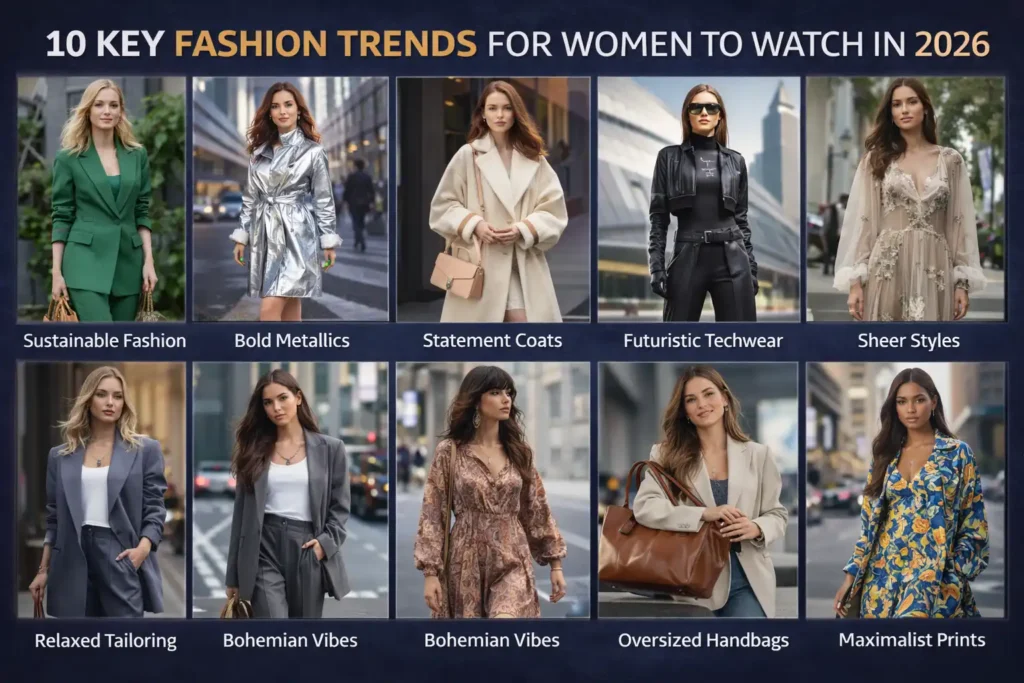
A fitted top won’t rescue baggy pants that pull across your seat, slip when you walk, or collect under your shoes. The popular formula, tight top plus chunky sneaker, skips the part that decides whether the outfit works. Fit comes first, proportion comes next, and trend comes last. Stop sizing down to make roomy trousers look tidy. Start checking whether the room is in the right places.
Why Most Baggy Pants Outfit Advice Falls Apart
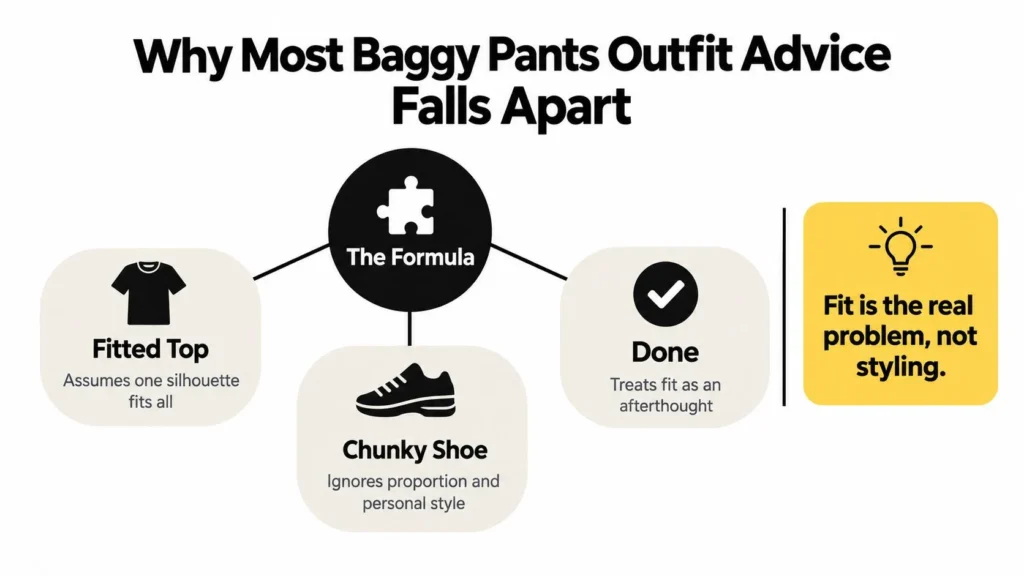
The fitted-top rule isn’t useless. It’s incomplete. A close-fitting tank can make the contrast between your torso and trousers look deliberate, but it can’t correct a waistband that sits at the wrong height or a crotch that restricts your stride.
That’s why copying someone else’s baggy pants outfit can disappoint. You’ve copied the clothes, not the relationship between their body, the garment’s cut, and the shoes beneath it.
This diagram captures what the familiar formula leaves out.
Roomy Is a Design Choice
Oversized trousers aren’t regular trousers bought too large. Their cultural history includes zoot-suit tailoring, Black cultural expression, hip-hop, and skate culture, rather than a single confirmed origin. NPR’s history of oversized and sagging pants traces exaggerated silhouettes through these overlapping movements and cautions against treating the familiar prison-origin explanation as settled fact.
That history matters when you get dressed. You don’t have to reproduce a subculture’s uniform, but you should recognize that generous proportions can be intentional, expressive, and carefully constructed. Removing every fold isn’t necessarily an improvement.
Fit principle: Preserve the room that lets the garment work. Correct the dimensions that prevent it from working.
Don’t Shrink the Whole Garment to Fix One Part
My least favorite fitting-room advice is to size down because the waist looks loose. If the hips and thighs already sit comfortably, a smaller size can trade that waistband gap for tension across the seat.
Separate the problems instead. A waist mismatch, an unsuitable rise, and an overlong hem need different responses. None automatically means you need less leg volume.
A successful silhouette can include a fitted tee, a boxy sweatshirt, or an oversized jacket. What makes it convincing is controlled placement, not a compulsory tight upper half. Choose where the waistband sits, where the top ends, and how much shoe remains visible. Those decisions beat a generic balancing rule.
Measuring for Fit Before You Style a Single Thing
Bring a flexible measuring tape, your usual underwear, and shoes you expect to wear with the trousers. Compare your measurements with the garment’s size chart, then compare the garment itself with a pair you already enjoy wearing. Keep body measurements and flat garment measurements separate.
Waist labels alone aren’t reliable enough. A 3D-scanning apparel study discussed in University of Arkansas research found that 50% of participants purchased incorrectly sized pants compared with scan-based measurements.
Five Measurements and What Each One Tells You
| Measurement | How to Take It | What It Reveals |
|---|---|---|
| Waist | Measure around the position where you want the waistband to sit, then check comfort while seated. | Whether the chosen wearing height is comfortable and secure. |
| Hip | Measure around the fullest point without tightening the tape. | Whether the top block has enough room for your seat. |
| Front and back rise | On a reference pair, measure from the crotch seam to the waistband along each rise seam. | Whether the waistband position and crotch depth suit you. |
| Inseam | Measure from the crotch seam to the hem on a well-fitting pair. | The length to compare against your intended shoe and hem break. |
| Leg opening | Measure straight across the hem of trousers laid flat. | How the lower leg will sit around, or over, footwear. |
For another reference while comparing labels and measurements, use ClothME’s guide for matching pants to your body. Treat it as a companion to trying the garment on, not a replacement for movement.
Make the Fitting Room a Movement Test
- Sit naturally: Don’t perch upright to make the waistband behave. Check whether you can breathe comfortably and whether the back stays covered.
- Walk and bend: Notice pulling at the crotch, pocket distortion, or the need to keep lifting the waist.
- Check the side view: Look for a steady waistband and fabric falling downward rather than bunching into tight horizontal folds.
- Try a step: Use a safe stair if available. The trousers shouldn’t restrict you or catch beneath your foot.
Standard categories won’t capture every proportion. A body-scanning study of 677 women found that 35.45% didn’t align with any single sizing category. Trust the movement test more than the reassuring familiarity of a size label.
Styling a Baggy Pants Outfit by Body Type Without the Type
The same jeans can look cropped on one person, puddled on another, and uncomfortable on someone whose waist and hip measurements require different sizes. Those aren’t styling failures. They’re different fitting conditions.
Use the following as hypothetical fitting-room situations, not rules about what particular bodies should wear. A body label can suggest where to look, but it shouldn’t dictate the answer.
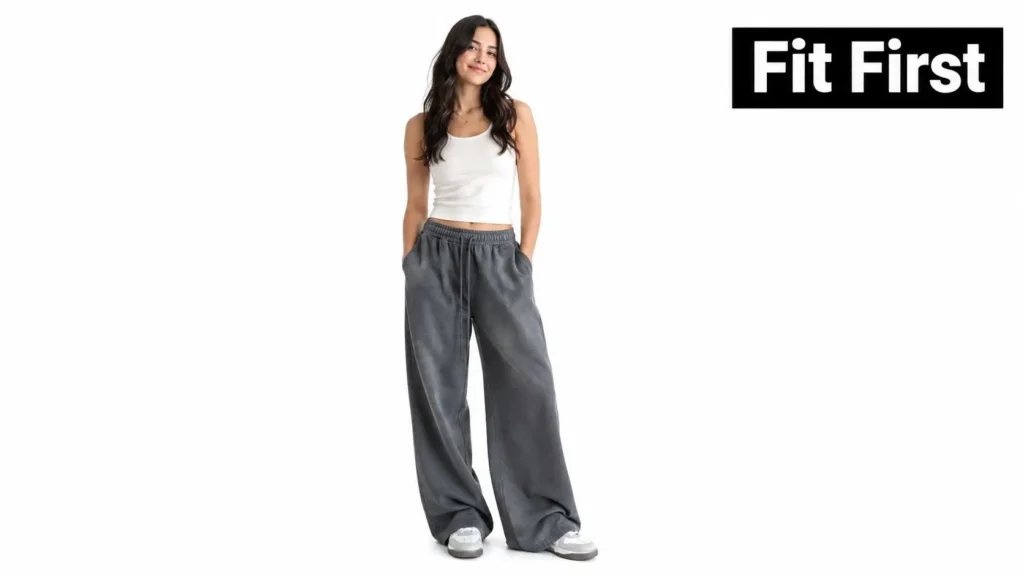
A simple tank-and-sweatpants combination is a useful reminder that styling doesn’t have to be complicated.
Different Proportions, Different Adjustments
For a shorter wearer, investigate the ankle first. Suppose the waist and seat fit, but fabric gathers heavily above a sneaker. Pin the hem temporarily and compare the side view. You might prefer a cleaner break rather than a narrower leg, especially with a short cardigan or tucked tee.
A taller wearer may face the opposite problem: trousers that end awkwardly above the intended footwear. Don’t pull the waistband lower just to borrow length. Choose an adequate inseam, then consider a fabric with enough substance to hold the shape you want. A boxy cotton shirt can look purposeful without needing to be cropped.
For someone with a fuller hip and smaller waist, the waistband may gap while the seat fits beautifully. Keep that hip ease and ask a tailor whether the waist can be adjusted. If sitting produces pulling or exposure, investigate the rise before treating the gap as the only issue.
Use Labels as Prompts, Not Instructions
Cedar & Lily Clothier body type advice can provide another lens for considering proportions. I’d use that lens to generate questions, not permission slips about which trousers you’re allowed to wear.
- Muscular thighs: Check the thigh and seat independently of the waistband.
- Plus-size proportions: Judge the actual garment, not assumptions about hiding or minimizing.
- Seated or mobility-limited wearers: Prioritize comfort in your usual position and access to closures.
If you enjoy generous volume above the waist too, experiment with styling an oversized blazer. An open front and a clearly chosen jacket length can give the outfit definition without forcing you into a fitted top.
Three Outfits in One Pair
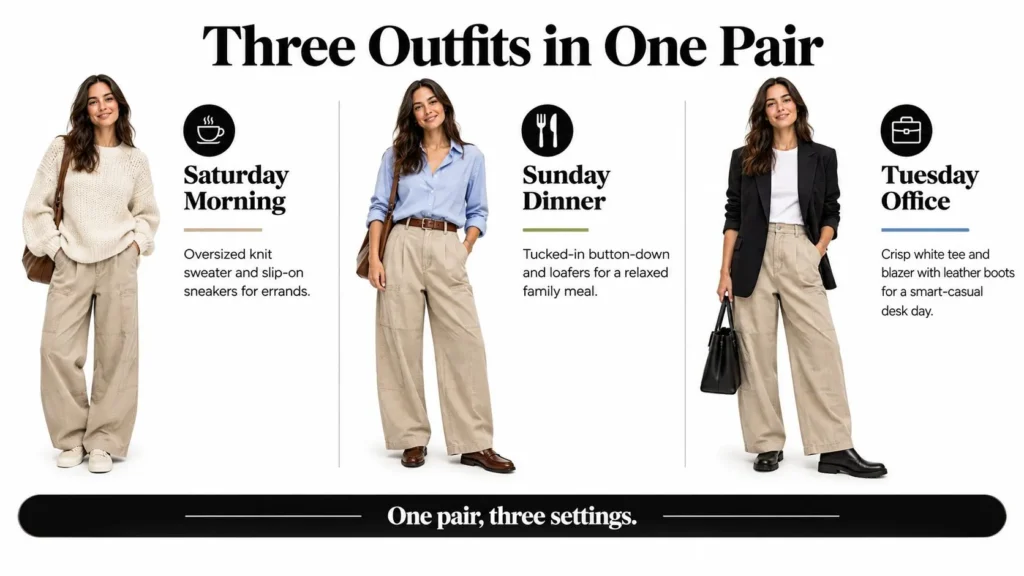
Choose the pair that passed your movement test, then change the surrounding pieces. I’d start with baggy jeans in an uncomplicated wash or relaxed khaki trousers, whichever fits your actual week.
The outfit comparison below shows how you can change the setting without changing the trousers.
Casual, Office, and Evening
| Setting | My Suggested Combination | What Makes It Intentional |
|---|---|---|
| Casual | Cropped or waist-length cotton tee, simple sneaker, lightweight shacket | A clear top endpoint and visible footwear |
| Office | Tucked long-sleeve top, structured blazer, loafer or low heel | A defined upper layer and polished shoe |
| Evening | Fitted knit or comfortable bodysuit, ankle boot or chunky Chelsea, statement belt | A focused neckline and one deliberate accessory |
For errands, you don’t need an aggressively cropped top. A tee that ends around the waistband can give you the same clear endpoint without exposing your stomach. Leave the shacket open and check that its hem doesn’t collide awkwardly with bulky pockets.
For work, follow your workplace’s dress code rather than assuming a blazer makes denim acceptable. Where jeans are welcome, choose an understated pair; where they aren’t, use relaxed trousers. Keep the tucked layer thin enough that it doesn’t create lumps beneath the waistband.
Change the Emphasis, Not Everything
For dinner, I’d swap the everyday tee for a fine-gauge knit and choose boots that remain visible under the hem. A statement belt should be decoration on an already stable waistband, not the device holding the entire outfit together.
You can also study an outfit in motion rather than relying entirely on still photographs.
Don’t buy another pair until you’ve tried changing the neckline, jacket, and shoe on the pair you already own.
I’d skip a billowy long top worn untucked over heavily stacked hems unless that much volume is your deliberate goal. Shiny fabric isn’t forbidden, but a satin blouse, glossy belt, and polished boots together may compete for attention. Pick one focal point.
Likewise, delicate shoes can work if the hem lets you see them. If they disappear, adjust the relationship rather than automatically buying chunkier footwear. This approach also fits neatly into building a capsule wardrobe: useful combinations matter more than a pile of separate purchases.
Seasonal Layering That Respects the Drape
Dress for the weather you’ll walk through. A puddled hem may suit a dry indoor evening, but I wouldn’t choose it for a wet commute. Seasonal styling starts with that practical decision, not a seasonal color palette.
Keep a lighter and a heavier upper-layer option beside your trousers when testing outfits. You’ll see quickly whether the pants need a crisp jacket, a softer knit, or just less fabric gathered around the waistband.
Spring and Summer
For spring, try a cotton tee, cropped trench or chore coat, and white sneaker. I prefer a jacket that finishes clearly above or below the pocket area rather than halfway across bulky cargo pockets. If you choose a longer trench, wear it open and inspect the side view before committing.
Summer doesn’t demand a tiny top. A tank works, but so does a linen shirt with the front tucked and the back left loose, provided the extra length looks deliberate. Choose trousers you find comfortable in the heat rather than insisting on heavy denim because it photographed well.
- With sandals: Check the hem while taking a normal stride, not just standing still.
- With a tucked shirt: Leave enough looseness above the waistband to sit comfortably.
- With a hat: Keep the rest of the accessories simple if you want the trousers to remain the focus.
Fall and Winter
For fall, I’d pair a substantial knit with a structured leather jacket and an ankle boot. Use a shallow front tuck instead of stuffing an entire thick sweater into the waistband. If the knit is bulky, let the jacket provide a clear outline.
Winter allows a long wool coat, but length alone doesn’t guarantee a good combination. Look for a clean opening over the trousers and enough room to move without the coat bunching around your hips. Add a scarf for warmth, then test whether you still like the outline with the coat fastened.
For wool-specific outfit ideas, California Cowboy’s après-ski wool trousers guide offers a relevant seasonal reference. Choose footwear for the actual conditions; don’t substitute fashion boots for suitable wet-weather shoes.
Wet-weather rule: Keep the trouser edge off the ground. A controlled break is easier to live with than fabric you have to hold up through puddles.
Buying Baggy Pants Like They’ll Still Be Cool in 2029
Buy the pair you’ll want to wear after the excitement wears off. The date in this heading is a wardrobe challenge, not a prediction. Nobody can promise that a particular silhouette will remain fashionable, but you can choose trousers that work beyond a single look.
My recommendation is moderate volume before maximum width. Extremely wide trousers can be wonderful if you genuinely love them. They’re a less convincing purchase when your main reason is that everyone in your feed seems to own them.
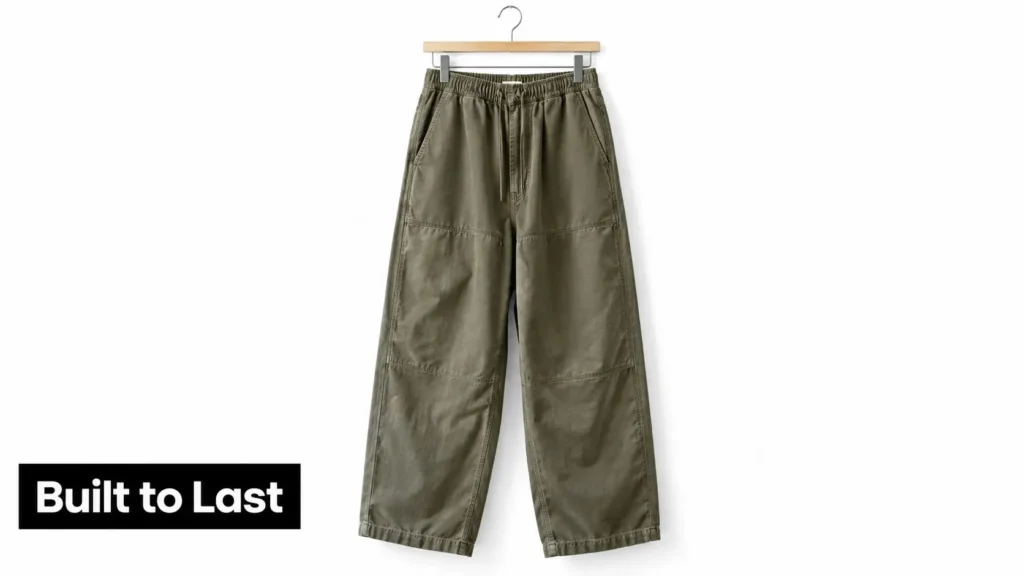
Start with the garment itself, not the styling around it.
Read Growth Without Assuming Permanence
Vogue’s report citing EDITED data recorded 27% year-over-year growth for baggy and wide-leg jeans in menswear, down from 150% the previous year; the report also projected a 3% decline for wide-leg jeans over the following year, alongside projected growth of 2% for slim and 4% for straight-leg styles.
Those were reported market signals and projections, not guarantees about your wardrobe. My reading is straightforward: don’t confuse popularity with a reason to buy the most exaggerated version. You can enjoy baggy pants without betting your whole wardrobe on them.
Put the Pair Through a Trend-to-Basics Test
- Fabric: Favor material with substance, inspect seams, and check the care label. Don’t assume stiffness alone means quality.
- Rise: Start by trying a mid-rise for versatility, but choose the position that actually feels right.
- Details: Restrained fading, uncomplicated pockets, and minimal distressing are my picks for easier repeat styling.
- Footwear: Test the hem with a sneaker, a loafer, and a boot you already own.
That shoe test isn’t a demand to purchase footwear. It’s a way to discover whether the trousers fit your existing life before you bring them home.
Use this introduction to sustainable fashion as another prompt to think about purchasing decisions. Don’t call a pair a wardrobe basic merely because it’s neutral. It becomes useful when you can wear it comfortably, maintain it realistically, and combine it with clothes you already like.
Your One-Page Baggy Pants Checklist
Save this before your next fitting-room visit. Assess the trousers without a jacket first, then put the complete outfit on. Don’t judge a baggy pants outfit only from a straight-on photograph with your hands in the pockets.
Ask These Questions
- Does the waist stay comfortable when seated? Check both pressure at the front and coverage at the back.
- Do the side seams hang correctly? Look again after walking, not just after arranging the fabric.
- Does the hem meet the shoe deliberately? You should be able to move without stepping on it.
- Does the fabric fall vertically? Distinguish loose drape from tension folds across the seat or crotch.
- Does the upper half look chosen? Check the top’s endpoint, tuck, and jacket length together.
Shopping filter: Run the earlier shoe test before removing the tags. Styling rule: Let one half stay visually quiet when you’re unsure; simplicity is a starting point, not a restriction on experimentation.
Fix the Complaint, Not the Entire Silhouette
| Complaint | First Response |
|---|---|
| Twisting seams | Reposition the trousers, then investigate fit or construction if the twisting persists. |
| Dragging hems | Pin and alter the length with your intended footwear on. |
| Gaping waistband | Ask about waist tailoring while preserving comfortable seat and thigh room. |
A belt won’t resolve every fit problem, and a smaller size isn’t automatically the cleaner choice. Keep the pair that feels good in motion and looks deliberate without constant adjustment. If you’re repeatedly tugging, hitching, or arranging it, keep looking.
For approachable fashion advice alongside fresh writing on arts, travel, technology, and everyday interests, visit maxijournal.com. Explore its outfit and wardrobe guides with your best-fitting baggy pants nearby, then try a jacket or shoe combination using pieces you already own.
Discover more from Maxi Journal
Subscribe to get the latest posts sent to your email.