When people ask if basmati rice is healthy, the answer is a surprisingly clear yes. For most diets, it’s not just an acceptable choice—it’s often a superior one. It stands out from other grains thanks to its unique nutritional profile and a gentler impact on blood sugar.
Is Basmati Rice a Healthy Choice for Your Diet?
For years, rice has gotten a bad rap, often tossed into the “unhealthy carb” bin without a second thought. But here’s the thing: not all rice is created equal. Basmati, with its signature long grains and delightful nutty aroma, is in a class of its own.
Unlike many refined grains that send your blood sugar on a rollercoaster, basmati has a much milder effect. This is a game-changer for anyone focused on managing their energy, weight, or metabolic health. It’s a staple you can actually feel good about.
To give you a quick snapshot, here’s a look at what makes basmati a smart choice.
Basmati Rice Health at a Glance
| Health Aspect | Benefit |
|---|---|
| Glycemic Index | Lower GI (50-58) means a slower, more stable blood sugar response. |
| Nutrient Content | Good source of B vitamins, especially in its brown variety. |
| Digestibility | Easier on the digestive system compared to some other grains. |
| Diet Versatility | Naturally gluten-free and fits well into various eating plans. |
| Heart Health | Brown basmati contains fiber, which supports cardiovascular wellness. |
This table just scratches the surface. The real benefits come from understanding how these factors work together in your body.
What Makes Basmati Rice Stand Out
The health advantages of basmati rice aren’t due to just one thing but a powerful combination of its natural properties. Think of it as a complete package that delivers far more than simple carbohydrates.
In this guide, we’ll break down the science behind basmati rice health, covering:
- Its lower glycemic index: We’ll explain why this helps you avoid energy crashes and makes it a smarter carb for steady fuel.
- The nutritional difference: We’ll compare brown and white basmati, looking at the specific vitamins and minerals each offers.
- Safety and preparation: You’ll learn how to cook basmati to boost its health benefits and minimize potential contaminants.
- Practical dietary use: We’ll show you how to fit this versatile grain into plans for diabetes management, weight loss, and gluten-free living.
Basmati rice is more than just a filler—it’s a functional food. Its unique aromatic compounds and lower glycemic response truly set it apart from other rice varieties, offering real benefits for a balanced diet.
We’re going beyond simple claims to give you the evidence-backed information you need. You’ll see why basmati rice has earned its place in healthy kitchens worldwide, from its Himalayan origins to your dinner plate.
Whether you’re pairing it with a rich curry, grilled fish, or a colorful mix of roasted veggies, basmati can elevate both the flavor and nutrition of your meal. Adding other nutrient-dense foods like asparagus can create an even more powerful plate. For more on this, check out our article on the benefits of asparagus for your health. Now, let’s get into the details.
The Complete Nutritional Profile of Basmati Rice
To really get why basmati rice fits into a healthy diet, we have to look past its fluffy texture and dig into what’s inside each grain.
Basmati is mainly a carbohydrate, which is your body’s go-to fuel. But it’s not just an empty energy source. It brings along essential macronutrients and a solid roster of micronutrients that give it a healthy edge. Let’s break down the numbers.
Decoding the Macronutrients
The nutritional story of any food starts with its macronutrients—carbs, protein, and fat. These are what your body uses for energy and cellular repair.
A standard one-cup serving of cooked white basmati rice (about 163 grams) stacks up well against other grains. It has around 210 calories, making it a fairly light option for a staple food. That same cup gives you 4.4 grams of protein, a minimal 0.5 grams of fat, and 45.6 grams of carbohydrates to keep you going. You can see a more comprehensive breakdown of its nutrient profile and how it impacts your diet in this detailed analysis on Healthline.
This specific macronutrient mix is central to the basmati rice health conversation. The low fat content makes it a lean choice, and the protein helps you feel full longer than you would with simpler starches.
Basmati rice isn’t just an empty carb. It’s an energy source bundled with valuable nutrients, making it a functional and intelligent addition to a balanced plate.
This combination allows for a steady release of energy, helping you avoid the sharp blood sugar spikes and crashes common with other refined foods.
A Closer Look at Essential Micronutrients
Beyond the big three macros, basmati’s micronutrients—the vitamins and minerals—are where it really shines. They may be present in smaller amounts, but they handle hundreds of critical functions in the body.
Both white and brown basmati are good sources of several key nutrients. Here’s what a single serving can add to your daily intake:
- Folate (Vitamin B9): White basmati is a surprisingly good source, offering about 24% of the Daily Value (DV) per cup. Folate is crucial for building new cells and DNA—essential for everyone.
- Thiamine (Vitamin B1): This B vitamin is a workhorse, helping your body convert carbs into energy. It also supports nerve, muscle, and heart function.
- Selenium: Acting as a powerful antioxidant, selenium helps protect your cells from damage. It also plays a key role in thyroid health and immune response.
Brown basmati, however, kicks things up a notch. Since it keeps its outer bran layer, it packs in even more beneficial compounds.
The Nutritional Edge of Brown Basmati
If white basmati is the reliable standard, brown basmati is the premium upgrade. It has more fiber, which is a game-changer for digestive health and satiety.
On top of that, a serving of brown basmati delivers higher levels of important minerals:
- Magnesium: With about 5% of the DV, it’s involved in hundreds of bodily processes, from muscle and nerve function to blood sugar regulation.
- Zinc: Providing around 7% of the DV, zinc is fundamental for immune function, wound healing, and cell growth.
- Phosphorus: This mineral teams up with calcium to build strong bones and teeth, delivering about 6% of the DV.
Ultimately, the choice between white and brown basmati depends on your goals. If you’re focused on maximizing fiber and minerals, brown is the winner. But even white basmati offers a solid nutritional base, making it a far better option than many other refined grains.
Understanding the Glycemic Index and Blood Sugar
One of the biggest reasons basmati rice stands out from a health perspective is how it interacts with your blood sugar. The key to this is a concept called the glycemic index (GI), which is just a simple scale that ranks foods on how quickly they raise your blood glucose levels after you eat them.
Let’s use an analogy. High-GI foods—think sugary drinks or plain white bread—are like kindling for a fire. They catch instantly and burn hot and fast, giving you a quick burst of energy followed by a sudden crash. You’re left feeling tired and hungry again in no time.
Low-GI foods, on the other hand, are like a dense hardwood log. It takes a while for the log to catch, but once it does, it provides a slow, steady burn for hours. This is exactly how basmati rice works in your body, delivering a controlled release of energy without the dramatic spikes and crashes.
Why a Low GI Matters for Your Health
Keeping your blood sugar stable is about more than just dodging that 3 p.m. slump. It has a real, long-term impact on your metabolic health. When your blood sugar stays on an even keel, your body isn’t forced to pump out huge amounts of insulin to deal with a sudden flood of glucose.
This steady-state approach gives you a few major wins:
- Sustained Energy: You get a consistent fuel source for your brain and body, which helps you stay sharp and productive all day.
- Better Appetite Control: Carbs that digest slowly help you feel full and satisfied for longer, cutting down on the urge to grab unhealthy snacks.
- Reduced Metabolic Stress: Over time, constant blood sugar spikes can wear out your body’s insulin response system. This is a primary factor in the development of type 2 diabetes.
By choosing foods like basmati, you’re essentially helping your body’s natural energy system run the way it’s supposed to—smoothly and efficiently.
Basmati Rice and Diabetes Management
For anyone managing type 2 diabetes or trying to prevent it, the low GI of basmati rice can be a game-changer. Basmati rice has a glycemic index that usually falls between 50-58. That’s a huge improvement over other rice varieties, some of which can have a GI of 70 or higher.
This means it releases glucose into your bloodstream slowly, which is critical for managing a condition that affects over 460 million adults worldwide. Research shows that consistently choosing whole grains, especially brown basmati, can lead to better insulin sensitivity and a lower risk of developing diabetes in the first place. Some studies even suggest that swapping refined grains for whole ones like brown basmati helps reduce inflammatory markers tied to chronic diseases. You can learn more about why basmati is a top choice for health-conscious diets to get the full picture.
Choosing basmati rice is a proactive step towards better blood sugar management. Its low glycemic index provides a gentler, more predictable energy source, making it a smarter carbohydrate choice for metabolic health.
All of this makes basmati, particularly the brown variety, an excellent addition to a diabetes-friendly eating plan. It allows people to enjoy a classic staple food without worrying about wrecking their blood sugar control.
The Science of Amylose
So, what’s the secret behind basmati’s low-GI magic? It all comes down to its starch makeup, specifically a high amount of a starch called amylose.
All starches are just long chains of glucose, but their physical structure dictates how your body digests them.
- Amylopectin: This is a highly branched starch, kind of like a tree with limbs spreading out in every direction. This open structure gives digestive enzymes lots of places to latch on and break it down into glucose very quickly. Sticky, short-grain rice is packed with amylopectin.
- Amylose: This is a straight, tightly-packed chain. Because of its simple, linear structure, it’s much more resistant to digestion. It takes your body more time and effort to unravel these chains, which is what leads to that slow, steady release of glucose.
Basmati rice is naturally high in amylose. That’s why the grains cook up fluffy and separate instead of clumping together. And that very same quality is what makes it a healthier pick for your blood sugar, turning a potential energy spike into a reliable, sustained fuel source.
Brown vs. White Basmati: Which Is Right for You?
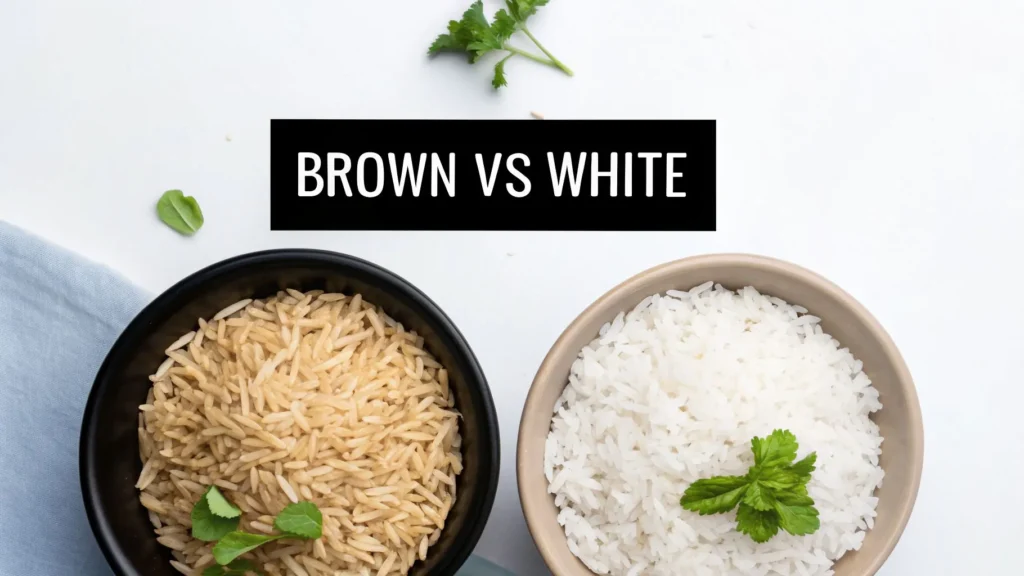
When you’re standing in the rice aisle, the choice between brown and white basmati can seem complicated. Is one really that much healthier? The difference is actually pretty simple.
Brown basmati is a whole grain. It keeps its outer bran layer and germ, which are packed with nutrients. White basmati, on the other hand, is milled to remove that bran and germ. This makes it softer and quicker to cook, but it also strips away a lot of fiber and vitamins.
The Nutritional Power of the Bran Layer
The bran is what gives brown basmati its color and, more importantly, its nutritional advantage. This outer layer is the grain’s main source of dietary fiber, which is a big deal for everything from digestion to appetite control.
This extra fiber is what makes brown basmati so good at keeping you full. It slows digestion, helping you feel satisfied longer after a meal—a huge plus if you’re managing your weight.
Beyond fiber, the bran is a treasure trove of key micronutrients. It packs more of the good stuff, including:
- Magnesium: Critical for muscle function, nerve health, and blood sugar control.
- Manganese: A key mineral for bone formation and metabolism.
- B Vitamins: Essential for converting your food into energy.
- Antioxidants: Compounds that help protect your cells from damage.
If getting the most nutrition out of every bite is your goal, brown basmati is the clear winner.
Nutritional Showdown Brown vs White Basmati Rice (per cup cooked)
To make the choice even clearer, let’s look at the numbers. While both are great choices compared to other refined carbs, their profiles tell different stories. Here’s how a typical one-cup cooked serving of each stacks up.
| Nutrient | Brown Basmati Rice | White Basmati Rice | Primary Benefit of the Difference |
|---|---|---|---|
| Fiber | ~3.5g | ~0.6g | Supports digestion, satiety, and heart health. |
| Magnesium | ~84mg | ~24mg | Better for muscle function and blood sugar regulation. |
| Manganese | ~1.8mg | ~0.9mg | Superior for bone health and metabolic processes. |
| Glycemic Index | Lower (~50) | Slightly Higher (~58) | Brown rice offers a slightly slower energy release. |
| Cooking Time | ~40-45 minutes | ~15-20 minutes | White rice is faster and more convenient for quick meals. |
| Texture & Taste | Chewier, nuttier | Softer, milder | Brown has a robust flavor; white is more neutral. |
As the table shows, brown basmati consistently delivers more nutritional punch. The higher fiber and mineral content make it a more robust choice for long-term health, especially if you’re focused on heart health and stable blood sugar.
Choosing brown basmati rice is an easy way to boost your daily fiber and mineral intake without changing your meal structure. It’s a simple swap that enhances the overall nutritional value of your plate.
So, Which One Should You Choose?
Ultimately, the best choice is the one that fits your personal health goals, tastes, and even your schedule. There’s no one-size-fits-all answer, and both can be part of a healthy diet.
Choose brown basmati if:
- Your top priority is maximizing fiber and nutrient intake.
- You are managing blood sugar and need a steadier energy release.
- You enjoy a chewier texture and a richer, nuttier flavor.
Choose white basmati if:
- You have a sensitive digestive system, as it’s lower in fiber.
- You’re short on time and need a quick-cooking grain for a weeknight meal.
- You’re making a delicate curry or stir-fry and want a softer, more neutral-tasting rice.
There’s no need to be exclusive. Many people keep both in their pantry, using brown basmati for hearty grain bowls and stews while reaching for fluffy white basmati to serve with lighter dishes. The key is making an informed choice that works for you.
How to Cook Basmati for Maximum Health Benefits
Picking the right type of basmati is only half the battle. How you actually prepare it in your kitchen can dramatically change its health profile, maximizing the good stuff while minimizing any potential risks.
It all starts with one simple but crucial step: rinsing. Running cool water over your basmati until it’s no longer cloudy does more than just get it clean. This removes the excess surface starch, which is the key to getting fluffy, individual grains instead of a sticky mess.
More importantly, rinsing is your first line of defense against contaminants like arsenic that can sometimes be found in rice.
The Foolproof Method for Perfect Basmati Rice
Cooking basmati isn’t hard, but a few small details separate a decent batch from a perfect one. Follow these steps for fluffy, healthy rice every time.
- Rinse Thoroughly: Put your rice in a fine-mesh sieve. Hold it under cool running water, swirling the grains with your fingers. Keep going until the water runs clear, not milky.
- Use the Right Water Ratio: The gold standard is 1 cup of rice to 1.5 cups of water. This ratio delivers firm, separate grains. For a slightly softer texture, feel free to use up to 2 cups of water.
- Boil and Simmer: In a pot with a tight lid, bring your water to a rolling boil. Add the rinsed rice, give it a single stir to stop it from clumping, and pop the lid on. Immediately turn the heat down to the lowest setting.
- Hands Off: Let the rice simmer for 15-20 minutes. The most important rule here is to not lift the lid. Resisting the urge to peek keeps the steam trapped inside, which is what cooks the rice to perfection.
- Rest and Fluff: After the time is up, kill the heat but leave the pot covered for another 5-10 minutes. This allows the grains to absorb any remaining steam. Finally, take off the lid and use a fork to gently fluff the rice.
Mastering these basics will elevate the texture and quality of any meal. For more kitchen wisdom, check out our guide on the top 10 essential cooking tips for beginners.
Mastering Portion Control Without Measuring
Even the healthiest foods can work against you if you overdo it. For basmati rice, portion control is essential for balancing its benefits with its carb and calorie count. The good news is you don’t need to keep a measuring cup on hand.
Your hand is one of the easiest and most reliable tools for portion control. A single serving of cooked rice should be about the size of your clenched fist.
This simple visual trick is a surprisingly effective way to manage your carb intake without the hassle of scales. It helps you treat rice as a complement to your meal, not the main event, leaving plenty of space for protein and veggies.
Advanced Cooking for Enhanced Health
If you want to take the health benefits to the next level, you can tweak your cooking technique. The “excess water method” is a fantastic way to lower both the starch and arsenic content of your rice.
Instead of letting the rice absorb all the water, you cook it more like pasta.
- Boil a large pot of water—think a ratio of about 6 to 10 parts water for every 1 part rice.
- Add your rinsed rice and let it boil for 10-12 minutes, or until it’s tender but still has a slight bite.
- Drain all the water using a colander.
This method effectively washes away a good amount of the soluble starches, which slightly lowers the final calorie and carbohydrate load. Even better, studies have shown this technique can slash arsenic content by as much as 60%, making it a smart move for anyone who eats rice regularly. It uses a bit more water and an extra step, but the health payoff is well worth the effort.
Integrating Basmati Rice Into a Healthy Diet
So, how do you actually make basmati rice a regular part of a healthy diet? The answer is all about smart strategy, not strict avoidance.
Basmati isn’t a “bad” carb you need to fear. Instead, view it as a valuable tool that, when used correctly, can make your meals more satisfying and flavorful. The trick is to treat it as one part of a balanced plate, not the main attraction.
When you pair basmati rice with lean protein, healthy fats, and plenty of non-starchy vegetables, you create a complete meal that provides steady, slow-release energy.
Strategies for Different Dietary Needs
You can easily adapt how you eat basmati rice to fit your specific health goals, whether you’re managing blood sugar or working on your weight.
For Diabetes Management: Make brown basmati rice your go-to. Its extra fiber gives it an even lower glycemic impact. Portion control is non-negotiable here; stick to a serving that fits your carbohydrate goals (usually about half a cup cooked) and always eat it with protein and fiber to slow down glucose absorption.
For Weight Management: Use the filling nature of basmati rice to your advantage. The fiber in brown basmati is particularly effective for promoting satiety, which helps you feel full longer and reduces the urge to overeat. A single fist-sized portion can fuel workouts and keep hunger away.
For a Gluten-Free Diet: Basmati rice is naturally 100% gluten-free, making it a fantastic and safe staple. It’s a great substitute for gluten-heavy grains like couscous or bulgur, especially in salads and pilafs where you want a similar light texture.
This three-step process is the best way to prepare basmati rice to lock in its health benefits.
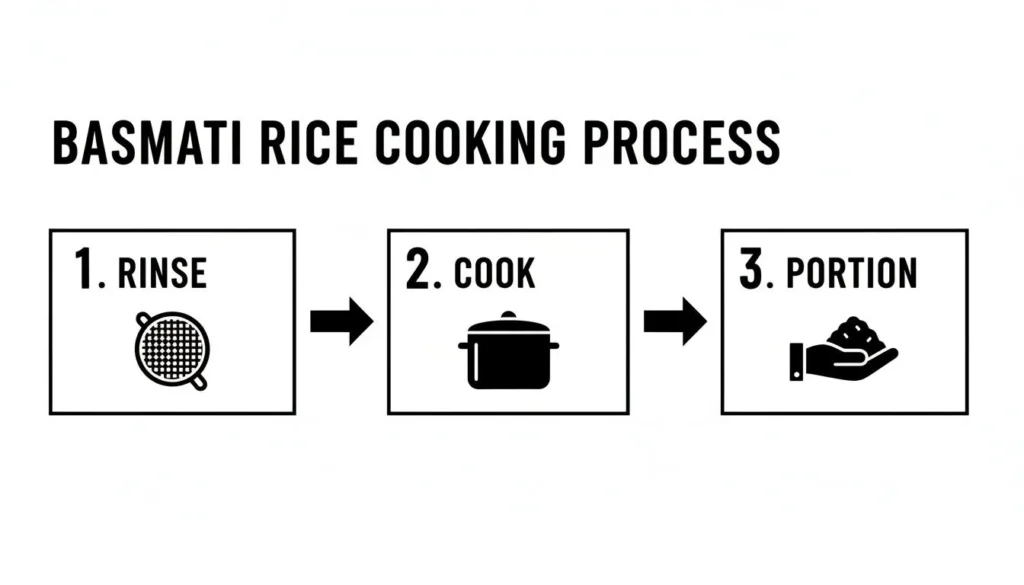
By rinsing, cooking, and portioning correctly, you’ll end up with perfectly fluffy and healthy grains every single time.
Building Balanced and Delicious Meals
Think of basmati rice as the perfect canvas. Its nutty, subtle flavor is incredibly versatile, pairing well with just about anything and making it simple to build exciting, nutrient-dense meals. Your goal should be to add color, texture, and a good mix of macronutrients to every bowl.
For instance, try building a Mediterranean-inspired rice bowl. Start with a bed of brown basmati rice, then layer on grilled chicken or chickpeas, fresh cucumber and tomatoes, a bit of feta cheese, and a drizzle of lemon-tahini dressing. You get fiber, protein, and healthy fats all in one delicious, easy-to-assemble meal. For more ideas, check out our guide to healthy meal prep ideas, which is full of creative ways to use grains.
Basmati rice isn’t something to fear in a modern diet. It’s a versatile, enjoyable grain that, when portioned and prepared correctly, supports your health goals rather than hindering them.
Ultimately, the conversation around basmati rice health comes down to balance. Now that you know its benefits and the best ways to prepare it, you can confidently add this ancient grain back to your table as part of a vibrant, modern, and healthy diet.
Your Questions About Basmati Rice, Answered
Let’s clear up some of the common questions that come up when talking about basmati rice. We’ve covered a lot of ground, but these quick-fire answers will help you feel even more confident about making it a regular part of your meals.
Is Basmati Rice Good for Weight Loss?
It certainly can be. Brown basmati rice, in particular, is a great ally for weight management because it’s packed with fiber. That fiber is key to helping you feel full and satisfied, which naturally helps curb overeating.
Plus, its low glycemic index means you get steady, sustained energy. You avoid the sudden blood sugar spike and crash that sends you reaching for sugary snacks. Of course, portion control is still crucial. A good rule of thumb is to stick to a serving about the size of your fist.
The one-two punch of high fiber and a low glycemic index makes basmati rice a smart play for weight management. It keeps you feeling satisfied and energized, making it easier to stick to your health goals.
Is Basmati Rice Processed?
That all depends on which kind you buy. Brown basmati is a whole grain. This means it’s barely processed at all, keeping its nutrient-dense bran and germ layers intact. It’s about as close to its natural state as you can get.
White basmati, however, is a different story. It goes through a milling process where the bran and germ are removed. This gives it that softer texture and allows it to cook faster. While it does lose some fiber and nutrients along the way, its unique starch composition and lower GI still make it a better choice than most other refined grains.
Can You Eat Basmati Rice Every Day?
For most healthy individuals, enjoying a sensible portion of basmati rice every day is completely fine—it’s a staple food for millions of people for a reason. The real key to a healthy diet, though, is variety.
Try to pair your basmati with a mix of different proteins and a rainbow of vegetables. This ensures you’re getting a wide array of essential nutrients. And if you are a frequent rice eater, it’s a good idea to use the excess water cooking method to minimize any potential exposure to arsenic.
At maxijournal.com, we provide clear, evidence-based insights on food and health. Explore more topics to build a healthier, more delicious life by visiting us at https://maxijournal.com.
Discover more from Maxi Journal
Subscribe to get the latest posts sent to your email.