You’re probably in one of two situations right now. You want to start taking classes in New York City, but every studio claims it has the best workout, the best coaches, the best community, and the best post-class glow. Or you already have a routine, but it’s gone flat, and you want something that makes you want to show up again.
That’s the challenge with the best exercise classes NYC offers. There’s too much choice, and most roundups blur together. They treat a boxing class, a Megaformer class, and a heated hip-hop yoga flow like they serve the same person. They don’t.
This guide takes a more useful approach. Each pick solves for a specific personality, training style, or motivation pattern. Some classes are built for people who want hard numbers, athletic coaching, and progression. Others work better for people who need music, atmosphere, or low-impact strength to stay consistent. New York also supports both ends of the market. At one end, Shape Up NYC by NYC Parks offers free group fitness for adults and seniors across all five boroughs. At the other, boutique pricing in the city has long supported premium single-class rates, with one travel guide listing classes at USD 32 for Alo Yoga, USD 36 for Mile High Run Club, and USD 47 for the Tracy Anderson Method.
1. Barry’s
Best for the HIIT loyalist who wants a hard workout, a predictable format, and enough locations to make the habit stick.
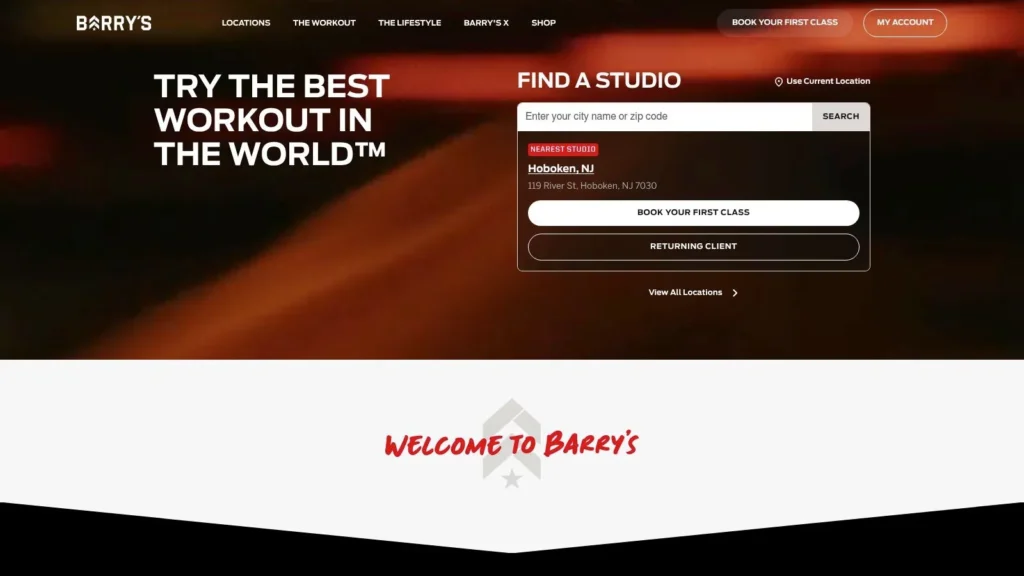
Barry’s is still one of the easiest recommendations in NYC if you know you like intensity. The formula is simple and effective: treadmill intervals, floor strength work, loud playlists, dark lighting, and a room full of people who came to train rather than linger.
That consistency matters more than people think. In a city where schedules change constantly, a class works better when you know exactly what kind of effort it will demand before you walk in. Barry’s is good at that. You’re not guessing whether the coach will turn it into choreography, bootcamp chaos, or a lecture on mindfulness. You show up and work.
What works in practice
The signature draw is the Red Room experience. Some people love the club-like energy because it helps them push harder. Others find it overstimulating. That’s the main trade-off with Barry’s. If music and atmosphere motivate you, it’s a strength. If you need calm coaching and technical detail, it can feel more like performance than instruction.
A practical upside is location coverage. Barry’s has multiple NYC studios, which makes it easier to fit into a real workweek. That matters in a city where commute friction kills routines fast.
- Best strength of the format: You get both cardio and resistance work in one class, which makes it efficient for busy schedules.
- Biggest hidden benefit: Programming feels familiar across locations, so booking a different studio doesn’t feel like starting over.
- Main drawback: Peak-time classes can get competitive, and the premium feel usually comes with premium pricing.
Practical rule: Barry’s works best for people who already know they like being pushed hard by the room’s energy.
If you’re brand new to structured training, start by learning a few basic movement patterns first. A guide on fitness tips for beginners will make your first few classes smoother, especially on the floor blocks where pace can move fast.
2. Tone House
Best for the competitor who wants training, not entertainment.
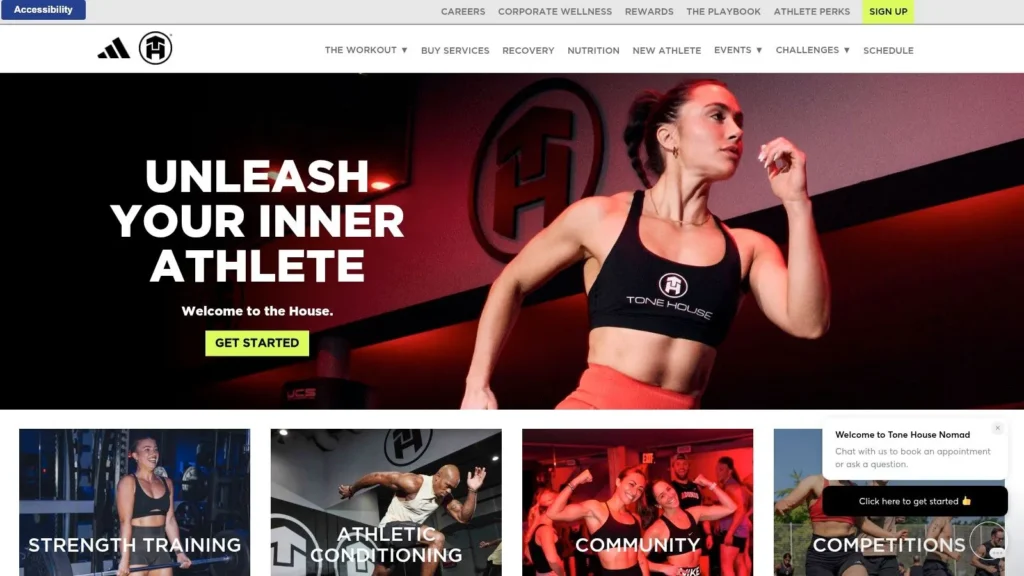
Tone House is what I’d recommend to someone who says, “I don’t need candles, branding, or a smoothie bar. I want to get better.” Its sessions lean athletic. Think sprints, sled work, power output, conditioning circuits, and coaching that treats effort as the baseline, not the selling point.
That makes it one of the better options in the city for former athletes, serious runners, and people who get bored in aesthetic-first studios. You’re there to move with intent. Tone House tends to attract people who like standards, structure, and a little bit of edge.
Where it separates itself
The small-group coaching setup is the key advantage. In a lot of boutique classes, “coaching” means hype. At Tone House, coaching is closer to actual performance instruction. You’ll still be in a group, but the environment feels more like a team session than a fitness party.
It also helps that the studio offers extras like InBody testing and optional nutrition services. Those details won’t matter to everyone, but they do matter to people who like feedback and progression.
- Why it’s worth the price for the right person: The workout has a clearer athletic identity than most general boutique fitness classes.
- Who should be cautious: Complete beginners may find the pace and intensity intimidating.
- What sells out first: Strong time slots tend to go fast because the format depends on tighter class sizes.
This is the class for people who want to feel coached, not just cheered on.
If you like the idea of this style but haven’t built much lifting confidence yet, brushing up on how to start strength training will make the transition much easier. That prep matters here because Tone House rewards people who can already hinge, brace, and move under fatigue without losing form.
3. SLT
Best for the grinder who wants low-impact work that still feels brutally effective.
SLT has a very specific appeal. It’s for people who don’t want pounding, jumping, or treadmill intervals, but still want a class that leaves muscles shaking. The Megaformer format creates that feeling through slow tempo, sustained tension, and precise positioning rather than impact.
That’s why SLT tends to build loyal followings. It punishes shortcuts. You can’t coast on momentum. If your form slips, you know it immediately, especially through the core, glutes, and inner thighs.
The real trade-off
The upside is obvious. SLT is one of the strongest choices in the best exercise classes NYC category for people who want strength emphasis without the wear and tear of repetitive impact. It aligns well with a broader regional trend too. In Mariana Tek’s Northeast report, Pilates, including Lagree and Megaformer, is the most common modality, with nearly one-third of studios offering it. That tracks with what you feel on the ground in New York. This style isn’t niche anymore.
The downside is the learning curve. First classes can feel humbling because tiny adjustments make a huge difference. The machine moves. The tempo is slow. The burn arrives early and stays.
- Best reason to book it: Excellent for people chasing deep muscular fatigue and control.
- Most common mistake: Going too heavy on resistance too soon.
- What doesn’t work: Treating it like a stretch class. It isn’t one.
If you like detailed coaching and can tolerate discomfort, SLT often becomes addictive. If you need variety, speed, and big energy from the room, it may feel too contained.
4. Y7 Studio
Best for the zen warrior who wants yoga without the preciousness.
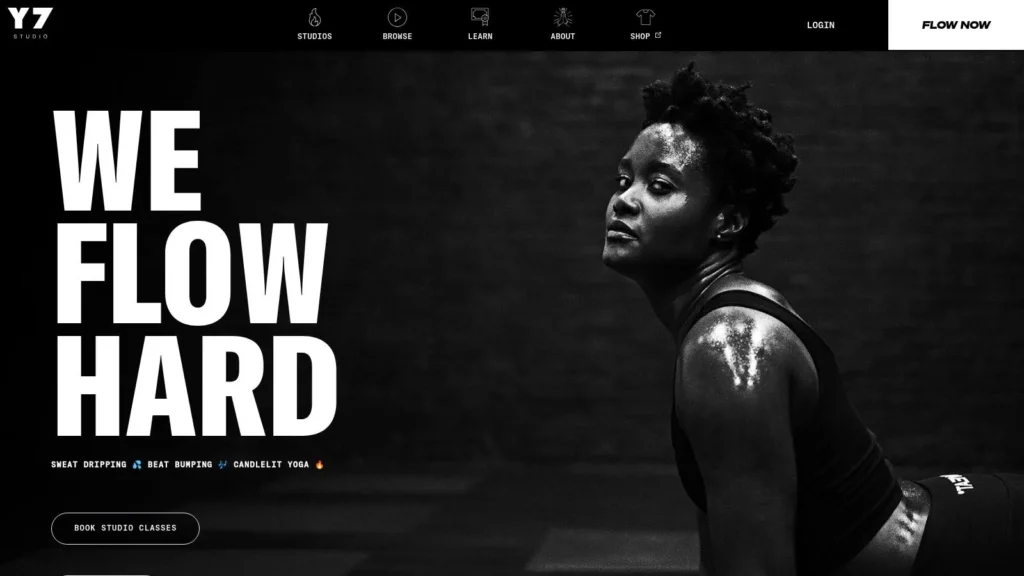
Y7 Studio carved out a lane by making yoga feel less exposed and more immersive. Classes are candlelit, mirror-free, set to hip-hop, and taught in infrared-heated rooms. For the right student, that setup removes a lot of what makes studio yoga uncomfortable.
The mirror-free piece matters. Plenty of people say they want yoga, but what they really don’t want is a bright room where they compare their poses to everyone else. Y7 lowers that pressure. You focus inward because there’s less visual noise to distract you.
What to know before booking
This isn’t the best first yoga class for every beginner. The low light can make visual learning harder, and minimal demos may frustrate students who need lots of step-by-step guidance. But for people who hate performative wellness culture, Y7 can be the fix.
The heated environment changes the experience too. Some people feel looser and more focused in heat. Others just feel overheated. Know which camp you’re in before committing to a packed evening class.
If you want yoga to feel like a reset, Y7 works. If you want yoga to feel like a workshop, look elsewhere.
One practical advantage is the hybrid setup with on-demand access through Y7 Online. That’s useful if your schedule is unpredictable or if you want to learn the flow style at home before stepping into the room.
The class works best for students who are comfortable following rhythm and breath more than constant verbal correction. If that sounds appealing, Y7 is one of the clearest vibe-based recommendations in the city, and one of the few where the atmosphere changes the training effect.
5. 305 Fitness
Best for the dancer, or the cardio skeptic who only sticks with workouts that feel fun.
305 Fitness understands a simple truth. A lot of people don’t quit exercise because they’re lazy. They quit because they’re bored. 305 solves that problem with a dance-cardio format that leans hard into live energy, party lighting, and a welcoming tone that doesn’t demand dance experience.
That last part is important. Some dance fitness classes tend to benefit people who already move well. 305 does a better job than most of making beginners feel like they belong even if they miss steps, freestyle awkwardly, or spend the first class laughing at themselves.
Why people come back
The class moves fast and keeps changing, which helps if traditional cardio makes you watch the clock. You’re not grinding through silent intervals on a machine. You’re following cues, moving across the room, and getting enough conditioning mixed in to turn the party vibe into an actual workout.
There’s a reason NYC keeps supporting classes like this alongside harder-edge training formats. ClassPass’s New York City market profile notes that barre and strength training remain consistently popular, and barre makes up roughly 15% of the city’s class mix. That tells you something useful about this market. New Yorkers don’t only buy intensity. They also buy formats that are repeatable and identity-driven.
- Best for adherence: Great if enjoyment is the deciding factor in whether you’ll show up.
- Less ideal for: People who want heavy technical coaching or precise progression.
- What surprises first-timers: It’s more athletic than the party branding suggests.
If your goal is pure performance, 305 won’t replace focused strength work. But if your real challenge is consistency, it may outperform “serious” classes just because you’ll keep booking it.
6. Rumble Boxing
Best for the curious beginner who wants boxing energy without walking into a fighter’s gym.
Rumble Boxing is one of the easiest entry points into boxing-style fitness in New York. The structure alternates bag rounds with strength work, so you get a full-body class without spending the entire session trying to memorize combinations.
That split format is why Rumble appeals to a broad range of people. It gives newcomers just enough technique to feel engaged, but it doesn’t expect them to train like amateur boxers. For many clients, that’s exactly the sweet spot.
What it gets right
The aqua bags are more approachable than a traditional boxing gym setup for first-timers, and the room’s energy helps reduce self-consciousness. You’re not being individually scrutinized. You’re moving with the class, hitting hard, and getting coached just enough to avoid flailing.
Amenities also matter here. Rumble tends to deliver the kind of polished studio experience people expect from NYC boutique fitness, especially if they’re fitting class around work or dinner plans.
- Strongest selling point: Easy on-ramp for people who want the emotional release of boxing without the intimidation factor.
- Biggest weakness: If you want serious boxing skill development, the format will eventually feel limited.
- Most overlooked cost: Gloves and wraps can add friction if you’re not prepared.
The dark-room, high-volume setup won’t work for everyone. But if you want something cathartic, sweaty, and easier to commit to than a traditional fight gym, Rumble is a smart pick. It’s especially good for people who need a class to feel exciting from the first five minutes.
7. solidcore
Best for the perfectionist who wants maximum muscular demand with zero impact.
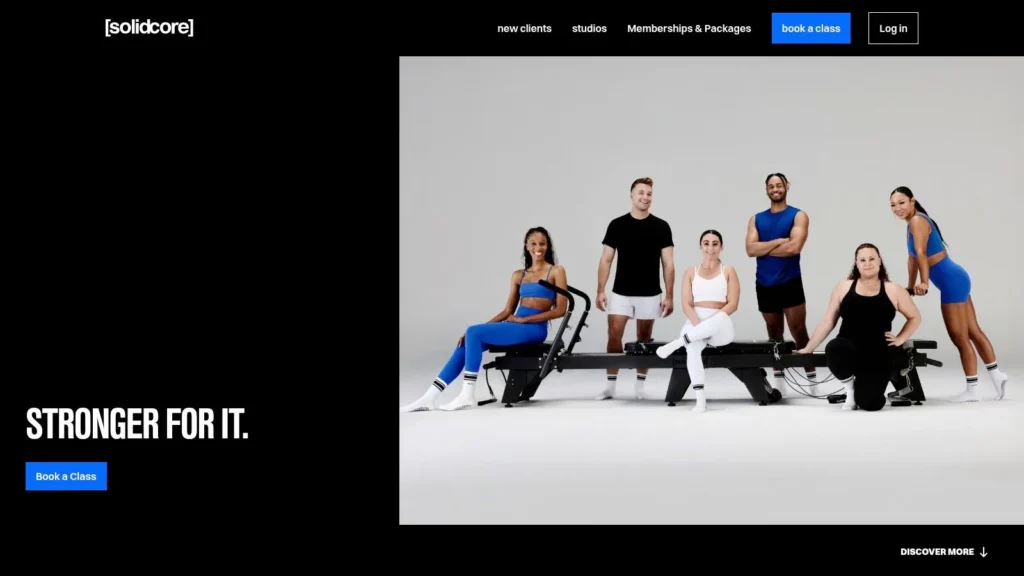
solidcore is not relaxing Pilates. It’s a slow, aggressive, time-under-tension workout on a custom reformer-style machine that forces you to stay present because every second of sloppy positioning costs you.
That’s the appeal. People who love solidcore usually love how honest it is. There’s nowhere to hide. Light weights won’t save you. Momentum won’t save you. You work through long, controlled efforts and earn every rep.
Who thrives here
This class fits people who like precision, discomfort, and a sense of measurable physical challenge. If you’re the kind of student who enjoys hearing form cues, adjusting by a few inches, and suddenly feeling a movement twice as hard, you’ll probably connect with it fast.
solidcore also benefits from decent Manhattan coverage, which makes it easier to use consistently if you live or work nearby. Membership perks vary by tier, but the more practical point is that the studio has enough presence to function like a routine, not a special occasion booking.
Coach’s note: Don’t judge your first solidcore class by how coordinated you feel. Judge it by whether the coaching makes you want to learn the machine.
The downside is familiar to anyone who’s tried machine-based boutique strength. There’s a learning curve, and the class can feel unforgiving early on. Recovery matters too, especially if you’re pairing this with running, lifting, or court sports. Before stacking hard sessions back to back, brush up on how to prevent sports injuries.
Top 7 NYC Exercise Classes Comparison
| Studio | Learning curve / Setup | Resources & Cost | Results | Ideal use cases | Key advantages |
|---|---|---|---|---|---|
| Barry’s | Low–medium, basic treadmill and weight intervals, easy to join | Premium pricing, region‑locked credits in NYC, full locker amenities | High calorie burn, improved interval conditioning and strength | HIIT enthusiasts who want a club‑like, city‑wide sweat session | Consistent programming, many locations, strong community and amenities |
| Tone House | Medium–high, athletic standards and progressive coaching | Published pricing, small‑group coaching, InBody testing, optional nutrition | Gains in speed, power and athletic conditioning; measurable progress | Competitive athletes and experienced exercisers seeking performance gains | Transparent pricing, structured programming, testing and recovery extras |
| SLT | Medium, Megaformer technique has a learning curve | Megaformer equipment, citywide memberships, published NYC pricing | Deep core strength, muscle definition, low‑impact strength gains | People seeking low‑impact strength and core-focused results | Effective time‑under‑tension work, clear pricing, multi‑studio access |
| Y7 Studio | Medium, vinyasa flow in low light with minimal demos | Infrared‑heated rooms, candlelit format, on‑demand subscription option | Improved flexibility, mindfulness, moderate calorie burn | Modern yogis who prefer vibe‑driven, nonjudgmental, hybrid practice | Distinctive low‑light vibe, focus‑enhancing environment, online classes |
| 305 Fitness | Low, beginner‑friendly dance moves and choreography | Party lighting, live DJs, varied pricing and studio amenities | High calorie burn, cardio adherence through fun, sustained effort | People who want dance‑cardio in a social, high‑energy setting | Very inclusive culture, fun DJ‑led format that improves cardio adherence |
| Rumble Boxing | Low–medium, basic boxing technique taught in class | Boxing bags, gloves/wraps (purchase/rental), premium boutique pricing | Full‑body conditioning, improved boxing technique and endurance | Newcomers to boxing seeking technique plus energetic cardio | Approachable technique coaching, structured rounds, full‑service studios |
| solidcore | Medium–high, custom reformer‑style machines require guidance | Custom machines, tiered memberships, premium class packs | Muscle endurance, definition, low‑impact strength gains | Those seeking intense, low‑impact muscle‑building workouts | Highly effective time‑under‑tension method, membership perks, multiple locations |
Your First Class Awaits
The best exercise class in NYC isn’t the one with the loudest brand or the toughest-looking room. It’s the one that matches your psychology closely enough that you’ll keep coming back when work runs late, the subway stalls, or motivation dips. That’s the key filter.
If you want reliable intensity and easy scheduling, Barry’s is a strong default. If you’re performance-driven and want athletic coaching, Tone House stands out. If your joints hate impact but you still want a serious challenge, SLT and solidcore both belong on your shortlist, with SLT feeling a bit more controlled and solidcore feeling more relentless. If atmosphere matters most, Y7 and 305 Fitness win for two very different reasons. One pulls you inward. The other pulls you onto the floor and keeps cardio from feeling like punishment. If you want to hit something and leave lighter than you arrived, Rumble is the easy call.
The city also gives you room to think beyond hype. Some people need premium boutique structure to stay engaged. Others do better with public options, independent neighborhood classes, or a mix of studio days and solo training. That flexibility is part of what makes New York such a strong fitness city. There’s a lane for almost every budget, energy level, and identity.
So keep the decision simple. Pick the class that fits the version of you that shows up. Not the fantasy version. Not the one who suddenly loves predawn training and extreme discipline. Focus on the authentic you.
Then book one session, take the intro offer if there is one, and pay attention to two things after class. Did the workout suit your body, and did the experience make you want to return? If the answer to both is yes, you’ve found something useful. Support the routine with better muscle recovery strategies, and let consistency do the rest.
If you like practical guides like this, explore more at maxijournal.com, where you’ll find approachable writing on health, sports, science, travel, culture, and everyday questions worth answering clearly.
Discover more from Maxi Journal
Subscribe to get the latest posts sent to your email.