In an era of constant information flow, podcasts have emerged as a powerful, accessible tool for personal and professional growth. Unlike traditional learning methods that require dedicated screen time or quiet spaces, audio learning integrates seamlessly into our lives, fitting into commutes, workouts, or household chores. This flexibility turns previously unused time into valuable moments of discovery.
The sheer volume of available shows, however, presents a challenge. With millions of podcasts vying for your attention, finding high-quality, engaging, and genuinely educational content can feel like searching for a needle in a haystack. This guide is built to solve that exact problem. We’ve done the heavy lifting for you, curating a definitive list of the best podcasts for learning. Each selection stands out for its exceptional production quality, expert-led insights, and remarkable ability to make complex topics both understandable and enjoyable.
Whether you’re looking to deepen your knowledge in science, economics, design, or simply satisfy a curious mind, this roundup will connect you with a podcast that fits your goals. Inside, you’ll find a detailed breakdown for each of the 7 top-tier shows, including:
- A concise summary of its core focus.
- Suggestions for signature episodes to get you started.
- Clear guidance on who the podcast is best suited for.
- Direct links and platform information to start listening immediately.
Our goal is straightforward: to help you filter through the noise and find audio content that truly enriches your understanding of the world. Let’s dive in and turn your listening time into a cornerstone of your educational journey.
1. Radiolab (WNYC Studios)
Radiolab has long been a benchmark for exceptional audio journalism, making it one of the best podcasts for learning about complex topics. It masterfully translates dense subjects in science, philosophy, and law into compelling narratives. The show’s core strength lies in its sound-rich production, which isn’t just for effect; it’s an integral part of the explanation, helping listeners grasp and remember abstract ideas.
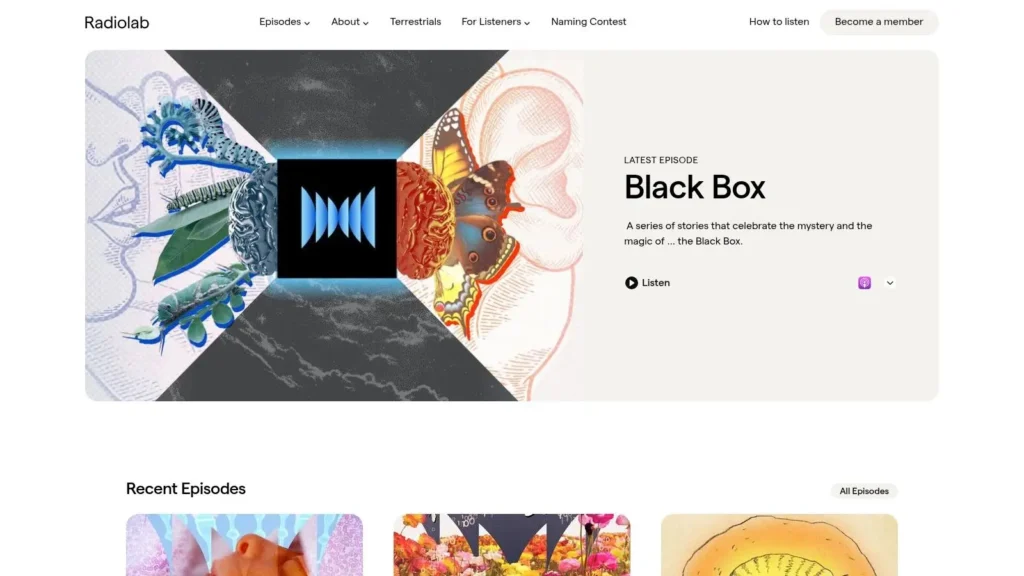
The podcast investigates “how the world works” questions through a blend of interviews, historical context, and inventive sound design. This approach makes even intimidating subjects feel approachable. For instance, an episode might explore the ethical maze of gene editing or the physics behind a specific color, all while weaving in personal stories that ground the science in human experience.
Why It Stands Out for Learners
What sets Radiolab apart is its dedication to clarity without sacrificing depth. Hosts Lulu Miller and Latif Nasser guide listeners through intricate topics with genuine curiosity, acting as proxies for the non-expert. This method avoids the dryness of a lecture, instead creating a shared journey of discovery. The show’s extensive back catalog, including the kid-friendly spinoff Radiolab for Kids, provides a vast library for continuous learning.
“Radiolab doesn’t just tell you about science; it makes you feel the wonder and confusion of discovery. The audio production is a character in itself, shaping your understanding of the story.”
Access and Practical Tips
- Cost: Radiolab is available for free with ads on all major podcast platforms, including Apple Podcasts, Spotify, and its home at WNYC Studios.
- Membership: An optional membership program called “The Lab” (around $7/month) provides an ad-free feed, complete archive access, and exclusive bonus content.
- Best For: Curious minds who enjoy narrative-driven deep dives and are not experts in the fields being discussed. It’s perfect for anyone who wants to understand the big ideas shaping our world.
- Pro Tip: Start with a topic that already interests you. The episode archive is vast, so searching for keywords like “genetics,” “space,” or “law” can help you find a relevant entry point. Episodes like “G” offer a fascinating look into the concept of general intelligence, while others demystify topics like quantum computing in an easy-to-understand way.
| Feature Breakdown | Details |
|---|---|
| Best For | Lifelong learners, science enthusiasts, story lovers |
| Main Topics | Science, philosophy, technology, law, ethics |
| Key Strength | Immersive sound design aids understanding and recall |
| Access | Free with ads; ad-free membership available |
Website: https://www.radiolab.org
2. Stuff You Should Know (iHeart)
With a simple yet effective premise, Stuff You Should Know (SYSK) has become a giant in the podcasting world and a perfect entry point for anyone looking to learn something new. Each episode features hosts Josh Clark and Chuck Bryant breaking down a single topic, from champagne and chaos theory to the history of clowns. Its approachable, conversational style makes it one of the best podcasts for learning about a massive range of subjects without feeling intimidated.
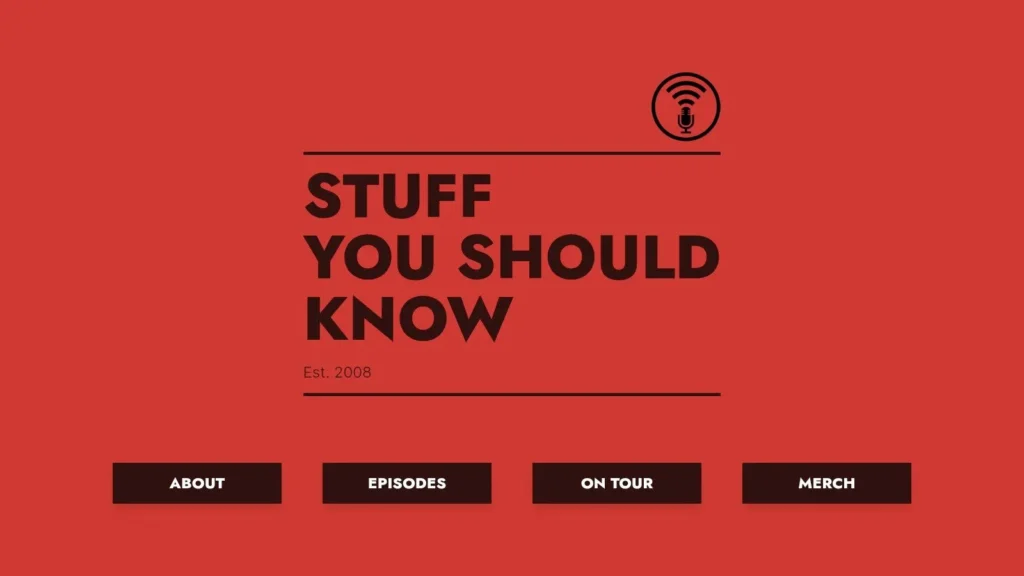
The podcast’s strength is its simplicity and sheer volume. With well over a thousand episodes in its back catalog, SYSK functions as a sprawling, on-demand encyclopedia of general knowledge. The hosts’ friendly banter and genuine curiosity guide listeners through the history, science, and cultural impact of their chosen subject, making complex ideas easy to follow and digest.
Why It Stands Out for Learners
What makes SYSK so effective for learning is its low barrier to entry. Josh and Chuck act as enthusiastic everymen, researching a topic and sharing what they’ve found in a way that feels like a conversation with knowledgeable friends. This beginner-friendly format removes the pressure of prior expertise, encouraging listeners to explore topics they might otherwise find too dense or academic. The incredible variety ensures there is an episode for literally any curiosity you might have.
“SYSK is the audio equivalent of falling down a Wikipedia rabbit hole, but with two charming guides to make the journey entertaining. You never know what you’ll learn next, but you know it will be interesting.”
Access and Practical Tips
- Cost: Stuff You Should Know is completely free and supported by ads. It’s available on all major podcast platforms, including Apple Podcasts, Spotify, and the iHeartRadio app.
- Membership: There is no universal ad-free subscription option. Ads are dynamically inserted and can sometimes interrupt the flow of the conversation.
- Best For: General knowledge seekers, curious beginners, and anyone who wants a casual, entertaining way to learn about history, science, society, and peculiar cultural phenomena.
- Pro Tip: Use the show’s extensive archive as your personal learning library. The official SYSK website has a “Random Episode” button that is perfect for discovering topics you didn’t even know you were interested in.
| Feature Breakdown | Details |
|---|---|
| Best For | Casual learners, beginners, topic explorers |
| Main Topics | History, science, technology, pop culture, society |
| Key Strength | Huge back catalog and highly approachable, conversational tone |
| Access | Free with ads on all major podcast apps |
Website: https://www.stuffyoushouldknow.com
3. TED Radio Hour (NPR/TED)
TED Radio Hour acts as a powerful amplifier for the “ideas worth spreading” that TED is known for, making it one of the best podcasts for learning about a wide range of subjects efficiently. The show cleverly curates multiple TED Talks around a single, compelling theme-like joy, anger, or the future of work-and weaves them together with new interviews and host-led reporting. This format provides a layered, multi-perspective exploration of big ideas.
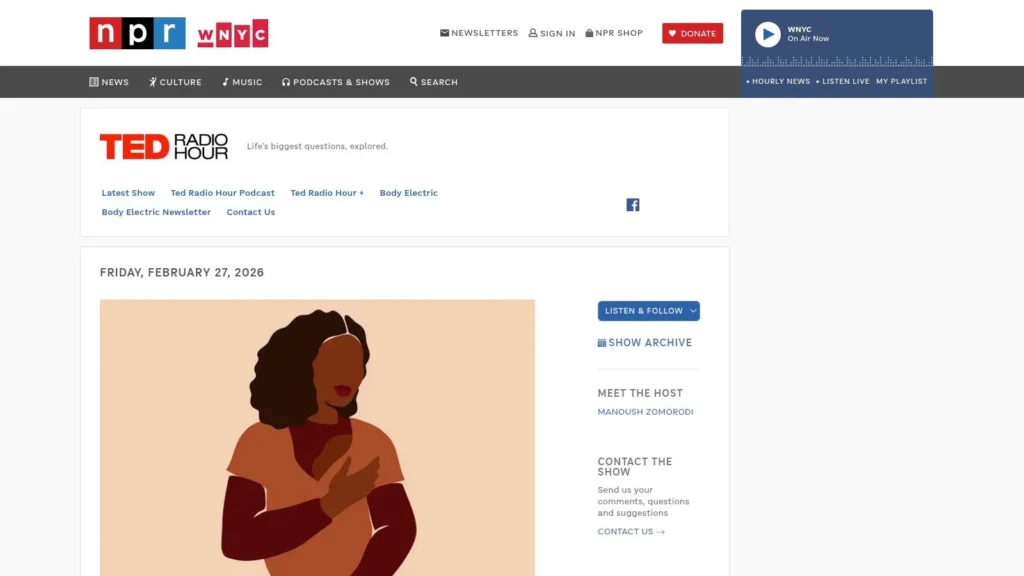
Each weekly episode functions as a journey through a concept, guided by host Manoush Zomorodi. The show takes snippets from famous talks and then expands on them, giving the original speakers a chance to elaborate or update their ideas. This structure transforms a collection of talks into a cohesive narrative, offering both breadth and context that you wouldn’t get from watching the talks individually.
Why It Stands Out for Learners
The primary strength of TED Radio Hour for learners is its exceptional curation. It sifts through the massive TED archive to connect dots you might not see on your own, packaging insights from psychologists, designers, scientists, and artists into one thematically coherent hour. This approach is perfect for sampling diverse fields and discovering new areas of interest without a significant time commitment. The show excels at making complex information digestible and builds strong mental connections by examining a topic from several expert viewpoints. The skills it nurtures are similar to those needed to improve your reading comprehension skills by analyzing a subject from multiple angles.
“TED Radio Hour is like a guided tour of the world’s most interesting minds. It doesn’t just replay talks; it builds a new, bigger idea out of them, making learning feel collaborative and dynamic.”
Access and Practical Tips
- Cost: The podcast is completely free with ads and available on all major podcast platforms, including Apple Podcasts, Spotify, and NPR’s website.
- Membership: NPR+ members (starting at $8/month) can listen to the show sponsor-free.
- Best For: Anyone short on time who wants a high-level overview of important ideas across science, society, and personal development. It’s ideal for kickstarting your curiosity on multiple fronts.
- Pro Tip: Use the episode archive, which is organized by broad themes like “Creativity,” “Privacy,” and “The Digital Age.” If you want to understand a big-picture concept, starting with a relevant theme is a more effective entry point than searching for a specific speaker.
| Feature Breakdown | Details |
|---|---|
| Best For | Curious generalists, time-crunched learners, idea synthesizers |
| Main Topics | Psychology, technology, design, society, science, creativity |
| Key Strength | Thematic curation of multiple expert talks into a single narrative |
| Access | Free with ads; ad-free membership available via NPR+ |
Website: https://www.npr.org/programs/ted-radio-hour
4. Freakonomics Radio (Freakonomics Radio Network/SiriusXM Podcasts)
Freakonomics Radio explores the hidden side of everything, applying economic principles and social science to explain real-world phenomena. It’s one of the best podcasts for learning how incentives, data, and unconventional thinking shape our lives. The show, hosted by journalist Stephen J. Dubner, takes the core idea of the best-selling book and turns it into a weekly investigation of human behavior, making it a staple for those interested in business, policy, and decision-making.
The podcast dismantles complex topics by looking for the underlying economic drivers, whether it’s the cost of a “free” lunch or the real reason people vote. Each episode is built on evidence-driven stories, combining interviews with Nobel laureates, CEOs, and researchers with Dubner’s sharp and accessible narration. This format makes intricate social and economic theories digestible and relevant to everyday life.
Why It Stands Out for Learners
What makes Freakonomics Radio so effective for learning is its consistent framework. By viewing the world through the lens of incentives, the show provides a powerful and reusable mental model for analyzing problems. Dubner doesn’t just present facts; he teaches you a new way to think. Listeners learn to question assumptions and look for the data behind the headlines, a critical skill in any field. The show’s high-quality production and consistent weekly cadence have built a foundation of audience trust over its long run.
“Freakonomics Radio trains you to see the world like an economist-without needing the PhD. It reveals the often-surprising incentives that drive the choices people make every day.”
Access and Practical Tips
- Cost: The podcast is available for free with ads on all major podcast platforms, including Apple Podcasts, Spotify, and the official Freakonomics website.
- Membership: Ad-free listening, along with bonus episodes and archive access, is available through a subscription to the SiriusXM Podcasts+ bundle, which includes the entire Freakonomics Radio Network.
- Best For: Analytical minds, aspiring business leaders, policy wonks, and anyone curious about why people behave the way they do. It’s ideal for listeners who appreciate data-backed arguments and a structured approach to problem-solving.
- Pro Tip: Explore the broader Freakonomics Radio Network to deepen your learning. Companion shows like No Stupid Questions and People I (Mostly) Admire offer different formats and perspectives, expanding on the core themes of the main show.
| Feature Breakdown | Details |
|---|---|
| Best For | Business professionals, students of social sciences, data-driven thinkers |
| Main Topics | Economics, behavioral science, business, public policy, decision-making |
| Key Strength | Provides a repeatable “incentives-based” framework for analysis |
| Access | Free with ads; ad-free subscription available via SiriusXM |
Website: https://freakonomics.com
5. 99% Invisible (SiriusXM/PRX)
99% Invisible trains you to see the hidden world of design, architecture, and infrastructure that shapes our lives. It’s one of the best podcasts for learning because it reveals the thought and history behind the mundane things we overlook every day, from traffic signals and inflatable men to the design of flags. The show demonstrates that everything around us is designed, and understanding that design helps us understand our world more deeply.
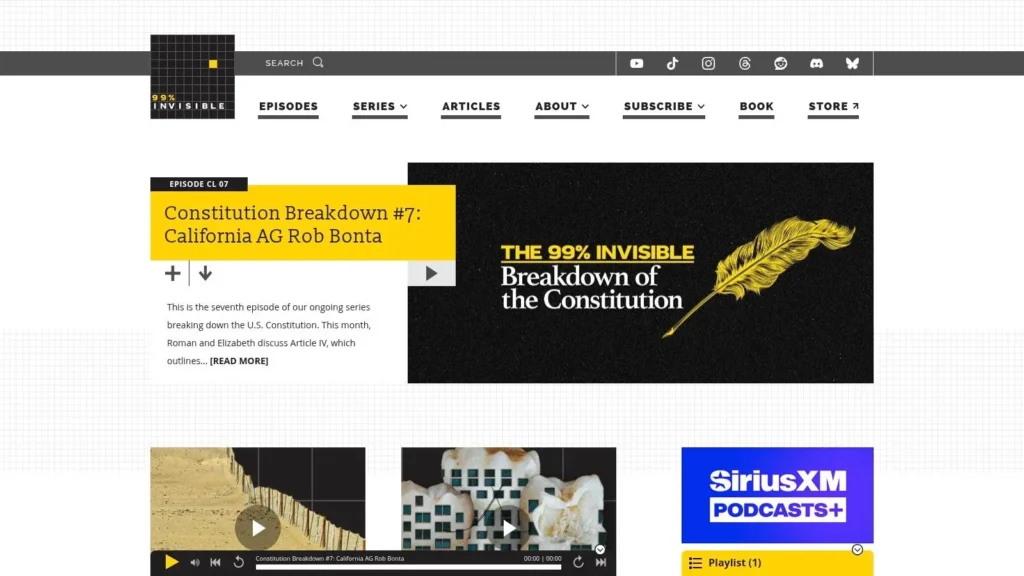
Hosted by Roman Mars, the podcast tells captivating stories about the built environment. Each episode is a tightly crafted narrative that explores a single topic, revealing the unseen forces that influence our movements, our decisions, and our very societies. The show’s polished production and compelling storytelling make complex subjects like urban planning and industrial design not just understandable, but fascinating.
Why It Stands Out for Learners
What makes 99% Invisible exceptional is its ability to build “design literacy” in its audience. It doesn’t just present facts; it changes how you perceive your surroundings. After listening, you’ll start noticing the details in buildings, the purpose behind public spaces, and the history embedded in ordinary objects. This newfound awareness is a powerful and permanent form of learning. The show’s extensive and well-organized back catalog, complete with transcripts, is a treasure trove for anyone interested in how things came to be.
“99% Invisible gives you a new lens through which to view the world. It’s a masterclass in storytelling that proves good design is about so much more than just aesthetics; it’s about solving human problems.”
Access and Practical Tips
- Cost: The podcast is available for free with ads on all major podcast platforms, including Apple Podcasts, Spotify, and the show’s website.
- Membership: Ad-free listening and early access to episodes are available through paid subscriptions like SiriusXM Podcasts+ or Apple Podcasts Channels.
- Best For: Anyone with a curious mind, especially those interested in design, architecture, urbanism, or history. No prior knowledge is needed.
- Pro Tip: Explore the episode archive by theme. The website organizes episodes into collections like “Sounds of the City” or “Objects of Affection,” which is a great way to dive into a specific area of interest. An episode like “Vexillology: The Study of Flags” is a classic entry point that perfectly captures the show’s spirit.
| Feature Breakdown | Details |
|---|---|
| Best For | Design novices, urban explorers, history buffs |
| Main Topics | Design, architecture, urban planning, infrastructure |
| Key Strength | Changes how you see and understand the everyday world |
| Access | Free with ads; ad-free and early access via subscriptions |
Website: https://99percentinvisible.org
6. Planet Money (NPR)
Planet Money makes economics not just understandable but genuinely entertaining, cementing its place among the best podcasts for learning about the hidden forces that shape our lives. It excels at taking a seemingly mundane topic, like the price of Christmas trees or the global t-shirt supply chain, and transforming it into a captivating story. The show’s magic is its ability to reveal the economic principles at play in almost any situation, all within short, digestible 15 to 30-minute episodes.
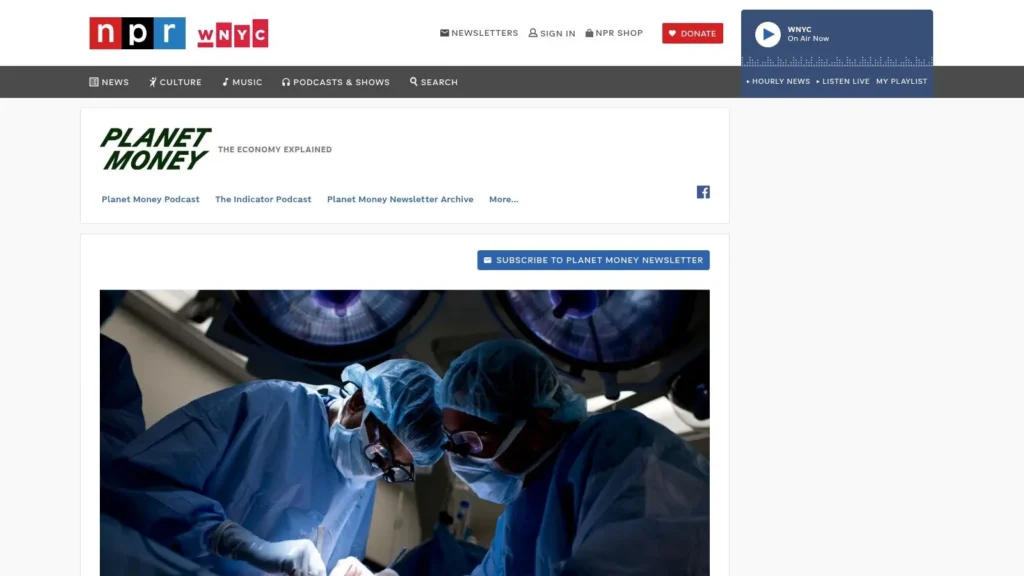
Twice a week, the award-winning team of journalists connects complex concepts in finance, business, and policy to everyday decisions and current events. They investigate questions you didn’t even know you had, such as “Why does it cost so much to call someone in prison?” or “How did we end up with so many streaming services?” This narrative approach makes abstract economic theories feel concrete and relevant.
Why It Stands Out for Learners
Planet Money is distinct because it teaches economics through curiosity and storytelling rather than charts and graphs. The hosts act as your guides, uncovering surprising connections and explaining systems with clarity and wit. Its brevity is a key feature; you can grasp a significant economic concept during a short commute or coffee break. Special series like Planet Money Summer School provide a more structured learning path, breaking down foundational economic ideas over several episodes.
“Planet Money is the friend who can explain a global financial crisis using a simple, brilliant analogy. It never feels like a lecture; it feels like you’re solving a puzzle together.”
Access and Practical Tips
- Cost: Planet Money is free with ads on NPR One, Apple Podcasts, Spotify, and other major podcast apps.
- Membership: Planet Money+ offers an ad-free feed, bonus episodes, and early access for subscribers. It is available through NPR Plus (starting at $8/month) or as part of an Apple Podcasts subscription.
- Best For: Anyone intimidated by economics or finance who wants a practical, story-driven introduction. It’s also great for those who want to stay informed on current events through an economic lens.
- Pro Tip: For a daily dose, check out its sister show, The Indicator from Planet Money, which offers bite-sized economic insights in under 10 minutes. Start with their famous “We Made A T-Shirt” series to see how the show follows a product around the globe to explain trade, manufacturing, and logistics.
| Feature Breakdown | Details |
|---|---|
| Best For | Economics novices, busy professionals, news followers |
| Main Topics | Economics, business, finance, public policy |
| Key Strength | Makes complex economic ideas accessible through short stories |
| Access | Free with ads; ad-free subscription (Planet Money+) available |
Website: https://www.npr.org/planetmoney
7. Ologies with Alie Ward
Ologies brilliantly lowers the barrier to scientific discovery, making it one of the best podcasts for learning about literally anything that ends in “-ology.” Host Alie Ward interviews a different expert, or “Ologist,” each week, covering disciplines from bryology (mosses) to thanatology (death and dying). The show’s charm comes from Ward’s infectious enthusiasm and her ability to ask the questions we’re all thinking, translating expert jargon into hilarious, relatable, and memorable explanations.
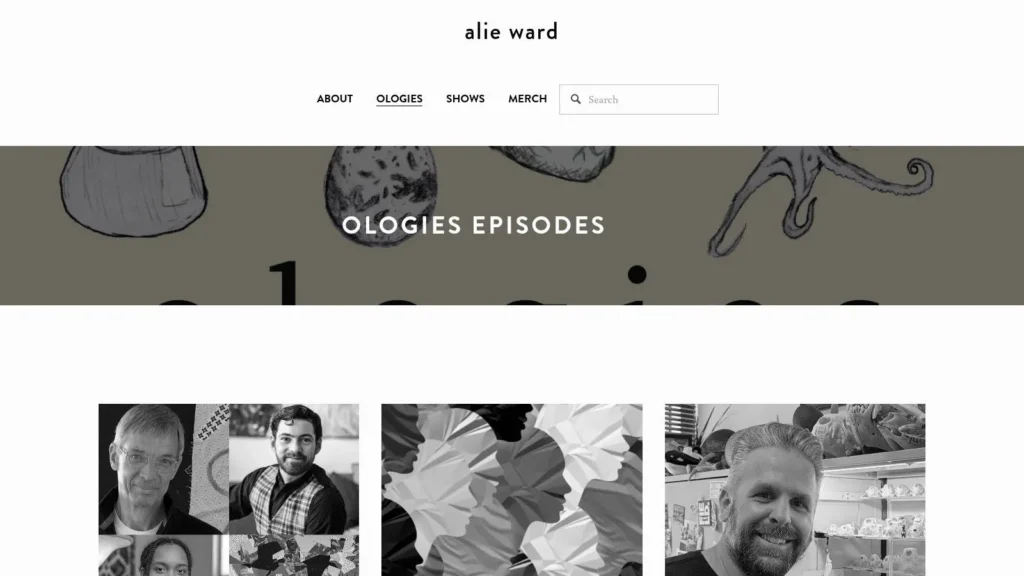
Each episode is a focused deep dive into a single scientific field, guided by someone who has dedicated their life to it. Ward’s interview style feels like a fun, meandering conversation with a brilliant friend, packed with humor, personal asides, and genuine moments of wonder. This approach makes even the most obscure or seemingly dry topics feel exciting and relevant, turning passive listening into an active learning experience.
Why It Stands Out for Learners
What makes Ologies so effective is its “curiosity-first” model. Instead of a rigid, formal structure, the podcast follows the natural flow of conversation, allowing for spontaneous discoveries and surprisingly poignant moments. Ward’s humor and plain-English questions make scientific concepts accessible without dumbing them down. The show proves that learning can be joyful and funny, which is a powerful tool for engagement and helps with strategies to improve your memory retention.
“Ask smart people dumb questions. That’s the mantra. Ologies makes you feel like you’re crashing a very cool, very nerdy party where the only entry requirement is a desire to learn something new.”
Access and Practical Tips
- Cost: Ologies is free with ads on all major podcast platforms, including Apple Podcasts, Spotify, and Stitcher.
- Membership: An optional Patreon membership (starting around $1/month) offers access to an ad-free feed, Q&A episodes called “Smologies,” and the ability to vote on future topics.
- Best For: Anyone with a curious mind who finds traditional science education intimidating. It’s perfect for sampling a wide variety of scientific fields or finding a new passion you never knew you had.
- Pro Tip: Don’t be afraid to pick an episode based on a funny-sounding title. The robust archive is best explored by following your curiosity, whether it’s “Potterology” (the science of Harry Potter) or “Mycology” (the study of fungi). The variety ensures there is always something new to discover.
| Feature Breakdown | Details |
|---|---|
| Best For | Science newcomers, curious minds, anyone who loves passionate experts |
| Main Topics | Every “-ology” imaginable, from biology and geology to more obscure fields |
| Key Strength | Humorous and friendly tone makes complex science approachable and fun |
| Access | Free with ads; Patreon membership for bonus content |
Website: https://www.alieward.com/ologies
Top 7 Learning Podcasts Comparison
| Podcast | Production / Listening Complexity | Resource Requirements (time / cost) | Expected Learning Outcomes | Ideal Use Cases | Key Advantages |
|---|---|---|---|---|---|
| Radiolab (WNYC Studios) | High production; immersive sound; requires focused listening | Deep conceptual understanding of complex science/ethics | Long-form learning, reflective listening, deep curiosity | Award-winning reporting; distinctive sound design; extensive archive | |
| Stuff You Should Know (iHeart) | Low production; conversational and easy to follow | ~45–60 min; free ad-supported; very large back catalog | Introductory overviews across many subjects | Casual learning, commutes, broad topic sampling | Approachable hosts; massive archive; accessible entry point |
| TED Radio Hour (NPR/TED) | Medium production; curated multi-speaker format; thematic flow | ~60 min weekly; free on major apps | Exposure to expert ideas and thematic synthesis | Sampling diverse expert talks; theme-focused listening | TED + NPR curation; coherent themes; expert voices |
| Freakonomics Radio (Freakonomics Radio Network) | Medium production; interview and data-driven; analytical tone | 30–60 min; free with ads; ad-free via SiriusXM bundles | Evidence-based reframing of social/economic issues | Business, policy learning, analytical thinking | Economics lens; trusted brand; consistent cadence |
| 99% Invisible (SiriusXM/PRX) | High production; narrative storytelling focused on design | 30–60 min weekly; free with ads; subscription options for ad-free/early access | Improved design and architecture literacy; observational skills | Design education, urban awareness, professional interest | Polished storytelling; strong design reputation; searchable transcripts |
| Planet Money (NPR) | Low-to-medium; short, story-driven explainers | 15–30 min twice-weekly; free with ads; Planet Money+ for extras | Practical, timely understanding of economics and policy | Quick learning, news-linked economics insights, time-constrained listening | Concise episodes; strong editorial standards; timely relevance |
| Ologies with Alie Ward | Low-to-medium; expert interviews with informal, humorous tone | 45–90 min varied; free with ads; Patreon for bonus content | Accessible domain-specific knowledge across scientific fields | Niche topic deep dives, science introductions, curiosity-driven learning | Wide variety of expert-led topics; friendly host; active listener community |
Turn Listening Into Learning: Your Next Steps
You’ve just explored a handpicked collection of some of the best podcasts for learning, from the narrative science of Radiolab to the hidden economic forces revealed in Freakonomics Radio. This list serves as your launchpad, but the real journey begins now. Transforming casual listening into a meaningful educational practice is the key to unlocking the true value these shows offer. It’s about building a system that turns your commute, workout, or quiet moments into opportunities for genuine growth.
The shows we’ve covered, including 99% Invisible, Ologies, and Planet Money, were chosen not just for their entertainment value but for their ability to spark curiosity and deliver substantial knowledge. The common thread among them is a commitment to deep, engaging storytelling. They prove that learning doesn’t have to be a chore; it can be a source of daily inspiration and wonder.
From Passive Listener to Active Learner
Moving from simply hearing a podcast to actively learning from it requires a small shift in mindset and a few deliberate actions. The goal is to create a feedback loop where you consume, process, and apply the information you encounter. This intentional engagement is what separates entertainment from education.
Here are a few practical strategies to get started:
- The “One Thing” Rule: After finishing an episode, take 30 seconds to identify the single most interesting or surprising idea you heard. Articulate it in your own words, either by jotting it down in a notebook, sending a voice memo to yourself, or simply stating it out loud. This simple act reinforces memory and comprehension.
- The Curiosity Trail: Podcast show notes are often treasure troves of additional resources. If an episode of Stuff You Should Know piques your interest in a historical event, check the notes for links to articles, books, or documentaries. Follow that trail. This turns the podcast into a starting point for deeper exploration rather than an endpoint.
- Schedule Your Learning: Treat your podcast listening like a class you want to attend. Designate specific times for it. Maybe TED Radio Hour becomes your Monday morning motivation, or Ologies accompanies your Wednesday evening walk. Creating a routine makes the habit stick.
Building Your Personal Podcast Curriculum
With so many excellent options, the paradox of choice can be paralyzing. The secret is to not try to listen to everything at once. Instead, build a personalized “curriculum” based on your current goals and interests.
Consider these factors when choosing your next listen:
- Define Your “Why”: Are you trying to gain a specific skill for your career, explore a new hobby, or simply stay informed about the world? Your purpose will guide your selection. For professional development, a show like Freakonomics Radio might be a great fit. For pure intellectual curiosity, Radiolab or Ologies are fantastic choices.
- Start Small: Pick just one or two podcasts from this list to start. Subscribe to them and commit to listening for a couple of weeks. Overloading your queue with too many new shows often leads to listening to none of them.
- Mix and Match Formats: Pay attention to episode length and style. Do you prefer the shorter, focused episodes of Planet Money for a quick dose of insight, or the longer, more immersive narratives of 99% Invisible? A good mix can keep your listening fresh and engaging.
Ultimately, the best podcasts for learning are the ones that you consistently listen to and think about. The path to becoming a more knowledgeable person is paved with small, consistent habits. By selecting shows that genuinely excite you and applying simple active-listening techniques, you can build an enjoyable and powerful learning routine that fits seamlessly into your life. The world’s greatest thinkers and storytellers are waiting. All you have to do is press play.
For more deep dives into the topics you hear about, from scientific breakthroughs to cultural trends, visit maxijournal.com. Our daily articles complement the knowledge you gain from podcasts, providing fresh perspectives and further reading on the subjects that capture your curiosity. Explore our content today at maxijournal.com to continue your learning journey.
Discover more from Maxi Journal
Subscribe to get the latest posts sent to your email.