You’re standing in the supplement aisle, or scrolling a store page, looking at tubs that all seem to promise the same thing. Zero sugar. Clean protein. Better recovery. Then you flip the label and find stevia, sucralose, “natural flavors,” gums, sugar alcohols, and a scoop size big enough to hide a lot of filler.
That confusion makes sense. “Sugar free” sounds simple, but it isn’t. Some powders are simple and useful. Others are technically sugar-free while still tasting intensely sweet, upsetting your stomach, or missing the protein quality you want.
The good news is that you don’t need to memorize brand rankings to find the best sugar free protein powder for your body. You need a system. Once you know how to read the label, evaluate the sweetener, and match the protein source to your diet and digestion, the marketing gets much easier to ignore.
Navigating the World of Sugar Free Protein
Interest in sugar-free protein powders isn’t a niche trend anymore. The global sugar-free protein powder market was valued at USD 4.67 billion in 2023 and is projected to reach USD 10.05 billion by 2032, with a CAGR of 8.89%, according to Wise Guy Reports’ sugar-free protein powder market analysis. That tells you two things. First, more people want protein without added sugar. Second, more brands are competing for your attention, which usually means more label games.
A beginner often starts with a simple question: “Which one is best?” A better question is: Best for what? Muscle gain, blood sugar awareness, a sensitive gut, a Whole30 reset, a dairy-free routine, or just an easy breakfast fix all point to different choices.
That’s why the best sugar free protein powder isn’t one universal tub. It’s the powder that fits your digestion, goals, ingredient standards, and daily habits.
Practical rule: If a powder only looks good from the front of the container, keep reading. The back label decides whether it belongs in your cart.
If you’re also building your overall nutrition and exercise routine from scratch, these fitness tips for beginners can help you pair protein choices with realistic habits.
Why shoppers get stuck
Most readers get tripped up in three places:
- The label language confuses “sugar-free,” “unsweetened,” and “no added sugar.”
- The sweet taste makes people assume sugar must be hiding somewhere.
- The protein source gets treated like a minor detail when it often matters most.
A useful buying process starts in this order:
- Read the sugar claim.
- Identify the sweetener.
- Check the protein source.
- Look for quality verification.
- Match the powder to your own body, not somebody else’s review.
Decoding What Sugar Free Really Means
You pick up a vanilla protein powder, see “sugar-free” on the front, then taste it later and it tastes like a milkshake. That does not mean the label is lying. It means sweetness and sugar are different things, and the label only tells part of the story.
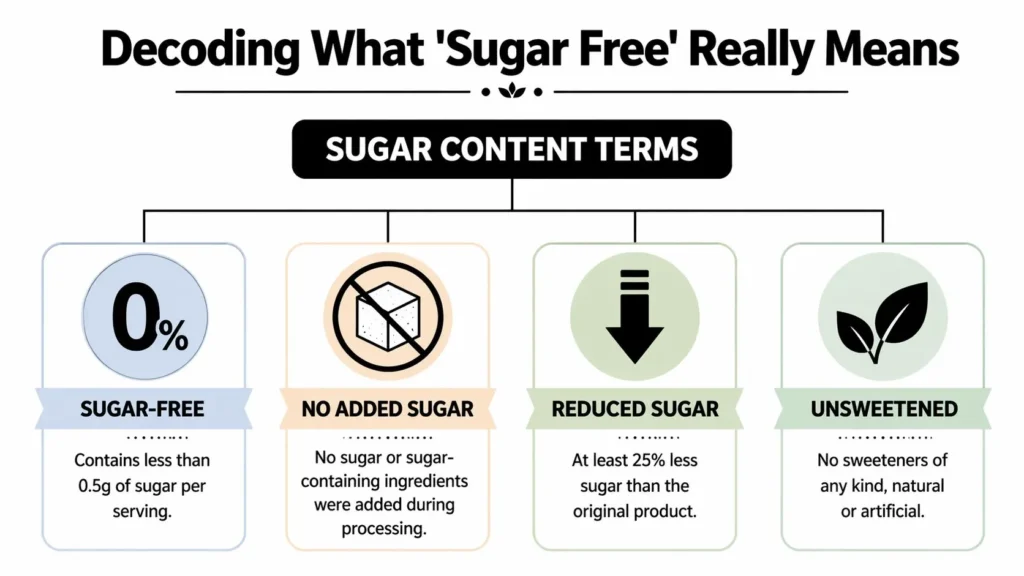
The front of the tub works like a headline. The nutrition panel and ingredient list are the full article. If you stop at the headline, you miss the details that matter for blood sugar, digestion, and how the powder fits your diet.
Four terms people mix up
These label claims sound similar, but they are not interchangeable.
| Label term | What it generally signals | What to check next |
|---|---|---|
| Sugar-free | Very low or zero sugar by labeling rules | Sweeteners used, total carbs, serving size |
| No added sugar | No sugar ingredient was added during processing | Naturally occurring sugars from dairy, fruit, or other ingredients |
| Reduced sugar | Less sugar than a standard version | What replaced the missing sugar |
| Unsweetened | No sweeteners added | Whether the product is also unflavored, and whether the taste works for you |
A practical example helps here. An unsweetened whey isolate may taste plain because nothing was added to make it sweet. A sugar-free chocolate blend may still taste very sweet because the brand used stevia, sucralose, monk fruit, or another non-sugar sweetener. Both can be low in sugar. They just get there in different ways.
What “sugar-free” does and does not tell you
“Sugar-free” answers one narrow question: how much sugar is in a serving. It does not tell you what creates the sweetness, whether the powder contains carb-based fillers, or whether your stomach will tolerate the formula well.
That is why two tubs with the same sugar claim can feel very different in real life.
One may contain only protein, cocoa, natural flavors, and stevia. Another may include maltodextrin, gums, creamers, and multiple sweeteners to improve texture and taste. On paper, both may look similar at a glance. In your gut, they may not.
Why total carbs and ingredients still matter
Sugar is one line on the label. It is not the whole story.
If you care about blood sugar, keto-style eating, or keeping formulas simple, check total carbohydrates right after you check sugars. Then read the ingredient list from top to bottom. Ingredients are listed by weight, so the first several entries usually tell you whether the product is mostly protein or padded with extras.
Watch for ingredients that can make a powder feel less straightforward than the front label suggests:
- Carb-based fillers, such as maltodextrin
- Creamer blends that add texture but also add complexity
- Multiple sweeteners layered together for a stronger dessert-like taste
- Large flavor systems with many additives packed into one “natural flavors” line
- Gums or thickeners that some people tolerate well and others do not
None of those ingredients is automatically bad. The point is accuracy. A sugar-free label tells you less than many shoppers assume.
If a powder tastes very sweet, verify the ingredient list before you judge it. Sweet taste alone does not tell you whether sugar is present.
A fast label-reading method
Use this quick scan in the store or on a product page:
- Check the serving size. A tiny scoop can make numbers look cleaner than they really are.
- Look at sugars and total carbohydrates together. That gives you a better sense of how “low sugar” the formula is.
- Read the first five ingredients. Those usually reveal the formula’s real structure.
- Identify the sweetener source. Save your opinion on “good” or “bad” until you know what is being used.
- Notice whether the product is sweetened, unsweetened, flavored, or unflavored. Those terms shape taste, digestion, and how easy it is to mix into your routine.
If you want the cleanest interpretation of sugar-free, start with unsweetened or unflavored powders. They are often easier to evaluate because fewer ingredients are doing hidden work behind the scenes.
The Sweetener Showdown Natural vs Artificial
Once you know the powder is sugar-free, the next question is more personal: What’s making it taste sweet, and how does your body handle it?
For some people, this is just about taste. For others, it’s about bloating, aftertaste, cravings, or repeat use over time. There isn’t one perfect sweetener. There is only the one you tolerate well enough to use consistently.
Common sugar-free sweeteners compared
| Sweetener | Type | Taste profile | Key considerations |
|---|---|---|---|
| Stevia | Natural sweetener | Sweet, sometimes herbal or slightly bitter | Works well for many people, but some notice an aftertaste |
| Monk fruit | Natural sweetener | Sweet, usually smoother than stevia | Often preferred in simpler formulas and noted for low-FODMAP suitability |
| Sucralose | Artificial sweetener | Very sweet, familiar dessert-like taste | Can make a powder taste more like a milkshake, but some people avoid it |
| Aspartame | Artificial sweetener | Clean sweetness in some products | Some shoppers prefer to avoid it altogether |
| Sugar alcohols | Sugar substitute category | Cooling or slightly artificial depending on type | Some people report gas, bloating, or digestive discomfort |
The key issue isn’t whether a sweetener is “natural” or “artificial” in a moral sense. It’s whether you digest it well, like the taste, and feel comfortable using it regularly.
Gut comfort matters more than marketing
Label reading becomes practical when considering that, according to Drink Wholesome’s review of sugar-free protein powder, emerging microbiome research links some artificial sweeteners to gut dysbiosis, while even natural options can cause issues. The same review notes that monk fruit is low-FODMAP, while stevia can trigger GI issues in up to 15% of sensitive users.
That doesn’t mean stevia is bad. It means sensitivity is individual.
If your stomach gets unsettled by “healthy” shakes, the problem may not be the protein at all. It may be the sweetener blend.
How to choose based on real life
You don’t need a lab test. You need a pattern.
- If you want the mildest ingredient profile, start with unflavored or unsweetened powder.
- If you have IBS tendencies or a sensitive gut, monk fruit is often a more comfortable place to start than a heavily sweetened blend.
- If aftertaste bothers you, sucralose-based products often taste more familiar, though some readers prefer to avoid them.
- If you use protein every day, consistency matters more than theory. Pick what you digest well enough to stick with.
A powder you tolerate and actually use beats a “cleaner” tub that sits unopened in your cabinet.
My practical nutrition advice is to test one variable at a time. Don’t switch protein source, sweetener, and flavor all at once. Otherwise you won’t know what caused the problem or the improvement.
Choosing Your Ideal Protein Source
You buy a sugar-free powder because the label looks clean, then the tub arrives and two problems show up fast. It either leaves you bloated, or it tastes fine but does little to keep you full or support recovery. That usually comes back to the protein source.
Sweetener choice shapes taste and gut comfort. Protein source shapes amino acid profile, digestion speed, texture, and how well the powder fits your diet. If sweeteners are the seasoning, protein is the main ingredient. Start there.
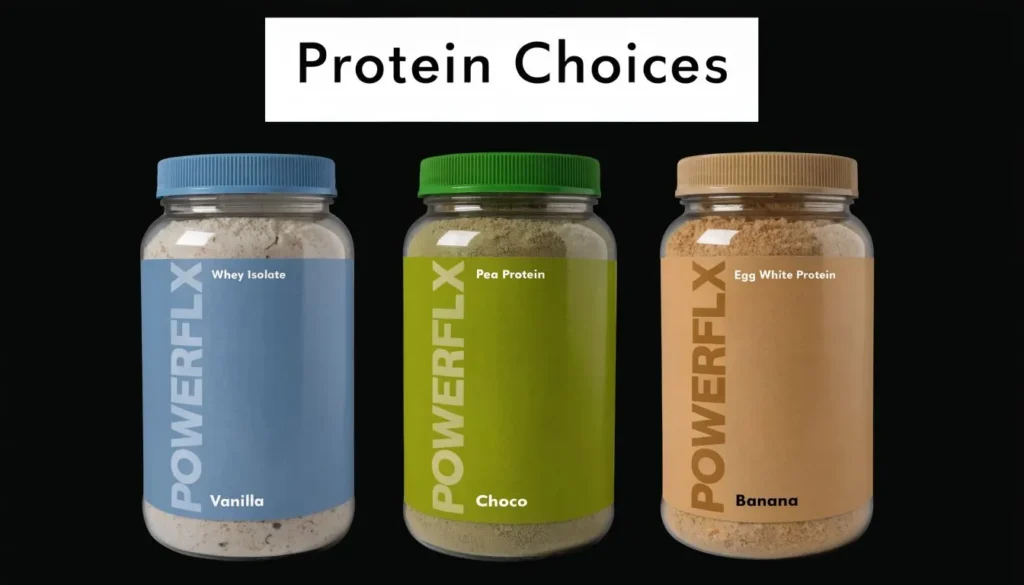
Whey and why isolate is popular
Whey isolate is common for a simple reason. It is a complete protein that scores highly for digestibility and amino acid quality. The U.S. dairy ingredient reference on whey proteins explains that whey proteins are high-quality, complete proteins, and isolate is the more filtered form. In practical terms, that usually means a high protein percentage with less lactose than whey concentrate.
For someone training hard, that matters. You want a protein your body can break down efficiently and use for repair. For someone with a sensitive stomach, the lower lactose content may matter even more.
Still, isolate is not automatically the right answer. A powder can look excellent on paper and still be a poor fit if dairy gives you cramps, congestion, or bloating.
The main protein types at a glance
Here is the label-reading shortcut I use with clients.
Whey isolate
Fast-digesting, complete, and usually lower in lactose than whey concentrate. Often a strong choice after training.Casein
Also milk-based, but slower to digest. It tends to thicken more in shakes and may keep you full longer.Egg white protein
Dairy-free and complete. Useful if you want an animal-based option without milk proteins.Pea protein
A practical plant option with decent texture in many blends. On its own, it may taste earthier than whey.Soy protein isolate
Complete and plant-based. Often one of the more effective vegan options for protein quality.Hemp, pumpkin, rice, and mixed plant blends
These can work well, but quality varies widely. Some are more about branding than protein density, so the label matters.
If you prefer a food-first approach on some days, this cottage cheese protein shake recipe and guide pairs well with the same decision process you would use for powders.
Protein amount is only part of the story
A big number on the front label is not enough. Two tubs can both claim high protein, yet one gives you a cleaner formula, better texture, or a better amino acid profile for your goal.
Typical powders often land in the low-20-gram range per serving, though the exact amount varies by brand and scoop size. The Cleveland Clinic overview of protein powder notes that many products provide about 20 to 25 grams per serving. That is why I tell readers to look at the ratio, not just the headline. Ask how much protein you get per scoop, what the protein source is, and what else is packed into that scoop.
A brief visual explainer can help if you want a simple overview of how protein powders fit into training and recovery.
Matching source to situation
Product lists often fall short. They rank tubs. You need a system.
Use this filter.
- If muscle recovery is the priority, start with whey isolate.
- If you react poorly to dairy but still want an animal protein, look at egg white protein.
- If fullness matters more than speed, casein may suit you better.
- If you are vegan or dairy-free, choose a plant protein that names the source clearly, such as pea or soy isolate, instead of a vague proprietary blend.
- If your gut is sensitive, simpler formulas usually make troubleshooting easier because there are fewer possible triggers.
Best-use shortcut: Pick the protein source first, based on digestion and diet. Pick the flavor second. That order prevents a lot of expensive mistakes.
A Five-Point Checklist for Quality
A protein tub can look clean on the front and still be sloppy on the back. The label is your filter. Use it the way you would use an ingredient list on any packaged food. Start with what the product is made of, then check whether the company gives you any reason to trust its claims.
1. Look for third-party testing
Independent testing matters because protein powders are concentrated products. If the raw ingredients contain contaminants, concentration can magnify the problem. Consumer Reports has highlighted concerns about heavy metals in some protein powders, which is why a brand that shares third-party testing or certification details earns more trust than one that only says words like “pure” or “clean” (Consumer Reports on protein drinks and powders).
Look for clear proof, not vague reassurance. NSF Certified for Sport, Informed Choice, and similar programs are useful signals because they show an outside group checked something the brand said.
2. Keep the ingredient list short
Short formulas are easier to judge and easier to tolerate. You should be able to spot the protein source first, identify the sweetener if there is one, and quickly see whether the product relies on gums, fibers, or “natural flavors” to make the texture and taste work.
This also helps with troubleshooting. If bloating shows up after your shake, a formula with six ingredients is much easier to investigate than one with sixteen.
3. Check protein density
Now do a quick math test. Divide the grams of protein by the serving size in grams. That gives you a rough sense of how much of the scoop is protein rather than flavoring, thickener, fat, or filler.
As a practical benchmark, many plain or lightly flavored powders cluster around the low-to-mid 20 gram range of protein per serving, especially whey isolate products, while broader meal-style formulas often dilute that number. The Cleveland Clinic notes that many protein powders provide about 20 to 25 grams per serving, which is a useful reality check when a front label makes a scoop sound more impressive than it is (Cleveland Clinic guide to choosing a protein powder).
4. Watch for red-flag wording
Certain phrases deserve a slower read.
- “Proprietary blend” can hide how much of each ingredient you are getting
- “Natural flavors” near the top of the list may signal a more engineered formula than the package suggests
- Long add-on lists of fibers, enzymes, oils, and thickeners can turn a simple protein into a digestion experiment
- Front-label purity claims should match the ingredient panel and any testing details
If you plan to use your powder in smoothies, oats, or high-protein healthy meal prep ideas, this step matters even more. Extra flavor systems and gums can change both digestion and texture.
5. Compare protein to calories
Calories are not the enemy. They are just part of the job description. A powder meant to act like a lean protein add-on should give you a strong protein return for the calories you spend. A powder meant to function more like a snack or mini-meal can justify more calories if those extras serve a purpose.
Use this checkpoint to match the product to the role. If you want a post-workout shake, a cleaner protein-to-calorie ratio often makes sense. If you want something more filling between meals, a broader formula may fit better.
Compare tubs the way a clinician reads a chart. Check testing, ingredient clarity, protein density, label wording, and calories in relation to the job you need the powder to do.
Best Picks for Your Specific Diet and Goals
The best sugar free protein powder changes depending on who’s using it. A bodybuilder, a low-carb eater, and someone with IBS may all need different formulas even if they’re shopping the same shelf.

Best for maximum muscle support
If training performance and recovery are your top priorities, whey isolate is usually the strongest starting point. It offers a complete amino acid profile and tends to digest quickly, which is why many lifters prefer it after workouts.
If dairy is an issue, egg white protein is a practical second option.
Best for sensitive stomachs
For a touchy gut, simplicity usually wins. Look for:
- Unflavored formulas with fewer ingredients
- Monk fruit over more aggressive sweetener blends
- Egg white or simpler dairy-free proteins if whey tends to bother you
A lot of people blame “protein powder” when the problem lies with the flavoring system, gums, or sweetener combination.
Best for keto or low-carb routines
Your priority here is usually minimizing sugar and unnecessary carbohydrate load. A lean whey isolate or a plain egg white protein often fits best. You want the label to be boring in a good way.
If you use powder in actual meals instead of just shakes, these healthy meal prep ideas can help you turn protein into something more filling and sustainable.
Best for Whole30, AIP, and carnivore-style eating
Many “sugar-free” products often fall short. According to PaleoPro’s breakdown of sugar-free protein powder for niche diets, Whole30 does not allow sweeteners such as stevia, and carnivore dieters must avoid plant-derived additives including cocoa or vanilla. That makes unflavored powders from sources like beef or egg white the most suitable options.
This is an important distinction. A powder can be sugar-free and still be non-compliant for your diet.
Best if you care most about clean ingredients
Some shoppers don’t need the sweetest shake or the trendiest brand. They want the shortest list and the least drama. For that goal, focus on:
- Unflavored or unsweetened products
- One primary protein source
- Clear third-party testing
- No proprietary blends
The stricter your diet, the less useful a generic “top 10 protein powders” list becomes. Diet-specific label reading matters more than popularity.
Frequently Asked Questions
Is unsweetened the same as sugar-free
Not always. Sugar-free means the product has very little or no sugar by labeling standards. Unsweetened usually means no sweeteners were added at all. An unsweetened powder is often the more literal “nothing extra” choice.
Can I use sugar-free protein powder if I have diabetes
Potentially, yes, but the label still matters. A product can be sugar-free and still include ingredients that you may want to evaluate carefully. Look at the full nutrition panel, not just the sugar line, and talk with your healthcare provider if you’re managing medications or blood sugar targets.
Why does my powder taste chalky
Usually because the formula is simpler, less sweet, or based on a protein that naturally has a drier texture. Unflavored products, egg white powders, beef isolates, and some plant proteins can taste more chalky than dessert-style whey blends. That isn’t always a sign of poor quality. It often means fewer texture enhancers were added.
Try blending instead of shaking, or mixing the powder into oatmeal, yogurt, or a smoothie rather than plain water.
Why does my protein powder clump
Clumping usually comes from one of three things: minimal emulsifiers, poor mixing method, or the powder absorbing moisture from the air. Use a blender bottle, add liquid first, and store the container tightly closed.
Are sugar alcohols safe to have every day
Some people tolerate them well. Others don’t. The main issue is often digestive comfort, especially if you already deal with bloating or IBS-type symptoms. If you notice gas, cramping, or loose stools, try a powder without sugar alcohols and compare how you feel.
Should I choose flavored or unflavored
Choose based on consistency. If a flavored product helps you use protein regularly and you tolerate the sweetener well, it may be the better option for you. If you want maximum control over ingredients, unflavored is usually easier to evaluate and easier to fit into different meals.
What’s the simplest way to pick one
Use this short decision order:
- Pick the protein source your body handles best.
- Choose the sweetener profile you tolerate.
- Check for third-party testing.
- Prefer a shorter ingredient list.
- Ignore flashy front-label claims unless the back label supports them.
If you enjoy practical, evidence-minded guides like this one, explore more approachable health, fitness, and science writing at Maxi Journal. It’s a good place to find clear articles that help you make sense of complex topics without the hype.
Discover more from Maxi Journal
Subscribe to get the latest posts sent to your email.