Welcome to an essential guide on classroom management strategies for teachers. In today’s schools, managing a classroom is less about enforcing rigid control and more about cultivating a thriving, supportive ecosystem where every student can succeed. The difference between a chaotic environment and an engaged one often lies in the proactive strategies teachers implement daily. This is not just about discipline; it is about building relationships, establishing clear routines, and meeting student needs before disruptions even begin.
This article moves beyond generic advice to provide a detailed roundup of 10 evidence-based, actionable strategies. For each one, you will find:
- A clear description of the core concept.
- Specific steps for implementation.
- Sample scripts and real-world examples.
- Adaptations for different grade levels.
- Troubleshooting tips for common challenges.
Whether you’re a first-year teacher seeking foundational skills or a veteran educator looking to refresh your approach, this guide will equip you with practical tools to reduce stress and maximize instructional time. You’ll learn effective classroom management strategies for teachers that create a positive learning community for the 2026 school year and beyond. Let’s explore the techniques that transform classrooms from places of simple management to places of genuine empowerment and learning.
1. Positive Reinforcement and Rewards System
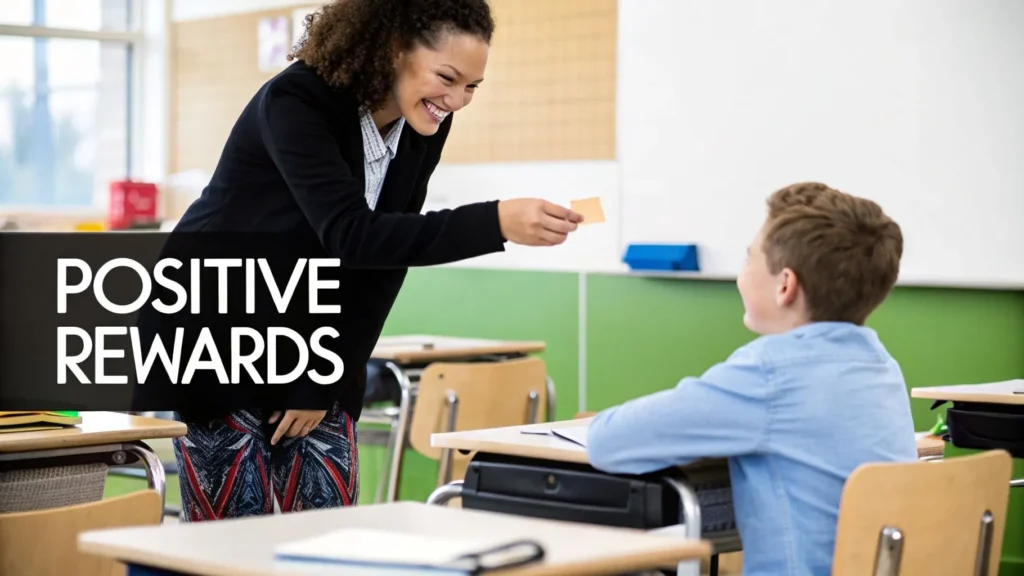
At its core, a positive reinforcement strategy is about proactively catching students doing things right, rather than reactively addressing misbehavior. This approach, rooted in behavioral psychology principles from figures like B.F. Skinner, shifts the classroom focus from punishment to praise. As one of the most foundational classroom management strategies for teachers, it helps build a positive, supportive environment where students feel seen and motivated. The goal is to acknowledge desirable actions with meaningful feedback, encouraging students to repeat those behaviors.
How to Implement This Strategy
Effective implementation requires consistency and clarity. Students need to understand exactly what behaviors are being rewarded and why.
- Establish a Token Economy: Create a system where students earn points, classroom currency, or stickers for specific actions like helping a peer, staying on task, or showing kindness. These tokens can be exchanged for tangible rewards or privileges.
- Create Recognition Boards: Dedicate a bulletin board to celebrate student achievements. Post “Student of the Week” certificates, positive notes from the teacher, or photos of students demonstrating school values.
- Offer Privilege-Based Rewards: Instead of just material items, offer rewards like extra recess, free reading time, lunch with the teacher, or a homework pass. These non-tangible rewards are often highly motivating.
Actionable Tips for Success
To maintain the system’s effectiveness, it must be managed thoughtfully. The aim is to build intrinsic motivation over time, not create a dependency on external rewards.
Be specific with your praise. Instead of saying, “Good job,” try, “I really appreciate how you quietly helped Sam clean up his crayons without being asked.” This clarifies which behavior is being valued.
- Make Rewards Age-Appropriate: Younger students might appreciate stickers or small toys, while older students may prefer extra technology time or the ability to listen to music while working.
- Ensure Equitable Distribution: Pay close attention to ensure all students have an opportunity to earn rewards. This prevents the system from only benefiting already high-achieving or well-behaved students.
- Track Reward Frequency: Keep an eye on how often rewards are given. If they become too common, they can lose their impact. Gradually increase the effort required to earn them as the year progresses.
2. Establishing Clear Expectations and Rules
Establishing clear expectations is a foundational classroom management strategy that prevents misbehavior before it starts. By explicitly defining and communicating rules and consequences from day one, teachers create a predictable and structured environment. This approach, central to frameworks like PBIS and the work of Fred Jones, gives students a clear roadmap for success. It shifts the focus from reacting to problems to proactively building a culture where every student understands what is expected of them and how to contribute positively.
How to Implement This Strategy
The key is to make expectations visible, understandable, and shared. A collaborative approach often fosters greater student investment in upholding the classroom community’s standards.
- Co-Create a Classroom Constitution: Involve students in the rule-making process. Brainstorm ideas together and frame them positively (e.g., “Respect others’ ideas” instead of “Don’t be mean”). This gives students ownership over their environment.
- Use Visual Behavior Charts: Especially for younger grades, visual aids are essential. Create charts with pictures and simple text that illustrate desired behaviors like “Raise a quiet hand” or “Keep hands to yourself.”
- Develop Digital Expectation Posters: For online or hybrid classes, create a digital document or slide that outlines rules for video calls, chat box usage, and online assignments. Review it at the beginning of each session.
Actionable Tips for Success
Rules are only effective if they are consistently taught, referenced, and reinforced. They should be living documents that guide daily classroom life.
Frame your rules around what students should do. Positive framing encourages a growth mindset and is easier for students to internalize than a list of prohibitions. For example, change “No running” to “Use walking feet in the classroom.”
- Keep Rules Simple and Limited: Aim for 3-5 broad, positively stated rules that cover most situations. Too many rules can be overwhelming and difficult to remember.
- Review and Practice Regularly: Don’t just post the rules and forget them. Review them daily at first, then weekly. Role-play scenarios to help students practice applying the rules in different contexts. This helps them develop good study habits by creating clear procedural memory.
- Connect Rules to a “Why”: Explain the reasoning behind each rule. When students understand that rules exist to ensure safety, fairness, and a productive learning environment for everyone, they are more likely to follow them.
3. Building Positive Teacher-Student Relationships
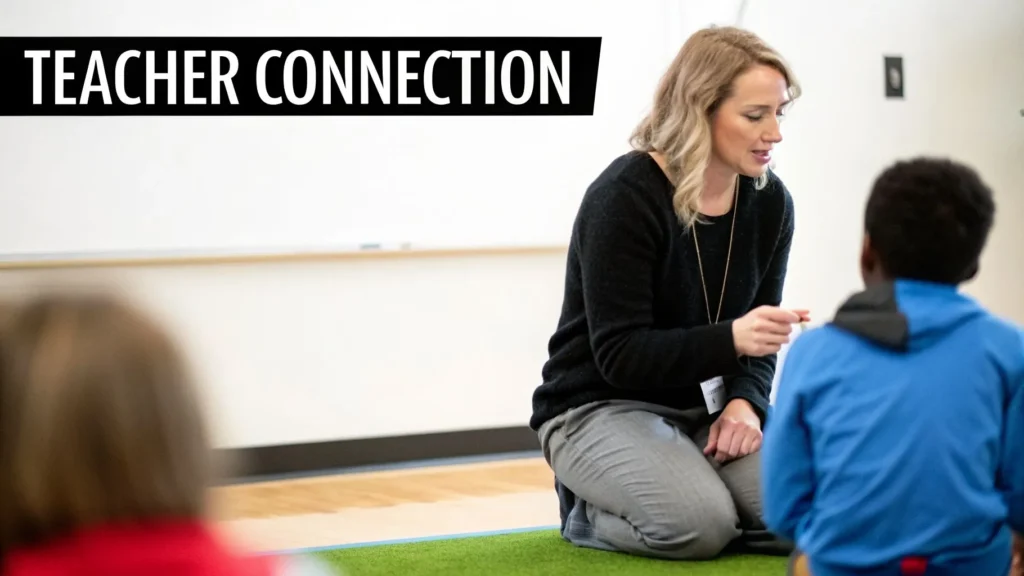
This strategy prioritizes the human connection between educator and student, establishing a foundation of trust, empathy, and mutual respect. Pioneered by figures like Haim Ginott and Nel Noddings, this approach posits that strong relationships are a cornerstone of effective classroom management. Students who feel valued, seen, and understood by their teacher are more likely to cooperate, engage in learning, and take academic risks. It shifts the dynamic from one of compliance to one of collaboration.
How to Implement This Strategy
Building authentic connections requires intentional, consistent effort. The goal is to show students that you care about them as individuals, not just as learners.
- Implement Morning Greetings: Stand at your classroom door and greet each student by name with a handshake, high-five, or simple “hello.” This small ritual sets a positive tone for the day.
- Use Interest Inventories: At the beginning of the year, have students fill out a short survey about their hobbies, favorite music, and what they enjoy outside of school. Refer back to this information in conversations.
- Schedule One-on-One Conferences: Dedicate brief, regular moments to check in with students individually. These chats can address academic progress, social concerns, or simply be a time to connect.
Actionable Tips for Success
Maintaining these relationships is an ongoing process that builds a positive classroom culture. The same principles that foster connection in the classroom are also effective in professional settings, showing that understanding ways to boost employee morale can offer insights for student engagement.
Show genuine interest by being present and available during non-instructional times like recess or lunch. These informal moments are often where the strongest bonds are formed.
- Learn and Use Names Correctly: Consistently using a student’s preferred name and pronouncing it correctly is a fundamental sign of respect.
- Celebrate Small Wins: Acknowledge personal progress and effort, not just top grades. Celebrating milestones, both academic and personal, shows you are paying attention.
- Follow Through on Promises: Your reliability builds trust. If you promise to look into a student’s question or bring a resource for them, make sure you do it.
4. Proximity and Non-Verbal Communication
Sometimes the most powerful classroom management strategies for teachers are the quietest. Proximity and non-verbal communication involve using your physical presence and body language to manage student behavior without disrupting the flow of instruction. This technique, highlighted in frameworks like Fred Jones’s Tools for Teaching, allows a teacher to redirect off-task students, de-escalate minor issues, and maintain focus simply by moving around the room. It’s a subtle yet firm approach that communicates awareness and control without a single word.
How to Implement This Strategy
Mastering this strategy is about being intentional with movement and signals. The goal is to address disruptions before they gain momentum, making your presence a gentle but constant guide.
- Establish Clear Non-Verbal Signals: At the beginning of the year, agree on a set of signals with your class. This could be a raised hand to quiet the room, a finger to the lips for silence, or a specific hand gesture meaning “get back to work.”
- Practice “Classroom Choreography”: Plan your movement during lessons. Walk around the entire classroom, pausing near different groups of students. This constant, unpredictable movement keeps students engaged and minimizes opportunities for distraction.
- Use Eye Contact and Facial Expressions: A simple, direct look can often be enough to stop a side conversation. A small smile or nod can affirm a student who is on task, while a more neutral or serious expression can signal disapproval of a behavior.
Actionable Tips for Success
To make this strategy work, your movements must be purposeful, not random. It’s about proactive positioning rather than reactive chasing.
Combine proximity with a strategic pause. If a few students are talking, walk toward them and briefly stop speaking. The combination of your presence and the sudden silence is incredibly effective at regaining the room’s attention.
- Move Proactively, Not Reactively: Identify areas in the room where students tend to get distracted. Make a point to stand or walk by these “hot spots” frequently to prevent issues before they start.
- Avoid Hovering: Standing too close to a student for too long can feel intimidating or cause anxiety. The key is to be a mobile presence, pausing briefly near a student to redirect, and then moving on.
- Position Yourself for Visibility: When teaching, stand where you can see every student. During independent work, circulate from a position that gives you a clear line of sight across the classroom, allowing you to anticipate and address issues quickly.
5. Transitions and Classroom Procedures
Most classroom disruptions don’t happen during a lesson; they happen in the unstructured moments between activities. This strategy, popularized by educators like Harry Wong, focuses on creating smooth, efficient transitions through clearly defined and practiced procedures. As one of the most effective classroom management strategies for teachers, establishing routines for common activities reduces confusion, minimizes wasted time, and prevents the behavioral issues that arise from idleness and uncertainty. The goal is to make daily operations so automatic that learning can happen seamlessly.
How to Implement This Strategy
Successful implementation hinges on explicitly teaching, modeling, and practicing every procedure until it becomes second nature for students.
- Design Beginning-of-Class Routines: Create a clear, multi-step process for what students should do the moment they enter. For example: hang up your coat, turn in homework to the designated basket, get your materials, and begin the warm-up activity on the board.
- Establish Clear Transition Signals: Use a consistent signal to alert students that it’s time to switch tasks. This could be a chime, a timer going off, or a simple verbal cue like a 3-2-1 countdown.
- Create End-of-Day Procedures: Outline expectations for packing up, cleaning personal and shared spaces, and dismissal. An “exit ticket” where students answer a quick question before leaving can provide a structured end to the lesson.
Actionable Tips for Success
Procedures are not a “set it and forget it” tool. They require ongoing maintenance and reinforcement to remain effective throughout the school year.
Treat procedures like you would any academic subject. You must teach, practice, and assess them. Don’t assume students know what to do just because you told them once.
- Practice, Practice, Practice: During the first weeks of school, dedicate significant time to walking through each procedure. Have students role-play the correct way to line up, turn in papers, or get help.
- Use Visual Supports: Post simple, easy-to-read charts or posters with pictures and text that outline the steps for key routines. This is especially helpful for younger students and English language learners.
- Re-teach After Breaks: After a long holiday or summer break, take time to review and practice important procedures again. This helps students get back into the rhythm of the classroom quickly.
6. Restorative Practices and Conflict Resolution
Restorative practices represent a significant shift from traditional, punitive discipline to a relationship-centered approach focused on repairing harm. Instead of asking “What rule was broken?” this strategy asks “Who was harmed and what can be done to make things right?” This method, with roots in the work of figures like Howard Zehr, helps build a strong classroom community, teaches accountability, and equips students with vital problem-solving skills. As one of the more profound classroom management strategies for teachers, it prioritizes dialogue and understanding over punishment.
How to Implement This Strategy
Successful implementation builds a culture of empathy and responsibility. It moves from small, proactive measures to larger, responsive interventions.
- Introduce Peacemaking Circles: Regularly hold class meetings in a circle to discuss community issues, celebrate successes, or solve low-stakes problems. This builds the foundation for using circles to address more serious conflicts.
- Facilitate Restorative Conferences: When a significant conflict or misbehavior occurs, bring the affected parties together. Guide a conversation where each person can share their perspective, understand the impact, and collaboratively decide on a solution to repair the harm.
- Establish Reintegration Meetings: After a student returns from a suspension or extended absence, hold a small circle. This allows the student to reconnect with the community and helps everyone move forward productively.
Actionable Tips for Success
Developing a truly restorative classroom is a gradual process that requires patience and commitment from both the teacher and the students.
Focus on key restorative questions to guide conversations: “What happened?” “Who has been affected by what you did and how?” and “What do you think needs to happen to make things right?”
- Start with Staff Training: Ensure you and your colleagues have a shared understanding of restorative principles before implementing them. Strong leadership skills for managers and teachers are crucial for guiding this cultural shift.
- Begin with Low-Stakes Practices: Don’t wait for a major incident. Use morning meetings or community circles to build trust and practice the communication skills needed for tougher conversations.
- Train Peer Facilitators: Empower students by training them to lead some of the low-stakes circles. This fosters student ownership and develops leadership within the classroom.
7. Differentiation and Individualized Learning
Differentiation is a proactive strategy that prevents many behavior problems by meeting students where they are. This approach recognizes that a one-size-fits-all lesson can lead to boredom for advanced learners and frustration for those who are struggling, both of which can cause disruptive behavior. Championed by educators like Carol Ann Tomlinson, differentiation involves tailoring instruction to individual student needs, learning styles, and readiness levels. As one of the most effective classroom management strategies for teachers, it keeps students engaged by providing an appropriate level of challenge.
How to Implement This Strategy
Effective differentiation requires teachers to vary the content (what students learn), process (how they learn), and product (how they show what they’ve learned) based on student data.
- Offer Tiered Activities: Create stations or assignments with varying levels of difficulty. For example, a math center could have three tiers of problems ranging from foundational to advanced, allowing students to work at their own pace.
- Provide Student Choice: Give students options in how they demonstrate their knowledge. They might choose between writing an essay, creating a presentation, recording a podcast, or designing a model to show their understanding of a topic.
- Use Flexible Grouping: Group students in various ways for different activities. Use reading groups based on skill level for guided reading, but then use mixed-ability groups for collaborative science experiments.
Actionable Tips for Success
To make differentiation manageable, start small and build your capacity over time. The goal is to create a classroom where every student feels both supported and stretched.
Use pre-assessments and formative check-ins to gain a clear picture of what your students know and what they need. This data is the foundation of any successful differentiation plan.
- Start with One Subject: Don’t try to differentiate everything at once. Begin by modifying activities in a single subject area, like reading or math, and expand as you become more comfortable.
- Teach Independence: Explicitly teach students how to work independently, manage their time, and use the resources available at different stations or centers. This is key to a smoothly run differentiated classroom.
- Involve Students in Goal-Setting: Help students understand their own learning profiles and set personal academic goals. This empowers them to take ownership of their education and progress.
8. Movement Breaks and Physical Activity Integration
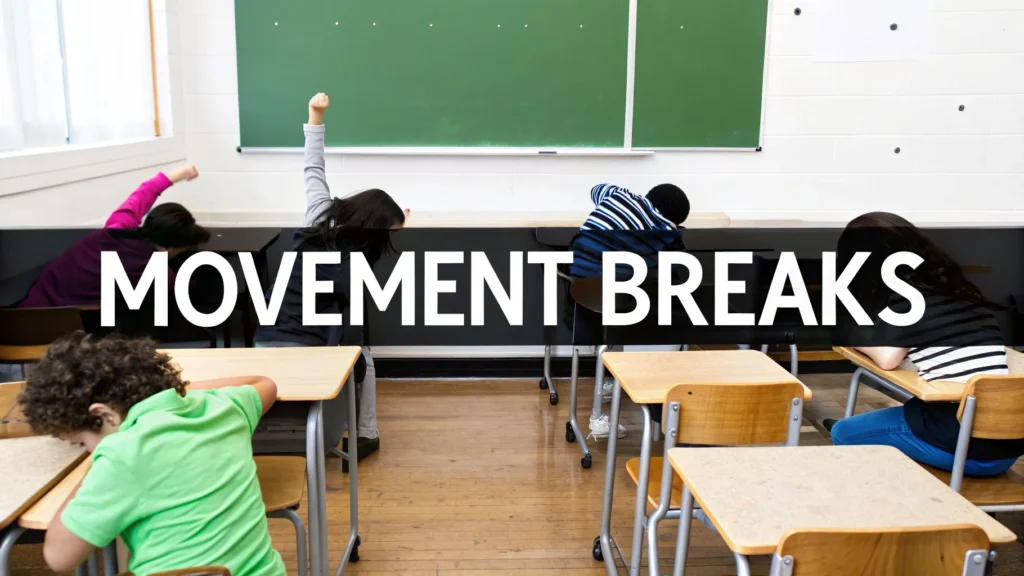
A classroom buzzing with restless energy can quickly lead to disruptions and off-task behavior. Integrating movement breaks is a proactive strategy that channels this energy productively, turning potential distractions into opportunities for focus. This approach recognizes that students, especially younger ones, need physical outlets to regulate their bodies and minds. As a key component of modern classroom management strategies for teachers, it helps improve attention, reduce fidgeting, and create a more dynamic learning environment where students can reset and re-engage.
How to Implement This Strategy
Effective implementation involves making movement a planned and purposeful part of the daily routine, not just a reaction to restlessness.
- Use Guided Brain Breaks: Incorporate short, 5-minute videos from platforms like GoNoodle or YouTube that guide students through dances, yoga, or simple exercises. This provides a structured and engaging way to get everyone moving.
- Integrate Active Learning: Weave movement directly into your lessons. Have students walk to different corners of the room to show their stance on an opinion question, act out historical events, or use their bodies to demonstrate scientific concepts.
- Create Movement Stations: Set up different areas in the classroom for quick physical tasks. During transition times or independent work, students can briefly visit a station for stretching, jumping jacks, or balancing exercises.
Actionable Tips for Success
To get the most out of this strategy, movement should be predictable, well-managed, and inclusive. The goal is to provide a mental and physical reset that enhances learning.
Schedule movement breaks strategically. Plan them right before difficult lessons, after long periods of sitting, or during transition times to help students refocus their energy and prepare for the next activity.
- Establish a Clear Signal: Have a consistent sound, phrase, or hand signal to let students know when a movement break is over and it’s time to settle back down. Practice this signal so the transition back to work is quick and smooth.
- Offer Choices: When possible, give students a choice between a high-energy activity (like dancing) and a calming one (like stretching or deep breathing). This respects different energy levels and sensory needs.
- Model Participation: Join in with the students during movement breaks. Your participation normalizes the activity, increases student buy-in, and shows that you value this time as an important part of the learning day.
9. Collaborative and Cooperative Learning Structures
Shifting instruction from a purely teacher-led model to one that incorporates peer collaboration can dramatically improve classroom dynamics. This approach uses intentional group work to build both academic and social-emotional skills. Championed by educators like Spencer Kagan, this strategy turns passive listeners into active participants. As one of the most effective classroom management strategies for teachers, well-designed cooperative learning reduces misbehavior by increasing student engagement and leveraging positive peer influence to maintain expectations.
How to Implement This Strategy
Successful collaboration doesn’t just happen; it must be structured with clear purpose and accountability. The goal is to make every student an essential contributor to the group’s success.
- Use Proven Structures: Implement frameworks like Think-Pair-Share, where students first consider a question individually, then discuss it with a partner before sharing with the class. Another powerful method is the Jigsaw activity, where each student becomes an “expert” on one piece of a topic and then teaches it to their home group.
- Assign and Rotate Roles: Give students specific jobs within their groups, such as Facilitator, Timekeeper, Recorder, or Reporter. Rotating these roles ensures everyone gets a chance to practice different leadership and supportive skills.
- Create Group Projects: Design projects that require genuine interdependence. For example, a group investigation where students must combine their research to solve a problem or a collaborative digital presentation using shared documents.
Actionable Tips for Success
To prevent common group work pitfalls like social loafing or off-task behavior, the process needs to be actively managed and supported.
Teach collaborative skills directly. Before a major project, run short activities practicing active listening, respectful disagreement, and giving constructive feedback.
- Group Students Intentionally: While letting students choose their own groups is tempting, it often leads to exclusion or imbalanced dynamics. Mix groups based on skill levels, personalities, and work habits to promote new social connections and a more equitable learning environment.
- Provide Clear Accountability: Ensure there is both an individual and a group component to the final grade. This motivates everyone to contribute their fair share and prevents one or two students from doing all the work.
- Debrief the Process: After a collaborative activity, lead a brief discussion. Ask students what worked well in their group and what challenges they faced. This reflection helps them become more effective collaborators over time.
10. Consistent Consequences and Follow-Through
A system of consistent consequences establishes a predictable and fair environment where students understand the direct results of their choices. This principle, central to models like Lee Canter’s Assertive Discipline, is about applying established consequences for rule violations impartially and reliably. It’s a key classroom management strategy for teachers because it builds credibility; students learn that rules are not arbitrary and are enforced equitably for everyone. The core idea is that predictability reduces testing behaviors and supports overall classroom discipline.
How to Implement This Strategy
Effective follow-through requires proactive planning and clear communication. Students and their families should be aware of the consequence structure before any incidents occur, ensuring transparency from day one.
- Create a Consequence Ladder: Develop a clear, tiered system of consequences that escalate with repeated misbehavior. For example: first infraction is a verbal warning, second is a student-teacher conference, third results in parent contact, and a fourth leads to an office referral.
- Establish Behavior Contracts: For students with chronic behavioral challenges, use a formal behavior contract. This document outlines specific target behaviors, the consequences for not meeting them, and rewards for success, with clear milestones.
- Use a Documentation System: Implement a simple but effective tracking method, like a spreadsheet, a dedicated app, or a simple clipboard log. This helps you monitor incidents and ensure you are applying consequences consistently across all students.
Actionable Tips for Success
The goal is to teach responsibility, not to punish. The delivery of the consequence is as important as the consequence itself.
Keep emotion out of the delivery. State the observed behavior and the corresponding consequence matter-of-factly. Say, “You chose to talk while I was giving instructions, so you will need to complete the first two problems during free time.”
- Communicate Clearly and Early: Share your consequence plan with students and families at the beginning of the school year. Post it in the classroom as a constant visual reminder.
- Deliver Consequences Privately: Whenever possible, address the student and issue the consequence away from their peers. This respects the student’s dignity and prevents a public power struggle.
- Follow Up and Restore: After a consequence is served, circle back to the student. A quick, positive check-in shows you are not holding a grudge and that you are ready to help them make a better choice next time.
Classroom Management: 10-Strategy Comparison
| Strategy | Implementation complexity | Resource requirements | Expected outcomes | Ideal use cases | Key advantages |
|---|---|---|---|---|---|
| Positive Reinforcement and Rewards System | Medium — requires planning and consistent routines | Medium — tokens/privileges, tracking system, time for recognition | Higher engagement; fewer disruptions; improved morale | Classrooms needing motivation or behavior improvement (K–8) | Proactive; builds positive culture and motivation |
| Establishing Clear Expectations and Rules | Low–Medium — set up early and maintain | Low — posted rules, time for discussion and review | Less confusion; faster discipline decisions; fairer classroom | Start of year, substitute support, any grade level | Predictable; transparent; easy to communicate |
| Building Positive Teacher-Student Relationships | High — ongoing emotional investment and time | Medium — regular one-on-one time, relationship-building activities | Dramatic reduction in behavior issues; better attendance and engagement | Classrooms with behavioral or social-emotional needs; all grades | Deep, long-term impact on engagement and safety |
| Proximity and Non-Verbal Communication | Low — practice and intentional movement | Low — teacher positioning and established signals | Quick, discreet redirection; fewer interruptions to instruction | During whole-group instruction; grades K–12 | Minimally disruptive; immediate de-escalation tool |
| Transitions and Classroom Procedures | Medium — initial teaching and rehearsal | Low–Medium — visual cues, timers, practice time | More instructional time; fewer transition-related behaviors | Busy schedules, elementary settings, multi-activity lessons | Efficient use of time; predictable routines |
| Restorative Practices and Conflict Resolution | High — requires training and skilled facilitation | High — staff PD, time for circles/conferences, community buy‑in | Reduced suspensions; improved school climate and empathy | Schools addressing conflict, equity, and re-entry after incidents | Addresses root causes; builds community and accountability |
| Differentiation and Individualized Learning | High — ongoing planning and assessment | High — varied materials, assessment tools, PD | Increased engagement; reduced boredom/frustration; improved outcomes | Mixed-ability classrooms and inclusive settings | Meets diverse needs; narrows achievement gaps |
| Movement Breaks and Physical Activity Integration | Low — simple to schedule and implement | Low–Medium — space, brief activity resources or media | Improved focus and behavior; better mood and self-regulation | Energetic classes, students with ADHD, elementary settings | Boosts attention and physical well‑being quickly |
| Collaborative and Cooperative Learning Structures | Medium–High — needs clear roles and training | Medium — materials, teacher monitoring, time for skill teaching | Greater engagement; stronger social skills; peer support | Project-based learning, discussion-rich lessons, secondary grades | Promotes peer learning; builds collaboration skills |
| Consistent Consequences and Follow-Through | Medium — requires policy design and fidelity | Low–Medium — documentation system, communication with families | Predictability; decreased escalation; perceived fairness | Settings needing clear discipline systems, multi-teacher environments | Builds credibility and equity in enforcement |
Your Next Steps: Integrating and Adapting Your Toolkit
Mastering the art of classroom management is an ongoing journey, not a destination. As we’ve explored, the most effective classroom management strategies for teachers are not isolated tricks but interconnected components of a thoughtful, proactive approach. You now have a detailed guide to ten powerful methods, from the foundational strength of building relationships to the practical necessity of consistent consequences.
The true art of classroom management lies not in memorizing these strategies, but in understanding how they work together. Strong procedures for transitions are supported by clear expectations. Restorative practices are more effective when built on a foundation of positive teacher-student relationships. Differentiation prevents behavioral issues before they start, while non-verbal cues can redirect minor disruptions without stopping the flow of a lesson. Think of these ten strategies as a system where each part strengthens the others.
From Theory to Practice: Your Action Plan
Feeling overwhelmed by the options is a common reaction. The goal is not to implement everything at once. A frantic overhaul can be more disruptive than helpful. Instead, the key is to be strategic and intentional.
- Conduct a Self-Assessment: Take a moment to reflect on your current classroom environment. What is working well? Where are the primary friction points? Are you dealing with constant low-level disruptions, or are you managing larger conflicts? Identifying the core challenge helps you select the right tool for the job.
- Select Your Starting Point: Choose just one or two strategies from this list that directly address your most pressing need and align with your personal teaching style. If your classroom feels chaotic during group work, focus on implementing collaborative learning structures. If you find yourself constantly repeating directions, start by explicitly teaching and practicing classroom procedures.
- Commit to Consistency: The most brilliant strategy will fail without consistent application. Once you choose a focus, commit to it for several weeks. Students need time to learn new routines and expectations. Your consistency is what makes a strategy predictable and, therefore, effective.
- Track and Reflect: Observe the impact of your chosen strategy. What changes do you notice in student behavior? What feedback are you getting, both verbally and non-verbally? This reflection is critical for deciding whether to continue, adjust, or try a different approach. Effective classroom management is a cycle of action and reflection.
The Long-Term Impact of a Well-Managed Classroom
Ultimately, strong classroom management is not about control; it’s about creating an environment where learning can flourish. When students feel safe, seen, and supported, they are more willing to take academic risks, engage with their peers, and invest in their own education. These strategies are the architectural plans for building that very environment.
By dedicating yourself to refining your classroom management strategies for teachers, you are not just making your day-to-day work easier. You are creating a more equitable, engaging, and productive space for every student who walks through your door. It is one of the most significant investments you can make in your students’ success and your own professional well-being. Remember that every master teacher was once a beginner, and progress is made one small, consistent step at a time. Your commitment to this process is what will set the stage for a successful and rewarding school year.
Keeping track of which strategies you’re implementing, observing student progress, and reflecting on what works requires dedicated space. Consider using a high-quality journal from maxijournal.com to document your classroom management journey and refine your approach throughout the year. With a dedicated journal for your professional reflections, you can turn daily observations into powerful, long-term improvements for your classroom. maxijournal.com
Discover more from Maxi Journal
Subscribe to get the latest posts sent to your email.