
A little bit of gunk in your dog’s eye is usually nothing to worry about. Think of it like the “sleep” we get in our own eyes—it’s a normal part of the body’s self-cleaning process. But when you start to see a major change in the color, consistency, or amount of that discharge, it’s often a sign that something else is going on. Let’s walk through what’s normal and when it’s time to pick up the phone and call your vet.
What Your Dog’s Eye Discharge Is Trying to Tell You
Finding goop in your dog’s eyes can be a bit alarming, but it’s good to know that not all discharge means trouble. A dog’s eyes are constantly producing tears and a bit of mucus to stay lubricated and wash away tiny particles like dust and pollen. When that mix of tears and mucus dries, it forms those familiar little crusts in the corner of the eye, especially after a good long nap.
You can think of this as the eye’s daily housekeeping. It’s a sign that everything is working as it should to keep the cornea clean and healthy. That’s why a small amount of clear or slightly brownish crust that you can easily wipe away is perfectly fine.
The story changes, however, when the discharge becomes excessive, sticks around, or looks different. Abnormal dog eye discharge is less like housekeeping and more like a warning light on your car’s dashboard—it’s a clear signal that something isn’t right. The cause could be as simple as a minor irritation or as serious as a medical condition that needs attention.
Recognizing the Difference Between Normal and Abnormal
The real trick is learning to tell the difference between routine gunk and a genuine red flag. Paying close attention to the details can give you some major clues about what’s happening with your dog’s health. Several things can trigger abnormal discharge, including:
- Allergies: Just like us, dogs can get watery eyes from environmental triggers like pollen, dust, or mold.
- Infections: If you see thick, discolored gunk that’s yellow or green, a bacterial or viral infection is often the culprit.
- Physical Irritants: Sometimes the cause is simple—a stray eyelash, a speck of sand, or even fur rubbing against the eye can cause tearing.
- Anatomical Issues: Some breeds, particularly flat-faced dogs like Pugs and Bulldogs, are just more prone to eye problems because of their unique head shape.
- Serious Conditions: Deeper issues like conjunctivitis (pink eye), corneal ulcers, or dry eye (Keratoconjunctivitis Sicca) are more serious and need a vet’s diagnosis and treatment.
Unfortunately, eye problems are pretty common in the dog world. A recent study that looked at over 2,200 dogs found that 9.07% of them had some form of ocular disease, and many of those issues involved eye discharge. You can dive into the complete study about canine eye health findings for more details. This really highlights why it’s so important to keep a close watch on your dog’s eyes for any changes.
Quick Guide to Dog Eye Discharge Types
To help you get a quick read on the situation, here’s a simple table breaking down the common types of eye discharge. Think of this as a starting point for understanding what you’re seeing, but remember, only a veterinarian can give you a definitive diagnosis.
| Discharge Type | Common Consistency | Potential Meaning |
|---|---|---|
| Clear & Watery | Thin, tear-like liquid | Allergies, foreign object, blocked tear ducts |
| Yellow or Green | Thick, sticky, mucus-like | Likely a bacterial or viral infection |
| Brownish-Red Stains | Crusty or damp staining | Chronic tearing (epiphora), common in certain breeds |
| Bloody | Red-tinged, watery or thick | Serious trauma, injury, or advanced glaucoma |
| Crusty Goop | Hardened, dry material | Usually dried tears, but abnormal if excessive or colored |
This chart is a handy reference, but if what you’re seeing doesn’t seem right or your dog is in any discomfort, the best move is always to consult with your vet.
Decoding the Colors and Types of Eye Discharge
Figuring out what your dog’s eye gunk means can feel like you’re trying to crack a secret code. Is it normal, or is it a sign that something’s wrong? The first step is to get familiar with the different colors and textures, because they can tell you a lot about what’s happening with your dog’s health.
Think of yourself as a detective looking for clues. A little crust in the corner of your dog’s eye after a nap is usually nothing to worry about. But a sudden change in color, amount, or consistency is a signal that deserves a closer look.
Let’s break down the most common types of discharge you might see, from perfectly normal to “call the vet now.”
This guide can help you quickly spot the difference between normal eye function and discharge that signals a potential problem.
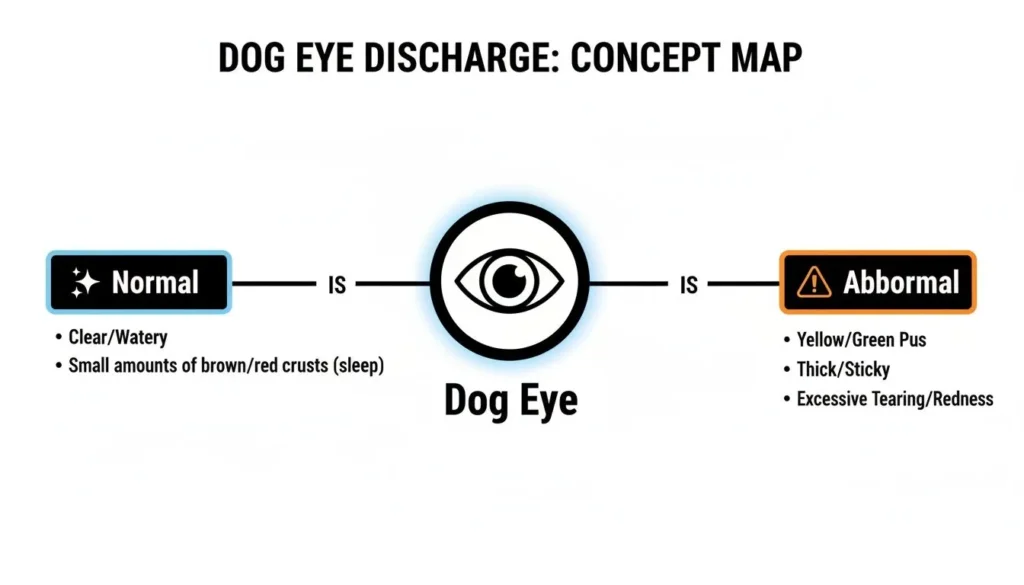
The main thing to remember is that while a little bit of eye goop can be harmless, major changes in color or amount are your dog’s way of telling you something is off.
Clear and Watery Discharge
If you notice a thin, clear liquid running from your dog’s eyes—basically, excessive tears—you’re seeing what vets call epiphora. This is one of the most frequent types of eye discharge and can be caused by anything from a speck of dust to more complex health issues.
Picture your dog’s tear duct as a sophisticated little plumbing system. It’s designed to produce tears, wash them over the eye to keep it clean, and then drain them away through tiny openings in the corner of the eyelid.
But if something disrupts this system, the tears have nowhere to go and end up spilling down your dog’s face. This overflow can happen for a few common reasons:
- Allergies: Just like us, dogs get watery eyes from allergens like pollen, dust, and even certain food ingredients.
- Irritants: A bit of dust, a stray eyelash, or even a strong gust of wind can make the eyes water to flush the irritant out.
- Blocked Tear Ducts: Sometimes, the “drains” in the corner of the eye get clogged. This prevents tears from draining properly, leading to a constant watery overflow.
While clear discharge often isn’t an emergency, you should definitely mention it to your vet if it’s a new thing for your dog or if it doesn’t go away.
Yellow or Green Mucus Discharge
Okay, now this is a much clearer warning sign. Seeing yellow or green goop coming from your dog’s eye is a classic red flag for an infection. This stuff, known as mucopurulent discharge, is usually thick and sticky. You might even find your dog’s eyelids are crusted shut after they wake up.
Think of this discharge as the aftermath of a battle happening on your dog’s eye. The yellow or green color is from pus, which is really just a collection of white blood cells.
These cells are the body’s first responders, rushing to an infection to fight off bacteria or other invaders. Their presence is a dead giveaway that your dog’s immune system is in high gear.
This kind of dog eye discharge is most often linked to conjunctivitis (you probably know it as pink eye). It can also be a sign of a corneal ulcer, which is a scratch on the surface of the eye that has become infected.
Because a simple scratch can turn into a serious, vision-threatening ulcer in less than 24 hours, any yellow or green discharge means you need to call your vet right away.
Brownish or Reddish Tear Stains
If you have a dog with a light-colored coat, you’re probably all too familiar with the reddish-brown stains that can form under their eyes. These marks aren’t actually a type of discharge; they’re the residue left behind by chronic tearing. The color comes from a pigment in tears called porphyrin, which turns that rusty color when it’s exposed to the air.
This is a really common issue for certain breeds. Flat-faced (brachycephalic) dogs like Pugs and Bulldogs often have shallow eye sockets that cause tears to spill over. Small breeds like Maltese and Poodles are also prone to it because of how their hair grows around their eyes.
While tear stains are often just a cosmetic concern, they can sometimes point to a medical reason for all that extra tearing. It’s always a good idea to rule out problems like:
- Blocked tear ducts that might need to be flushed by your vet.
- Entropion, a painful condition where the eyelid rolls inward, causing the lashes to rub against the eye.
- Allergies or other irritants that are causing the eyes to water constantly.
Keeping the area clean and dry can help manage the staining, but if the tearing is new or seems to be getting worse, a vet visit is your best bet. You don’t want to ignore the root cause and miss a condition that needs real treatment.
Common Health Issues That Cause Goopy Eyes
While the color and consistency of your dog’s eye discharge give you some great clues, they’re really just the symptoms. The real detective work involves figuring out the underlying cause of the goop. Because so many different health problems can lead to surprisingly similar-looking eye gunk, getting a professional diagnosis from your vet is always the smartest move.
Several common culprits are behind everything from a slightly watery eye to thick, gunky discharge. These issues can be as simple as a reaction to something in the air or as complex as a medical condition needing specific treatment.
Allergies and Environmental Irritants
Just like us, dogs can get allergies. When their immune system overreacts to something in the environment, you might notice clear, watery discharge as their body tries to literally flush the irritant away.
Common triggers for these allergic reactions include:
- Pollen: Seasonal sniffles aren’t just for humans! Grass, tree, and weed pollens can make your dog’s eyes itchy and watery.
- Dust and Mold: These indoor culprits can cause symptoms all year round.
- Smoke or Perfumes: Any strong airborne irritant can cause a temporary gush of tears as the eye works to protect itself.
This kind of discharge is typically clear and thin. While it’s not usually an emergency, if your dog’s eyes are constantly watery from allergies, the skin around them can get irritated and raw, which might lead to a secondary infection.
Infections Like Conjunctivitis
One of the most frequent reasons a vet will see a dog for goopy eyes is conjunctivitis, which you probably know as pink eye. This is simply an inflammation of the conjunctiva—that thin, moist membrane covering the white of the eye and lining the eyelids.
When bacteria, a virus, or even an allergen inflames the conjunctiva, it can produce a thick, sticky discharge that’s often yellow or green. This is a pretty clear signal your dog’s body is fighting off an infection. You’ll likely also see a lot of redness and puffiness around the eye.
Structural and Breed-Specific Problems
Sometimes, the issue isn’t an illness but a simple matter of anatomy. The shape of a dog’s head and eyes can make them more prone to discharge. This is especially true for brachycephalic (flat-faced) breeds like Pugs, Bulldogs, and Pekingese.
A major structural problem is entropion, a condition where the eyelid actually rolls inward. This causes the eyelashes to constantly rub against the cornea, leading to serious irritation, pain, and chronic discharge. Imagine having a tiny brush scratching your eye all day—it’s incredibly uncomfortable and often needs surgery to fix permanently.
The eyeworm parasite Thelazia callipaeda has surged as a key culprit behind dog eye discharge across Europe over the past two decades, causing symptoms from mild lacrimation to severe conjunctivitis, keratitis, and corneal ulcers with heavy discharge. Reported increasingly in countries like France, Italy, and Portugal, this parasite affects both adults and larvae stages, making it a persistent threat in endemic areas. Discover more insights about this parasitic threat on Consensus.app.
Keratoconjunctivitis Sicca (Dry Eye)
A much more serious condition, Keratoconjunctivitis Sicca (KCS), or “dry eye,” also causes a thick, goopy discharge. With KCS, the tear glands fail to produce enough of the watery part of the tear film, leaving the eye without proper lubrication.
Think of it like the eye’s sprinkler system suddenly shutting down. Without that constant, cleansing flow of tears, the eye gets dry, irritated, and painful. The body tries to compensate by overproducing mucus, resulting in a very thick, stringy, and often yellow or green discharge. KCS is a lifelong condition that requires management with special medications to stimulate tear production and keep the cornea from getting damaged. If left untreated, it can lead to painful ulcers and even blindness.
For more on topics vital to your dog’s well-being, explore our full library of guides on dog health and care.
Glaucoma and Corneal Ulcers
Finally, we have two of the most urgent causes of dog eye discharge: glaucoma and corneal ulcers. Glaucoma is a serious condition where pressure inside the eye builds to dangerous levels, causing intense pain and rapid vision loss. Symptoms can include watery discharge, a cloudy or bluish tint to the cornea, and a visibly swollen eye.
A corneal ulcer is essentially a scratch or open sore on the eye’s surface. It can happen from a simple poke or scratch, a foreign body getting trapped under the eyelid, or as a complication of another issue like dry eye. These are extremely painful and will cause a dog to squint, paw at their face, and produce watery tears. If the ulcer gets infected, that discharge will quickly turn thick and yellow-green.
Both glaucoma and corneal ulcers are true veterinary emergencies. They require immediate medical attention to relieve pain and, most importantly, to save your dog’s vision.
Red Flags That Require Immediate Vet Attention
While a little bit of eye gunk can be normal, some signs are your dog’s equivalent of a blaring fire alarm. You just can’t ignore them. These red flags often go beyond the discharge itself, pointing to serious underlying issues that could risk your dog’s sight or even their overall health. When you see these, it’s time to act fast.
Think of it this way: your dog can’t tell you, “My eye really hurts!” or “I can’t see out of my left side!” Instead, they show you through their behavior and the physical appearance of their eyes. Learning to spot these signals means you can get them the help they desperately need, often preventing a minor issue from becoming a permanent problem.
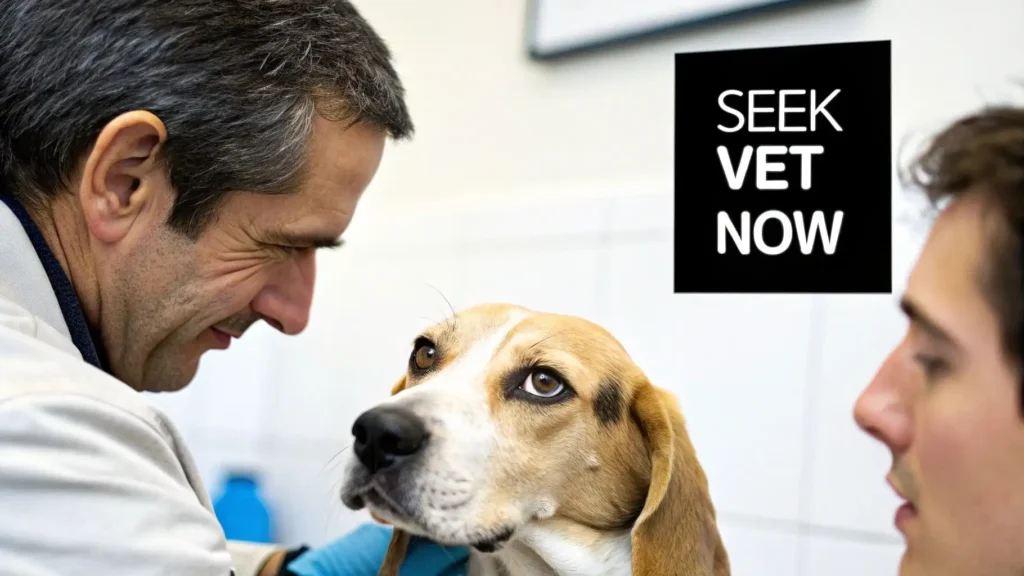
Obvious Signs of Pain or Discomfort
Pain is always a priority. If your dog is clearly uncomfortable, their body language will scream it. Don’t adopt a “wait and see” approach with these behaviors.
- Constant Squinting or Holding an Eye Shut: A dog that won’t open its eye is in serious pain. This is a classic sign of a corneal ulcer (a scratch on the eye’s surface), which can deteriorate in less than 24 hours.
- Pawing or Rubbing the Face: Is your dog frantically rubbing their eye on the carpet, the sofa, or with their paw? They’re trying to relieve a powerful itch or pain. This can easily make things much worse.
- Sensitivity to Light: If your dog suddenly starts shying away from bright rooms or flinching in the sunlight, this is a major clue. It’s called photophobia and points to painful inflammation inside the eye.
These aren’t just minor irritations; they’re your dog’s way of telling you something is very wrong and needs a vet’s attention now.
Visible Changes to the Eye Itself
Sometimes, the most urgent signs are the ones you can see with your own eyes. Any change to the structure or color of the eyeball is an emergency. If you spot any of these, it’s time to go.
A cloudy, blue-tinged film over the cornea, a bulging or swollen eyeball, or pupils that are different sizes are all giant red flags for conditions like glaucoma or severe ulcers. These are incredibly painful and can steal your dog’s sight in a matter of hours or days.
Other critical signs include any blood in the discharge or a visible scratch or divot on the eye’s surface. These point to significant trauma or disease that requires immediate veterinary care to save the eye.
Sudden Behavioral Shifts
Beyond the eye itself, a sudden change in your dog’s personality or habits can be a warning sign. Serious eye problems are painful and disorienting, and they can affect your dog’s whole world. Be on high alert if you notice:
- Sudden Clumsiness or Disorientation: If your typically graceful dog starts bumping into walls or seems nervous walking through familiar rooms, they may have experienced sudden vision loss.
- Lethargy or Loss of Appetite: Intense eye pain can make a dog feel sick all over. They might become withdrawn, sleep more than usual, or refuse their food.
- Uncharacteristic Aggression or Irritability: Pain changes personality. Even the most gentle dog might snap or growl if you try to touch their face when they’re hurting.
To help you decide when to call the vet, here’s a quick checklist comparing routine symptoms with urgent red flags.
Urgent Care Checklist For Dog Eye Issues
| Symptom Observed | Monitor at Home (If minor & temporary) | Seek Immediate Vet Care |
|---|---|---|
| Discharge Color | Small amount of clear or slightly crusty discharge | Thick yellow/green, bloody, or sudden watery discharge |
| Eye Appearance | Eyes are bright, clear, and fully open | Redness, cloudiness, bulging, or differently sized pupils |
| Behavior | Normal energy levels and appetite | Squinting, pawing at face, sensitivity to light, lethargy |
| Vision | Navigates normally, no signs of confusion | Bumping into objects, hesitation, disorientation |
This table is a guide, but your gut instinct is powerful. If you’re worried, it’s always better to be safe and make that call.
If your dog’s eye discharge is paired with any of these urgent signs, don’t wait. Call your veterinarian or the nearest emergency animal hospital immediately. When it comes to vision, every second counts.
How to Safely Clean Your Dog’s Eyes at Home
When you spot some gunk in the corner of your dog’s eye, your first instinct is probably to clean it off. That’s a good thing! Gentle, regular cleaning not only keeps your pup comfortable but also gives you a chance to spot any changes early on. But a dog’s eyes are incredibly sensitive, so how you clean them matters—a lot.
First things first, make sure your dog is relaxed. Pick a spot with good lighting, use a calm, reassuring tone, and have some treats ready. If your dog seems anxious, is squinting in pain, or fights you, stop immediately. That’s your cue to call the vet instead of trying to handle it at home.
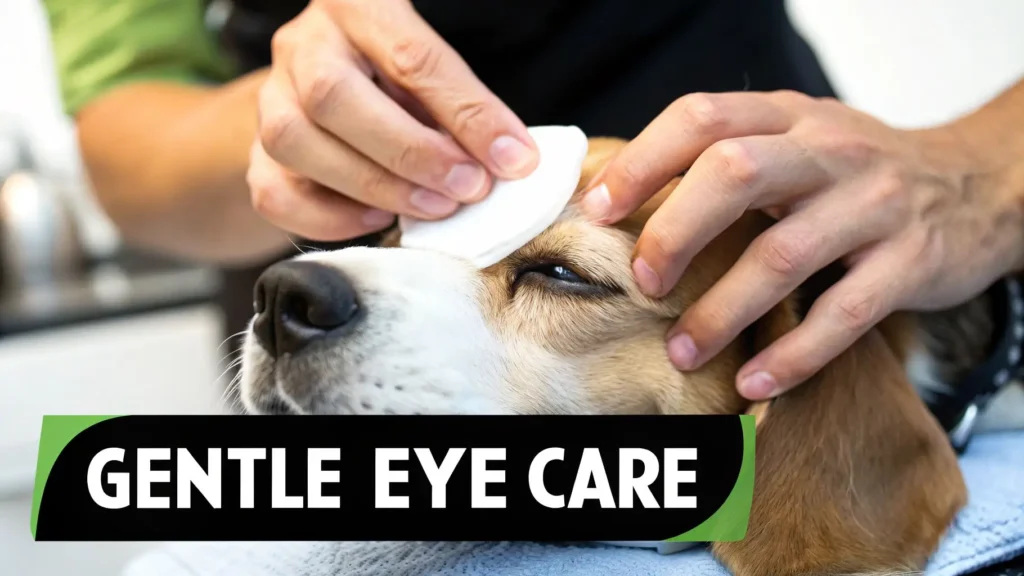
A Step-by-Step Cleaning Guide
For routine tidying of normal dog eye discharge, less is more. All you need are the right supplies and a gentle hand.
- Gather Your Tools: Grab some lint-free cotton balls, gauze pads, or a soft, clean washcloth. You’ll also need a vet-approved sterile saline eye wash (the kind made for eyes, not contacts) or just plain lukewarm water.
- Soak Your Pad: Dunk the cotton ball or cloth in the saline or water until it’s damp, but not dripping. Never try to wipe with a dry cloth, as it can be abrasive and irritate the delicate skin.
- Wipe Away Gently: Start at the inner corner of the eye (near the nose) and gently wipe outward, away from the eye. This simple motion pulls debris away from the eyeball instead of dragging it across.
- One Wipe, One Pad: To avoid cross-contamination, use a fresh cotton ball or a clean section of the cloth for each and every wipe. This is non-negotiable, especially when cleaning both eyes.
- Tackle the Crusties: For stubborn, crusty bits on the fur below the eye, don’t pick at them. Instead, hold a warm, damp cloth against the area for about 30 seconds. This will soften the gunk right up, making it much easier to wipe away.
What You Should Never Do
Knowing what not to do is just as critical as knowing the right steps. A few common mistakes can quickly escalate a minor issue into a major problem.
Think of your dog’s eye like a delicate camera lens; even a small scratch or the wrong chemical can cause permanent damage. Your goal is to clean around the eye, not the eye itself.
Here’s a list of absolute no-nos to keep your dog safe:
- NEVER use human eye drops. Products like Visine contain drugs that are harmful to dogs and can make some eye problems, like ulcers, much worse.
- NEVER touch the eyeball directly. Whether with your finger or a cotton swab, direct contact can easily scratch the cornea, which is extremely painful and can lead to serious complications.
- NEVER use dry cotton swabs or paper towels. These materials are surprisingly abrasive and can leave behind tiny fibers that will only irritate the eye further.
- NEVER try to remove a foreign object yourself. If you see something stuck in your dog’s eye—a grass seed, a splinter, anything—leave it alone. Trying to pull it out could push it in deeper or cause a nasty scratch. This is a job for a professional.
By following these simple do’s and don’ts, you can ensure you’re helping, not hurting. For breeds with flat faces or long hair, making this gentle cleaning a part of your regular routine can go a long way in preventing bigger issues down the road.
Keeping Your Dog’s Eyes Healthy: A Proactive Approach
When it comes to your dog’s eye health, the old saying “an ounce of prevention is worth a pound of cure” really holds true. Instead of just reacting when you see goop, shifting your mindset to proactive care can save your dog from discomfort and protect their vision down the road. Think of it like regular oil changes for your car—these small, consistent checks are what prevent a catastrophic engine failure.
Your dog’s annual wellness exam is the bedrock of this strategy. These yearly check-ups are so much more than just shots. They give your vet a chance to catch things you’d never see, like the subtle rise in eye pressure that whispers “glaucoma” long before it starts causing real trouble. For breeds known for eye issues, these visits are absolutely non-negotiable.
Know Your Dog: Breed-Specific and Nutritional Tips
Every dog is different, and understanding your specific breed’s quirks is a huge part of good preventative care. Some dogs are just built in a way that makes them more likely to develop eye problems.
- Flat-Faced Breeds: Pugs, Bulldogs, and other “brachycephalic” dogs have those adorable smooshed faces, but their shallow eye sockets leave their eyes exposed. A little daily wipe-down to clear away debris and keeping them out of super dusty places can make a world of difference.
- Long-Haired Breeds: If you have a Shih Tzu, Poodle, or another long-haired beauty, keeping the hair trimmed away from their eyes is crucial. Those fine hairs can act like tiny little needles, constantly scratching the cornea and causing irritation.
- Breeds Prone to Entropion: For Shar-Peis and Chow Chows, you’ll want to watch for eyelids that seem to roll inward. This is a painful condition that causes the eyelashes to rub directly on the eye, often leading to chronic discharge and ulcers until it’s surgically corrected.
What you put in the food bowl matters, too. A balanced diet packed with antioxidants, like vitamins C and E, supports overall cellular health, and that includes the delicate structures of the eye.
One of the biggest culprits behind eye issues that many owners don’t know about is Canine herpesvirus-1 (CHV-1). This virus is incredibly common, with infection rates hitting over 80% in places like shelters and kennels. It can cause a range of ocular problems, including discharge. This is a stark reminder of why vaccinations and smart management are so important, particularly for breeders. You can read more about the impact of CHV-1 on canine eye health.
At the end of the day, proactive care is all about being a tuned-in, informed owner. By combining those regular vet visits with good grooming, hygiene, and breed-specific awareness, you create a powerful defense that helps keep your best friend’s eyes bright, clear, and healthy for years to come.
A Few Common Questions About Dog Eye Discharge
When you’re dealing with your dog’s eye gunk, it’s natural to have a lot of questions pop up. One day everything seems fine, and the next you’re wondering what’s normal and what isn’t. Let’s clear up some of the most common concerns.
Are Some Dog Breeds More Likely to Have Eye Discharge?
Absolutely. A dog’s breed can definitely make them more susceptible to eye problems, and it often comes down to their unique anatomy.
Flat-faced, or brachycephalic, breeds are a perfect example.
- Pugs, Bulldogs, and Shih Tzus have those big, beautiful, but very exposed eyes due to shallow eye sockets. This structure makes it easier for irritants to get in and can mess with proper tear drainage.
- Breeds with long, flowing facial hair, like Poodles and Maltese, often have issues simply because their fur pokes and irritates the eye, causing it to water more than usual.
- Then you have breeds like Shar-Peis and Chow Chows, which are genetically prone to a painful condition called entropion. This is where the eyelid actually rolls inward, causing the eyelashes to constantly scrape against the cornea. Ouch!
Knowing your dog’s breed-specific tendencies helps you know what to watch out for.
Can I Just Use Human Eye Drops on My Dog?
This is a hard no. You should never use human eye drops for your dog unless your veterinarian has explicitly told you to. It’s a risky move.
Many over-the-counter drops, especially the “get the red out” kind, contain chemicals that are straight-up toxic to dogs. Using the wrong product can make a simple infection much worse, hide the signs of a serious problem like glaucoma, or cause a painful chemical burn on the cornea.
Always, always get a proper diagnosis from your vet first. They’ll prescribe something that’s actually safe and effective for your dog’s specific issue.
Is It Normal to See a Little Crust in My Dog’s Eyes?
Yes, a small amount of crust—what some people call “sleepies”—in the corners of your dog’s eyes in the morning is totally normal. This gunk is just the eye’s natural cleaning system at work, getting rid of a mix of tears, oil, mucus, and old cells while your dog sleeps.
But here’s the key: what’s normal for your dog should be consistent. A little bit of clear or brownish crust is one thing. If you suddenly see a lot more of it, or it changes color to yellow or green, that’s your cue that something’s wrong.
Think of it like this: a little dust on a windowsill is normal housekeeping. A big pile of debris means something is broken. If the eye gunk changes in amount, color, or consistency, or if you see other signs like redness or squinting, it’s time for a vet visit.
At maxijournal.com, we’re committed to giving you clear, trustworthy information on pet health and a whole host of other fascinating subjects. Dive into our article library to learn more. Find out more at https://maxijournal.com.
Discover more from Maxi Journal
Subscribe to get the latest posts sent to your email.

Pingback: Why Your Dog Keeps Shaking Its Head and What To Do