The thought of planning a big backpacking trip can feel completely overwhelming. I get it. But even after years of doing this, every single adventure—whether it’s a few weeks or a few months—starts with the same basic questions.
The secret is to stop thinking of it as one massive project. Instead, break it down. It’s just a series of smaller, more manageable decisions that build on each other, moving from the big dreams to the tiny details.
Starting Your Backpacking Adventure Without the Overwhelm
Let’s zoom out and look at the big picture first. Seeing the entire roadmap helps you tackle one piece at a time without feeling lost. It’s all about doing the right things at the right time.
You wouldn’t buy a plane ticket before knowing if you need a visa, right? And you definitely wouldn’t buy a new backpack before you know what climate you’ll be in. Following a logical order saves a ton of headaches later.
The Major Phases of Trip Planning
Most successful trips I’ve planned or seen have followed a pretty clear progression. To make it simple, I’ve broken the entire process down into four distinct phases.
This table maps out what you should be doing and when. Think of it as your master blueprint from the “what if” stage all the way to “I’m packed and ready to go.”
Backpacking Trip Planning Phases
| Planning Phase | Key Actions | Recommended Timeline |
|---|---|---|
| I. Discovery & Decision | Research destinations, set trip duration, define travel style, estimate a high-level budget. | 3-6+ Months Out |
| II. Logistics & Booking | Finalize budget, map a flexible route, book major flights, apply for visas or permits. | 2-3 Months Out |
| III. Gear & Preparation | Purchase and test gear, book initial accommodation, plan a physical training routine. | 1-2 Months Out |
| IV. Final Checks | Arrange travel insurance, set up finances, make copies of documents, finalize packing. | 2-4 Weeks Out |
This timeline gives you a solid framework, moving from brainstorming and research to the final nitty-gritty tasks right before you leave.
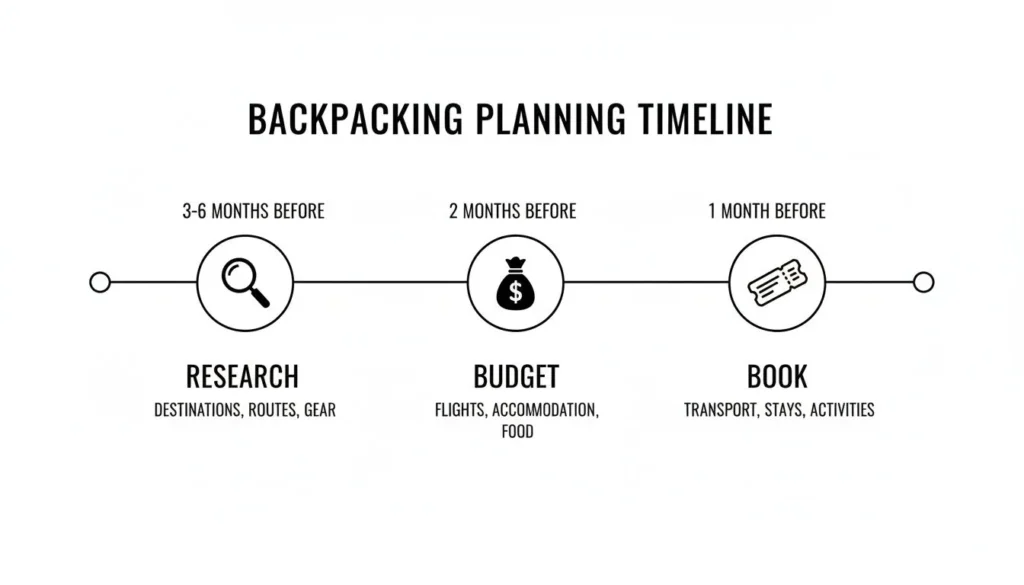
This process isn’t a sprint; it’s a marathon. You start with wide-angle research, then zero in on your budget, and only then do you start booking the big-ticket items like flights.
Key Takeaway: If there’s one piece of advice to take away, it’s this: start early. Giving yourself a few months completely changes the game. You’ll have time to do proper research, find way better deals, and get yourself ready without that awful last-minute panic. The trip truly begins the day you start planning it.
Alright, let’s kick things off with the most exciting part of planning any backpacking trip: figuring out where you’re going. That single “where to?” question is the domino that sets all the others in motion, influencing your budget, gear, and everything in between.
The trick is to find a spot that genuinely lines up with your travel style, how much experience you have under your belt, and the amount of time you can get away.
Think of it like a matchmaking service for your adventure. Are you picturing yourself wandering through ancient ruins and getting lost in the buzz of a big city? Or is it the call of remote mountain trails and quiet, windswept coastlines that gets your heart pumping? Answering this is your first step to whittling down the entire globe to a few places that actually fit you.
Match Your Trip to Your Travel Style
Before you fall down the rabbit hole of envy-inducing social media feeds, take a beat and get real with yourself. The most crucial part of planning a good trip is knowing what you honestly want out of it.
Start by asking yourself a few simple questions:
- What’s your ideal pace? Do you want to see as much as possible, hopping between spots every couple of days? Or do you prefer to really sink into a place, maybe spending a week or more in just one or two locations?
- What’s your comfort zone? Be honest. Are you ready to dive into the beautiful, organized chaos of a place like India? Or does the well-trodden “Gringo Trail” in South America feel a bit more manageable for a first-time adventure?
- What are your must-dos? If you’re a die-hard diver, a landlocked country probably isn’t the best choice. If hiking is your entire personality, then destinations with world-class trekking should be at the top of your list.
A two-week trip, for example, is perfect for a focused goal, like hiking the W-Trek in Patagonia. On the other hand, if you’ve got three months, you can afford a more sprawling and spontaneous journey, like a classic wander through the diverse countries of Southeast Asia.
A classic rookie mistake is trying to jam way too much into a short trip. It’s always more rewarding to really experience one country than to just collect passport stamps from five, spending half your time on buses and planes.
It’s also worth noting the massive rise of solo travel—it’s not a niche thing anymore. The global solo travel market hit an incredible USD 482.34 billion in 2024. With 76% of Gen Z and Millennial backpackers planning to go it alone, you’ll be in very good company. You can check out the latest solo travel statistics to see just how common it’s become.
Dig Into the Practical Logistics
Once you’ve got a region or a couple of countries on your radar, it’s time to get down to brass tacks. This research phase is what makes the difference between a smooth trip and a series of stressful headaches. You’re looking past the pretty pictures and into the reality of what it takes to travel there.
Key factors to research include:
- Climate and Seasonality: “Best time to visit” should be your most-used search term. Hitting Thailand during monsoon season or the European Alps in the dead of winter will dramatically change your plans and your packing list.
- Visa Requirements: Never, ever assume. Look up your government’s official travel advisory website to see if you need a visa, how to get one, and—crucially—how long the process takes.
- Local Customs and Culture: Learning the basics of local etiquette, what to wear (especially for religious sites), and social norms is about respect. It also helps you avoid looking like a clueless tourist and can keep you out of awkward or unsafe spots.
- Safety and Stability: Again, your government’s official travel advisories are your best friend here. They’ll have up-to-date info on political stability, high-risk areas to avoid, and the common scams that target travelers.
For example, planning a trip to Japan means getting your head around its unique social etiquette and higher cost of living. Planning for Morocco, on the other hand, involves being mindful of a more conservative dress code and prepping yourself to haggle in the souks. Every destination has its own playbook; doing your homework is just part of the game.
Building Your Budget and Mapping Your Route
Okay, you’ve picked a destination. Now for the two things that will truly shape your trip: your money and your route. These two are completely linked—your path determines your spending, and your budget dictates how far you can go.
Getting this part right is less about creating rigid spreadsheets and more about building a smart financial framework. It’s what allows you to be spontaneous without the constant stress of running out of cash.
Breaking Down Your Backpacking Budget
Think of your travel expenses in two piles: the money you spend before you leave and the money you spend on the road. The first pile involves the big, one-off costs to get you out the door. The second is your daily spending rate while you’re actually living the dream.
Here are the main pre-trip costs you need to account for:
- Flights: This is often your single biggest purchase. Use flight aggregators and play around with your dates to find the best deals.
- Visas and Passports: These fees can be surprisingly high, depending on your destination and citizenship. Research them early.
- Travel Insurance: This is non-negotiable. We’ll get into the specifics later, but it’s an essential upfront cost.
- Gear: Your backpack, footwear, and any special equipment you need. This can be a major expense if you’re starting from scratch.
- Vaccinations: Check destination requirements. Many immunizations aren’t covered by standard insurance and have to be paid for out of pocket.
Once you’re on the road, your daily costs for accommodation, food, local transport, and activities are where you have the most control. The key is to figure out a realistic daily average for the region you’re exploring.
Sample Daily Budgets for Popular Regions
Costs can change dramatically from one country to the next, but these are solid starting points for a budget backpacker. This assumes you’re staying in hostels, eating street food, and cooking some of your own meals.
| Region | Daily Budget (Low-End) | Daily Budget (Mid-Range) | Key Considerations |
|---|---|---|---|
| Southeast Asia | $25 – $35 | $40 – $50 | Extremely affordable. Local transport is cheap and the street food is a highlight. |
| South America | $30 – $45 | $50 – $65 | Varies widely by country. Bolivia is very cheap; Chile and Brazil are more expensive. |
| Western Europe | $60 – $80 | $90 – $110+ | Accommodation will be your biggest expense. Cooking in your hostel is a game-changer for your budget. |
| Eastern Europe | $40 – $55 | $60 – $75 | All the charm of Europe for a fraction of the price of its western neighbors. |
These are just benchmarks. Smart budgeting is really about understanding traveler trends. For example, young travelers make up 23% of all international tourists and typically spend around €3,000 for a 41-day trip. A massive 69% of that cash goes directly into local businesses, from hostels to food stalls. You can see more backpacker tourism statistics on hotelagio.com to get a better sense of spending habits.
Pro Tip: Always, always build a 15-20% contingency fund into your total budget. This isn’t for souvenirs. It’s your safety net for a cancelled flight, a doctor’s visit, or that once-in-a-lifetime trek you didn’t plan for.
Mapping a Flexible and Logical Route
With a budget in mind, you can start sketching a path. The real goal here is to create a route that flows naturally, cuts down on expensive backtracking, and makes the most of your time and money. Forget a minute-by-minute schedule; you just need a general direction of travel.
Start by identifying your “anchor points.” These are the major cities you’ll fly into and out of, plus any must-see sights you absolutely can’t miss. Connect those dots on a map and see what the common travel methods are. Is there a great train network? Are overnight buses the way to go?
A great itinerary is all about balancing solid plans with open-ended freedom.
- Book This in Advance: Your first few nights of accommodation are a must. Also, lock in any major transport like international flights or cross-country trains.
- Keep This Flexible: Daily activities, local bus journeys, and most of your hostel stays. In the high season, you might book a popular hostel a few days ahead, but you can often book the day before or even just show up.
There are some fantastic tools that make this process way easier. Check out our guide to the best travel apps for planning to find apps for route mapping, booking on the go, and tracking your spending. By planning your route and your budget together, you ensure your dream trip is not just incredible, but also financially sound.
Choosing and Testing Your Backpacking Gear
Okay, you’ve picked a destination and have a budget in mind. Now for the fun part: gear. What you decide to carry on your back is more than just a collection of stuff—it’s your mobile home, your kitchen, and your entire closet. Getting this right is absolutely critical. It’s the difference between a trip you’ll remember for all the right reasons and one you’d rather forget.
Everything you carry literally hinges on one piece of gear: your backpack. This is not the place to skimp. I’ve seen countless trips soured by a cheap or poorly fitting pack that turned a beautiful trek into a shoulder-shredding, hip-bruising nightmare. The single most important factor isn’t the brand or the color—it’s the fit.
To get the right fit, you need to know your torso length. This is the distance from the bony bump at the base of your neck (your C7 vertebra) down to the top of your hip bones (the iliac crest). Any decent outdoor shop can measure this for you and help you find a pack that’s built for your body.
How Big of a Pack Do You Really Need?
Pack volume is measured in liters, and the right size depends entirely on what you’re doing. A quick weekend trip has totally different demands than a multi-month journey across a continent.
- 1–3 Nights (30–50 Liters): Perfect for those short and sweet getaways. These packs are light, encouraging you to bring only the essentials and stay nimble on the trail.
- 3–5 Nights (50–70 Liters): This is the sweet spot for most backpackers and works great for trips up to a week. It gives you enough room for extra food, fuel, and a couple of layers without feeling massive.
- 5+ Nights (70+ Liters): We’re talking expedition territory here. This size is for long-haul trips, cold-weather adventures with bulky gear, or routes where you need to carry a serious amount of food and water between resupplies.
Don’t forget to factor in the climate. A trip into the mountains or a colder region means bulkier clothes and a warmer sleep system, which eats up space fast.
Nailing the “Big Three”: Your Pack, Shelter, and Sleep System
In the backpacking world, we have a term for your most important—and heaviest—items: the “Big Three.” This is your backpack, your shelter (be it a tent, tarp, or hammock), and your sleep system (your sleeping bag and pad). These three pieces form the foundation of your entire kit and usually represent the biggest chunk of your pack’s weight and your budget.
Your choice of shelter really comes down to where you’re going. A freestanding tent offers incredible versatility and is a solid choice for beginners. If you know you’ll be in forested areas, a hammock setup can be a game-changer for comfort. Similarly, your sleeping bag’s temperature rating should be based on the coldest temps you could realistically face, not the average.
Expert Tip: Don’t just trust the temperature rating on the tag. A bag rated to 30°F (-1°C) will keep you alive at that temperature, but you’ll be miserable. I always recommend a bag rated at least 10-15 degrees colder than the lowest temperature you expect. Trust me, you’ll be grateful for the comfortable night’s sleep.
Getting your Big Three as light as possible is the quickest way to slash your total pack weight. Once those are locked in, you can build out the rest of your gear. This means planning a smart clothing layering system and putting together a solid first-aid kit. For a complete rundown, our guide on what to pack for long trips breaks down everything you’ll need.
The Golden Rule: Test Everything
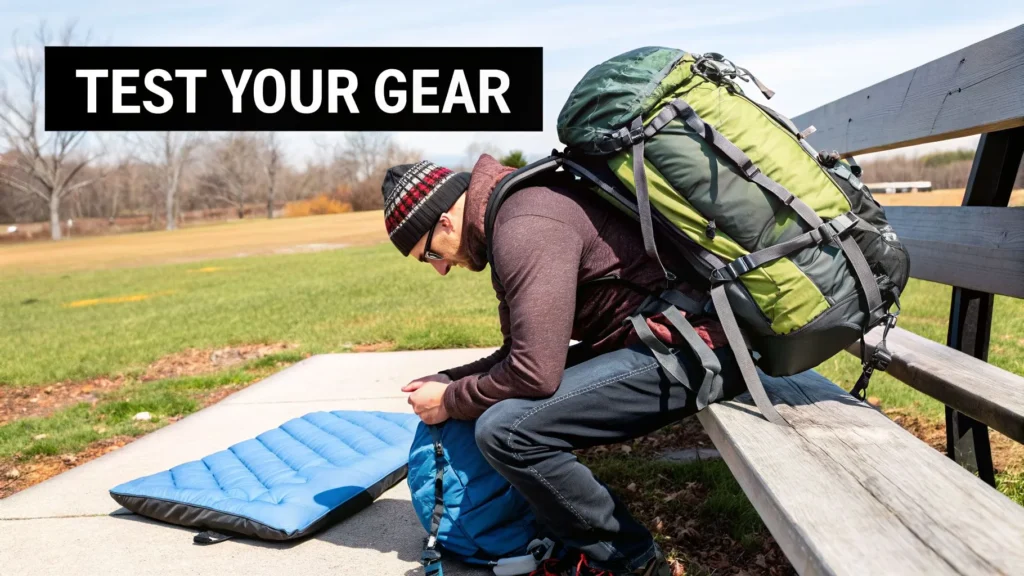
If you take away only one piece of advice from this entire guide, let it be this: test your gear before you go. And I don’t mean just trying on your boots in the living room. I mean loading up your backpack with everything you plan to carry—food, water, all of it.
Once it’s packed, go for a proper hike. Better yet, do a local overnight trip. This is your shakedown. This is where you’ll find out if that pack rubs your shoulders raw after two miles, if your new stove is a pain to light in the wind, or if you can’t seem to inflate your sleeping pad without passing out.
Finding these problems at a local park is a minor hiccup. Discovering them on a remote trail, hundreds of miles from anywhere, is a potential disaster. This trial run is non-negotiable. It helps you fine-tune your setup, ditch what you don’t need, and build real confidence in your gear before you’re truly depending on it.
Getting Your Body and Mind Ready for the Journey
Let’s talk about the gear that isn’t in your pack: you. A great trip is just as much about your own physical and mental readiness as it is about the equipment you carry.
Getting your body in shape makes the day-to-day grind of hauling a pack feel manageable, not miserable. And building mental resilience is what helps you handle the curveballs the trail will inevitably throw at you. This isn’t about becoming a world-class athlete; it’s about building practical fitness so you can actually enjoy the views instead of just focusing on your aching shoulders.
Building Your Physical Foundation
You should start prepping your body at least 4-6 weeks before you head out. Don’t overthink it. Focus on consistency and target three key areas: cardio, strength, and pack-specific training.
- Cardiovascular Training: Your goal is stamina. Aim for 30-45 minutes of jogging, cycling, swimming, or hitting the elliptical 3-4 times a week. This builds the engine you’ll need for long days on your feet.
- Strength and Stability: You need to build a strong chassis, especially in your legs and core. Simple exercises like planks, squats, lunges, and step-ups are perfect because they directly mimic trail movements. A solid core is your number one defense against the back pain that can come from carrying a heavy load.
- Weighted Pack Training: This is non-negotiable. Start by loading your pack with 15-20 pounds (about 7-9 kg) and just go for a long walk around your neighborhood or a local park. Each week, add a little more weight, working your way up to your expected final pack weight. This is the only way to get your shoulders, hips, and back used to the specific stress of your pack.
The real secret to being physically ready is injury avoidance. By training with your loaded pack, you’re helping your body adapt. You’re turning what would be a sudden shock into a familiar feeling, and your body will thank you for it on day one of your trek.
Preparing Your Mind for the Adventure
Mental prep for a backpacking trip comes down to one thing: learning to embrace imperfection. Trust me, things will go sideways. Your bus will be late. The hostel will be a lot louder than advertised. You might even feel a little lonely sometimes. Resilience is about rolling with these moments instead of letting them ruin your trip.
The first step is setting realistic expectations. Your journey won’t be a constant highlight reel like the ones you see on social media. There will be tough days. There will be moments of culture shock and, yes, even boredom. Knowing and accepting this from the start is half the battle.
Try to cultivate a mindset of openness. Get comfortable with being uncomfortable. Talk to strangers, try that weird-looking food, and say “yes” to the spontaneous side-quests that pop up. Those are almost always the moments you remember most.
Final Administrative Checks
Before you lock the door behind you, a few last-minute tasks can save you a world of hurt on the road. Think of this as your final pre-flight checklist.
- Get Vaccinated and Insured: Visit a travel clinic at least two months before you leave to get any necessary shots. More importantly, buy comprehensive travel insurance. Make sure it covers not just medical emergencies but also trip cancellations and theft. Don’t skip this.
- Notify Your Banks: Give your bank and credit card companies a heads-up about your travel dates and destinations. This simple phone call prevents them from freezing your accounts for “suspicious activity” right when you need cash.
- Create Digital Backups: This is your lifeline. Scan your passport, visas, flight itineraries, and insurance policy. Save these files to a secure cloud service like Google Drive or Dropbox and also email copies to yourself and a trusted friend or family member back home. If you lose the physical copies, you’ll be incredibly glad you did this.
Finalizing Your Safety Plan and Pre-Departure Checks
With your departure date just around the corner, it’s time to shift gears from big-picture planning to the final, crucial details. This is where a good trip becomes a great one—by tying up loose ends and making sure your safety net is rock-solid before you even walk out the door.
Think of your smartphone as your copilot, but remember its biggest weakness: it needs a connection. Before you even think about packing, download offline maps for your destination. Apps like Google Maps or Maps.me are perfect for this. It’s a simple task that can save you a world of headache when you land and can’t immediately find Wi-Fi.
Solidifying Your Emergency Protocols
Knowing what to do when things go sideways is just as vital as planning for everything to go right. This isn’t about being paranoid; it’s about being prepared enough to handle bumps in the road with a cool head.
First thing’s first: create an “emergency card.” Save it as a note on your phone, but also print a physical copy to tuck into your wallet. Trust me on this one.
Your Emergency Card Should Include:
- Local Emergency Numbers: Don’t just assume 911 works everywhere. For most of Europe, it’s 112. In Australia, it’s 000. A quick search will give you the right numbers for police, fire, and ambulance services.
- Embassy/Consulate Details: Jot down the address and phone number of your country’s nearest embassy. They’re your go-to for a lost passport or any major crisis.
- Travel Insurance Information: This needs to have your policy number and, most importantly, the 24/7 emergency assistance phone number. If you have a medical issue, this is the very first number you call.
- Emergency Contact Back Home: The name and number of the person you’ve designated as your point of contact.
This little card is your first line of defense, putting all that vital info in one place. Getting these details sorted is a cornerstone of smart travel, especially when you’re on your own. For a much deeper look, our guide on essential solo travel safety tips has even more strategies to keep you secure.
Key Takeaway: Share your complete, finalized itinerary with at least one person you trust back home. Make sure it has your flight details, hostel names and addresses, and a general idea of your route. If you ever need help, this document becomes their lifeline to finding you.
Final Pre-Departure Checklist
The last 48 hours before a trip are always a blur of packing and last-minute errands. A checklist is your best friend here, making sure nothing important gets lost in the chaos.
- Charge Everything: Get all your electronics—phone, power bank, headphones, camera—to 100%.
- Review Local Scams: Do one last search for “common tourist scams in [your city].” A quick refresher can save you money and stress.
- Photocopy Your Documents: Make two physical copies of your passport, visa, and insurance policy. Put one in your main bag and one in your daypack, always separate from the originals.
- Set Up “Find My Phone”: Double-check that this feature is on. If your phone goes missing, you’ll be glad you did.
Once you’ve ticked off these final boxes, you can finally breathe. Knowing you’ve done everything you can to prepare lets you relax and dive headfirst into the adventure waiting for you.
Frequently Asked Questions About Planning a Backpacking Trip
No matter how much you read, there are always a few nagging questions that come up when you’re in the thick of planning. Let’s tackle some of the most common ones we get from fellow travelers.
How Far in Advance Should I Start Planning?
For a big international trip lasting several weeks or months, giving yourself a 3-6 month runway is a great idea. This window gives you breathing room to properly research destinations, handle any visa applications without paying for rush processing, and scout for the best flight deals.
A longer timeline really does reduce stress and leads to smarter, more cost-effective decisions. If your trip is shorter, say one or two weeks, you can pull it off in 1-2 months. But starting early is never a bad thing.
Key Insight: The single biggest benefit of planning early is saving money. Booking flights 2-3 months ahead can easily save you hundreds of dollars over last-minute fares. It also means you’re more likely to snag a bed in that top-rated hostel everyone wants to stay at.
What Is the Best Way to Find Cheap Flights?
Finding affordable airfare is a bit of a cat-and-mouse game that rewards strategy and timing. The key is using the right tools and staying flexible with your dates.
I’ve had the most success with these tactics:
- Check Multiple Aggregators: Don’t just stick to one site. Run your search on Skyscanner, Google Flights, and Momondo. Each uses a slightly different algorithm, and you’d be surprised how often one finds a deal the others missed.
- Fly Mid-Week: Tuesdays and Wednesdays are consistently the cheapest days for international flights. If you can, avoid flying out on a Friday or Sunday when prices are highest.
- Look at Alternate Airports: Sometimes flying into a smaller, secondary airport and catching a cheap local bus or train to your final destination can slash your costs significantly.
How Should I Handle Money and Stay Safe on the Road?
Smart money management on the road is all about redundancy. Never, ever depend on a single card. The best approach is to carry a mix of payment options to keep yourself covered.
Essential Money Tips:
- Pack at least two different debit or credit cards linked to separate bank accounts. I keep one in my day wallet and the other tucked away safely in my main backpack.
- Always call your banks before you leave to let them know your travel itinerary. This prevents them from flagging your international purchases as fraud and freezing your accounts.
- Use a travel money belt or a hidden pouch for your passport, primary cards, and any large cash reserves. For daily spending, keep only a small amount of cash easily accessible in a pocket or wallet.
At maxijournal.com, we’re passionate about bringing you stories and guides that inspire your next adventure. From travel and technology to arts and culture, we cover the topics that spark your curiosity. Explore more with maxijournal.com and start your journey today.
Discover more from Maxi Journal
Subscribe to get the latest posts sent to your email.