metrica yandex pixel

Cat Food For Digestive Health

Support your cat’s well-being with our guide to the best nutrition for sensitive stomachs. Explore expert reviews on specialized cat food formulas designed to improve digestion, reduce hairballs, and ensure optimal nutrient absorption for a happier, healthier pet.

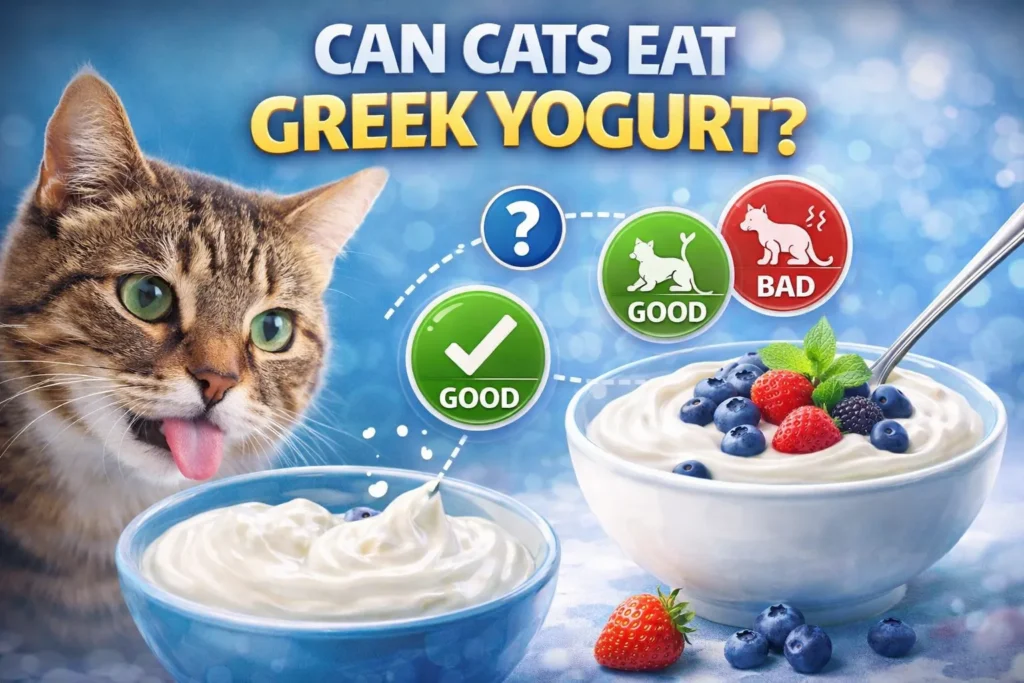
Cat next to bowls of Greek yogurt with good and bad icons, illustrating whether cats can safely eat yogurt.
Pets

Can Cats Eat Greek Yogurt? A Guide for Curious Owners

Cats can have a small lick of plain, unsweetened Greek yogurt, but it’s risky due to lactose intolerance, affecting roughly 70% of adult cats. Greek yogurt, despite its protein content, can harm their digestive system. A half-teaspoon is the maximum serving, and flavored types are dangerous. Safer treat alternatives include meats or cat-specific probiotic supplements that support health without causing harm.

Indoor cat food guide thumbnail showing cat, kibble bowl, food bags, and icons for protein, vitamins, and weight control.
Pets

Finding the Best Cat Food for Indoor Cats in 2026

Choosing the right food for indoor cats is vital for their health due to their unique sedentary lifestyle. A high-protein, low-calorie diet with fiber is essential to manage weight and hairballs. Understanding cat food labels helps in selecting quality nutrition focused on animal-based proteins. Hydration is also critical, favoring wet food for moisture. Consult a vet for any dietary concerns.

Tabby cat looking at cooked salmon on cutting board with text “Can Cats Eat Salmon?” in kitchen setting.
Pets

Can Cats Eat Salmon? A Vet-Approved Guide for Owners

Cats can safely eat salmon as an occasional treat, provided it is fully cooked, plain, and boneless. Raw, smoked, or seasoned salmon poses risks such as harmful bacteria and thiaminase. Salmon is rich in omega-3 fatty acids, which benefit skin health, joint mobility, and brain function. Treats should be limited to 10% of a cat’s daily calories to maintain a balanced diet.

Scroll to Top