The first evening with a new pet often looks the same. There’s a bag of food by the door, a toy on the floor, and a person wondering if they’re already forgetting something important. Is this the right food? How often should you brush? What counts as normal sleeping, normal stool, normal energy, normal everything?
That uncertainty is common, and it doesn’t mean you’re unprepared. It means you care.
Good pet care advice should lower that stress, not add to it. In the United States, about 66% of households own a pet, or roughly 86.9 million homes, and Americans spent over $152 billion on their pets in 2024 according to pet ownership statistics. Pet care isn’t a niche concern. It’s a daily responsibility for a huge part of ordinary life.
The most useful approach isn’t perfection. It’s learning how to make sound decisions, notice problems early, and provide the best care you can with the time, money, and access you have.
Your New Pet Welcome Guide
The first few days matter because your pet is learning your home, your voice, and your routine. New owners often think they need to solve everything at once. You don’t. Start by creating safety, predictability, and a short list of key boundaries.

Start with a calm home base
Pick one area where your pet can settle without too much noise or traffic. For a dog, that might be a crate or bed in a quiet room. For a cat, it’s often a single room with litter, water, food, and hiding spots. For small animals and birds, the enclosure location matters a lot. Keep them away from drafts, direct kitchen fumes, and constant handling.
Your early goal isn’t entertainment. It’s regulation. Pets adjust better when they know where to sleep, where to eat, and where to retreat.
A few basics help immediately:
- Set out fresh water first. Hydration comes before treats, toys, or introductions.
- Keep the first meals simple. Sudden food changes can upset the stomach.
- Limit visitors at the start. New pets need recovery time, even when they seem social.
- Observe before you intervene. Many new owners mistake normal adjustment behavior for a problem.
Practical rule: If your pet seems shy, don’t force confidence. A secure animal usually becomes social faster than a pressured one.
Think in layers, not luxuries
New owners often ask what they must buy right away. I’d separate needs from extras. A safe resting spot, species-appropriate food, water bowls, cleanup supplies, and a plan for veterinary care belong in the first group. Decorative accessories don’t.
Comfort items can still serve a real purpose when chosen well. If your dog likes nesting, warmth, or soft bedding, materials made for durability and easy cleaning can be useful. Some owners also like cruelty-free faux fur for dogs because it offers warmth and a cozy texture without using animal fur.
If you’ve brought home a kitten and want a more detailed room-by-room setup, this guide for a first-time cat owner can help you avoid common mistakes.
Good care is still good care when it’s practical
Many people assume responsible ownership means doing the most expensive thing every time. That’s not how real life works. Responsible care means understanding priorities, acting early, and asking for help before a small issue becomes a crisis.
That’s especially important because owners face different budgets, work schedules, transport options, and clinic access. A loving, attentive home with a realistic care plan is far better than a perfect plan that never gets followed.
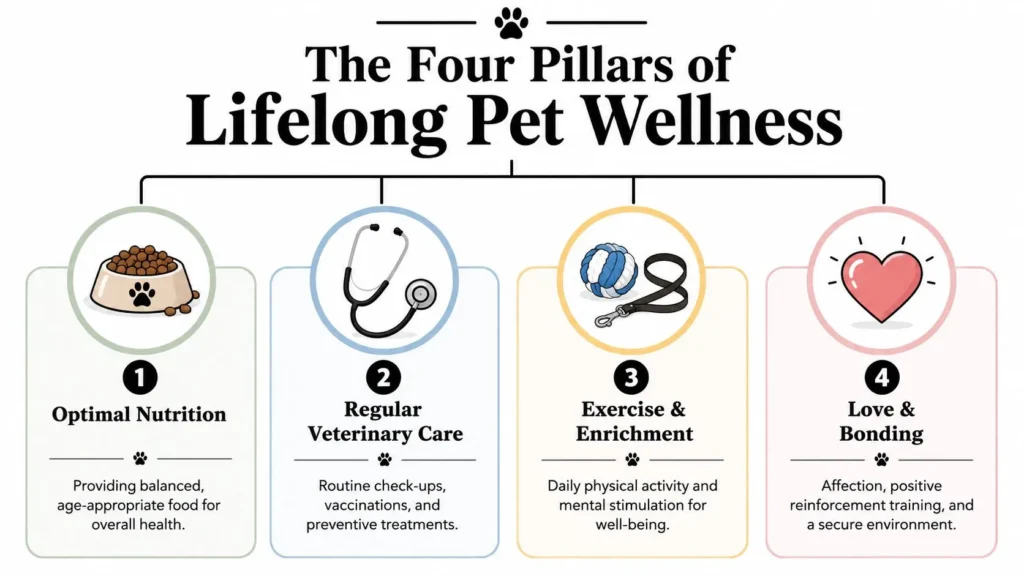
The Four Pillars of Lifelong Pet Wellness
A healthy pet life rests on a few repeating patterns. If you understand those patterns, most daily decisions become easier. I think of them as four pillars: food, environment, enrichment, and health oversight.
This visual sums up the framework.
Nutrition shapes more than weight
Food affects energy, digestion, skin quality, coat condition, stool quality, and long-term disease risk. It also influences behavior. A pet that’s overfed, underfed, or fed an unsuitable diet often shows it in subtle ways before obvious illness appears.
That’s one reason weight management belongs near the center of modern pet care advice. The Association for Pet Obesity Prevention’s 2022 survey found that 59% of dogs and 61% of cats were overweight or obese, as noted in this pet statistics summary. In practice, that means many owners may see an “average” body shape every day and still miss that their own pet is carrying too much weight.
A simple check helps. You should usually be able to feel the ribs without pressing hard. In many pets, a visible waist or tuck from the side is also a useful clue.
A safe environment prevents avoidable problems
A pet’s surroundings shape health every day. Slippery floors can worsen mobility issues. Easy access to trash can lead to stomach upset or obstruction. A litter box placed beside a loud washer may trigger avoidance. A bird cage in a smoky or fume-heavy area creates risk.
Environmental safety isn’t glamorous, but it prevents a remarkable number of injuries and stress behaviors.
Use your home like a checklist:
- Remove chewing hazards. Cords, string, small toys, and accessible medications matter.
- Protect rest areas. Pets need a place where children and other animals won’t bother them.
- Control temperature and airflow. Many animals struggle more than owners realize with heat, cold, or poor ventilation.
- Match the space to the species. Climbing, burrowing, hiding, and perching aren’t personality quirks alone. They’re needs.
Here’s a short video that pairs well with the wellness framework above.
Enrichment protects the mind and the body
Exercise isn’t just about burning calories. It keeps joints moving, gives structure to the day, and reduces boredom. Mental stimulation matters just as much. Food puzzles, scent games, climbing shelves, chew items, foraging toys, training sessions, and supervised exploration all count.
A bored pet often looks “bad” before they look “unwell.” Destructive chewing, repeated vocalizing, pacing, overgrooming, and attention-seeking behavior can all reflect unmet needs.
Pets do better when they can perform natural behaviors safely and regularly.
Health monitoring is what turns love into action
Owners spend the most time with their pets, so they’re often the first to notice change. Appetite shifts, different drinking habits, new odors, altered posture, less grooming, more sleeping, or hiding can all matter.
You don’t need advanced skills. You need a habit of paying attention.
Try a weekly mini-scan:
- Look at the eyes and nose. Check for discharge, squinting, or crusting.
- Check the mouth area. Bad breath, drooling, or trouble chewing deserve attention.
- Run your hands over the body. Feel for lumps, mats, sore spots, or weight change.
- Watch movement. Stiffness after rest is easy to miss if you aren’t looking for it.
Building Your Daily and Weekly Care Routines
A good routine protects pets from neglect that isn’t intentional. Most owners don’t skip care because they don’t care. They skip it because life gets busy and nothing is written down. The fix is simple. Give recurring tasks a rhythm.
What should happen every day
Some daily jobs are obvious, like feeding and water changes. Others are easy to overlook, like checking stool quality, scanning the skin under a fluffy coat, or noticing that a bird who usually chirps at breakfast is quiet today.
Daily care usually includes:
- Fresh water and clean bowls. Refill and rinse, not just top off.
- Feeding with portion awareness. Use a measuring cup or kitchen scale if your veterinarian recommends it.
- A quick body and behavior check. Notice appetite, energy, breathing, mobility, and elimination.
- Species-appropriate interaction. Dogs need walks or play. Cats need hunting-style play or climbing. Small mammals need safe handling and habitat checks. Birds need social time and environmental engagement.
For many homes, the most realistic way to stick with these tasks is to anchor them to your own habits. Feed after your morning coffee. Scoop the litter before dinner. Brush the dog after the evening walk.
What belongs on a weekly schedule
Weekly care often includes brushing, nail checks, deeper enclosure cleaning, washing bedding, and reviewing supplies before you run out. This is also a good time to inspect collars, harnesses, carriers, litter scoops, and feeding tools for wear.
Parasite prevention belongs in the routine category too, even when nothing looks wrong. Expert veterinary guidance emphasizes preventive parasite control through regular administration of parasiticides and consistent diagnostic testing, because that approach helps stop small infestations or hidden infections from becoming more serious disease, as described in the Global State of Pet Care report.
That point confuses many owners. If a pet seems fine, they assume prevention can wait. Parasites often don’t announce themselves early.
Missing one dose or delaying testing doesn’t always cause visible illness right away. That’s why prevention works best as a schedule, not a reaction.
If your pet spends time on furniture and you’re trying to balance comfort with hygiene, some owners find The Sofa Cover Crafter’s pet solutions useful for reducing wear and simplifying cleanup.
Species-Specific Routine Care at a Glance
| Care Aspect | Dogs | Cats | Small Mammals (e.g., Hamsters, Guinea Pigs) | Birds (e.g., Parakeets, Cockatiels) |
|---|---|---|---|---|
| Feeding rhythm | Usually scheduled meals work well | Often benefit from measured meals and avoiding constant overeating | Need species-appropriate food and close monitoring of intake | Need species-appropriate diets and fresh food handled carefully |
| Water | Refresh daily and clean bowl | Refresh daily and many cats prefer very clean bowls or fountains | Check bottle or bowl function daily | Refresh frequently and keep containers clean |
| Bathroom hygiene | Pick up stool promptly and observe consistency | Scoop litter daily and monitor urine and stool | Spot-clean bedding and watch droppings | Change cage liners and observe droppings |
| Grooming | Brush based on coat type; check paws and ears | Brush as needed, especially long-haired cats | Check coat, nails, and rear-end cleanliness | Watch feathers, nails, and beak condition |
| Exercise | Walks, play, sniffing, training | Interactive play, climbing, scratching | Safe exploration and enrichment outside hiding time | Flight or movement opportunities where safe, plus toy rotation |
| Home monitoring | Watch for limping, itching, coughing, appetite changes | Watch for hiding, litter changes, reduced grooming, appetite shifts | Watch for reduced eating, quiet behavior, posture changes | Watch for fluffed feathers, appetite changes, or less vocalizing |
The at-home check most owners skip
Touch your pet.
Visual checks are helpful, but hands-on checks catch more. Run your fingers along the legs, belly, sides, tail base, and neck. Feel for heat, swelling, crusting, knots in the coat, or weight loss under the fur. In long-haired pets, problems can hide well.
If something changes and stays changed, don’t wait for a dramatic sign before calling your clinic.
Partnering with Your Vet for Preventive Health
The best veterinary visits often happen before your pet seems sick. That surprises new owners, especially if they grew up thinking the vet was only for emergencies or vaccines. In reality, the strongest medical care is preventive, planned, and built on a relationship.
What a wellness exam really does
Major veterinary guidance recommends at least one wellness exam per year for most pets, with more frequent visits for seniors or animals with higher needs. That routine helps reduce risks tied to dehydration, dental disease, and preventable infectious disease, as explained in this guide for taking care of animals.
An annual exam isn’t just a quick look. It gives your veterinarian a chance to assess body condition, skin and coat, teeth and gums, ears, eyes, heart and lungs, mobility, and any subtle changes you may not have recognized as important. It also creates a baseline. Without that baseline, many problems are harder to spot early.
Choose a clinic you can actually work with
The “right” veterinarian isn’t only about credentials. It’s also about communication. You need a clinic where you feel comfortable asking basic questions, discussing costs openly, and saying when a plan doesn’t fit your circumstances.
A strong clinic partnership usually looks like this:
- You tell the full story. Appetite, stool, energy, habits, and home environment all matter.
- The team explains priorities. What needs action now, what can be monitored, and what is optional.
- You leave with a workable plan. Not just ideal medicine on paper, but care you can follow through on.
That practical conversation matters for prevention too. If you’re comparing environmental approaches to parasite management around the home, you may also want to review options for non-toxic pest control for fleas and ticks. Home products are not a replacement for veterinary guidance, but they can be part of a broader prevention discussion.
Preventive care is usually cheaper than delayed care
Owners sometimes postpone wellness visits to save money, then face a much more complex problem later. That pattern is common with dental disease, skin disease, obesity-related complications, and chronic issues that started as “something small.”
Prevention doesn’t guarantee a cheap future. Pets can still get injured or develop illness. But it often reduces suffering and catches change sooner, when your options are wider.
Clinical reminder: The visit that feels “uneventful” is often the one doing the most long-term good.
If you want a plain-language overview of one common vaccine discussion, Maxi Journal also has a helpful explainer on the DHPP dog vaccine. Use resources like that to prepare better questions for your own veterinarian, not to replace the exam itself.
Positive Training for a Happy and Well Behaved Pet
Training works best when you stop thinking of it as control and start thinking of it as communication. Pets repeat behaviors that help them get what they want. If you reward the behavior you like, you’ll usually see more of it.
Why positive reinforcement works
Positive reinforcement means adding something the pet values after a desired behavior. That might be a small treat, praise, play, access to the yard, a toy, or release from pressure. The timing matters. Reward quickly so the pet connects the reward to the action you wanted.
This approach builds trust. It also gives the pet clear information. Punishment often tells an animal that people are unpredictable. Reward-based training tells the animal exactly what succeeds.
Common examples include:
- Puppy house-training. Reward outdoor elimination right away.
- Kitten litter habits. Keep the box clean and reward calm use of the correct area.
- Dog leash walking. Reinforce moments when the leash is loose.
- Small mammal handling. Reward calm approach and gentle contact in short sessions.
- Bird step-up training. Reward the movement you want, not just the end result.
Solve the reason, not just the symptom
A dog that chews furniture may need teething outlets, supervision, more exercise, or less unsupervised freedom. A cat scratching the couch may need a more appealing scratcher placed in the right location. A bird that screams may be bored, overstimulated, or reacting to a pattern that owners accidentally reward.
The mistake is assuming “bad behavior” is defiance. More often, it’s confusion, stress, excess energy, fear, or a natural behavior with no acceptable outlet.
Try this sequence when a problem shows up:
- Ask what the pet is getting from the behavior.
- Remove accidental rewards where possible.
- Teach and reward an easier alternative.
- Adjust the environment so success is simpler.
For dog owners who want a practical starting point with cues, timing, and consistency, this guide on how to train your dog is a useful companion to your home practice.
Socialization and enrichment prevent many training problems
Socialization doesn’t mean overwhelming a pet with endless new experiences. It means introducing the world in manageable, safe, positive ways. Calm exposure to sounds, surfaces, handling, people, carriers, grooming tools, and routine life tasks can reduce fear later.
Mental work helps too. Snuffle mats, stuffed food toys, cardboard foraging games, hide-and-seek, target training, and short cue sessions all build confidence.
A tired pet isn’t always a fulfilled pet. Many behavior problems improve more from mental engagement than from physical activity alone.
When to get extra help
Call your veterinarian first if a behavior change is sudden. Pain, illness, itching, digestive trouble, and neurologic problems can all look like training issues.
If the issue is ongoing, a qualified trainer or behavior professional can help when your pet shows fear, guarding, panic, escalating reactivity, or repeated stress despite your efforts. Early help is easier than rebuilding after months of rehearsal.
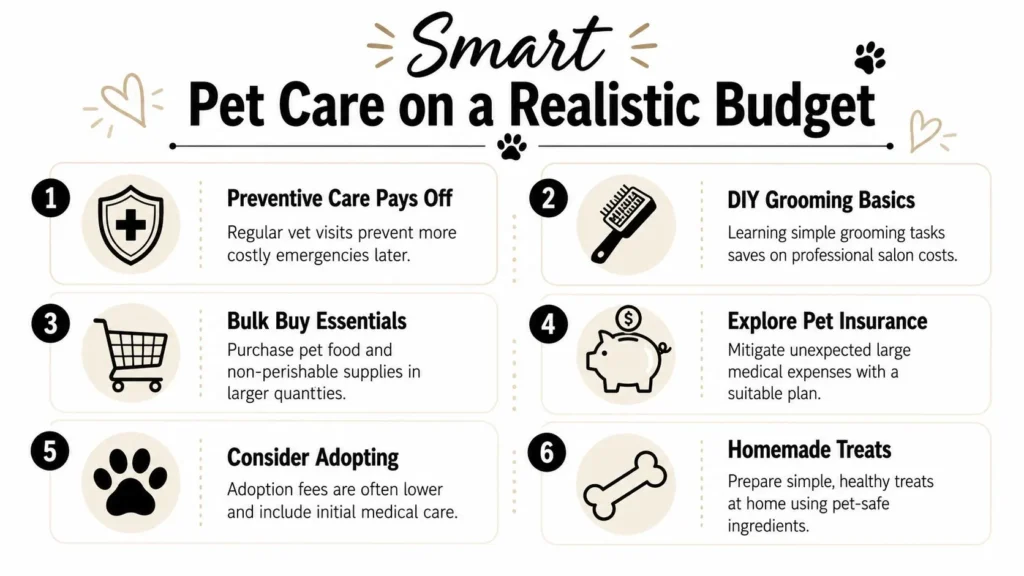
Smart Pet Care on a Realistic Budget
Many owners carry a quiet fear that they’ll be judged if they can’t afford every recommended test, treatment, or product. That fear keeps people away from clinics, delays hard conversations, and sometimes worsens outcomes. Real pet care advice has to make room for reality.
Research on access to veterinary services highlights meaningful barriers for low-income guardians and supports a more compassionate question: what is the best feasible care when money, transport, and clinic access are limited? That perspective is discussed in this Frontiers article on barriers to veterinary care.
The all-or-nothing model hurts pets
Some owners hear a full ideal plan and assume that if they can’t do all of it, there’s no point doing any of it. That’s the wrong conclusion.
Spectrum-of-care thinking asks better questions:
- What must happen now to prevent suffering or serious decline?
- What can be staged over time?
- What can be monitored safely at home for a short period?
- What lower-cost version of the plan still protects welfare?
That doesn’t mean “cheap care” is always enough. It means medicine can be prioritized responsibly.
Where to spend first
If money is tight, spend first on the categories that most strongly affect safety and avoidable illness.
Priorities usually include:
- Food that is appropriate and consistent. Frequent switching to whatever is cheapest that week often creates new problems.
- Core prevention. Routine exams, parasite control, and vaccines matter more than trendy accessories.
- Pain, breathing, and injury concerns. Those should never be treated casually.
- A transport plan. Even a modest emergency fund is useful, but a way to reach care matters too.
Owners often save money by learning basic grooming, keeping accurate records, and asking the clinic whether treatment can be staged. Some communities also have nonprofit services, outreach clinics, or support programs created because access gaps are real.
Questions that lower the cost without lowering the standard of honesty
You don’t need to apologize for asking practical questions. Try these instead:
- What’s the most important thing to do today?
- If I can’t do the full plan, what’s the next safest option?
- What signs mean this has become urgent?
- Can I monitor at home for a short time, and what exactly should I watch?
Those questions often lead to better care than silence does.
Responsible ownership isn’t proved by spending the most. It’s proved by making thoughtful decisions, acting early, and following through on the plan you and your veterinary team can actually carry out.
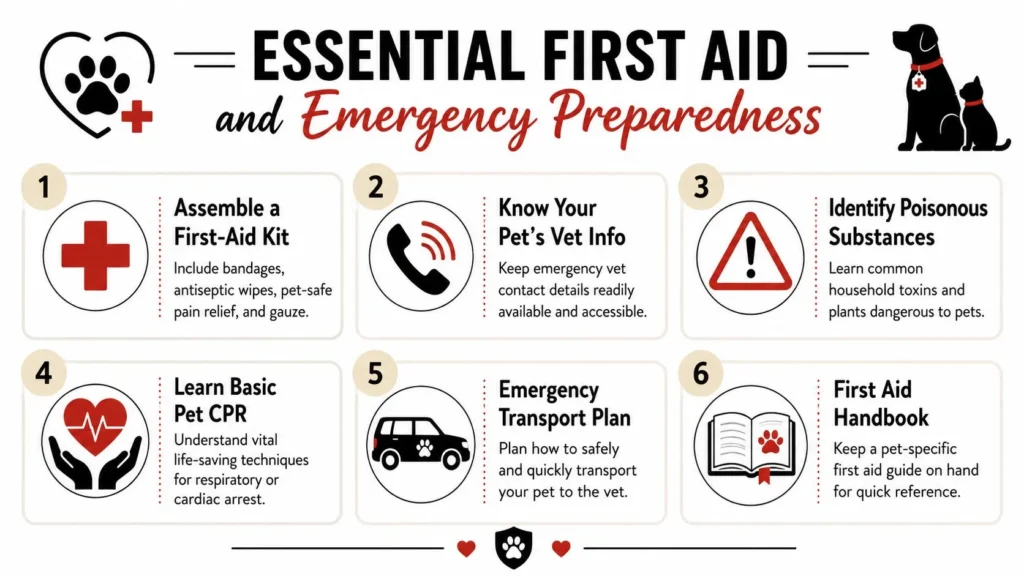
Essential First Aid and Emergency Preparedness
Most emergencies feel chaotic because they start with uncertainty. Is this serious? Can it wait? Should I induce vomiting? Should I move them, touch them, feed them, or leave them alone? The best preparation reduces that hesitation.
Know what counts as an emergency
Some signs justify urgent veterinary help even if you’re not sure of the cause.
Seek immediate care for things like:
- Difficulty breathing
- Seizures
- Uncontrolled bleeding
- Collapse or inability to stand
- Known toxin exposure
- Severe trauma
- Repeated vomiting with weakness or abdominal distress
- Straining to urinate, especially with little output
- Sudden severe pain
- Unresponsiveness
If you’re deciding whether to “watch and wait,” ask whether your pet is stable, alert, breathing comfortably, and able to rest without obvious distress. If the answer is no, don’t delay.
Build a kit before you need it
A home first-aid kit should support transport and temporary care, not replace veterinary treatment.
Useful items include:
- Gauze and nonstick pads
- Bandage material
- Antiseptic wipes or veterinary-approved wound-cleaning supplies
- A digital thermometer if your veterinarian has taught you how to use it
- Tweezers
- A towel or blanket for restraint and warmth
- A leash or secure carrier
- A muzzle for dogs if needed for safe handling during pain
- Your pet’s medication list
- Phone numbers for your regular clinic and nearest emergency clinic
Store the kit where everyone in the household can find it quickly.
What first aid can and cannot do
First aid is for the minutes before professional care. It can limit blood loss, reduce contamination, support safe transport, and help you avoid making a bad situation worse.
A few examples:
Minor wound
Gently control bleeding with pressure using clean material. Don’t pour random household products into the wound.Possible toxin ingestion
Remove access to the substance and call a veterinary professional or poison service right away. Don’t induce vomiting unless a professional tells you to.Heat stress concern
Move the pet to a cooler area and seek veterinary help promptly. Use cautious cooling, not extremes.Suspected fracture or severe pain
Limit movement and transport carefully. Don’t try to “set” anything at home.
Keep your actions simple. In emergencies, calm transport and rapid communication usually matter more than elaborate home treatment.
Put emergency information where you’ll actually see it
Phone numbers saved in one person’s phone aren’t enough. Write them down and place them on the fridge, in the first-aid kit, and in your car. Include your regular clinic, emergency clinic, and poison guidance contact. If your pet takes medication or has a chronic illness, keep that list with the carrier too.
Preparation feels boring until the day it saves time. Then it feels priceless.
If you want more practical, plain-language reading on pet health, training, and everyday care, visit maxijournal.com. It publishes approachable articles across pets and other everyday topics, which makes it a useful place to keep learning one manageable step at a time.
Discover more from Maxi Journal
Subscribe to get the latest posts sent to your email.