Your dog was ready for bed. Then the routine started. A few scratches at the blanket. A turn to the left, then another. Maybe a determined little dig into the cushion, a shove of a pillow with the nose, and finally a dramatic flop and a sigh.
If you’ve watched this and wondered, “Why is my dog doing that?” you’re not overthinking it. You’re noticing a real, recognizable behavior. Dog nesting behavior is common, often harmless, and surprisingly meaningful.
Most of the time, it’s your dog’s way of making a resting place feel safe, comfortable, and familiar. Sometimes, though, a change in nesting can point to stress, pain, pregnancy, or false pregnancy. The key is not just seeing the behavior. It’s seeing the context around it.
Why Your Dog Digs, Circles, and Settles In
One of the most familiar scenes in a dog-owning home happens right before sleep. Your dog heads to the bed, couch, crate, or even your laundry pile and starts “preparing” it. There’s pawing, circling, bunching up blankets, and sometimes a focused nuzzle into just the right corner. Then they settle.

That little ritual has a name. It’s called nesting. And in many dogs, it’s part of how they wind down.
Small dogs might bunch up a fleece throw into a tight donut shape. Larger dogs may scrape at a bed for a while before lying down. If you’re choosing a sleep setup for a tiny breed that loves to burrow and arrange bedding, resources like Nandog’s Chihuahua dog beds can help you think through size, softness, and support.
A dog’s body language during this routine matters too. Calm nesting looks very different from distressed pacing or frantic digging, and learning those signals can help. A simple guide to understanding dog body language can make those differences easier to spot.
Dogs often “tell” you whether nesting is normal by what happens right after. If they settle and rest, that’s reassuring. If they keep starting over and can’t relax, pay closer attention.
What Is Dog Nesting Behavior?
Dog nesting behavior is an instinctive, pre-sleep settling routine. According to All Dogs Dream’s explanation of why dogs nest, many dogs gather soft materials such as blankets, pillows, or clothing, then scratch, dig, circle, or nuzzle the area before lying down. That source also explains that this mirrors den-making tendencies inherited from wild canid ancestors.
In plain language, nesting is your dog’s version of fluffing a pillow, straightening a comforter, and finding the cool side of the bed.
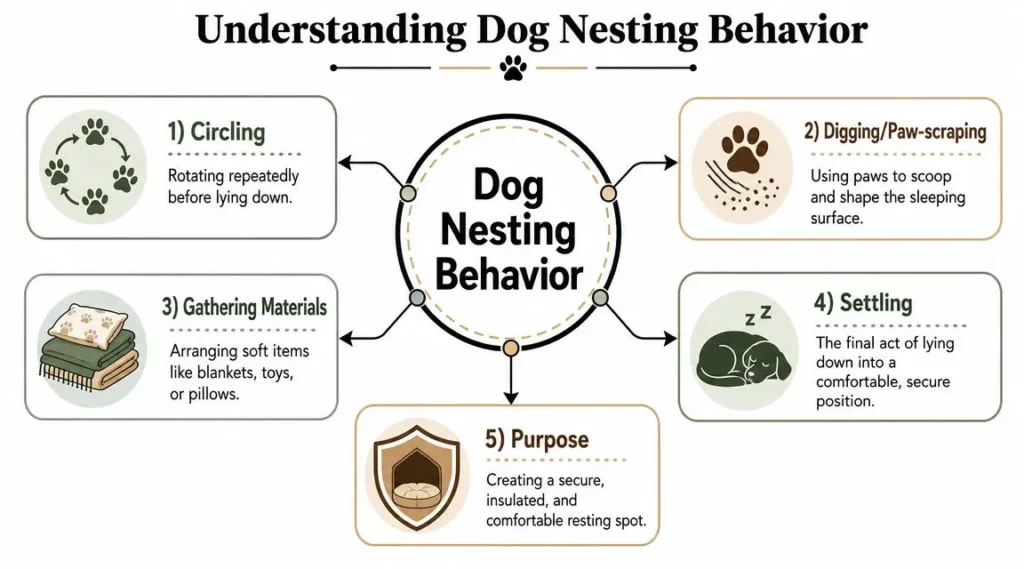
What nesting usually looks like
You may see one behavior or a sequence of several:
- Gathering soft items such as blankets, towels, toys, or even your sweatshirt
- Scratching or pawing at the bed, rug, crate mat, or couch cushion
- Circling before lying down
- Nuzzling or pushing bedding with the nose
- Repositioning more than once before finally settling
Not every dog does every part. One dog may circle twice and lie down. Another may spend several minutes bunching bedding into a mound.
Why owners get confused
People often assume nesting means one of two things. Either “my dog is being weird” or “my dog must be pregnant.” Neither is a reliable conclusion on its own.
Nesting is not automatically a problem. It’s also not limited to female dogs. Many dogs, including males and non-pregnant females, perform some version of this settling ritual because it helps them feel comfortable and secure.
Here’s a quick way to understand it:
| Behavior | What it often means |
|---|---|
| Calm circling and pawing before bed | Normal settling |
| Rearranging blankets and then sleeping | Comfort-seeking |
| Brief digging at bedding | Making the surface feel right |
| Repeated frantic attempts to settle | Needs closer attention |
What nesting is not
Nesting isn’t defiance. It isn’t your dog “being stubborn” about bedtime. And it usually isn’t a sign that you’ve trained something incorrectly.
Practical rule: If the behavior helps your dog relax and sleep, it’s probably serving a normal purpose.
The behavior starts to mean something different when it suddenly becomes intense, distressed, or out of character.
The Instinctive Roots of Nesting
Dogs live in homes now, but their bodies and brains still carry old survival habits. Nesting is one of them. A soft orthopedic bed in a climate-controlled house may look nothing like the outdoors, yet many dogs still act as if they need to shape, inspect, and secure the place where they rest.
That makes sense when you look at the behavior through an instinctive lens. PawPaw Pets’ discussion of dog nesting describes nesting as a pre-resting and shelter-building behavior tied to a dog’s need for thermal comfort, pressure modulation, and environmental security. The same source notes that dogs may paw, circle, scratch, or gather blankets to flatten bedding, remove irritants, and create a stable micro-environment.
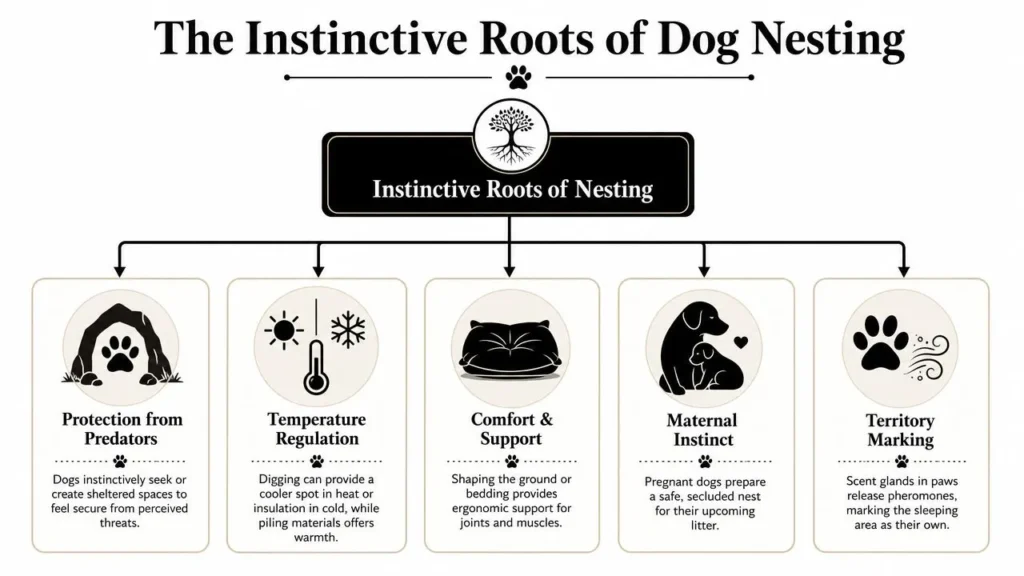
Comfort matters more than many owners realize
Some dogs nest because the bed doesn’t feel right yet. They may want a flatter surface. Or a puffier one. Or a shape that supports the hips, shoulders, and chest more comfortably.
That’s especially easy to notice in older dogs or dogs with stiff movement. They may not be “misbehaving.” They may be trying to reduce pressure and find a position that doesn’t hurt.
A few practical comfort drivers include:
- Surface feel. Rough seams, wrinkles, trapped crumbs, or bunched fabric can bother sensitive dogs.
- Body support. A dog may scrape bedding into a curve that fits the spine and limbs better.
- Resting predictability. Dogs often return to spots that feel familiar and smell like home.
Security is part of the routine
Many dogs also seem to prefer a protected resting zone. That doesn’t mean they think predators are in your living room. It means sheltered, low-traffic areas often feel more restful.
You may notice more nesting in places like:
- Crates with bedding
- Quiet bedroom corners
- A tucked-away spot behind furniture
- A bed placed away from busy doorways
When owners create a dedicated nesting zone and leave it mostly undisturbed, many dogs rest more easily.
A nesting spot works best when it’s quiet, clean, and predictable.
Temperature plays a role too
A dog may scratch and turn partly to adjust warmth. Some dogs bunch blankets under them for insulation. Others paw at bedding as if they’re trying to uncover a cooler patch.
That’s one reason nesting may change with the season, room temperature, or even the type of bed cover you use. The behavior isn’t random. Your dog may be making small environmental adjustments before sleep.
Nesting Variations That Deserve Your Attention
Normal nesting is calm, brief, and ends with rest. Concerning nesting usually has a different feel. It may be sudden, repetitive, intense, or paired with other changes in behavior or physical comfort.
Interpreting this behavior often leaves owners puzzled. The same action, scratching at bedding, can mean very different things depending on the dog and the situation.
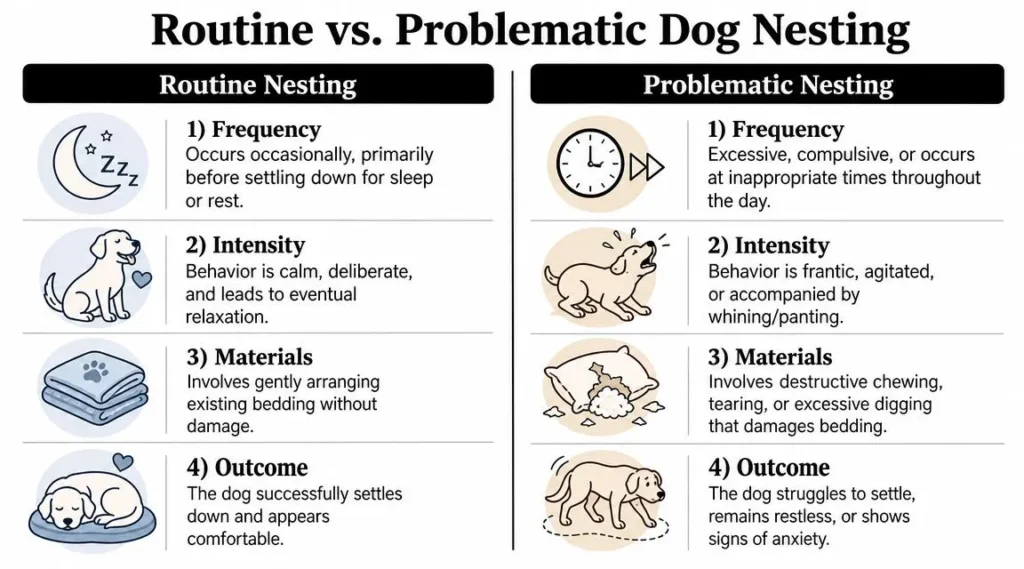
WagWalking’s overview of why dogs try to make a nest notes that nesting can increase around late pregnancy or false pregnancy and may be paired with restlessness, appetite changes, or carrying toys. The same source adds that excessive, frantic, or sudden nesting can overlap with discomfort, pain, or anxiety and should prompt veterinary review rather than being brushed off as a simple habit.
Pregnancy and false pregnancy
If an intact female suddenly becomes very interested in making a nest, especially in a secluded area, reproductive causes move up the list.
You might notice:
- More focused nest-building
- Restlessness
- Carrying toys or soft objects
- Changes around eating
- Protective behavior around a chosen area
This doesn’t automatically confirm pregnancy. False pregnancy can create a very similar picture. What matters is the cluster of signs, not nesting alone.
Anxiety and self-soothing
Some dogs use repetitive behaviors to calm themselves. Nesting can become one of those behaviors.
This version often looks different from ordinary bedtime preparation. The dog may start and restart the sequence. They may seem unsettled rather than sleepy. You may also notice that the behavior appears after disruption, noise, visitors, moving house, or schedule changes.
A dog who is anxious may:
- Scratch and circle repeatedly without lying down
- Move from one resting place to another
- Pant, pace, or seem unable to switch off
- Guard the nesting area more than usual
Pain and physical discomfort
Pain is easy to miss because dogs don’t always yelp or limp. Sometimes they just can’t get comfortable.
A dog with discomfort may keep trying to settle, stand back up, and try again. You might see nesting on hard floors, soft beds, and rugs in quick succession, as if nothing feels right. That repeated repositioning can be a clue that the problem isn’t the bed. It’s the body.
Here’s a simple comparison:
| Pattern | More reassuring | More concerning |
|---|---|---|
| Timing | Mostly before naps or bedtime | Happens throughout the day, out of character |
| Energy | Calm, methodical | Agitated, restless, frantic |
| Outcome | Dog settles and sleeps | Dog keeps moving, whining, or panting |
| Context | Familiar routine | Pregnancy signs, anxiety signs, or pain clues |
If nesting has changed suddenly, assume it means something before you assume it means nothing.
How to Manage Your Dog’s Nesting Habits
The goal isn’t to stop normal nesting. The goal is to give it a safe outlet and reduce the chances that it turns destructive, stressful, or confusing.
For many dogs, the best response is environmental support. Let the instinct happen in an appropriate place.
Build a nesting zone that works
A good nesting area doesn’t need to be fancy. It needs to be predictable.
Try this:
- Choose a low-traffic spot where your dog won’t be bumped, surprised, or repeatedly interrupted.
- Use soft, washable layers so your dog can paw and rearrange without creating a mess you can’t manage.
- Keep it clean because many dogs settle better when the resting area feels fresh and consistent.
- Offer enough space for turning and circling, especially for dogs that like a little ritual before lying down.
Some owners like adding a blanket with familiar scent cues. If your dog finds comfort in soft layers, custom dog photo blankets can give you ideas for creating a cozy item that feels personal and easy to recognize.
Don’t punish the behavior
If your dog scratches a bed before sleep, punishment won’t help. You’d be correcting an instinctive settling routine, not a deliberate attempt to annoy you.
What usually works better is redirecting the behavior to an approved surface and making that surface more rewarding. Guide the dog to the bed, praise calm settling, and make sure the location itself is comfortable enough to choose.
Support the whole dog, not just the bed
When nesting starts to look a little too frequent, zoom out. Ask what else might be missing from the day.
A few useful adjustments:
- More mental activity through food puzzles, sniffing games, and short training sessions
- Better daily rhythm with predictable meals, walks, and rest times
- Gentle skill-building for dogs who struggle to settle on cue
If you want to strengthen calm routines, practical advice on how to train your dog can help you reinforce bed cues, relaxation, and redirection without force.
The best management plan is simple. Give your dog a place where nesting is allowed, comfortable, and boring enough to end in sleep.
When to Call Your Vet About Nesting
Most nesting is not an emergency. A change in nesting can be.
Call your veterinarian if your dog’s nesting suddenly becomes intense, distressed, or clearly different from their usual pattern. Owners often hesitate because the behavior can look harmless on the surface. But when a dog repeatedly tries to get comfortable and can’t, that deserves medical attention.
Red flags that shouldn’t wait
Contact your vet if you notice any of the following:
- Sudden increase in nesting when your dog didn’t do this before
- Frantic or obsessive behavior that doesn’t end in settling
- Restlessness with signs of discomfort such as repeated repositioning
- Pairing with appetite changes, especially in an intact female
- Carrying toys and acting maternal when pregnancy or false pregnancy may be possible
- Whining, panting, guarding, or distress around the nesting area
Trust the pattern, not a single moment
One odd bedtime doesn’t always mean a problem. A repeated pattern does.
If your dog seems uncomfortable in other ways too, mention everything you’re seeing. For example, eye changes, discharge, reduced appetite, or a drop in normal energy can add important context. If you’ve also noticed changes around the face or eyes, this guide to dog eye discharge may help you organize what to watch before your appointment.
Bring your vet a short description of:
- when the nesting started
- whether it happens only at rest times or all day
- what behaviors happen before and after
- any appetite, sleep, or mood changes
That kind of observation helps far more than guessing at the cause.
Your Dog Nesting Questions Answered
Owners usually have a few lingering questions after they realize nesting is common. The short answer is that context matters more than the behavior itself. A video discussion of nesting as a self-soothing and environment-adjusting behavior notes that it becomes concerning when it is obsessive or frantic, which is why the surrounding circumstances matter so much.
Is my dog nesting because they’re bored?
Sometimes, yes. A dog with too little mental engagement may turn repetitive behaviors into a way to pass time or self-soothe. But boredom is only one possibility. Room temperature, stress, routine changes, and comfort preferences can all shape dog nesting behavior too.
Should I stop my dog from nesting in my bed?
You don’t need to stop the nesting itself. You need boundaries about location. If you don’t want your dog arranging your bedding, offer a more appealing alternative nearby with soft layers and privacy. Most dogs choose the place that feels best and most predictable.
Do some dogs nest more than others?
Yes, though not always for dramatic reasons. Individual preference plays a big role. One dog circles once and lies down. Another needs to bunch a blanket, paw the corner, turn twice, and then settle. That difference alone isn’t a problem.
Is nesting always a sign of anxiety?
No. It can be a self-soothing behavior, but self-soothing is not the same as pathology. Many normal dogs use small rituals to relax. Worry rises when the nesting looks driven, distressed, or impossible to interrupt.
What’s the simplest way to judge it?
Ask one question: Does my dog look more comfortable after nesting, or less?
If the answer is “more comfortable,” that’s reassuring. If the answer is “less,” or “they never seem able to settle,” it’s time to look closer.
If you enjoy clear, practical guides like this one, visit maxijournal.com for more approachable reading on pets, health, science, and everyday questions that benefit from calm, evidence-aware explanations.
Discover more from Maxi Journal
Subscribe to get the latest posts sent to your email.