You hear it once and barely notice. Then again. Then a little sneeze fit while your kitten is trying to eat, play, or nap, and suddenly you’re thinking, my kitten keeps sneezing, is this serious?
Most of the time, sneezing in a kitten falls into a few practical buckets. It’s either an irritated nose, a common upper respiratory infection, or a red flag that needs a vet sooner rather than later. The hard part for new owners isn’t finding a giant list of causes. It’s knowing how to sort what you’re seeing into the right category without either panicking or waiting too long.
Kittens also hide illness better than people expect. A mildly stuffy adult cat may power through the day. A tiny kitten can get run down faster, especially if congestion starts affecting eating, drinking, or breathing. That’s why I tell owners to stop asking only “why is my kitten sneezing?” and start asking “what pattern am I seeing?”
Common Causes for a Sneezing Kitten
If your kitten has suddenly started sneezing, the most likely cause is an upper respiratory infection, often called a cat cold. Veterinary references note that in young, otherwise healthy cats with acute onset sneezing, infection is the most likely explanation, and the most frequent agents are feline herpesvirus and feline calicivirus, as outlined in Royal Canin’s veterinary guide to the sneezing cat.
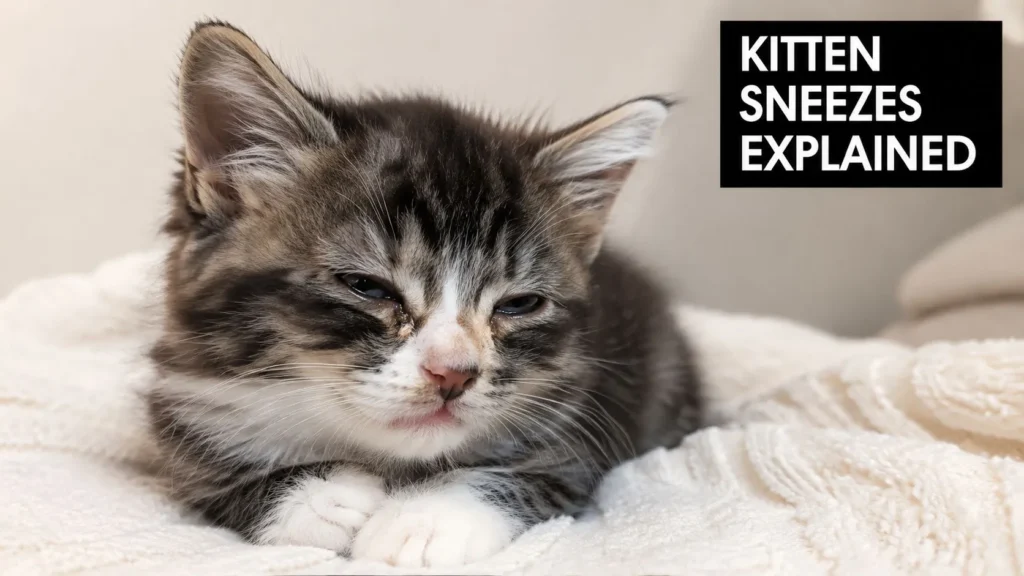
The most common cause is a cat cold
A kitten URI often acts a lot like a human cold. The nose gets inflamed. Mucus builds up. Sneezing starts because the body is trying to clear irritated nasal passages.
This is especially common in young cats from busy environments. Shelters, foster systems, and multi-cat households are places where these infections spread easily. If you recently brought a kitten home, a URI moves high on the list right away. For a useful overview of what that can look like in practice, these UK vet insights on cat URI are worth reading.
Sometimes the problem is the room, not the kitten
Not every sneezing kitten has an infection. A nose can react to dust, smoke, perfume, litter dust, cleaning sprays, mold, pollen, or other airborne irritants. These cases often show a pattern. The kitten sneezes after you clean, after a litter change, or only in one room.
That’s why I pay attention to environment early. If a kitten seems bright, active, and otherwise normal, and the sneezing lines up with a specific trigger, irritation becomes more likely than infection. Long-coated kittens can also collect more dust and debris around the face and nose, which makes routine grooming and a clean setup more important. Owners of fluffier cats often find that simple home adjustments help, especially if they’re also learning coat care basics with a long haired kitten guide.
Practical rule: A sneeze by itself doesn’t tell you much. The pattern around the sneeze tells you more.
Other causes that matter
A sneezing kitten can also have something less obvious going on. The broader list includes:
- Foreign material in the nose. This matters more if sneezing starts suddenly, especially after outdoor access.
- Bacterial or fungal disease. These are recognized causes, particularly when symptoms don’t clear or become more severe.
- Dental disease or chronic nasal disease. Less common in a very young kitten, but part of the differential.
- Rare but serious conditions. Tumors are on the long list for sneezing cats in general, though they are not the first thing most owners should assume in a young kitten.
The takeaway is simple. Most sneezing kittens have something common and treatable, but “common” doesn’t mean “ignore it.” A few careful observations at home can tell you whether you’re likely dealing with irritation, a routine URI, or a problem that needs a vet visit.
How to Assess Your Kitten’s Symptoms
Start with a notebook, your phone notes app, or even a few timestamped videos. Owners often tell me, “He was sneezing a lot,” but what helps most is detail. Was it one sneeze here and there, or repeated bouts throughout the day? Did it begin after switching litter? Is the kitten still eating normally?
That kind of pattern-tracking matters because reputable veterinary guidance emphasizes that changing the environment and watching for triggers can be the right first step, especially when sneezing happens only in one room or after litter changes, as explained in BluePearl’s discussion of cat sneezing and environmental triggers.
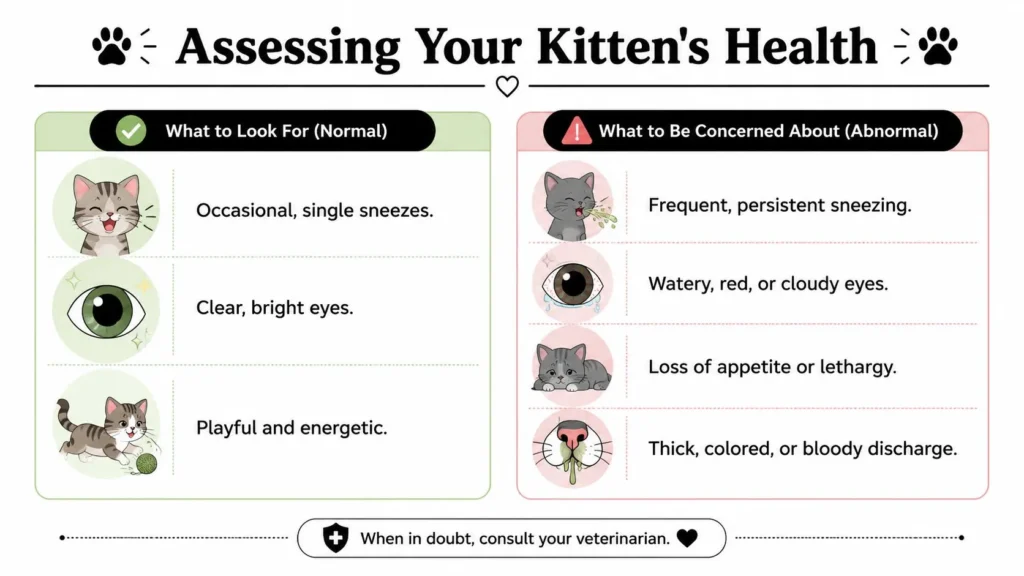
Watch the sneeze pattern
Not all sneezing means the same thing. Use this quick comparison:
| Pattern | More consistent with | What to do |
|---|---|---|
| Single occasional sneezes | Mild irritation or normal reflex | Monitor |
| Sneezing only after litter, sprays, or dusty cleaning | Environmental trigger | Remove trigger and observe |
| Multiple sneezes per day for several days | Infection or ongoing irritation | Book a vet appointment |
| Sudden violent sneezing, especially after outdoor access | Possible foreign material | Contact your vet |
A helpful practical question is this: Can you predict when it happens? If yes, irritation climbs higher on the list. If no, and it’s getting more frequent, infection becomes more likely.
Check the discharge and the eyes
The nose and eyes usually tell the story faster than the sneeze itself.
Look for:
- Clear discharge. This can happen with mild irritation or early infection.
- Thick yellow, green, or bloody discharge. This is more concerning and should not be brushed off.
- Watery, red, swollen, or cloudy eyes. Eye involvement often points to a respiratory illness rather than simple dust.
- Crusting around the nose. Congestion can make kittens less willing to eat because they can’t smell well.
If you need a practical orientation to normal kitten behavior overall, this primer for a first time cat owner can help you spot what’s routine versus what feels off.
If the discharge is getting thicker, darker, or blood-tinged, stop treating it like a harmless sneeze problem.
Look at the kitten, not just the nose
This is the part many people miss. A kitten with a mildly irritated nose may still act perfectly normal. A kitten with a brewing URI often starts changing in small ways before owners notice how sick they feel.
Pay attention to:
- Appetite. Is your kitten finishing meals, sniffing food and walking away, or struggling to smell food?
- Energy level. Bright and playful is reassuring. Quiet, hiding, or less interactive is not.
- Breathing sounds. Listen for snuffling, congestion, wheezing, or cough.
- Hydration and grooming. A stuffy kitten may stop cleaning well and may seem tacky around the mouth or nose.
A simple home triage checklist
Use this framework when you’re deciding what category your kitten fits into:
- Likely mild irritation if the sneezing is occasional, tied to a trigger, and your kitten is eating, playing, and breathing normally.
- Likely common infection if the sneezing is frequent, there’s eye or nose discharge, and your kitten seems less energetic or less interested in food.
- Possible urgent problem if breathing is affected, there’s blood, or your kitten is becoming weak or unwilling to eat.
That’s the point where “my kitten keeps sneezing” stops being a vague worry and becomes something you can describe clearly to a veterinary team.
When to Call the Vet Immediately
Sneezing by itself doesn’t always mean emergency care. Sneezing plus the wrong companion signs can change the situation fast. The safest way to think about it is in three levels: wait and monitor, book a vet appointment, and go urgently.
That tiered approach matters because persistent sneezing gets lumped together too often. A more useful framework separates routine observation from signs that suggest upper airway disease, lower airway disease, or bleeding. Pawlicy’s summary of veterinary guidance notes that sneezing with coughing points toward an upper respiratory process, sneezing with wheezing may suggest lower respiratory disease, and sneezing blood is a reason to contact a vet in their guide to sneezing in kittens.
Wait and monitor
You can usually watch at home for a short period if all of the following are true:
- Sneezes are occasional and not happening in repeated fits all day
- No thick or bloody discharge is present
- Eyes look normal or only mildly watery
- Appetite and play are normal
- Breathing looks easy and quiet
This is the group where cleaning up dust, stopping scented sprays, and switching away from a dusty litter may make a visible difference.
Book a vet appointment
Call your regular vet soon if you notice any of these:
- Sneezing multiple times a day for several days
- Eye discharge or squinting
- Yellow or green mucus
- Reduced appetite
- Lethargy or hiding
- Coughing with the sneezing
These kittens may not need an emergency hospital, but they do need a proper exam. Young cats can slide from “just congested” to dehydrated and not eating more quickly than owners expect.
Go urgently
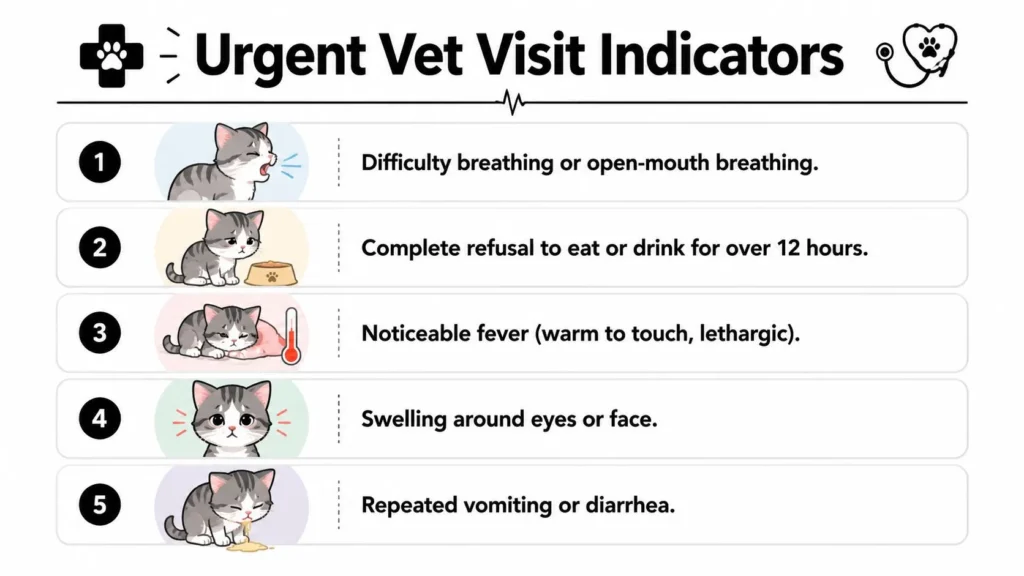
A kitten needs urgent veterinary attention if you see any sign that breathing or overall stability is being affected.
- Open-mouth breathing or obvious trouble breathing
- Wheezing
- Blood from the nose
- Marked weakness
- Refusal to eat or drink
- Swelling around the face or eyes
- Repeated vomiting or diarrhea along with respiratory signs
Do not wait: If your kitten is struggling to breathe, the question is no longer why they’re sneezing. The problem is oxygen and airway function.
One more practical point. Kittens compensate until they can’t. A tiny cat that seems “just sleepy” can be conserving energy because breathing feels harder or congestion has made eating too difficult. If your gut says your kitten looks unwell, trust that and make the call.
What to Expect at the Vet Visit
Many owners delay an appointment because they’re worried the vet visit will be stressful, expensive, or full of tests their kitten doesn’t need. Most sneezing workups start with less complexity than people think. The first goal is to narrow down whether the problem looks infectious, environmental, structural, or something chronic.
Your vet will usually begin with history. Expect questions about when the sneezing started, whether it’s getting worse, what the discharge looks like, whether your kitten came from a shelter or rescue, and whether anything changed at home. That includes litter, cleaners, smoke exposure, diffusers, and other pets.
The exam usually answers a lot
A hands-on exam often gives the team important clues right away. They’ll look at the eyes, nose, mouth, hydration, temperature, body condition, and breathing effort. They’ll also listen to the chest and check for facial asymmetry, mouth pain, or anything suggesting that the issue isn’t just a simple URI.
Bring photos or a short video if the sneezing fits happen mostly at home. Owners often capture patterns that aren’t obvious in the exam room.
Testing depends on the pattern
Veterinary sources describe a broad differential for sneezing cats that includes irritants, foreign bodies, dental disease, and fungal disease, and they note that chronic cases may need imaging, biopsy, rhinoscopy, or PCR testing rather than guesswork, as summarized in Lemonade’s review of why cats sneeze.
That doesn’t mean every sneezing kitten gets advanced diagnostics. In real practice, testing is matched to the situation.
| What the vet sees | What they may recommend |
|---|---|
| Mild acute URI pattern | Supportive care and monitoring |
| Significant discharge or worsening signs | Medication and closer follow-up |
| Chronic or one-sided sneezing | Imaging or further nasal workup |
| Suspicion of a foreign body or structural issue | Rhinoscopy or referral |
| Ongoing unexplained disease | PCR testing, biopsy, or broader diagnostics |
If your kitten is young and otherwise straightforward, the appointment may be mostly exam, symptom assessment, and a treatment plan. If symptoms are persistent, unusual, or one-sided, expect a more detailed workup. That’s a good thing. It means your vet is trying to identify the cause instead of guessing.
Treatments and Supportive Home Care
Treatment depends on what the exam suggests. A viral URI doesn’t get handled exactly the same way as irritation from dusty litter, and neither of those looks like a foreign body or fungal disease. What works is matching treatment to the actual pattern, not throwing random remedies at the problem.
What veterinary treatment may involve
For a routine URI, the plan often focuses on keeping the kitten comfortable and preventing complications. If the veterinary team suspects a secondary bacterial problem, they may prescribe medication. If the eyes are involved, eye treatment may be added. If congestion is severe, the main priority is often getting the kitten eating and hydrated again.
When the cause is environmental, the fix may be much less dramatic. Remove the trigger, improve air quality, and stop exposing the nose to the thing that keeps setting it off. When the cause is structural or a foreign object, medications alone usually won’t solve it.
What actually helps at home
Supportive care makes a noticeable difference, especially for congested kittens.
- Use humidity. Sitting with your kitten in a steamy bathroom for a short time or using a humidifier can help loosen nasal secretions.
- Clean the face gently. Use a warm damp cloth or cotton pad to wipe away discharge from the nose and eyes.
- Make food easier to smell. Warm wet food slightly so aroma is stronger. Congested kittens often eat better when food is fragrant and soft.
- Keep water close. Sick kittens don’t always walk far to drink.
- Reduce stress. Give them a warm, quiet resting space away from noise and heavy activity.
Home care should support recovery, not replace veterinary advice when red flags are present.
What doesn’t help
Owners often want to give human cold medicine, leftover antibiotics, or over-the-counter allergy products. That’s where mistakes happen. Don’t medicate a kitten on guesswork. Even products people think of as simple can be a bad fit for a young cat. If you’re wondering about common household meds, read this safety-focused guide on whether you can give your cat Benadryl before trying anything on your own.
Also skip essential oils, strong vapor rubs, and heavily scented “air freshening” products. A kitten with an irritated airway doesn’t need more things to inhale.
How to Prevent Sneezing in the Future
Prevention works best when you think in layers. Vaccination lowers risk and severity for common infectious causes, and environment control lowers the day-to-day irritation load on the nose. Those two strategies cover the majority of what owners run into.
Persistent sneezing in kittens is most often tied to URI, and Cats.com notes that 90% or more of upper respiratory conditions causing sneezing in cats are viral, with feline herpesvirus and calicivirus among the most common agents. That matters because viral infections create inflammation and can set a kitten up for secondary complications even when the illness started as “just sneezing.”
Build protection before there’s a problem
Vaccination doesn’t make every sniffle impossible, but it does matter. Core vaccines help reduce the severity of common respiratory infections. If you’re reviewing your kitten’s vaccine plan and want a plain-English refresher, this guide on all about the FVRCP shot gives useful background for owners.
Other prevention basics are just as practical:
- Keep kittens indoors to reduce exposure to infectious cats and nasal irritants outdoors.
- Isolate sick cats in multi-cat homes when respiratory signs show up.
- Wash your hands after handling an ill cat, litter, or bowls.
- Reduce stress because stressed kittens often handle infections less well.
Clean air helps more than people realize
A lot of recurrent sneezing cases improve when owners stop focusing only on medicine and look hard at the home.
Try these changes:
- Choose a lower-dust litter
- Avoid smoke, sprays, perfumes, and diffusers near the kitten
- Use unscented cleaning products when possible
- Vacuum and dust regularly
- Wash bedding and food areas routinely
If your kitten only sneezes in one part of the house, that’s useful information. The room may be the issue.
Support the kitten, not just the symptom
Healthy routines matter. Good nutrition, steady hydration, proper vaccination, a clean litter area, and low-stress handling all support a kitten’s ability to recover from minor respiratory insults without spiraling into a bigger problem.
If you remember one thing, make it this: my kitten keeps sneezing is not a diagnosis. It’s an observation. The next step is to sort that observation into one of three categories. Irritation, infection, or urgent red flag. Once you do that, the right response gets much clearer.
If you like clear, practical pet guides without the fluff, maxijournal.com publishes approachable articles across pets, health, science, travel, entertainment, and more. It’s a good place to bookmark if you want straightforward reading and simple answers from an independent online magazine.
Discover more from Maxi Journal
Subscribe to get the latest posts sent to your email.