You’re probably here because a tiny fluffball has entered your life, and you’re trying to answer a very practical question: what exactly does this coat mean for the months ahead?
A long haired kitten can look like a little cloud with paws. The ears seem extra fuzzy, the tail looks puffed out before the kitten has grown into it, and brushing already feels like something you should be doing, even if you’re not sure how. That instinct is right. Long-haired kittens are delightful, but they do need a bit more hands-on care than their short-haired friends.
The good news is that none of this has to feel intimidating. If you understand how the coat develops, what tools to use, and what changes to expect from early fuzz to full adult coat, caring for a long haired kitten becomes much easier. In many homes, grooming even turns into one of the best bonding routines of the day.
What Makes a Kitten Long-Haired
You bring home a tiny kitten who looks like a dandelion puff with whiskers, and within a week you start wondering whether that baby fluff is permanent or just a fuzzy kitten phase. That question matters, because the answer affects what kind of coat care your kitten will need as it grows from soft baby fuzz into its adult coat.
The clues usually show up at the edges first
In very young kittens, long hair often appears around the outline of the body before it shows clearly everywhere else. The coat looks light and airy instead of sleek. The ears may have little wisps at the tips, the toes may peek out with tufts of fur, and the tail can look fuller than you would expect on such a small kitten.
Those details matter because a kitten’s coat develops in stages. Early fluff is a little like a child’s first set of teeth. It tells you something useful, but it is not the finished version. A kitten can look plush at six or eight weeks and still mature into a medium-coated cat rather than a long-haired one.
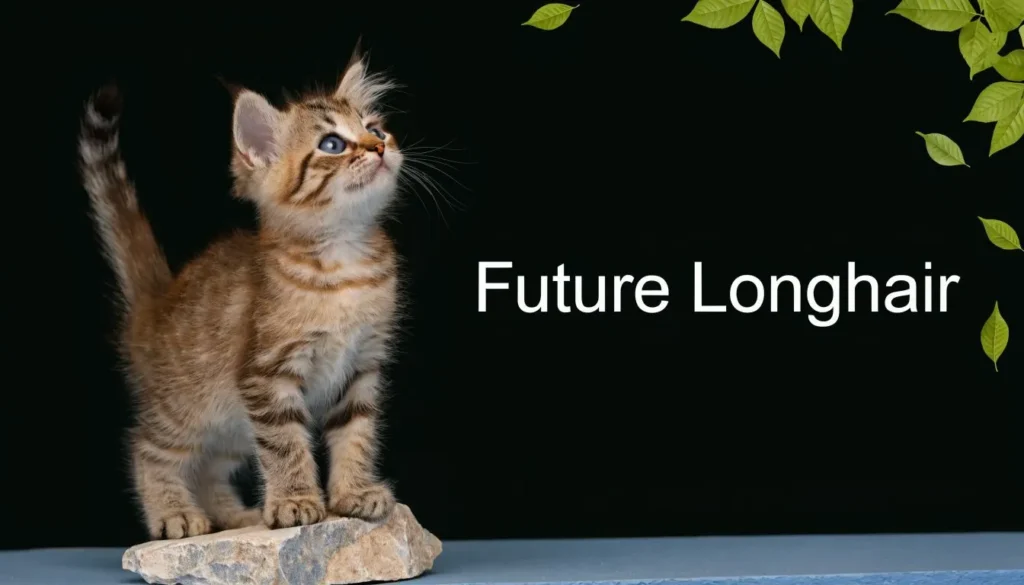
The areas I watch most closely are the ears, the fur between the toes, the tail, and the backs of the legs. In rescue settings, those spots often give the earliest reliable hints about the coat that will appear over the next several months.
Genetics decide the potential
Long hair in cats is usually linked to a recessive gene. In plain English, that means a kitten generally needs the long-hair version from both parents for the trait to show up.
A simple family comparison helps here. Some traits can stay hidden for a generation and then appear in one child when both parents carried them unexpressed. Cat coat length works in a similar way. Two short-haired cats can have a long-haired kitten if both parents carry the long-hair gene.
Researchers have linked feline long hair to mutations in the FGF5 gene. That tells us coat length starts with genetics, even though the final look can still vary a lot from kitten to kitten.
Long-haired describes a coat. It does not confirm a breed.
This is one of the biggest points of confusion for new owners. A long-haired kitten may be a purebred cat, but many are mixed-breed cats with a longer coat.
A shelter label such as Domestic Longhair is usually a coat description, not a detailed family tree. It means the kitten has long fur and mixed ancestry that is not tied to a documented breed line. That is very common, and it does not tell you much by itself about personality, size, or how dramatic the adult coat will become.
Here is the easiest way to separate the terms:
- Breed name: a known lineage, such as Persian, Maine Coon, or Ragdoll
- Coat description: a physical trait, such as long-haired or short-haired
- Domestic Longhair: a mixed-breed cat with a long coat
A fluffy kitten is still a work in progress
Long coats do not all grow in the same pattern. Some kittens stay soft and wispy for months before the tail plumes out and the leg feathers appear. Others start with obvious ear tufts and a puffed tail, then fill in across the chest and belly later.
That is why I encourage new owners to think in terms of a coat journey, not a label picked on day one. Your kitten begins as a fuzzball, then gradually reveals what kind of long-haired cat it will be. Watching those changes is part of the fun, and understanding them early helps you prepare for the grooming and coat care that fit your kitten’s next stage.
Exploring Common Long-Haired Cat Breeds
When people picture a long haired kitten, they often imagine a purebred show cat. In real life, you’re just as likely to meet a mixed-breed fluffball at a local rescue.
Four familiar long-haired types
Here’s a simple side-by-side look at the cats people most often mean when they talk about long-haired cats.
| Type | What stands out | General impression |
|---|---|---|
| Maine Coon | Large frame, shaggy coat, tufted ears | Often described as sturdy and social |
| Persian | Dense coat, round face, calm look | Often chosen by people who want a quieter lap cat |
| Ragdoll | Silky coat, soft expression | Known for a relaxed, easygoing reputation |
| Domestic Longhair | Mixed ancestry, wide variety of looks | The everyday long-haired cat found in many homes and shelters |

The important thing is that coat length alone doesn’t tell you temperament. A kitten can have a flowing coat and still be wildly athletic, very cuddly, slightly opinionated, or all three before lunch.
The shelter favorite is often the Domestic Longhair
If your kitten didn’t come with papers, the most likely label is Domestic Longhair. That isn’t a downgrade. It’s an honest description of a mixed-breed cat with a long coat.
Because of that mixed ancestry, these cats can look dramatically different from one another. One may resemble a mini Maine Coon. Another may have a softer Persian-like face. A third may look like no breed in particular and still be gorgeous.
According to Messybeast’s overview of longhair cats, Domestic Longhairs typically live 12 to 18 years and generally weigh between 8 and 15 pounds, with temperaments that range from highly sociable to more independent. That variety is exactly what many experienced adopters love about them.
Some of the best cats I’ve known were “just” Domestic Longhairs. Mixed ancestry often means fewer assumptions and more surprises, in the best way.
How to think about breed without overthinking it
If you’re choosing between a breeder kitten and a rescue kitten, focus on what will matter day to day.
- Coat maintenance: Persians often need very committed coat care. Many Domestic Longhairs do too, but the exact workload can vary.
- Personality fit: A playful household may want a busier, more interactive kitten. A quiet home may prefer a calmer one.
- Health conversations: With any kitten, ask about coat care habits, stool quality, eating habits, and how the kitten tolerates handling.
A long-haired coat is only one part of the cat. It matters, but it doesn’t tell the whole story.
Your Step-by-Step Kitten Grooming Guide
New owners often think grooming starts when the coat looks messy. It doesn’t. Grooming starts when the kitten is still easy to convince that a brush is just another strange little toy.
Start with tolerance, not perfection
Begin by letting your long haired kitten sniff the brush, bat at it, and rub against it. Then do one or two gentle strokes and stop. Offer a treat. Pet the kitten. Walk away before the kitten decides grooming is annoying.
That short, cheerful routine matters more than a long brushing session. You’re building a habit, not winning a wrestling match.
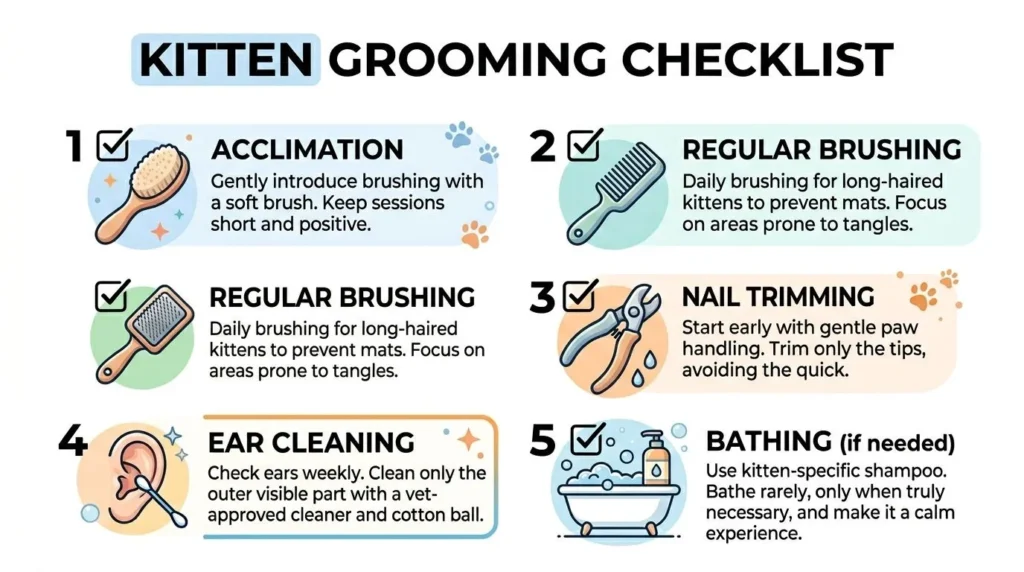
A good starter toolkit includes a slicker brush, a steel comb, and an undercoat rake. If you want examples, many owners use tools in these categories from brands such as Safari, Chris Christensen, Hertzko, and Andis. The brand matters less than choosing a tool that feels gentle in your hand and doesn’t scratch the kitten’s skin.
What each grooming tool actually does
- Slicker brush: Best for lifting loose surface fur and lightly detangling the topcoat.
- Steel comb: Your “truth detector.” If the comb catches, there’s still a tangle hiding underneath.
- Undercoat rake: Helpful for thicker coats where loose underfur builds up.
- Small nail trimmers: Not for the coat, of course, but worth introducing during the same handling sessions.
A long-haired cat’s double coat requires grooming 2 to 3 times weekly to prevent matting, and neglected longhairs have a 15 to 25 percent higher incidence of dermatitis compared to shorthairs, according to Litter-Robot’s Domestic Longhair care guide. The same source notes that regular grooming with an undercoat rake can reduce shedding by 30 to 50 percent.
That sounds clinical, but the practical takeaway is simple. Mats don’t just look untidy. They hold moisture close to the skin, pull when the cat moves, and can turn into painful skin trouble.
Brush the coat the way you’d detangle long human hair after a windy day. Small sections, light pressure, and patience work better than force.
For a quick visual demonstration, this video is useful for getting your hands and timing right:
A routine that works in real homes
Most families do best with a predictable pattern rather than random marathon sessions.
Choose a calm time
After play or after a meal works well. A sleepy kitten is usually more cooperative than a zooming one.Brush the easy spots first
Start around the shoulders and back. Save the belly, armpits, and rear leg fluff for later, once your kitten trusts the routine.Follow with the comb
The comb finds sneaky tangles behind the ears, under the front legs, and around the pants area.Stop early if the kitten gets irritated
You can always do another short session later that day.Check trouble zones often
Behind the ears, under the collar area if your kitten wears one, the armpits, and the hindquarters are the mat hotspots.
When a mat shows up anyway
Even careful owners find a knot now and then. Don’t cut blindly with household scissors. Cat skin is thin and easy to injure.
Instead, hold the fur close to the skin so it doesn’t tug, tease the mat apart gently with your fingers or comb, and use a de-matting tool only if you know how to handle it safely. If the mat is tight, close to the skin, or your kitten protests, call your veterinarian or a professional groomer.
Essential Nutrition and Health for Fluffy Kittens
A shiny coat doesn’t come from brushing alone. Grooming handles the outside of the fur. Nutrition supports what grows from the inside.
Why food shows up in the coat
When a kitten eats well, you often see it first in the skin and fur. The coat feels smoother, the skin stays calmer, and the fur is less likely to look dry or rough. Long-haired kittens especially benefit from a complete kitten diet because they’re building a lot of body tissue at once, including skin and hair.
The coat can also act like an early warning system. A dull, brittle, or messy-looking coat may reflect diet problems, illness, stress, parasites, or that the kitten isn’t yet getting enough help with grooming.
If you’re comparing formulas, a practical place to start is a guide to the best kitten food options so you can evaluate labels and feeding styles more confidently.
The two problems owners notice first
The first is hairballs. Long-haired kittens swallow more fur during self-grooming, especially once the coat starts thickening. Occasional retching up of a hairball can happen, but frequent gagging, repeated vomiting, constipation, poor appetite, or lethargy deserves a veterinary call. Owners often assume every cough is “just a hairball,” and that can delay care for other problems.
The second is matting, which is partly cosmetic at first and then quickly becomes medical. A mat acts like a tight felt blanket pressed against the skin. Air can’t move well under it. Moisture gets trapped. The skin can become sore, inflamed, or infected.
A healthy long-haired coat should separate when you part it with your fingers. If it feels like one solid sheet, the skin underneath needs attention.
Simple support that helps
- Choose a complete kitten food: Growth is demanding, and kittens need balanced nutrition rather than homemade guesswork.
- Keep fresh water easy to reach: Hydration helps overall health and supports normal digestion.
- Brush before problems start: This reduces loose fur swallowed during self-grooming.
- Watch the litter box: Changes in stool can affect grooming tolerance because a messy rear coat quickly becomes uncomfortable.
- Ask your vet before adding supplements: Fish oils and coat supplements sound appealing, but kittens need the right product and dose for their age and diet.
If your kitten’s coat suddenly changes, your first question shouldn’t be, “Which shampoo should I buy?” It should be, “Why did this coat change?” That mindset catches health issues much earlier.
Understanding the Kitten Coat Development Timeline
The coat of a long haired kitten doesn’t arrive all at once. It unfolds in stages, and each stage has its own look.
The soft baby phase
At first, the fur is what many owners call kitten fuzz. It’s soft, light, and a little wispy. Even in obviously fluffy kittens, this early coat often looks less dramatic than people expect because the adult structure hasn’t formed yet.
Then the transition begins. The undercoat thickens, the outline of the body gets rounder, and the kitten starts to look puffier almost week by week.
The fluff explosion
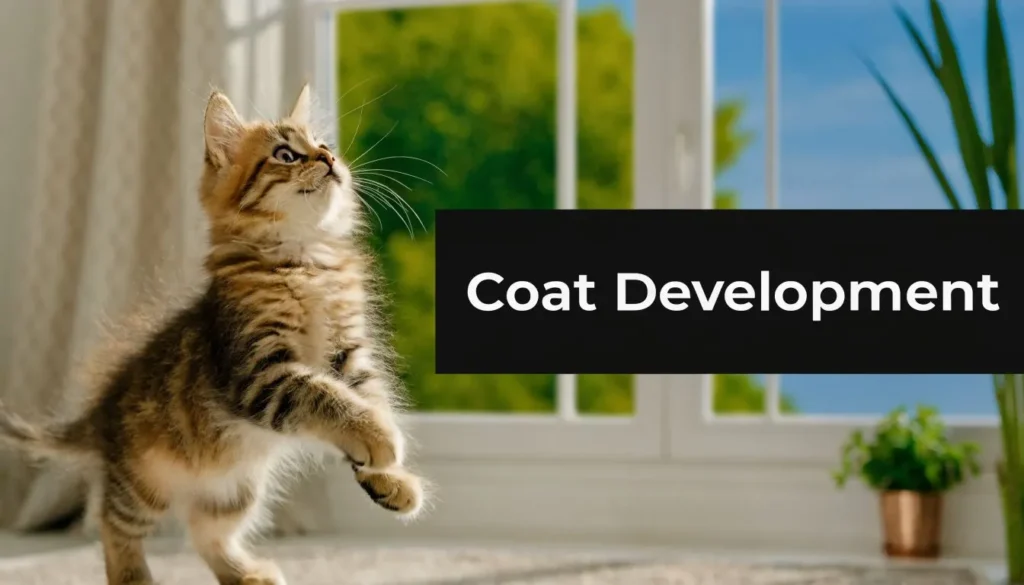
This is the stage that catches new owners off guard. According to CatKing Cattery’s discussion of coat development, long-haired kittens often go through a “fluff explosion” between 3 and 6 months, when the undercoat densifies and adds 2 to 3 times its initial volume. The same source notes that nutritional deficits in biotin or zinc can delay the process by 1 to 2 months.
That means your tidy little fluffball can suddenly become a much bigger grooming project in a surprisingly short time. Owners often think the coat changed overnight. It didn’t, but it can feel that way.
A simple way to think about age changes is to compare kitten milestones with cat age in human years, especially if you’re trying to match grooming habits to your pet’s maturity level.
The almost-adult look
As the months pass, the coat starts to organize itself. You may see a fuller neck ruff, thicker fur on the back legs, and a tail that finally looks intentionally luxurious rather than randomly oversized.
Here’s what many owners notice over time:
- Early months: Fine, soft fuzz and light feathering
- Middle months: Sudden bulk, more shedding, tangles appear faster
- Later kitten stage: Distinct ruff, breeches, and a heavier tail
Don’t judge the final coat too early. Some kittens look mildly fluffy at first and become spectacularly full-coated later on.
If your kitten seems awkward during this phase, that’s normal too. Growing into a large coat is a bit like a child growing into winter boots. They often need time to adjust to all that extra fluff.
Preparing Your Home and Lifestyle
The first week with a long haired kitten often surprises people in very ordinary ways. You sit down on the couch and find a little drift of fur on your sleeve. The litter box suddenly seems to travel on tiny furry pants. The soft baby coat that looked easy at eight weeks starts acting more like a wool sweater that catches everything by five or six months.
That shift is why home setup matters so much. A long-haired kitten does not stay in the same care stage for long. As the coat changes from loose baby fluff to a fuller, thicker coat, your routine needs to change with it.
What the commitment really means
A long coat needs regular help. Brushing works much like combing a child’s long hair after a windy day. If you do a little often, the job stays simple. If you wait too long, the tangles tighten close to the skin and the kitten may start to hate being handled.
Your schedule matters here. So does your tolerance for fur on clothing, blankets, and corners of the room. Long-haired kittens can fit beautifully into busy homes, but they usually do best with owners who can keep small care tasks consistent.
Set up your home for the coat your kitten is growing into
Prepare for stages, not just for the kitten you brought home today.
In the early weeks, focus on making handling feel safe. Leave a brush near the spot where your kitten naps, offer treats during short brushing sessions, and gently touch paws, ears, belly, and tail for a few seconds at a time. You are teaching cooperation before you need it.
As the coat starts filling out, your house needs a few practical upgrades:
- Create one grooming spot: Keep a comb, slicker brush, nail trimmer, and treats together so grooming does not turn into a scavenger hunt.
- Cover favorite lounging areas: Washable throws save a lot of frustration on beds, sofas, and window seats.
- Clean litter areas more often: Long rear and leg fur can trap litter and track it farther than short coats do.
- Plan for hygiene help: Some kittens need occasional sanitary trims from a groomer or veterinary team.
- Use short, calm practice sessions: One minute of gentle brushing today is better than ten stressful minutes after mats form.
A good setup also includes your calendar. Coat care is easier to manage when it becomes part of the day, like feeding or scooping the litter box.
Lifestyle changes that make long-haired kittens easier to live with
These kittens do best in homes where people notice small changes early.
A skipped brushing day is usually not a crisis. Several skipped days during a coat growth spurt can turn a simple grooming session into a wrestling match. The same goes for mess around the rear end, debris caught in the tail, or little knots behind the ears and under the front legs. Those spots are the cat version of backpack straps rubbing the same area over and over. Friction builds there fast.
If your kitten gets something irritating on the coat or skin, pause before reaching for a human product. This guide on whether Benadryl is safe for cats is a better place to start than guessing.
Long-haired kittens are wonderful companions. They just ask you to live a little more deliberately. If you build the routine while your kitten is still a small fuzzball, the full coat stage is much easier for both of you.
Frequently Asked Questions About Long-Haired Kittens
Are long-haired kittens hypoallergenic
No. A long-haired coat doesn’t make a cat hypoallergenic. People usually react to proteins in skin flakes and saliva, not just to visible fur. In practical terms, a bigger coat can also spread shed hair around the home more noticeably.
Do long-haired kittens always shed more than short-haired kittens
Not always in a way that’s simple to measure at home, but they usually look like they shed more because the hair is longer, easier to spot, and more likely to collect on furniture and clothing. Good brushing changes the situation a lot because it catches loose fur before it spreads everywhere.
Can a long-haired kitten be an outdoor cat
I generally don’t recommend it. Long coats pick up burrs, dirt, moisture, and debris easily. Outdoor roaming also makes matting harder to control and can hide skin problems until they’re advanced. Indoor life, with supervised safe outdoor access if available, is usually kinder to the coat and safer for the cat.
If your kitten gets into something irritating, or you’re tempted to use a human medication without guidance, it’s worth reading clear safety advice on whether you can give your cat Benadryl before trying anything on your own.
If you enjoy practical pet guides written in plain English, visit maxijournal.com for more approachable articles on cats, health, science, and everyday questions readers have.
Discover more from Maxi Journal
Subscribe to get the latest posts sent to your email.