You’ve probably heard the old “one cat year equals seven human years” rule. It’s time to toss that idea out the window. It’s a common myth that just doesn’t line up with how our feline friends actually age.
Cats live life in the fast lane, especially during their first two years. A one-year-old cat is basically a 15-year-old teenager, and by age two, they’ve hit the human equivalent of 24. After that initial sprint, their aging process slows down quite a bit.
How to Calculate Your Cat’s Age
The “times seven” rule is misleading because it completely misses the explosive growth cats experience early on. Their development is heavily front-loaded, with a massive leap from a dependent kitten to a physically mature adult happening in just 24 months.
The first year of a cat’s life is a developmental whirlwind, roughly equivalent to the first 15 years of a human’s life. This is when they truly become the cat you’ll know for years to come.
To get a more realistic picture, we can turn to the formula backed by veterinary experts, including the American Veterinary Medical Association (AVMA). It starts with a huge jump: a cat’s first year is equal to 15 human years. Their second year adds another nine human years. After that, it settles into a more predictable rhythm of about four human years for every cat year. You can dig deeper into this standard and what it means for your pet’s health with resources like PetMD’s guide to feline aging.
This visual gives you a quick breakdown of just how fast those first couple of years fly by.
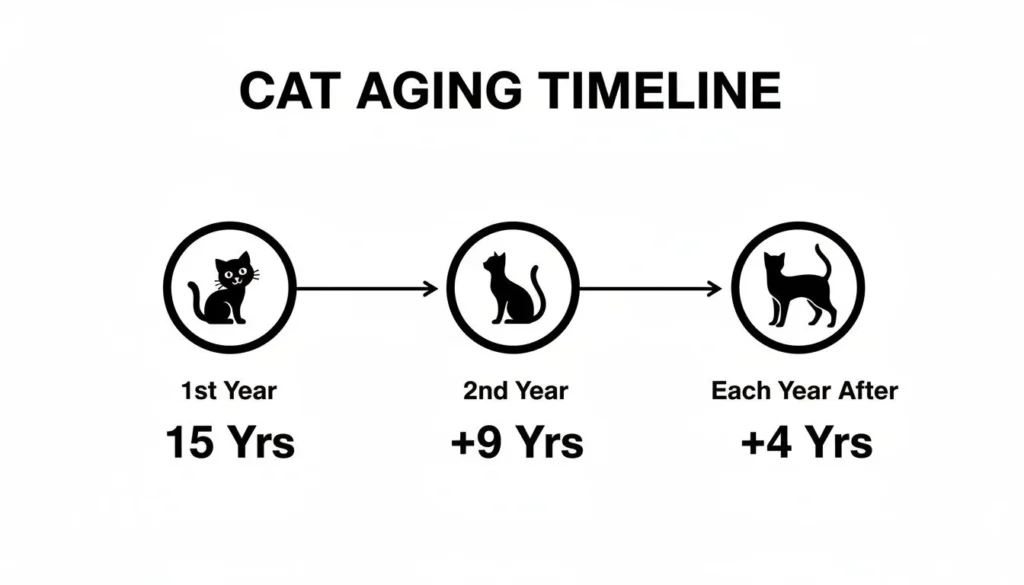
As the infographic shows, once you get past that initial two-year surge, the math becomes pretty straightforward. This modern approach gives you a much better lens for viewing your cat’s life stage, which is key for anticipating their needs. Realizing your cat is a teenager, a young adult, or entering their mid-thirties completely changes how you think about their behavior and health.
For a quick reference, here’s a handy chart that does the math for you.
Cat Age to Human Years Quick Conversion Chart
| Cat’s Actual Age | Equivalent Human Age |
|---|---|
| 1 Year | 15 Years |
| 2 Years | 24 Years |
| 3 Years | 28 Years |
| 4 Years | 32 Years |
| 5 Years | 36 Years |
| 6 Years | 40 Years |
| 8 Years | 48 Years |
| 10 Years | 56 Years |
| 12 Years | 64 Years |
| 15 Years | 76 Years |
| 18 Years | 88 Years |
| 20 Years | 96 Years |
This chart makes it easy to see how a cat’s age translates, helping you understand whether you’re dealing with the feline equivalent of a rambunctious teen or a settled senior.
Understanding Your Cat’s Six Life Stages
Like people, cats don’t just go from “young” to “old.” They move through distinct life stages, each bringing its own unique joys, challenges, and health needs.
Thinking about your cat’s age in human terms isn’t about getting a perfect number. It’s about getting a feel for where they are in their journey. Knowing these stages helps you provide the right kind of care, whether you have a rambunctious kitten or a wise old senior.
Kitten (0 to 6 months)
This is the phase of pure, explosive growth, much like a human child from birth to about age 10. Kittens are little sponges of energy and curiosity. Their main jobs are simple: learn how to be a cat from their mom and siblings, explore everything, and grow like a weed.
Keep in mind their immune systems are still getting up to speed, which makes them more vulnerable to certain illnesses. It’s wise to read up on common issues in young cats, like parasitic infections such as coccidia, so you know what to watch for.
Junior (7 months to 2 years)
Welcome to the teenage and young adult years, which cover the human equivalent of age 12 to 24. Your cat is now full-sized, but they’re still maturing mentally and emotionally. This is when their true personality really starts to emerge.
You’ll see a mix of goofy kitten behavior and more settled, adult moments. They’re at their physical peak—fast, agile, and often testing boundaries just to see what they can get away with.
A cat in the junior stage is like a person in their late teens or early twenties. They have all the physical tools of an adult but are still figuring out the world and their place in it.
Prime Adult (3 to 6 years)
From about age 28 to 40 in human years, your cat is in their absolute prime. They’re confident, know their routines, and have fully settled into their role in the household. Think of them as a self-assured adult in their thirties.
They are typically very healthy and active, but this is a critical time to double down on preventative care. Keeping them at an ideal weight and maintaining good dental health now will pay huge dividends for their senior years.
Mature Adult (7 to 10 years)
As your cat enters their mature adult phase—the equivalent of a human in their mid-40s to late 50s—you might start to notice the first subtle signs of aging. Maybe they sleep a little more soundly or think twice before leaping to the highest point of the cat tree.
This is a period where regular vet check-ups become non-negotiable. Catching any age-related issues early is the best way to ensure they transition smoothly into their golden years.
Senior (11 to 14 years)
Now officially a senior citizen, your cat is navigating the equivalent of human ages 60 to 72. This is when age-related health conditions become more common. For instance, 30-40% of cats in this group deal with arthritis, which might show up as a reluctance to jump or difficulty using the litter box.
A 12-year-old cat is roughly 64 in human years, and proactive care is key. Regular bloodwork, for example, can catch 80% of early diabetes cases, which can dramatically extend their lifespan. You can find more great info on proactive care for older cats on Chewy’s educational blog.
Geriatric (15+ years)
A cat who is 15 or older is considered geriatric, which is like a human aged 76 and up. These golden years require special attention to comfort and managing their health. Mobility problems, cognitive changes, and chronic conditions are common, but with dedicated, loving care, many geriatric cats continue to live happy and fulfilling lives.
How to Use the Cat Age Calculator
Understanding the theory behind cat aging is one thing, but putting it into practice is where it really clicks. Let’s get practical. There’s a simple formula you can use to quickly figure out your cat’s age in human years, no chart needed.
This hands-on method makes the conversion straightforward. The math is simple, but the result is a meaningful number that helps you relate to your cat’s current life stage on a much deeper level.
The Simple Formula for Cat Age
For any cat older than two, the calculation is surprisingly easy to remember. It’s designed to account for that rapid-fire growth in their first 24 months, followed by the more steady aging pace afterward.
Here’s the breakdown:
- Start with 24. This number covers their first two years, which is roughly equivalent to 24 human years.
- Calculate the remaining years. Just subtract two from your cat’s actual age.
- Multiply that number by four.
- Add it all together. Add the result to your base of 24 to get the final human-equivalent age.
The Formula: (Cat’s Age − 2) × 4 + 24 = Human Years
This gives you a solid estimate for any adult cat, turning an abstract idea into a number you can actually use. It’s a fantastic tool for building empathy and better understanding their needs.
Putting the Calculator to Work
Let’s walk through a few real-world examples. This is where you can see how the formula turns the concept of cat age in human years into a clear picture of your own cat’s life.
Example 1: A Playful 4-Year-Old Cat
Your cat is four. They’re still full of energy, confident, and clearly in their prime.
- Start with 24 (for their first two years).
- Subtract 2 from their age: 4 – 2 = 2.
- Multiply by 4: 2 × 4 = 8.
- Add it all up: 24 + 8 = 32 human years.
That energetic four-year-old of yours? They’re basically a human in their early thirties.
Example 2: A Mellow 9-Year-Old Cat
At nine years old, your cat has settled into their mature adult phase. Things are a bit more relaxed.
- Start with 24.
- Subtract 2 from their age: 9 – 2 = 7.
- Multiply by 4: 7 × 4 = 28.
- Add it all up: 24 + 28 = 52 human years.
Your mellow nine-year-old is navigating the equivalent of their early fifties.
Example 3: A Wise 16-Year-Old Senior
Your sweet cat just turned sixteen, making them an official senior citizen in the feline world.
- Start with 24.
- Subtract 2 from their age: 16 – 2 = 14.
- Multiply by 4: 14 × 4 = 56.
- Add it all up: 24 + 56 = 80 human years.
Your wise old friend is enjoying their golden years, just like an 80-year-old person would be.
Factors That Influence Your Cat’s Aging Process
While the age conversion chart is a handy tool, it’s really just a starting point. Think of that chart as a general map—but the actual road your cat travels is unique, shaped by some powerful factors that can speed up or slow down the aging process.
It’s a lot like human identical twins. If one leads a healthy, active life and the other doesn’t, they’ll age very differently despite their identical genes. The same goes for our cats. Understanding what influences their aging is the key to giving them a long, happy, and healthy life.
The Great Indoors Versus the Great Outdoors
Where your cat lives is probably the single biggest factor in how they age. An indoor-only cat and a cat with outdoor access are living in two completely different worlds, and this has a massive impact on their health and lifespan.
Indoor Cats: These kitties live in a protective bubble. They’re safe from traffic, predators, fights with other animals, and many contagious diseases like Feline Leukemia (FeLV). This sheltered lifestyle drastically cuts their risk of injury and serious illness, allowing them to age much more slowly and gracefully.
Outdoor Cats: Life on the outside is tough. These cats face a daily gauntlet of dangers, from harsh weather and parasites to poisons and territorial battles. The chronic stress and high risk of injury or illness mean they often “age” much faster from a health standpoint.
The difference in how long they live is dramatic. A well-cared-for indoor cat can easily live into their late teens or even early twenties. The decision to keep a cat indoors is one of the most powerful “anti-aging” choices an owner can make.
The lifestyle contrast is immense. While the maximum cat age is often cited around 20.8 years (comparable to a 100-year-old human), feral cats face a much harsher reality, with an average lifespan of just 4.4 years. Adopting a cat to live indoors can increase their potential longevity by over 300%. You can explore more on how environment affects feline aging with insights from Litter-Robot’s detailed guide.
Breed, Nutrition, and Preventative Care
Beyond just where they live, a few other key pieces of the puzzle determine how your cat ages. These factors all work together, either bolstering their health or presenting new challenges as they get older.
Breed and Genetics
Most domestic cats age along a similar timeline, but some purebreds come with genetic predispositions to certain health problems. For instance, Maine Coons can be prone to hip dysplasia, while Persians might face dental or breathing issues. Knowing your breed’s specific risks helps you and your vet stay one step ahead.
Nutrition and Body Condition
A balanced, high-quality diet is the absolute foundation of good health, supporting everything from their immune system to their joints. Obesity has become a huge problem for cats, putting extra strain on their organs and accelerating age-related diseases like arthritis and diabetes. Keeping your cat at a healthy weight is crucial.
Preventative Veterinary Care
Regular vet check-ups are your secret weapon against premature aging. Things like vaccinations, parasite control, and professional dental cleanings are essential. For older cats, routine bloodwork can catch problems long before they become serious. Partnering with your vet is the best way to make sure your cat’s golden years are truly golden.
Age-Specific Care for a Healthier Cat

Figuring out your cat’s age in human years isn’t just a fun party trick. It’s actually a practical tool for understanding their health needs and giving them the best possible care. This knowledge helps you become a more informed partner in their well-being.
After all, you wouldn’t give a toddler the same diet or medical attention as a 40-year-old or an 80-year-old. The same logic holds true for our cats. Each life stage has its own unique set of priorities, and matching your care to these needs is the key to a long and healthy life for your companion.
Care for Kittens and Junior Cats
Those first two years are a whirlwind. Your cat transforms from a tiny newborn into the feline equivalent of a 24-year-old human. The main goal here is building a strong foundation for a healthy life.
This is the time for essential preventative care that pays off for years to come.
- Vaccinations: This is non-negotiable. Core vaccines are critical for protecting your kitten from common and often fatal diseases. Your vet will set up the right schedule.
- Spaying or Neutering: Besides preventing unwanted litters, this procedure has real health advantages. It dramatically lowers the risk for certain cancers and can curb unwanted behaviors.
- Socialization: Gently exposing your young cat to new people, sounds, and experiences helps them grow into a confident and well-behaved adult.
- Parasite Prevention: Kittens are magnets for fleas, ticks, and internal worms. Sticking to a consistent prevention plan is crucial for their health and comfort.
This early investment sets them up for a happy and robust adulthood.
Health Priorities for Prime and Mature Adults
Once your cat hits their prime adult years (ages 3-6, or about 28-40 in human years), the game changes. The focus shifts from building a foundation to proactive maintenance and preventing future problems.
The two biggest concerns for this age group are dental health and weight management. Periodontal disease is incredibly common in adult cats, leading to pain, tooth loss, and even infections that can spread to other organs. At the same time, obesity puts immense strain on their joints and internal systems, hiking the risk of diabetes and arthritis.
Try thinking of your 8-year-old cat not just as “getting older,” but as a person in their late 40s. Just like for a human at that age, simple choices about diet and exercise become incredibly important for a smooth transition into their senior years.
Proactive Care for Senior and Geriatric Cats
As your cat enters their senior years (age 11 and up), your job shifts to that of a vigilant health monitor. This is when age-related issues tend to surface, and catching them early makes all the difference. You can learn more about the role of diet for less active felines in our guide to the best cat food for indoor cats.
For senior and geriatric cats, vets strongly recommend more frequent check-ups, often twice a year. Think of it like a 70-year-old person going to their doctor for regular screenings. These bi-annual appointments are vital for catching common senior cat illnesses early, such as:
- Kidney Disease
- Hyperthyroidism
- Arthritis
- High Blood Pressure
- Diabetes
By working closely with your vet, you can design a health plan that adapts to your senior cat’s changing needs, making sure their golden years are as happy and comfortable as they can be.
Putting It All Together for Your Cat
Figuring out your cat’s age in human years is more than just a fun party trick. It’s about empathy. It completely changes how you look at their daily habits and quirky behaviors. Suddenly, you stop thinking of them as just “young” or “old” and start seeing them for the specific life stage they’re in.
Think about it. When you realize your twelve-year-old cat isn’t just “slowing down” but is actually dealing with life like a human in their late 60s, your entire perspective shifts. It just clicks. That’s why they might love that new orthopedic bed, seek out a sunny, quiet corner for naps, or benefit from more frequent vet check-ins.
This is the most important part: turning those numbers into real-world empathy. It’s the connection between their aging and your day-to-day care, and it makes the bond you share that much stronger.
At the end of the day, knowing your cat’s “human” age makes you a better, more tuned-in cat parent. When you can see the world through their age-equivalent eyes, you can get ahead of their needs and tweak their environment to match. This kind of understanding is what helps you give them an amazing quality of life, from their crazy kitten days all the way through their golden years.
Frequently Asked Questions About Cat Age
Even with the best charts and formulas, you’re bound to have some real-world questions about your own cat. Let’s tackle some of the most common ones that pop up.
How Can I Estimate My Adopted Cat’s Age?
If you’ve brought home a cat with a mysterious past, your veterinarian is your number one detective. Vets are pros at estimating age by examining a few key physical clues, piecing together the story of your cat’s life.
Their biggest clue is almost always the teeth. They’ll look for tartar buildup and general wear-and-tear. A young cat’s pearly whites are a dead giveaway, while a senior will almost certainly have yellowing, significant tartar, and maybe even a few missing teeth.
Beyond the mouth, they’ll also check out a few other things:
- Eye Clarity: Kittens and young adults have crystal clear, bright eyes. An older cat might start to show some cloudiness or haziness.
- Coat Condition: A kitten’s fur is incredibly soft and fine. As a cat ages, its coat can become coarser, thinner, or even a bit scruffy.
- Muscle Tone: Young adult cats in their prime are typically lean and well-muscled. Seniors, on the other hand, may be bonier and have less muscle mass.
Do Different Cat Breeds Age at Different Rates?
For the most part, the standard aging formula works well across almost all domestic cat breeds. However, some purebreds come with genetic baggage that can affect their “healthspan,” if not their direct age conversion.
For example, large breeds like Maine Coons are sometimes more prone to hip dysplasia, and Siamese cats can face more dental problems as they get older. While they are technically aging at the same rate, these kinds of conditions can make them feel older or require senior-level care much sooner than other cats.
When it comes to any health concern, your vet is always the best person to ask. You can also read more about what medications are safe in our article explaining if you can give your cat Benadryl.
Is the Multiply by Seven Rule Ever Correct?
Nope, not at all. The old “multiply by seven” rule is a persistent myth that just won’t go away.
It completely fails to capture the lightning-fast development cats go through in their first two years of life. A one-year-old cat is much more like a 15-year-old human teenager than a 7-year-old child.
Sticking to that old rule gives you a wildly inaccurate picture of where your cat is in its life. The modern, vet-approved formula—15 human years for the first year, 9 for the second, and 4 for every year after—is the only standard you should use.
Discover more from Maxi Journal
Subscribe to get the latest posts sent to your email.