Roger Federer’s Australian Open story starts with a number that still feels slightly unreal: 102 wins against 15 losses across 21 appearances, an 87% win rate at Melbourne Park, according to Federer’s Australian Open results archive. Plenty of champions have won the event. Very few have treated two decades of it like familiar territory.
That’s the right way to read australian open tennis federer as a subject. Not as a scrapbook of highlights, and not as a museum display of trophies. His Melbourne legacy came in three acts. First, the young master who turned clean timing into sustained rule. Then the older champion who came back from injury and doubt to win the title again when the sport had already begun writing his epilogue. Finally, the wounded veteran who kept finding ways to compete in Melbourne even as the body gave him less and less to work with.
The tournament suited him, but that alone doesn’t explain the scale of the imprint. Federer made the Australian Open feel elegant without making it soft. He gave it glamour, but also gravity. In Melbourne, he looked at once inevitable and vulnerable, which is a rare combination in elite sport and a big reason those January nights still linger.
Federer’s Reign at the Australian Open
Six titles explain the scale of Roger Federer’s Melbourne record. They do not explain its texture.
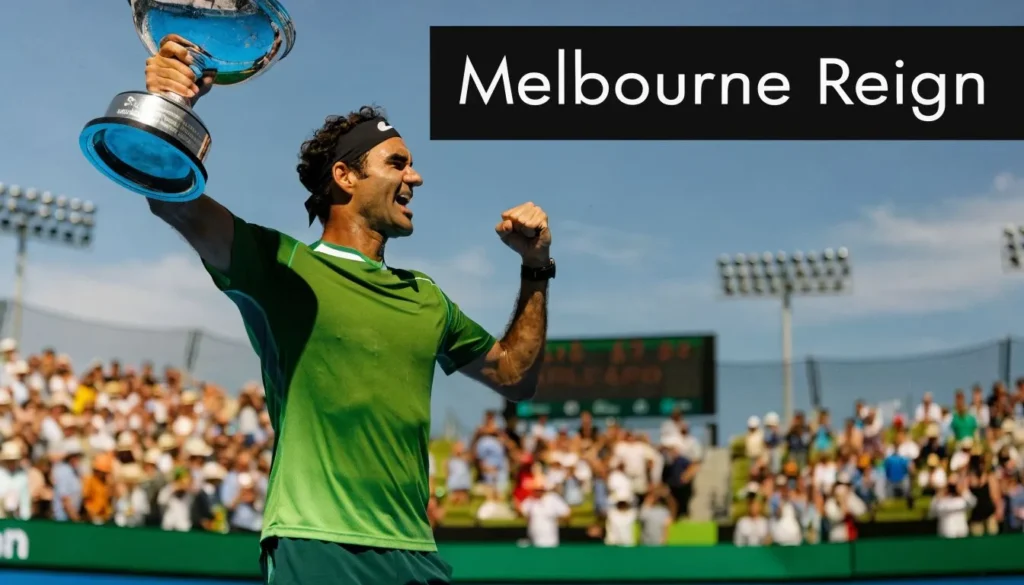
At the Australian Open, Federer’s career breaks neatly into three acts. First came the years when his hard-court game looked almost too clean to resist. Then came the revival, when age, injury, and a younger field had already narrowed the margin for error. The final act mattered for a different reason. Even without the certainty of his peak, he kept returning to Melbourne as a contender, which says as much about his imagination as his endurance.
What separated his reign from a simple run of titles was the way the tournament exposed the full architecture of his game. Melbourne rewarded first-strike tennis, precise serving, and early ball-taking. Federer brought all three. His forehand technique on hard courts was the center of that pressure. It let him shorten points when he wanted, redirect rallies before opponents settled, and make attack look less risky than it was.
The fit went beyond shotmaking. Federer read the pace of the Australian Open well. The heat, the lively evenings, the quick shifts from routine early rounds to tense second-week matches. He often looked comfortable in all of it. Plenty of champions have won in Melbourne through force. Federer often won there through control.
Three qualities defined that control:
- Service games with purpose: He served to shape the next shot, not only to collect free points.
- Positional balance: He could defend just enough to reset the exchange, then take it back on his terms.
- Emotional economy: He rarely gave the court extra drama. That calm had tactical value.
That is why his Australian Open legacy feels larger than the trophy count alone. Melbourne Park captured the full career arc. It showed the young champion turning talent into rule, the older master rewriting the ending, and the late-career competitor refusing to yield the stage meekly. Wimbledon may remain his purest symbol, but Australia revealed his range more clearly than any other major.
The Foundation of a Dynasty 2004-2010
Federer’s first Australian Open title in 2004 mattered because it confirmed that his Wimbledon breakthrough wasn’t a one-surface miracle. He had already become a major champion. In Melbourne, he became something more dangerous: portable. His game traveled.
Through 2004, 2006, 2007, and 2010, he built the first phase of his Australian Open dynasty. The broad numbers belong later. What matters here is the pattern. He wasn’t surviving these tournaments with attritional grit alone. He was shaping them with first-strike tennis, short transitions to the net, and a refusal to let hard courts become purely physical contests.
The early Federer blueprint
At his best in this period, Federer did three things better than almost anyone else.
- He served for position, not just for speed. The serve wasn’t only a point starter. It was a map.
- He took the forehand early. Opponents often felt rushed even when the rally count stayed low.
- He changed direction without warning. That made his attack feel less like a sequence and more like a trap.
Readers interested in how that forehand structure works mechanically can compare it with modern coaching ideas around tennis forehand technique. Federer’s version looked effortless, but it was built on exact spacing and early preparation.
Dominance without noise
One reason this era is sometimes discussed too casually is that Federer made excellence look tidy. He didn’t always leave the impression of struggle, so people forget the tactical pressure he applied. Melbourne hard courts gave him time to use shape and angle, but not so much time that his opponents could easily reset. He exploited that balance repeatedly.
Practical lens: Federer’s early Australian Open run showed that elegance can be a form of control. A point doesn’t need to look violent to be decisive.
He also built an aura that changed matches before they started. Opponents entered with the knowledge that he had too many solutions. If they attacked his backhand, he could chip, redirect, or absorb. If they stayed neutral, he would take over with the forehand. If they served passively, he moved inside the baseline and made the court feel smaller.
The 2010 title as a bridge
The 2010 championship closed this first act and previewed the second. By then Federer was no longer just the young ruler collecting majors at speed. Resistance had thickened. Rivalries had sharpened. Winning in Melbourne now required more adaptation than inevitability.
That’s what makes the 2004 to 2010 stretch foundational rather than exclusively nostalgic. Federer didn’t just pile up trophies there. He established a model of hard-court command that younger players had to solve, and many spent years trying.
Epic Rivalries Forged in Melbourne
Federer’s Australian Open legacy becomes richer when you place it inside the rivalries that defined his era. Melbourne was never just his showcase. It was also one of the main stages where Rafael Nadal and Novak Djokovic tested the limits of his game and, at times, exposed them.
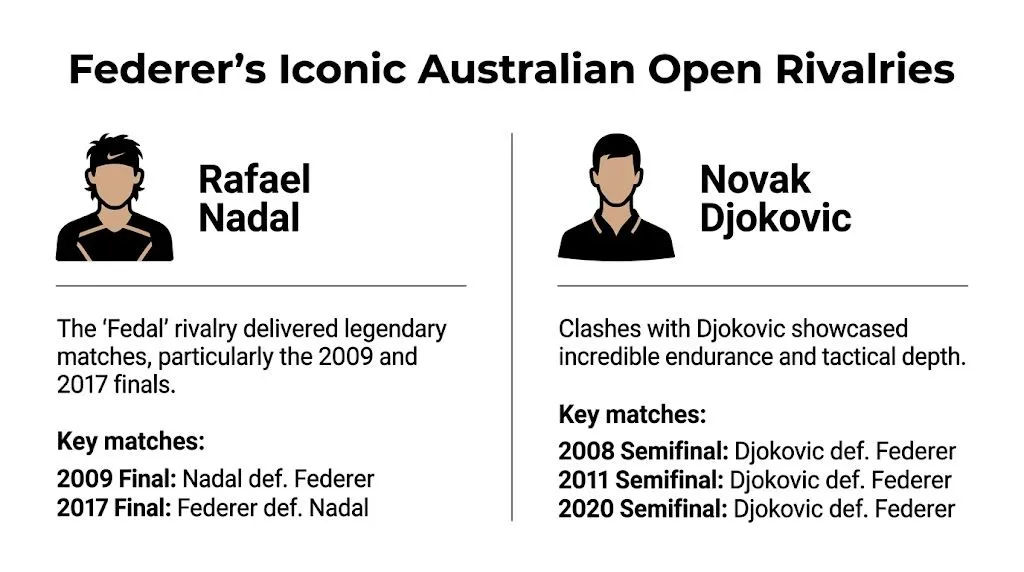
The central story is the contrast between those rivalries. Nadal made Federer confront discomfort in emotionally loaded, stylistically complicated matches. Djokovic made him solve a cleaner but often harsher problem: relentless pressure from the baseline, repeated depth, and an opponent who turned neutral rallies into endurance exams.
Nadal brought drama and contrast
The Australian Open finals against Nadal remain central to the Federer myth because they carried opposite emotional tones. One became an emblem of pain. The other became a late-career redemption tale.
Against Nadal in Melbourne, Federer’s challenge wasn’t only tactical. It was psychological and geometric at once. Nadal’s patterns asked him to strike from less comfortable heights and from positions that disrupted his preferred rhythm. Federer could still produce brilliance in those exchanges, but he rarely got to dictate them on his terms for long.
Djokovic brought attrition and precision
The Djokovic meetings in Australia felt different. Less romantic, more exacting. If Nadal bent Federer’s game into awkward shapes, Djokovic often forced him into repeated proof. Could he keep serving sharply enough? Could he finish before the rally settled into Djokovic’s preferred tempo? Could he protect the backhand corner without giving up the middle of the court?
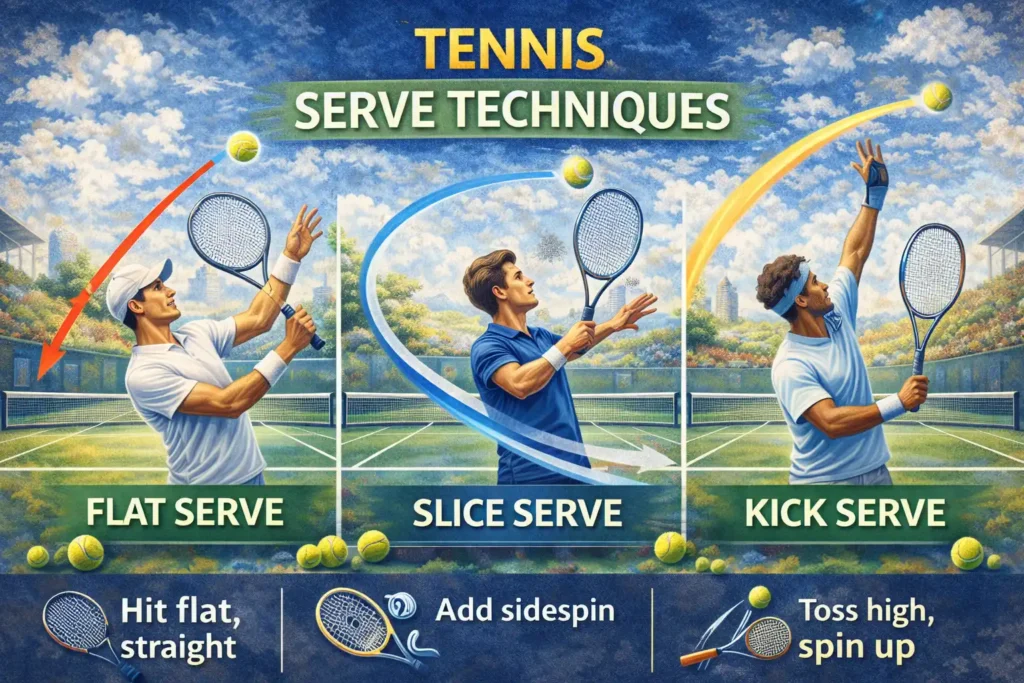
For players studying service structure, those Melbourne contests are a reminder that the serve is only as valuable as the shot it sets up. That’s one reason technical analysis of tennis serve techniques still matters when looking back at Federer’s biggest hard-court matches.
| Rival | Melbourne tension point | What it demanded from Federer |
|---|---|---|
| Rafael Nadal | Height, spin, and emotional volatility | Risk-taking off uncomfortable balls |
| Novak Djokovic | Depth, return pressure, and extended baseline control | Sharper first-strike execution and patience |
Some rivalries produce masterpieces because styles blend. Federer’s with Nadal and Djokovic in Australia produced them because the styles resisted each other.
Why Melbourne amplified both rivalries
The Australian Open sat at the front of the season, when players arrived fresh and physically capable of testing every layer of an opponent’s game. That sharpened everything. Nadal could drag Federer into painful physical and tactical exchanges. Djokovic could sustain his pressure without the erosion that sometimes arrives later in the year.
For Federer, that meant his Australian Open wasn’t just a parade of titles. It was also the place where two of the greatest rivals in the sport repeatedly forced him to redefine what winning there would require. That tension is part of why his six championships feel larger than the number itself.
The King’s Unforgettable 2017 Comeback
At 35, seeded 17th, and returning from a six-month layoff, Roger Federer arrived in Melbourne as a former champion with unanswered questions. By the end of the fortnight, he had turned the Australian Open into the defining middle act of his career. The early years had established his authority. The 2017 title showed how that authority could survive age, surgery, and a draw built to expose any weakness.
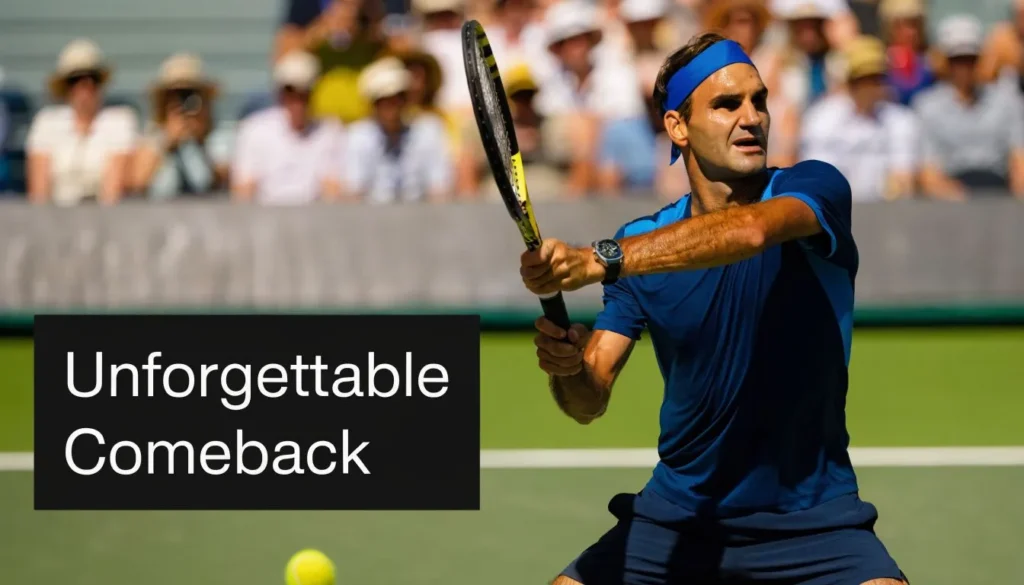
What made the run so memorable was the contrast between circumstance and execution. Federer had not played a tour match since Wimbledon 2016. His knee and back had forced him into the longest competitive absence of his career. Players coming off that kind of interruption usually spend a major searching for timing. Federer found his almost immediately, then trusted it against opponents powerful enough to punish hesitation.
Why the comeback resonated so strongly
The 2017 title mattered because it revealed a new version of Federer. In his first Melbourne peak, he often controlled matches with a kind of natural surplus. In 2017, every advantage looked earned. He took the ball earlier, committed to the backhand wing, and played with the urgency of someone who understood that long exchanges no longer served him as reliably as they once had.
That tactical shift was clearest against Rafael Nadal in the final. Federer did not try to replay the old rivalry on old terms. He drove through his backhand, protected the center of the court more assertively, and refused to let Nadal’s heavy forehand dictate the emotional rhythm of the match. The five-set win, 6-4, 3-6, 6-1, 3-6, 6-3, felt significant because it challenged one of the longest-running assumptions in men’s tennis: that on the biggest stages, in the tightest moments, Nadal could always drag this matchup back into his preferred geometry.
Injury context sharpened everything. Athletes can return from layoffs with fitness, yet still lack timing, trust, or the willingness to hit freely under pressure. That is why discussions around how to prevent sports injuries in high-performance competition matter beyond training rooms. They shape careers, scheduling, and the narrow margin between a respectable return and a title run that alters tennis history.
The 2017 championship did not revive Federer’s reputation. It expanded it, showing that adaptation could be as impressive as dominance.
A visual reminder of that run still captures the atmosphere better than any recap can:
The final against Nadal changed the shape of his career
Federer’s résumé was already complete. Melbourne 2017 changed how that résumé was read. Instead of ending with a graceful decline after the sport’s most sustained period of excellence, his Australian Open story gained a second summit. That matters for legacy because late-career titles are judged differently. They are less about accumulation and more about reinvention under pressure.
Beating Nadal in that final gave the comeback its sharpest edge. Their history in majors had left Federer with too many matches where brilliance was not enough. This time he met the old problem with a revised answer. The victory did not erase the earlier scars, but it gave his Melbourne record a richer shape. Youthful dominance had built the first act. The 2017 run became the dramatic resurgence that made the full Australian Open arc impossible to reduce to a simple title count.
It also reopened belief. Federer left Melbourne not as a ceremonial champion enjoying one last surge, but as a player whose game still had the clarity and attacking precision to threaten the best in the world. That is why this title remains the emotional center of his Australian Open career. It turned nostalgia into present-tense relevance.
A Final Title and a Heroic Farewell
Two Melbourne titles after turning 35 changed the shape of Federer’s Australian Open story. The first completed the resurrection. The second proved it was not a sentimental aftershock, but a repeatable formula built for hard courts and for the narrow margins of late career tennis.
The 2018 title matters because it closed the second act and opened the third. Federer beat Marin Cilic in five sets, defended a major title for the first time in almost a decade, and showed how thoroughly he had edited his game. Points were shorter. Service games were cleaner. The forehand was still the headline shot, but a key advantage came from how quickly he established court position and how rarely he let matches drift into extended exchanges.
That economy had always been part of Federer’s genius. In Melbourne, by 2018, it had become his survival plan as well as his advantage. Younger Federer could win in several styles. Older Federer needed to dictate the terms early, hold serve without fuss, and keep physical strain from becoming the main story. He did that often enough to win one more Australian Open, and in doing so gave his Melbourne record a rare symmetry. The event had framed his first period of dominance. It also became the site of his last major title.
The last act was defined by resistance
Then came 2020, and the mood changed. Federer was no longer chasing another summit so much as refusing to yield one of his favorite stages. His quarterfinal escape against Tennys Sandgren, played through visible physical discomfort, ranks among the grittiest wins of his career precisely because it did not look like a Federer performance in the classic sense. It was tense, improvised, and survivalist.
That is why the match belongs in the final act of his Melbourne career. The early years were about control. The comeback years were about reinvention. The closing stretch was about resistance, about how long experience, nerve, and skill could hold back time when the body was no longer a reliable ally.
Federer lost the semifinal that followed, and the larger truth was impossible to miss. Melbourne had given him his cleanest hard-court stage, but even there the margin for error had narrowed. What remained, though, was revealing. He could still command a crowd, still solve problems under pressure, still make an arena believe that one more escape was possible.
That is a heroic farewell in the sporting sense. It is not defined only by a trophy. It is defined by how clearly the final chapters captured the full arc of his Australian Open career: youthful dominance, a champion’s late resurgence, and a last stand stubborn enough to add dignity to decline.
Federer’s Australian Open Career by the Numbers
Twenty-one appearances. Six titles. Fifteen quarterfinals, and he won every one of them. Those figures capture why Federer’s Melbourne record sits in a class of its own. As noted earlier in the article, he finished with a 102-15 singles mark at the Australian Open, a level of sustained control that very few champions have matched at any major.
The pattern becomes clearer when you line up the rounds. Federer never lost in the first round, never lost in the second round, and never exited before the third round in any of his Melbourne campaigns. He was more than dangerous there. He was structurally reliable in a tournament that often exposes even elite players early, when the season is still young and timing can be uneven.
That reliability is what links the three acts of his Australian Open story. The first act produced dominance. The second, after years of rivalry and physical wear, produced one of the sport’s great revivals. The third showed how much competitive authority he could still summon even when his body no longer let him impose himself the old way.
The records that hold up under scrutiny
A few numbers matter more than the rest because they describe how Federer won in Melbourne, not just how often.
- Never eliminated before the third round: Across 21 appearances, he gave underdogs almost no early opening.
- Perfect in quarterfinals: His 15-0 mark in Australian Open quarterfinals may be the clearest measure of his command over the event’s middle and late stages.
- Exceptional conversion rate in finals: Federer reached seven finals and won six of them, which helps explain why Melbourne became both the foundation of his dynasty and the site of his late-career renewal.
One number deserves extra attention. 7-8 in semifinals looks ordinary compared with the rest of the record, but it is indeed revealing. Semifinals were where Melbourne most often turned into a referendum on an era, usually against another all-time great. By that point, Federer was no longer defending himself from upset. He was trying to beat the best player left.
Roger Federer’s Australian Open Year-by-Year Results
The full season-by-season ledger is lengthy, but several editions show the broader shape of his Melbourne career.
| Year | Seed | Round Reached | Lost To (if not champion) |
|---|---|---|---|
| 2000 | Not listed in verified data | Third round | Not listed in verified data |
| 2004 | Not listed in verified data | Champion | |
| 2006 | Not listed in verified data | Champion | |
| 2007 | Not listed in verified data | Champion | |
| 2010 | Not listed in verified data | Champion | |
| 2017 | 17th | Champion | |
| 2018 | Not listed in verified data | Champion | |
| 2020 | Not listed in verified data | Quarterfinal | Not listed in verified data |
Read in sequence, those years do more than mark trophies. They show a career arc rare in any sport. Federer won early enough to establish the event as part of his base, returned late enough to reclaim it against younger legs, and stayed dangerous long enough for his final Melbourne runs to feel defiant rather than ceremonial.
That is why the statistical portrait matters. It turns memory into shape. Melbourne was not just a tournament where Federer had some great moments. It was one of the few stages where every version of Federer, the rising champion, the reigning master, the revived veteran, and the aging survivor, left a measurable imprint.
The Enduring Legacy on Hard Courts and Beyond
Six Australian Open titles tell only part of the story. Federer’s deeper imprint on Melbourne comes from how many versions of him thrived there, from the rising force of the mid 2000s to the reinvented veteran who turned back the clock, then the aging champion who kept making belief feel reasonable.
That three-act shape is what separates his Australian Open record from a standard tally of trophies. In the first act, Melbourne was a stage for authority. Federer’s clean ball-striking, short points, and calm scoreline management helped define the tournament’s modern image. In the second, it became the site of one of tennis’s most unlikely revivals, when a player many had started to place in the past tense returned to win the title again. In the third, even as the body began to narrow his options, he still carried enough aura and precision to make late runs feel meaningful rather than nostalgic.
His standing on hard courts gives that story its proper scale. As noted earlier, Federer’s Australian Open success was never a standalone phenomenon. It fit the larger pattern of his career, where hard courts offered the clearest expression of his timing, first-strike instincts, and ability to take time away from opponents without rushing himself.
Melbourne also mattered because it revealed more than one kind of greatness. Early Federer won there by making elite opponents look a step slow. Later Federer won by changing the geometry of points, protecting his body, and trusting shorter, sharper patterns. Those are different skills. The continuity was his sense of space and tempo, which remained world class long after the version of him that covered every corner had begun to fade.
That is why his influence on the event lasts.
He changed what fans expected from January tennis. Federer brought a standard of shotmaking that made control look artistic rather than merely efficient. He also changed the conversation around age. His comeback titles in Melbourne did not just add to his resume. They widened the sport’s imagination about how long a champion could remain dangerous at the highest level.
His legacy at the Australian Open extends beyond his own matches, too. Rivalries with Marat Safin, Rafael Nadal, Novak Djokovic, and Andy Murray gave Melbourne recurring drama, but Federer often served as the tournament’s central reference point. If he was in form, the event felt larger. If he was vulnerable, the draw felt unstable. Few players have shaped the emotional temperature of a major so consistently.
When readers search for australian open tennis federer, the obvious answers are the titles, finals, and classic matches. The stronger answer is broader. Melbourne became the place where Federer’s career could be read in full. Youthful dominance. A late-career resurgence that once seemed improbable. Final stands that gave defeat its own kind of dignity.
That is a rare sporting relationship between player and venue. Federer did not only win often in Melbourne. He left behind a complete portrait of championship life on one court, across nearly two decades, and that is why his Australian Open legacy still feels present.
Discover more from Maxi Journal
Subscribe to get the latest posts sent to your email.