Bringing a new kitten home is an incredible experience, but the key to raising a healthy, thriving cat starts in their food bowl. The best kitten food is loaded with high-quality animal protein, crucial fats like DHA, and a specific mix of vitamins and minerals. Think of it as the nutritional foundation for their entire life.
Why a Kitten Food Is Not Just Smaller Kibble
It’s a common mistake to think kitten food is just a smaller-sized version of adult cat food, but that couldn’t be further from the truth. Imagine the difference between building a high-rise from the ground up and just performing regular maintenance on it. A kitten’s body is in full construction mode, demanding a huge amount of specialized materials, whereas an adult cat is mostly just maintaining what’s already there.
This difference is critical. Feeding a kitten adult food can lead to real, lasting health problems down the road.
The kitten food market hit a staggering $21.94 billion in 2023, and it’s not just a marketing fad. This boom is fueled by a better understanding of feline nutrition and the science to back it up. In fact, studies show that kittens raised on specialized growth formulas can build muscle mass 15-20% faster and have 30% fewer digestive problems than kittens fed standard adult food.
The Blueprint for Healthy Growth
So, why is a “growth-formulated” food an absolute must? It all comes down to the intense, high-energy nutritional profile a growing kitten requires. These formulas aren’t just about packing in more calories; they’re about delivering the right kind of nutrients.
A proper kitten diet is engineered to support:
- Strong Bone and Muscle Development: Higher levels of protein, calcium, and phosphorus act as the essential building blocks for a powerful frame and lean muscle.
- Enhanced Brain and Vision Function: Key fatty acids, especially DHA (docosahexaenoic acid), are non-negotiable for sharp vision and cognitive development.
- A Robust Immune System: A unique blend of antioxidants, vitamins, and minerals helps build a resilient immune system to fend off common illnesses.
Choosing a food specifically labeled for “growth and development” is the single most important dietary decision you’ll make for your cat in their first year. It lays the groundwork for everything from organ health to a shiny coat, setting them up for a long and vibrant life.
Kittens have completely different needs from adult cats, especially those living indoors. You can read more about that in our guide to the best cat food for indoor cats. Getting the food right during this critical growth stage is the best way to prevent deficiencies that could compromise their health for years.
Kitten vs Adult Cat Nutritional Needs at a Glance
To put it in perspective, let’s break down the key differences. A kitten’s diet is all about fueling rapid growth, while an adult’s is focused on maintaining their current condition. The contrast is stark.
| Nutrient | Kitten Requirement (Growth Phase) | Adult Cat Requirement (Maintenance) |
|---|---|---|
| Protein | 30-45% (High-quality animal sources) | 26-40% (Maintenance levels) |
| Fat | 18-35% (Including DHA & arachidonic acid) | 9-20% (Lower energy needs) |
| Calcium | 1.0% (For bone density) | 0.6% (Skeletal maintenance) |
| Phosphorus | 0.8% (Works with calcium) | 0.5% (Skeletal maintenance) |
| Calories | ~250 kcal/kg of body weight | ~60-80 kcal/kg of body weight |
As you can see, a kitten’s need for protein, fat, and key minerals is significantly higher. This is why an adult formula simply won’t cut it for a growing cat—it’s like trying to build that skyscraper with a skeleton crew and half the necessary materials.
How to Read a Kitten Food Label Like a Pro
Ever feel like you need a secret decoder ring to understand a pet food label? You’re not the only one. Between the flashy marketing and the microscopic print, it’s easy to get overwhelmed. But learning to cut through the noise is the single best skill you can develop to choose food based on facts, not hype.
Think of it like reading the nutrition label on your own food. Once you know what to look for, you can tell what’s really inside. You only need to focus on three key parts of the bag or can: the AAFCO statement, the ingredient list, and the guaranteed analysis.
The AAFCO Nutritional Adequacy Statement
This little block of text is your most important checkpoint. Look for the acronym AAFCO (The Association of American Feed Control Officials). This statement is a guarantee that the food is “complete and balanced” for a specific life stage.
For a growing kitten, the label must have one of these two phrases:
- “Formulated to meet the nutritional levels established by the AAFCO Cat Food Nutrient Profiles for growth.”
- “For all life stages.”
If you see a food labeled only for “adult maintenance,” put it back on the shelf. It simply won’t have the supercharged calories, protein, and nutrients your kitten needs to develop properly.
This quick visual overview shows the foundational nutrients your kitten’s food must provide.
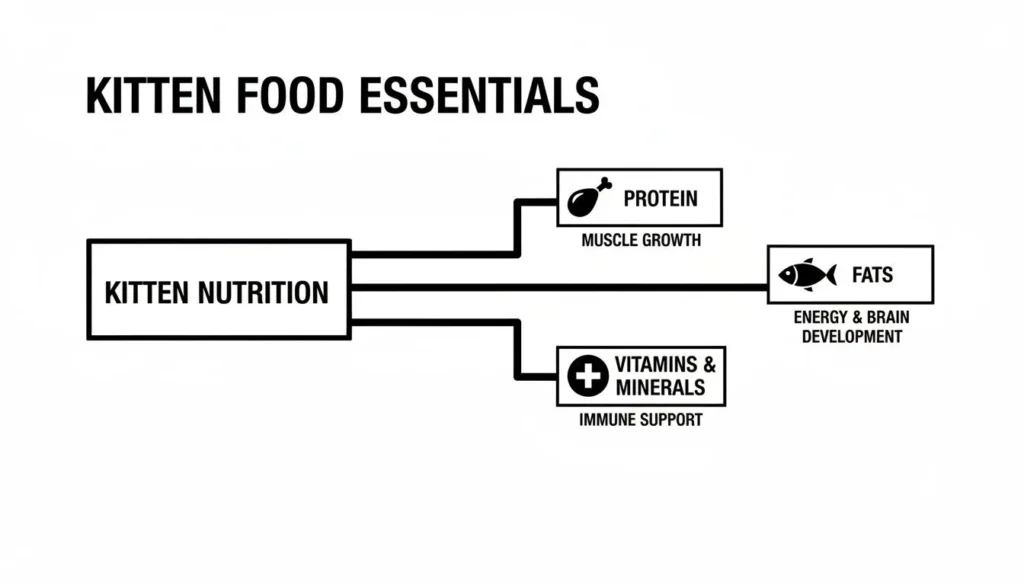
As you can see, high-quality animal protein, healthy fats, and essential vitamins are the non-negotiable pillars of any diet built for growth.
Unpacking the Ingredient List
Ingredients are always listed by weight, so the first few items are what make up the majority of the food. For a kitten, you need to see high-quality, named animal proteins right at the top of the list.
Kittens require two to three times more calories and protein than adult cats to fuel their explosive growth. A diet with 30-40% protein from excellent sources is crucial. Choosing the wrong food can have serious consequences; feeding a diet meant for adults can increase the risk of stunted development, a sad reality for up to 20% of litters fed inappropriate food. You can discover more data about the growing kitten food market on statsndata.org.
Look for specific, high-quality ingredients like:
- Deboned chicken
- Turkey
- Salmon
Be cautious if you see vague terms like “meat by-products” or “poultry meal” in the first few spots. The quality of these ingredients can be inconsistent. While you’re checking ingredients, you might wonder about other human foods. For instance, check out our guide on whether cats can eat Greek yogurt.
Marketing buzzwords like “natural,” “holistic,” or “human-grade” have very loose regulatory definitions. Focus on the AAFCO statement and the quality of the first five ingredients to make an informed choice.
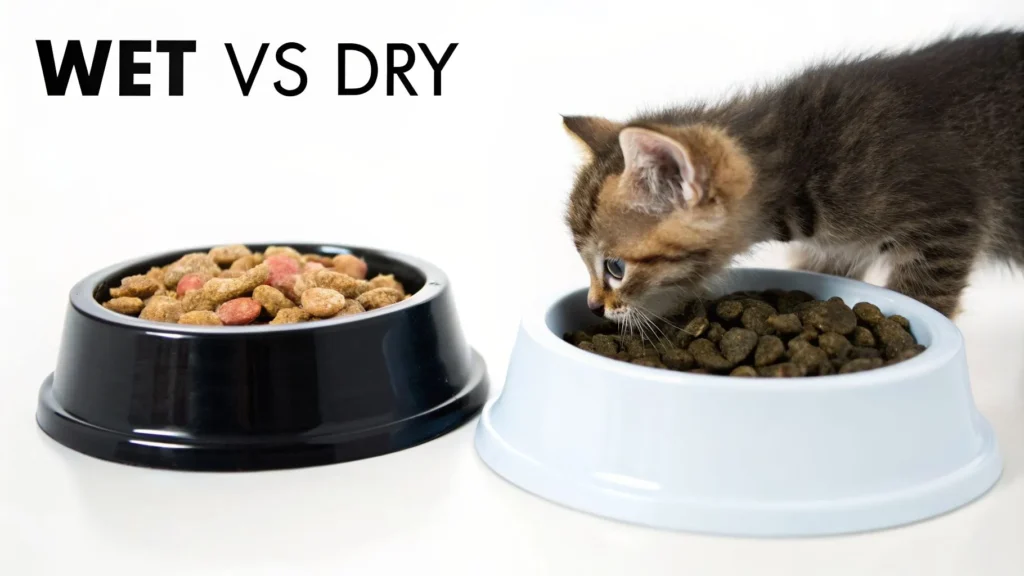
Choosing Between Wet and Dry Kitten Food
Walking down the pet food aisle can feel overwhelming. Wet food or dry food? It’s a classic dilemma for any new kitten owner. The good news is there’s no single “right” answer. Both have their own distinct benefits, and often, the best approach is a mix of the two.
Think of it this way: wet food is like a hydrating, savory meal, while dry food is a convenient, crunchy energy bar. Each plays a valuable role in your kitten’s diet.
The Case for Wet Food
Wet food is a fantastic source of hydration. Cats are notoriously poor drinkers, so the high moisture content in canned food is a game-changer for supporting kidney function and urinary health right from the start. Its soft texture and rich aroma are also perfect for tempting even the pickiest eaters.
This isn’t just a matter of opinion; it’s backed by market trends and nutritional science. In Europe, where premium pet nutrition is a huge focus, wet kitten foods make up 45% of sales, largely due to their impressive 78% moisture content. In fact, sales for premium kitten foods in the UK and Germany jumped 18% in 2023 alone, with many vets endorsing the benefits. You can read more about the cat food market on Fortune Business Insights.
The Convenience of Dry Food
On the other side of the coin, you have dry food, or kibble. It’s the undisputed champion of convenience and affordability. You can leave it out for your kitten to graze on throughout the day—a practice known as “free-feeding”—which fits perfectly with their small stomachs and sky-high energy demands.
Plus, the crunchy texture helps scrape away plaque as they chew, giving their teeth a bit of a cleaning. If you’re concerned about specific ingredients like fish in your cat’s diet, you might find our guide on whether cats can eat salmon helpful.
To help you weigh the options, here’s a straightforward comparison of wet and dry kitten food.
Wet vs Dry Kitten Food Feature Comparison
| Feature | Wet Food | Dry Food (Kibble) |
|---|---|---|
| Hydration | Excellent. High moisture (~78%) supports kidney and urinary health. | Low. Kittens need access to plenty of fresh water. |
| Palatability | High. Strong aroma and soft texture entice picky eaters. | Good. Crunchy texture is satisfying for many kittens. |
| Convenience | Lower. Must be refrigerated after opening; cannot be left out. | High. Can be left out for “free-feeding” all day. |
| Dental Health | Neutral. Does not provide dental cleaning benefits. | Good. Crunchy texture helps reduce plaque and tartar buildup. |
| Cost | Higher per serving. | Lower per serving and more budget-friendly in bulk. |
| Nutrient Density | Lower per gram due to high water content. | Higher per gram, making it very energy-dense. |
Ultimately, you don’t have to pick just one. Many owners find a combination of both works best.
The Best of Both Worlds: Mixed Feeding
You don’t have to choose just one. Mixed feeding, which combines wet and dry food, is a popular and practical strategy. This approach allows your kitten to enjoy the hydration and palatability of wet food while still benefiting from the dental and convenience aspects of kibble.
A great way to do this is to serve a portion of wet food in the morning and evening, then leave a small bowl of high-quality dry food out during the day for snacking. This routine ensures your kitten gets plenty of moisture, a steady supply of energy, and a well-rounded diet to fuel their rapid growth.
How to Transition to a New Kitten Food Smoothly
Suddenly changing your kitten’s diet is a recipe for digestive upset. Their little systems are sensitive, and an abrupt switch can lead to everything from tummy aches to outright food refusal.
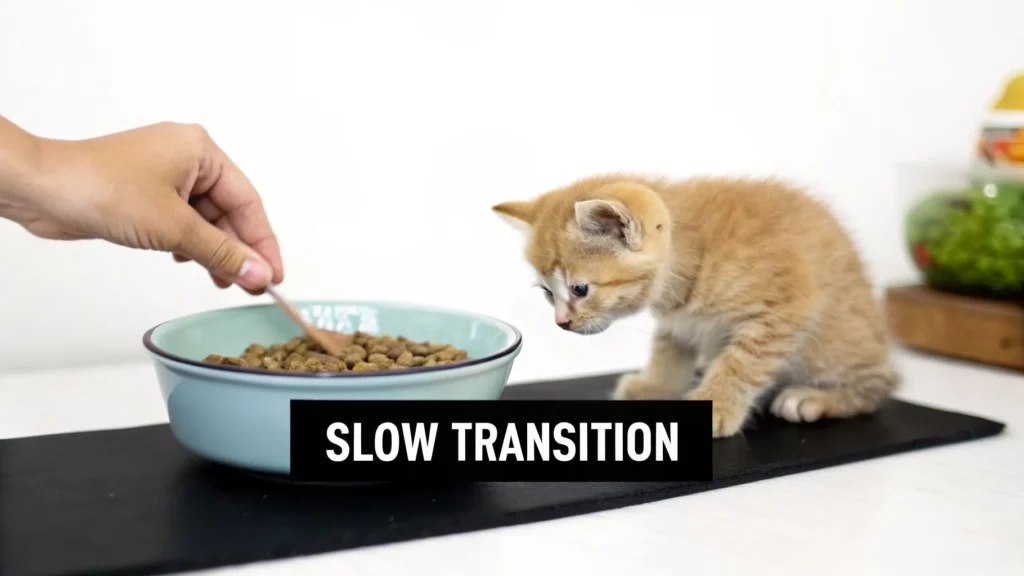
The only way to do it right is with a gradual transition over 7-10 days. Think of it as letting their body, especially the good bacteria in their gut, get used to a whole new set of ingredients. Rushing this is a classic mistake that often results in vomiting or diarrhea, which can make your kitten think the new food is what’s making them sick.
The 7-Day Transition Plan
The plan is simple: slowly mix more of the new food in with the old food each day. Use a measuring spoon to be precise.
Here’s a proven schedule that works for most kittens:
- Days 1-2: 75% old food, 25% new food
- Days 3-4: 50% old food, 50% new food
- Days 5-6: 25% old food, 75% new food
- Day 7: 100% new food
If your kitten is known to have a sensitive stomach, don’t hesitate to stretch this out over 10 days or even two weeks. Just make the ratio changes more slowly. The key is to watch your kitten for any signs of trouble.
Troubleshooting Tip: If you notice some mild diarrhea or vomiting, just dial it back. Return to the previous ratio where they were doing fine and hold there for an extra day or two before trying to move forward again. A slow, successful transition is always better than a fast, problematic one.
What if My Kitten Refuses the New Food
Sometimes the problem isn’t a sensitive gut, it’s a picky palate. If your kitten is eating around the new food and only picking out the old stuff, you may need a few tricks up your sleeve.
Don’t give up. Try these simple tactics first:
- Mix Thoroughly: For wet food, this is easy. Stir the old and new food together until they’re completely blended. This makes it impossible for them to pick and choose.
- Add a Topper: Make the new food irresistible by adding a tiny bit of something they love. A sprinkle of freeze-dried chicken or a small drizzle of tuna juice (in water, no salt) can do the trick.
- Warm It Up: Gently warming wet food makes it much more aromatic. For a cat, smell is a huge part of taste, and this can often entice a stubborn kitten to give it a try.
Patience is your most important tool here. When you make the switch to the best kitten food a calm and positive experience, you’re paving the way for a lifetime of healthy eating.
Creating a Kitten Feeding Schedule That Works
So, how much and how often should you be feeding that tiny, energetic furball? Nailing down a consistent feeding schedule is one of the best things you can do for their long-term health. It all boils down to one simple fact: kittens have tiny stomachs but need a massive amount of energy.
Unlike an adult cat that might be fine with two meals a day, a young kitten needs several small meals to power their incredible growth spurts. This prevents overwhelming their little digestive system. For a kitten that’s just been weaned, this usually means three to four scheduled meals per day.
This routine does more than just meet their nutritional needs. It also helps you keep a close eye on their appetite, letting you spot instantly if something seems off.
Free Feeding vs. Scheduled Meals
It can be tempting to just fill a bowl and leave it out all day. This is called “free-feeding,” and while it’s certainly convenient for you, it comes with some serious drawbacks. It’s nearly impossible to know how much your kitten is actually eating.
Worse, it can pave the way for obesity later on. Many cats get into the habit of eating out of boredom, not hunger, and that pattern often starts in kittenhood.
A structured meal schedule is the far better way to go. It gives your kitten a predictable routine they can count on, helps strengthen your bond during mealtimes, and puts you in complete control of their portions. This is a crucial part of choosing the best kitten food and making sure you’re using it correctly.
Think of a consistent feeding schedule as setting your kitten’s internal biological clock. It helps regulate their metabolism, supports healthy digestion, and makes it much easier to manage their weight as they grow into an adult.
Sample Kitten Feeding Schedule
Here’s a sample schedule you can tweak to fit your kitten’s age and your own routine. The main goal is to space meals out evenly to give them a steady supply of energy all day long.
8 to 12 Weeks Old:
- 7:00 AM: Meal 1 (e.g., ¼ can of wet food)
- 12:00 PM: Meal 2 (e.g., ¼ can of wet food)
- 5:00 PM: Meal 3 (e.g., ¼ can of wet food)
- 10:00 PM: Meal 4 (A small final meal before bedtime)
3 to 6 Months Old:
- 7:00 AM: Meal 1
- 1:00 PM: Meal 2
- 7:00 PM: Meal 3
6 to 12 Months Old:
- 8:00 AM: Meal 1
- 6:00 PM: Meal 2
As your kitten gets close to their first birthday, you can start transitioning them to two meals per day. This is a standard schedule for most adult cats. Always start with the portion guidelines on the food label and be prepared to adjust based on your kitten’s activity level and body condition.
Common Questions About Feeding Your Kitten
We’ve covered a lot of ground, but you might still have a few questions. That’s perfectly normal. Here are some of the most common queries we get about feeding kittens, with straightforward answers to help you feel confident.
When Should I Switch to Adult Cat Food?
The simple rule is to switch your kitten to adult cat food around their first birthday (12 months). By this age, their major growth spurt is over. Their nutritional needs change from building a body to maintaining it.
There’s one big exception: large breeds like Maine Coons or Ragdolls. These cats mature much more slowly. Your vet may suggest keeping them on a high-calorie kitten formula until they’re 18 to 24 months old.
Key Takeaway: Switching to adult food too soon can rob your kitten of the extra protein and calories they need to develop properly. Waiting too long, on the other hand, can lead to weight problems, as kitten food is far richer than adult formulas.
Is Grain-Free Food Better for My Kitten?
Not necessarily. “Grain-free” is a huge marketing buzzword, but actual grain allergies in cats are very rare. Cats are far more likely to be allergic to common proteins, like chicken or fish.
What matters most is a diet high in quality animal protein that is complete and balanced. Don’t let a single marketing claim distract you from the overall quality of the food.
Unless your vet has diagnosed a specific grain sensitivity, there’s no scientific reason to believe a grain-free diet is better. Just focus on the ingredients and the AAFCO statement.
Can I Give My Kitten Milk or Table Scraps?
It’s best to avoid both. That classic picture of a kitten lapping up milk is a myth. Most cats become lactose intolerant after weaning, and cow’s milk can cause nasty digestive issues like diarrhea and stomach pain.
Table scraps are also a no-go. Human food is often too rich, salty, or fatty for a kitten’s system. Worse, many of our favorite ingredients are downright toxic to cats.
Keep these away from your kitten:
- Onions and garlic
- Chocolate
- Grapes and raisins
- Xylitol (a common artificial sweetener)
Stick to food made specifically for kittens. It’s the only way to guarantee they get the safe, precise nutrition they need.
How Do I Know if My Kitten Is a Healthy Weight?
You can do a quick body check right at home. Run your hands along your kitten’s sides. You should be able to feel their ribs under a thin layer of fat, but not see them sticking out.
Looking down from above, you should see a clear, defined waist behind their ribcage. A bulging or sagging belly might mean they are carrying a little extra weight.
Of course, nothing beats regular vet check-ups. Your veterinarian can track their growth curve professionally and make sure they’re on the right path.
At maxijournal.com, we’re dedicated to helping you make informed decisions about your pet’s health and happiness. For more insights into the world of pets, science, and more, explore our daily articles at https://maxijournal.com.
Discover more from Maxi Journal
Subscribe to get the latest posts sent to your email.