It’s a question a lot of new cat owners have, especially if they’ve drawn comparisons to other animals or, well, humans. So let’s clear the air: No, cats do not have periods in the same way people do.
If you’re watching for a monthly cycle, you won’t find one. Your cat’s reproductive process is built on a completely different system, one that revolves around going into “heat” rather than menstruation.
Understanding the Feline Heat Cycle
While it’s easy to see our own behaviors and biology in our pets, the reproductive system is where the similarities end. A human menstrual cycle works on a predictable monthly schedule, and if pregnancy doesn’t happen, the body sheds the uterine lining. That shedding is what we know as a period.
Cats, however, run on a totally different operating system. Their cycle is called the estrous cycle, and the fertile phase is what we all know as being in heat. A human cycle is like a monthly calendar appointment that happens regardless. A cat’s heat cycle is more like a series of pop-up events that only occur when the conditions are just right.
Key Biological Differences
The biggest difference comes down to one key fact: cats are induced ovulators. This is a game-changer. It means a female cat’s body only releases an egg after she has mated. Since there’s no automatic, monthly ovulation, her body has no reason to shed the uterine lining. This is why you won’t see any regular, predictable bleeding.
Instead of a monthly event, cats are seasonally polyestrous. That’s just a technical way of saying they have multiple heat cycles during the breeding season—typically when the days are longer and warmer in the spring and fall. If a female cat doesn’t mate during one heat, she’ll often go right back into another one just a couple of weeks later.
The Bottom Line: A cat’s body is a marvel of reproductive efficiency. It gets ready for pregnancy multiple times a year but only takes the final step—ovulation—if mating actually occurs. This strategy conserves a huge amount of energy.
Cat Heat Cycle vs Human Period at a Glance
To really spell it out, seeing the two cycles side-by-side makes the differences pop. It quickly becomes clear just how unique the feline reproductive process is compared to our own.
Here’s a quick breakdown:
| Feature | Feline Estrous Cycle (Heat) | Human Menstrual Cycle (Period) |
|---|---|---|
| Visible Bleeding | Extremely rare; any spotting is a sign of a health issue. | Normal and expected for 3-7 days. |
| Timing | Occurs multiple times during breeding seasons (spring/fall). | Occurs roughly every 28 days, year-round. |
| Biological Purpose | To signal readiness to mate and attract a partner. | To shed the uterine lining when pregnancy has not occurred. |
| Ovulation Trigger | Induced by the act of mating. | Spontaneous; happens automatically each cycle. |
As you can see, what happens in a cat’s body is designed for a very different purpose and timeline. While both are reproductive cycles, they follow completely separate rulebooks.
Exploring the Feline Estrous Cycle
While it’s easy to think a cat’s reproductive system mirrors our own, they operate on a completely different schedule. Instead of a monthly period, female cats experience what’s called an estrous cycle. You probably know it by its more common name: being “in heat.”
This whole process is a masterclass in biological efficiency, designed purely to maximize the odds of getting pregnant. Cats are seasonally polyestrous, a fancy way of saying they have multiple heat cycles during specific times of the year. The main trigger is daylight. As the days grow longer in spring and summer, their reproductive systems kick into high gear. For indoor cats living with lots of artificial light, this “breeding season” can easily last all year long.
The Four Phases of a Cat’s Heat Cycle
A cat’s heat cycle isn’t a single event but rather a series of four distinct stages. Knowing what they are makes it much easier to understand why your cat’s behavior can change so dramatically.
- Proestrus: Think of this as the warm-up, lasting just a day or two. Your cat isn’t ready to mate just yet, but she might start acting more affectionate, rubbing on things, and being a bit more vocal. Her body is just getting ready.
- Estrus: This is the main event—the “in heat” phase. This is when she’s fertile and will show all those classic signs: loud yowling, extreme restlessness, and arching her back into the “lordosis” position. It’s all designed to get a male’s attention.
- Interestrus: If your cat doesn’t mate during the estrus phase, she’ll enter a short rest period called interestrus. This quiet phase typically lasts about two to three weeks before the cycle fires up all over again.
- Anestrus: This is the off-season. It happens during the shorter, darker days of late fall and winter when the reproductive system goes dormant, waiting for longer daylight hours to return.
A Masterclass in Reproductive Efficiency
Here’s where things get really fascinating. Cats are induced ovulators. This means they only release an egg (ovulate) in response to the physical act of mating. It’s an on-demand system.
Without that trigger, no egg is released, and her body simply resets for the next cycle. This is the core reason cats don’t have periods—there’s no need to shed a uterine lining that was never prepared for a fertilized egg in the first place.
The entire estrous cycle can last anywhere from one to six weeks, but the average is about three weeks. The estrus phase itself, when she’s actively in heat, usually lasts about seven days. You can dive deeper into the science with this excellent guide to estrus cycles in cats from VCA Hospitals. And while both cats and dogs go into heat, their cycles are quite different; you might find our article on how long dogs are in heat interesting, too.
This infographic below does a great job of showing the predictable, regular human cycle next to the seasonal, event-driven cycle of a cat.
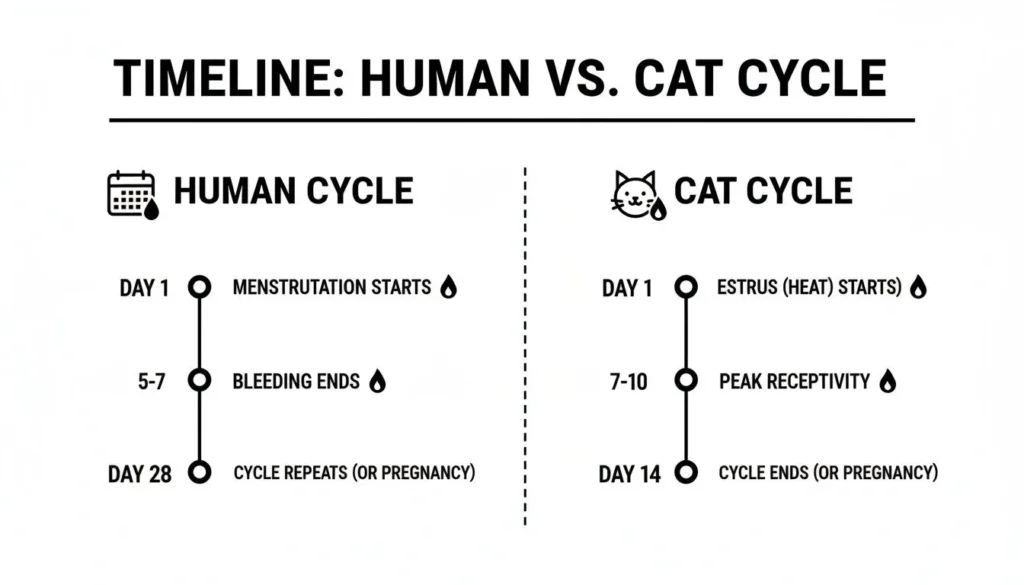
As you can see, the human cycle involves routine bleeding, while the cat’s is all about recurring periods of fertility, highlighting their very different biological game plans.
Recognizing the Signs Your Cat Is in Heat
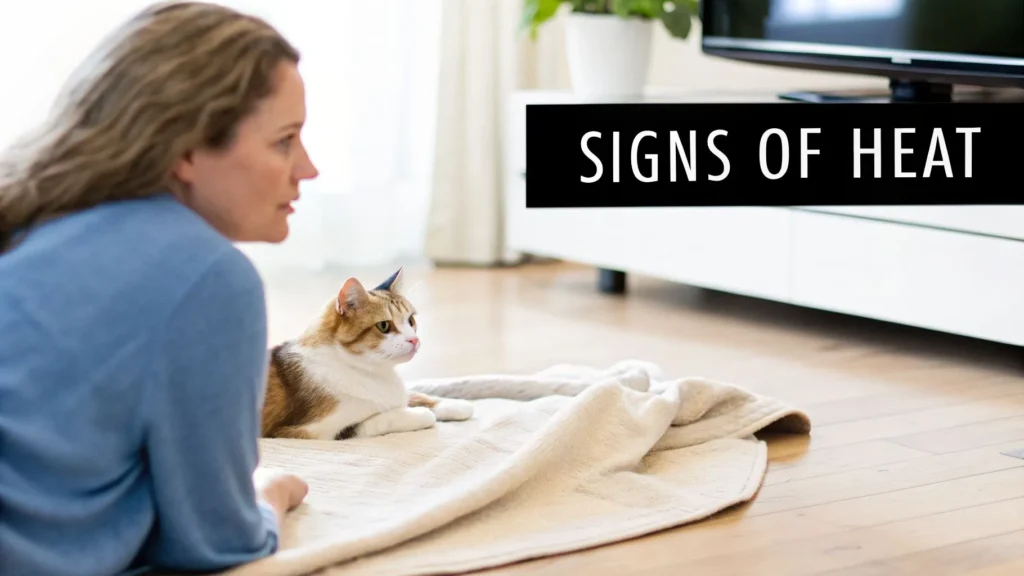
Unlike us, your cat can’t just circle a date on the calendar to let you know what’s going on. Instead, she’ll rely on a pretty dramatic set of instinctual behaviors to announce she’s in estrus, or what we call “in heat.” If you’re not ready for it, these signs can be pretty confusing—even alarming—but they are all perfectly normal for an unspayed female.
One of the first things you’ll probably notice is the noise. Your once-quiet little companion might suddenly start yowling, crying, or meowing nonstop, and at a volume you didn’t know she was capable of. Don’t worry, she’s not in pain. This is her biological megaphone, broadcasting to every male cat in the vicinity that she’s ready to mate.
This newfound vocal talent is often paired with an intense restlessness. She might pace the house like a caged tiger or make a frantic dash for the door every time it opens. It’s all driven by a powerful biological urge to get out and find a partner.
Affection and Posturing
During her heat cycle, your cat’s entire personality can seem to flip. Many become overwhelmingly affectionate, demanding endless pets and rubbing up against you, the furniture, the walls—pretty much any surface she can find. She’s not just looking for extra cuddles; this behavior is how she spreads her unique scent, which is loaded with pheromones that signal her fertile status.
Then there’s the most classic physical sign of heat: a posture called lordosis. When you pet her, especially near the base of her tail, you’ll likely see her do this specific set of moves:
- She’ll lower her front half down towards the floor.
- Her hindquarters will pop up high into the air.
- She’ll flick her tail to one side.
This is the definitive mating position, and it’s a pure reflex. If you see this, there’s no doubt about it—she’s in the most fertile phase of her estrus cycle.
What About Bleeding or Discharge?
This is where a lot of the confusion about cat “periods” comes from. Since we associate heat cycles with menstruation in humans, many owners expect to see blood. However, significant bleeding is not a normal part of a cat’s heat cycle. Cats don’t shed their uterine lining the way humans do, so you shouldn’t be looking for blood.
While you might occasionally see a tiny bit of clear or faintly pinkish discharge during estrus, any noticeable vaginal bleeding is a major red flag. It is absolutely not a “period” and should be treated as a potential sign of a serious health problem that needs an immediate call to your veterinarian.
All these behaviors are purely driven by hormones and instinct. It’s not a sign your cat is in pain or unhappy, but simply that her body is doing exactly what it’s designed to do. Understanding what to look for helps you know what’s coming and why spaying is so often recommended to prevent these cycles.
Why Spaying Your Cat Is the Best Decision
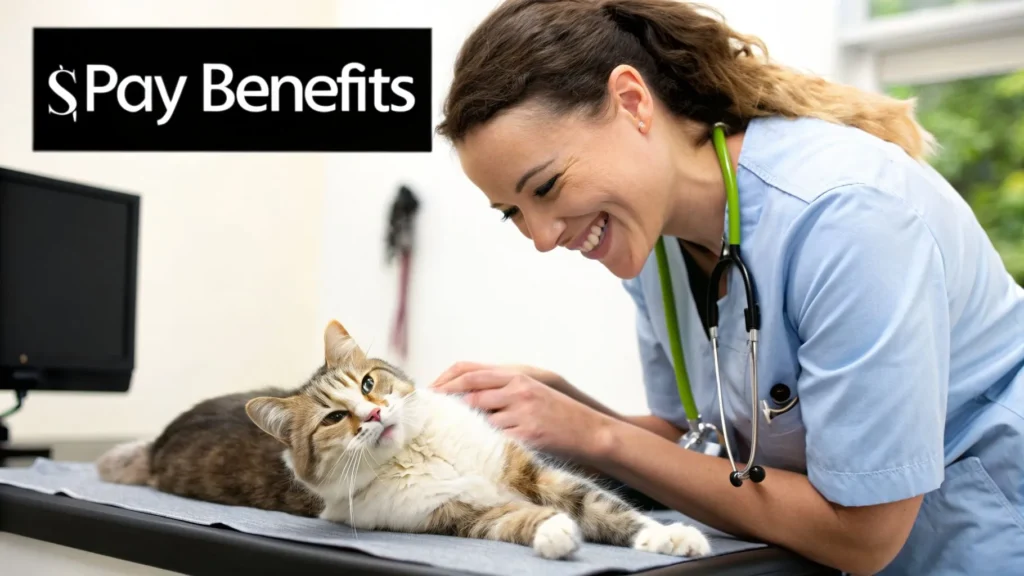
If you’ve ever lived through the yowling, restlessness, and pure chaos of a cat in heat, you’ve probably started looking for a permanent fix. Once you understand that cats don’t get periods but have these intense heat cycles instead, the path forward becomes pretty clear. Spaying is one of the kindest things you can do for your cat.
The procedure, called an ovariohysterectomy, is so much more than just population control. Think of it as powerful preventative medicine—an investment that shields your cat from major stress and even life-threatening health problems down the road.
A Powerful Guard Against Disease
One of the biggest reasons to spay your cat is to protect her from some really nasty reproductive diseases. Unspayed females are at a high risk for a severe uterine infection called pyometra. It’s a horrible condition where the uterus essentially becomes an abscess, and it demands emergency surgery that’s far riskier and more expensive than a routine spay.
Spaying also slashes the risk of certain cancers. The numbers are pretty staggering:
- Mammary (Breast) Cancer: Spaying your cat before her first heat cycle reduces her risk of getting mammary tumors by over 90%. In cats, this cancer is often aggressive and malignant.
- Ovarian and Uterine Cancer: The procedure removes the ovaries and uterus entirely, which means the risk for these cancers drops to zero.
By spaying your cat, you aren’t just managing her behavior. You’re actively preventing some of the most devastating diseases that affect unspayed females and giving her a much better shot at a long, healthy life.
Behavioral Benefits for a Happier Home
Besides the massive health perks, spaying brings some much-needed peace and quiet back to your home. That constant, loud yowling that wrecks your sleep and your sanity? Gone. The desperate attempts to dart out the door to find a mate will also stop, keeping her safe from traffic, fights with other animals, and infectious diseases.
Spaying also puts an end to other frustrating behaviors, like territorial urine spraying, which some females do to attract males. This leads to a calmer, cleaner, and more predictable home for everyone. Ultimately, it frees your cat from the relentless cycle of hormonal stress. A spayed cat is almost always a more relaxed and content companion.
Of course, a healthy lifestyle involves more than just spaying. Choosing the right food is also key for a happy indoor cat. To learn more, take a look at our guide on the best cat food for indoor cats.
When You Should Worry About Cat Bleeding
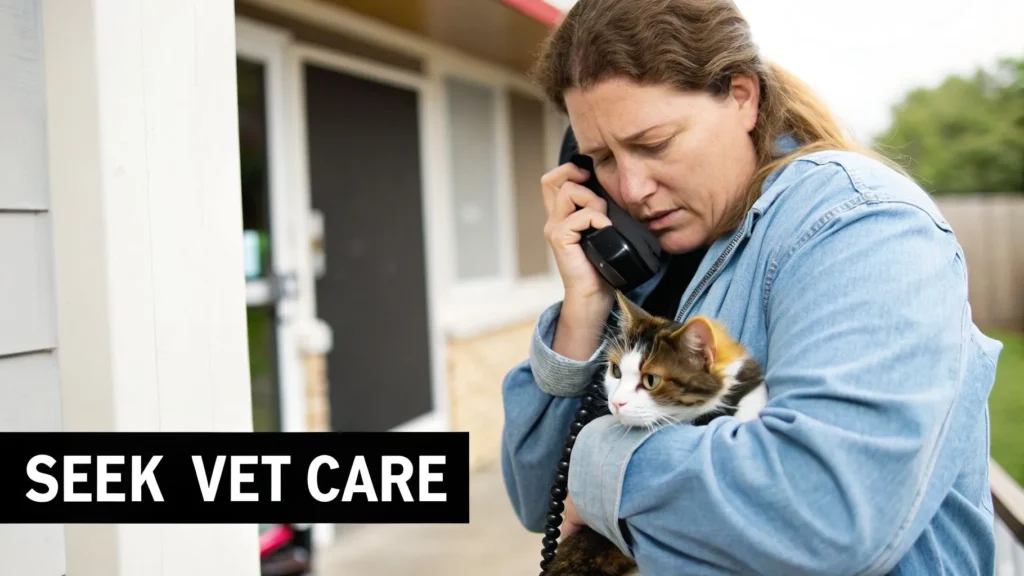
Let’s get straight to the most important point: since cats don’t have periods, any visible vaginal bleeding is an immediate red flag. Think of it as a critical alarm bell from your cat’s body that something is wrong and you need to see a vet—fast. Never, ever write off bleeding as a “normal” part of your cat’s cycle.
This rule applies across the board, whether your cat is spayed or not. Vaginal bleeding is always a symptom of an underlying medical issue, and these issues can range from easily treatable to life-threatening. The best thing you can do for her health is to act quickly.
Common Causes of Bleeding in Cats
If you see bleeding, it’s not a cat period. It’s a symptom. A veterinarian is the only person who can figure out what’s really going on, but several serious health conditions are common culprits.
Some of the most frequent reasons include:
- Urinary Tract Infections (UTIs): These painful infections inflame the urinary system, causing bleeding. You might spot blood in the litter box or notice her straining to pee.
- Bladder Stones: Sharp mineral crystals can form in the bladder, leading to irritation, blockages, and bleeding.
- Trauma or Injury: An internal injury to her reproductive or urinary organs can cause bleeding that you might not connect to a specific event.
- Tumors: Cancers affecting the reproductive or urinary tract can present with bleeding as one of the primary signs.
For unspayed cats, one of the gravest dangers is pyometra. This is a severe, pus-filled infection of the uterus that is often fatal if not treated with emergency surgery. A bloody or foul-smelling vaginal discharge is a classic sign of this condition.
The message here is simple and direct: If you see your cat bleeding, it’s not a “period.” It’s a medical emergency. Call your veterinarian immediately for guidance.
The Efficiency of the Feline Cycle
The feline reproductive system is built for one thing: efficiency. That’s precisely why bleeding isn’t part of the normal process. A queen’s estrous cycle moves through several phases, with the “heat” portion (estrus) lasting an average of 5-7 days. During this time, her hormones surge to prepare her for mating.
When cats do conceive, research shows the pregnancy rate is remarkably high, sitting at about 73.9%. This just goes to show how biologically fine-tuned they are for frequent and successful reproduction. In this evolutionary strategy, shedding a uterine lining every few weeks would be a waste of resources. If you’re curious about the science, you can explore more detailed statistics about the feline reproductive system to understand its complexities.
Frequently Asked Questions About Cat Heat Cycles
Even when you know the science behind a cat’s heat cycle, dealing with it in real life can be a whole other story. The endless yowling, the strange postures… it can be confusing and, frankly, a little stressful. Let’s tackle some of the most common questions we hear from cat parents.
How Can I Keep My Cat Calm During Her Heat Cycle?
Living with a cat in heat is an exercise in patience. While spaying is the only way to stop the cycle for good, you can do a few things to bring the drama down a notch and make her (and you) more comfortable. Your main goal is to create a calm, secure space that dials down her overwhelming instinct to find a mate.
First things first: lockdown mode. Make sure all your windows are securely closed and latched. Be extra vigilant anytime you open a door to the outside. A female in heat is a master escape artist, and she can be gone in a flash.
Once your home is secure, shift your focus to comfort and distraction.
- Create a Cozy Retreat: Give her a warm, comfortable place to curl up. A heated cat bed or even just a pile of soft blankets in a quiet corner can be incredibly soothing for her.
- Redirect Her Energy: Break out the laser pointer or her favorite wand toy. A good play session can provide some much-needed mental stimulation and redirect all that pent-up energy.
- Keep Things Clean: Pay extra attention to her litter box. Cats in heat sometimes urinate more frequently or even spray, and a spotless box can help prevent accidents around the house.
- Isolate from Males: This one is critical. Keep her indoors and far away from any unneutered male cats. Just the scent of a male nearby will send her behavior into overdrive.
Keep in mind that these are just temporary fixes to get you through the week. The only permanent solution to end these stressful cycles is to have her spayed.
Can I Still Spay My Cat If She Is Older?
Absolutely. While the ideal time to spay a cat is before her first heat cycle—a step that dramatically reduces her risk of developing mammary cancer later in life—it is never too late to spay a healthy cat. Veterinarians safely and routinely perform this surgery on adult and even senior cats.
Your vet will perform a full pre-anesthetic exam, which will likely include blood work, to make sure your older girl is in good shape for the procedure. The surgery itself is the same, though her recovery might take a day or two longer than a kitten’s. The benefits, however, are just as significant.
Spaying an older cat still completely eliminates the risk of uterine infections (pyometra) and ovarian cancer, puts a stop to the exhausting heat cycles, and prevents any surprise litters. It’s one of the best investments you can make in her long-term health, no matter her age.
Why Is My Spayed Cat Showing Signs of Heat?
This is a scenario that understandably sends owners into a panic. If you have a cat who has been spayed but is suddenly yowling, rubbing on everything, and assuming the “lordosis” posture, it almost always points to one thing: Ovarian Remnant Syndrome.
This happens when a tiny, microscopic piece of ovarian tissue was unintentionally left behind during the original spay surgery. Even a sliver of this tissue can produce enough estrogen to send her body right back into a heat cycle. It’s a tricky situation for even the best surgeon, as it can be difficult to remove every last cell, especially if the cat was in heat when she was spayed, making the tissues more fragile.
If you suspect this is happening with your cat, your veterinarian can run some tests to confirm if there’s active ovarian tissue present.
The fix is another surgery to find and remove the leftover ovarian fragment. It’s a hassle, for sure, but it’s the only way to stop the heat cycles for good and prevent a serious long-term risk called stump pyometra, an infection that can develop in the remaining uterine tissue.
When a cat is acting distressed, it can be tempting to reach for a human medication to calm them down, but this can be incredibly dangerous. For an in-depth look at this issue, you can read our guide on whether you can give your cat Benadryl, which details the risks of using over-the-counter drugs not meant for pets.
maxijournal.com is your source for clear and engaging articles on everything from pet health to the latest in science and technology. We publish daily writing to keep you informed and curious. https://maxijournal.com
Discover more from Maxi Journal
Subscribe to get the latest posts sent to your email.