You hear the crinkle, look over, and catch your cat licking at a food wrapper or chewing the corner off a plastic bag. By the time you reach them, the piece is gone. That moment is enough to make any owner panic.
That reaction is understandable. Plastic ingestion can be minor, but it can also turn into a choking event, a stomach or intestinal blockage, or a perforation. The problem is that you usually can’t tell which version you’re dealing with just by looking at your cat in the first few minutes.
There is a useful way to think about this. Your job isn’t to guess whether the plastic will pass. Your job is to make the next safe decision, then the one after that. That means getting clear on what happened, calling a veterinary professional promptly, and watching for the right signs instead of trying random home fixes.
Your Cat Swallowed Plastic What Now
Most owners I speak with are in one of two situations. They either saw the whole thing happen, or they found torn plastic and a cat acting completely normal. Both situations are stressful because cats often don’t read the script. Some stay bright and alert even when there’s a serious problem developing.
A practical example is the cat that steals deli meat packaging and swallows a thin strip before anyone can intervene. Another is the kitten that gnaws on a grocery bag handle. A third is the adult cat that raids the trash and may have eaten part of a wrapper overnight. Those are not all the same risk. A stiff chunk of plastic, a flimsy film, and a string-like strip behave differently once swallowed.
The first decision matters most
If your cat swallowed plastic, treat it as a same-day veterinary issue. That doesn’t always mean surgery or an overnight stay. It does mean you should stop trying to figure it out alone and get professional guidance quickly.
Veterinary guidance is direct on this point. Any witnessed plastic ingestion warrants immediate attention, because plastic can cause choking, gastrointestinal obstruction, or perforation. Red flags include vomiting, drooling, loss of appetite, lethargy, abdominal pain, straining, or not defecating, and treatment may range from monitoring to endoscopy or surgery depending on the object’s size and shape, as explained by Ann Arbor Animal Hospital’s guidance on cats eating plastic.
The safest early move is simple: call your vet or the nearest emergency clinic while the details are still fresh.
There’s another reason not to shrug this off. Plastic doesn’t just affect pets that chew trash directly. A study in Sri Lanka collected 276 fishing cat scat samples and found plastic in 6 samples, about 2.2%, with debris ranging from microplastics to larger fragments such as single-use bag pieces and nylon or polyester string. The finding suggests plastic can move up the food chain through prey, not only through obvious trash consumption, according to Mongabay’s report on the fishing cat study.
Immediate Actions and What to Avoid
The first few minutes should be calm and deliberate. Panic tends to create two problems. It stresses the cat, and it pushes owners toward home remedies that can make a bad situation worse.
What to do right away
Move the cat to a quiet space.
Put them in a bathroom, laundry room, or carrier if needed. You want them away from more plastic, string, wrappers, or trash.Look for any remaining plastic.
If a piece is hanging from the mouth and comes away easily, you can remove it gently. If you’ll need to tug, stop. Pulling on plastic or string can cause internal injury.Figure out what was swallowed.
Try to identify the item. Was it a hard bit from a container lid, cling film, a grocery bag handle, a bread bag tie area, or a ribbon-like strip? Shape matters. Thin, flexible, stringy plastic is often more concerning than a small smooth fragment.Estimate timing and amount.
Your vet will want to know when it happened, whether it was witnessed, and whether your cat is showing any signs now.Call a veterinarian immediately.
Don’t wait for symptoms before making the call. If your regular clinic is closed, call an emergency hospital.
If you’re tempted to give an over-the-counter medication to “settle the stomach,” don’t guess. Many owners reach for human meds in a rush, and that can complicate the picture. If you’ve ever wondered about antihistamines or other home medicines, this guide on whether you can give your cat Benadryl is a good reminder that medication decisions should be species-specific and vet-directed.
Avoid this: Do not induce vomiting, do not give oil, bread, or other home remedies, and do not keep feeding your cat to “push it through.”
What doesn’t work
Owners often hope that if the cat seems normal, they can just observe without calling. That’s the trap. Early foreign body cases can look deceptively mild.
Another common mistake is trying to “help” by pulling on visible material from the mouth or anus. If that plastic is part of a longer strip inside the digestive tract, traction can do damage. Leave it alone and get veterinary instruction.
A final mistake is waiting overnight because the cat ate “only a little.” Sometimes the amount matters less than the shape. A tiny ribbon-like strip can be a bigger problem than a larger blunt piece.
Monitoring Your Cat at Home for Warning Signs
Sometimes, after you call, the veterinarian may tell you to monitor at home for a period of time. That is not casual observation. It is focused triage.
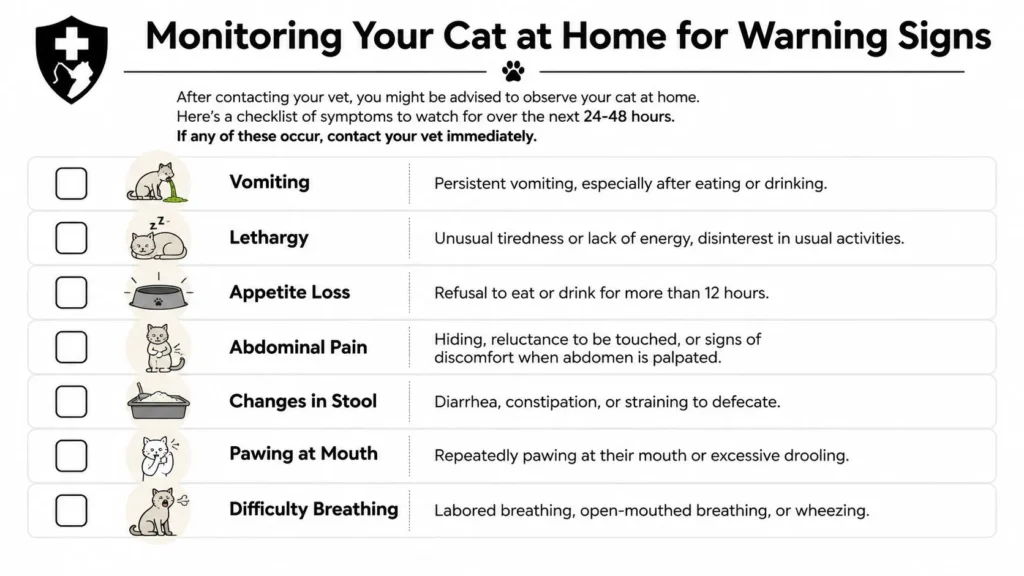
Signs that mean go back in now
Vomiting, drooling, abdominal pain, straining without producing stool, or a cat that becomes weak or withdrawn after swallowing plastic should be treated as an urgent change, not a wait-and-see moment.
These are the signs I want owners checking for in real time:
- Vomiting: One episode may still warrant concern, but repeated vomiting is more worrying.
- Drooling or pawing at the mouth: This can suggest nausea, oral discomfort, or material caught farther forward.
- Loss of appetite: A cat who suddenly won’t eat after plastic ingestion needs reassessment.
- Lethargy: Less interaction, less movement, hiding, or seeming “off” matters.
- Abdominal discomfort: Tensing, growling, hunching, reluctance to be picked up, or reacting when you touch the belly.
- Litter box changes: Straining, producing very little, or not defecating.
- Breathing changes: Open-mouth breathing, obvious distress, or noisy breathing is an emergency.
What useful home monitoring looks like
Don’t just glance at your cat from across the room and assume all is well. Use a short check routine every few hours:
- Watch them walk. Are they moving normally or hunched?
- Offer water and normal food only if your vet advised it. Note whether they approach it, sniff it, and eat.
- Observe the litter box. This matters more than many owners realize.
- Check behavior. A social cat that suddenly hides is giving you information.
A symptom diary helps. Write down the time of ingestion, what was swallowed, whether your cat ate or vomited, and any litter box activity. That makes your follow-up call far more useful.
If your cat develops diarrhea or straining, don’t assume it’s unrelated stomach upset. Digestive changes always deserve context, and owners sometimes miss how much stool information helps with triage. This overview of coccidia in cats is a good example of why stool changes shouldn’t be brushed off as “just a bad day.”
Home monitoring versus false reassurance
Cats can hide pain well. The dangerous version of watchful waiting is passive waiting. The safer version is active observation with a low threshold to go in if anything changes.
If you feel yourself checking your cat every few minutes because your gut says something isn’t right, listen to that instinct and call again. Owners often notice subtle decline before dramatic symptoms appear.
What to Expect at the Veterinary Clinic
A lot of owner anxiety comes from not knowing what the appointment will involve. In most cases, the clinic visit is methodical.
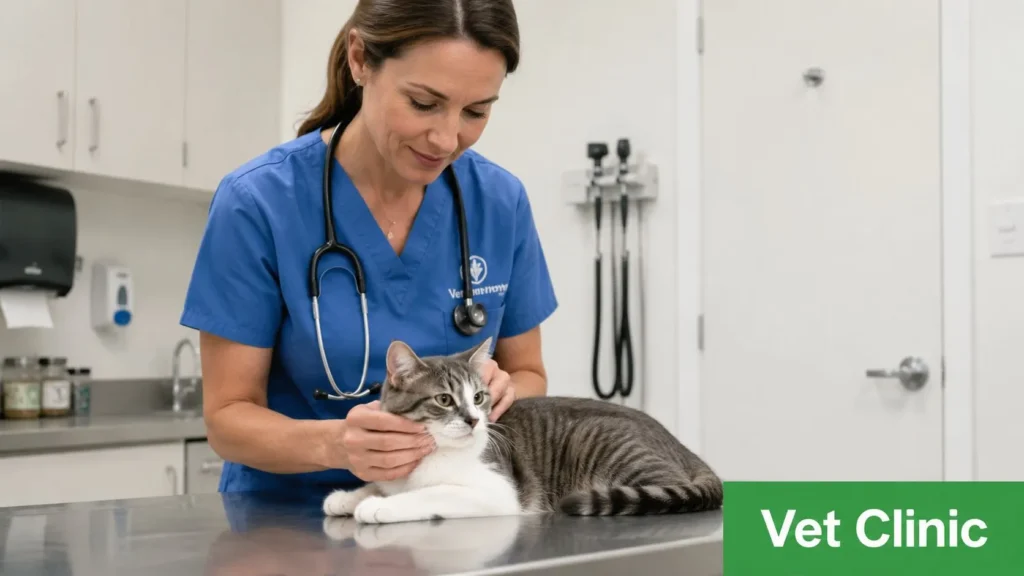
The usual diagnostic path
Expect your veterinary team to ask detailed questions first. What exactly was swallowed, when it happened, whether any part was recovered, and what signs you’ve seen since then all shape the plan.
Veterinarians typically begin with a physical exam and abdominal X-rays when a foreign body is suspected. Several views, contrast studies, and sometimes ultrasound may be needed, along with blood and urine testing to look for systemic compromise or alternate causes of vomiting. This step matters because interrupted blood supply to the stomach or intestine can lead to tissue death within hours, a point emphasized in VCA’s overview of foreign body ingestion in cats.
Why your cat may need more than one test
Plastic doesn’t always show up neatly on imaging. Sometimes the object itself isn’t obvious, but the effect on the stomach or intestines is. That’s why your veterinarian may recommend more than a single X-ray.
A typical sequence can look like this:
| Situation | Likely next step |
|---|---|
| No symptoms, uncertain ingestion | Exam, history, and targeted monitoring advice |
| Vomiting or abdominal pain | Abdominal imaging and supportive care |
| Object may still be in the stomach | Discussion of retrieval options |
| Obstruction suspected | More urgent intervention |
Possible treatments
Treatment depends on location, shape, and timing.
Some cats need monitoring and repeat checks. Some need an endoscopic procedure if the object can be reached safely in the stomach. Others need surgery if the plastic has moved farther down, caused an obstruction, or behaves like a linear foreign body.
Ask your vet one direct question: “Based on what you see, are we monitoring, retrieving, or preparing for obstruction treatment?”
That question usually gets you a clear answer and helps you make decisions faster.
Preventing Your Cat from Eating Plastic Again
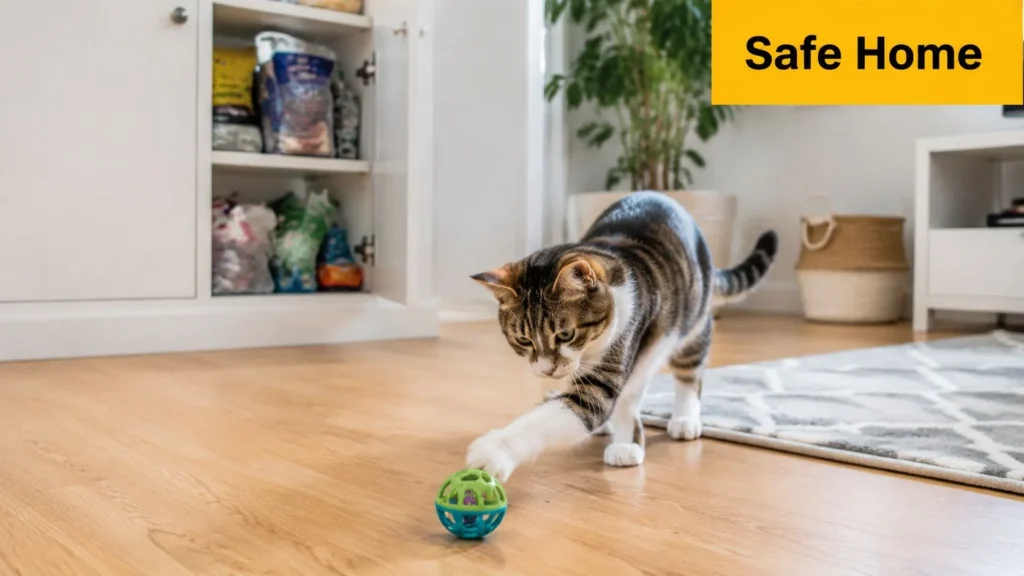
If this wasn’t a one-off accident, prevention has to go beyond hiding grocery bags. Repeated plastic chewing often points to pica, which means eating or persistently chewing non-food items.
When plastic chewing is a behavior problem and when it isn’t
Recurring plastic chewing can be linked to boredom, stress, or anxiety, but it can also be associated with medical issues such as diabetes, intestinal parasites, or liver disease. That’s why a full veterinary workup is often the right starting point before labeling it “just behavioral,” as discussed in this veterinary explanation of pica and plastic chewing in cats.
That distinction matters. If a cat suddenly starts obsessing over wrappers after never doing it before, I worry less about “bad habits” and more about asking what changed. Appetite shifts, household stress, new pets, schedule changes, and underlying illness all belong on the table.
What actually helps reduce recurrence
The best prevention plans usually combine home management with enrichment:
- Make plastic boring and inaccessible. Store grocery bags in closed cabinets. Don’t leave bread bags, produce sleeves, mailing envelopes, or snack wrappers on counters.
- Change the scavenging environment. Use lidded trash cans and clear recycling promptly.
- Increase hunting-style activity. Food puzzles, short play sessions with wand toys, and treat hunts around the home can redirect oral fixation and boredom.
- Add vertical territory. Cat trees, shelves, and window perches often reduce stress-driven repetitive behavior.
- Offer safe alternatives. Some cats do better when they have cat-safe chewable toys or textured enrichment items approved by their vet.
Home setup matters more than owners think. If your cat targets throw pillows, blanket corners, or the plastic film that often comes with household items, the same strategies that help with chewing prevention also help with protecting furnishings from pets. The useful overlap is reducing temptation while making the environment easier to manage.
Don’t rely on punishment
Punishment usually fails here. Cats don’t connect delayed scolding with the earlier act of chewing plastic, and stress can intensify the behavior.
A better plan is to remove access, track patterns, and enrich the cat’s day. If you’re trying to cut down on risky household materials overall, these ideas for eco-friendly pet products can also help reduce loose packaging and disposable pet-item clutter in the home.
Frequently Asked Questions
Will the plastic pass on its own
Sometimes it does, but you should never assume that at home without veterinary input. The deciding factors are usually the object’s shape, size, and how your cat is doing clinically. Timing matters too. Prognosis for foreign bodies changes sharply depending on the object and how quickly care is started. Cats have had a 100% survival rate for solid foreign bodies that do not stretch or tangle, with an overall recovery rate of 91% across reported cases in claims data discussed by Gaia Vets on swallowed objects in pets. That does not make thin plastic strips or bag fragments low-risk.
What if the piece was very small
A small piece can still be a problem if it’s thin, flexible, or sharp-edged. “Small” is less important than whether it can fold, snag, or travel in a dangerous way.
Is some plastic more dangerous than other types
Yes. A smooth, compact fragment is very different from a ribbon-like strip, cling film, or anything stringy. Linear items are more likely to cause intestinal injury than solid, non-entangling objects.
My cat only chews plastic but doesn’t swallow it. Is that okay
No. It’s safer than confirmed swallowing, but it still isn’t normal behavior to ignore. Plastic chewing can escalate, and repeated chewing may point to pica, stress, boredom, or a medical issue that deserves a workup.
Should I pull plastic if I see it coming out
No. Don’t pull material from the mouth or the rear end unless your veterinarian specifically instructs you to do so. Tugging can cause injury if part of the object is anchored internally.
If you want more plain-language pet guidance, practical health explainers, and approachable articles across pets, science, health, and everyday questions, visit maxijournal.com.
Discover more from Maxi Journal
Subscribe to get the latest posts sent to your email.