You’re probably in the same spot most animators hit the first time they tackle a black cat. The pose looked elegant in thumbnails, the blocking felt solid, and then the moment you filled the body with near-black values, the whole character collapsed into a vague shape. The ears disappeared against the background. The face lost structure. The tail stopped reading as part of the performance and started reading as a random curve.
That problem isn’t about software. It’s a design and staging problem first, then an animation problem, then a lighting problem. Black cat animation only works when you treat silhouette, motion, and render as one system. If one part is weak, the others can’t rescue it.
The good news is that black cats are unusually strong animation subjects once you build around their constraints. Their shapes are graphic. Their body language is readable. Their tails, ears, and eyes can carry a scene with very little dialogue or ornament. What fails is the common instinct to animate them like any other furry quadruped and hope the details will show up later.
Foundations for a Feline Phantom
A black cat is unforgiving. A ginger cat can survive weak staging because stripe patterns and local color variation do some of the readability work for you. A black cat won’t. If the pose is muddy, the shot is muddy.
That’s why the starting point is observation, not rig controls or brush presets. Watch what cats do when they pause before a jump, when they decide whether to trust a sound, when they move through a familiar space versus an unfamiliar one. The difference is rarely in big body mechanics alone. It’s in how long they hold, where tension gathers, and which part of the spine initiates the next action.
Build a brief before you animate
Before drawing a turnaround, define the cat in terms of behavior.
- Curious cat: leads with the head, pauses often, tail writes soft question-mark shapes
- Guarded cat: keeps weight back, ears swivel before the torso commits
- Confident cat: moves as if it owns the frame, with fewer corrective motions
- Supernatural cat: holds still longer than feels natural, then moves in very clean bursts
Those choices matter more than breed accuracy in most stylized work. They tell you whether to exaggerate shoulder glide, how much asymmetry to allow, and whether the tail acts like punctuation or like a steady counterbalance.
Black cats also carry a long visual history in animation. Luna from Sailor Moon (1992) helped establish the black cat as a mentor figure, while Bagheera in Disney’s The Jungle Book (1967) showed how a dark feline silhouette can communicate intelligence and authority, as noted in PetMD’s overview of black cat cultural history. That visual language still works because the ingredients are simple and durable: dark coat, bright eyes, and expressive tail motion.
Reference that actually helps
Watching random cat clips is better than nothing, but it often leads to mimicry without understanding. A stronger reference pack usually includes:
- Side-view locomotion footage so you can track spine compression and release
- Low-light stills to study what remains visible when fur value and background value get close
- Front three-quarter portraits for eye spacing, muzzle simplification, and ear angle changes
- Slow, non-dramatic behavior like sitting, listening, grooming, and turning
Practical rule: If the cat only reads when you can see interior fur detail, the design isn’t doing enough work.
For scripting short actions, beats, and visual transitions before you animate, it can help to rough out motion ideas with essential animation scripts. Not as a substitute for reference, but as a way to stress-test whether the action is clear enough to stage.
What works and what fails early
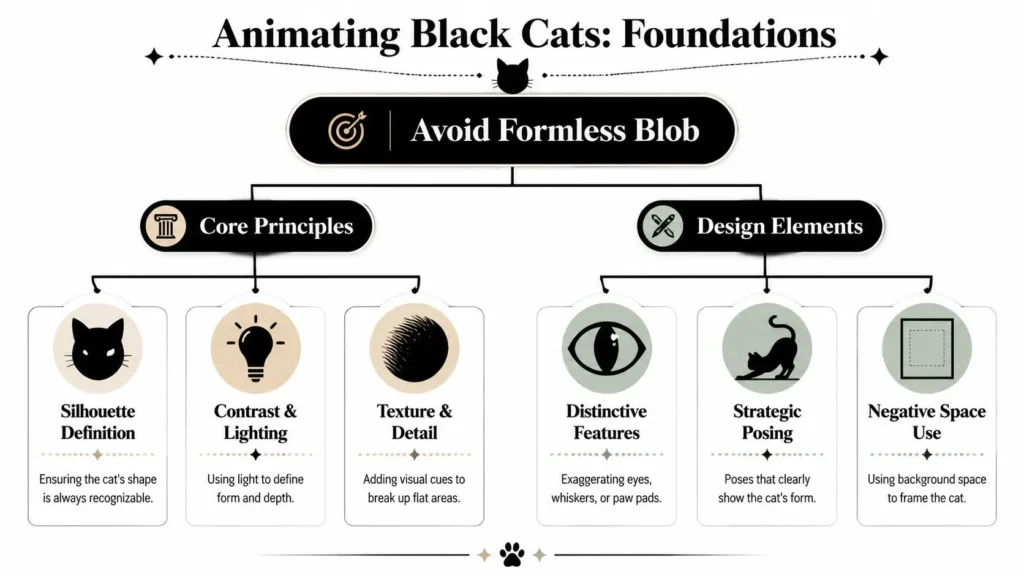
A good black cat design starts with readable negative space. Tail away from the torso. Ears not swallowed by the skull shape. Legs posed so they don’t merge into one dark mass.
A weak one usually shows the same symptoms:
| Problem | What it causes |
|---|---|
| Tail glued to body contour | Loss of emotion and balance cues |
| Eyes too small or too dark | Face disappears first |
| Fur detail used as rescue | Noise without clarity |
| Symmetrical posing | Stiffness and poor silhouette |
The foundation isn’t flashy. It’s disciplined. If you solve the shape language and behavioral brief first, everything downstream gets easier.
Designing for Readability and Appeal
Most black cat designs fail before animation starts. The artist draws a lovely static illustration, fills it with black, and only then realizes the form depended on internal lines that vanish in motion.
So design from the outside in. Silhouette first, features second, surface detail last.
Push the silhouette harder than feels polite
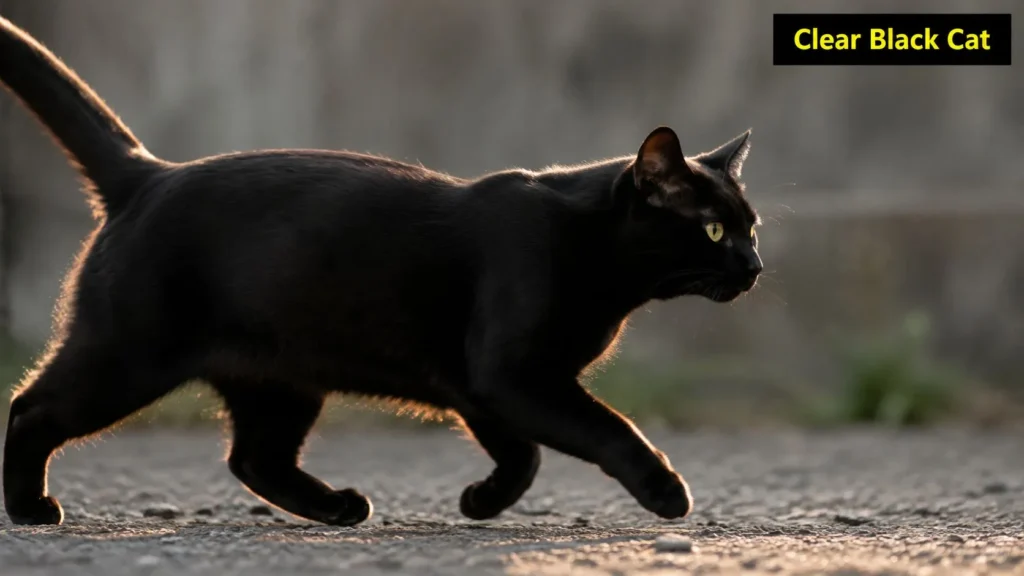
A readable cat silhouette doesn’t need realism. It needs distinct landmarks. Ears, tail, chest, haunches, and muzzle should each contribute to the read at thumbnail size.
Try this test. Fill the character with one flat dark shape and shrink it until facial detail is almost gone. If you can still tell whether the cat is sly, sweet, tense, or aloof, you’re on track.
Useful exaggerations include:
- Longer ears for alert or witchy designs
- A clearer chest break to separate head from torso
- A tail with intentional line of action instead of a generic curve
- Slightly oversized eyes if the style leans toward appeal over realism
If you struggle with facial structure, portrait drawing discipline helps more than people expect. The same habits used to organize planes, focal points, and value grouping in faces carry over to animals. A guide on how to draw portraits step by step is useful here because it trains you to simplify form before chasing detail.
Use accents with restraint
A black cat doesn’t need many accents, but it usually needs some. Otherwise the viewer has nowhere to land.
The best accents tend to be small and strategic:
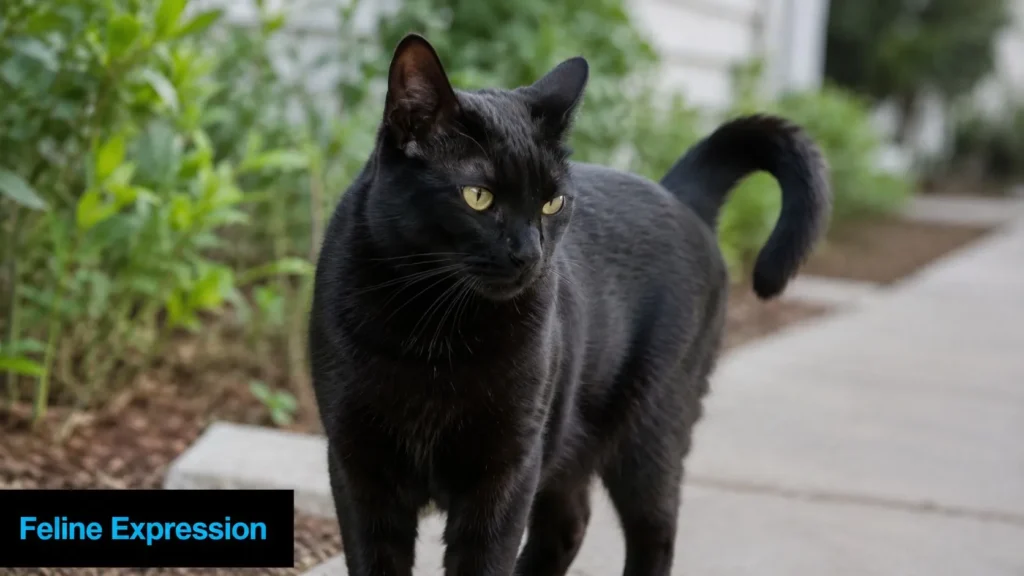
- Eyes are the strongest focal point. Yellow, green, or pale blue can anchor the face instantly.
- Whiskers work when they’re staged against clean background space, not when they sit over busy textures.
- A collar or charm can help in children’s animation, though it can also reduce elegance if overdesigned.
- Tiny markings like a chest patch or lighter ear interior can help break value monotony.
If every part of the cat is interesting, none of it is directing attention.
That’s the trade-off. A few accents create clarity. Too many turn the cat into a decorated object instead of a shape-led character.
Shape language decides personality
A friendly black cat often benefits from softer masses and a slightly rounder muzzle. A sinister or mysterious cat reads better with narrower eyes, taller ears, and more angular spacing between head, neck, and shoulders.
Here’s a fast comparison:
| Design choice | Likely read |
|---|---|
| Rounded cheeks and broad eyes | Gentle, comic, companionable |
| Tall ears and slim body | Alert, elegant, uncanny |
| Thick chest and grounded stance | Protective, authoritative |
| Thin limbs and long tail | Nimble, mischievous |
What doesn’t work is splitting the difference without intention. An angular face on a plush, rounded body can be great if the contradiction is the point. If it isn’t, the design feels indecisive.
Readability beats ornament
In black cat animation, appeal comes from clarity under motion. That means a simpler model often outperforms a detailed one. Keep line breaks sparse. Keep facial landmarks consistent. Let the pose sell the performance.
When the cat turns in space, the audience should never have to solve the drawing.
Animating Core Cat-like Movements
A believable cat doesn’t move like a small dog with pointy ears. The rhythm is different. The spine does more expressive work, the shoulders announce the motion earlier, and the sense of stored energy never fully disappears, even in relaxed movement.
That’s what gives feline motion its identity. Even when a cat is barely doing anything, it feels ready.
The walk starts in the shoulders
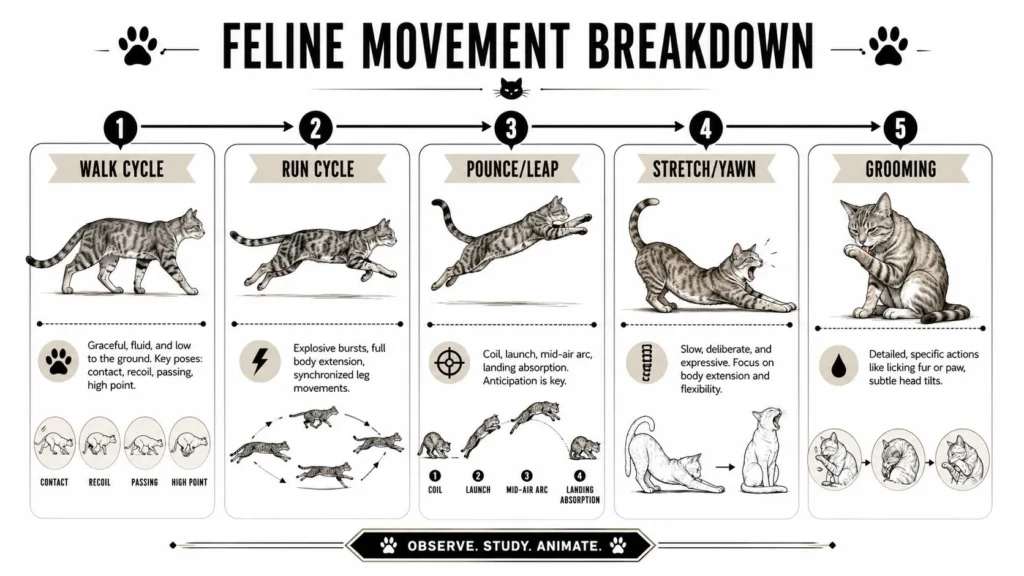
A cat walk cycle reads best when the torso feels like a flexible bridge between front intent and rear follow-through. The shoulders usually lead the impression. If the hips dominate the walk too early, the cat starts to feel canine or generic.
Start with four broad keys:
- Contact
- Down or recoil
- Passing
- High point
But don’t treat those labels too mechanically. In a cat, the elegance comes from how one pose melts into the next. The body stays relatively low, the steps feel deliberate, and the front quarters often carry more of the visual rhythm than beginners expect.
A practical blocking pass
If I’m building a black cat shot from scratch, I usually check these things before touching polish:
- Head lead: is the cat deciding where to go with the head and neck first?
- Scapula motion: do the shoulders rise and travel enough to suggest feline anatomy?
- Paw placement: are the feet landing with intention rather than bouncing generically?
- Spine compression: does the torso alternately lengthen and gather?
The body should feel like one connected chain, not four legs attached to a rigid barrel.
A useful technical lesson from Álvaro Montoro’s CSS cat breakdown is the value of a single container with absolute-positioned parts and proportional scaling in em units, because it keeps components aligned and reduces drift as you animate layered features independently. The same logic applies outside CSS too. Whether you’re in Blender, TVPaint, Toon Boom Harmony, Adobe Animate, or After Effects, motion is easier to manage when your parts inherit a stable proportional system. Montoro also points out that varying timing functions across blinks, head tilts, and tail movement avoids a mechanical result in his black cat CSS art workflow.
A tail study can help before the full body pass. For behavior context around tail control and communication, this explainer on do cats have control of their tails is worth a read.
Here’s a useful movement reference to study alongside your own blocking:
Pounce, jump, and stretch
The pounce is where many black cat shots either become memorable or fall apart. The key is compression. Cats gather themselves before launch in a way that makes the release feel inevitable.
For a convincing pounce:
- Hold the coil long enough that the audience registers intention
- Launch with a clean line of action rather than a mushy push-off
- Let the spine extend fully in the air
- Absorb landing through legs and shoulders, not just a head bob
A jump is similar, but the target changes the body language. A vertical jump to a shelf tends to feel precise and measured. A horizontal leap reads more predatory or playful depending on head angle and paw reach.
Small actions reveal authenticity
Stretching and grooming aren’t filler actions. They’re great tests of whether you understand feline timing. A cat stretch should feel deliberate, almost luxurious. The extension travels through the whole body, and the release doesn’t snap back instantly.
The fastest way to make a cat look fake is to animate every action at one emotional temperature.
Grooming is even more specific. Head tilts are tiny. Paw positioning matters. Repetition helps, but exact repetition looks procedural, so offset the arcs and spacing. Those little imperfections are where life shows up.
Mastering Secondary Motion and Nuance
A black cat can be fully on model and still feel dead if the shot ends at body mechanics. The read usually breaks in the smaller choices. Tail drag, ear delay, whisker overlap, a blink that comes half a beat too early. On dark characters, those details matter even more because you cannot rely on fur pattern or color contrast to carry expression.
The tail needs intent
The tail should read as an extension of the spine with its own drag and recovery. I block it late enough that the body action is clear first, then I add tail behavior that supports the shot’s emotional priority. That order prevents decorative motion.
A few patterns hold up well in production:
- A soft S-curve reads calm, curious, or socially open.
- A low tail with a slight lag can read cautious, tired, or predatory depending on head and shoulder posture.
- A single tip flick adds thought and tension without pulling focus.
- A high upright tail reads confident in stylized animation, but only if the base of the tail feels connected to the pelvis.
The common mistake is amplitude. Animators sometimes swing the tail so broadly that it starts acting like a metronome. Real cats often do less. In stalking or listening shots, less usually reads better, especially on a black cat where the silhouette has to stay clean.
Ears show attention before the face does
Ear motion is small, but it is one of the fastest ways to suggest thought. I treat the ears as early indicators of attention change. A tiny pivot toward an off-screen sound often sells awareness before the head turn starts.
Asymmetry helps. One ear arriving first feels observed. Both ears snapping together feels designed.
Speed matters too. If every ear twitch is sharp, the cat reads tense in every scene. Calm shots need slower drifts, partial rotations, and moments where one ear holds while the other adjusts. Those restrained offsets create life without adding clutter to the silhouette.
A controlled ear adjustment often communicates more than another body accent.
Secondary motion has a hierarchy
Good secondary motion supports the main idea of the shot. It does not compete with it. If the audience is meant to read suspicion, choose the two or three signals that carry suspicion best and protect them. Usually that means one tail idea, one ear idea, and one facial accent such as a blink or slight muzzle shift.
I use a simple check in passes. First pass, body action only. Second pass, tail and ear overlap. Third pass, remove anything that steals attention from the strongest pose. Black cats benefit from that discipline because dark fur hides weak decisions and exposes noisy ones. If every small part is moving, the silhouette gets muddy fast.
Whiskers, chest fur, and shoulder flesh can add a lot, but only if the shot earns them. On close shots, a slight whisker drag on a head turn can make the face feel tactile. On wider shots, that work is often invisible, so I put the time into clearer tail timing or a better hold instead.
Restraint reads as confidence. One clean emotional beat usually plays better than stacking five subtle ideas into the same few seconds.
Lighting and Rendering the Void
Black fur isn’t hard to light because it’s black. It’s hard to light because people try to reveal it the same way they reveal lighter subjects. That usually means broad frontal illumination, timid contrast, and too much dependence on diffuse fill.
A black cat needs sculpting, not flattening. Once you accept that, lighting becomes one of the most enjoyable parts of the process.
Separate the cat from the background
The first job of light is separation. If the body and background sit too close in value, no amount of texture painting will save the shot.
Use a clear hierarchy:
| Light choice | What it does |
|---|---|
| Rim light | Cuts the silhouette away from the background |
| Kicker | Adds shape on cheek, shoulder, or haunch from the side |
| Controlled fill | Keeps facial planes readable without washing them out |
| Specular accents | Reveals fur direction and form selectively |
The rim light is usually the hero. It defines the ear edge, spine contour, tail thickness, and cheek break. Without it, the cat can merge into darkness. With too much of it, the cat starts to look wet or metallic. The sweet spot is enough edge information to read form while preserving the sense of dark fur.
Don’t light every plane equally
A common mistake is trying to show the whole cat at once. That flattens the render and weakens mood.
Instead, decide which planes matter in the shot. If the face is carrying the scene, let the shoulder and hindquarters drop quieter. If the cat is turning, let one side disappear briefly so the turn has shape.
This is especially important in cinematic black cat animation. Darkness is useful. It creates mystery and focus. You don’t need to apologize for it with extra fill.
Lighting rule: Reveal only the form the audience needs right now.
Fur texture needs restraint too
Black fur texture works best when it’s implied through breaks in value, selective highlights, and edge variation. If you paint fur strokes everywhere, the cat gets noisy fast.
Better options include:
- Specular streaks along major form turns, especially forehead, shoulder, and back
- Soft value shifts to separate top plane from side plane
- Broken edges in a few places to hint at fur softness
- Colored bounce light from the environment to stop the black from feeling dead
A cool fill from moonlight, a warm ground bounce from lamplight, or a green environmental reflection from foliage can all help shape the cat without changing its identity as a dark subject.
Software matters less than intent
This workflow translates across pipelines. In Blender or Maya, you’re balancing key, fill, rim, and roughness response. In Toon Boom Harmony or After Effects, you’re staging gradients, compositing glows, and controlling edge separation. In Krita or Photoshop paintovers, you’re grouping values so the render reads before detail appears.
The question isn’t which package renders black fur best. The question is whether your shot has a deliberate light story. If the answer is yes, the cat won’t read like a void. It’ll read like a character emerging from it.
Polishing and Exporting Your Animation
You finish a black cat shot at 2 a.m., hit play, and the motion works. Then the loop bumps on frame one, the tail flick resets, and the upload crushes the shadow detail you spent hours shaping. That last pass decides whether the piece feels finished or merely done.
Polish is where black cat animation often wins or loses. Small errors stand out faster on a dark character because the audience is already working harder to read the form. A weak endpoint, a drifting contact shadow, or muddy compression can undo good design and animation choices.
Make the loop disappear
The cleanest loops return to the same intent, not just the same pose. If the cat starts alert and ends sleepy, the cut will show even if the silhouette lines up. I usually check the emotional state first, then the mechanics.
A reliable review pass looks like this:
- Scrub the loop point frame by frame and watch for tail pops, ear snaps, and whisker jitter
- Check blinks and pupil shape so the face does not reset in a distracting way
- Review contact points and cast shadows if paws, props, or ground planes shift over time
- Watch it on repeat with the audio off because visual breaks show up before sound can hide them
For portfolio use, shorter usually plays better if the idea is clear. A concise shot with one controlled behavior, stalking, listening, settling, reads as judgment. It also shows that you know when to stop refining and when to stop adding.
Export for the platform you are actually using
Keep a high-quality master file first. Export delivery files from that master, not from a previously compressed version. Re-encoding dark footage over and over is an easy way to lose the subtle edge separation that keeps a black cat readable.
Platform specs matter here. Social feeds often crush shadow information, add their own compression, and crop more aggressively than expected. If the shot is headed to a reel or channel upload, this practical guide on how to edit videos for YouTube is useful for thinking through resolution, pacing, and final delivery choices. If you need a lighter file after you have a clean export, tools that optimize video size can help reduce weight without endless manual tests.
Test the file where it will be seen. Phone screen, tablet, desktop, dark mode feed, bright room. Black fur that reads beautifully in your viewer can close up fast on a mediocre mobile display.
Cut what does not help the shot
My final polish pass is usually subtraction. I remove extra camera drift, trim redundant tail motion, soften any highlight that pulls attention from the face, and check whether the first read still works in a second or two.
A short shot with one readable idea looks more professional than a longer shot full of competing actions.
That standard matters even more with black cat animation. The silhouette has to stay clear, the motion has to stay specific, and the export has to protect the value structure you built. Good polish is not about adding one more pass. It is about preserving the choices that already made the cat read.
Discover more from Maxi Journal
Subscribe to get the latest posts sent to your email.