You’re sitting at your desk, trying to answer a simple message, but your mind keeps jumping to everything that could go wrong. Your chest feels tight, your shoulders won’t relax, and the thought “what if?” keeps returning even after you’ve checked the facts. Anxiety can begin as a useful warning, then become so persistent that it starts making everyday life smaller.
Understanding anxiety disorders means learning where ordinary worry ends and a condition that deserves care begins. Anxiety disorders are the world’s most common mental disorders, affecting an estimated 359 million people in 2021, or about 4.4% of the global population, according to the World Health Organization’s anxiety disorders fact sheet. The same WHO information includes 72 million children and adolescents, so this isn’t only an adult concern.

Think of anxiety as an alarm system. A well-calibrated alarm rings when there’s a genuine threat and quiets when the danger passes. An anxiety disorder can act more like an alarm that stays sensitive, sounds too often, or keeps warning you about situations that aren’t immediately dangerous. The fear feels real, even when other people don’t see the threat.
That doesn’t make someone weak, dramatic, or incapable. It means their symptoms deserve thoughtful assessment and appropriate support. This guide moves from recognition to diagnosis, types, symptoms, treatment, daily coping, and the practical question many explainers avoid: what does adequate care look like when access is uneven? For a plain-language overview of available support, anxiety therapy options explained can offer another useful starting point.
Introduction to Understanding Anxiety Disorders
Anxiety has a protective purpose. Before an exam, an important conversation, a medical appointment, or an uncertain decision, some worry can sharpen attention and encourage preparation. The feeling becomes more concerning when it no longer matches the situation, refuses to settle, or repeatedly pushes a person away from work, relationships, school, travel, or ordinary responsibilities.
A person with occasional anxiety might feel nervous before giving a presentation and then relax afterward. A person with an anxiety disorder may spend days anticipating the presentation, lose sleep, avoid speaking altogether, or continue replaying the event long after it ends. The difference isn’t whether anxiety exists. The difference is the pattern, intensity, persistence, and disruption.
A useful question: Is anxiety helping you respond to a real challenge, or is it repeatedly controlling what you can do?
The global scale matters because it changes the conversation. WHO previously reported a 3.6% global prevalence estimate in 2015, then reported 4.4% in 2021, corresponding to 359 million people worldwide, as described in its global mental-health estimate. These figures don’t tell you whether one individual has a disorder, but they do show why anxiety belongs in public-health education, clinical screening, and everyday health conversations.
They also show why stigma causes harm. When people treat anxiety as a character flaw, individuals may hide symptoms, delay appointments, or assume they should manage alone. A calmer approach starts with curiosity. What triggers the alarm? How often does it sound? What does it stop you from doing? What kind of help would make life more workable?
The following sections use those questions to build a practical understanding. You’ll see why diagnosis depends on more than one symptom, how anxiety disorders differ, how risk factors interact, and how proven treatment differs from promising but untested ideas.
What Anxiety Disorders Are and How They Are Diagnosed
An anxiety disorder isn’t identified from one nervous moment. Clinicians look for a persistent pattern of fear, worry, or avoidance that causes meaningful distress or interferes with daily functioning. Someone may recognize several familiar symptoms, but that alone can’t establish a diagnosis.
The pattern matters more than a single symptom
A professional assessment usually begins with the person’s story. When did the symptoms begin? What situations bring them on? How difficult are they to control? Do they affect sleep, concentration, relationships, attendance, work, or basic routines? The clinician may also ask about medications, substances, physical health, trauma, mood, and other concerns that can resemble or intensify anxiety.
Duration and frequency help place symptoms in context. The diagnostic criteria for some anxiety disorders include symptoms occurring most days over an extended period, but the exact threshold varies by disorder. A clinician considers the relevant criteria rather than applying one universal timer to every person.

Diagnosis is a process of clarification
The assessment also separates anxiety from other explanations. A racing heart might occur during panic, but physical conditions can produce similar sensations. Sleep loss, medication effects, substance use, depression, trauma-related symptoms, and obsessive thoughts may overlap with anxiety. That’s why a careful evaluation can include medical review or referral when needed.
The clinician isn’t trying to catch you out. They’re trying to identify the most accurate pattern so treatment targets the right problem. A person who avoids elevators because of a specific fear may need a different approach from someone whose worry spreads across health, finances, family, and work.
You can prepare by writing down symptoms, situations that trigger them, changes in routine, and questions about treatment. A brief record can make vague distress easier to describe. For readers interested in how the brain and behavior are studied more broadly, recent discoveries in neuroscience provides useful scientific context, though online reading can’t replace an individual evaluation.
Main Types of Anxiety Disorders Explained
Anxiety disorders share an alarm response, but the alarm can be aimed at different threats. One person fears judgment, another fears a panic sensation, and another worries about many ordinary responsibilities. Identifying the dominant fear pattern helps a provider choose a more precise treatment plan.
Different targets, different experiences
Generalized anxiety disorder involves broad, ongoing worry about everyday areas such as health, money, family, work, or future events. The worry can move from one topic to another, making it difficult to find a quiet mental space.
Panic disorder centers on recurring panic attacks or persistent concern about having them. A panic attack can bring an abrupt surge of intense fear and physical sensations such as a pounding heart, trembling, breathlessness, dizziness, or fear of losing control. The fear of another attack may then lead to avoidance.
Social anxiety disorder involves intense fear of embarrassment, criticism, or negative judgment in social or performance situations. A person might avoid meetings, conversations, eating around others, public speaking, or unfamiliar groups, even when they want connection.
Specific phobias focus on a particular object or situation, such as an animal, height, injection, enclosed space, or flying. The fear may seem disproportionate to the actual risk, but the body’s reaction can still feel immediate and overwhelming.
Agoraphobia involves fear of places or situations where escape, assistance, or safety may feel difficult. Crowded transport, open spaces, queues, or being outside alone can become associated with danger.
Separation anxiety disorder involves excessive fear about being apart from attachment figures. It can affect children and adults, and may include persistent worry that harm will come to someone important.
Selective mutism is related to anxiety when a person consistently can’t speak in particular social settings despite speaking in other settings. It isn’t shyness or unwillingness.
Key concept: The same physical alarm can appear across disorders, but the feared outcome and the avoidance pattern often distinguish one type from another.
These categories can overlap. Someone with panic disorder may avoid public places, while someone with social anxiety may experience panic-like symptoms during feared interactions. A qualified professional looks at the full pattern instead of forcing every experience into one box.
Signs Symptoms and Risk Factors You Should Know
Anxiety can speak through the body before a person has words for it. It can also appear as a thought pattern, a mood shift, or a decision to avoid something. Looking at these clusters together is more useful than treating one symptom as proof of a disorder.

How anxiety may show up
Physical signs can include a racing heart, sweating, trembling, muscle tension, fatigue, stomach discomfort, shortness of breath, or disrupted sleep. These sensations can become frightening themselves, especially when someone interprets a normal stress response as evidence of immediate danger.
Cognitive signs include racing thoughts, repeated “what if” questions, catastrophizing, indecision, and difficulty concentrating. The mind may keep scanning for problems, even after a situation has been checked and resolved.
Emotional and behavioral signs include restlessness, irritability, dread, reassurance-seeking, procrastination, escape, and avoidance. Avoidance often brings short-term relief, which can accidentally teach the brain that the avoided situation really was dangerous.
Why vulnerability varies
Anxiety rarely has one simple cause. Family history may influence vulnerability, while temperament can shape how strongly someone reacts to uncertainty. Stressful experiences, ongoing pressure, grief, conflict, discrimination, illness, pain, or major change can add strain. Medical conditions, medication effects, sleep disruption, caffeine, alcohol, and substance use may also affect symptoms.
These influences interact rather than operate like isolated switches. A person may have a sensitive stress response, then experience a difficult life period that overwhelms existing coping resources. Another person may develop symptoms after a health scare, while someone else notices anxiety gradually during prolonged sleep disruption.
That’s why self-blame is unhelpful. Understanding anxiety triggers and prevention can help identify patterns, but it shouldn’t turn into an attempt to control every possible trigger. Learning which factors are changeable, which require medical attention, and which need therapeutic support is more realistic.
Look for a pattern, not a label: Symptoms deserve assessment when they persist, intensify, or repeatedly restrict a person’s life.
Sleep is one practical area to examine because poor rest can make emotional regulation harder. A simple log of bedtime, waking, worry, and daytime energy can reveal useful patterns, and how to improve sleep quality offers further general guidance. Tracking doesn’t diagnose anxiety, but it gives you clearer information to bring to a provider.
Evidence Based Treatments and How They Work Together
Effective care usually matches the treatment to the person, the anxiety pattern, the level of impairment, medical context, preferences, and access. Psychotherapy, medication, and lifestyle support aren’t competing answers. They often address different parts of the same problem.
Cognitive behavioral therapy, or CBT, helps people identify unhelpful thought patterns, test fearful predictions, and practice more workable responses. Exposure-based methods apply this learning to avoided situations gradually and safely, so the person can discover that discomfort can rise and fall without escape. Medication may reduce symptom intensity enough to make therapy and daily functioning more manageable, but prescribing decisions belong with a qualified clinician.
| Treatment Approach | Primary Goal | How It Helps | Important Considerations |
|---|---|---|---|
| Psychotherapy, including CBT | Change worry, fear, and avoidance patterns | Builds skills for reframing thoughts, tolerating discomfort, and approaching feared situations | Progress depends on fit, consistency, the anxiety type, and access to a trained provider |
| Medication | Reduce symptom intensity and support functioning | May influence the biological processes involved in anxiety | A prescriber should review benefits, side effects, interactions, medical history, and follow-up |
| Lifestyle support | Strengthen the foundation for recovery | Regular movement, steadier sleep, stress management, and social connection can support regulation | These tools complement care and shouldn’t be presented as a substitute for needed treatment |
| Coordinated care | Address several needs together | Combines therapy, medication management, education, and attention to related conditions | Coordination can be difficult when services are fragmented or unavailable |
Why access changes the picture
The global treatment gap is substantial. Published treatment-coverage estimates for anxiety disorders ranged from 7.3% in Bulgaria to 47.1% in Sweden, and no published estimates were available for 40 countries, according to a global analysis of anxiety treatment coverage. Even entering care doesn’t guarantee adequate care. The same analysis reported Belgium at 35.7% receiving any treatment versus 11.2% receiving adequate treatment, France at 29.4% versus 13.7%, and Portugal at 32% versus 11.2%.
These figures explain why “just get therapy” is incomplete advice. People may face cost, distance, waitlists, language barriers, stigma, shortages of trained clinicians, or treatment that doesn’t match their needs. Adequate care means more than contact with a service. It means an accurate assessment, an appropriate intervention, follow-up, adjustments when needed, and support that the person can realistically continue.
A 2025 review found that the FDA had approved only two medications for anxiety disorders over the previous 16 years, while 14 anxiety-drug candidates were in phase III trials by 2025, as summarized in the WHO mental-health services update. Digital therapeutics, microbiome strategies, and peptide or receptor-targeted medicines may be important areas of research, but most still require large-scale validation. A promising headline isn’t the same as proven routine care.
Practical Coping Strategies and When to Seek Help
Daily coping works best when it lowers the alarm without making avoidance the permanent solution. Start with the body. Unclench your jaw, place both feet on the floor, and lengthen the exhale without forcing a deep breath. Then name a few things you can see, hear, and feel. Grounding shifts attention from an imagined future threat to the immediate environment.
Thought reframing adds a second layer. Write the feared prediction in one sentence, then ask what evidence supports it, what evidence doesn’t, and what you’d tell a friend in the same situation. You don’t need to replace the thought with false positivity. A balanced statement such as “I’m uncomfortable, and I can take the next small step” is more believable and more useful.
Small routines reduce decision fatigue
Choose one repeatable anchor, such as a consistent wake time, a short walk, a regular meal, or a brief evening wind-down. Keep the goal modest enough that anxiety doesn’t turn the routine into another test you can fail. Notice whether the activity supports engagement, rather than becoming a ritual designed only to guarantee that nothing bad happens.
A journal can help you record triggers, sensations, thoughts, actions, sleep, and what happened afterward. MaxiJournal’s health and wellness journal content describes journaling as a way to reflect on physical, mental, and emotional health and notice relationships among daily choices, sleep, thoughts, and feelings. Share relevant patterns with a clinician instead of using the record to diagnose yourself.
Know when self-management isn’t enough
Seek professional help when anxiety keeps you from work, school, relationships, sleep, healthcare, travel, or basic responsibilities. Reach out when fear becomes difficult to control, symptoms keep returning, or physical sensations raise concern about your health. A primary-care clinician can review possible medical contributors and connect you with mental-health support.
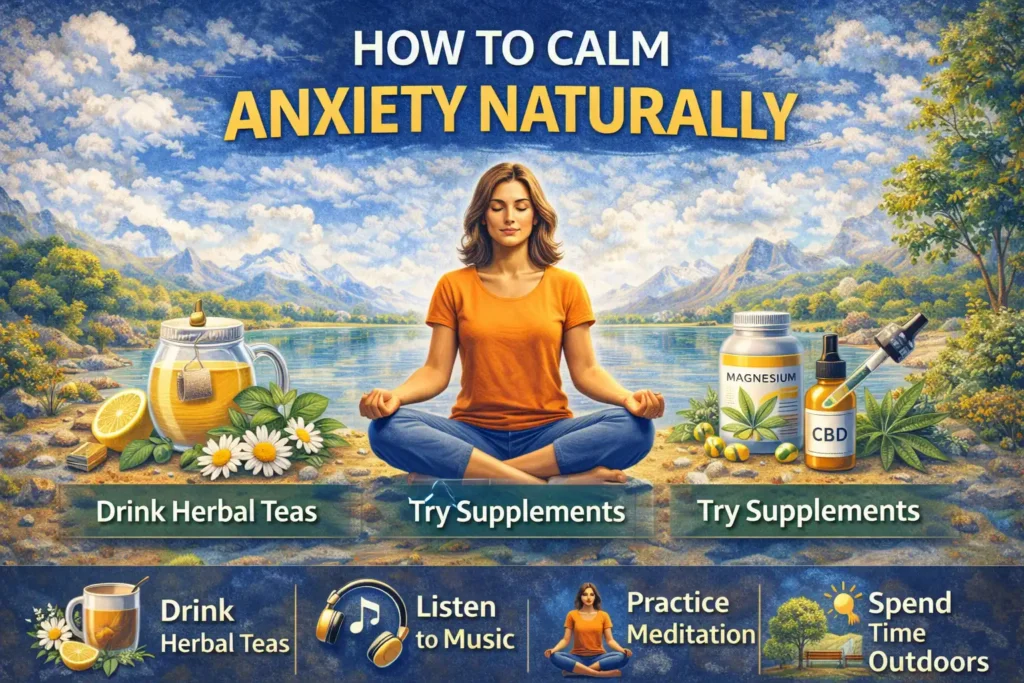
Before an appointment, bring a symptom timeline, current medications and supplements, relevant health history, and a short list of goals. If you’re looking for local services, find anxiety help in Kelowna can be a starting point for exploring counselling options. For more everyday techniques, how to calm anxiety naturally offers additional general ideas, but urgent or severe symptoms need professional attention.
Common Myths About Anxiety Disorders and Key Takeaways
Myth: Anxiety is just ordinary stress. Stress responds to changing circumstances, while an anxiety disorder persists as a pattern that continues or spreads after demands shift. The difference becomes clearer when fear, worry, or physical symptoms interfere with ordinary responsibilities.
Myth: Anxiety will disappear if you ignore it. Avoidance may bring short-term relief, yet it can teach the brain that a situation is dangerous. Appropriate therapy builds a gradual, structured way to face fear, with support matched to the person’s symptoms and readiness.
Myth: Medication solves everything. Medication helps some people. Adequate care may also include psychotherapy, skills practice, lifestyle support, medical review, and follow-up. These parts work like tools in a toolkit, and treatment should be adjusted rather than reduced to one option.
Myth: New treatment headlines mean a breakthrough is ready. Research on digital tools, microbiome-based strategies, and targeted medicines continues. Experimental approaches require careful validation before routine use, so promising research and proven care should remain separate categories.
The most useful takeaways are these:
- Anxiety is common, not a personal failure.
- A disorder is defined by patterns and impairment, not one stressful day.
- Different fear patterns require different assessments and treatment approaches.
- Coping skills can help today, while professional care addresses persistent or disabling symptoms.
- Access to treatment is not the same as receiving adequate treatment.
- Hope is realistic when care is accurate, appropriate, and sustained.
Adequate care means more than finding any available intervention. It includes a careful assessment, a treatment plan suited to the person, follow-up, and adjustments when progress stalls or symptoms change.
If anxiety is shrinking your life, you do not have to wait until it becomes unbearable to ask for help. Start with one conversation, one symptom record, or one appointment. Bring specific questions about diagnosis, treatment choices, follow-up, and what adequate care would look like for you. MaxiJournal offers approachable writing on health, science, education, and everyday wellbeing at maxijournal.com.
Discover more from Maxi Journal
Subscribe to get the latest posts sent to your email.