What is it about a masked face that immediately raises the stakes of a scene? A mask can hide the person underneath, transform an ordinary character, make a threat harder to read, or turn an individual into a symbol. That’s why the best movies with masks aren’t just showcases for memorable costumes. They use the covered face to change how we understand a character and what we expect from the story.
This selection moves by function rather than fame, from horror and superheroes to thrillers, musicals, and arthouse cinema. Each film earns its place because its mask is central to the story, visually distinctive, and still recognizable in film culture. You’ll also find practical ideas for recreating the look, whether you’re planning a costume or working on poster art for indie filmmakers.
1. Halloween (1978)
Michael Myers’ mask is frightening because it gives you almost nothing to read. Its blank, pale face hides expression, leaving the viewer to search for clues in his posture, the angle of his head, and the distance he keeps from his victims. In John Carpenter’s slasher, that stillness turns a simple disguise into a way of withholding information.
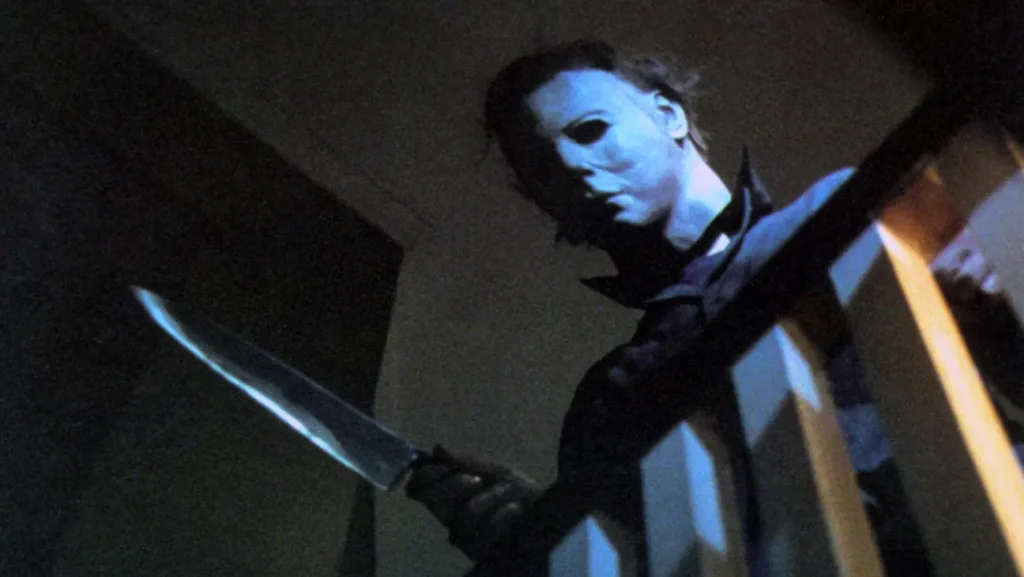
Why the blank face works
The mask doesn’t give Myers a colorful personality or a clever disguise. It strips away visible emotion, so the character feels less like someone you can reason with and more like an approaching presence. That image helped make the film a reference point for slasher horror, and Myers’ face remains a go-to choice for horror costumes.
For a faithful recreation, start with a Captain Kirk-style or Myers-style mask and give it a matte white finish. Pair it with a dark jumpsuit and a clearly identifiable toy kitchen knife, not a real blade. The costume works best when you keep the movement restrained: stand still, turn slowly, and let the blank mask do the unsettling work.
A movie night built around stalking horror can also lead into newer genre releases. Browse new zombie movie recommendations if you want to follow the slasher with a different kind of threat.
Costume rule: Prioritize the mask’s flat expression and safe visibility over screen-perfect distressing.
2. Scream (1996)
Ghostface turns a familiar Halloween-style disguise into an invitation to a conversation. The killer calls, asks questions, and makes the person on the other end of the phone participate in the suspense. The stark, stretched face makes that exchange feel even more unnerving: it looks like a mask, but its expression is almost impossible to interpret.
Wes Craven’s film also uses the disguise to play with the rules of horror. Characters know the conventions of scary movies, yet that knowledge doesn’t protect them from the person behind the mask. The design became one of modern horror’s most recognizable villain looks because it’s simple enough to identify at a glance and expressive enough to stay eerie.
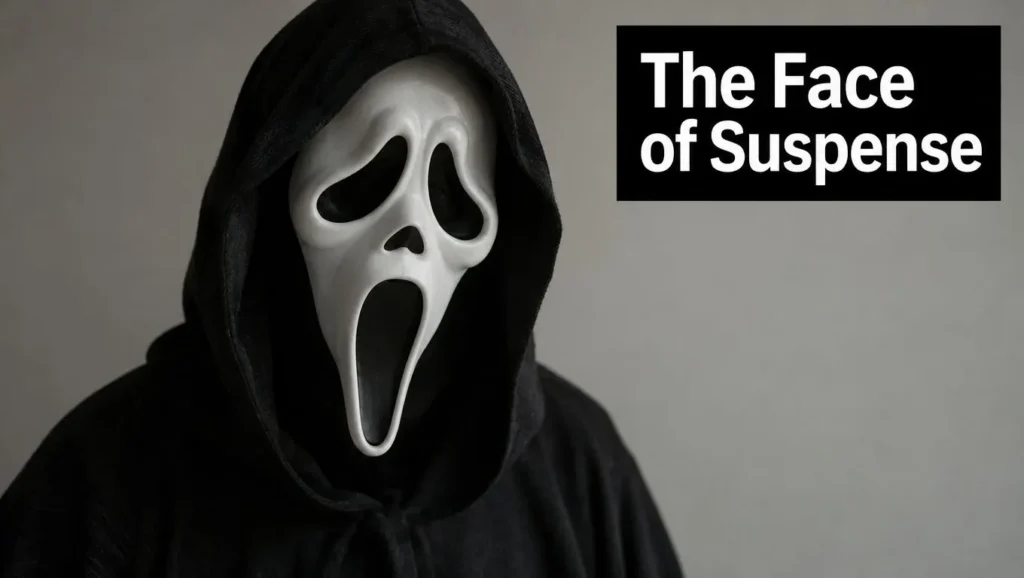
A practical Ghostface look
Pair a Ghostface mask with a black robe, then check the fit before wearing it for a full evening. Choose a mask with clear eye openings and a breathable interior, and make sure the hood doesn’t slide over your line of sight. A costume should let you walk, see, and hear comfortably, especially in a crowded setting.
For a viewing-night example, watch the opening sequence with the lights low, then pay attention to how the phone call creates tension before the masked figure takes over the frame. That shift from voice to image is part of the design’s lasting punch.
3. The Purge (2013)
In The Purge, masks make violence look organized. The attackers’ disguises obscure their individual identities while making them appear to belong to a shared ritual. That collective effect suits a story about a society that has turned violence into a public performance.
The masks aren’t just there to frighten a household under attack. They also make the threat harder to classify. A face hidden behind a costume could belong to a stranger, a neighbor, or someone who would otherwise look ordinary. The franchise uses that uncertainty to connect home-invasion suspense with questions about social division and the stories people tell themselves to excuse cruelty.
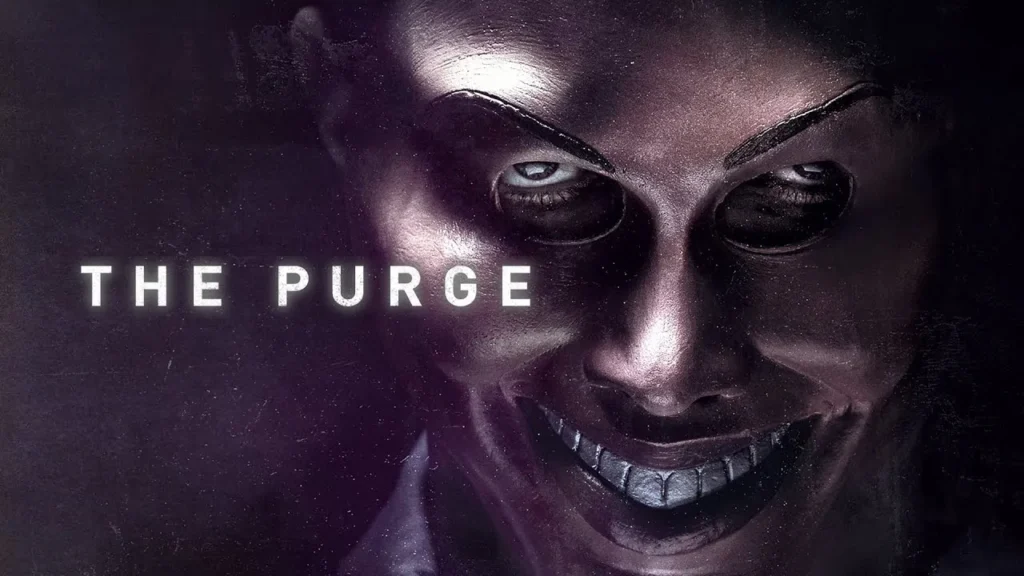
Build the look without creating alarm
Purge-inspired masks work for cosplay because the designs can be customized, but the disguise should remain clearly part of a costume. Choose a comfortable mask with a secure strap, and don’t wear a realistic-looking mask in public where it could frighten people or be mistaken for a threat.
For a home costume party, try a plain dark outfit and one distinctive mask detail, such as an exaggerated grin or painted markings. Keep the rest simple. The film’s tension comes from the contrast between a covered face and an everyday setting, not from piling on props.
4. Eyes Without a Face (1960)
Georges Franju’s Eyes Without a Face makes a pale, expressionless mask the center of a quiet, disturbing story. Edith Scob plays the daughter of a surgeon who tries to restore her face after an accident. Her mask conceals her features, but it also gives the character a striking visual presence: she’s not hidden from others, she has been made into an image they can’t stop looking at.
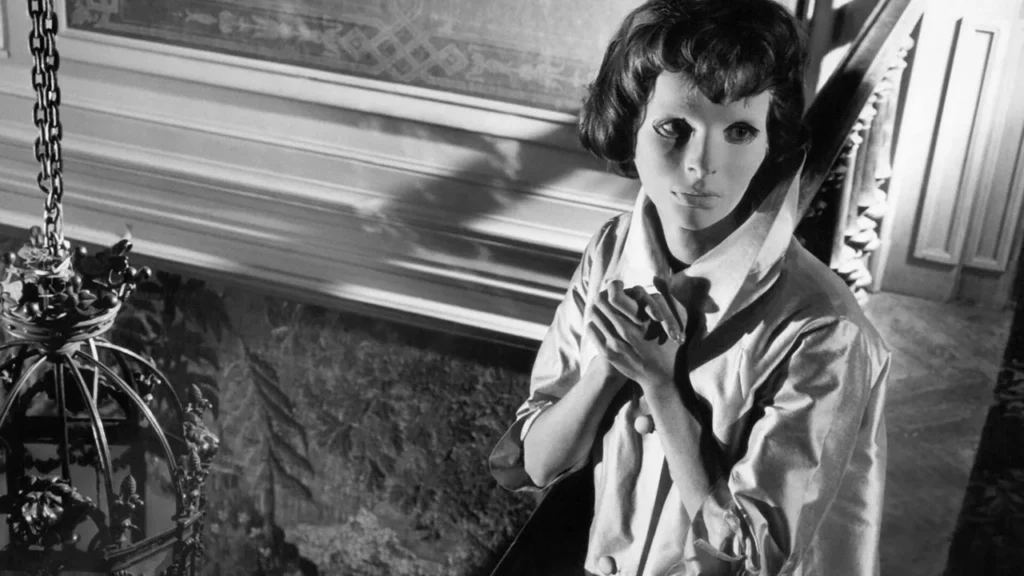
Let the stillness set the pace
This French horror classic uses restraint where a louder film might rely on shocks. The smooth mask keeps facial expression out of reach, so the viewer has to notice the character’s posture, the composition of each shot, and the moments when silence replaces explanation. Its beauty is part of the unease.
Watch with the original French soundtrack and subtitles. Give the film room to breathe rather than treating it as background viewing, and notice how the camera frames the mask against the surrounding space. That approach makes this a strong pick for arthouse viewers who want horror built around mood and imagery.
For a themed double feature, follow it with a later film about facial identity, then compare how each story uses disguise or appearance to shape its character’s sense of self. The mask here isn’t a villain’s signature. It’s the visible outline of someone caught between privacy, vulnerability, and other people’s expectations.
5. Eyes Wide Shut (1999)
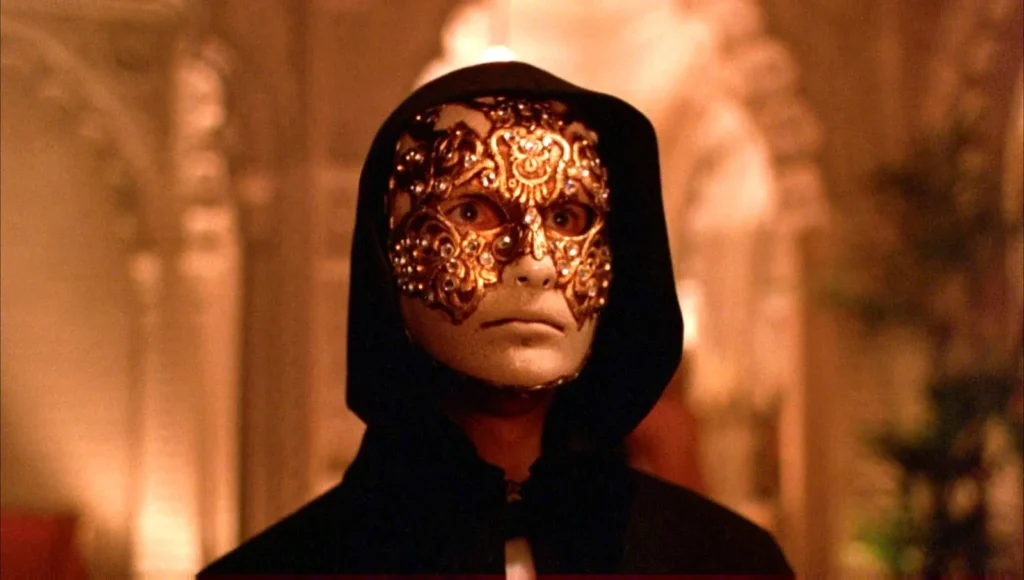
The masks in Eyes Wide Shut don’t conceal a single villain. They create an atmosphere in which everyone seems protected from recognition, while the masked gathering makes the main character feel exposed. Stanley Kubrick turns ornate Venetian-style masks and robes into part of a ritual world shaped by secrecy, desire, and unequal power.
Watch the room, not only the masks
The masked sequence rewards close attention. Look at who gets to move confidently through the room, who appears out of place, and how the costumes make individuals seem interchangeable. The masks don’t erase status or power. Instead, they make the rules of the gathering harder for an outsider to understand.
For a costume inspired by the film, choose a Venetian-style half mask with ornate detailing and pair it with formal clothes or a robe. Keep the mask secure and unobstructed, so you can see and move comfortably. The point isn’t to recreate every screen detail. It’s to use a deliberate contrast between an elegant disguise and a guarded expression.
This is the pick for a slow-burn movie night with friends who enjoy talking through visual motifs afterward. Watch for recurring images and shifts in who appears to control the scene. The mask gives you an immediate visual hook, but the mystery comes from what it does not explain.
6. V for Vendetta (2005)
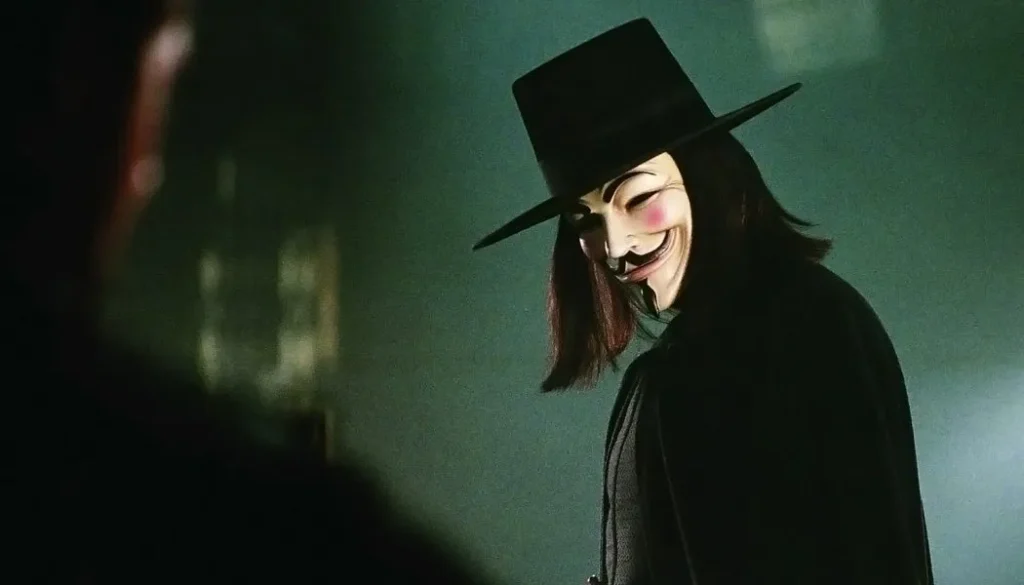
V’s Guy Fawkes mask changes a hidden face into a public statement. In this dystopian political thriller, the disguise helps its wearer resist a fascist government, but it also makes the idea larger than any one person. The face stays fixed while the person underneath remains concealed, giving the character a theatrical, deliberately constructed identity.
When a disguise becomes a symbol
The film’s mask has a life beyond the story. Anonymous adopted the Guy Fawkes mask in online activity and street protests, and demonstrators have worn it at events in different countries. That wider use makes this an especially important example of how a film costume can become a recognizable political symbol.
A costume inspired by V calls for a dark suit, cape, and the mask itself. If you wear it in public, remember that people may read it as a political statement rather than a neutral movie reference. For more picks centered on masked heroes and larger-than-life identities, browse superhero movie recommendations.
The movie works particularly well for viewers who want action with an argument behind it. The mask conceals the character’s face, but it also announces what he wants the public to see: a figure who can’t be reduced to a private identity.
7. The Mask of Zorro (1998)
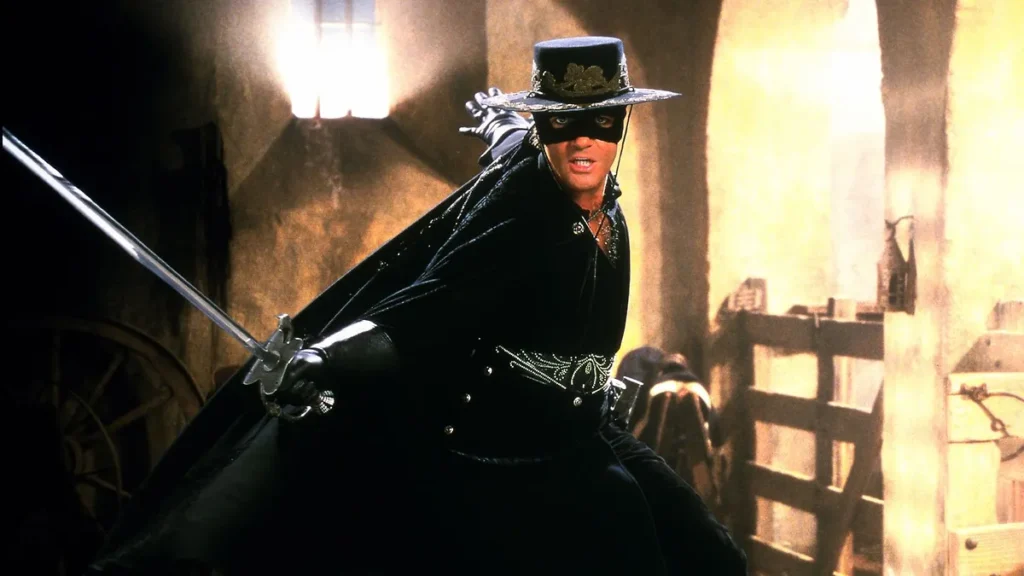
Zorro’s black half-mask hides his everyday identity while letting him act as a folk hero. In Martin Campbell’s swashbuckling adventure, the disguise is practical, dramatic, and immediately legible. It lets the character move between private life and public resistance without making the two roles look the same.
The mask doesn’t turn Zorro into a different creature, as it does in some fantasy films. It gives him room to perform courage and defiance. That distinction makes the character a clear choice for viewers who want a masked hero without horror’s menace or a superhero’s elaborate equipment.
Put together a recognizable Zorro costume
Start with a comfortable black half-mask, then add a wide-brimmed hat and cape. Make sure the elastic strap stays in place without pressing too tightly, and check your peripheral vision before wearing it at a party. A simple dark outfit supports the silhouette without competing with the mask.
For a costume-party example, carry a blunt, lightweight prop rapier only if the venue allows props, and keep it safely stowed when you’re not posing. The most recognizable parts of the look are the mask and cape, so you don’t need a complicated build.
The 1998 film revived interest in the character and followed the classic masked-hero tradition with modern action filmmaking. Its mask is a promise: the person behind it is choosing to protect a community, not just escape notice.
8. The Mask (1994)
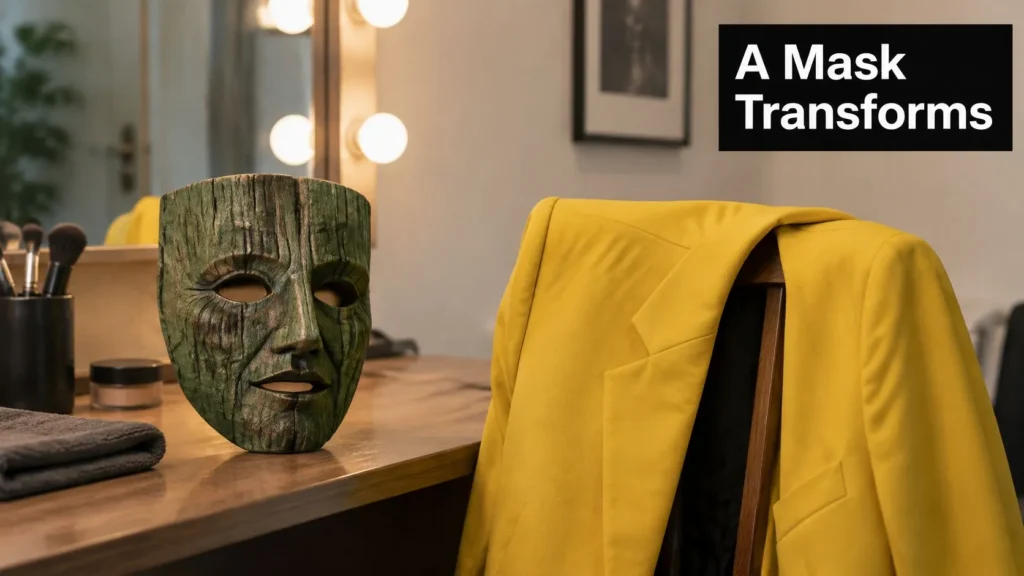
Stanley Ipkiss begins as a timid bank clerk, but a mysterious green wooden mask transforms him into a cartoonish force of chaos. In Chuck Russell’s comedy, the mask doesn’t just disguise its wearer. It changes how he moves, speaks, and takes up space, making transformation the whole point of the performance.
The film’s combination of Jim Carrey’s physical comedy, makeup, and visual effects helped turn its central image into a pop-culture costume. The look is instantly readable: green face, exaggerated expressions, and a bright yellow suit. The contrast between reserved Stanley and the Mask’s wild confidence gives every gag its charge.
Recreate the transformation
Choose a foam or resin mask with a matte green finish and pair it with a coordinated yellow zoot suit. If you’re using face paint instead, keep it comfortable and follow the product instructions. The costume depends on lively body language as much as the colors: use bold gestures and exaggerated expressions to suggest the character’s comic energy.
The film’s box-office story reinforces how far this premise travelled. Box Office Watch’s figures for The Mask report a worldwide gross of about $351.8 million against an estimated production budget of $18 million. That gross-to-budget comparison isn’t profit, but it shows the scale of the film’s theatrical reach.
For a lively movie night, pair it with another effects-driven comedy and look for how performers use their bodies to sell impossible transformations. The mask is the trigger, but Carrey’s performance makes the change feel physical.
9. Face/Off (1997)
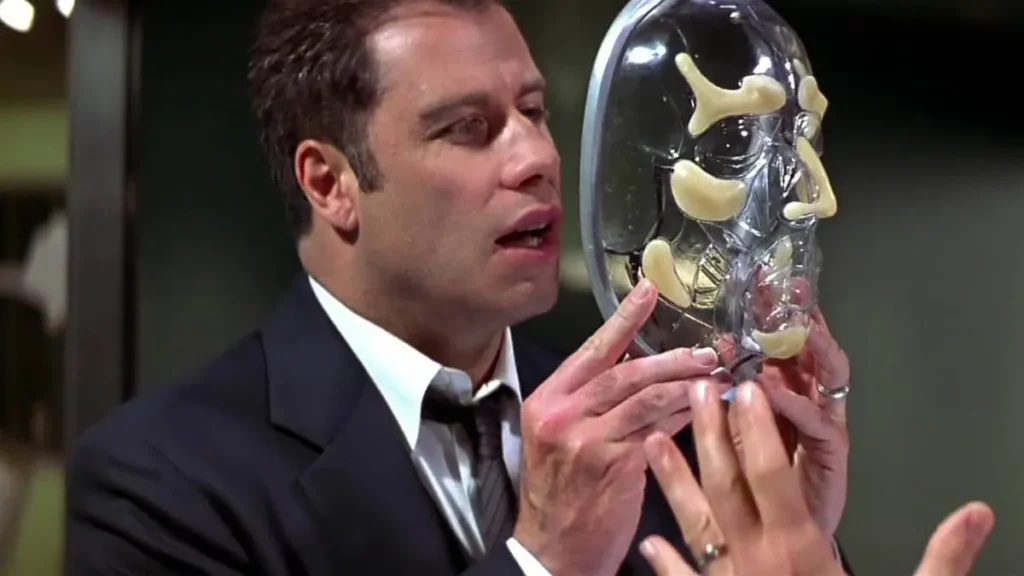
Face/Off turns the idea of a mask inside out. John Woo’s action thriller centers on an FBI agent and a terrorist who swap faces through experimental surgery. Instead of wearing a disguise over the face, the characters must live inside someone else’s appearance, making identity a physical problem as well as a psychological one.
Watch how the performance changes
Nicolas Cage and John Travolta have to play characters whose faces belong to their opponents. That premise gives every exchange an extra layer: the face may signal one person while the behavior suggests another. The result is a high-energy action film that uses prosthetics and face-swapping as a plot engine, not as a brief visual trick.
Watch for the contrast between the characters’ outward appearance and the choices they make. Then pay attention to John Woo’s stylized action and camera movement. The film’s heightened approach fits its central question: how much of identity comes from what others see, and how much comes from what a person does?
For a costume inspired by the film, use a high-quality rubber face mask only if it fits safely and leaves you with clear vision and breathing room. A full-face prop can be uncomfortable for extended wear, so test it beforehand and take it off if it limits movement or visibility.
10. The Phantom of the Opera (2004)
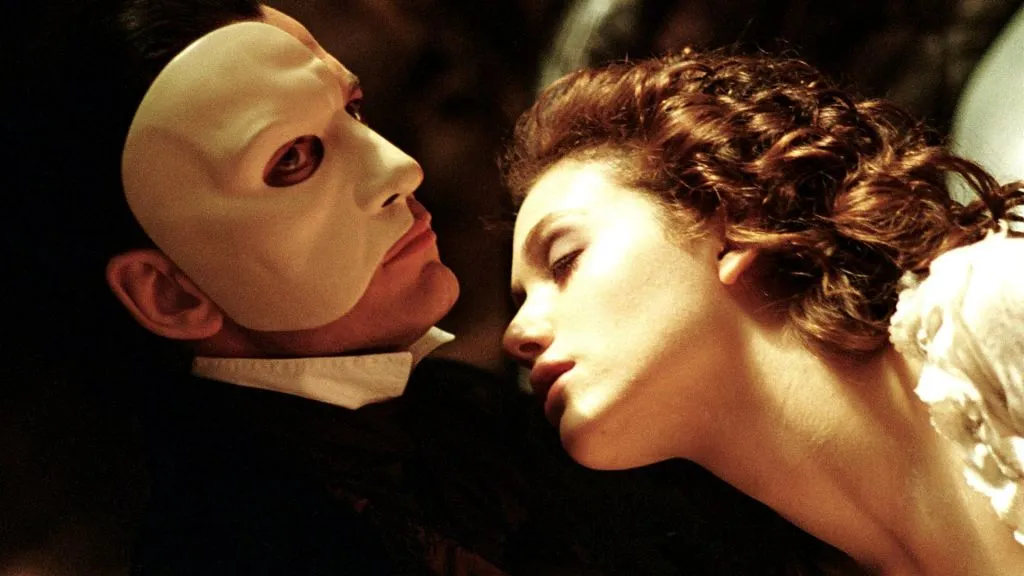
The Phantom’s white half-mask conceals his face, but it can’t hide his longing to be seen and heard. Joel Schumacher’s film adaptation of Andrew Lloyd Webber’s musical draws on Gaston Leroux’s story of a disfigured composer living beneath the Paris Opera House. The mask makes appearance part of the drama, turning every close encounter into a negotiation between secrecy and intimacy.
Let the music carry the emotion
The Phantom’s mask is visually simple compared with the elaborate settings around it. That contrast keeps the character’s face at the center of the story, even when he’s surrounded by theatrical spectacle. The film works best when you listen as closely as you watch, since the music reveals feelings the character struggles to express directly.
For a costume, choose a white half-mask with gold or silver accents and secure it comfortably. Keep the rest of the outfit formal and dark, so the mask stands out without needing excessive decoration. Watch the film with the soundtrack in mind, or compare it with a stage performance to see how each version uses music and space.
The story makes the mask more than a disguise. It signals a painful relationship with visibility, while also asking who gets to decide whether another person is worthy of compassion. For more listening-focused film recommendations, explore movie soundtrack guides.
10 Movies with Masks at a Glance
| Genre | Mask Type | Year | Best For |
|---|---|---|---|
| Slasher horror | Blank white mask | 1978 | Classic slasher suspense |
| Slasher horror | Ghostface mask and hood | 1996 | Self-aware horror fans |
| Home-invasion thriller | Masks and disguises | 2013 | High-concept thriller fans |
| French horror | Pale, featureless mask | 1960 | Atmospheric, poetic horror |
| Psychological drama | Venetian-style masks | 1999 | Slow-burn stories about secrecy |
| Dystopian political thriller | Guy Fawkes mask | 2005 | Political thrillers and rebellion themes |
| Swashbuckling adventure | Black half-mask | 1998 | Swordplay and classic adventure |
| Slapstick superhero comedy | Green wooden mask | 1994 | Physical comedy and cosplay |
| Action thriller | Face masks and prosthetics | 1997 | Stylized action and identity themes |
| Musical drama | White half-mask | 2004 | Musical romance and theatrical design |
Pick Your Mask, A Viewing Plan for Every Mood
Choose by the kind of experience you want, not by which mask you already recognize. Halloween and Scream make a strong classic horror night: the first turns blankness into a source of dread, while the second uses a disguise to make the audience question the rules of the genre. Follow either with The Purge if you want a more contemporary story about masked violence and social fear.
For arthouse atmosphere, start with Eyes Without a Face. Its pale mask, careful framing, and quiet pace reward a focused viewing. Eyes Wide Shut is the better choice when you want a slow-burn film to discuss afterward, especially if your group enjoys unpacking costume, power, and recurring visual motifs.
Need a lighter adventure? Put on The Mask for a comic transformation, or The Mask of Zorro for a classic hero’s disguise and swashbuckling action. Both make clear that a mask can give its wearer a new way to act, though one uses cartoonish chaos and the other uses secrecy in service of a cause. V for Vendetta suits viewers who want to follow that idea into political symbolism.
Costume planning is a useful bonus, but make comfort and visibility your first priorities. Check that the mask fits securely, leaves clear eye openings, and allows you to breathe and move easily. For a recognizably screen-inspired look, keep the supporting costume simple: a dark robe for Ghostface, a cape and hat for Zorro, or a yellow suit with green for The Mask. Use safe costume props, and don’t wear a realistic disguise in public in a way that could alarm others.
These films show how much story a face covering can carry. It can conceal a killer, transform a shy character, protect a hero’s private identity, or make a person stand for a larger idea. Start with the function that interests you, then watch for the choices around it: who wears the mask, who recognizes it, and what changes when it comes off. For more approachable film and entertainment recommendations, explore Maxijournal, which publishes fresh articles across movies, music, arts, and other subjects.
Maxijournal brings together daily writing on movies, music, arts, and a wide range of other interests. Visit maxijournal.com for more curated entertainment guides and fresh recommendations to add to your watchlist.
Discover more from Maxi Journal
Subscribe to get the latest posts sent to your email.