You’ve got eight days off in November, a browser full of tabs, and a suspicion that the cheap fares are cheap for a reason. Half the destinations on your shortlist are stuck between seasons. The Greek islands are closing, the Caribbean is still dodging storms, and the friend who went to Kyoto in April keeps warning you about queues three rows deep at every temple gate.
That friend is describing a different month. November rearranges the same map. Arrive at a famous temple or a historic square now and the summer lines are gone, the air is cooler, and the local calendar fills with things that only happen this time of year: lantern festivals timed to a full moon, chestnut roasts, harvest processions, national days with fireworks over a harbour.
None of it happens automatically. November rewards travelers who check three things before booking: what the weather does region by region inside one country, which festivals follow a lunar date and therefore move every year, and how far ahead the good rooms sell out.
Here are ten countries where November delivers, judged by what the month does to travel there rather than by generic appeal.
1. Japan
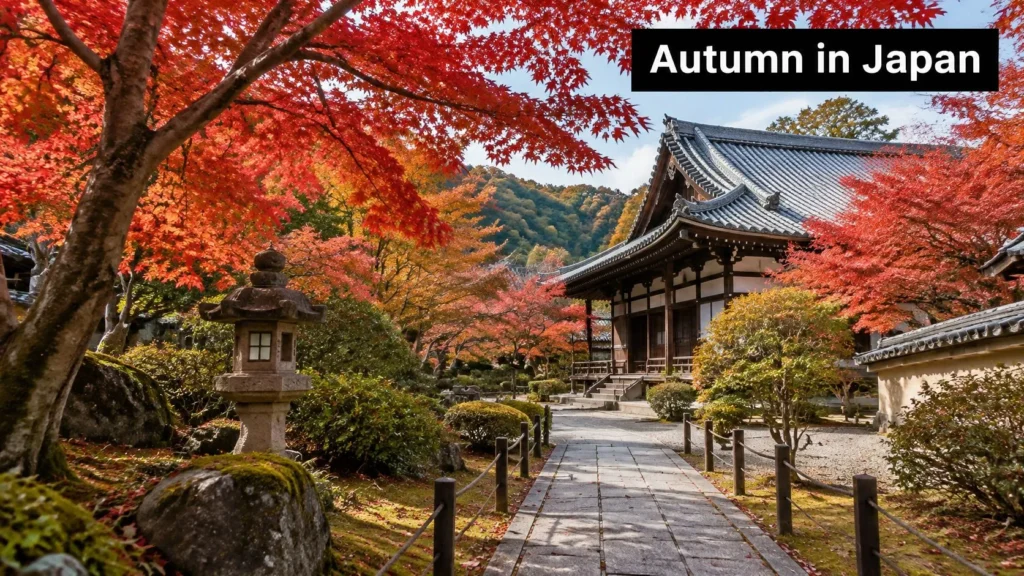
November gives Japan a second spring without the spring crowds. The autumn colour wave, koyo, moves south through the country over several weeks, so where you go matters more than when you book the flight.
Time the Foliage, Not the Flight
Tokyo’s maples usually turn before Kyoto’s do. Kyoto and Nikko typically reach peak colour in mid to late November, which is exactly when Japanese domestic travelers arrive for weekend trips. Book midweek and the temple gardens feel far calmer.
Tofuku-ji and Eikan-do in Kyoto are the two names everyone repeats, and both earn it. The Tsutenkyo bridge at Tofuku-ji is a corridor of maples, while Eikan-do’s evening illuminations pull the longest queues. In Nikko, Toshogu Shrine and the Lake Chuzenji area pair cedar forest with colour. Hakone splits the difference, with onsen stays and Mount Fuji views on clear days.
What I book first: the ryokan. Autumn is peak domestic season, and good traditional inns sell out weeks before the foliage peak, not days.
November is also the season for chestnuts, persimmons and shin-sake, the first pressing of the new rice harvest. Regional foliage forecasts from Japan’s meteorological agencies and prefectural travel boards are worth checking before you lock dates, and a Japan Rail Pass or a regional pass pays off if you’re moving between cities. English gets thin in small onsen towns, so keep navigating Japan without speaking Japanese on your phone, and build your city days around this guide to the best things to do in Tokyo.
2. Thailand
Thailand in November is two decisions stacked on each other: which coast, and which week. Get both right and you get warm water, a lantern festival and beach days without the August downpours.
Phuket shows what the month really costs you. Its 30-year November climate normal is 178.2 mm of rain across roughly 12.9 days, with an average high of 32.1°C and a low of 25.2°C, according to Packzup’s November climate roundup. That’s beach weather with a shower problem, not a washout. The same source makes the point that matters most for planning: the Andaman coast and the Gulf coast follow different rainfall patterns, so Phuket, Krabi and Koh Lanta can be drying out while the Gulf islands are still wet.
Festivals That Follow the Moon
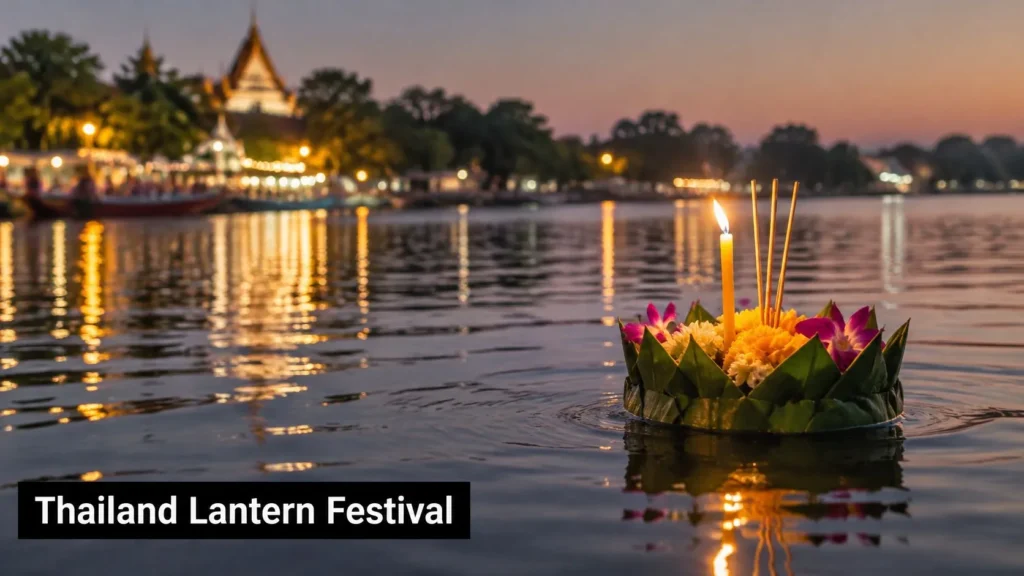
Loy Krathong falls on the full moon of the twelfth lunar month, usually in November, and the date shifts every year. Chiang Mai’s Yi Peng lantern release runs alongside it and draws the heaviest crowds. Sukhothai’s historical park stages the most atmospheric version, with lit ruins and processions, while Bangkok keeps things urban along the Chao Phraya.
- Confirm this year’s date before booking: the lunar calendar moves it, and hotels price accordingly.
- Lock Chiang Mai early if you want Yi Peng: the city fills with domestic and international visitors for the release nights.
- Follow local lantern and krathong rules: several provinces restrict sky lanterns for fire and flight safety, and eco-friendly krathong materials are the better choice.
- Check island forecasts separately: for the driest November conditions, the Andaman side is the safer bet.
If you want a feel for the scale before committing, this footage of the lantern celebrations is a fair preview.
For the wider seasonal picture, Thailand seasonal tips from Approved Experiences Traveler covers how the monsoon transitions play out month by month.
3. Morocco
Morocco works in November because the numbers are moderate rather than dramatic. Marrakech averages a 23.1°C high and a 10.7°C low, with 29.8 mm of rain across 3.8 rainy days under 1991 to 2020 normals, per Monkey Travel’s November destination guide. That’s the profile of a walking city: warm enough for a medina in the afternoon, cool enough that you want a jacket after dark.
The Trade-Off You’re Actually Making
A tropical beach destination gives you heat but also real weather variability. Marrakech gives you itinerary certainty. If your trip is built around fixed days, Atlas Mountain hikes and long sightseeing walks, certainty wins every time. The Atlas passes and desert routes stay open, and the Sahara camps near Merzouga run overnight stays among the Erg Chebbi dunes with cold nights.
The day-to-day payoff is tangible. You can see the Jardin Majorelle, restored by Pierre Bergé after Yves Saint Laurent’s ownership, walk Essaouira’s UNESCO-listed fortifications and fishing port, and still have energy for a Fes medina in the evening. Try that in August.
November is the month when you can cross a medina at 2pm without hiding in a café until the sun drops.
Packing and planning notes that matter:
- Pack layers, not a wardrobe: warm days, cold desert nights, and mountain mornings that need a fleece.
- Hire a licensed local guide for medina navigation and any desert trip.
- Carry dirhams in cash: cards aren’t widely accepted in souks.
- Dress modestly at mosques and in rural villages.
4. Mexico
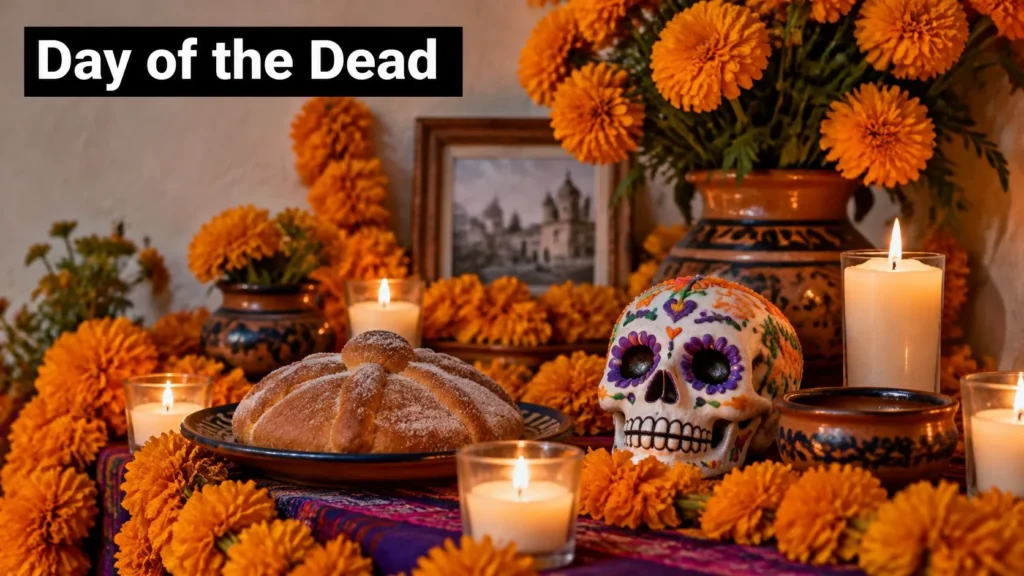
Say you book flights for the first week of November and assume you’ll sort a room in Oaxaca later. You won’t. Día de Muertos falls on November 1 and 2, families build ofrendas, marigolds and sugar skulls take over the markets, and the towns that do it best are booked months out.
Where the Ritual Is Real
Oaxaca runs the biggest programme of processions and altar displays. Mixquic, on the edge of Mexico City, holds candlelit cemetery vigils. Around Lake Pátzcuaro, Purépecha communities keep ceremonies that long predate the tourism.
Etiquette carries weight here. Cemeteries are family space on those nights, so ask before photographing people or altars, and keep your voice down near graveside vigils. Buying marigolds and sugar skulls from local market stalls puts money where the ritual lives.
Weather is the easy part. The rainy season is ending, central Mexico turns pleasant, and the Pacific and Caribbean coasts stay warm. A few Spanish phrases for asking permission go a long way, and this guide to speak Spanish confidently on vacation covers the polite forms you’ll need at a cemetery gate or a market stall.
Book before you browse: accommodation and intercity transport for November 1 and 2, then check your government’s current travel advisories for the states on your route.
5. Portugal
Portugal in November isn’t a beach holiday, and pretending otherwise is how people end up disappointed in the Algarve. What it is: mild walking weather in Lisbon and Porto, thinner crowds, and lower prices across the board.
Chestnuts, Port and Wet Pavement
November is magusto season, when Portugal roasts chestnuts on street corners and villages hold communal fireside gatherings. The Douro Valley has finished harvest and moved into winter preparation, which makes winery tastings feel personal rather than rushed.
In Porto, Livraria Lello draws a queue year-round, so book a timed entry rather than turning up. From Lisbon, Sintra’s Pena Palace is a short train ride and far more manageable without summer crowds. Northern Portugal is the wet part of the country this month, so pack accordingly.
- Buy a Viva Viagem card in Lisbon or use regional train passes for intercity legs.
- Reserve Sintra palaces and Douro boat trips ahead: reduced November schedules mean fewer slots.
- Eat the season: pastéis de nata warm from the counter and roasted chestnuts from a street vendor cost very little.
- Pack a light rain jacket for the north, and leave the swimwear at home.
A five-day version that works: two days in Lisbon with a Sintra day trip, then the train north for Porto and a Douro day. You’ll walk more than you expect and queue less than you feared.
6. Vietnam
No country on this list splits as sharply in November. The north, including Hanoi and Ha Long Bay, turns cooler and drier. The centre, Hue and Hoi An, is in its rainy season and can flood. The south, Ho Chi Minh City and the Mekong Delta, is dry.
Choose Two Regions, Not Three
Trying to see the whole country in a week is how people spend November stuck on a flooded road in central Vietnam. Check regional forecasts before committing to a central itinerary, and keep the centre flexible if you’re traveling in a heavy rain year.
Ha Long Bay cruises depart from Ha Long City, and reputable operators publish clear weather policies; confirm what happens to your booking if the bay is closed. Hoi An’s full moon lantern night lights the old town along the Thu Bon River, but it follows the lunar calendar, so the date moves each month. In the south, Mekong Delta floating markets near Can Tho start before dawn and finish early.
A fixed three-region itinerary in November is a gamble. A two-region one almost never is.
Practical on the ground: carry small-denomination dong for street food and markets, and use reputable ride-hailing apps in cities rather than flagging down strangers.
7. India
India in November is the month the north exhales. The monsoon haze clears, Rajasthan, Delhi and Agra become comfortable for full days outdoors, and the south settles into its post-monsoon stretch.
Festival Dates That Move Every Year
The Pushkar Camel Fair in Rajasthan runs around Kartik Purnima, the full moon of the Kartik month. Diwali falls in October or November depending on the lunar calendar, so check the year’s date before you assume anything about crowds or hotel prices. Jaipur’s palaces and forts reward an early start, and Varanasi’s Ganga Aarti on the ghats is best seen from the steps rather than a boat.
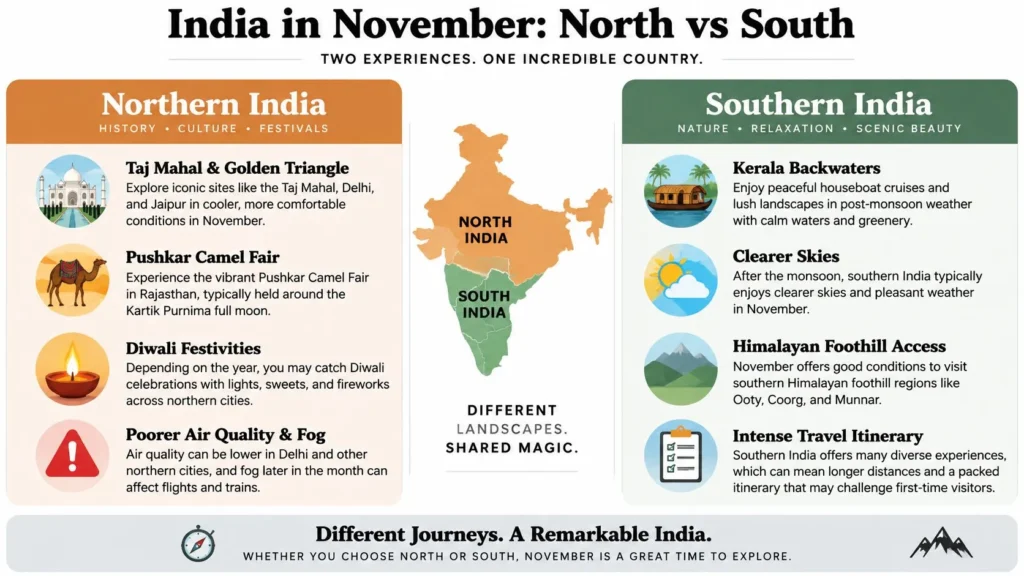
- Check air quality indexes before committing to Delhi and northern cities in the days after Diwali.
- Book trains early: festival periods fill sleeper and chair classes fast.
- Hire licensed guides for heritage sites and confirm monument entry rules.
- Dress modestly at religious sites and carry a scarf for temple visits.
A route that works: land in Delhi, take the train to Agra and Jaipur, then fly south for Kerala once the north gets cold at night. If you’re still narrowing the map, this guide to places to visit in India covers the regional splits in more depth.
8. Egypt
Egypt’s November advantage is simple. The sites are outdoors and the sun stops being punitive. Cairo, Luxor and Aswan turn mild, and you’re moving through the Valley of the Kings and Karnak before the peak winter crowds land.
Add the Red Sea Without Gambling on Rain
Hurghada averages 81°F (27.2°C) with about 0.1 inches of rain and water at 77°F (25°C), per Advised Traveler’s comparison of warm November destinations. The same comparison puts Cancún at 5.2 inches of rain across 12 rainy days, which tells you exactly how much precipitation risk you avoid by choosing the Red Sea over a Caribbean beach.
A workable ten days: three nights in Cairo for Giza and the Egyptian Museum, a flight south to Luxor for the Valley of the Kings, where Howard Carter found Tutankhamun’s tomb in 1922, then Karnak’s hypostyle halls, then a Nile cruise or a drive to Aswan for Philae Temple, reached by boat.
Midday sun is still strong enough to flatten you by 2pm. Start at opening time and nap through lunch.
Before you go: book licensed guides and official operators for ancient sites, confirm visa and entry rules, and carry more water than you think you need.
9. Peru
Peru’s November is a shoulder season with a deadline attached. Tourist numbers drop below the June to August peak, the highland rainy season typically arrives later in the year, and Cusco and the Sacred Valley stay workable for trekking and sightseeing.
Permits First, Flights Second
Inca Trail permits and Machu Picchu entry tickets sell out well ahead of the date, so book those before anything else on the itinerary. Then add acclimatisation days in Cusco, one or two, before any trek. Altitude doesn’t negotiate.
The Sacred Valley fills the days in between: Ollantaytambo’s Inca fortress and terraces, the market towns, and Machu Picchu itself, brought to wider attention by Hiram Bingham in 1911. Lima’s Barranco district handles the ceviche and gastronomy side of the trip, and the Amazon works as a multi-stop add-on if you have the days.
- Book Inca Trail and Machu Picchu entry well in advance through licensed operators.
- Carry layers: cold mornings at altitude, warm afternoons, sharp drops after sunset.
- Use licensed guides for safety and access on trekking routes.
- Build in a buffer day for weather delays on the train to Aguas Calientes.
Wider route options across the continent are covered in this guide to the best places to visit in South America, which is useful if you’re stitching Peru into a longer trip.
10. Iceland
Iceland in November runs on very short daylight, and that constraint sits underneath every other decision. You won’t comfortably drive the whole ring road. You can do the Golden Circle, the south coast waterfalls, an ice cave and the northern lights if you plan around the light rather than against it.
Base Yourself, Then Day Trip
Reykjavik makes sense as a base while the winter season begins. Christmas lights and festive markets start appearing, and the Iceland Airwaves music festival brings local and international bands to town. From the city, Gullfoss and Geysir sit on the Golden Circle loop, and the Blue Lagoon near Keflavik is an easy airport-day stop if you book ahead.
November in Iceland rewards the traveler who treats the official road report as a morning ritual, not an afterthought.
- Check road conditions and forecasts daily through the official Icelandic road authorities.
- Rent a 4×4 if you’re heading outside Reykjavik in winter conditions.
- Book the Blue Lagoon and northern lights tours in advance: short daylight means fixed departure windows.
- Pack waterproof, windproof layers plus spare gloves and hats, because wet hands end evenings early.
A three-night version: one day for the Golden Circle, one for the south coast, one held flexible for aurora hunting on whichever night the sky clears.
November Conditions at a Glance
Each row reads as what November does to the trip: cooler air, a festival pinned to fixed dates, or a weather split inside one country that steers your itinerary toward a specific region.
| Country | November Weather | Key Event or Season | Best For |
|---|---|---|---|
| Japan | Cool and crisp, typically 10–18°C in Tokyo and Kyoto | Peak autumn foliage and evening temple illuminations | Autumn scenery, temple visits, seasonal cuisine |
| Thailand | Cooler and drier across most regions; some southern islands stay rainy | Loy Krathong and Yi Peng lantern festivals | Festivals, beaches, cultural travel |
| Morocco | Mild days, cool nights in the desert | Comfortable season for cities, mountains and desert trips | Medinas, Atlas treks, Sahara excursions |
| Mexico | Pleasant in the central highlands; warm on the coasts | Día de Muertos on November 1 and 2 | Cultural celebrations, food, beach stays |
| Portugal | Mild, around 13–18°C, wetter in the north | Magusto chestnut season | City walks, food, wine, quieter sightseeing |
| Vietnam | Split three ways: cooler, drier north; rainy center; dry south | Hoi An full moon lantern festival | North or south itineraries, food, river scenery |
| India | Cooler and drier in the north; post-monsoon in the south | Pushkar Camel Fair and, depending on the year, Diwali | Festivals, heritage sites, sightseeing |
| Egypt | Mild days, cooler desert nights | Comfortable window for ancient sites and Nile cruises | Archaeological sites, temples, river cruises |
| Peru | Changeable mountain weather, generally workable for sightseeing | Shoulder season before the busier months | Machu Picchu, trekking, thinner crowds |
| Iceland | Dark, wintry and unpredictable, with very short daylight | Northern lights season and Iceland Airwaves | Aurora viewing, hot springs, dramatic landscapes |
Scan the event column first. It is the one that decides which week inside November is yours.
Choose Your November Destination by Timing, Not Just Weather
The destination matters less than the week you land in it. Japan’s foliage moves south over roughly three weeks. Loy Krathong and Diwali follow the lunar calendar and shift every year. Peru’s dry window closes as the rainy season builds. Iceland’s usable light shrinks by the day. Pick the country, then pick the dates inside it that do the work.
The Calendar Is a Crowd Forecast
November isn’t one global shoulder season. It’s a set of overlapping local calendars, and each one moves prices. In the United States, Thanksgiving falls on the fourth Thursday of November and has become one of the country’s largest annual travel periods; the Macy’s Thanksgiving Day Parade in New York has run since 1924, reaching a century-long November tourism milestone by 2024, as Monkey Eating Mango’s November calendar notes record. The same notes flag national days that reshape a week: Poland and Angola mark independence on November 11, and Albania on November 28. If your flights connect through a country observing one of those dates, expect full hotels, altered museum hours and heavier demand on transport.
- Book festival-linked stays first: Oaxaca for November 1 and 2, Chiang Mai for Yi Peng, and any Kyoto ryokan near a maple garden.
- Secure permits and timed entry next: Inca Trail slots, Machu Picchu tickets, Sintra palaces, Blue Lagoon slots.
- Check lunar dates for the current year before you commit to a festival itinerary. A week’s drift is normal and it changes everything.
- Pack for regional extremes, not national averages: the same country can hand you a 32°C beach and a cold desert night in one trip.
- Confirm current travel advisories and visa rules in the weeks before departure, not the day before.
Climate normals describe typical conditions over decades, not a forecast for your specific week, so keep a short-range check in the final days and stay flexible on the one or two bookings that allow it. Travelers who lock everything months out and refuse to move anything usually end up working around the weather anyway.
The honest summary: November rewards specificity. Name the festival, name the coast, name the week, and the trip plans itself.
If you’re still weighing which of these fits your dates, maxijournal.com publishes daily travel writing alongside its coverage of science, technology, health, sports, business, arts, fashion, pets, entertainment, education and gaming, and readers in more than 150 countries use it to plan trips like this one. Our tourism section pairs destination guides with the seasonal, booking and packing detail that decides whether a shoulder-season trip works. Start at maxijournal.com and build the November that matches your calendar rather than the brochure.
Discover more from Maxi Journal
Subscribe to get the latest posts sent to your email.