In a digital space dominated by fleeting social media trends and unpredictable algorithm changes, email marketing remains the most dependable channel for connecting directly with your audience. For writers, publishers, and small businesses, a smart email strategy is more than just sending updates; it’s about building a loyal community, driving reliable traffic, and creating a sustainable engine for growth.
However, the inbox is a competitive environment. To capture attention, you need more than just good content; you need a strategic framework built on proven techniques. This guide moves beyond generic advice to deliver actionable best practices for email marketing campaigns that get results. We have compiled a practical roadmap to help you turn your email efforts from an occasional task into a powerful marketing asset.
Inside, you will find specific, data-backed strategies covering the entire campaign lifecycle. We will explore:
- Advanced audience segmentation and personalization.
- The technical foundation for strong email deliverability.
- Creative tips for compelling subject lines and clear calls-to-action.
- Effective automation sequences for subscriber onboarding.
- A straightforward framework for performance measurement and testing.
These methods are designed to be immediately useful for platforms like MaxiJournal and creators like you. Let’s get into the ten practices that will define email marketing success in 2026 and beyond, helping you build a direct line to the people who matter most to your brand.
1. Segmentation by Content Interest and Reader Behavior
Moving beyond generic, one-size-fits-all email blasts is the first step toward a successful strategy. One of the most effective best practices for email marketing campaigns involves dividing your audience into smaller, distinct groups, or segments, based on their explicit interests and observable actions. Instead of sending the same newsletter to everyone, you send focused content that aligns with what each subscriber has shown they care about, dramatically increasing relevance and engagement.

For a publisher like MaxiJournal, this means looking at which content categories a reader interacts with. A subscriber who frequently opens articles about gaming and entertainment should receive updates on new game releases and movie reviews, not financial news. Similarly, someone engaging with health and travel content would appreciate destination wellness guides. This targeted approach makes your emails feel like a personalized service rather than a generic marketing message.
How to Implement Content-Based Segmentation
Getting started is more straightforward than it sounds. Most modern email service providers, such as Mailchimp or ConvertKit, offer robust tools for audience management.
- Create a Preference Center: Add a page to your website where new and existing subscribers can manually select their interests (e.g., check-boxes for “Science,” “Fashion,” “Sports”). This is the most direct way to gather data.
- Use Behavioral Automation: Set up rules that automatically tag subscribers based on their activity. For instance, if a user clicks a link to a “Technology” article three times in a month, automatically add them to your “Tech Enthusiasts” segment.
- Analyze Past Engagement: For your existing list, review historical data. Sort subscribers based on the links they have clicked in past campaigns to build your initial segments.
Key Takeaway: The goal is to make every email feel personally curated. Segmentation based on interest and behavior respects the subscriber’s time and preferences, which fosters loyalty and boosts open and click-through rates. Regularly review these segments, at least quarterly, to ensure they remain accurate as reader interests change.
2. Compelling Subject Lines with Category Hooks
Your subject line is the gatekeeper to your content; if it doesn’t entice a subscriber to open the email, the effort you put into the body is wasted. One of the most direct best practices for email marketing campaigns is crafting subject lines that clearly signal the email’s topic using a category hook. This technique immediately tells subscribers what the email is about, allowing them to open it based on their specific interests.
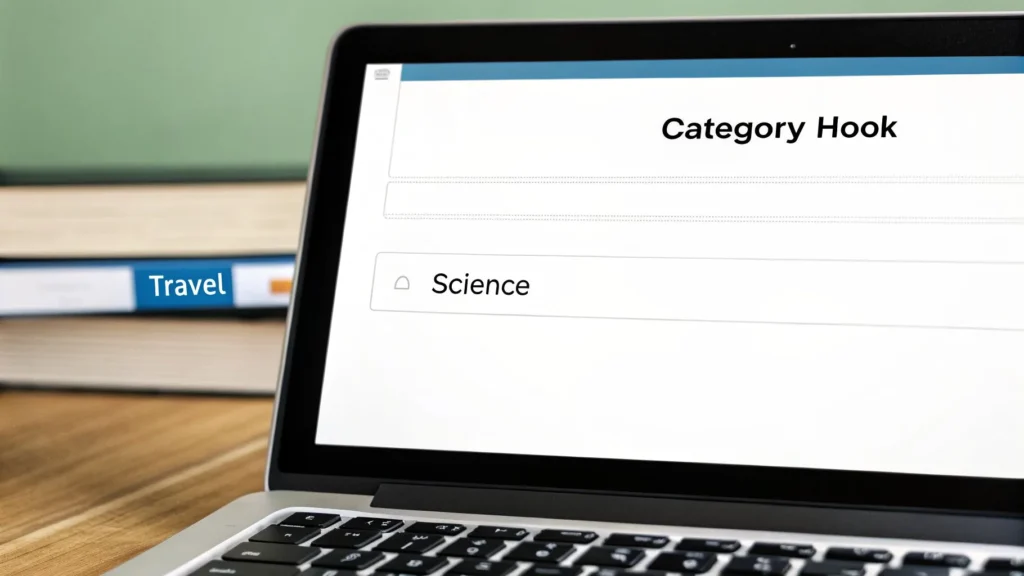
For a multi-topic publisher like MaxiJournal, this approach is critical. A subscriber passionate about gaming is far more likely to open an email with the subject line, “[Gaming] The 5 Most Anticipated Releases This Quarter,” than a generic one. Similarly, a reader interested in personal well-being will gravitate toward “[Health] What New Research Says About Your Sleep.” This method respects the reader’s time and inbox, creating an efficient and personalized experience.
How to Implement Subject Lines with Category Hooks
This strategy, popularized by experts like Nathan Barry and supported by data from testing tools like Litmus, is simple to apply and highly effective.
- Use Brackets for Clarity: Start your subject line with the category in brackets, such as
[Travel]or[Science]. This format is scannable and instantly recognizable in a crowded inbox. - Lead with Value: After the category tag, immediately present the value proposition. Use action-oriented words like “discover,” “learn,” or “explore” to create curiosity. For example: “[Music] Discover Emerging Independent Artists You Should Know.”
- Optimize for Mobile: Keep subject lines under 50 characters to ensure they are fully visible on mobile devices, where a significant portion of emails are read.
- Test and Measure: Before sending to your entire segment, A/B test at least two subject line variations. Track which themes and formats generate the best open rates for each audience segment. For a deeper dive, you can explore more email subject line best practices.
Key Takeaway: Category hooks make your subject lines work smarter, not harder. By providing an immediate signal of relevance, you empower subscribers to engage with the content they love, which dramatically improves open rates and strengthens your relationship with your audience.
3. Strategic Send Time Optimization Based on Subscriber Timezone
The timing of your email can be just as crucial as its content. A core component of the best practices for email marketing campaigns is ensuring your message arrives when your subscribers are most likely to read it. Sending an email at 2 PM Eastern Time means it will hit inboxes in California at 11 AM but at 7 PM in London, potentially missing the window of peak attention for a large part of your audience.
This is where timezone-based sending becomes essential. Instead of a single, universal send time, this strategy delivers your campaign to each subscriber at the same local time, regardless of their location. For a publisher with a global readership, this means your morning newsletter can reliably land in every subscriber’s inbox at 9 AM local time, catching them as they start their day. Similarly, a weekend entertainment digest sent at 5 PM on a Friday will arrive just as readers are winding down for the week, maximizing its relevance and impact.
How to Implement Send Time Optimization
Email service providers like Mailchimp and ActiveCampaign have built-in features to make this process simple. You can usually enable timezone optimization with a single click before scheduling a campaign.
- Collect Timezone Data: When users subscribe, ask for their location or use IP address detection to automatically determine their timezone. This is foundational data for the feature to work correctly.
- Test and Analyze: While general wisdom points to mid-morning on Tuesdays through Thursdays as a strong starting point, your audience is unique. Test various send times (e.g., 9 AM, 11 AM, 6 PM) and track open and click rates for each timezone segment to find your specific sweet spots.
- Align with Content Type: Match your send time to the email’s purpose. A business-focused brief performs well during work hours, while a long-form article or movie review might get more attention in the evening or on a weekend.
Key Takeaway: Sending an email at the right local time demonstrates respect for your subscribers’ daily routines. It’s a simple but powerful adjustment that ensures your message arrives when it has the highest chance of being seen and engaged with, directly improving your campaign performance. Regularly review your analytics to refine your timing strategy based on changing subscriber behavior.
4. Value-First Content Strategy with Clear Article Previews
Before you ask for a click, you must first provide value. A powerful approach, popularized by newsletters like Morning Brew and The Skimm, involves leading with genuinely useful content directly within the email itself. Instead of just sending a list of links, this strategy turns your email into a valuable product on its own by offering compelling article previews, key takeaways, or exclusive commentary. This method establishes trust and positions your brand as a thoughtful curator, not just a content distributor.
For a publisher like MaxiJournal, this means giving subscribers a reason to open the email, even if they don’t click through. For example, a gaming update could lead with, “Three major studio announcements this week could reshape the industry in 2024,” followed by a brief summary of each. A science-focused preview might state, “Researchers discover a new connection between gut bacteria and mental health. Here’s the key finding…” This approach respects the reader’s time while enticing them to learn more.
How to Implement a Value-First Content Strategy
Building your newsletter around this principle makes it a must-read, a core component of effective best practices for email marketing campaigns.
- Write Compelling Previews: Don’t just copy the first sentence of your article. Craft a unique, 2-3 sentence summary that highlights the most impactful insight, statistic, or outcome. Think of it as the “tl;dr” (too long; didn’t read) that makes someone want to read.
- Structure for Scannability: Use clear subheadings for different content categories (e.g., “Science,” “Travel,” “Guest Spotlight”). This helps readers quickly find the information that matters most to them.
- Credit Your Contributors: When featuring a guest post, always include the author’s name and a brief mention of their expertise. This adds a layer of credibility and introduces your audience to new, authoritative voices.
Key Takeaway: The goal is to make your email an indispensable source of information. By delivering real value upfront with well-crafted previews and clear organization, you train subscribers to open your emails consistently. They come to rely on you for curated insights, which builds a stronger, more engaged relationship over time.
5. Clear Call-to-Action (CTA) Hierarchy with Distinct Buttons
An email without a clear next step is a missed opportunity. One of the most critical best practices for email marketing campaigns is designing a deliberate hierarchy for your calls-to-action (CTAs). This involves making one primary action obvious and visually dominant, while secondary actions are present but less prominent. This guides the reader’s journey and prevents decision fatigue, ensuring they take the most important action you want them to.
For a music publication promoting new independent artists, the primary goal might be getting subscribers to listen to a featured album. The main CTA button would be large, colorful, and say something direct like [Discover New Independent Music]. Secondary CTAs, perhaps for Read Our Music Policy or Browse Past Features, could be simple text links or muted buttons placed further down. This structure ensures the main objective is met without removing other useful navigation options.
How to Implement a CTA Hierarchy
Modern email design tools make creating this visual distinction straightforward. It’s a matter of strategy before execution, as noted in design guidelines from Campaign Monitor and HubSpot.
- Design for Dominance: Make your primary CTA a button with a high-contrast background color that stands out from the rest of the email. Ensure it is at least 44×44 pixels to be easily tappable on mobile devices. Place it “above the fold” so it’s visible without scrolling.
- Use Action-Oriented Copy: Start your CTA text with a strong verb that inspires action. Instead of a passive “Read More,” test phrases like “Explore This Week’s Fashion Trends” or “Get the Full Story.”
- Differentiate Secondary Actions: Style your secondary CTAs as plain text links or “ghost” buttons (buttons with a transparent background and a colored border). This keeps them accessible but visually subordinate to the primary action.
Key Takeaway: Every email should have a clear purpose, and your CTA design must reflect that. By establishing a visual hierarchy, you guide your subscribers toward the most valuable action, dramatically improving conversion rates. Don’t forget to repeat your primary CTA near the email’s signature for readers who scroll to the end.
6. Mobile-Responsive Design with Single-Column Layout
With over half of all emails now opened on mobile devices, ignoring the small-screen experience is no longer an option. A critical best practice for email marketing campaigns is ensuring your message renders perfectly on any device through responsive design. This approach involves creating flexible layouts, most notably a single-column structure, that adapt to different screen sizes, providing a seamless reading experience for everyone.
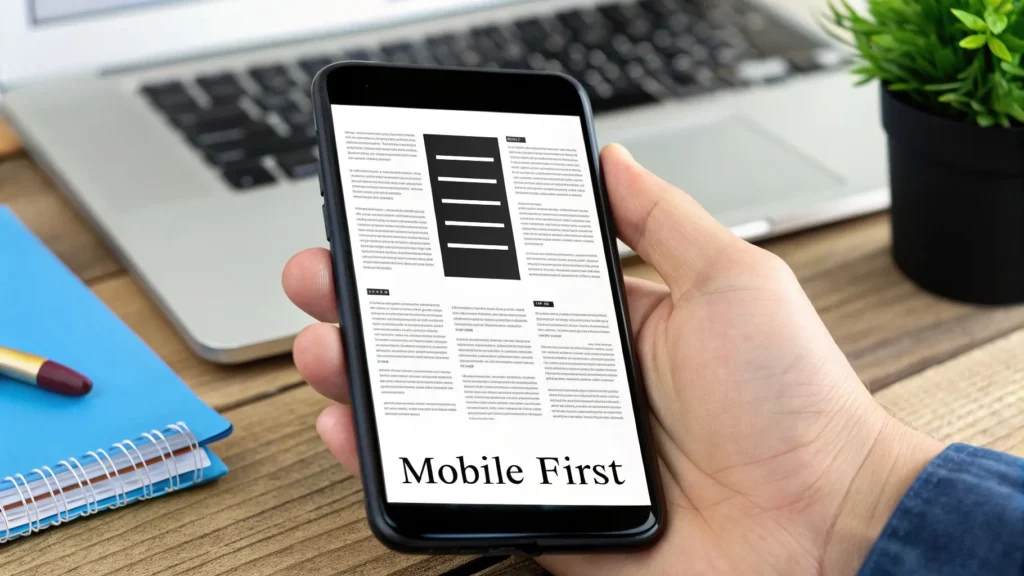
For a content publisher like MaxiJournal, mobile optimization is vital. An email that looks great on a desktop with a two-column layout can become an unreadable, jumbled mess on a smartphone, forcing users to pinch and zoom. A responsive design automatically stacks those columns into a single, scrollable format. This ensures that large hero images resize gracefully, and navigation buttons are large enough to be easily tapped, keeping your readers engaged instead of frustrated.
How to Implement a Mobile-First Design
Adopting a mobile-first mindset means designing for the smallest screen and then enhancing the experience for larger ones. Many email builders like Stripo and frameworks such as MJML are built specifically for this purpose.
- Prioritize a Single-Column Layout: This is the safest and most effective structure for mobile readability. It guides the reader’s eye down a clear path without horizontal scrolling.
- Use Large, Tappable Buttons: Links and calls-to-action should be at least 44×44 pixels to be easily tapped with a thumb. Avoid placing multiple links too close together.
- Test Extensively Before Sending: Use email testing tools like Litmus or Email on Acid to preview how your campaign will appear across dozens of devices and email clients. Always send a test to your own iPhone and Android devices for a real-world check.
- Keep Images Optimized: Ensure images have descriptive alt-text for accessibility and for when images fail to load. Compress them to maintain fast load times on mobile networks.
Key Takeaway: A poorly rendered mobile email is an instant delete. By prioritizing a responsive, single-column design, you cater to the majority of your audience and demonstrate a commitment to user experience. This simple adjustment can significantly reduce unsubscribe rates and improve overall campaign performance.
7. Authentication and Trust Signals (SPF, DKIM, DMARC Setup)
While creative content and beautiful design are crucial, they are ineffective if your emails never reach the inbox. A technical foundation built on trust is one of the most important best practices for email marketing campaigns. Email authentication protocols like SPF, DKIM, and DMARC are the digital handshakes that prove to inbox providers like Gmail and Outlook that your emails are legitimate and not from a malicious spoofer trying to impersonate your brand.
For a publisher like MaxiJournal, setting up these records is non-negotiable. Without them, mailbox providers might automatically flag your newsletters, promotions, and subscriber updates as spam. Proper authentication tells services that emails sent from your domain are authorized and trustworthy, which dramatically improves your sender reputation and overall deliverability. It’s the behind-the-scenes work that ensures your hard-earned audience actually sees your messages.
How to Implement Email Authentication
Setting up these DNS records is a one-time technical task that pays dividends for years. Your email service provider will give you the exact records you need to add to your domain’s DNS settings.
- SPF (Sender Policy Framework): This record lists the authorized mail servers (like those of Mailchimp or ConvertKit) permitted to send emails on your domain’s behalf. It acts as a public guest list for your domain.
- DKIM (DomainKeys Identified Mail): This adds a unique digital signature to every email you send. The receiving server can verify this signature against a public key in your DNS, confirming the email hasn’t been altered in transit.
- DMARC (Domain-based Message Authentication, Reporting, and Conformance): This policy instructs receiving servers on what to do if an email fails SPF or DKIM checks (e.g., quarantine it or reject it). It also provides reports on fraudulent activity.
Key Takeaway: Email authentication is your passport to the inbox. It’s a fundamental requirement for building a positive sender reputation and ensuring high deliverability. Work with your email service provider to get the correct records, use a free tool like MXToolbox to verify your setup, and monitor your platform’s reports to confirm your emails are passing authentication checks.
8. Welcome Series and Onboarding Automation for New Subscribers
The first few days after a user subscribes are critical for establishing a long-term relationship. One of the most important best practices for email marketing campaigns is to implement an automated welcome series, a sequence of 3-5 emails that guide new subscribers through your brand. This initial onboarding process sets expectations, introduces your value, and makes a powerful first impression that improves engagement and retention from day one.
For a publisher like MaxiJournal, a welcome series is the perfect tool to introduce the breadth of its content. Instead of leaving new readers to discover things on their own, the sequence can highlight key content categories, explain what to expect in future newsletters, and encourage them to set their preferences. This proactive approach immediately demonstrates that you value their time and interests, turning a passive sign-up into an active reader.
How to Implement a Welcome Series
Most email marketing platforms, including ActiveCampaign and ConvertKit, offer powerful automation features that make setting up a welcome sequence simple. The goal is to deliver value before you ask for anything.
- Day 1: The Initial Welcome: Send an immediate email from a person, like the founder or head editor, to create an authentic connection. Thank them for subscribing, briefly explain what to expect, and mention the sign-up source (e.g., “Thanks for subscribing from our article on independent music!”).
- Day 3: Introduce Your Content: Showcase the different categories you offer. Provide links to popular articles in sections like Gaming, Travel, or Science to help them explore. This is also a great place to include a link to your preference center.
- Day 5-10: Offer Exclusive Value: After introducing your brand, provide something exclusive. This could be a link to a top-rated archived article, a free digital download, or an introduction to the guest contributor program. This rewards their early engagement and gives them a reason to stay subscribed. If you’re looking for more ways to attract subscribers in the first place, you can learn more about how to build an email list.
Key Takeaway: Your welcome series is your best opportunity to convert a new subscriber into a loyal fan. By automating a thoughtful onboarding experience, you set the stage for sustained engagement, prove your value immediately, and significantly reduce the chances of early unsubscribes.
9. Consistent Email Frequency and Schedule Communication
Predictability is a powerful, yet often overlooked, component of successful email marketing. Establishing a reliable sending schedule and clearly communicating it to your subscribers builds trust and turns your emails into an anticipated event rather than an unwelcome interruption. This is one of the core best practices for email marketing campaigns because it respects your audience’s time and manages their expectations, leading to fewer unsubscribes and higher engagement over the long term.
Think of highly successful newsletters like Morning Brew or The Skimm. Their subscribers know exactly when to expect an email, making it part of their daily routine. For a publisher, this might mean a weekly roundup of top articles sent every Thursday at 9 AM, or category-specific updates like “Gaming News” every Wednesday. Consistency transforms your email from a random marketing push into a dependable source of information or entertainment.
How to Implement a Consistent Sending Schedule
Building a habit with your readers starts with internal discipline and clear communication. Your email service provider can help you schedule sends, but the strategy behind it is what truly matters.
- Communicate Frequency Upfront: State your sending schedule clearly on your signup form (e.g., “Get our weekly travel tips every Tuesday morning”). Reinforce this in your welcome email and consider adding a small note in your email header or footer.
- Build an Editorial Calendar: Plan your content at least four weeks in advance. An editorial calendar prevents last-minute scrambles and ensures you have quality content ready for each scheduled send. This helps you stick to your promised frequency.
- Offer Frequency Options: In your preference center, allow subscribers to choose how often they hear from you. Options like “Daily Digest,” “Weekly Roundup,” or “Breaking News Only” empower your audience and reduce the likelihood of them unsubscribing completely.
- Survey Your Subscribers: Don’t just guess the best frequency. Ask your audience what they prefer. A simple quarterly or annual survey can provide valuable feedback to adjust your schedule for maximum impact.
Key Takeaway: Consistency fosters habit. When subscribers know when and what to expect, they are more likely to open your emails. Start with a frequency you can realistically maintain and be transparent. If you miss a scheduled send, a brief, honest explanation in your next email can help maintain trust.
10. Performance Metrics Tracking and A/B Testing Framework
Intuition is helpful, but data-driven decisions are what truly move the needle. A critical component of the best practices for email marketing campaigns is establishing a systematic way to measure what works and what doesn’t. This involves tracking key performance indicators (KPIs) and running controlled experiments, known as A/B tests, to methodically improve your results over time. Instead of guessing, you test, measure, and iterate.
For a small business sending out a weekly deals newsletter, A/B testing could reveal whether a subject line with an emoji performs better than one without. For a publisher like MaxiJournal, it could mean testing two different headlines for the same feature story to see which one generates more clicks. The goal is to isolate one variable, test its impact on a small portion of your audience, and then send the winning version to the rest, maximizing engagement.
How to Implement a Testing Framework
Most email platforms, from Mailchimp to ConvertKit, have built-in A/B testing tools. The key is to be methodical in your approach.
- Isolate One Variable: To get clean results, only test one element at a time. For example, test subject line A vs. subject line B, but keep the email content and send time identical. Other common tests include CTA button color (blue vs. orange) or send time (Tuesday 9 AM vs. Wednesday 1 PM).
- Ensure Statistical Significance: Run your test on a large enough portion of your list, typically 20% or more, to ensure the results aren’t just random chance. Let the test run long enough to gather meaningful data, often 4 to 24 hours, before determining a winner.
- Track and Document Everything: Keep a simple spreadsheet to log your tests, the variants, the winner, and the key metrics (open rate, click-through rate, conversions). Over time, this document will become a valuable playbook for what resonates with your audience. For a deeper dive into KPIs, you can learn more about how to measure content performance.
Key Takeaway: A/B testing turns your marketing efforts from a game of chance into a science. By constantly testing and measuring, you build an evidence-based strategy that continuously refines your approach, leading to better engagement, stronger subscriber relationships, and more successful campaigns. Document winning variations and share these insights with your team to create institutional knowledge.
10-Point Email Marketing Best Practices Comparison
| Strategy | Implementation complexity | Resource requirements | Expected outcomes | Ideal use cases | Key advantages |
|---|---|---|---|---|---|
| Segmentation by Content Interest and Reader Behavior | Medium–High: platform features + ongoing maintenance | CRM/ESP with segmentation, analytics, tagging, engineering time | Higher open/CTR, lower unsubscribes, improved retention | Multi-category publications and personalized newsletters | Delivers highly relevant content and boosts engagement |
| Compelling Subject Lines with Category Hooks | Low–Medium: copywriting plus A/B tests | Copywriters, subject-line testing tools, basic analytics | Significant open-rate lift (often 20–50% when tested) | Driving opens across diverse topic audiences | Low cost, quick impact on opens and engagement |
| Strategic Send Time Optimization Based on Subscriber Timezone | Medium: timezone detection and testing required | Scheduling/automation tools, historical engagement data | Moderate open/CTR improvements (≈15–25%) | Global audiences and timezone-sensitive content | Improves timing relevance and reduces missed opens |
| Value-First Content Strategy with Clear Article Previews | Medium: editorial effort and layout design | Skilled writers, editors, designers | Stronger trust and engagement; may reduce site visits if overdone | Curated journalism and authority-building newsletters | Builds credibility and delivers immediate reader value |
| Clear Call-to-Action (CTA) Hierarchy with Distinct Buttons | Low–Medium: design and placement best practices | Designers, responsive templates, A/B testing | Higher CTRs and clearer conversion paths (50–200% gains possible) | Driving specific conversions or promoting flagship content | Reduces decision friction and improves attribution |
| Mobile-Responsive Design with Single-Column Layout | Medium: responsive templates and extensive testing | Developers, designers, device testing tools | Better mobile engagement, fewer bounces, improved UX | Audiences with majority mobile opens | Ensures consistent experience across devices |
| Authentication and Trust Signals (SPF, DKIM, DMARC Setup) | Medium–High: DNS changes and monitoring | IT/deliverability specialist, DNS access, monitoring tools | Dramatically improved deliverability and reduced spoofing | New domains, deliverability problems, high-volume senders | Protects domain and maximizes inbox placement |
| Welcome Series and Onboarding Automation for New Subscribers | Medium: workflow setup and content sequencing | ESP automation, copywriting, basic personalization data | Higher early engagement (often 75%+ in first 30 days), better retention | New subscriber onboarding and list growth phases | Sets expectations, educates subscribers, scalable engagement |
| Consistent Email Frequency and Schedule Communication | Low–Medium: planning and editorial discipline | Editorial calendar, communication channels, preference center | Habit-driven opens, fewer complaints, predictable planning | Publications needing reliable cadence and reader habits | Builds trust and improves resource coordination |
| Performance Metrics Tracking and A/B Testing Framework | Medium–High: analytics and statistical rigor | Analytics platform, testing tools, analyst/time | Continuous improvement, data-driven optimizations | Optimization programs and validating strategy changes | Enables evidence-based decisions and long-term gains |
Turning Best Practices into Consistent Results
The journey from a basic email list to a powerful marketing engine is built on a foundation of consistent, thoughtful execution. We’ve explored a wide range of strategies, from the technical necessity of authentication to the creative art of crafting a subject line. Viewing these ten best practices for email marketing campaigns not as a checklist to complete but as interconnected parts of a dynamic system is the key to sustained success. This approach transforms your email marketing from a series of one-off broadcasts into an ongoing conversation with your audience.
The core principle connecting all these tactics is value. Every email you send is an opportunity to either build or erode the trust your subscribers have placed in you. A well-segmented list ensures the content is relevant. A compelling subject line respects their time by clarifying what’s inside. A clean, mobile-responsive design makes the experience effortless. Each element works together to deliver a valuable interaction.
From Theory to Action: Your Next Steps
Putting this knowledge into practice can feel overwhelming, but progress is made through small, deliberate steps. Instead of trying to implement everything at once, focus on creating a cycle of continuous improvement.
- Start with a Quick Win: Choose one or two high-impact strategies to implement this week. Setting up a simple welcome series for new subscribers can have an immediate effect on engagement. Alternatively, commit to A/B testing your subject lines for the next four campaigns to gather concrete data on what resonates with your readers.
- Establish a Measurement Habit: You cannot improve what you do not measure. Dedicate time after each send to review your key performance indicators (KPIs). Look beyond open rates and focus on click-through rates and conversion goals. This data is your most reliable guide for what to test and optimize next.
- Layer on Complexity Gradually: Once you have a handle on the basics, you can introduce more advanced tactics. Begin sending emails based on subscriber timezones or create deeper segments based on past purchase behavior or content consumption patterns. Each layer you add refines your approach and strengthens your connection with your audience.
Think of your email strategy as a garden. It requires regular attention, careful observation, and a willingness to adapt. Just as you would prune a plant to encourage healthy growth, you must analyze your email performance and trim what isn’t working.
The most successful email marketers are not those who find a single magic formula, but those who build a resilient framework for testing, learning, and adapting to their audience’s ever-changing needs.
Ultimately, mastering these best practices is about more than just boosting metrics. It is about building a community around your brand, publication, or creative work. It’s about transforming a passive list of contacts into an active, engaged audience that looks forward to hearing from you. By committing to delivering genuine value and refining your approach based on real data, you will create an email program that not only drives business results but also fosters lasting loyalty and becomes a cornerstone of your growth strategy.
Ready to put these strategies into action with a platform that makes powerful email marketing simple? maxijournal.com offers intuitive tools for segmentation, automation, and analytics, designed for creators and businesses who want to grow their audience without the technical headache. Start building better campaigns today at maxijournal.com and turn your insights into results.
Discover more from Maxi Journal
Subscribe to get the latest posts sent to your email.