When you see DHPP on your dog’s health record, you’re looking at one of the most important acronyms in veterinary medicine. This is a core combination vaccine that shields your dog from four incredibly serious and contagious diseases: Distemper, Hepatitis, Parainfluenza, and Parvovirus. It’s the foundation of immunity for puppies and adult dogs alike.
Understanding The DHPP Vaccine
Think of the DHPP shot as a highly efficient training program for your dog’s immune system. Instead of getting four separate shots, this one vaccine teaches your dog’s body how to recognize and defeat four different, and potentially fatal, viral invaders. It’s a true cornerstone of preventative care that has saved countless lives and stopped devastating outbreaks in their tracks.
The acronym itself is a straightforward map of what it covers:
- D is for Canine Distemper.
- H is for Infectious Canine Hepatitis.
- P is for Parainfluenza.
- P is for Canine Parvovirus.
This single shot is a powerhouse, making it a non-negotiable part of your dog’s health plan, whether you’re welcoming a new puppy or caring for a long-time adult companion.
Why This Combination Vaccine Is Critical
Each of the four diseases covered by the DHPP vaccine is a major threat to an unvaccinated dog. These aren’t just minor illnesses; they are severe, aggressive viruses that can spread with shocking ease. A simple trip to the dog park, a stay at a boarding kennel, or even germs carried home on your shoes can lead to exposure.
The DHPP vaccine, sometimes called a 5-in-1 or 4-way shot, is a triumph of veterinary medicine. Its components have drastically cut down on deadly canine illnesses globally. Over the past 40 years, vaccines like this one have introduced protection against distemper, adenovirus, parvovirus, and parainfluenza, fundamentally changing canine health for the better.
The protection it offers is both powerful and long-lasting. One landmark study showed that puppies vaccinated at just 7-8 weeks old still had 100% protection against death from parvovirus and hepatitis, and 90% protection against distemper symptoms, when challenged nearly five years later. You can dive deeper into the impressive durability of these vaccines by reviewing the research.
To really grasp what’s at stake, it helps to see exactly what this vaccine is fighting against.
The Four Diseases Covered by the DHPP Vaccine
Here’s a quick breakdown of the serious threats the DHPP vaccine neutralizes.
| Acronym Letter | Disease Name | Primary Impact Area | Risk to Unvaccinated Dogs |
|---|---|---|---|
| D | Canine Distemper | Respiratory, GI, & Nervous Systems | Often fatal; severe neurological damage |
| H | Infectious Canine Hepatitis | Liver, Kidneys, Eyes, & Blood Vessels | Severe organ damage; can be fatal |
| P | Parainfluenza | Respiratory System | A primary cause of infectious kennel cough |
| P | Canine Parvovirus | Gastrointestinal (GI) Tract | Severe, bloody vomiting and diarrhea; highly fatal in puppies |
As you can see, the DHPP vaccine isn’t just another routine shot—it’s an essential shield against some of the most heartbreaking and aggressive diseases your dog could ever face. Keeping this core vaccination up-to-date gives your best friend the powerful defense they need for a long, healthy, and happy life.
Breaking Down What Each Letter in DHPP Means
That jumble of letters on your puppy’s vet records—DHPP—isn’t just alphabet soup. It’s a powerful shield against four of the scariest diseases your dog can face.
Think of it as your dog’s first line of defense, a single shot that protects them from a whole list of viral threats. To really understand why your vet insists on it, let’s break down what each of those letters actually stands for.
D for Canine Distemper
First up is the “D” for Canine Distemper. This is a brutal, highly contagious virus, often compared to measles in humans for its severity and the way it spreads.
Distemper is a multi-front war that attacks a dog’s breathing, their gut, and tragically, their brain and nervous system. What might start as goopy eyes and a runny nose—symptoms you could easily mistake for a cold—quickly spirals into vomiting, diarrhea, and then devastating neurological signs like seizures, muscle twitches, or even paralysis.
For puppies especially, a distemper diagnosis can be a death sentence. The fatality rate is shockingly high, and the dogs that do survive are often left with permanent, life-altering neurological damage.
This is precisely why the distemper component is non-negotiable. It gives the immune system the blueprint it needs to identify and shut down this ruthless virus before it ever gets a chance to take hold.
H for Infectious Canine Hepatitis
The “H” stands for Infectious Canine Hepatitis. It’s important to know this isn’t the same hepatitis that affects people; it’s caused by a canine-specific adenovirus. This virus wages a vicious assault on the liver, but it doesn’t stop there, often causing collateral damage to the kidneys, spleen, and eyes.
A dog suffering from infectious hepatitis can go downhill fast. You might see a high fever, a total loss of appetite, and signs of abdominal pain. In the worst cases, it can cause liver failure, internal bleeding, and a strange condition called “blue eye,” where the corneas turn cloudy.
Because the virus spreads through the urine, saliva, and feces of infected animals, your dog could be exposed from a single sniff in the wrong place. The “H” in the DHPP vaccine is the shield that stops this aggressive, organ-attacking invader in its tracks.
P for Parainfluenza
The first “P” in the lineup is for Canine Parainfluenza. While this respiratory virus isn’t as deadly as distemper or parvo on its own, it’s one of the main culprits behind infectious tracheobronchitis, which most of us know as kennel cough.
If you’ve ever heard it, you know it. We’re talking about a miserable, persistent, hacking cough that sounds terrible and leaves your dog exhausted. It’s accompanied by sneezing and nasal discharge, making your dog feel rotten.
The real danger, especially for puppies or immunocompromised dogs, is that it can open the door for more serious secondary infections like pneumonia. The parainfluenza portion of the DHPP shot helps keep your dog from catching this highly contagious bug and prevents them from becoming a super-spreader at the dog park, daycare, or groomer.
P for Parvovirus
Finally, we have the last and most feared “P”: Canine Parvovirus, or just “parvo.” For a puppy owner, this is the ultimate nightmare. It’s a remarkably tough and aggressive virus that targets the gastrointestinal tract.
Parvo causes extreme, often bloody, vomiting and diarrhea. This leads to severe dehydration, a dangerous loss of nutrients, and a catastrophic drop in white blood cells that essentially wipes out the immune system. A puppy can go from showing the first signs to being in critical condition in just 48 to 72 hours.
What’s even scarier is how resilient the virus is. It can survive in the environment—on grass, floors, or bowls—for months, meaning a puppy can get sick without ever coming into direct contact with an infected dog. This is why the parvo component of the dhpp dog vaccine is arguably the most critical piece of the puzzle, giving puppies the vital protection they need to make it through their most vulnerable stage of life.
Your Dog’s Recommended DHPP Vaccination Schedule
Getting your dog’s vaccination schedule right is one of the most important things you can do as a new pet parent. It’s a scientifically-backed timeline designed to build powerful, lifelong immunity at just the right moments.
Puppies are born with some temporary immunity passed down from their mom, which we call maternal antibodies. Think of it as a starter security system. This inherited protection is great, but it starts to fade away somewhere between 6 and 16 weeks of age. The DHPP vaccination schedule is timed perfectly to build your puppy’s own defenses just as this temporary shield wears off.
The Critical Puppy Vaccination Series
For puppies, this isn’t a “one and done” shot. We use a series of vaccines to methodically build up strong, reliable immunity. This multi-shot approach closes the window of vulnerability left as their mother’s antibodies disappear. Each shot in the series boosts the one before it, training your pup’s immune system to get stronger and smarter.
Here’s what a standard puppy DHPP series looks like:
- First Shot: Given at 6 to 8 weeks of age. This is the first introduction that gets the immune system’s attention.
- Booster Shots: Follow-up shots are given every 2 to 4 weeks after the first one.
- Final Puppy Shot: The series wraps up when the puppy is around 14 to 16 weeks old.
Sticking to this schedule is absolutely essential. If you miss a booster or stop the series too soon, you can leave dangerous gaps in your puppy’s protection against diseases like parvo and distemper.
Adult Dog Booster Schedule
After the puppy series is complete, the goal shifts to maintaining that immunity for life. One year after finishing the puppy shots, your dog will need a DHPP booster. This really solidifies the foundation of protection built during puppyhood.
From there, most adult dogs move to a three-year booster schedule. Thanks to extensive research on how long these vaccines last, we know that a booster is only needed every three years for most dogs.
This schedule isn’t just a guess; it’s backed by solid science. One key study showed that puppies who completed their vaccine series had 100% protection from parvovirus even when exposed more than four years later. It’s a testament to how durable this vaccine really is.
This infographic breaks down exactly what the DHPP vaccine protects your dog from.
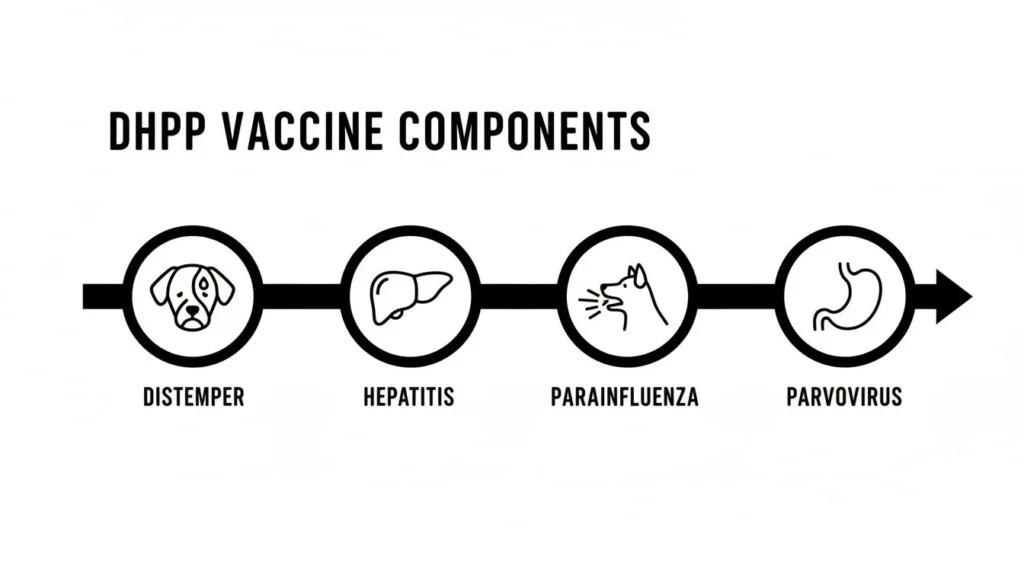
Each letter in the DHPP acronym stands for a serious virus, and the vaccine works to guard against all of them at once.
Special Cases and Unknown Histories
What if you adopt an adult dog and have no idea if they’ve ever been vaccinated? It’s a very common scenario, and vets have a straightforward plan to get them protected quickly.
For a dog with an unknown vaccine history, your vet will likely recommend this protocol:
- Give one dose of the DHPP vaccine right away.
- Administer a booster shot 3 to 4 weeks later.
- After that, the dog can move onto the standard three-year booster schedule.
This two-shot startup makes sure that even if the dog had zero immunity, they get the full protection they need to be safe.
Working closely with your veterinarian is the best way to keep your dog on the right track. They’ll help you manage the schedule and send reminders when boosters are due. Proper vaccination is also a must for safe socialization, which is key for a well-adjusted dog. For more tips on getting started, you can check out our guide on how to train your dog. This will ensure they’re ready and safe for dog parks, daycare, and training classes.
How Long Does the DHPP Vaccine’s Protection Last
So, you’ve made it through the whole puppy shot series—congratulations! Now comes the big question every dog owner asks: how long is my dog actually protected? It’s a great question, and knowing the answer is key to building a smart health plan with your vet for the long haul.
The fancy term for this is Duration of Immunity (DOI), which is just the scientific way of saying how long a vaccine keeps working. For years, the default was to give a booster for everything, every single year. But we’ve learned a lot since then, and modern veterinary science shows that for core vaccines like the DHPP, that’s not always the best approach.
The Shift to Three-Year Boosters
Veterinarians and researchers have spent a ton of time studying the DOI for the “big three” in the dhpp dog vaccine: distemper, hepatitis, and parvovirus. What they found completely changed the game, shifting our entire approach to boosters for adult dogs. The takeaway is pretty clear: the protection from these diseases is impressively long-lasting.
After a puppy finishes their initial series and gets that first booster around their first birthday, the evidence overwhelmingly shows that their immunity is solid for at least three years, and often even longer. This is why major groups like the American Animal Hospital Association (AAHA) now recommend a three-year booster schedule for most adult dogs. It’s a science-backed way to keep your dog protected without the stress, cost, and potential side effects of shots they might not need.
One incredible clinical trial really drove this point home. Researchers vaccinated puppies, then intentionally exposed them to the live viruses more than four years later. The results were stunning: they saw 100% protection against death and sickness from parvovirus, total protection against fatal infectious hepatitis, and 90% of the dogs showed zero signs of distemper. You can read the full research about these findings and see the data for yourself.
What Is Titer Testing
While the three-year schedule is a fantastic, safe standard for most dogs, some owners prefer a more tailored approach. That’s where titer testing enters the picture. Think of it as a blood test that lets you peek into your dog’s immune system to check if its defenses are still up and running.
A titer test is a simple blood test that measures the level of antibodies your dog has against a specific disease. High antibody levels indicate that the dog still has a strong “immune memory” and is likely protected, meaning a booster may not be immediately necessary.
This is a great tool for making decisions based on your specific dog’s data. If a titer test shows your dog’s immunity is still rock-solid, you and your vet might decide to hold off on that next DHPP booster.
But, there are a few things to keep in mind about titers:
- Cost: Titer tests almost always cost more than the vaccine itself.
- Interpretation: A low titer doesn’t automatically mean your dog is vulnerable, but it does suggest their immunity could be on the decline. It’s not a simple “yes” or “no.”
- Requirements: This is a big one. Many boarding kennels, groomers, and training facilities will not accept a titer test instead of proof of current vaccination.
Ultimately, the choice between sticking to the standard three-year booster or using titer tests is a conversation for you and your veterinarian. They can help you weigh the pros and cons based on your dog’s health, age, lifestyle, and the disease risk in your area to figure out what makes the most sense for your furry family member.
Potential Side Effects and Allergic Reactions
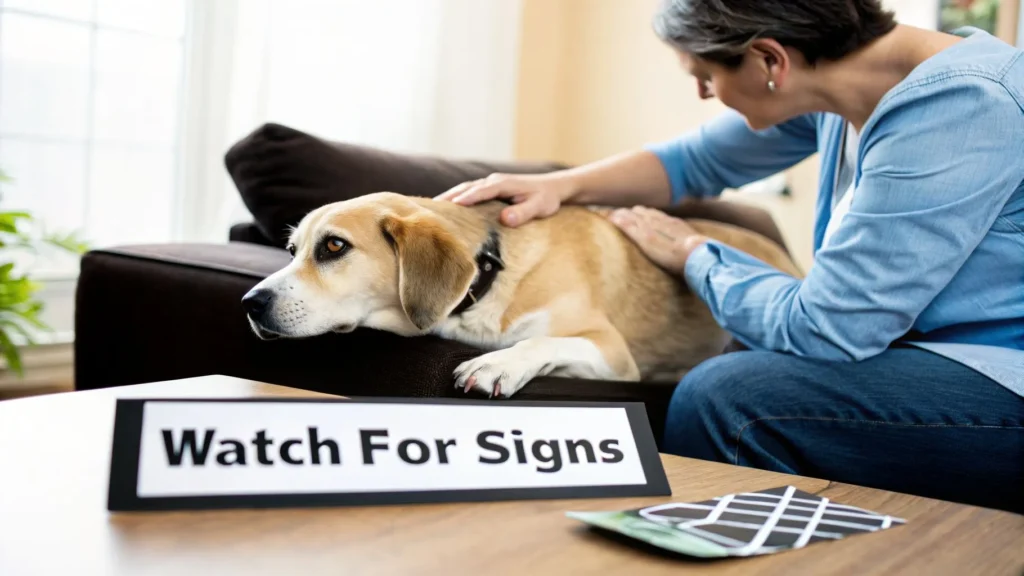
As a pet owner, your dog’s safety is always top of mind. It’s natural to worry about how your companion might feel after a vaccination. The reality is the DHPP dog vaccine is overwhelmingly safe, and serious reactions are very rare.
Most dogs are back to their normal selves in no time. Still, it helps to know what to watch for in the hours and days following the shot. Understanding the difference between a minor, expected response and a true emergency is key.
Common and Mild Side Effects
Think of mild side effects as proof your dog’s immune system is learning. Much like you might feel a bit sluggish after a flu shot, your dog’s body is hard at work building up its defenses. These reactions are usually short-lived, fading within a day or two.
You might see your dog become:
- A bit tired: They may seem sleepier than usual or pass on a game of fetch.
- Slightly sore: The injection area could be tender to the touch.
- A little warm: A low-grade fever is a normal part of the immune response.
- Less hungry: Don’t be surprised if they skip a meal.
These signs are typically no cause for concern. Just let your dog rest, keep their water bowl full, and give them a comfy spot to relax for about 24 hours.
Rare but Serious Allergic Reactions
Although highly uncommon, a true allergic reaction (anaphylaxis) is possible after any vaccine. This is a medical emergency that requires immediate veterinary care. A severe reaction usually happens fast, often within minutes to an hour after the shot.
It’s critical to know the warning signs of a true allergy, as this requires a very different response than just mild lethargy.
Here’s a quick guide to help you tell the difference between a normal reaction and a potential emergency.
DHPP Side Effect Guide: Normal vs. Emergency
| Symptom | Typical Onset | What to Do (Action Guide) |
|---|---|---|
| Lethargy or Soreness | A few hours after vaccination | Monitor, provide rest and water. Should resolve in 24-48 hours. |
| Swelling of Face/Muzzle | Within minutes to an hour | Emergency. Contact your vet or an emergency clinic immediately. |
| Hives or Bumps on Body | Within minutes to an hour | Emergency. Contact your vet or an emergency clinic immediately. |
| Vomiting or Diarrhea | Can be mild and transient, but if severe or persistent, it’s an emergency. | For a single episode, monitor. For multiple episodes or severe signs, it’s an Emergency. |
| Difficulty Breathing/Coughing | Within minutes to an hour | Emergency. Go to the nearest veterinary hospital right away. |
| Sudden Collapse/Weakness | Within minutes to an hour | Emergency. Go to the nearest veterinary hospital right away. |
If you see any of the symptoms listed as an emergency, don’t wait. Call your vet or head to the nearest animal hospital immediately.
If your dog has a history of vaccine reactions, let your vet know. They might suggest giving an antihistamine beforehand to reduce the risk. You can learn more about the use of Benadryl in dogs from our guide, but never give any medication without your vet’s direct approval.
DHPP vs DAPP vs DHLPP Vaccine Differences
Walking into the vet’s office can sometimes feel like you need a translator for all the acronyms. When it comes to core vaccines, you might hear your vet mention DHPP, DAPP, or even DHLPP. It’s easy to get them mixed up, so let’s clear up the confusion and make sure you know exactly what protection your dog is getting.
The good news is that DHPP and DAPP are essentially the same vaccine. The “H” in DHPP stands for Hepatitis, which is caused by an adenovirus. The “A” in DAPP is just a more direct way of saying Adenovirus. Both acronyms refer to the exact same core shot that protects against Distemper, Hepatitis (Adenovirus), Parainfluenza, and Parvovirus.
The Important Difference: The Letter L
The most significant variation you need to know about is the one between DHPP and DHLPP. That single “L” tacked on at the end makes a huge difference.
That “L” stands for Leptospirosis. Unlike the other components of the vaccine, which are all viruses, Leptospirosis is a dangerous bacterial disease. It’s typically spread through the urine of infected wildlife like raccoons, skunks, and rodents. A dog can get sick just by drinking from or swimming in a contaminated puddle, pond, or stream.
Leptospirosis is what we call a “non-core” or “lifestyle” vaccine. This means it isn’t automatically recommended for every dog out there. Instead, your vet acts as a risk assessor, weighing your dog’s daily activities and environment to decide if this extra protection is necessary.
Is the Leptospirosis Vaccine Right for Your Dog?
Deciding whether your dog needs that “L” really comes down to their daily habits and where you live. Your veterinarian will probably recommend the full DHLPP vaccine if your dog:
- Spends a lot of time outdoors, especially in rural or wooded areas.
- Goes hiking, camping, or swims in natural bodies of water like lakes and rivers.
- Lives on a farm or in an area with a noticeable wildlife population.
- Regularly visits dog parks where water bowls or puddles might be shared.
On the other hand, if you have a small dog who is mostly an indoor companion and only takes leashed walks around a clean, urban neighborhood, your vet might decide the risk is low enough to stick with the standard dhpp dog vaccine.
Knowing what these letters mean empowers you to have a much better conversation with your vet. You can confidently ask, “Based on our lifestyle, do you think we need to include the leptospirosis vaccine this year?” This ensures your dog gets the precise protection they need—nothing more, and nothing less.
Frequently Asked Questions About the DHPP Vaccine
Even with the basics covered, you probably still have a few practical questions about the DHPP vaccine. That’s completely normal. Most dog owners want to know about real-world details like cost, specific scenarios, and what to do if things don’t go exactly as planned.
Think of this as your go-to guide for those common concerns. We’ll give you straight answers to help you feel confident about your dog’s health plan.
How Much Does the DHPP Vaccine Cost?
Let’s start with the question on every pet parent’s mind: what’s the cost? The price for a single dhpp dog vaccine can swing quite a bit depending on where you live and the type of vet clinic you visit.
On average, you can expect to pay anywhere from $25 to $75 per injection. A private veterinary hospital in a big city will likely charge on the higher end of that scale. On the other hand, a low-cost vaccine clinic or an animal shelter might offer it for much less. The shot is also frequently bundled into a wellness package or annual exam, which can influence the final price you see on the bill.
Does My Indoor Dog Really Need This Vaccine?
It’s a fair question. If your dog is a homebody who rarely sets a paw outside, do they really need protection from diseases they might never encounter? The answer from every veterinarian is a firm yes.
The viruses covered by the DHPP shot are shockingly tough. Distemper and especially parvovirus can be carried right into your home on your shoes, your clothes, or even the paws of another visiting pet.
A dog doesn’t need to meet an infected animal face-to-face to be at risk. Because these viruses can survive in the environment for months, an indoor-only dog is never completely isolated from potential exposure. Vaccination is the only reliable shield.
Even a quick trip to the groomer, a routine vet visit, or a single unexpected escape out the front door can put an unvaccinated dog in serious danger. It’s always safer to keep their immunity up. If you notice odd behaviors after a vet visit, like constant head shaking, it’s worth looking into. Our guide on why a dog keeps shaking its head can offer some helpful insights.
What Happens If My Dog Misses a Booster Shot?
Life gets hectic, and sometimes a booster appointment slips by. If you realize your dog is overdue for their DHPP shot, don’t panic—but do take action quickly. The right move depends on your dog’s age and how long it’s been since their last vaccine.
Your first step should always be to contact your veterinarian.
Here’s a general idea of what they will likely recommend:
- For an Adult Dog (Slightly Late): If an adult dog with a solid vaccination history is just a few months late for their three-year booster, your vet will probably administer a single shot to get them right back on schedule.
- For an Adult Dog (Very Late): If the gap is a year or more, your vet may suggest a two-shot protocol. This usually involves a second booster 3-4 weeks after the first one to fully re-establish strong immunity.
- For a Puppy: A missed shot during a puppy’s initial series is more critical. Their immune systems are still developing. Your vet will likely want to restart the entire series to ensure there are no dangerous gaps in their protection.
Your vet will know the best course of action to get your dog’s immunity back on track safely and effectively.
At maxijournal.com, we’re dedicated to bringing you clear, reliable information on pet health and more. Explore our extensive library of articles to find answers to all your questions. Learn more by visiting us at https://maxijournal.com.
Discover more from Maxi Journal
Subscribe to get the latest posts sent to your email.