Welcome to travel in 2026. If you’re looking for one simple story about the state of tourism, you won’t find it. Instead, we’re seeing a fascinating mix of competing priorities: travelers are hunting for deals on domestic trips, demanding real sustainability, and starting to use AI as a genuine co-pilot for planning. We’ve finally moved past the post-pandemic rebound and into a new phase defined by savvy travelers and shifting economic winds.
The 2026 Travel Landscape an Overview
The world of travel is in a really interesting place. The “revenge travel” chapter has closed, and we’re now watching travelers make much more deliberate and complex choices. This section will give you a bird’s-eye view of the major forces at play before we dig deeper into each specific trend.
At the heart of it all is a tension between the deep-seated desire to explore and the very real economic pressures people are feeling. Lingering inflation hasn’t squashed the travel bug, but it has made people smarter about how and where they spend their money. This has created what I call a dual-speed travel economy, where different groups are behaving in completely different ways.
To better understand these shifts, here’s a quick summary of the key trends shaping the industry this year.
Key Travel and Tourism Shifts in 2026
| Trend | Description | Primary Driver |
|---|---|---|
| Budget-Conscious Domestic Travel | Travelers are opting for road trips and regional exploration to get more value for their money. | Economic uncertainty and inflation. |
| Meaningful Sustainability | A move from “greenwashing” to genuine, impactful eco-friendly and community-supportive travel. | Increased traveler awareness and demand for accountability. |
| AI-Powered Trip Planning | Travelers are using AI tools for personalized itinerary creation, booking, and in-trip assistance. | Advances in generative AI and a desire for efficiency. |
| The Rise of “Bleisure” | The blending of business trips with leisure extensions is now a standard travel style. | Remote and flexible work policies. |
| Wellness and Sabbaticals | A growing focus on trips designed for mental and physical well-being, including longer “sabbatical” journeys. | Post-pandemic focus on health and work-life balance. |
These trends are not just isolated data points; they’re interconnected pieces of a larger puzzle that shows how much travel has evolved.
Economic Crosscurrents and Market Realities
If you look at the numbers, you’ll see a story of cautious but steady resilience. For instance, recent projections for the U.S. travel market show total spending is expected to inch up by 1.1% to $1.35 trillion. This slight growth tells us consumers are still keen to travel, just more carefully. You can explore more details about these travel forecasts to see the full picture.
This careful spending is a big reason why travel closer to home is booming. Domestic leisure travel remains the industry’s engine, with forecasts showing a 1.9% expansion to an incredible $895 billion. On the flip side, international inbound travel to the U.S. is expected to see a slight dip for the first time since the pandemic, a clear sign of how global economic health affects travel patterns.
This all points to one big takeaway for 2026: Value and convenience are king. Travelers are weighing every dollar, which is why we’re seeing a surge in road trips, staycations, and regional getaways that deliver amazing experiences without the high cost of a long-haul flight.
Core Themes Shaping Modern Journeys
Beyond the economic data, a few powerful themes are redefining what a “trip” even means. These aren’t just buzzwords; they represent a real shift in what people expect from their travels.
The Rise of “Bleisure”: The line between work and play has practically disappeared. Thanks to remote work, people are tacking personal vacation days onto business trips, creating a whole new hybrid travel category.
The Demand for Sustainability: Responsible travel has officially gone mainstream. People aren’t just looking for a green-certified hotel anymore; they want to know their trip supports local communities and has a minimal environmental footprint.
The Impact of AI: Artificial intelligence is quickly becoming an indispensable travel buddy. It’s helping people build hyper-personalized itineraries, find hidden gems, and get the best deals, all with a simple prompt.
These themes are a huge step forward from the travel and tourism trends of just a few years ago. Getting a handle on them is the key to understanding where the world of travel is headed in 2026 and beyond.
How Technology Is Redefining the Travel Experience
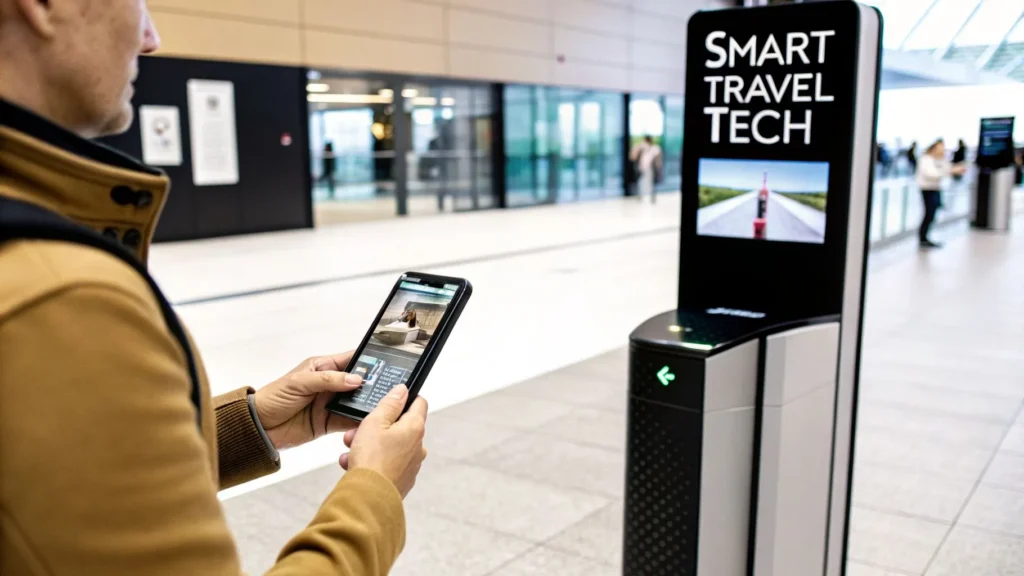
If you still think of travel tech as just a website for booking flights, you’re missing the biggest story in travel right now. Technology has moved far beyond simple transactions; it’s now woven into every step of the journey, acting as a smart companion that smooths out the rough edges of travel. This is one of the most practical and powerful travel and tourism trends emerging in 2026.
Think back to planning a trip just a few years ago. It often meant juggling a dozen browser tabs, comparing flights, hotels, and activities until your head spun. Today, Artificial Intelligence (AI) acts like a seasoned travel agent that lives in your pocket. You can give a single, natural-language prompt, and it will spit out a complete itinerary that actually makes sense for your budget and tastes.
But it’s more than just a time-saver. These AI systems dig through mountains of data to spot opportunities you’d never find on your own, like a flash sale on a flight or a fantastic “dupe” destination that has the same vibe as a crowded hotspot. This is fundamentally changing how we find inspiration and book our adventures.
AI and Personalization: The Digital Concierge
The real magic of today’s travel AI is its knack for deep personalization. Forget generic top-10 lists. Modern platforms learn what you like—noticing you always book boutique hotels or search for hiking trails—and tailor their suggestions accordingly.
This is what turns a good trip into an unforgettable one. The tech starts to anticipate your needs, almost before you do.
AI is turning travel planning from a chore into a genuinely fun part of the adventure. It takes on the grunt work—comparing prices, checking schedules—so you can focus on the exciting part: dreaming up your perfect trip.
For example, a smart planner won’t just recommend a well-rated restaurant. It will suggest a specific farm-to-table spot because it knows you love that kind of food and that you’ll be in the neighborhood right around dinnertime. To see how this works in practice, check out our breakdown of the best travel apps for planning your next trip. It’s proactive, predictive, and incredibly personal.
Creating a Seamless Journey
This tech-driven ease doesn’t stop once the planning is done. Once you’re on the move, technology is busy dismantling the most annoying parts of travel, from long check-in lines to security queues. The entire industry is pushing toward a completely seamless experience, from the moment you leave your house to the moment you unlock your hotel room door.
Imagine walking through airport security without ever pulling out your ID or boarding pass. This isn’t science fiction; it’s happening now. In fact, more than two-thirds of travelers are ready to embrace biometric screening to make the process faster and less stressful.
This shift is backed by serious money. AI and Machine Learning now attract about two-thirds of all investment in travel tech, with a huge portion dedicated to booking tools and making operations run smoother. The payoff is a calmer, more intuitive journey for all of us.
The demand for this efficiency is only going to grow. With 74% of travelers planning one to three domestic trips and 59% planning one to three international trips, airports and hotels need to handle more people without adding more friction. You can explore more on this in the latest travel and tourism forecasts.
Here are a few key technologies making this a reality:
- Biometric Screening: Facial recognition is used to verify your identity at check-in, bag drop, and boarding, cutting down on wait times dramatically.
- Contactless Check-In: Your phone becomes your room key, letting you skip the front desk entirely and head straight to your room.
- Smart Luggage Tags: Real-time bag tracking from your phone provides incredible peace of mind and ends the dreaded wait at the carousel, wondering if your luggage made it.
These aren’t just flashy gadgets. They are quickly becoming standard features of modern travel, making the whole experience more secure, efficient, and, most importantly, enjoyable. This focus on a smooth, stress-free journey is a core element of today’s travel and tourism trends.
The Rise of Bleisure and the Digital Nomad Lifestyle

The wall between the office and the rest of the world has crumbled. In its place, we’re seeing one of the biggest shifts in travel today: bleisure. It’s a simple blend of “business” and “leisure,” but the concept is changing how people approach their careers and their passion for exploring the world.
Think about it. The old-school, whirlwind business trip is on its way out. That frantic dash for a one-day conference, followed by an immediate flight home? It’s being replaced by something much more deliberate and fulfilling.
Take a marketing executive flying to London for a two-day conference. A few years ago, she would’ve been on the first plane back. Now, it’s just as likely she’ll extend her stay through the following week. She might work from her rental flat in the mornings and spend her afternoons as a tourist—exploring museums, catching a West End show, or hopping on a train to the countryside.
This isn’t some niche habit anymore. It’s a full-blown movement, supercharged by the widespread adoption of remote and flexible work. Millions of professionals are no longer chained to a desk, giving them the freedom to take their jobs on the road.
Who Is Embracing the Bleisure Lifestyle
This shift is especially popular among younger professionals, who tend to prioritize meaningful experiences and a healthy work-life balance over rigid, old-fashioned office culture. For them, a work trip isn’t just an obligation; it’s an opportunity. And the data backs this up.
Recent analysis of summer travel trends shows a massive uptick in bleisure trips, with 52% of travelers under 35 adding personal vacation days to their work travel. The data also highlights some interesting demographic splits. Men (40%) seem slightly more inclined to mix business and leisure than women (26%).
As this trend matures, it’s having a direct impact on travel planning. In 2025, 39% of remote workers opted for longer vacations, a noticeable jump from just 31% in 2024. These extended trips often lead them to more distant destinations, and a significant 20% now prefer private rentals over traditional hotels to get the space and amenities needed for a comfortable work-live setup. You can read the full research about these summer travel trends on TravelAge West.
Bleisure isn’t just about taking longer vacations. It’s a complete re-imagining of the work week. It turns any spot with decent Wi-Fi into a potential office, effectively making the entire world a workplace.
The Digital Nomad Evolution
Bleisure is often the first step toward an even more immersive lifestyle: becoming a digital nomad. While a bleisure traveler might tack a few extra days onto a work trip, a digital nomad builds their entire career around being location-independent.
One month, they might be working from a cozy café in Lisbon, the next from a bustling co-working space in Bali, and the one after that from a quiet town in Mexico.
This lifestyle comes with a whole new set of demands, for both the traveler and the tourism industry.
- Connectivity is Everything: For digital nomads, fast and reliable Wi-Fi isn’t a perk. It’s a non-negotiable utility, as essential as running water.
- Accommodations Have to Evolve: There’s a growing demand for places that feel more like a home than a sterile hotel room. This means more private rentals, aparthotels, and co-living spaces that offer kitchens, real workspaces, and a sense of community.
- Longer Stays are the New Normal: Slow travel is key. Nomads often book accommodations for weeks or even months at a time, looking for better deals and a chance to truly settle in and experience the local culture.
This has opened up a huge market for services built specifically for the location-independent worker. Many are now documenting their experiences, inspiring others to follow suit. If that sounds like you, it’s worth checking out our guide on how to start a travel blog to share your own adventures with the world.
Searching for Authentic and Sustainable Journeys
Something fundamental has shifted in why and how we travel. The postcard-perfect view isn’t enough anymore. We’re seeing a powerful move away from checkbox tourism and toward journeys that feel meaningful, create genuine connections, and leave a positive mark.
This desire for authenticity and sustainability is far more than just a buzzword; it’s one of the most significant travel and tourism trends pushing the industry into a new era of conscious travel.
A big part of this is a direct pushback against overtourism. We’ve all seen the photos—or experienced it ourselves. Popular destinations are getting choked by crowds, damaging the very environment and culture people came to see. In response, smart travelers are adopting a “go-where-the-crowds-aren’t” mindset. They’re happily trading the packed squares of Venice for the quiet canals of Annecy, or swapping a crowded Hawaiian beach for a secluded cove on a lesser-known Caribbean island.
The Rise of Purpose-Driven Travel Styles
This search for something different has sparked some fascinating micro-trends. Each one is built on the idea of traveling with more intention, turning a simple vacation into something truly memorable. It’s less about where you go and more about the why.
A few styles are really picking up steam:
- Coolcations: As climate change brings sweltering heatwaves to classic summer spots, travelers are looking north. These “coolcations” are all about escaping extreme temperatures with trips to places like Scandinavia, Scotland, or Canada’s maritime provinces, where you can actually enjoy the outdoors.
- Gig-Tripping: Taylor Swift’s Eras Tour is the poster child for this one. Fans are planning entire trips, often across borders, just to see their favorite artists. It combines the energy of live music with the thrill of exploring a new city, turning a single concert into a multi-day adventure.
- Set-Jetting: With streaming shows dominating our screens, it was only a matter of time before we started visiting their worlds. “Set-jetting” is all about walking in the footsteps of your favorite characters, whether it’s exploring the dramatic landscapes of Game of Thrones in Northern Ireland or sipping coffee on the Parisian streets from Emily in Paris.
What this really tells us is that today’s traveler has moved from being a passive observer to an active participant. People want to engage, to connect, and to feel like they’re part of a story, even for a little while.
From Greenwashing to Genuine Impact
The conversation around sustainability has also grown up. Vague promises about being “eco-friendly” just don’t cut it anymore. Travelers are savvier and more skeptical; they want to see proof. They’re asking the tough questions, demanding to know exactly how their money is helping local communities and protecting the environment.
This has pushed the industry toward what’s known as regenerative tourism—the idea of leaving a place better than you found it. It’s a proactive approach that goes way beyond just minimizing your footprint. So, instead of simply using a reusable water bottle, a regenerative trip might involve participating in a local reef restoration project. If you’re looking for simple first steps, our guide on how to reduce plastic waste while traveling is a great place to start.
You can see this shift in the choices people are making:
- Supporting Local Economies: Deliberately choosing locally-owned hotels, family-run restaurants, and independent tour guides to keep money in the community.
- Choosing Low-Impact Transport: Opting for scenic train rides instead of short-haul flights or exploring a city on an e-bike rather than in a rental car.
- Engaging in Cultural Exchange: Seeking out real, hands-on experiences like a cooking class with a local family or a craft workshop that builds genuine human connection.
Ultimately, this search for authentic, sustainable travel is redefining what it means to be a “good” traveler. It’s about being mindful, respectful, and intentional. For anyone in the tourism business, this means the future is in creating genuine, low-impact adventures that do more than just entertain—they connect with people’s values. This isn’t just a passing phase; it’s the new foundation for meaningful exploration.
Of all the forces shaping how we travel, none are as powerful as the ones tugging at our wallets. The economic currents of 2026—from stubborn inflation to wavering consumer confidence—aren’t just boardroom talk. They’re directly influencing where people go, what they do, and how much they’re willing to spend.
What’s emerged is a fascinating split down the middle of the travel market. On one side, you have a huge number of people becoming incredibly savvy about value. On the other, affluent travelers are doubling down on high-end, exclusive experiences. To really get a handle on today’s travel scene, you have to understand both sides of this coin.
The Staying Power of the Close-to-Home Trip
When money gets tight, the desire to explore doesn’t just vanish. It simply recalibrates. We’re seeing this play out in the remarkable strength of domestic and regional travel. The classic road trip, especially, is making a huge comeback as people rediscover the simple joy of hitting the open road.
It’s not purely about saving on airfare, either. It’s about taking back control. A road trip gives you a sense of freedom that feels worlds away from the headaches of flight cancellations, lost luggage, and surprise fees. It puts spontaneity back in the driver’s seat, letting you follow a whim to a small-town diner or an overlooked scenic route—a mindset that feels very right for the times.
In this climate, value has become the new luxury. People are on the hunt for experiences that deliver a huge emotional return without the eye-watering price tag, making a weekend getaway a few hours away feel like the smartest indulgence.
This isn’t just a feeling; the numbers back it up. While the travel industry as a whole is seeing steady, if cautious, growth, it’s the domestic leisure segment that’s really humming. It’s proof that the travel bug is alive and well; it’s just finding its fix a little closer to home.
The Big Spenders Steering the Ship
While many are bargain-hunting, travelers with deeper pockets are writing a completely different story. This group has been largely insulated from inflation, and their spending continues to prop up the premium end of the market. Their choices have a massive ripple effect, often setting the trends that the rest of the industry eventually follows.
These travelers aren’t just looking for a five-star hotel room. They’re after true exclusivity and experiences that are deeply personal and impossible to duplicate. Think things like:
- Expert-Led Journeys: Imagine touring ancient ruins with the lead archaeologist or exploring a vineyard with the master winemaker.
- Ultra-Personalized Itineraries: Working with elite travel designers to build a trip from scratch around a passion, whether it’s a deep dive into a region’s culinary scene or a private wellness retreat in a remote location.
- Exclusive Access: Getting those “behind-the-ropes” opportunities, like a private after-hours tour of a world-famous museum or a one-on-one cooking class with a Michelin-starred chef.
This constant demand for what’s next in bespoke travel is what pushes luxury hotels, airlines, and tour operators to get more creative. Their spending supports a level of service and imagination that ultimately raises the bar for everyone.
A Look at the Numbers
Drilling down into the data gives us a clearer picture of these economic cross-currents. The following projections for the U.S. travel market show exactly which segments are thriving and which are facing headwinds as we head further into 2026.
2025-2026 U.S. Travel Market Projections
| Segment | 2025 Projected Spending | Year-Over-Year Change | Key Driver/Challenge |
|---|---|---|---|
| Domestic Leisure | $895 billion | +1.9% | Strong, sustained demand for value-driven trips and road travel. |
| Domestic Business | $302 billion | +2.8% | Corporate travel and in-person events are slowly but surely returning. |
| International Inbound | $173 billion | -3.2% | A strong U.S. dollar makes travel here expensive for foreigners. |
| International Outbound | Not specified | Mixed | Varies widely by destination; high costs are the biggest hurdle. |
As you can see, the data tells a story of incredible resilience in the domestic market. In contrast, the strength of the U.S. dollar and global economic jitters are putting a damper on international travel. This divergence is one of the most critical travel and tourism trends to watch, whether you’re planning your own vacation or mapping out a business strategy.
What These Travel Trends Mean for You
So, what do all these shifts actually mean when the rubber hits the road? It’s one thing to talk about trends, but it’s another to know how they affect your next vacation or your business’s bottom line.
Whether you’re packing a suitcase or managing a hotel, the key is to adapt. These changes aren’t just abstract ideas for analysts; they’re creating real-world opportunities and challenges for everyone involved in travel.
For travelers, it’s all about having more control than ever before. Think of yourself as the captain of your own trip, with new AI tools acting as your first mate. You can design incredibly specific itineraries that match your unique tastes and budget, while the rise of remote work is making longer, more meaningful trips a genuine possibility for many.
For businesses, the old playbook is officially obsolete. Trying to be everything to everyone is a recipe for failure. The companies that are winning are the ones that have doubled down on a specific niche and are delivering authentic, memorable experiences. They know their audience inside and out, whether it’s a digital nomad who just needs fast, reliable Wi-Fi or an eco-conscious family looking for a truly regenerative stay.
A Traveler’s Guide to the New Rules of the Road
Ready to plan your next trip? Here are a few practical tips to make the most of the current travel environment.
Let AI Do the Grunt Work: Use generative AI tools as your personal research assistant. Ask an AI to find the cheapest weeks to fly, map out a walking tour of a historic district, or even list the best gluten-free bakeries near your hotel. It frees you up to focus on the fun part.
Ask the Tough Sustainability Questions: Don’t just take a hotel’s “green” claims at face value. Dig a little deeper. Ask them directly how they support local businesses or what specific steps they take to reduce their environmental footprint. Real sustainable operators will be proud to tell you.
Try a “Coolcation”: If you’re planning a summer getaway, think about swapping the sweltering heat for a milder climate. Instead of the usual hotspots, consider destinations like the Scottish Highlands, the breezy Baltic coast, or the mountains of British Columbia. You’ll beat the crowds and the heatwaves.
How Tourism Businesses Can Stay Ahead of the Curve
For anyone running a hotel, a tour company, or marketing a destination, sitting still isn’t an option. The focus has to shift from merely selling a room or a ticket to creating an entire experience that resonates with your ideal guest.
This chart shows exactly where the money is being spent in U.S. travel right now, and the numbers speak for themselves.
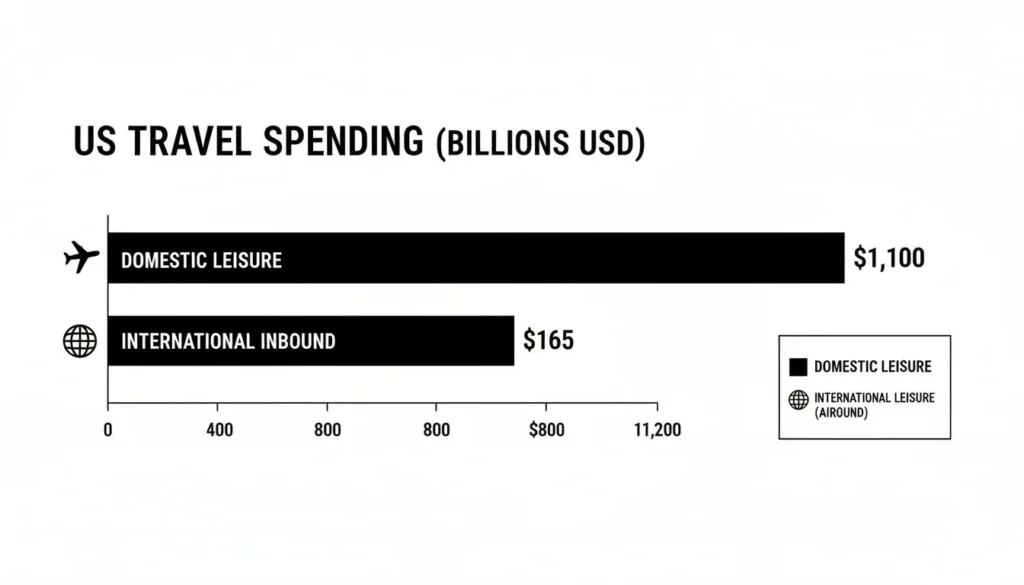
The data paints a clear picture: while international visitors are a vital part of the ecosystem, the domestic leisure market is an absolute powerhouse at $1.1 trillion. This is the most stable and significant source of tourism revenue.
To win in 2026, you need to stop chasing trends and start anticipating what travelers truly value. Invest in the right technology to make the guest journey effortless, forge genuine partnerships with local artisans and guides, and be loud and proud about your sustainability efforts. The businesses that will still be here in a decade are the ones that understand the human needs driving these changes.
Your Top Travel Trend Questions, Answered
We’ve covered a lot of ground, and it’s natural to have a few questions buzzing around. Let’s tackle some of the most common ones I hear so you can make sense of these trends for your own travels.
How Can I Make My Travel More Sustainable Without Breaking the Bank?
It’s a huge misconception that sustainable travel has to be expensive. In reality, some of the most budget-friendly habits are also the kindest to the planet and local communities.
Instead of defaulting to flights, look at destinations you can reach by train or bus. Not only do they have a smaller carbon footprint, but they’re often cheaper. Once you’re there, get to know the place on foot, by bike, or using the local public transit system. And when you’re hungry or shopping, seek out the small, family-run spots—your money goes directly into the hands of the people who call that place home.
Honestly, the biggest impact comes from simply slowing down. If you stay in one place for a week or a month instead of hopping around, you cut down on transit emissions and often get big discounts on accommodations. Plus, you get to form a real connection with the place.
Is AI in Travel a Threat to Jobs in the Tourism Industry?
I see AI as more of a job changer than a job replacer. It’s brilliant at handling the heavy lifting—like sifting through thousands of flight options or mapping out a basic itinerary. But it completely lacks a human’s touch and intuition.
Think of it this way: AI is your tireless research assistant, but a great travel agent or guide is the creative director of your trip. AI can tell you what to see, but a person can tell you why it matters, share a story that isn’t in the guidebook, or troubleshoot a disaster with genuine empathy. The future of tourism jobs lies in providing that high-touch, creative, and personal service that a machine just can’t replicate.
What Are Some Underrated Destinations to Visit to Avoid Crowds?
Overtourism is a real problem, but the world is still brimming with incredible places that fly under the radar. If you’re tired of battling the crowds in major European capitals, why not explore the vibrant energy of a city like Ljubljana, Slovenia, or wander the historic, amber-lined streets of Gdańsk in Poland?
For anyone craving a jaw-dropping nature escape, you don’t have to elbow your way through the most famous national parks. Consider the epic mountain landscapes of Georgia (the country!), the wild, turquoise coastlines of Albania, or the profound silence of Namibia’s vast deserts. You’ll find these places often offer a much more authentic experience and are a lot easier on the wallet.
Discover more from Maxi Journal
Subscribe to get the latest posts sent to your email.