At its core, content curation is the art of sifting through the endless sea of information online to find the absolute best, most relevant pieces for your audience. But it’s not just about finding and sharing links. The real magic happens when you add your own context and perspective, transforming your platform into a trusted hub for your niche.
Think of yourself as a museum curator or a festival DJ. You’re not creating the art or the music from scratch; you’re using your expertise to select and arrange the best pieces to create a cohesive, memorable experience for others.
Understanding Content Curation Beyond Sharing
Many people mistake content curation for simply reposting articles on social media. While that’s a tiny piece of the puzzle, true curation goes much deeper. It’s a thoughtful, human-led process of cutting through the noise to deliver pure signal.

Let’s say you run an independent web magazine like maxijournal.com. Your readers count on you to bring them insightful and reliable content. Trying to write every single article yourself is a fast track to burnout. Instead, you can carefully select and feature valuable work from other experts, adding your own commentary. This simple act elevates your brand from just another voice to a trusted guide.
The Curator’s Role
A great curator never just passes along information. They add a distinct layer of value. This can look like a few different things:
- Providing sharp commentary on a recent study.
- Offering a unique take that challenges the original author’s premise.
- Grouping several articles together to build a larger narrative or show a developing trend.
This human touch is what separates meaningful curation from a mindless, automated feed. It builds your authority and fosters deep loyalty by proving you truly understand your industry and what your audience needs. Your goal is to become an indispensable resource—one that saves your readers time and helps them connect dots they might have otherwise missed.
Curation is not about creating more noise. It’s about finding the signal in the noise and amplifying it for your audience, making complex topics accessible and digestible.
This isn’t just a niche tactic; it has become a cornerstone of modern content strategy. Recent industry data shows that 82% of marketers now actively curate content as part of their marketing mix. What’s more, 83% of marketers specifically source content from third-party blogs and news sites to share with their communities. You can dig into more content marketing statistics to see just how essential this practice has become.
Curation vs. Creation
It’s also important to draw a clear line between content curation and original content creation. Both are crucial for a healthy content strategy, but they play different roles and demand different resources.
To make this distinction clear, here’s a simple breakdown of how they compare.
Original Content vs Content Curation at a Glance
| Aspect | Original Content Creation | Content Curation |
|---|---|---|
| Core Activity | Researching and writing/producing something entirely new from scratch. | Finding, organizing, and adding context to existing content from others. |
| Primary Goal | To establish thought leadership and showcase unique expertise. | To provide a trusted perspective and become a go-to resource for a topic. |
| Resources | High investment of time, subject matter expertise, and often budget. | Lower time investment, requires strong editorial judgment and industry awareness. |
| Audience Value | Provides deep, original insights and answers specific questions. | Saves time, filters noise, and offers a broad view of the conversation. |
Ultimately, creation is about building something from the ground up, while curation is about assembling and contextualizing existing materials. By striking the right balance between the two, you can build a dynamic and sustainable content engine that keeps your audience coming back for more.
The Strategic Value of Curating Content
So, we know what content curation is. But why should you actually do it? Understanding the concept is one thing; seeing how it can fundamentally change your publication’s trajectory is another. For any publisher, and especially for an independent web magazine, curation isn’t just about filling empty space on your site. It’s a deliberate strategy that can help you compete with the big players, even on a shoestring budget.
The most obvious win is getting off the content treadmill. We all know the feeling. The pressure to publish high-quality, original articles day in and day out is immense, and it’s a fast track to burnout. Curation is your release valve. By supplementing your own original work with smart selections from others, you can keep your audience engaged with a steady stream of value without draining your resources.
Establish Authority and Build Trust
Here’s where the real magic happens. When you consistently find and share the best, most relevant content in your niche, your role changes. You’re no longer just another voice shouting into the void; you become a trusted guide for your audience. You’re effectively telling them, “There’s a lot of noise out there. I’m watching the industry for you, and this is what you really need to know.”
Curation demonstrates confidence. By highlighting excellent work from others, even competitors, you show that you are secure in your own brand’s value and are focused on serving the audience above all else. This builds immense trust and credibility.
That trust directly influences how people see you. Readers start to view your magazine as the first place to check for important news and insights, which leads to better engagement, loyal subscribers, and a much stronger community. For smaller teams, this is a game-changer. You can’t out-produce the huge media companies, but you can certainly out-curate them by offering a smarter, more focused perspective.
Boost Your SEO and Network
On top of building trust, curation has some fantastic side benefits for your SEO and professional network. Every time you link out to a high-authority site or an industry leader, you’re sending a signal to search engines. You’re showing them that you’re an active participant in your niche and that you know who the key players are. Over time, this helps build your own site’s authority.
It’s also one of the best networking tools you’re not using. When you highlight another creator’s work and add your own insightful commentary, they notice. This small act can open up a world of possibilities:
- Reciprocal Shares: They’ll often return the favor and share your original content with their own audience.
- Backlink Opportunities: This is how you earn natural, high-quality backlinks from the very sources you’re featuring.
- Collaboration Invitations: Don’t be surprised when you start getting invited to do guest posts, partner on a project, or join them for an expert interview.
A well-curated newsletter, in particular, can become a cornerstone of your growth. It’s a perfect way to keep your brand in front of people and drive them back to your website again and again. To get that part right, you should check out our guide on how to build an email list from scratch. In the end, curation isn’t filler—it’s a smart strategy that builds your reputation, grows your audience, and creates new opportunities.
Your Step-by-Step Curation Workflow
To your readers, a perfectly curated piece of content just appears, seemingly without effort. Behind the curtain, though, a solid workflow is doing all the heavy lifting. Creating a repeatable process is the secret to delivering consistent value without burning out. This is your blueprint for turning random sharing into a powerful, sustainable engine for your publication.
Think of it as a simple, three-part system. Each stage logically flows into the next, taking you from discovery all the way to analysis and refinement.
Stage 1: Building Your Content Radar
Your first job as a curator is to become a world-class filter for your audience. This means you need to build a reliable system for finding high-quality, relevant material. Don’t just stick to one source; cast a wide net to make sure you never miss a gem.
Here are a few proven ways to build your listening post:
- RSS Readers: Use a service like Feedly to pull all your favorite industry blogs, news outlets, and thinkers into one place. It’s a huge time-saver that stops you from having to visit dozens of sites every day.
- Social Media Lists: On platforms like X (formerly Twitter), you can create private lists of key influencers, publications, and even competitors. This cuts through the noise and gives you a custom-tailored feed for your niche.
- Google Alerts: Set up alerts for specific keywords and topics core to your brand. It’s a fantastic way to catch breaking news, fresh research, and important conversations right as they pop up.
This discovery process involves more than just scanning headlines; you’re researching recent articles, comparing pieces from multiple sources, and checking the facts. This is especially true for a publication like maxijournal.com, which caters to a broad audience. You can find an excellent deep dive into this comprehensive curation method from IntoTheMinds.
Stage 2: Adding Your Context and Insight
Finding a great article is just the start. The real magic happens when you organize what you’ve found and add your unique context. This is where you inject your expertise and create something truly valuable, separating your work from a simple link farm.
When you find something promising, save it to a dedicated spot like Pocket or a notes app. As you do, jot down a quick note: Why is this important? What’s the unique angle you can bring to it?
The most critical question you can ask yourself is: “What can I add to this?” Your commentary is the bridge between the original content and your audience’s needs.
When you’re ready to share, lead with that context. Explain why the piece matters to your readers. Pull out a key quote and give your take on it, or use it to illustrate a broader trend. Your insight is what makes it your curated content. If you’re just getting started with publishing, our guide on how to publish articles online can help you with the basics.
This whole process fits neatly into a larger strategy. Curation isn’t just a daily task; it’s a key driver of growth.
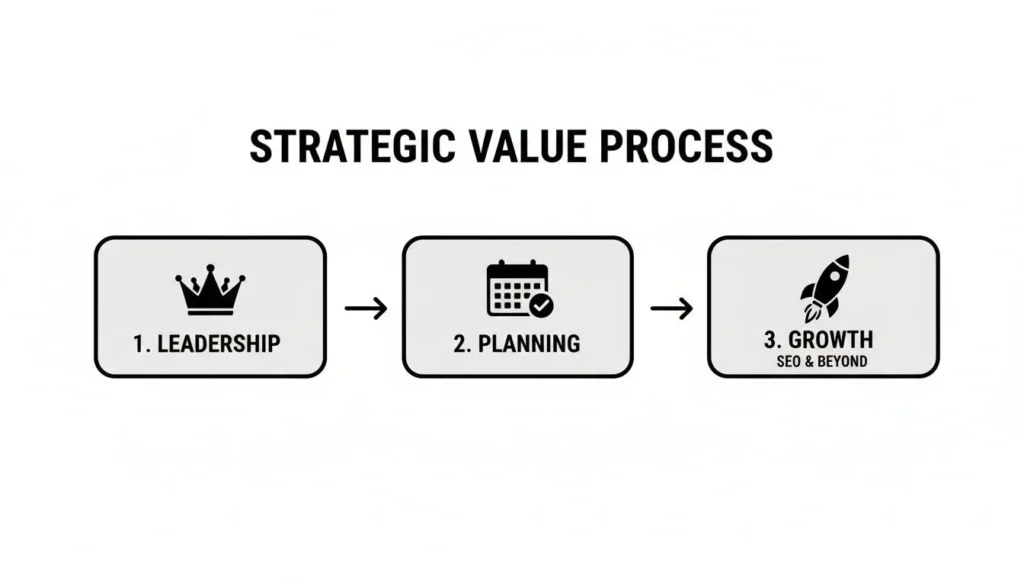
As you can see, great curation starts with leadership and vision, gets organized through smart planning, and ultimately fuels your growth in SEO and beyond.
Stage 3: Sharing, Measuring, and Refining
Now it’s time to get your curated post out into the world and see how it performs.
Always, always credit the original creator with a clear link back to their work. This is non-negotiable—it’s ethical, and it’s how you build strong relationships in your field. Use scheduling tools to plan your posts for optimal timing, but don’t just set it and forget it. Monitor the conversation and jump in to engage with your audience.
Once a post is live, pay attention to what happens next. Look at the clicks, comments, and shares. This data is pure gold. It tells you exactly what your audience finds valuable, helping you sharpen your instincts and make your next round of curation even better.
How to Curate Content Ethically and Legally
Let’s talk about one of the most important parts of curation: doing it right. There’s a fine but crucial line between responsibly sharing great work and, well, stealing it. Getting this right is about more than just avoiding legal trouble; it’s about building a brand people trust and respecting the creators who make the web a richer place.
At its core, the foundation of ethical curation is simple: never pass off someone else’s work as your own. This seems obvious, but it’s where a lot of people accidentally go wrong. You’re not just copying and pasting huge blocks of text or republishing an entire article on your own site. The idea is to grab a compelling snippet that makes your audience want to click through and read the whole thing from the original source.
The Golden Rules of Ethical Curation
Think of it this way: you’re making a promise to both the original creator and your own readers. Stick to these rules, and you’ll be adding value and building a solid reputation.
Always Credit the Original Source: This is the absolute, non-negotiable first step. Every single piece you curate needs a clear, easy-to-see link that takes your reader directly to the original article. This is how you pay your respects, send traffic their way, and build goodwill with other creators in your field.
Use Only Brief Excerpts: Your job is to provide a teaser, not the whole meal. Quote a powerful sentence or two to make your point, but never lift huge chunks of text. This respects copyright and, more importantly, gives your readers a reason to visit the original source to get the full story.
Add Your Own Take: This is what separates true curation from simple aggregation. Your unique commentary is the main event. Explain why this piece matters, connect it to a broader trend, or even offer a respectful counter-argument. The curated excerpt is just the supporting evidence for your own original insight.
The real test is whether you’re adding genuine value. If your post doesn’t offer a new perspective or frame the original work in a helpful context, you’re not curating—you’re just copying.
Staying Legally Sound with Fair Use
Thankfully, most ethical curation practices are protected by a legal concept called fair use. While the legal ins and outs can get complicated, fair use generally covers activities like commentary, criticism, and news reporting. When you use small portions of someone’s work and wrap it in your own transformative commentary, you’re almost always operating on safe ground.
But there’s a nuance here: you have to represent the original work fairly. Don’t twist an author’s words or cherry-pick a quote out of context just to make it fit your argument. The goal is to honor their work while building on it.
When you curate with respect, you do more than just share content. You build a reputation for integrity that brings in loyal readers and earns the trust of your peers, turning potential competitors into valuable allies.
Building Your Content Curation Toolkit for 2026
Great content curation doesn’t just happen. It’s the result of a well-oiled system, and the engine of that system is your toolkit. Think of it like a professional workshop—you need the right tool for each part of the job. Building your own “curation stack” means hand-picking the right software for finding, organizing, and ultimately, sharing content.
The goal isn’t just to find articles; it’s to create an efficient workflow that brings the best material to you. This frees you from the drudgery of endless searching and lets you focus on what really matters: adding your voice and perspective.
Tools for Content Discovery
First things first, you need to find the gold. Discovery tools are your digital scouts, constantly scanning the web for articles, news, and trends relevant to your niche so you don’t have to.
- RSS Readers (like Feedly): An RSS reader is your personal newspaper, built just for you. Subscribe to your favorite blogs and industry sites, and Feedly pulls every new post into one clean dashboard. It’s a game-changer that ends the need to bounce between dozens of websites every day.
- Trend Spotting Tools (like BuzzSumo): Want to know what’s actually resonating with people? Platforms like BuzzSumo show you which articles are getting the most shares and engagement for any topic. It’s an invaluable peek into what your audience is already excited about.
- Social Media Lists (on X/Twitter): Cut through the noise of your main feed by creating private lists. I fill mine with industry experts, key publications, and even competitors. It’s like having a custom-built, highly relevant news channel that only shows you what matters.

A well-organized dashboard is mission control for any curator. You can see at a glance what’s happening across different topics, all in one place.
Tools for Organization and Sharing
Once you’ve discovered some promising content, you need a system for saving it and preparing it for your audience. These tools handle the logistics of your workflow.
A great curation stack isn’t about having the most tools; it’s about having the right tools that work together seamlessly. Your goal is a smooth workflow from discovery to publication.
For saving and organizing, I can’t live without a tool like Pocket. When I find an article I might want to use, one click saves it to my own private library. It becomes a well of ideas I can draw from anytime.
When you’re ready to share, scheduling platforms are essential. Tools like Buffer or Scoop.it are workhorses that let you:
- Schedule in Bulk: Set up your curated posts for the entire week in one focused session.
- Add Commentary: Easily layer your own insights on top and tag the original source.
- Optimize Timing: Drip your content out at the times your audience is most likely to be online.
By connecting a discovery tool like Feedly, an organization app like Pocket, and a sharing platform like Buffer, you’ve just built a powerful curation engine. This kind of tech-assisted workflow is the secret to a successful and sustainable content strategy.
Measuring the ROI of Your Curation Strategy
So, you’ve put in all this work to find and share fantastic content. But is it actually paying off? To know for sure, you have to measure the return on your investment (ROI). This means looking past surface-level numbers, like likes and shares, to see how curation is really impacting your growth.
Simply telling your team “it’s working” isn’t going to cut it. You need to connect your curation efforts to real, tangible results. The good news is, tracking this is more straightforward than you might think.
Measuring your strategy isn’t just about justifying the work. It’s about finding the insights you need to make your curation smarter and more effective over time.
By focusing on a handful of key performance indicators (KPIs), you can get a clear picture of what’s hitting the mark and what isn’t. This allows you to stop guessing and start making decisions based on solid data.
Key Metrics to Track
Vanity metrics can give you a nice little ego boost, but they rarely tell the whole story. To truly understand ROI, you need to zero in on the numbers that actually align with your goals. A simple dashboard in a tool like Google Analytics can pull all this information into one convenient place.
Here are the most important KPIs to keep an eye on:
On-Page Engagement: When people land on your curated posts, do they stick around? Check out metrics like Time on Page and Pages per Session. High numbers here are a great sign that your commentary is adding real value and making readers curious to see what else you have.
Referral Traffic from Curation: Are the creators and sites you feature sending some love back your way? Keep an eye on your referral traffic. Seeing new visitors come from sites you’ve highlighted is a clear signal that your networking is paying off.
Social Media Growth: Is your curated content helping you attract a larger, more active community? Track your follower growth and, more importantly, your engagement rates. We’re talking about meaningful comments and shares, not just passive likes.
SEO Improvements: Thoughtful curation can earn you some very valuable new backlinks, especially when other creators appreciate the mention. Use an SEO tool to watch for new links pointing to your site—this is a direct boost to your domain authority.
If you want to take a deeper dive, our detailed guide explains how to measure content performance. By tracking these metrics consistently, you’ll have all the proof you need to show just how valuable content curation is.
Common Questions About Content Curation
Alright, even after you’ve got your strategy mapped out, some practical questions always seem to pop up. Let’s get into a couple of the big ones I hear all the time to clear up any confusion.
What Is the Ideal Content Mix?
I wish I could give you a single magic number, but the truth is, the perfect ratio of curated to original content really depends on your team’s bandwidth and what your audience wants.
That said, a solid framework to start with is the 60/30/10 rule:
- 60% curated content that you find and share from other experts.
- 30% original content that you create from scratch.
- 10% promotional content focused on your own work, products, or services.
Think of this as a balanced starting point. It helps you stay active and provide constant value without the pressure of having to create every single piece of content yourself.
How Does Content Curation Affect SEO?
This is a huge one, and the short answer is: when you do it right, it’s great for your SEO.
By regularly linking out to respected, high-authority sites, you’re essentially telling search engines that you’re a connected and knowledgeable player in your field. This can also lead to earning valuable backlinks and social shares from the original creators, which is pure gold for boosting your site’s authority over the long run.
The absolute key here is to add your own significant commentary. You can’t just copy and paste. It’s your insight, analysis, and perspective that adds unique value for your readers and for search engines, which keeps you well clear of any duplicate content penalties.
At maxijournal.com, we practice what we preach, mixing our own original reporting with the best hand-picked articles from around the web. Explore our latest publications to see this blend in action.
Discover more from Maxi Journal
Subscribe to get the latest posts sent to your email.