A writer sent 428 submissions in 2024 and got 3 acceptances, a 0.7% acceptance rate, according to a detailed submission log shared at rjklee.com. That number sounds brutal until you read it the right way. It doesn’t prove writing is hopeless. It proves that creative writing submissions are not a one-shot act of courage. They’re a long game built on fit, volume, patience, and systems.
Most newer writers treat submissions like final exams. They polish one piece, send it out with a racing heart, and wait. Then they read the rejection as a verdict on talent. That mindset burns people out fast.
A better approach is operational. You build a submission pipeline. You decide what kind of work you write, which markets fit that work, how you package each piece, how long you’ll keep it circulating before revising, and how you’ll keep moving when the inbox says no.
That sounds less romantic than “getting discovered.” It’s also how working writers stay in the game.
The Unwritten Rules of Creative Writing Submissions
The first unwritten rule is simple. Rejection is normal. Not occasional. Not unusual. Normal.
If you understand that early, you stop misreading the process. A rejection usually means one of a few practical things: the piece wasn’t right for that editor, it wasn’t right for that issue, it arrived behind stronger work, or it missed the publication’s taste by a small margin. Sometimes it means the piece needs work. Sometimes it doesn’t.
Talent matters, but fit decides a lot
Writers often overestimate how much submissions are a pure ranking of quality. Editors don’t read in a vacuum. They read for theme, tone, balance, timing, and editorial need.
A polished realist story can fail at a venue leaning experimental. A sharp lyric essay can miss a publication that wants reported nonfiction. A good poem can arrive after the issue already has too many poems with a similar texture.
Practical rule: Treat each submission as a matching problem, not a referendum on your worth.
That shift matters because it changes your behavior. Instead of asking, “Is this piece good enough?” you start asking, “Where does this piece belong?”
The writers who last build repeatable habits
A sustainable submission practice has a few traits:
- It separates writing from submitting. Drafting and market research use different energy.
- It reduces decision fatigue. You know where finished pieces go next.
- It assumes long waits. You don’t stop because one story is out.
- It records outcomes. Memory is a terrible submissions manager.
There’s also a psychological benefit to system thinking. When your process is stable, individual rejections lose some of their force. They still sting. They just don’t derail the week.
Professionalism starts before acceptance
Many writers think they become professional once they publish. In practice, professionalism starts much earlier. It shows up in how you read guidelines, how you withdraw accepted work from other venues, how you respond to editors, and how you avoid making the same preventable mistake twice.
Creative writing submissions reward discipline more than drama. The writers who keep placing work are rarely the ones waiting for confidence. They’re the ones sending work out in a steady, informed way, then returning to the page.
The goal isn’t to feel fearless. The goal is to keep your work in circulation without letting the process eat your writing life.
Finding the Right Home for Your Writing
Most submission problems start before the piece is uploaded. They start with bad targeting.
Editors report that a significant percentage of submissions are discarded immediately for ignoring guidelines or missing the theme, while a perfectly matched story can land a 100% first-submission acceptance in a specific case discussed at Sorry We’re Prosed. That’s the clearest argument for market research I know. Better targeting doesn’t guarantee publication, but poor targeting can kill a submission before the first paragraph matters.

Start broad, then narrow hard
Use discovery tools to build a longlist. Duotrope and The Submission Grinder are useful because they help you locate active markets, track reading periods, and notice patterns in response behavior. They are not a substitute for reading the publication.
Your first pass is just filtering. Ask:
- What genre is this piece, really? Literary short story, flash, prose poem, hybrid essay, speculative piece, humor, craft essay.
- What length fits it best? Some venues say “under 1,000 words” and mean it.
- Is it themed or unthemed? Themed calls can be a gift if your work fits naturally.
- What kind of publication is it? Print journal, web magazine, contest, anthology, blog-style outlet.
Once you have possible homes, stop searching and start reading.
Read like an editor, not like a fan
Reading past issues isn’t about finding work identical to yours. It’s about learning a publication’s decision-making habits.
Look for signals such as:
| What to examine | What it tells you |
|---|---|
| Opening paragraphs | Whether the journal prefers immediate momentum or slower immersion |
| Titles | Whether the publication leans plainspoken, lyrical, playful, or conceptual |
| Subject matter range | Whether your piece expands the issue or repeats what they already favor |
| Author bios | Whether they publish emerging writers, established names, or a mix |
| House style | Whether they prefer minimal formatting, section breaks, unusual forms, or conventional presentation |
If you can’t describe a venue’s taste in a sentence or two, you probably haven’t read enough.
Build tiers without worshipping tiers
It helps to group markets into rough buckets: ambitious, solid-fit, and emerging. The mistake is turning that into prestige-only submitting.
Top journals can be worth trying if your work belongs there. But a smart submissions system mixes aspiration with realism. Send some work high. Send more work where fit is excellent. Keep a list of newer or smaller venues with attentive editors and strong aesthetics.
At this stage, many writers lose momentum. They wait for the “best” place instead of the right place.
A publication doesn’t need the biggest name to be a good home. It needs the right readers, the right editor, and terms you can live with.
Make a fit checklist for every piece
Before you submit, run the piece through a short evaluation. I like a checklist because it removes wishful thinking.
- Aesthetic match: Does the publication publish work that shares this piece’s energy, not just its genre?
- Length match: Does your word count sit comfortably inside the venue’s range?
- Editorial appetite: Is the venue currently open for this kind of work, or are you trying to force a near miss?
- Professional fit: Do the rights, payment terms, and response windows work for you?
- Submission practicality: Does the venue allow simultaneous submissions, and can you comply cleanly?
If a market fails two or more of those checks, I move on.
Interdisciplinary writing needs a different search habit
A lot of submission advice assumes you’re sending literary work to literary magazines. That leaves out writers producing hybrid essays, cultural criticism, accessible science writing, arts-and-tech pieces, or crossover work that sits between commentary and creative nonfiction.
For that kind of work, your search terms matter. Don’t only search for “literary magazine.” Search for digital magazines, guest post opportunities, category-driven journals, and niche publications with broad editorial lanes. If you write hybrid commentary, it also helps to review curated lists such as blogs accepting guest posts and then assess each site’s editorial style the same way you would a journal.
The core principle stays the same. Read first. Match. Submit where your work feels inevitable, not merely permissible.
Keep a living market list
Your best research tool is often a simple document you maintain yourself.
Mine would include fields like:
- Publication name
- Genre or category
- Typical tone
- Reading period
- Pay or contributor copy
- Simultaneous submissions policy
- Notes on past issues
- Whether I’d send there again
That final column matters. Not every rejection is neutral. Some venues are a pleasure to deal with. Some aren’t. A sustainable system pays attention to that.
Preparing a Flawless Submission Packet
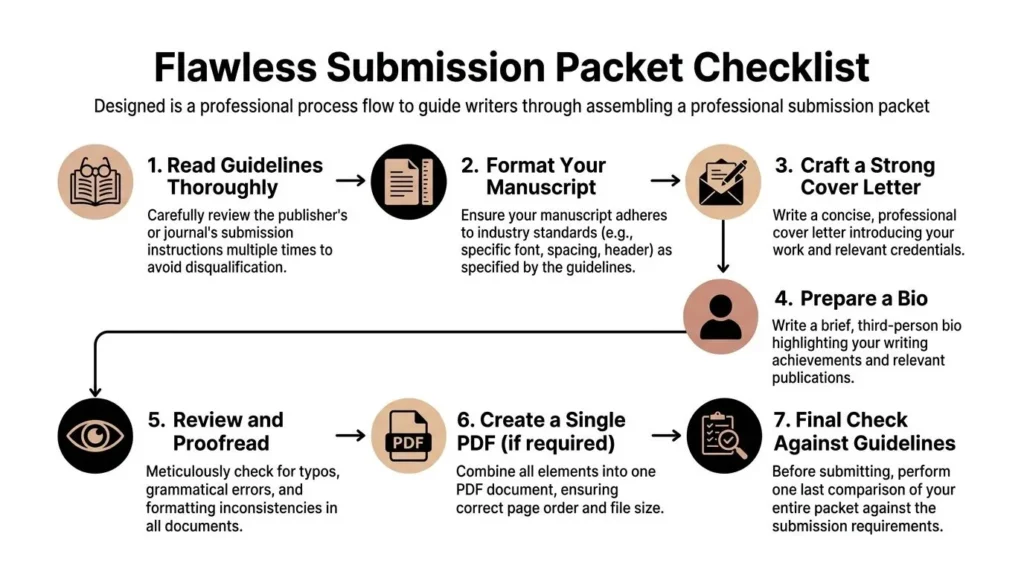
A strong piece can still lose ground if the packet looks careless. Editors notice friction fast. Wrong file type, sloppy bio, clumsy cover note, ignored formatting request. None of those mistakes make your work better to read.
The packet has one job. It should make saying yes as easy as possible.
Format the manuscript for clarity
Many venues specify what they want. Follow that over any general rule. If they don’t specify, use standard, readable formatting.
That usually means:
- Readable font: A plain, professional font is safest.
- Double spacing: It gives editors room to read comfortably.
- Consistent page setup: Keep margins and paragraph treatment clean and stable.
- Clear identification: Include your name, contact details if requested, title, and page numbers if appropriate.
- Accurate file naming: Name the file so it’s easy to identify later.
Your formatting shouldn’t call attention to itself. If an editor remembers your font choice, that’s rarely a good sign.
The cover letter should be brief and useful
Writers either overdo cover letters or freeze up over them. Most literary cover letters are simple. They are not memoirs. They are not artist statements. They are not apology notes.
A good cover letter usually does three things:
- Names the piece and basic details.
- Offers a short, relevant bio.
- Notes simultaneous submission status if required.
That’s enough.
Keep the tone professional and calm. You’re not trying to impress the editor with personality in the cover letter. You’re showing that you understand the business.
Here’s a clean template you can adapt:
Dear Editors,
Please consider my story, “Title,” for publication. It is a work of [genre] and is approximately [word count] words.
My work has appeared in [publication names] or is forthcoming in [publication names]. If you are unpublished, a brief line about your background or interests is enough. I am submitting this piece simultaneously and will withdraw it promptly if accepted elsewhere.
Thank you for your time and consideration.
[Name]
If the venue uses Submittable fields that already gather this information, shorten the note further.
Your bio needs versions, not one master paragraph
Most writers need at least three bios:
| Bio type | Best use |
|---|---|
| One-line bio | Submission forms and contributor notes with tight character limits |
| Short bio | Standard cover letters and online publication pages |
| Expanded bio | Website, media kit, event pages |
A good bio mentions publication history, relevant credentials, or current projects. It does not need your full life story. If you’re early in your publishing path, don’t pad. Brief and direct is better than inflated.
For practical examples and structure, this guide on how to write an author bio is a useful reference point.
Check the guidelines last, not first only
Writers often read guidelines once, then work from memory. That’s how small errors creep in.
I prefer a last-pass checklist right before submission:
- Correct genre category selected
- Word count within stated limits
- Requested file format used
- Anonymous formatting applied if required
- Bio included only if requested
- Cover letter updated for the correct publication
- Simultaneous submission status disclosed if required
That final item matters more than some writers realize. Editors don’t expect exclusivity everywhere, but they do expect honesty.
Mistakes that instantly make you look amateur
Some errors are bigger than they seem because they suggest you’ll be difficult to work with later.
Avoid these:
- Addressing the wrong publication: A copied cover letter with another journal’s name is hard to recover from.
- Explaining the story at length: The story should do that.
- Oversharing personal struggle: Your work can arise from deep experience. Your cover letter doesn’t need to narrate it.
- Claiming uniqueness: Let editors decide whether the work is unlike anything they’ve read.
- Sending a draft that isn’t final: If you already know the ending is shaky, wait.
Build a packet template once
A sustainable submission system uses templates. Keep a folder with:
- A clean manuscript master
- A blind version without identifying information
- A short cover letter template
- Three bio lengths
- A publication credits document you can update easily
That turns each submission into a controlled task instead of a fresh scramble.
When the packet is solid, your energy goes where it should. Into the work itself, and into matching that work to the right editor.
Decoding Submission Policies and Writer Etiquette
Confusion around policy creates a lot of avoidable trouble. Writers get tangled over simultaneous submissions, rights language, fees, and when to follow up. None of this is mysterious once you learn the terms.
The practical rule is easy. Read the policy as if it were part of the contract, because it usually points toward the contract that follows.

Simultaneous and multiple submissions aren’t the same
These terms get mixed up constantly.
Simultaneous submissions means you send the same piece to more than one venue at the same time. Many journals allow this if you tell them and withdraw the piece immediately if another editor accepts it.
Multiple submissions usually means sending several different pieces to one venue in the same reading period. Some publications welcome that. Others want one piece per category, or one total submission at a time.
Never assume. The policy decides.
A simple way to stay clean is to keep one rule for yourself: if a piece is accepted, withdraw it everywhere else the same day.
Rights language deserves slow reading
Many journals ask for some version of first publication rights. The exact phrase varies. What matters is what you are granting and what you keep.
Common categories include:
- First serial or first publication rights: The publication wants to be first to publish the piece.
- Electronic rights: They want the right to publish online.
- Archival rights: They want to keep the published piece in their archive after first publication.
- Reprint rights: These matter if the work has appeared before.
None of that is automatically bad. It becomes a problem when writers grant more than they understand. If terms seem broad or unclear, ask. A concise, polite question is professional.
If a contract leaves you unsure what happens to your piece after publication, pause and clarify before signing.
Payment varies, but free entry doesn’t always mean low value
A lot of writers assume fee-free opportunities pay little. That’s not always true. Fee-free paying opportunities in 2025 included Bennington Review paying up to $250 for prose and National Endowment for the Arts Creative Writing Fellowships offering up to $50,000 grants, as noted in this roundup of free-entry writing opportunities closing in March 2025.
That matters for two reasons. First, you don’t need to assume “serious” opportunities always require a fee. Second, payment should be part of your submission strategy, not an afterthought.
If you publish online often, it also helps to understand the broader environment of digital publishing workflows, editorial expectations, and platform differences. A practical overview is available in this guide on how to publish articles online.
Good etiquette is mostly responsiveness
Editors remember writers who are easy to work with.
That usually means:
- Withdraw promptly: Don’t leave accepted work sitting elsewhere.
- Respond clearly: If an editor asks a question, answer it directly.
- Don’t argue with rejections: A rejection closes the conversation unless the editor invites more.
- Respect response windows: Query only when the publication’s own policy supports it.
Here’s the standard I use. Be concise, be courteous, and leave the editor with no extra administrative work.
A simple policy filter helps
Before submitting, check five things:
| Policy point | Why it matters |
|---|---|
| Simultaneous submission policy | Determines how broadly you can circulate a piece |
| Response window | Helps you decide when to follow up |
| Rights requested | Protects your ability to reuse or republish later |
| Payment terms | Lets you prioritize your best opportunities |
| Format requirements | Prevents avoidable rejection for noncompliance |
Policy reading feels dull until it saves you from a preventable mistake. Then it feels like part of the craft.
Tracking Your Submissions and Turning Rejection into Fuel
Writers who resist tracking usually say the same thing. They don’t want writing to feel bureaucratic.
I understand that instinct. I still think they’re wrong.
A writer handling a high volume of submissions logged 343 rejections within the same year and still had 84 submissions pending from that year’s total, according to discussion of submission tracking at Tildes. Once you’re operating at any real scale, memory stops being enough. Without a tracking system, you lose opportunities, miss withdrawals, forget response patterns, and make emotional decisions with bad data.
Tracking isn’t admin. It’s strategy
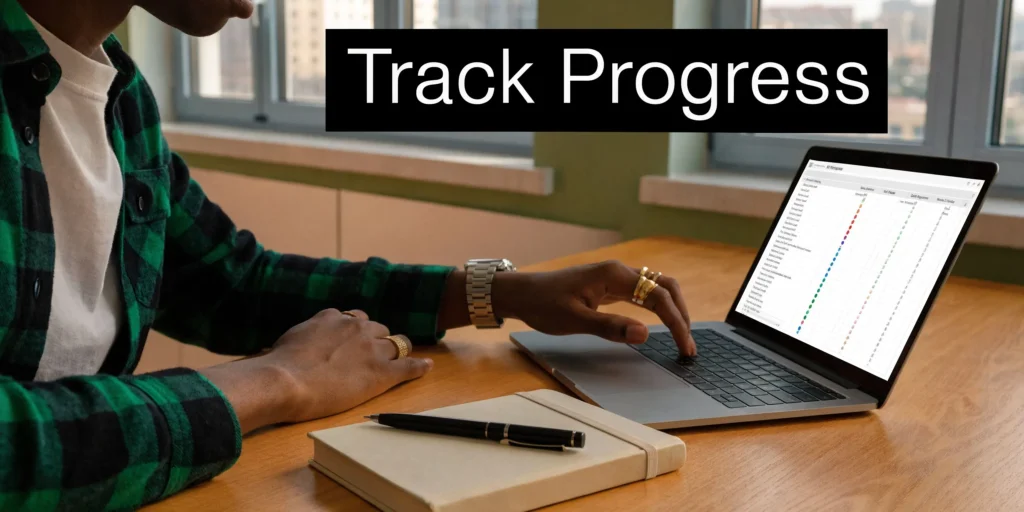
A submissions spreadsheet tells you far more than where a story is sitting.
It shows:
- which pieces attract encouraging near-misses
- which venues respond fast or slow
- which stories may need revision after repeated form rejections
- where your best work is under-submitted
- whether you’re sending work consistently or just thinking about it
Without records, every rejection feels isolated. With records, patterns emerge.
Rejection stops feeling random once you can see the route a piece has taken.
What to track in a simple spreadsheet
You don’t need special software. A spreadsheet works well if you keep it current.
I’d include columns like these:
| Column | What to put there |
|---|---|
| Piece title | Exact title of the poem, story, or essay |
| Genre | Flash, short story, poem, essay, hybrid, and so on |
| Word count | Useful for targeting future markets |
| Venue | Publication or contest name |
| Date sent | The day you submitted |
| Status | Pending, rejected, accepted, withdrawn |
| Response date | When the venue replied |
| Response type | Form rejection, personal note, shortlist, revise request |
| Simultaneous flag | A quick reminder that the piece is circulating elsewhere |
| Notes | Theme fit, editor comments, resubmission potential |
The key is consistency. Update it the day something changes.
Use rejection categories, not one giant no
Not all rejections mean the same thing. If you lump them together, you miss useful signals.
Create rough categories such as:
- Form rejection: Standard decline with no added detail.
- Tiered form rejection: A warmer decline that suggests serious consideration.
- Personal rejection: Specific feedback or evidence an editor engaged.
- Hold or second read: Strong sign that the piece is close.
- Revise and resubmit: Not an acceptance, but worth careful attention.
A story that gets only cold form rejections across many good-fit venues may need revision. A story collecting personal notes may need the right editor.
Decide in advance when to revise
Writers often revise either too quickly or too late.
Too quickly means you change a piece after one or two rejections and erase what made it distinct. Too late means you keep circulating a clearly misfiring draft because you don’t want to admit it needs work.
Set a rule before emotions enter. For example:
- after a run of generic rejections from strong-fit venues, reassess the opening
- after several encouraging near-misses, keep sending without major change
- after an editor points to the same weakness more than once, revise that element deliberately
The rule matters more than the exact threshold. It keeps you from making decisions in the heat of disappointment.
A useful reminder on process and mindset sits well here:
Build a rejection routine that protects your writing time
When a rejection arrives, don’t let it consume the day. Use a fixed sequence.
- Update the spreadsheet.
- Re-send the piece to the next suitable venue if no revision is needed.
- Save any personal feedback in your notes.
- Return to current writing work.
That routine turns the rejection into a task, not a crisis.
The emotional payoff of a system
Tracking doesn’t remove disappointment. It gives disappointment somewhere to go.
That matters because creative writing submissions expose you to long quiet stretches, sudden no’s, mixed signals, and occasional good news that arrives after months of uncertainty. A system steadies that rhythm.
The writers who keep going aren’t necessarily less sensitive. They’re usually better organized. They don’t ask every rejection to answer the giant question of whether they should continue. They ask a smaller, more useful one. What’s the next move for this piece?
Common Creative Writing Submission Questions
Even with a strong system, a few moments tend to rattle people. These are the points where writers either act professionally or make things harder than they need to be.
An editor rejected my work but included feedback. Should I reply
Yes, briefly.
If the feedback was thoughtful, send a short thank-you. Don’t defend the piece. Don’t ask for line edits. Don’t explain what the editor “missed.” A simple note of appreciation is enough.
Thank you for taking the time to read the piece and for the generous feedback. I appreciate it.
That kind of reply keeps the relationship professional and leaves the door open.
A publication asked for revisions. Is that good news
Usually, yes. It means the editor sees potential and is willing to continue the conversation.
Before you agree, check three things:
- What kind of revision is being requested: light edit, structural change, or substantial rewrite
- Whether the editor is offering conditional acceptance or renewed consideration
- Whether the proposed changes still align with the piece you want published
If the revisions make sense, accept the opportunity and meet the deadline cleanly. If the changes would break the piece, you can decline politely.
How do I withdraw a submission after it gets accepted elsewhere
Fast and simple wins.
Use the platform’s withdrawal function if there is one. If not, email the editor. Include the piece title and your gratitude. That’s all you need.
For example:
Dear Editors,
I’m writing to withdraw my submission, “Title,” as it has been accepted for publication elsewhere. Thank you for your time and consideration.
[Name]
Don’t leave a piece pending once it’s no longer available.
Should I pay submission fees
Sometimes, but not automatically.
A fee can be reasonable if the opportunity is strong, the publication is reputable, and the potential value is clear to you. But don’t treat fees as proof of legitimacy. Plenty of worthwhile opportunities are fee-free, and some paid opportunities aren’t a fit.
I’d ask:
- Does this venue publish work I admire?
- Are the rights and editorial standards respectable?
- Would I still feel okay about the fee if the answer is no?
If the answer to that last question is no, skip it.
How many pieces should I have in circulation at once
Enough to create momentum without losing control.
For some writers, that means one or two polished pieces moving steadily. For others, it means a larger rotating list. The better question is whether you can track them accurately and keep each piece going to appropriate markets.
The point isn’t volume for its own sake. It’s continuity.
How long should I wait before querying a late response
Follow the venue’s stated response guidance. If they say not to query before a certain point, respect that. If the piece is well beyond the stated window, send a short, polite check-in.
No frustration. No guilt-tripping. Just a professional note asking whether the submission is still under consideration.
If a piece keeps getting rejected, when do I retire it
Retire a piece when one of three things becomes true:
- you’ve outgrown it and no longer want it representing you
- repeated submissions have taught you that the draft isn’t landing
- the best remaining markets no longer fit your goals
Retirement isn’t failure. Sometimes it clears room for better work. Sometimes an older piece returns later with a sharper revision.
Can newer writers compete with experienced authors
Yes, because editors aren’t only buying résumés. They’re buying pieces.
Experience helps. So does reputation. But a strong piece that fits a venue well can beat a weak or mismatched piece from a more established name. Your task is not to out-famous anyone. It’s to send your best work where it has a real chance.
Is it bad to submit the same piece widely
Not if the venues allow simultaneous submissions and you can manage them responsibly.
Wide submission is often practical. Careless submission is the problem. If you can’t track where the piece is, if you ignore policies, or if you’re clearly mass-firing at venues that don’t fit, that’s when writers create avoidable trouble.
What’s the most useful habit to keep this sustainable
Separate your identity from any single response.
Build regular writing time. Build regular submission time. Let the system hold the emotional weight that would otherwise sit on each decision from an editor. That’s how you stay in the work long enough to improve, place pieces, and keep going.
If you’re looking for an outlet that welcomes approachable, cross-category writing in areas like science, technology, health, sports, business, arts, travel, entertainment, education, pets, fashion, and games, visit maxijournal.com. It’s a strong option for writers who want to publish thoughtful, accessible work for a broad digital audience.
Discover more from Maxi Journal
Subscribe to get the latest posts sent to your email.