What connects a character actor who makes failure feel painfully human, a villain specialist with classical restraint, a horror icon who reshaped screen fear, a tennis champion who turned composure into strategy, and two stage and comedy figures who changed how public identity is performed? A shared birthday matters less as trivia than as a useful frame for comparison.
June 6 brings together artists and athletes whose careers illuminate different forms of cultural power. Some changed their fields through technical precision. Others did it through persona, endurance, or a willingness to test what audiences would accept. Read that way, celebrities born on june 6 form more than a list of familiar names. They offer a compact study in how influence travels across film, sports, theatre, and comedy.
That perspective fits Maxijournal readers because it shifts attention from fame to method. Paul Giamatti, Jason Isaacs, Robert Englund, Björn Borg, Harvey Fierstein, and Sandra Bernhard each built a distinct public legacy, yet all show the same larger pattern: durable careers usually come from a clear artistic identity, then from the discipline to keep refining it. Readers who follow independent film reviews and performance-driven storytelling will recognize that principle immediately.
The value of this group lies in the contrast. Giamatti shows how subtle character work can outlast conventional star image. Isaacs demonstrates how control and intelligence can make antagonists memorable. Englund turned performance craft and physicality into a horror template. Borg made emotional restraint part of competitive mythology. Fierstein and Bernhard, in different ways, used voice itself as an instrument of social change.
A shared date cannot explain their success. It can reveal, in one place, how many different routes there are to lasting cultural impact.
1. Paul Giamatti – The Master of Character
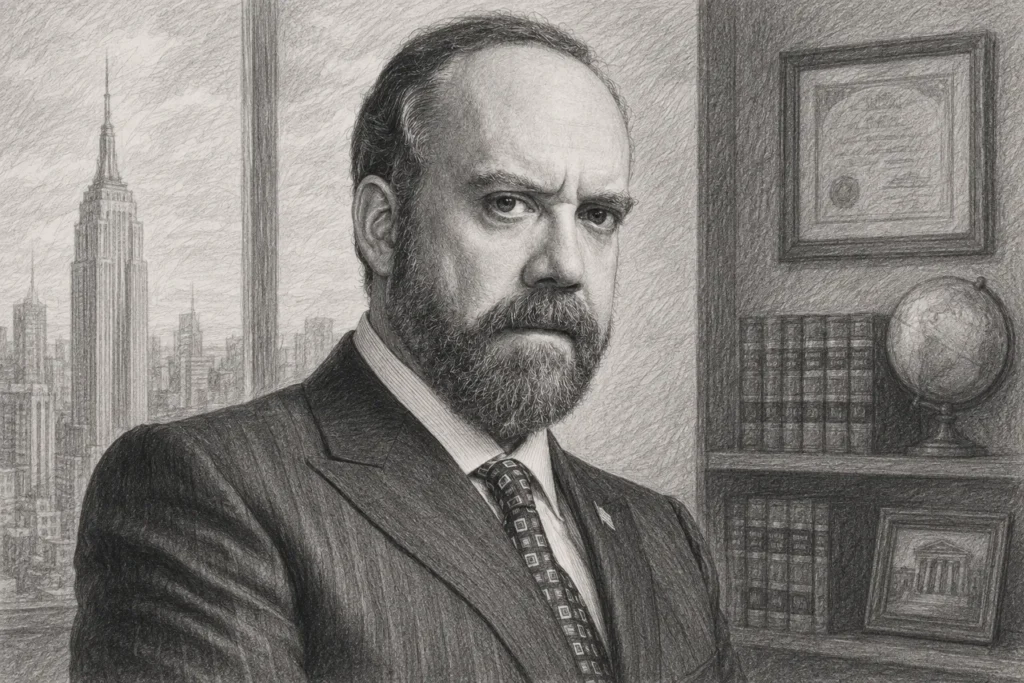
Paul Giamatti has built one of the most durable careers in modern acting by refusing the usual shortcut of glamour. Born in 1967, he became the kind of performer audiences trust even when his characters are difficult, petty, wounded, or morally compromised. That’s a rarer skill than movie-star charisma, because it asks viewers to stay with the truth of a person instead of the polish of an image.
His breakthrough in Sideways remains a clean example of what he does best. As Miles, he turned disappointment, insecurity, and intelligence into something painfully recognizable. The performance didn’t ask for sympathy in a broad way. It earned it through precision.
Why his career matters
Giamatti’s career is a case study in how character acting can become a form of authorship. In John Adams, he carried historical drama without sanding away the contradictions of the man. In Billions, his Chuck Rhoades worked because Giamatti understood power as something theatrical, intimate, and self-destructive all at once.
His later work in The Holdovers fits the same pattern. He doesn’t chase likability. He makes flawed people legible.
Practical rule: Build your reputation on depth of work, not on trying to look indispensable.
That’s one reason he matters beyond film gossip. He shows how a performer can turn consistency into identity. Readers who follow smaller, craft-driven cinema will recognize that instinct in the kinds of projects covered by independent film reviews at MaxiJournal.
- Choose roles with friction: Giamatti is strongest when the character contains embarrassment, intelligence, and yearning at the same time.
- Let specificity carry the scene: His line readings and body language often do more than a speech could.
- Treat range as texture: He doesn’t need to look radically transformed in every project. He changes the emotional temperature instead.
Among celebrities born on june 6, Giamatti stands for a useful lesson. Stardom can be loud, but artistic authority often arrives without fanfare.
2. Jason Isaacs – The Sophisticated Villain
Some actors become memorable because they can dominate a room without raising their voice. Jason Isaacs, born in 1963, belongs in that category. He’s widely recognized for playing Lucius Malfoy in the Harry Potter films, and that role explains a lot about his screen power. Isaacs understands that menace often works best when it’s elegant.
The cane, the whisper, the measured contempt. None of that was accidental. Lucius Malfoy became one of those franchise antagonists who felt larger than his screen time because Isaacs played status, not just cruelty. In commercial cinema, that’s an important distinction.

A specialist who never stayed trapped
A weaker actor might have been boxed in by villain roles after The Patriot and Harry Potter. Isaacs used those parts differently. He turned them into proof that he could make authority feel dangerous, then carried that control into more layered work, including Captain Gabriel Lorca in Star Trek: Discovery and voice work such as the Grand Inquisitor in Star Wars Rebels.
That trajectory matters because franchise acting often gets discussed too narrowly. People assume it’s either artistic compromise or career security. Isaacs shows a third option. Franchise visibility can become a platform for precision work.
Sophisticated antagonists last longer in public memory than generic heroes. They give the audience a structure for fear.
There’s also a broader cultural point here. English actors with strong classical technique often move fluidly between stage, prestige television, blockbuster film, and voice acting. Isaacs is a strong example of that mobility. He doesn’t just play villains. He plays intelligence under pressure.
- Own a niche without shrinking your range: Isaacs embraced the refined antagonist and then kept expanding beyond it.
- Use voice as an instrument: His diction and rhythm do as much work as costume or makeup.
- Make franchise work cumulative: A role like Lucius Malfoy becomes more valuable when it helps audiences trust you in very different projects later.
Among celebrities born on june 6, Isaacs represents a particular kind of staying power. He turned typecasting into a toolkit.
3. Robert Englund – The Face of Modern Horror
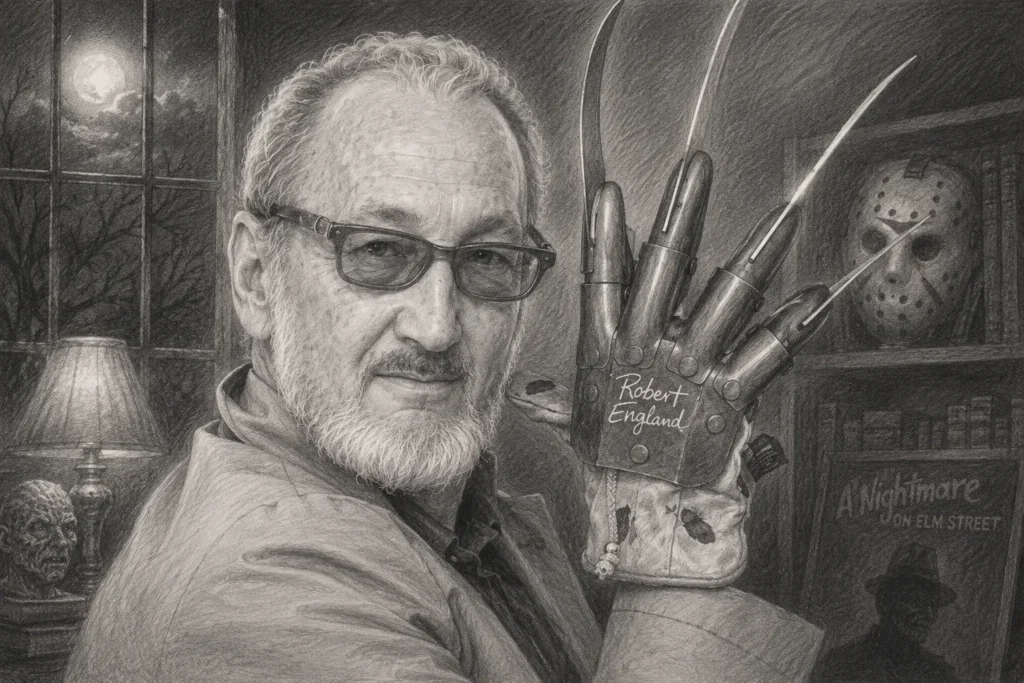
How does one actor turn a slasher villain into a lasting piece of popular culture? Robert Englund offers one of the clearest answers in this June 6 group. His work as Freddy Krueger in A Nightmare on Elm Street did more than anchor a successful horror series. It helped define how late 20th-century audiences understood villain performance itself.
What separates Englund from many screen monsters is craft. Freddy’s design is memorable, but design alone does not create durability. Englund supplied the variable elements that keep a character alive across sequels and decades: vocal play, comic timing, shifts in menace, and a performer’s sense of when to push a scene toward nightmare and when to pull it toward dark humor. The result was a villain who felt authored in performance, not just assembled through makeup and props.
A case study in genre longevity
Englund’s career shows that close identification with one role does not automatically narrow an actor’s legacy. In horror, repetition can build meaning. Each return to Freddy added another layer to the character’s place in audience memory, and Englund understood that serial mythology rewards performers who can vary familiar material without breaking it.
His broader filmography supports that point. In V, he played Willie with a very different energy, sympathetic and uneasy rather than predatory. As the director of 976-EVIL, he showed that his understanding of horror extended beyond acting into tone and structure. His later appearance in Stranger Things 4 mattered for a reason beyond nostalgia. It connected an earlier era of practical, actor-driven horror to a newer streaming audience that often discovers genre history backwards, through references first and originals second.
That influence reaches beyond one franchise. Horror fans tend to remember performers who treat the genre seriously, and Englund did. He recognized that fear depends on rhythm, much like any discipline built on timing and controlled release. The same principle shapes performance in sport, where technique determines how tension turns into action, whether on screen or in tennis forehand technique under pressure.
- Commit to the signature role: Englund accepted Freddy as the center of his public identity, which gave the character unusual continuity.
- Use performance, not only makeup: Voice, posture, and timing made Freddy more memorable than costume alone could.
- Stay relevant through selective later work: Appearances tied to horror history kept his legacy active for new viewers.
Among celebrities born on june 6, Englund represents a distinct kind of cultural impact. He shows how genre acting can shape mainstream memory, fan culture, and the long afterlife of a character.
4. Björn Borg – The Cool-Headed Champion
How does one athlete turn composure into both competitive advantage and lasting cultural identity? Björn Borg offers one of the clearest answers among celebrities born on June 6. Born in 1956, Borg built a career that reached far beyond tennis results. He won 11 Grand Slam singles titles, including five Wimbledon championships and six French Open titles, and later converted that stature into a major endorsement and licensing profile, as noted in this June 6 birthday listing and Borg profile.
Borg matters because he solved a problem that defeats many great players. Clay rewards patience and physical endurance. Grass has historically favored faster reactions and different timing. Borg mastered both, which suggests more than talent. It points to technical adaptability and unusual emotional discipline. His public calm was not a side story. It was part of the method that made his game work under pressure.

The 1980 Wimbledon final against John McEnroe remains the best case study. McEnroe brought visible tension and confrontation. Borg answered with restraint, repeatable mechanics, and an ability to keep the match on his terms even when momentum swung. That contrast helped make the final memorable, but the larger lesson is about performance itself. Audiences often respond most strongly to competitors whose style expresses a philosophy, and Borg’s philosophy was control.
That influence extended off the court. Long before personal branding became standard language in sports media, Borg showed that an athlete’s image could hold value after the trophies stopped coming. The hair, the headbands, the reserved demeanor, the clean visual identity, all of it formed a public persona that was easy to recognize and difficult to copy. In that sense, his career has something in common with profiles of up-and-coming music artists who turn a distinct style into long-term audience loyalty.
For readers interested in the craft of sport, Borg also remains useful as a technical reference point. His baseline consistency, topspin-heavy groundstrokes, and disciplined shot selection still reward close study. Players working on fundamentals can connect that legacy to practical instruction on how to master your tennis forehand technique.
Great athletes do more than win. They create a repeatable model of performance, pressure management, and public identity.
- Make temperament part of the craft: Borg’s calm presence reinforced the precision of his tennis rather than distracting from it.
- Prove versatility through results: Excelling on both clay and grass gave his reputation unusual weight.
- Turn recognition into staying power: His post-playing visibility showed how athletic excellence can become durable cultural capital.
Among celebrities born on june 6, Borg represents a different kind of artistry. His medium was competition, but the effect was broader. He helped define what modern sports stardom could look like when technique, temperament, and image all point in the same direction.
5. Harvey Fierstein – A Trailblazing Voice on Stage
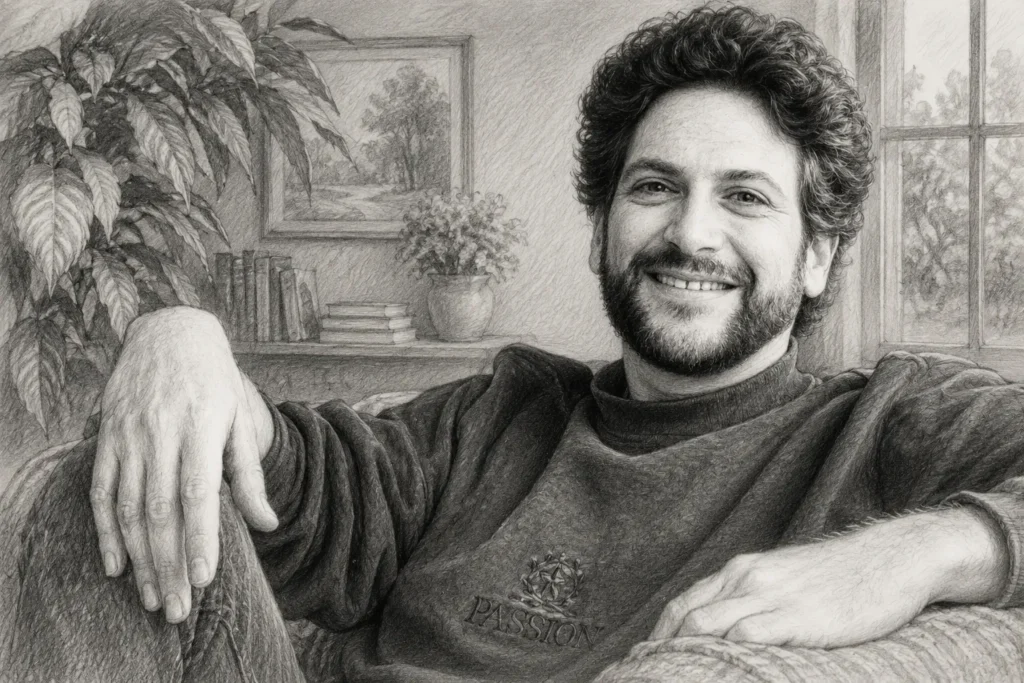
Harvey Fierstein, born in 1954, changed American theatre by refusing to separate craft from identity. That’s the shortest way to understand his importance. He didn’t merely succeed as a playwright and performer. He helped move gay life and queer storytelling from the margins toward the center of commercial and critical attention.
His work on Torch Song Trilogy remains the clearest case study. Fierstein wrote and starred in a play that let tenderness, grief, humor, and defiance exist in the same dramatic space. It didn’t ask for permission to be emotionally specific. That specificity is exactly why it lasted.
Writing and performing with the same conviction
Fierstein matters because he mastered more than one lane. He wrote the book for La Cage aux Folles, a musical that brought queer themes to broad audiences through wit, craft, and theatrical confidence. He also won admiration as a performer, including his turn as Edna Turnblad in Hairspray, where warmth and comic authority met perfectly.
His gravelly voice became part of his signature, but that voice was never a gimmick. It worked because it carried vulnerability as well as humor. Even his voice role as Yao in Disney’s Mulan fits the larger pattern. Fierstein is memorable because he sounds like no one else, and he writes from the same place.
Working principle: If your perspective is unusual, doubling down on it can be more powerful than smoothing it out.
That’s a lesson artists in music, theatre, and hybrid performance still need. Readers tracking fresh creative voices across disciplines can see that same value in coverage of up-and-coming music artists on MaxiJournal. Distinctiveness travels.
- Use multiple crafts together: Writing and acting gave Fierstein unusual control over what reached the audience.
- Make advocacy dramatic, not abstract: His politics landed because they lived inside character and story.
- Protect your singular voice: Some artists become influential by fitting in. Fierstein did it by sounding unmistakably like himself.
In any survey of celebrities born on june 6, Fierstein represents theatre at its most consequential. Art can entertain, yes. It can also widen who gets seen.
6. Sandra Bernhard – The Unfiltered Social Critic
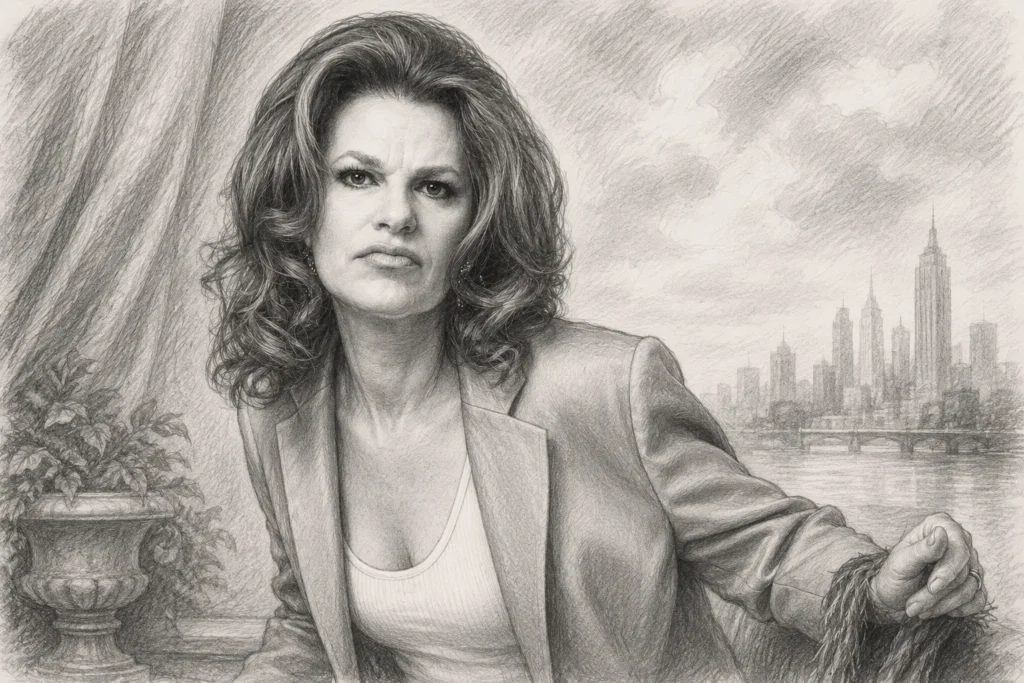
Sandra Bernhard, born in 1955, built a career by ignoring the neat borders that usually separate stand-up, cabaret, acting, and commentary. That refusal is the point. She emerged as a singular voice in alternative comedy because she treated performance as a place to test public taste, not just satisfy it.
Her breakout role in Martin Scorsese’s The King of Comedy showed exactly why she endured. As Masha, she played obsession with a level of intensity that felt unsettling and funny at once. The performance still works because Bernhard never chases conventional comic charm. She uses discomfort as material.
Why Bernhard still feels modern
A lot of performers are called fearless, but Bernhard’s career makes the word concrete. Without You I’m Nothing blended monologue, music, self-invention, and social critique into a one-woman format that later generations of performers would recognize immediately. It wasn’t tidy. It was authored.
Her recurring role on Roseanne introduced that sensibility to a wider television audience, while her long-running radio presence kept her connected to live cultural conversation. Bernhard’s influence is easiest to see in artists who don’t present themselves as one thing only. Comic, singer, actress, provocateur. She made that kind of hybridity feel coherent.
She turned persona into a critical tool. The performance was the argument.
There’s a wider takeaway here for readers who follow entertainment as culture rather than celebrity gossip. Bernhard understood early that public identity itself could be staged, questioned, and remixed. That instinct now feels common in media. In her hands, it was still confrontational.
- Protect your tone: Bernhard’s voice works because it’s instantly identifiable.
- Blend forms on purpose: Music, monologue, and acting gave her commentary more range.
- Stay willing to unsettle the audience: Not every meaningful performance aims for broad comfort.
Among celebrities born on june 6, Bernhard may be the clearest reminder that influence isn’t always measured by consensus. Sometimes it’s measured by who becomes possible after you.
Six-Way Comparison of June 6 Celebrities
| Figure | Implementation complexity | Resource requirements | Expected outcomes | Ideal use cases | Key advantages | Key limitations |
|---|---|---|---|---|---|---|
| Paul Giamatti, The Master of Character | High, deep craft study and character work | Years of training, diverse indie roles, acting coaches | Critical acclaim, career longevity, peer respect | Actors prioritizing craft and character-driven projects | Versatility; nuanced performances; consistent critical respect | Not a major box‑office draw; subtlety can be overlooked |
| Jason Isaacs, The Sophisticated Villain | Medium‑high, cultivate presence and archetype mastery | Voice work, stage/film experience, franchise casting access | Memorable supporting roles; strong fanbase from franchises | Actors seeking iconic antagonist roles or franchise work | Distinctive presence; franchise visibility; vocal versatility | Risk of typecasting; non‑villain roles may be overshadowed |
| Robert Englund, The Face of Modern Horror | Medium, create a standout genre character and persona | Makeup/costume collaboration, genre networks, convention engagement | Cultural icon within horror; loyal multi‑generational fans | Performers aiming to define or revive a genre character | Iconic recognition; commercial power in genre; fan loyalty | Identity tied to a single role; limited mainstream awards |
| Björn Borg, The Cool‑Headed Champion | Very high, elite athletic development and mental discipline | Intensive coaching, training facilities, sports infrastructure | Global stardom; competitive legacy; brand and business potential | Athletes building performance excellence and commercial brands | Sporting dominance; strong personal brand; post‑career business | Early retirement risk; enigmatic persona can limit public relatability |
| Harvey Fierstein, A Trailblazing Voice on Stage | High, mastery of writing and performance, plus advocacy | Playwriting craft, theatre networks, production collaborators | Lasting theatrical legacy; social impact; multi‑discipline acclaim | Writer‑performers and activist artists seeking influence | Dual‑craft acclaim; cultural and political impact; distinctive voice | Persona can limit casting; activist stance may be polarizing |
| Sandra Bernhard, The Unfiltered Social Critic | Medium‑high, develop a unique provocative voice across media | Live venues, multidisciplinary skills (comedy/music), PR | Cult following; sustained cultural relevance; critical influence | Alternative comedians and satirists challenging norms | Authentic voice; influence on alternative comedy; loyal fans | Confrontational style can be polarizing; fewer mainstream roles |
The Shared Legacy of June 6
A shared birthday doesn’t create a shared career pattern. That’s what makes this group so revealing. Paul Giamatti, Jason Isaacs, Robert Englund, Björn Borg, Harvey Fierstein, and Sandra Bernhard arrived in different industries, worked in different mediums, and faced different audience expectations. Yet each one built a public identity around something distinct that couldn’t easily be swapped out.
That’s the hidden pattern among celebrities born on june 6. Giamatti made interiority compelling. Isaacs turned refinement into menace. Englund transformed horror performance into pop-cultural permanence. Borg made composure into spectacle. Fierstein fused authorship with advocacy. Bernhard used performance to critique the culture producing it.
The broader lesson for MaxiJournal readers is that influence rarely comes from generic excellence. It comes from a recognizable method. These six figures didn’t just become famous. They each found a way of working that audiences could identify after a few scenes, a few matches, or a few lines. In cultural terms, that’s what legacy often looks like. Not universal similarity, but unmistakable signature.
June 6 also reminds us that entertainment history is richer when we connect fields instead of isolating them. A tennis champion can shape fashion and branding. A playwright can alter what mainstream theatre can hold. A horror actor can define a genre’s emotional vocabulary. A comedian can change how persona functions in public art. Put together, these lives form a much more useful list than a birthday roundup usually offers.
That’s why this date stands out. It gathers people whose work rewards close attention. Not because they share one trait, but because each one proves a different route to staying power. They didn’t leave the same mark. They left marks of equal force in different directions.
If you enjoy thoughtful culture writing that connects entertainment to sport, theatre, business, and the wider creative world, explore more at maxijournal.com. It’s a strong home for readers who want approachable commentary, fresh daily topics, and a broader view of how people and ideas shape culture.
Discover more from Maxi Journal
Subscribe to get the latest posts sent to your email.