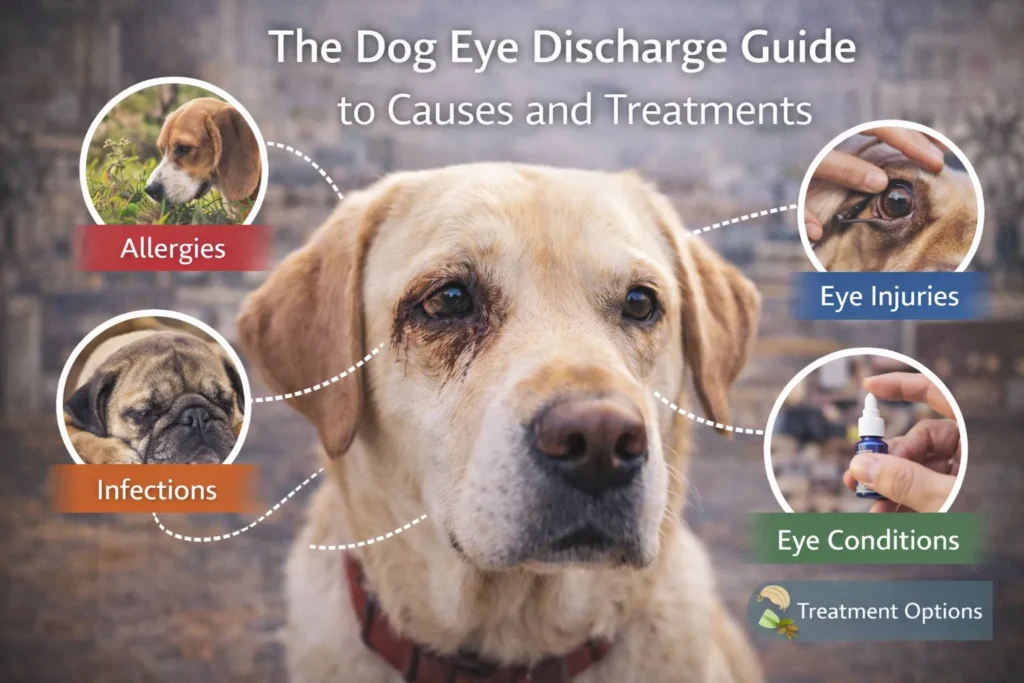
Your dog just came in from the yard, smells like wet leaves, and has that look that says, “You’re not seriously thinking about the tub, are you?” You’re standing there doing the mental math. Towels, shampoo, wrestling match, soaked bathroom floor, post-bath zoomies. For a lot of owners, the hardest part of learning to bathe a dog isn’t the soap. It’s the dread.
That dread is common for a reason. A staggering 95% of pet parents bathe their dogs at home, yet only 24% report having no frustrations during the process, often because the dog resists, the setup gets messy, or the tools aren’t right, according to Petco survey details summarized by Total Vet. If bath time feels clumsy in your house, you’re in very good company.
The good news is that a calmer bath usually has less to do with “getting your dog to obey” and more to do with reading the moment well, slowing the process down, and making the whole thing feel safe. A dog that understands what’s happening rarely fights as hard as a dog that feels trapped or confused.
Turning Bath Time from Chaos to Calm
A muddy dog at the doorway can make owners rush. That’s when bath time turns into a grab-the-collar, drag-to-the-tub event, and most dogs remember that feeling the next time. If you want to bathe a dog without making the next bath harder, start by changing the emotional tone before the water starts.
Some dogs freeze. Some pace. Some lean away the second they see the bathroom. Others act silly and excited, then panic once their paws slide. Those reactions matter. A nervous dog isn’t being stubborn. He’s trying to figure out whether this is safe.
A quick read of posture helps. Soft eyes, loose body, easy movement, and a tail in its normal position usually mean you can proceed calmly. Lip licking, yawning when not tired, pinned ears, whale eye, or constant paw lifting mean your dog needs you to slow down. If you’re unsure what those signals look like, this guide to understanding dog body language is worth reviewing before the next bath.
Practical rule: If your dog is getting more tense as you move faster, speed is the problem.
What calm actually looks like
Calm bath time doesn’t mean your dog loves every second. It means he can predict what happens next, keep his footing, and trust that your hands aren’t going to surprise him. That changes everything.
Use your voice the way you would during leash training or nail trims. Low, steady, boring. Happy squealing often revs dogs up. Sharp correction makes them brace. The sweet spot is matter-of-fact reassurance.
Bonding starts before the first rinse
Owners sometimes think bonding happens after the hard part, with the treat at the end. It starts earlier than that. When you pause to let your dog sniff the towel, step into the tub on his own, or take a break after a tense moment, you’re telling him his signals matter. That builds trust.
A good bath leaves the coat cleaner. A better bath leaves the dog easier to handle next time.
Preparing Your Station for a Smooth Wash
The easiest bath to manage is the one you set up before your dog enters the room. Most bath disasters start with one missing item. You turn to grab the shampoo, your dog tries to jump out, and now everybody’s stressed.
Set up your space like a groomer would. Everything should be within arm’s reach, opened, and ready to use.
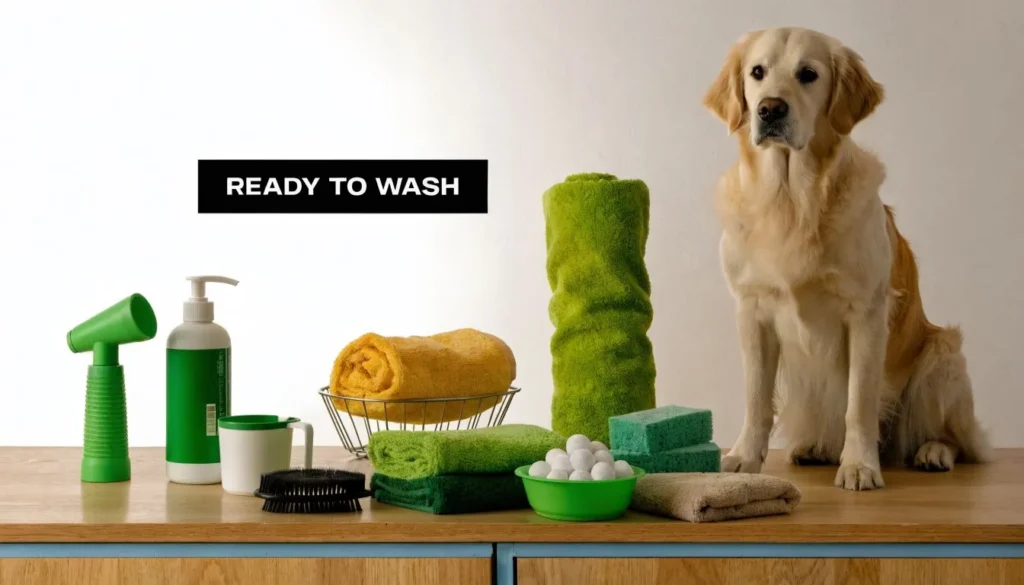
The supplies that actually change the experience
A few tools do more than make the job easier. They make it feel safer to your dog.
- Non-slip footing: Put a rubber bath mat or a folded towel under your dog’s feet. Slipping creates instant panic, especially for seniors, puppies, and dogs that already dislike handling.
- Several dry towels: Keep one for the face, one for the body, and one on the floor for the exit path. If you only have one towel, you’ll run out of absorbency fast.
- Dog shampoo only: Human shampoo is a poor choice for regular canine bathing. A gentle dog-specific shampoo is the safer default.
- Brush or comb: Brush before the bath if your dog has loose coat, tangles, or small mats. Water tightens tangles. It doesn’t fix them.
- Cup, handheld sprayer, or pitcher: Use whatever gives you the most control. The best rinsing tool is the one that lets you keep water out of eyes and ears.
- Treats or a licky mat: Smearing a little dog-safe spread on a licky mat gives many dogs a job to do besides worrying.
A dog with good footing is usually braver than a dog who feels like the floor is moving.
Build the room around predictability
The room matters more than people think. If your bathroom echoes, your dog may react to the noise before he reacts to the water. If the faucet blasts hard, lower the pressure before bringing him in. If your dog startles at running water, fill what you need first and keep the rest quiet.
Keep the door closed. Remove anything breakable. Wear clothes that can get soaked, because if you’re worried about your sleeves or socks, your handling gets jerky.
A simple setup checklist works well:
- Brush first if the coat needs it.
- Lay out towels before your dog enters.
- Place shampoo uncapped near the tub.
- Test the water with your wrist so it feels lukewarm.
- Put treats in reach so you don’t leave your dog unattended.
That last point matters. Never step away from a wet dog in a tub or on a grooming surface.
The Gentle Art of Washing Your Dog
A good wash is less about scrubbing hard and more about moving in a quiet, steady rhythm. When people learn to bathe a dog well, they usually stop treating the bath like one big event and start treating it like a series of small, calm actions.
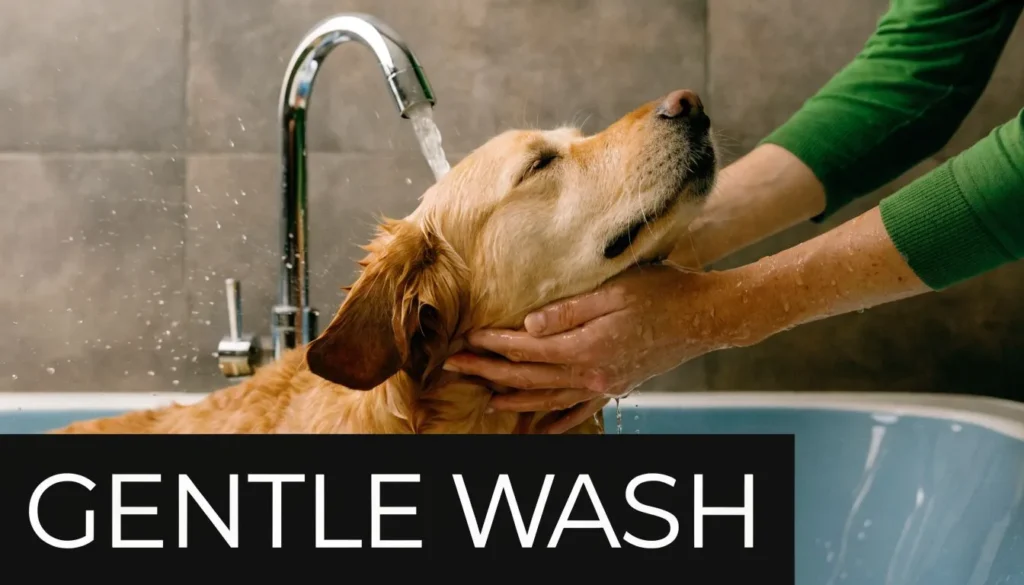
Start with your dog standing securely, then wet the body gradually. I like to begin at the shoulders or chest instead of the head. Most dogs tolerate that better because it doesn’t feel as invasive. Work down the legs, across the back, and under the belly with lukewarm water. Leave the face for last.
Start where dogs are least defensive
Dogs usually protect the head, ears, feet, and tail area first. If you rush those zones, you can lose their trust early.
Use this order for a smoother start:
- Shoulders and back first: It helps your dog adjust to the sensation.
- Chest and sides next: Keep one hand resting on the body so your dog feels where you are.
- Legs and paws when the dog is settled: Lift gently if needed, but don’t over-handle.
- Rear end carefully: Stay calm and efficient. Dogs often tense here.
- Face last with a damp cloth: Don’t pour water over the face unless your dog handles that well.
Shampoo should go into your hands first, then onto the coat. That gives you better control and helps you avoid dumping product in one spot. Massage it through the coat with your fingertips, not your nails. Think firm enough to clean, gentle enough that your dog doesn’t flinch.
Watch the response, not just the task
A relaxed dog may lean into your hand or stand still. A worried dog may lick lips, turn the head away, stiffen, or repeatedly try to step out. When that happens, pause. Put one calm hand on the shoulder. Let your dog reset.
Everyday training helps. If your dog knows how to stay on a mat, accept handling, or target your hand, that foundation carries over to grooming. Consistent handling exercises from how to train your dog can make future baths much easier.
Here’s a visual walkthrough if your dog learns better when you practice by example:
Rinsing is where many home baths fail. Leftover shampoo causes more problems than a short bath ever will.
Rinse longer than you think you need to
Soap trapped under the coat can leave the skin itchy and the coat dull. Double-coated and long-coated dogs need extra attention here because product hides easily under dense fur.
Use your hand to part the coat while rinsing. Keep flushing water through until the coat feels clean and slick without any bubbles or residue. Check the armpits, groin, belly, and under the collar area. Those spots get missed often.
For the face, use a damp washcloth. Wipe from the top of the head downward, and keep water away from the eyes and ear openings. If your dog is still calm at the end, finish with praise, not excited cheering. You want the energy to stay settled through the transition to drying.
Effective Drying Without the Drama
A lot of dogs tolerate the wash and then lose patience during drying. That makes sense. Now they’re wet, they want to shake, and they’d rather sprint through the house than stand still for one more minute.
Drying works best when you match the method to the coat and the dog’s temperament, not when you force the fastest option every time.
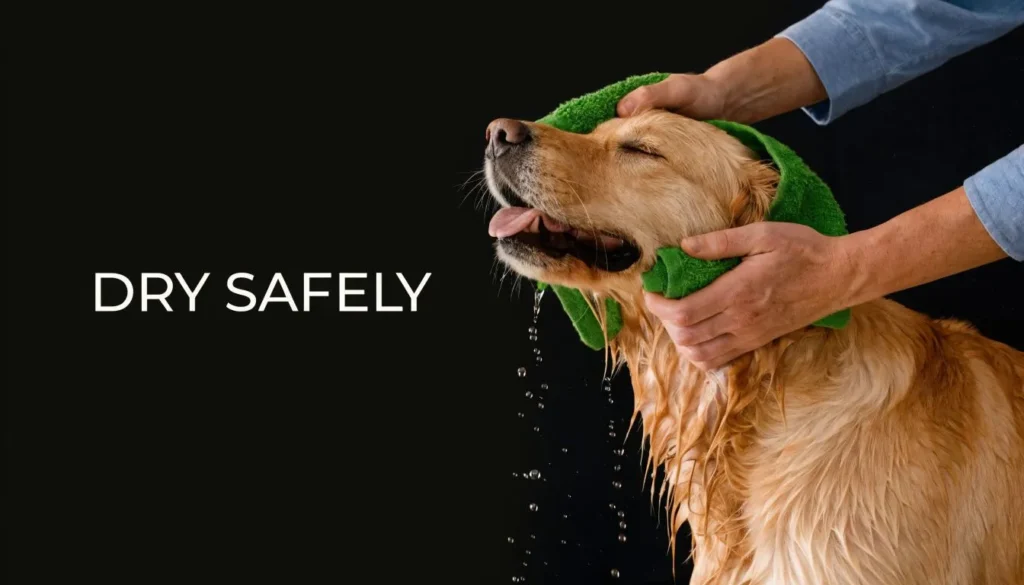
Towel drying, blow drying, and air drying
Here’s the practical comparison:
| Drying method | Best for | Watch out for |
|---|---|---|
| Towel drying | Most dogs, especially bath beginners | Rough rubbing can tangle longer coats |
| Blow drying | Thick coats, cold weather, dogs trained to accept noise | Heat and noise can scare dogs if introduced too fast |
| Air drying | Short coats in warm, safe indoor spaces | Damp undercoats can linger too long |
What each method does well
Towel drying is the safest starting point for nervous dogs. Press and squeeze the coat instead of scrubbing hard. On feathered legs, tails, or longer coats, vigorous rubbing creates knots and frizz.
Blow drying can be excellent for some coats, but only if the dog has been introduced properly. Use a cool or low-heat setting, keep the dryer moving, and never aim hot air at one spot. Let the dog hear the dryer from a distance before bringing it closer.
Air drying sounds easy, but it isn’t ideal for every dog. A short-coated dog in a warm room may do fine. A dense-coated dog can stay damp close to the skin much longer than the surface suggests.
If the undercoat is still damp, the bath isn’t really finished.
The smartest way to prevent the post-bath tornado
Keep your dog in a small, easy-to-clean area until the coat is mostly dry. Don’t release a damp dog onto the couch, bed, or backyard right away. That’s how clean dogs turn dirty again.
A quick finishing routine helps:
- Blot the ears and face gently with a separate towel.
- Brush once the coat is partly dry if your dog’s coat type benefits from it.
- Reward calm behavior after the drying process, not during wild shaking and bouncing.
- Check hidden damp spots under the collar, behind the ears, and in the armpits.
Dogs often remember drying as clearly as they remember bathing. If you keep this part smooth, the next session starts on better terms.
Tailoring Bath Frequency for Your Unique Dog
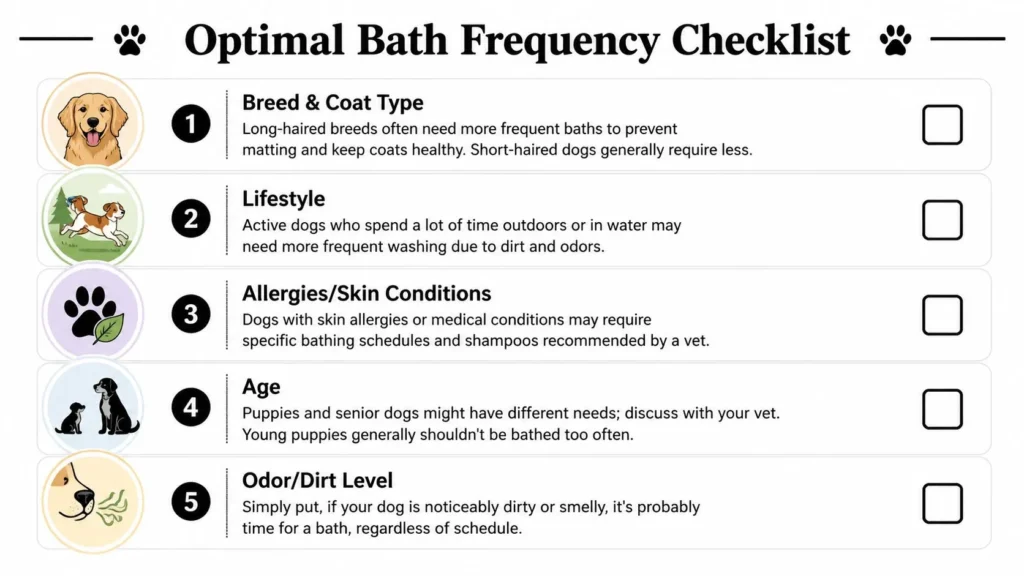
The biggest mistake owners make is asking for one universal bath schedule. There isn’t one. The right frequency depends on coat type first, then lifestyle, then any skin concerns your veterinarian is managing.
Bathing frequency varies greatly by coat type. Expert guidelines recommend bathing short-coated breeds every 1 to 3 months, while medium-to-long coated breeds may need a bath every 4 to 6 weeks to prevent matting and maintain skin health, according to the American Kennel Club’s bathing guidance.
Start with coat type, then adjust
A Beagle and a Collie shouldn’t be on the same schedule. A smooth coat releases dirt differently than a longer coat that traps debris and knots. Double-coated dogs can also need a different rhythm than owners expect, especially if regular brushing is doing a lot of the maintenance work between baths.
Use this as a starting point, not a rigid rule.
| Coat Type / Breed Example | Recommended Frequency |
|---|---|
| Short-coated / Beagle | Every 1 to 3 months |
| Medium-to-long coated / Collie | Every 4 to 6 weeks |
| Active or double-coated / Golden Retriever | Every 1 to 3 months or more often if activity level and coat condition call for it |
Lifestyle changes the calendar
A dog that spends most days on the sofa can often go longer between baths than a dog that hikes, swims, rolls in mulch, or sleeps in your bed after every outdoor adventure. Dirt level matters. Odor matters. Coat feel matters.
Signs your dog may need a bath sooner include:
- The coat feels grimy: Not just dirty-looking, but sticky or heavy to the touch.
- There’s a lingering odor: If the smell sticks after brushing, a bath may be due.
- The coat is starting to mat: Longer coats especially need help before tangles tighten.
- Outdoor buildup is obvious: Mud, pollen, sand, and debris all change the timeline.
Puppies, seniors, and sensitive dogs need a softer approach
Young puppies and older dogs often need more support around the process itself, even when the schedule is simple. Puppies are still learning what handling means. Senior dogs may have stiffness, hearing changes, or less confidence on slippery surfaces.
That means the right frequency isn’t just about skin and coat. It’s also about recovery. If a dog needs a full day to settle after a bath, shorten the session, improve the setup, or split the job into smaller grooming tasks between washes.
A personalized schedule always beats a generic one. The best plan is the one your dog’s skin tolerates, your household can maintain, and your dog can get through without dread.
Solving Common Bath Time Challenges
Most bath struggles are solvable once you stop framing them as bad behavior. Fear, thrashing, freezing, escape attempts, and stress panting are signs that your dog needs a different approach, not a tougher one.
For anxious dogs, think in layers. First teach the bathroom as a neutral place. Then the tub. Then standing in the tub. Then brief handling with no water. Then a damp cloth. Then a partial rinse. That slower path often gets you farther than forcing one complete bath and spending the next few months undoing the damage.
When skin problems change the rules
Skin trouble is where home improvising can backfire. For the 10% to 15% of dogs suffering from atopic dermatitis, standard bathing can be harmful. Veterinary-prescribed medicated shampoos are necessary, and improper bathing can exacerbate 30% of allergy cases, as noted in this veterinary-focused video reference on bathing and skin conditions. If your dog has chronic itchiness, rashes, recurring hot spots, or inflamed skin, ask your veterinarian what product and schedule they want you to follow.
A dog with irritated skin doesn’t need a “better scrub.” That dog needs the right medical plan.
Smart workarounds for dogs who hate full baths
A full tub bath isn’t your only option every time. For mild dirt, bad weather, or dogs that shut down with water, these can help:
- Waterless shampoo or grooming wipes: Useful for spot cleaning, paws, and in-between freshening.
- Damp cloth cleaning: Good for face folds, legs, belly, and rear cleanup.
- Partial baths: Wash the dirty area instead of the whole dog when that’s enough.
- Short grooming sessions: Brush, wipe, and dry one stage at a time if your dog has limited patience.
After the bath, check ears, paws, and coat condition. If your dog keeps shaking the head after bathing, don’t ignore it. Moisture or irritation can be part of the picture, and this article on why a dog keeps shaking head can help you decide when it’s time to look closer.
A calm bath doesn’t come from luck. It comes from preparation, handling, and respect for the dog in front of you. If your first attempt is awkward, that’s normal. Keep it gentle, keep it predictable, and your dog will usually meet you halfway.
If you enjoy practical pet care advice like this, maxijournal.com publishes approachable articles across pets, health, science, travel, entertainment, and more. It’s also a good place to explore fresh commentary and learn how independent online publishing works.
Discover more from Maxi Journal
Subscribe to get the latest posts sent to your email.