You catch your reflection in bright bathroom light and think, When did my silver start looking tired? Maybe the white pieces around your face have gone a little yellow. Maybe your gray feels rougher than it used to. Maybe every search result keeps shouting the same answer at you: buy a purple shampoo.
That advice isn’t wrong. It’s just incomplete.
The best shampoo for silver hair depends on what your hair needs first. If your strands are dry, fragile, or dull, a toning shampoo alone won’t fix that. Healthy silver hair needs the right cleanser, enough moisture, and sometimes a little strengthening support. Toning comes after that, as a targeted tool, not the entire plan.
Embracing Your Silver Shine Starts Here
Silver hair often asks you to change how you shop for shampoo. A bottle that worked beautifully years ago can suddenly leave your hair flat, thirsty, or slightly yellowed. That doesn’t mean your hair is difficult. It means your hair has different priorities now.
Many people start with one concern, usually brassiness. They want brighter silver, so they reach for the first purple bottle they see. Then a new problem shows up. Hair feels dry. Ends get wiry. The tone improves a little, but the hair itself doesn’t look healthier.
That’s why I like to separate hair health from hair tone.
What most people get wrong
If your hair is naturally silver, white, gray, or transitioning, your shampoo has two jobs:
- Clean gently so the hair doesn’t get coated and dull
- Protect softness so the silver reflects light instead of looking rough
A third job, toning, only matters when you see yellow or orange warmth you want to cancel.
Silver hair usually looks its best when it feels soft first. Shine comes from a smooth, cared-for surface, not just from adding violet pigment.
A good routine should help you answer a few practical questions. Is your hair dry or balanced? Fine or coarse? Bright but brassy, or naturally cool already? Once you know that, choosing a shampoo gets much easier.
Start with your real goal
Before you buy anything, decide which of these sounds most like you:
- My silver looks yellow or dingy. You may need occasional toning.
- My silver feels dry and stiff. You need a gentler, more hydrating base shampoo.
- My salt-and-pepper hair lacks shine, but not color. You may not need purple shampoo much, or at all.
- My white hair is soft but picks up warmth sometimes. A rotating routine usually works best.
That shift in thinking changes everything. You’re not hunting for one miracle bottle. You’re building a silver-hair routine that matches your hair.
Why Silver Hair Turns Yellow and How Toning Works
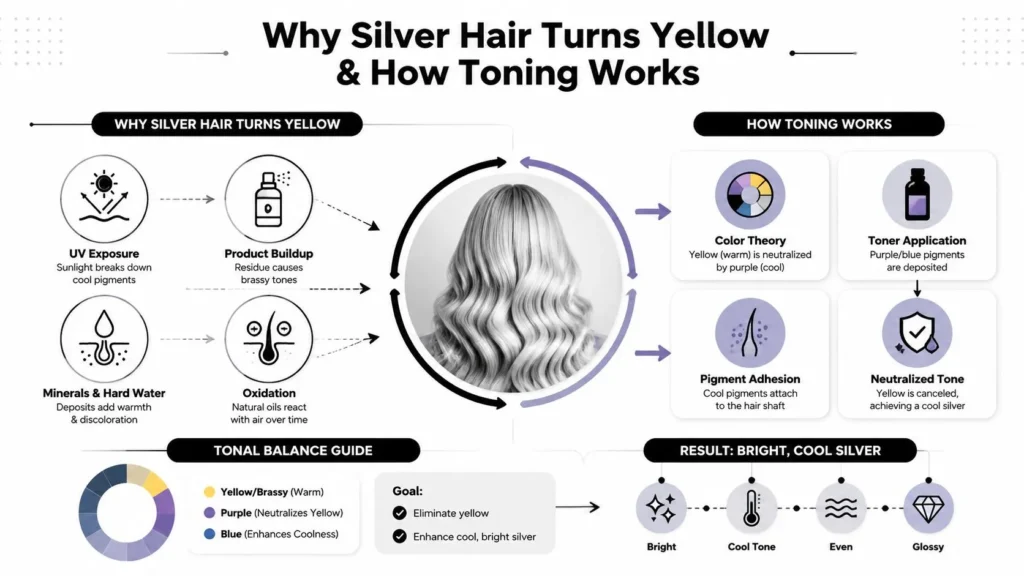
Yellowing can feel personal, but it usually isn’t. Silver hair shows discoloration more easily than darker shades. When hair loses pigment, every bit of warmth becomes more visible. What looked minor before can suddenly stand out.
Lighter hair also tends to reveal brassiness faster. That includes natural gray, white, silver, and blonde tones. The result is that your hair may look creamy, smoky, bright, or yellowish depending on what it’s picking up and how the surface of the hair is behaving.
The simple color-wheel explanation
Purple shampoo works because of color correction. Purple sits opposite yellow on the color wheel. When violet pigment lands on hair that looks too yellow or brassy, it visually softens that warmth.
Color rule: Purple doesn’t permanently dye silver hair. It helps neutralize yellow and orange brassiness so the overall tone looks cooler.
That point matters. Purple shampoo is designed to neutralize yellow and orange brassiness by depositing color-correcting pigments, not by permanently dyeing hair. L’Oréal Paris also notes that its formulas pair toning with moisturizing, which reflects the need for both color maintenance and hydration in silver-hair care, as described in L’Oréal Paris guidance on silver shampoo for silver hair.
What purple shampoo is actually doing
Purple shampoos use violet pigments to sit briefly on the outside of the hair. They don’t change your natural gray permanently. They act more like a corrective veil.
That means the result depends on several things:
- How warm your hair looks right now
- How porous your hair is
- How long you leave the shampoo on
- How strong the formula is
If your hair is only slightly warm, a mild toning shampoo may be enough. If the brassiness is obvious, you may need a stronger purple formula or a longer processing time. But there is a limit. Too much pigment can leave a faint purple cast, especially on very porous or very white hair.
Why people get mixed results
Two readers can use the same bottle and have very different outcomes. One says it barely worked. The other says it over-toned their ends. That’s usually because silver hair isn’t uniform. The bright white front pieces may grab pigment quickly, while darker salt-and-pepper areas barely change.
A useful way to think about it is this:
| Hair situation | Likely result from purple shampoo |
|---|---|
| Slight yellowing on white or silver hair | Gentle brightening |
| Noticeable brassiness | More visible neutralizing |
| Naturally cool silver with no warmth | Little benefit, possible over-toning |
| Porous ends | Faster pigment grab |
The goal isn’t to make silver hair look artificially icy. The goal is to remove unwanted warmth when it’s there. Once you understand that, purple shampoo stops feeling magical and starts feeling practical.
Decoding Shampoo Ingredients for Healthy Silver Hair
If I were helping you shop in person, I’d tell you to ignore the front of the bottle for a moment. Marketing says “brightening,” “silver,” and “repair” on almost everything. The ingredient approach matters more.
Gray hair commonly becomes drier with age, so the best shampoo for silver hair often starts with a gentle, moisture-conscious formula. Guidance collected by Hair Biology and summarized in Katie Goes Platinum’s gray-hair product recommendations says gray hair is prone to dryness and recommends hydrating ingredients such as biotin plus natural oils like jojoba or coconut oil. It also advises choosing sulfate-free or gentle shampoos because sulfates can strip natural oils and worsen dryness.
Start with the cleanser, not the pigment
A shampoo can tone beautifully and still leave your hair feeling like hay. That’s why I want you to check the cleansing base first.
Look for formulas described as sulfate-free or gentle. Silver hair often has a rougher feel when the cuticle is dry, and strong detergents can make that more obvious. If your hair already feels coarse, a harsh cleanser can leave it looking brighter in color but worse in texture.
Silver Hair Ingredient Cheat Sheet
| Ingredient Category | Look For These | Why It’s Important for Silver Hair |
|---|---|---|
| Gentle cleansers | Sulfate-free or gentle cleansing formulas | Helps clean without stripping natural moisture |
| Moisture support | Biotin, jojoba oil, coconut oil, humectant-focused formulas | Silver hair is often drier and needs softness and flexibility |
| Strength support | Proteins or strengthening ingredients listed in balanced formulas | Can help brittle or fragile strands feel more resilient |
| Occasional deep cleaning | Clarifying shampoos used sparingly | Helps remove buildup, but can feel drying if overused |
| Toning pigments | Violet-pigmented formulas when brassiness is present | Useful only when you need color correction |
What to prioritize by hair feel
Your hands will tell you a lot. If your hair feels squeaky, puffy, or brittle after washing, your cleanser is probably too aggressive. If it feels coated and limp, you may need a lighter formula or occasional clarifying.
Try matching your shampoo choice to your main concern:
- Dry, wiry silver calls for a sulfate-free hydrating shampoo first
- Flat, product-heavy silver may need an occasional clarifying wash, followed by a rich conditioner
- Breakage-prone silver benefits from shampoos marketed for strengthening and softness together
- Dull but not brassy silver often improves more from moisture than from toning
A lot of people ask about oils at this stage. If your hair needs more softness between washes, a light finishing oil can help smooth the surface and improve shine. This guide to using argan hair oil is a useful companion if you’re trying to add polish without making silver hair feel greasy.
A better way to read the label
Don’t ask, “Is this a silver shampoo?” Ask:
- Will this clean gently enough for my current dryness level?
- Does it support moisture, or is it only focused on tone?
- Will I enjoy using it often enough to stay consistent?
Healthy silver hair rarely comes from the strongest product in the shower. It usually comes from the most balanced one.
That’s the foundation. Once your hair feels good, toning becomes easier to control and easier to judge.
When to Skip Purple Shampoo for Better Results
Purple shampoo gets treated like a default setting for gray hair, but that can lead you in the wrong direction. Some silver hair looks its best with no violet pigment at all.
This is especially true if your natural silver is already cool-toned. In that case, a pigmented shampoo may not improve the color much, and it can distract you from the bigger issue, which is often dryness or lack of shine.
Hair goals that don’t need violet pigment
A useful industry correction has happened here. Not all silver hair benefits from purple shampoo, and many products are now sold specifically to enhance natural silver tones without violet pigments, especially for people who care more about softness, shine, and breakage prevention than brassiness control. That’s outlined clearly in Silvera47’s guide to gray hair shampoos.
That matters for a few common hair patterns:
- Naturally bright white hair that isn’t yellow
- Salt-and-pepper hair where contrast is part of the beauty
- Transitioning hair that needs gentleness more than correction
- Dry, textured gray hair that reacts poorly to frequent toning products
Signs you may be overusing purple shampoo
Sometimes the issue isn’t the product. It’s the frequency.
If your hair feels rough, looks slightly ashy in a dull way, or seems to lose bounce after repeated toning, back off. You may need a simpler wash routine. Some people do better with a hydrating silver-safe shampoo most of the time and a toning formula only when warmth becomes obvious.
For readers trying to reduce product overload altogether, this piece on cleaning hair without shampoo offers useful context on gentler cleansing habits and when less can work better.
Choose the right category for your real priority
Use this quick comparison:
| Your priority | Better shampoo type |
|---|---|
| Cancel visible yellowing | Purple toning shampoo |
| Improve softness and manageability | Hydrating sulfate-free shampoo |
| Keep salt-and-pepper contrast clean and glossy | Non-pigmented shine-enhancing shampoo |
| Remove heavy buildup once in a while | Clarifying shampoo used sparingly |
If your silver already looks cool, don’t chase a colder tone just because the bottle is purple.
The best shampoo for silver hair isn’t always the one with the strongest pigment. Often, it’s the one that lets your natural silver look healthy, reflective, and touchable.
Your Weekly Routine for Vibrant Silver Hair
Once you’ve picked the right shampoo categories, routine matters more than perfection. Silver hair usually responds well to consistency. You don’t need a complicated shelf. You need a rhythm.
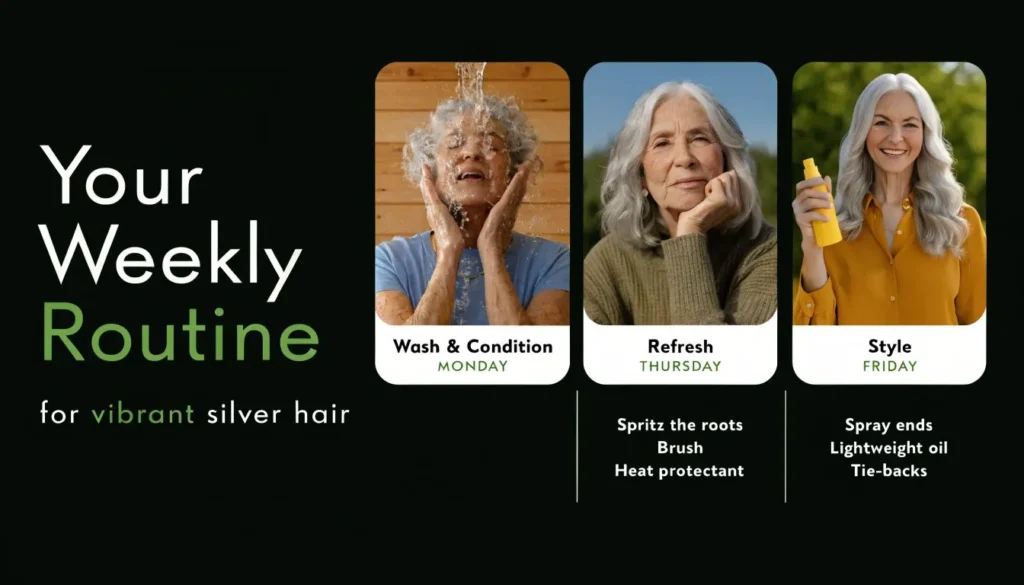
The most useful approach is shampoo cycling. That means you rotate a gentle, hydrating cleanser with a purple toning shampoo instead of using the toning formula every wash.
A simple washing pattern
Experts note that purple shampoos use violet pigments, often Violet 2, to neutralize brassiness, and they recommend rotating use 1 to 2 times weekly with a regular cleanser because overuse or leaving it on too long can cause purple buildup, as explained in The New Knew’s guide to purple shampoo.
That doesn’t mean everyone needs the same exact schedule. It means toning should be deliberate.
A practical routine might look like this:
Most wash days
Use your sulfate-free everyday shampoo. Focus on scalp cleansing and gentle lathering through the lengths.When brassiness shows up
Swap in your purple shampoo. Apply to wet hair, work it through evenly, and watch the timing carefully.After every wash
Follow with conditioner or a mask that restores slip and softness.
How long should purple shampoo stay on
People often feel nervous at this stage, and for good reason. Purple shampoo is not a universal solution. Very white or porous hair can absorb pigment rapidly. Coarser or more resistant hair may require a longer application time.
A good rule is to start conservatively. Rinse sooner the first time and judge the result in natural light. If your hair still looks warm, increase contact time gradually on the next wash.
Practical rule: You can always tone a little more next time. Fixing an accidental lavender cast is more annoying than taking a cautious first pass.
Support products that make silver look better
Shampoo is only part of the picture. Silver hair often looks dramatically better when the rest of the routine supports the cuticle.
Consider layering in:
- A moisturizing conditioner after each cleanse, especially if you use toning shampoo
- A richer mask when your ends feel wiry or your curl pattern loses definition
- A leave-in or light cream if your hair frizzes easily
- A smoother finishing product when you want added shine
If your conditioner is letting you down, a roundup of the best drugstore conditioner options can help you find something that supports softness without overspending.
Example routines by hair type
| Hair type or concern | Better weekly approach |
|---|---|
| Dry silver bob | Gentle shampoo most washes, purple only when needed, conditioner every time |
| Fine white hair | Lightweight regular cleanser, brief toning sessions, avoid heavy buildup |
| Coarse gray curls | Moisture-first shampoo routine, purple used sparingly, deep conditioning often |
| Salt-and-pepper hair | Non-pigmented cleanser most of the time, clarify occasionally if dull |
A routine like this keeps silver looking intentional. Not just toned, but cared for.
How to Judge a Shampoo Before You Buy
By the time you’re reading product listings, the hardest part isn’t finding options. It’s filtering out noise. Nearly every bottle promises brightness, softness, shine, and repair all at once.
So don’t shop by promise. Shop by fit.
Read the product page like a stylist
Start with the first few descriptive lines and ask what the formula is really trying to do. If the language leans heavily on brassiness correction, it’s probably a toning-first shampoo. If it emphasizes softness, moisture, and gentle cleansing, it’s probably better as your core shampoo.
Then compare that message to your own hair reality. If your hair isn’t brassy, a toning-first product may solve a problem you don’t have.
What reviews can tell you
Customer reviews are useful when you read them for pattern, not drama.
Look for comments that mention details close to your situation:
- Hair texture such as fine, coarse, curly, or straight
- Color stage such as white, salt-and-pepper, or full silver
- Main complaint such as dryness, yellowing, limpness, or stiffness
- After-feel such as soft, coated, squeaky, or rough
A review that says “made my hair purple” isn’t always a red flag. On porous white hair, that may mean the person left it on too long. A better warning sign is when many reviewers describe the formula as drying, especially if your hair is already fragile.
A quick pre-purchase checklist
Before you commit, run through this:
| Question | If yes | If no |
|---|---|---|
| Is my main issue actual brassiness? | Consider a purple shampoo | Choose a non-pigmented hydrating shampoo |
| Does my hair feel dry after washing now? | Prioritize sulfate-free moisture support | You may tolerate a stronger cleanser better |
| Am I willing to rotate products? | A toning shampoo can be a useful tool | Choose one balanced everyday formula first |
| Do reviews mention softness as well as tone? | More promising for regular use | Be cautious if tone is the only win |
Don’t let packaging make the decision
Silver bottles, lilac gels, salon language, and words like “platinum” can be persuasive. None of that tells you whether the formula matches your hair. A modest-looking hydrating shampoo may do more for your silver than a trendy purple one if your real issue is texture.
The best shampoo for silver hair is the one that supports the hair you have right now. Not the hair type a marketing team imagined.
Frequently Asked Questions About Silver Hair Care
Do I need blue shampoo or purple shampoo
For silver hair, purple shampoo is the usual choice when you want to soften yellow or orange brassiness. Blue shampoo is generally aimed at different warmth patterns and darker hair situations. If your hair is gray, white, silver, or very light, purple is typically the more relevant toning direction.
Can I make my own DIY toning rinse at home
You can experiment with home rinses, but they’re much less predictable than a purpose-made shampoo. Silver hair can grab tone unevenly, especially if the ends are porous. If your goal is reliable correction, a dedicated toning product is easier to control.
Is it okay to use my old regular shampoo on silver hair
Maybe, but judge it by performance, not habit. If your regular shampoo leaves your silver feeling rough, flat, or thirsty, it may no longer be the best fit. Many people discover that hair they once considered easy becomes much more responsive to gentle, moisture-focused formulas.
What about toning conditioners and masks
They can be a smart option if shampoo alone feels too drying. A toning conditioner or mask may help combine color correction with softness. They’re especially useful for people whose hair needs slip and moisture every time they tone.
How do I know if my hair needs protein or just moisture
Touch and behavior usually tell you. Hair that feels brittle, weak, or too stretchy may need some strengthening support. Hair that feels coarse, puffy, or dull often needs moisture first. If you’re unsure, start with hydration. Silver hair more commonly complains when it’s dry.
Can I use clarifying shampoo on silver hair
Yes, but treat it as an occasional reset, not your default cleanser. Clarifying can help when hair feels coated or looks dull from buildup. The trade-off is that it can feel drying, so follow with a nourishing conditioner or mask.
Why does my purple shampoo work on some areas and not others
Silver hair is rarely uniform. White front pieces, darker gray sections, and porous ends all react differently. Uneven toning doesn’t always mean the product is bad. It often means your hair has different needs in different places.
What’s the simplest possible silver-hair routine
For many people, it comes down to three things: a gentle everyday shampoo, a good conditioner, and a purple shampoo used only when warmth becomes visible. That’s enough to keep silver looking polished without turning your shower into a chemistry lab.
If you enjoy practical, no-hype guides like this one, visit maxijournal.com for more approachable writing across beauty, health, science, fashion, travel, and everyday questions that benefit from a clearer answer.
Discover more from Maxi Journal
Subscribe to get the latest posts sent to your email.