What counts as a great Minecraft achievement. A pop-up, a trophy, or the moment your world starts showing real intent?
The best milestones mark a change in how you play. Early on, survival is reactive. You gather food, patch together shelter, and solve the problem in front of you. Later, the game asks for more. Boss fights test preparation, beacons reward resource control, automation rewards planning, and full completion asks for patience across an entire world.
That is why this guide treats the 10 greatest Minecraft accomplishments as chapters, not a checklist. Each one marks a shift in skill, priorities, and game knowledge. The point is not only to earn the badge. The point is to understand why that milestone changes what comes next.
Java and Bedrock frame that journey differently. Java uses Advancements as a branching record of progression, discovery, and experimentation. Bedrock treats Achievements more like account-level proof, with platform tracking and stricter conditions for progress to count. If you care about a clean 100 percent run, those differences shape your decisions from the start.
A strong guide should do more than name the milestones. It should explain why beating the Ender Dragon changes your goals, why a full beacon says something different from full Netherite, and why some accomplishments are harder on one edition than the other. That context is what turns a list of achievements into a real progression map.
These chapters cover combat, grind, exploration, automation, and world-building because mastery in Minecraft has never been one-dimensional. A player who can beat bosses but cannot manage resources hits a wall. A player who can build farms but never pushes into dangerous content leaves major parts of the game untouched. The strongest worlds come from balancing both.
1. The End – Defeating the Ender Dragon

Every serious survival world has a moment when it stops being about shelter and starts being about intention. For most players, that moment is the Ender Dragon fight. Until then, you’re reacting to the world. After that, you’re shaping it.
The biggest mistake I see is treating the fight like a gear check. It’s really a preparation check. Diamond-tier armor, a strong bow, healing food, blocks, water, and backup weapons matter, but the run usually fails because players enter the stronghold rushed, understocked, or with no clear plan for crystals and dragon perches.
Why this chapter matters
Beating the dragon changes your relationship with Minecraft. It opens the larger endgame loop, pushes you into structured combat, and forces you to combine navigation, inventory discipline, and fight timing in one encounter. It also teaches a lesson that keeps paying off later: the hardest challenges usually become manageable once you control the setup.
Java and Bedrock both make this milestone feel central, but the route there feels slightly different. Java players often think in terms of advancement chains and progression logic. Bedrock players are more likely to think about whether the run preserves account-tracked achievement progress.
Practical rule: Destroy the healing crystals first, even if it feels slow. The fight gets dramatically cleaner once the dragon loses its recovery loop.
What works and what doesn’t
- Works well: Bring beds for the perch phase if you know the timing and blast spacing. They can end the fight much faster.
- Works well: Use Eyes of Ender methodically. Don’t sprint through the overworld throwing them at random and hoping.
- Fails often: Entering with one good weapon and no backup. If your main bow or sword becomes a problem, panic starts fast.
- Fails often: Ignoring the terrain around the exit portal. The center gets dangerous when you tunnel-vision on damage.
A real survival scenario makes the point. If you arrive with strong gear but no blocks and no ranged option, a caged crystal can waste more time and health than the dragon itself. If you arrive with average gear and clean planning, the fight usually feels stable.
2. Full Netherite Armor and Tools – The Ultimate Grind
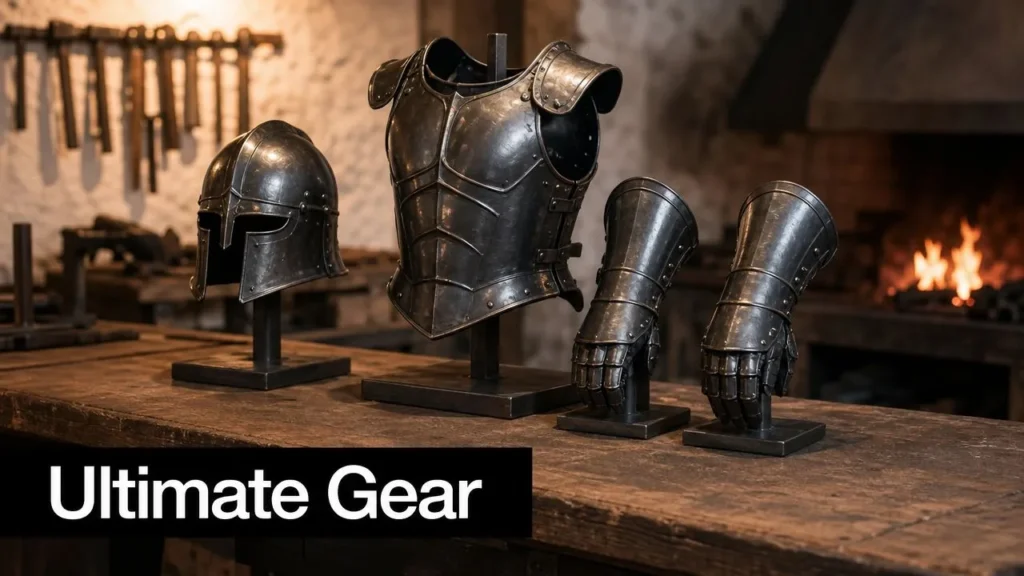
Netherite isn’t exciting because it’s shiny. It matters because it changes how confidently you move through dangerous jobs. Lava zones, bastions, wither fights, and long mining sessions all feel different once your gear can absorb more mistakes.
This chapter is where a lot of players burn out. They go into the Nether with weak route planning, mine inefficiently, and turn a focused equipment project into a miserable slog. Netherite rewards discipline more than persistence.
Mine with a system
Ancient debris hunting goes better when you treat it like logistics. Bring a diamond pickaxe or better, stack your fire resistance support if you use potions, carry extra blocks for lava control, and know exactly where your return portal sits. A lost portal is more dangerous than most mobs.
Beds can help with debris hunting if you understand blast safety, but they aren’t a toy. In practiced hands, they clear terrain quickly. In rushed hands, they eat armor durability and confidence.
- Best mindset: Hunt one upgrade path at a time. Armor first, or tools first. Don’t chase everything in one session.
- Best support item: Fire resistance. It turns bad lava contact from a disaster into a setback.
- Bad habit: Mining while overloaded with loot you’re afraid to lose. Deposit often.
Netherite is a grind, but it becomes manageable once every trip has one purpose.
Why this chapter separates veterans from dabblers
A lot of achievements in Minecraft reward knowledge. Netherite rewards temperament. You need to stay patient in a hostile dimension, keep your path safe, and avoid the urge to overextend when you finally start finding what you came for.
The practical payoff is huge. A full set of upgraded armor and tools isn’t just status. It lets you enter later chapters with fewer avoidable deaths, better durability, and more freedom to take on ugly jobs like bastion looting, beacon prep, and wither setup without playing scared.
On multiplayer servers, this chapter also changes social dynamics. The player with netherite stops asking whether a trip is safe enough and starts asking whether the route is efficient enough.
3. All Advancements – 100% Completion Challenge
This is the chapter where Minecraft stops being a survival game and becomes a record of your range. A full advancement clear in Java, or a near-total Bedrock account chase where applicable, asks a different question than any boss fight does. Not “can you win,” but “how many systems do you understand?”
That’s why completionism is more complicated now than older guides admit. There’s a growing appetite for huge challenge runs that go far beyond a quick “hardest ten” list. Recent creator coverage shows players tackling packs with 1,155 advancements and hundreds of hours of play, and that spotlight reflects a real shift in how players think about 100 percent runs. People want version-aware routing, hidden requirements, and honest answers about what is skill-based versus what is mostly grind.
Java versus Bedrock changes the whole chase
Java Advancements behave like a web. They guide discovery and often reveal how one mechanic feeds another. Bedrock Achievements feel more rigid because they’re tied to account tracking and platform expectations. That makes Bedrock cleaner for permanent records, but less flexible if you like testing world modifications.
The smart move is to sort goals into categories before you start:
- Combat gates: Bosses, rare fights, awkward mob interactions.
- Exploration gates: Biomes, structures, loot routes.
- Setup gates: Brewing, villagers, farms, enchantments.
- One-off annoyances: Tasks that are easy to forget unless you note them.
What actually helps
Most failed completion runs don’t die because the hardest objective is impossible. They die because players lose track of edge cases. A biome missed on one version, a hidden trigger not completed in the right order, or a rare mob setup forgotten for weeks can stall the whole project.
Field note: Keep a written tracker outside the game. Memory is the worst completion tool in Minecraft.
A practical example. If you’re already planning a long exploration trip, fold in structure loot, animal transport, biome discovery, and any odd crafting tasks tied to those regions. Completionists waste time when they chase each advancement as if it lives alone.
4. Beacon Full Activation – Building the Pyramid

A beacon is where Minecraft starts rewarding infrastructure instead of adventure. Players who build one early enough usually stop wasting time on basic labor. Mining gets faster. Base work gets cleaner. Massive excavation stops feeling like punishment.
The trap is building a beacon only as a trophy. That misses the point. A beacon should sit where it saves repeated effort, not where it looks dramatic and helps nobody.
Placement decides whether it was worth it
A full beacon pyramid is expensive in resources and time. If you drop it in an ornamental corner of your world and never work there, you built a monument, not a tool. A central quarry, industrial district, large storage hall, or future megabase is a better choice.
Iron is the usual practical material because many worlds can scale iron production more reliably than diamond or emerald reserves. Emerald beacons look nice, but unless villager trading is already mature, that route often slows down more useful projects.
- Strong use case: Put the beacon where you mine, terraform, or build for long periods.
- Weak use case: Hiding it in a distant shrine that you visit once a month.
- Best long-term approach: Plan for multiple beacons if your world has specialized districts.
Why this chapter matters more than players expect
The beacon is one of the clearest examples of a Minecraft achievement changing your pace of play rather than just your status. Once haste enters your workflow, large-scale digging and shaping stop being niche veteran behavior and start becoming normal.
That shift matters because so many late-game goals depend on scale. Mob farms need room. Villager halls need room. Aesthetic constructions need room. If you skip this chapter too long, every large project feels slower than it has to.
I’ve seen plenty of worlds with dragon kills, netherite gear, and stacked storage rooms where the owner still hand-mines major spaces without beacon support. Those worlds feel oddly unfinished. Not because the player lacks skill, but because they haven’t invested in the tool that multiplies every later build.
5. The Wither Boss Defeat – Ultimate Combat Challenge
The Wither punishes sloppy preparation harder than the dragon does. The dragon fight asks whether you can execute under pressure. The Wither asks whether you had the sense to control the battlefield before the fight even began.
That’s why experienced players don’t summon it casually in the open unless they want chaos on purpose. The smartest approach is containment. Pick the battleground first, build around the encounter, and only then place the soul sand and skulls.
Why the Wither feels harder
The Wither creates pressure in multiple directions. It moves aggressively, damages terrain, creates visual noise, and can punish close-range panic. If the dragon is a boss encounter, the Wither is a containment problem with combat attached.
Gear matters here, but arena design matters more than many players admit. Good armor and potions won’t save a bad summon location. A controlled tunnel or chamber can remove much of the fight’s volatility.
- Good decision: Bring your best armor and your best food. This isn’t the time to “save” supplies.
- Good decision: Prepare escape routes and spare blocks before spawning it.
- Bad decision: Summon near a treasured base or village because it feels convenient.
- Bad decision: Start the fight when your inventory is cluttered with unrelated gear.
Don’t prove bravery by improvising the Wither. Prove judgment by making the fight ugly for the boss instead of for yourself.
The real reward isn’t just the Nether Star
Yes, the Nether Star enables beacon crafting, and that alone makes the boss worth the effort. But the bigger value is the skill upgrade. Players who beat the Wither cleanly usually get better at all future high-risk play because they’ve learned to engineer encounters instead of merely surviving them.
A practical example is simple. One player spawns the Wither in open terrain and spends the whole fight reacting. Another builds a chamber, clears inventory space, preps healing, and enters with an exit route. Both may win. Only one looked in control.
That sense of control is one of the most useful accomplishments in the whole game.
6. Dragon Egg Collection – Ultimate Proof of Victory
The Dragon Egg is one of Minecraft’s best trophies because it doesn’t reward power. It rewards care. The dragon is dead, the danger feels over, and that’s exactly when players get sloppy and lose the most iconic souvenir in the game.
This chapter is short in theory and frustrating in practice. Touch the egg carelessly, and it teleports. Break the area badly, and you can turn a clean pickup into an awkward recovery job.
How to collect it without drama
The safest approach is to treat the egg like a puzzle block, not a normal drop. Secure the area around the exit portal first. Then use a method that controls where the egg goes, rather than chasing it after it teleports.
A hopper setup underneath the expected drop point works well if you prepare it correctly. A simple interaction from a distance, such as using a projectile or breaking the support in a controlled way, also keeps the process cleaner than frantic clicking.
- Do first: Clear the portal area and remove distractions.
- Do next: Decide on a collection method before touching the egg.
- Don’t do: Mash at the block and hope it lands somewhere convenient.
Why this small chapter matters
The Dragon Egg is proof that Minecraft values finesse alongside conquest. Plenty of players can win the dragon fight. Fewer finish the moment neatly, preserve the trophy, and display it well.
On multiplayer servers, this also becomes a social milestone. If ownership isn’t discussed, the egg can create more arguments than some boss kills. Good servers settle that early. Solo worlds are simpler. The only enemy there is your own impatience.
A real-world-style Minecraft scenario says it best. The player who pauses, places a hopper, and secures the area spends a minute and gets a clean result. The player who celebrates too early often ends up searching around the portal like they’ve misplaced a crown.
7. Enchanting Mastery – Optimal Gear Configuration
Enchanting is where good gear becomes specialized gear. A sword for general combat, a pickaxe for beacon mining, boots for dangerous terrain, and backup tools for niche jobs all come from understanding that “best” in Minecraft depends on the task.
A lot of players stay trapped in the enchanting table phase too long. They reroll, gamble, and settle for near-miss equipment. Veterans usually move toward villager trading and anvil combinations because control beats randomness every time.
Build a system, not just a table
Your enchanting setup should support repeatable outcomes. That means a proper level 30 table setup, an experience source you trust, librarians for targeted books, and enough storage to separate finished gear from work-in-progress pieces.
Librarian villagers are the backbone of consistent enchantment progress. Once you can secure useful books reliably, your whole world gets steadier. Gear stops being disposable and starts becoming part of long-term planning.
For players who enjoy optimizing progression systems in other games too, the logic is surprisingly similar to building an efficient stat path in this EV training guide. You don’t just want power. You want the right power in the right place.
What works in practice
- Best approach: Decide your final enchantment set before you start combining books.
- Best backup habit: Keep spare tools with different roles, especially picks and bows.
- Common mistake: Piling random books onto gear until anvil costs become painful.
- Common mistake: Depending on fishing luck alone when villagers can give consistency.
Strong enchanting isn’t about getting lucky once. It’s about removing luck from the process.
This chapter changes everything that follows. Bosses become cleaner, mining becomes faster, exploration gets safer, and expensive gear becomes worth maintaining. Once you’ve built proper enchantment infrastructure, even death stops feeling like the end of momentum because you can recover with purpose instead of starting from scratch.
8. Mob Grinder Construction – Automation Mastery
Automation is one of the clearest signs that a world has moved beyond survival. The moment your base starts producing drops, experience, or key materials while you focus elsewhere, Minecraft changes from manual labor to systems design.
That’s why mob grinders matter. Not every grinder needs to be beautiful, and not every world needs the same one. But every experienced player benefits from at least one dependable farm that reduces routine grinding.
Start simple and expand
The best grinder is usually not the most complicated one you’ve ever seen in a showcase video. It’s the one you can build correctly, maintain easily, and place where it functions effectively. A simple hostile mob farm, a skeleton spawner conversion, or a basic XP setup often delivers more practical value than an overambitious machine you never finish.
Before committing in survival, test the concept in a creative copy. Redstone errors are cheap there and irritating in a real world full of limited materials and interruptions.
A useful visual example helps here:
The trade-off most players learn late
Automation saves time, but it demands location discipline, spawn-proofing awareness, and some tolerance for troubleshooting. If a farm underperforms, the issue is often not the idea. It’s the environment around it, the collection path, or the spawn conditions.
- Good first project: Convert a dungeon spawner if your world has one in a usable spot.
- Better than expected: Basic item handling with hoppers and sorted storage.
- Usually a mistake: Copying a highly technical design without understanding why each block is there.
A practical survival example is easy to picture. One player builds a simple grinder they can service and trust. Another copies a giant contraption block for block, doesn’t understand the redstone, and spends the next session debugging instead of playing. The first player gets drops. The second gets a lesson.
That lesson still counts. Automation mastery in Minecraft isn’t just about machines. It’s about building machines you can live with.
9. Rare Biome Discovery and Exploration – The Explorer’s Quest
Exploration sounds relaxed until you try to do it systematically. Then it becomes one of the most demanding long-form accomplishments in the game. The hard part usually isn’t survival. It’s patience, route planning, and the discipline to document what you’ve already found.
This chapter matters more than it gets credit for because biome and structure knowledge feeds everything else. Better villagers, rarer blocks, specific mobs, unusual loot, and version-sensitive completion goals often sit behind travel rather than combat.
Explore like a surveyor, not a tourist
Random wandering creates stories, but targeted exploration creates results. Boats, mapped corridors, Nether portal shortcuts, and clearly marked outposts save more time than most players expect. If you don’t build return routes, each great discovery turns into a chore the next time you need it.
This is also where edition awareness matters. Some goals tied to exploration and completion behave differently depending on version expectations and tracking logic. If you’re pursuing broad progression milestones, don’t assume a generic guide written for “Minecraft” applies cleanly to your exact edition.
Players who enjoy long hunting lists in other open-world games will recognize the same rhythm in guides like this one on RDR 2 dinosaur bones. The pattern is familiar: travel efficiently, track discoveries carefully, and avoid doing the same trip twice.
What experienced explorers do differently
- They mark everything: Villages, portals, strongholds, rare biomes, useful structures.
- They travel with intent: Food, spare tools, beds, wood, and emergency navigation supplies.
- They build return paths: A find isn’t valuable if revisiting it is miserable.
Exploration gets expensive when your memory becomes your map.
A practical case shows the difference. One player finds a rare biome and celebrates, then forgets the route home and never uses the location again. Another drops markers, links it through the Nether, and turns the same find into a permanent resource. The second player hasn’t just explored more. They’ve integrated exploration into the world.
10. Perfect Village Development – Community Building Mastery
Village development is one of the richest accomplishments in Minecraft because it combines protection, logistics, breeding control, profession management, and long-term planning. A strong village isn’t just a place with villagers in it. It’s an economic engine that supports nearly every serious project in the world.
This chapter often starts with rescue work. You find a vulnerable village, wall it off, light it properly, and stop raids or random mob pressure from erasing your future trade network before it begins. That first layer of defense matters more than fancy layout.
Turn villagers into infrastructure
A mature village should do real work for you. Librarians supply key books. Toolsmiths and armorers can reduce gear recovery pain. Farmers help with food loops and trading flow. Once the village has structure, the whole world gets easier to run.
The strongest setups usually separate functions. Breeding in one controlled area, profession assignment in another, and trading access in a safe hall keeps the system manageable. When everything is mixed together, villagers become hard to route, replace, and optimize.
For players who like progression built around steady community growth, the loop has some of the same appeal as village optimization in these Stardew Valley tips. Different game, same truth: a well-organized community multiplies your options.
What works and what doesn’t
- Works: Protect first, optimize second.
- Works: Assign jobs deliberately and keep high-value villagers safe.
- Doesn’t work: Letting villagers roam in a half-secured settlement and hoping trades stay accessible.
- Doesn’t work: Depending on one perfect villager with no backup plan.
A real survival scenario makes this obvious. If a single zombie breach ruins your enchantment book source, your entire equipment pipeline slows down. If you built redundancy into the village, the damage is annoying, not catastrophic.
This is one of the final chapters because it reflects mature play. You’re no longer thinking about tonight’s survival. You’re thinking about how the world sustains itself tomorrow.
Top 10 Minecraft Achievements Comparison
| Achievement | Implementation complexity | Resource & time cost | Expected outcomes | Ideal use cases | Key advantages |
|---|---|---|---|---|---|
| The End – Defeating the Ender Dragon | High, locating stronghold and advanced combat skills required | High, Eyes of Ender, end gear, supplies; days–weeks for prep | Game credits, 12,000 XP, access to End dimension and dragon egg | Endgame completion, milestone streams, narrative finale | Clear goal, strong sense of completion, unlocks End content |
| Full Netherite Armor and Tools | Very high, Nether mining and upgrading workflow | Extreme, ancient debris + gold, many hours in dangerous Nether | Top-tier durability and protection; fire/lava resistant gear | Hardcore survival, PvP, long-term builds and exploration | Best-in-game protection, visible status symbol, lava-proof items |
| All Advancements – 100% Completion Challenge | Very high, dozens of varied objectives across mechanics | Very high, extensive playtime (often 500+ hours) and some RNG | Full mastery certificate of game mechanics and milestones | Completionists, challenge series, long-term content creators | Comprehensive mastery, structured goals, strong streaming appeal |
| Beacon Full Activation – Building the Pyramid | Medium, building pyramid + obtaining Nether Star | High, 164 mineral blocks (or equivalent) and Nether Star | Area-wide buffs (Speed, Haste, Strength, Resistance) and visual landmark | Mass mining, large builds, multiplayer server infrastructure | Powerful efficiency buffs, central utility, aesthetic signal of progress |
| The Wither Boss Defeat – Ultimate Combat Challenge | High, summoning strategy and containment combat required | High, rare skull drops, containment builds, high-risk fight | Nether Star drop, intense combat experience, terrain damage | Obtaining beacon component, combat-focused challenges | Grants Nether Star, combat prestige, potential for farms |
| Dragon Egg Collection – Ultimate Proof of Victory | Low–Medium, collect carefully after dragon defeat | Low, minimal extra resources beyond dragon fight; one-time item | Unique trophy block for display and trading value | Proof of victory, server trophy rooms, trading/collecting | Iconic achievement trophy, high trade value, symbolic proof of completion |
| Enchanting Mastery – Optimal Gear Configuration | High, XP management, villager trades, anvil strategy | High, large XP costs, bookshelves, trade investment | Optimally enchanted gear for peak efficiency and longevity | PvP, speedrunning, endgame optimization | Dramatic performance boost, near‑infinite durability with Mending |
| Mob Grinder Construction – Automation Mastery | Very high, advanced redstone and spawn mechanics | High upfront, materials, testing; risk of server lag | Passive XP and item generation, automated resource flow | Large servers, rapid progression, resource-heavy projects | Unlimited passive XP/drops, scalable automation, steady resource supply |
| Rare Biome Discovery and Exploration – The Explorer’s Quest | Medium–High, navigation and biome knowledge required | High, long travel time and supplies; may use seeds/tools | Discovery of unique biomes, rare blocks, and structures | Exploration showcases, collection of unique resources, content creation | Access to rare materials and aesthetics, rewarding discoveries |
| Perfect Village Development – Community Building Mastery | High, villager mechanics, breeding, trade optimization | Medium–High, beds, job blocks, protection, time to breed | Renewable trades, enchanted books, reliable resource source | Server economies, trading hubs, player convenience bases | Sustainable access to rare items, reduces dangerous gathering, economic hub |
Your Next Chapter: The Adventure Continues
What should your world become next?
The strongest Minecraft accomplishments are not isolated trophies. They form chapters, and each chapter changes the next one. Beating the Ender Dragon is not only a boss kill. It proves you can prepare, recover from mistakes, and finish a high-pressure objective. Full Netherite is more than a grind. It changes how aggressively you can explore, mine, and fight. A beacon is not decoration. It saves real hours on large builds and excavation.
That chapter-based view matters because Minecraft rewards momentum. A disciplined villager setup lowers the cost of future gear. An efficient mob grinder keeps XP and drops flowing in the background. Good enchantment planning prevents wasted levels and bad anvil paths. One smart project removes friction from the next five.
Java and Bedrock also frame these milestones a little differently. In Java, Advancements usually feel like a progression map. They push players toward odd corners of the game, then reward curiosity and system knowledge. In Bedrock, Achievements feel more tied to your long-term account history because they connect to your platform profile. That difference sounds small until you start a serious completion run. Java often feels better for experimentation. Bedrock can feel better for permanent bragging rights.
Bedrock players should also keep one practical rule in mind. Mojang’s official guidance says achievements can still work with add-ons, but only through the Minecraft Marketplace achievement-compatible add-on system. That is useful if you want a customized survival world without losing progression tracking. The trade-off is performance. Loading too many add-ons at once can make weaker devices struggle, especially in busy worlds with farms, villagers, and particle-heavy builds.
The bigger point is simpler. Mastery in Minecraft is cumulative.
A world starts to feel different when your goals stop competing with each other and start supporting each other. I have seen plenty of players burn out by chasing a flashy objective too early, then spending the next ten hours fixing gear, XP, food, and transport problems they could have solved first. The better approach is to choose the chapter that removes your current bottleneck.
If tools keep breaking, build your enchantment and villager foundation first. If giant build plans are stalling, kill the Wither and get the beacon online. If survival has started to feel routine, pick exploration and hunt the rare biomes you have ignored. If you want the longest road possible, track every missing Advancement or Achievement and treat the world like a campaign with stages, not a pile of disconnected tasks.
That is how lasting worlds are built. Each accomplishment should make the next one cheaper, safer, or faster.
If you enjoy practical gaming guides, approachable commentary, and cross-category writing that ranges from games to tech, culture, health, and travel, explore more at maxijournal.com. It’s also a solid place for prospective contributors who want to publish fresh, readable work for a broad audience.
Discover more from Maxi Journal
Subscribe to get the latest posts sent to your email.