You apply eyeliner to your waterline, admire the definition, blink a few times, and then it’s gone. Or worse, it’s migrated under your eyes, made them sting, or left you wondering whether the product was never meant to go there in the first place.
That’s the frustrating part of shopping for the best eyeliners for waterline use. Most lists focus on popular names and swatches, but the key question is simpler and more useful. Will this formula stay put on a wet, delicate area without irritating my eyes? Once you know how to answer that, you can judge almost any liner on your own.
The Search for a Smudge-Proof Waterline Eyeliner
A lot of people start with a regular eye pencil they already own. It works well enough on the lash line, so they assume it should work on the waterline too. Then the line fades fast, collects at the inner corners, or feels scratchy going on.
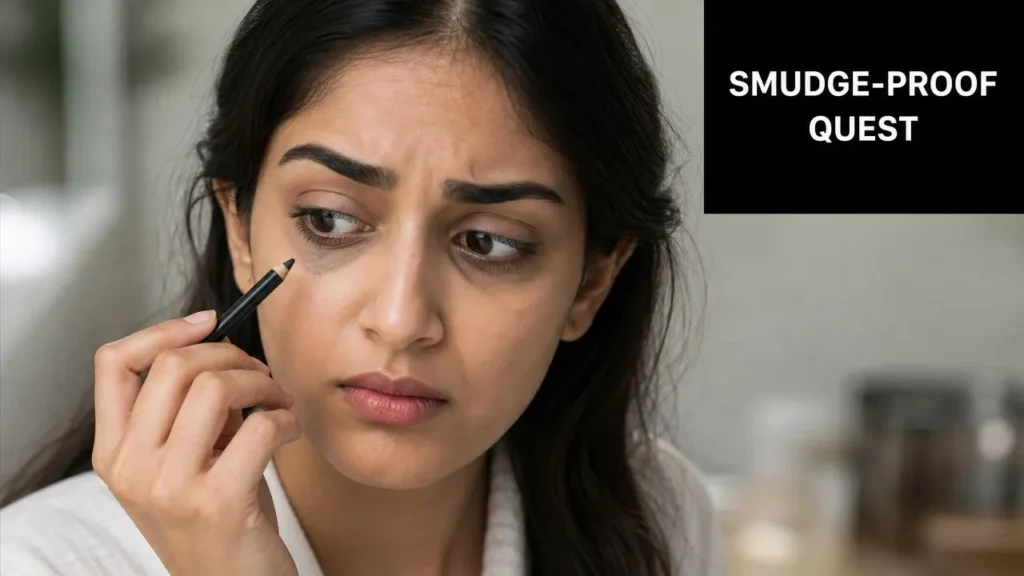
That mismatch happens because the waterline isn’t just another strip of skin. It’s one of the most sensitive, moisture-exposed parts of the eye area. A liner can be richly pigmented and still fail there.
Most online coverage misses that distinction. One helpful critique of current search results points out that many “best” lists treat waterline eyeliner like a ranking contest, when the better question is which formulas stay on without irritating the eye, including whether they’re ophthalmologist-tested and appropriate for sensitive users, as discussed in this video analysis of the safety-performance gap in waterline eyeliner coverage.
What people usually get wrong
Many shoppers focus on shade first. Blackest black. Best nude. Most flattering brown. Those things matter, but they matter after formula.
If a pencil drags, skips, or melts away, the color won’t save it.
Bottom line: The best eyeliners for waterline use aren’t just pretty. They’re built for grip, glide, and comfort in a difficult area.
A better way to shop
When I help someone choose a waterline liner, I don’t start with brand loyalty. I start with three questions:
- Does it say waterproof or long-wearing? Those claims matter more here than they do for many other eye looks.
- Does it glide smoothly? Tugging is a sign the formula may feel rough on the inner rim.
- Is it described for sensitive eyes or tested around the eye area? That’s often the difference between a liner you enjoy and one you avoid after one wear.
That approach is less glamorous than a top-ten roundup, but it’s much more practical.
Why Your Waterline Is a Unique Makeup Challenge
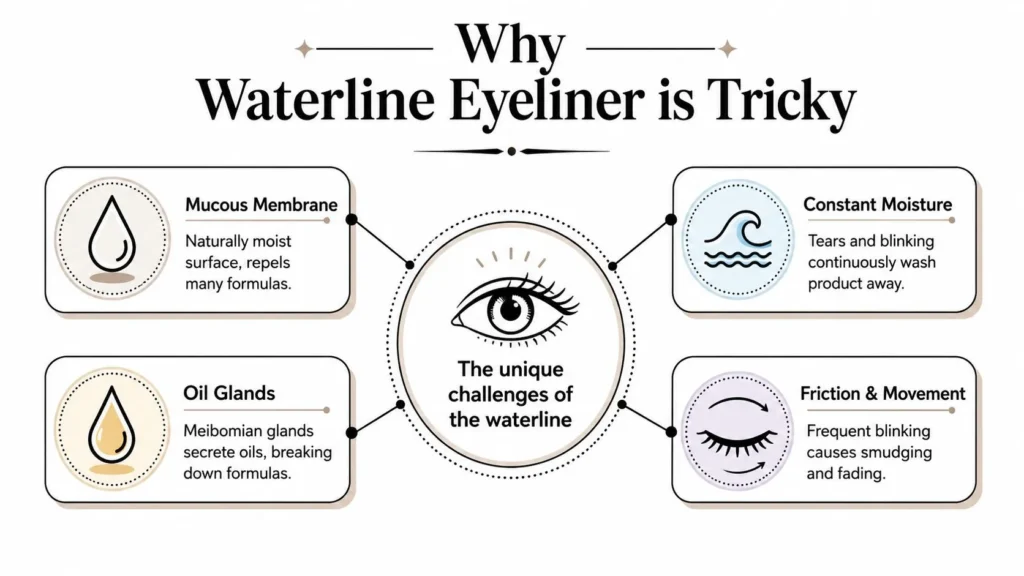
The easiest way to understand the waterline is to stop thinking of it as a dry canvas. It’s closer to trying to draw on a damp surface that keeps moving. Product has to stick through moisture, blinking, oil, and friction.
Why regular liner often fails
A classic kohl pencil can look beautiful on the upper lash line because that area is more forgiving. On the waterline, that same softness can turn slippery. The eye’s natural moisture starts breaking the line apart almost immediately.
Blinking makes the problem worse. Every blink creates movement across the area where you just placed pigment. If the formula doesn’t anchor well, it transfers or fades.
The four forces working against your eyeliner
Here’s what your liner is dealing with every time you wear it:
- Moisture: The inner rim is naturally wet, so many formulas won’t hold well.
- Oil: Oils near the eye can break down pigment over time.
- Movement: Blinking constantly rubs the area.
- Sensitivity: Even a product that lasts may not feel comfortable if the texture is too dry or abrasive.
That’s why broad makeup advice can be misleading. A “creamy favorite” for the lash line may still be wrong for the waterline.
Gentle care matters too
People often react to fading by pressing harder. That usually makes things worse. More pressure can irritate the eye and still won’t fix a formula that isn’t suited to the area.
If your eye area already feels stressed, it helps to think more broadly about soothing routines and ingredients. This guide to the benefits of rose water is useful background if you’re trying to keep the surrounding skin calm while wearing more eye makeup.
The waterline isn’t difficult because you’re bad at makeup. It’s difficult because the surface is working against wear from the start.
Decoding Eyeliner Labels and Formulations
A product description can tell you a lot, but only if you know which words matter. Some labels are mostly marketing. Others are practical clues that a liner may perform well on the waterline.
Labels that usually help
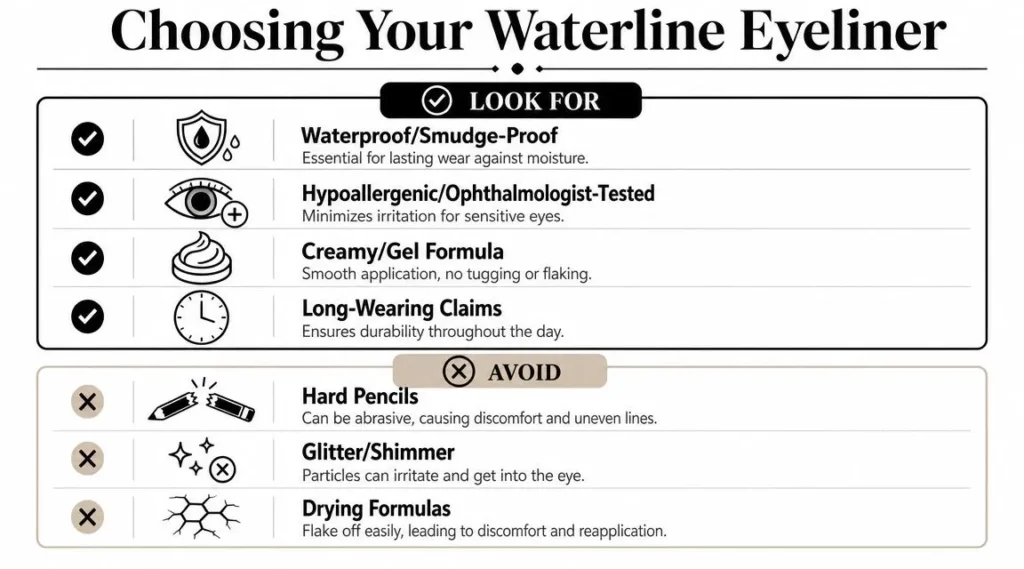
For waterline wear, waterproof, smudge-proof, ophthalmologist-tested, and safe for sensitive eyes are the labels I pay attention to first.
L’Oréal Paris notes that smooth-gliding gel or cream formulas labeled ophthalmologist-tested or safe for sensitive eyes are useful proxies for waterline suitability, and that creamy waterproof formulas applied with short, light-pressure strokes help maintain precision while minimizing irritation and smudging, as explained in this guide to lining your waterline.
That combination matters because it addresses both sides of the problem. Wear and comfort.
What “smooth-gliding” really means
A good waterline formula should deposit pigment with very little effort. You shouldn’t have to saw back and forth or push hard to see color.
When a pencil glides well, a few things usually follow:
- Less tugging: That’s more comfortable on a sensitive area.
- More even pigment: You get a cleaner line instead of patchy spots.
- Less flaking: Dry fragments near the eye are never ideal.
By contrast, a hard pencil may seem precise in the hand but feel scratchy on the eye.
Why silicone-based formulas get recommended
For this specific use, waterproof and silicone-based formulas tend to do better because they adhere more effectively and reduce transfer on the tear-film-rich inner rim. Beauty editors cited by Marie Claire specifically identify waterproof, silicone-based options as strongest for waterline use in this roundup of the best eyeliners for the waterline.
You don’t need to become an ingredient chemist. You just need to understand the practical takeaway. Some formulas are built to sit on a moist surface better than others.
Practical rule: If a liner is creamy but not waterproof, it may feel nice and still disappear fast. If it’s waterproof but stiff, it may last better and still be unpleasant to use.
Pencil, gel, and liquid on the waterline
Not every format behaves the same way.
| Format | How it usually performs on the waterline | Watch-out |
|---|---|---|
| Pencil | Easiest for most people, especially retractable or sharpenable creamy pencils | Can tug if the formula is hard |
| Gel | Often smooth and richly pigmented | Pot gels require a very steady hand and clean brush |
| Liquid | Usually the least suitable for the inner rim | Can feel harsh, tricky, or simply not designed for that area |
If you’re unsure where to start, a creamy waterproof pencil is usually the most forgiving choice.
Our Vetted Picks for the Best Waterline Eyeliners
Once you know what to look for, the shortlist gets clearer. Major beauty retailers and editors consistently frame strong waterline options around waterproof, long-wearing formulas that “glide effortlessly” and resist smudging. Product names and recommendations often repeat wear benchmarks like “24/7” and “12-hour”, which shows how central durability is in this category, as seen on Sephora’s best eyeliners for waterline page.
I’m not treating the list below as a universal ranking. Think of it as a vetted group that matches the logic we’ve already covered: smooth application, durability, and eye-area suitability.
Top Waterline Eyeliner Comparison
| Product Name | Type (Gel/Pencil) | Key Feature | Best For |
|---|---|---|---|
| Urban Decay 24/7 Glide-On Waterproof Eyeliner Pencil | Pencil | Waterproof, glide-focused formula with a long-wear claim in the product line name | People who want rich payoff and smooth application |
| Revlon ColorStay Eyeliner | Pencil | Waterproof and ophthalmologist-tested based on the brand’s product guidance | Shoppers who want a more accessible everyday option |
| Revlon ColorStay Micro Hyper Precision Gel Eyeliner | Gel | Gel texture and precise application format | Anyone who wants tighter control near the lash roots and rim |
Urban Decay 24/7 Glide-On Waterproof Eyeliner Pencil
This is one of the most commonly cited examples in editorial waterline roundups for a reason. The name itself signals the category standard. Long wear and glide.
For the waterline, that matters more than trend shades. A pencil that moves on easily is less likely to make you press hard, and a waterproof format is more likely to hold through the moisture and blinking that defeat ordinary liners.
Revlon ColorStay Eyeliner
This is a practical pick for people who want a familiar pencil format without the guesswork. In the brand’s own guidance, it’s positioned as waterproof and ophthalmologist-tested, which lines up well with what you want for the inner rim.
I like this kind of option for beginners because it keeps the decision simple. You’re not balancing novelty against comfort. You’re choosing a formula built around everyday wear.
Revlon ColorStay Micro Hyper Precision Gel Eyeliner
Some people prefer a narrower tip because their eyes water easily and they don’t want to go over the area repeatedly. A more precise gel style can help with that.
This kind of product can also appeal to anyone who likes to move between tightlining and lower waterline work with one tool. The main advantage is control.
How to choose between them
If you’re still stuck, use this quick filter:
- You want the smoothest traditional pencil feel. Start with Urban Decay 24/7 Glide-On.
- You want a straightforward daily option with eye-area reassurance. Revlon ColorStay makes sense.
- You want a finer, more detailed line. Revlon’s micro gel format is worth a look.
A broader shopping resource can also help if you’re comparing lower-cost options beyond this shortlist. This best drugstore eyeliner guide is useful when you want to cross-check formats and finishes before buying.
Don’t choose a waterline liner the way you’d choose a regular eyeliner. For this area, performance and comfort come first, and color comes after.
Mastering Waterline Application and Gentle Removal
Even the best formula can look messy if the application is rushed. Small technique changes make a real difference here because the area is wet and delicate.
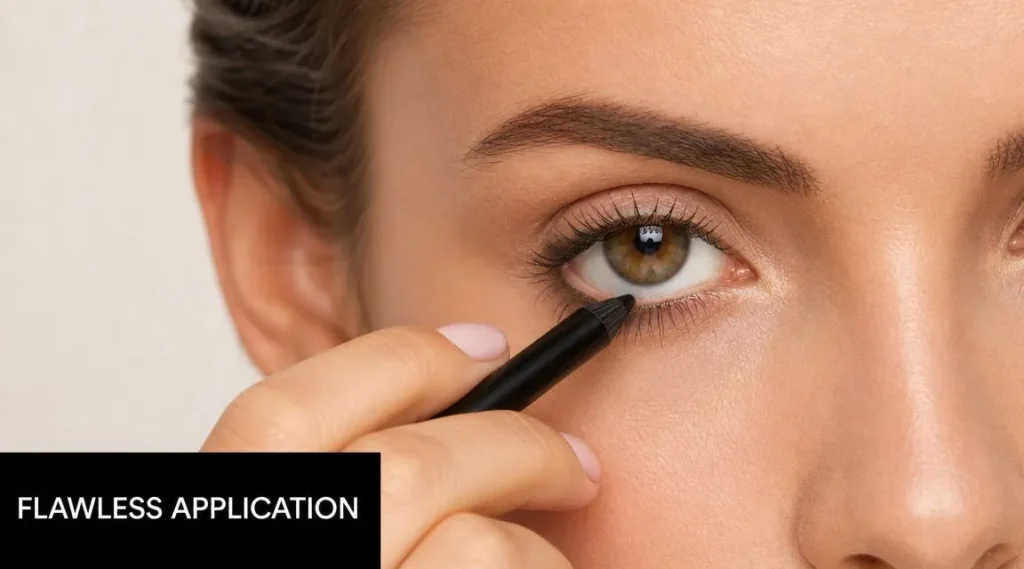
How to apply it so it lasts
Start with clean hands and a clean pencil tip. If your eyes water easily, wait until they’re calm before applying anything.
Then follow this order:
- Blot gently first. Use a clean cotton swab to remove extra moisture from the waterline.
- Expose the rim without pulling hard. A light downward tilt of the lower lid is enough.
- Use short, light strokes. This helps the product grip without irritating the area.
- Let it settle. Try not to blink aggressively right away.
- Optional setting step. Some people press a matching shadow very carefully near the line to support wear.
If your surrounding skin gets dry from frequent cleansing, broader skin-barrier care helps too. This piece on the benefits of glycerin soap is useful if you’re trying to cleanse gently without making the eye area feel stripped.
A quick demo helps
Watching the hand position can make this technique click faster than reading about it.
How to remove it without stressing your eyes
Removal is where a lot of irritation starts. People rub because waterproof formulas cling. The answer isn’t harder rubbing. It’s more patience.
Try this routine:
- Soak first: Hold a cotton pad with eye-safe remover against the closed eye for a few seconds.
- Wipe softly: Let the remover loosen pigment before you move the pad.
- Use a cotton swab for leftovers: This gives you more control along the inner rim.
- Rinse if needed: If your eyes are sensitive, remove residue so nothing lingers.
If your eyes sting during removal, stop and reassess the product. Lasting power is good. A formula that leaves you uncomfortable every time isn’t worth it.
Red Flags Eyeliner Ingredients and Types to Avoid
Once you know what works well on the waterline, the “no” list becomes easier. The safest shopping move is often avoiding formulas that were never designed for this area in the first place.
Skip these for the waterline
- Hard, dry pencils: They can drag across a sensitive surface and apply unevenly.
- Glitter or chunky shimmer liners: Decorative particles near the inner rim can feel scratchy and migrate into the eye.
- Liquid liners for the inner rim: Many are better suited to the lash line, not the waterline.
- Old or dried-out eye pencils: If the texture has changed, don’t force it.
Because waterproof, silicone-based formulas tend to adhere better and reduce transfer on the tear-rich inner rim, they’re generally a stronger direction than random soft pencils or trendy finishes for this use, as noted in Marie Claire’s earlier-cited editorial roundup.
Be skeptical of vague ingredient comfort claims
If a product is full of strong fragrance, heavy sparkle, or unclear “novelty” claims, I’d pass for waterline use. The eye area doesn’t reward experimentation the way cheeks or lips sometimes do.
A broader ingredient-awareness mindset helps here too. This overview of harmful skincare ingredients is a useful reminder that “beauty product” doesn’t automatically mean “ideal for sensitive areas.” And if you’re already fine-tuning an eye-area routine, this guide to the best anti-aging eye cream can help you think more carefully about what sits close to your eyes every day.
If a liner looks beautiful in a swatch but feels questionable near the eye, trust the feeling. The waterline is not the place to push through discomfort.
If you like practical, plain-English explainers on beauty, health, science, and everyday decision-making, visit maxijournal.com for more approachable guides and fresh independent writing.
Discover more from Maxi Journal
Subscribe to get the latest posts sent to your email.