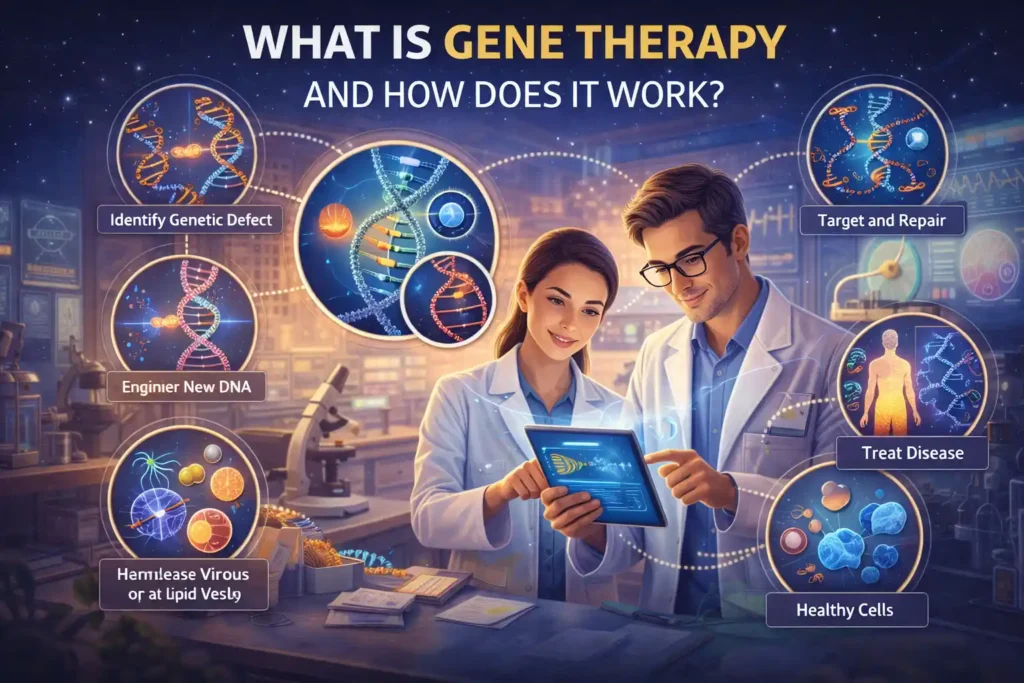
What if the true marvel is not that some animals grow body parts back, but how they do it?
That question turns a simple list into a biology lesson with real medical stakes. Regeneration is not one trick. It is a set of different solutions to the same problem: how to replace what was lost without ending in a scar.
Some animals rebuild by rearranging the tissues they still have. Others produce a fresh mass of cells and then shape that new material into a tail, a limb, an organ, or in a few cases, nearly an entire body. Biologists often sort those strategies into two broad mechanisms. Morphallaxis is regeneration by remodeling. Epimorphosis is regeneration by growth, often involving a blastema, which works like a temporary construction zone packed with cells that rebuild missing parts.
That distinction helps explain why a hydra, a planarian, and an axolotl can all regenerate, yet do it through very different biological routes. Real animals do not always fit neatly into one box, and some mix both strategies. Still, the categories are useful because they connect visible outcomes to the underlying cell behavior.
They also connect directly to medicine.
Researchers studying regeneration want to know how certain animals restart growth programs, control inflammation, preserve body pattern, and avoid the scar-heavy healing that limits repair in humans. That is part of the reason interest in regenerative biology overlaps with questions about what stem cell therapy is and how it aims to support tissue repair. Human medicine is not trying to copy a biological magic trick. It is trying to understand the rules.
The animals ahead are grouped by what their regeneration is built on, not just by how spectacular the result looks. That approach makes the wow factor clearer. A sea star rebuilding arms, a gecko replacing a tail, and a sponge reforming from fragments are all impressive. The deeper surprise is that evolution has arrived at multiple workable blueprints for repair. Each one offers a different clue for the future of healing.
1. Axolotl (Ambystoma mexicanum) – Complete Limb and Organ Regeneration
What if losing a limb did not end with a scar, but with a full rebuild?
The axolotl is one of the best answers nature gives to that question. This aquatic salamander can regrow limbs, parts of the spinal cord, heart tissue, reproductive tissue, and even portions of the brain. For a vertebrate, that is extraordinary. It also makes the axolotl a powerful example of epimorphosis, the regeneration mechanism built on new growth rather than simple tissue remodeling.
After an injury, the axolotl quickly closes the wound with a specialized layer of skin. Then the primary reconstruction begins. Cells near the injury site help form a blastema, a small mass of regeneration cells that works like a tightly organized construction zone. Instead of pouring scar tissue into the gap, the animal creates a living blueprint-and-build system that can replace bone, muscle, nerves, blood vessels, and skin in the correct arrangement.
Why the blastema matters
That blastema is the scientific star of the story.
In broad terms, cells from nearby tissues do not stay locked in their old jobs. Some shift into a more flexible state, multiply, and respond to molecular signals that tell them what structure is missing and where each part belongs. The challenge is not just growing more cells. The challenge is rebuilding a working arm with the right proportions, joints, and connections.
This is why axolotls matter so much to medicine. Human bodies usually treat a serious injury as a race to close the wound fast, which often leads to scarring. Axolotls handle the same problem very differently. They control inflammation, preserve positional information, and restart growth programs without turning the process into chaotic overgrowth. Researchers hope those lessons could improve tissue repair, nerve healing, and scar reduction in people.
The bigger lesson is easy to miss. Regeneration is not merely a matter of adding stem cells to damaged tissue. It is a matter of coordinating timing, cell identity, and body pattern so the replacement part matches the original. That is a much harder biological problem, and a much more exciting one.
If you enjoy unusual aquatic life with surprising biology, this guide to new species of fishes from around the world shows how often water-dwelling animals rewrite our expectations.
Practical rule: In regeneration biology, the central question is whether cells can rebuild the correct structure in the correct place.
Axolotls give this article’s mechanism-based approach real weight. They show what epimorphosis can achieve in a vertebrate, which is one reason they sit so close to the center of modern regeneration research.
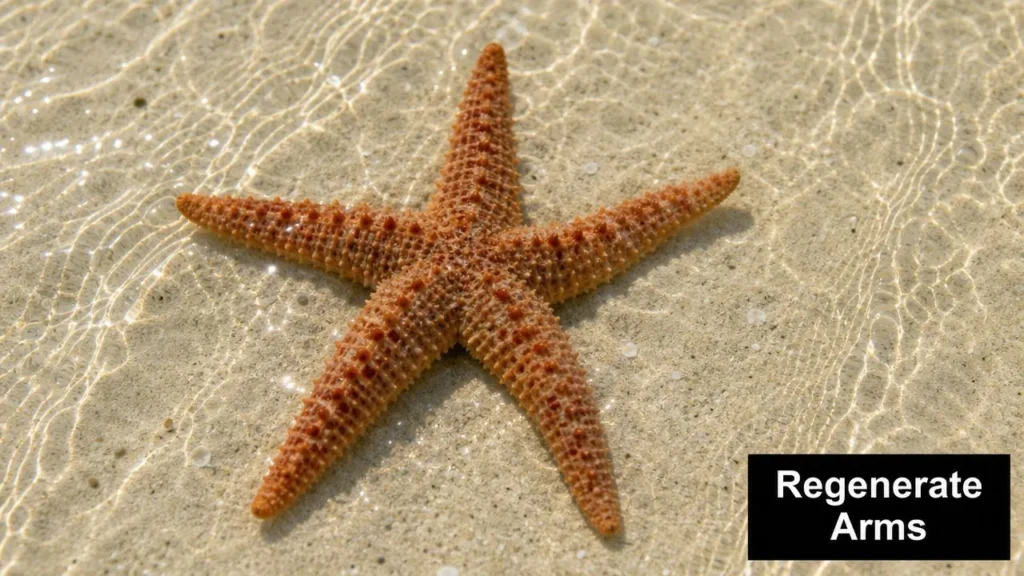
2. Starfish (Asteroidea) – Multi-Limb and Organ Regeneration
Sea stars feel almost designed to challenge our assumptions about body repair. Lose an arm, and many species can regrow it. In some cases, enough of the central body can be restored that the animal rebuilds critical internal structures as well.
Their regeneration is often described as a mix, but epimorphic growth is a useful starting lens. New tissue forms at the wound site, then gradually differentiates into the structures needed for a functioning arm. At the same time, body-wide patterning signals help the animal keep track of what belongs where.
More than an arm replacement
A sea star arm isn’t a simple stick of tissue. It has skeletal elements, tube feet, nerves, and links to the animal’s internal systems. Rebuilding that kind of structure means regeneration has to coordinate anatomy, movement, and function all at once.
That’s why sea stars are useful in the classroom and in marine biology conversations. They show that regeneration can involve restoring a whole working module, not just replacing a decorative appendage. Readers who enjoy marine diversity may also like this look at new species of fishes, because ocean life keeps stretching our sense of what animal bodies can do.
For medicine, the sea star lesson is about positional information. A healing system has to know whether it’s rebuilding the tip of a structure, the base, or a more central part. Human tissue engineering has the same problem. Growing cells is one challenge. Teaching them where they are is another.
3. Planarian Flatworms (Planaria) – Complete Body Regeneration
What if an animal could lose most of its body and still rebuild a complete, working self?
Planarians are among the clearest examples of why regeneration science is so astonishing. These small flatworms can regrow major missing parts, including a new head or tail, because their adult bodies are packed with stem cells called neoblasts. Those cells act like a standing repair workforce, ready to divide, specialize, and rebuild many different tissues after injury.
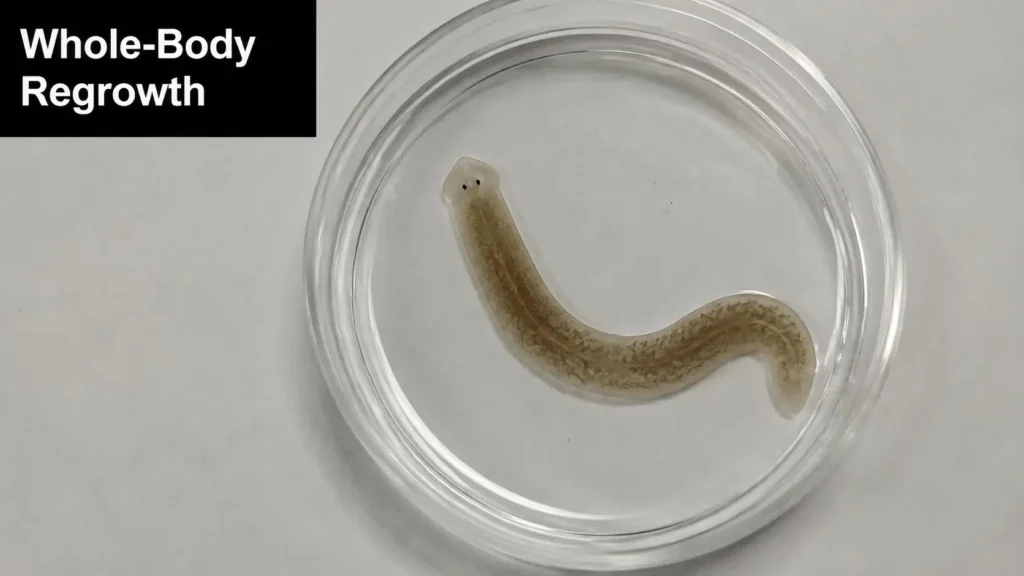
Planarians are especially useful in this article’s mechanism-based view of regeneration because they sit near the boundary between two big concepts. Morphallaxis means existing tissues reorganize to restore a smaller but properly patterned body. Epimorphosis means new cells are produced to replace what is missing. Planarians do both, but they are famous for the second part. Neoblasts generate fresh tissue, while the remaining body also repatterns itself so the new parts form in the correct place.
That combination is a true marvel. A fragment does not merely grow more material. It has to answer biological questions like: Where is the head now? Where should the tail go? Which side is left or right? In other words, planarian regeneration is not just cell growth. It is cell growth plus instructions.
Tiny worm, big lesson in biological memory
One way to picture it is to compare the animal to a city rebuilding after a disaster. Construction crews matter, but blueprints matter too. Neoblasts are the crews. Patterning signals are the blueprints. Without both, a planarian could make tissue, yet fail to make a correctly organized body.
That is why planarians are a favorite model for studies of genes, polarity, and tissue patterning, including research that connects naturally to the molecular logic behind CRISPR gene editing. Scientists want to know how adult tissues store and use positional information, because human healing usually closes wounds far better than it rebuilds complex structures.
A short clip makes the appeal obvious:
For medicine, the planarian lesson is exciting and humbling. Humans are not going to regenerate like flatworms anytime soon, but these animals show that adult bodies can keep powerful repair programs on standby. If researchers can learn how to control stem cells and restore positional cues together, they may improve wound healing, reduce scarring, and move closer to rebuilding damaged tissues instead of merely patching them.
4. Gecko Lizards (Gekkota) – Tail Regeneration and Shedding
Geckos are famous for a more tactical kind of regeneration. When attacked, many can shed the tail through autotomy, sacrificing it to survive. The replacement tail works, but it isn’t a perfect copy of the original.
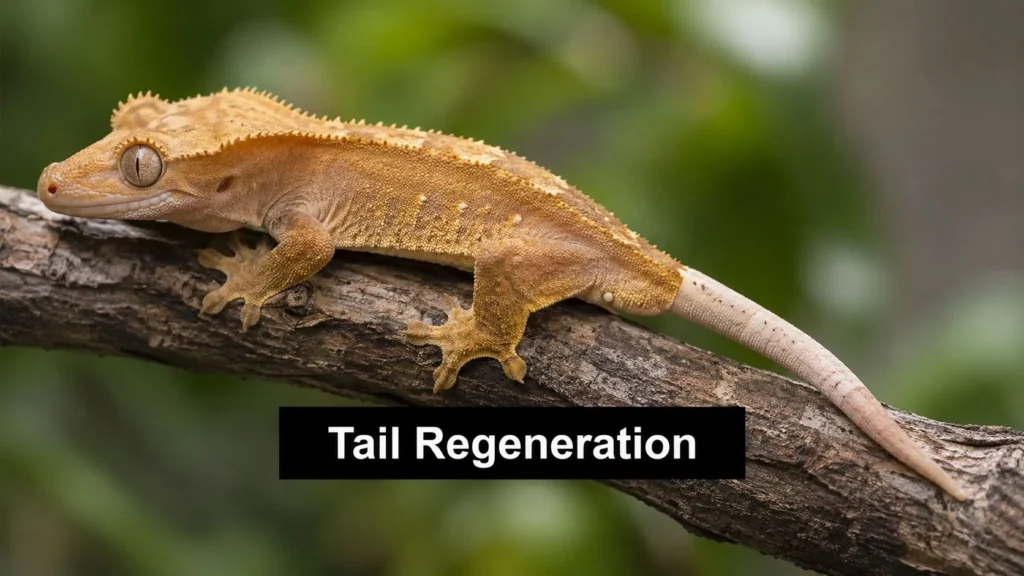
That detail matters. Regeneration isn’t always about flawless restoration. Sometimes biology settles for “functional enough,” which is still a major achievement.
A useful lesson in imperfect repair
A regenerated gecko tail is typically simpler than the first version. It may rely more on cartilage than the original structural layout, yet it still helps with balance, movement, and survival. This makes geckos a strong example of epimorphosis with compromise.
For human medicine, that’s a realistic model. Most therapies won’t jump straight from damage to perfect replacement. More likely, they’ll move step by step from closure, to reduced scarring, to partial reconstruction, to better functional recovery. Geckos show that even imperfect regeneration can be biologically valuable.
Regeneration isn’t always “back to factory settings.” Sometimes nature builds Version 2.0, simpler but still useful.
Geckos also help people understand that defense and regeneration often evolve together. An animal can afford to lose a structure only if rebuilding it is possible.
5. Hydra (Hydra vulgaris) – Complete Body Regeneration and Rejuvenation
What if an animal could be cut into pieces and rebuild itself by reorganizing what is already there, almost like reshuffling a small set of parts into a complete machine again? That is why Hydra vulgaris holds such a special place in regeneration science.
Hydra are tiny freshwater cnidarians with a very simple body plan. They have a tube-like body, a mouth ringed with tentacles, and a population of stem cells that keeps tissues renewing over time. That simplicity makes Hydra a powerful teaching model, because scientists can watch the rules of regeneration with less biological clutter than they face in a limb or organ.
Hydra are one of the clearest examples of morphallaxis. In morphallaxis, the body rebuilds mainly by rearranging and repatterning existing tissues, rather than by growing a large replacement structure such as a blastema. If axolotls and newts show regeneration through active construction, Hydra show regeneration through biological reorganization. The cells still divide, but the big story is pattern reset. The animal has to answer a basic question very quickly: where is the head now, where is the foot now, and how should the remaining tissue scale itself into a complete body?
Regeneration by re-patterning
That makes Hydra different from the epimorphic animals earlier in the article. A salamander rebuilding a limb works more like a construction site, with cells gathering, multiplying, and forming a new outgrowth. Hydra works more like a small town redrawing its map after part of it disappears. Existing cells shift roles, positional signals are re-established, and a whole body can emerge from a fragment.
The wow factor is hard to overstate. Hydra can recover from severe injury, and they are also famous for their apparent ability to avoid the kind of age-related decline seen in many other animals. Researchers care about both traits because they point to a shared biological theme: reliable tissue maintenance.
That is the medical connection. Human regeneration research often focuses on dramatic goals such as replacing a limb or repairing a heart. Hydra reminds scientists that an earlier step comes first. Tissues need systems that preserve order, maintain stem cells, control cell fate, and prevent repair from sliding into chaos. If researchers can better understand how Hydra keeps renewing itself while preserving body organization, they may gain clues for reducing scarring, improving wound healing, and supporting healthier tissue renewal in people.
Hydra does not offer a direct blueprint for rebuilding a human arm. It offers something just as useful: a stripped-down view of the rules. In regeneration biology, simple animals often teach the deepest lessons.
6. Newts (Triturus species) – Complete Limb and Organ Regeneration
How impressive is regeneration if an adult, land-living vertebrate can do it too?
Newts answer that question with force. These amphibians can rebuild limbs and tails, and they have also become famous for restoring parts of the eye and other tissues. That matters because newts are not just another version of the axolotl. They show that strong regeneration can persist even after metamorphosis, in a more mature body plan.
Mechanistically, newts belong in the epimorphosis category. That means they rebuild by creating a blastema, a mound of cells at the injury site that behaves a bit like a temporary construction crew. First the wound closes. Then nearby cells change their state, re-enter the cell cycle, and begin dividing. After that, positional signals tell those cells what to become and where to go, so the replacement structure is shaped in the right pattern rather than growing as a simple lump.
That sequence is the real wow factor. A newt does not just heal over an injury. It recreates a body part with organized tissues, including muscle, skin, bone, nerves, and blood vessels, all coordinated in the right arrangement.
Newts have also taught biologists an especially intriguing lesson about cell identity. In some tissues, mature cells can step back from their specialized jobs and regain a more flexible state before contributing to repair. A lens-related example is famous in regeneration research because it suggests that adult vertebrate cells are not always locked into one fate forever. Under the right signals, they can become surprisingly adaptable.
For human medicine, that possibility is huge. The central challenge is not only getting cells to divide. It is getting the right cells to divide at the right time, avoid scar-heavy repair, rebuild missing structures, and then stop. Newts handle those instructions far better than humans do.
Researchers study them for exactly that reason. If scientists can learn how newts control inflammation, limit fibrosis, and restart developmental programs without losing tissue order, they may get closer to improving wound healing, eye repair, and even the long-term goal of more complete limb regeneration in people.
Newts make the epimorphosis story feel less distant from us. They are still far from human biology, but as adult vertebrates they sit closer to our side of the animal tree than hydra or planarians do. That makes them a powerful reminder that dramatic regeneration is not only a feature of simple animals. Under the right biological rules, complex bodies can rebuild too.
7. Sea Cucumbers (Holothuroidea) – Organ Expulsion and Regeneration
Sea cucumbers take regeneration into strange territory. Some can eject internal organs as a defense response, then rebuild what they’ve lost. It sounds extreme because it is.
Their strategy sits within the broad world of epimorphic regeneration, but organ regeneration adds another layer. Replacing a limb is hard enough. Replacing digestive and associated internal tissues means rebuilding living systems that have to reconnect and resume function.
The shock value hides a serious scientific point
When people think about animals that regenerate, they often imagine visible body parts. Sea cucumbers force a shift in perspective. Regeneration can target internal anatomy too, and that opens a different medical conversation.
Researchers interested in digestive repair, connective tissue behavior, and organ remodeling can all learn from animals like these. The body has to clear damage, preserve survival, launch growth, and restore integration. Any one of those steps is difficult. Doing all of them in sequence is the remarkable feat.
Clinical insight: The most valuable regeneration models aren’t always the flashiest. Internal organ recovery may teach medicine more than a replaced appendage.
Sea cucumbers also remind us that regeneration is often tied to ecology. A bizarre defense strategy only works if the animal has evolved a reliable way to recover afterward.
8. Crustaceans (Decapoda) – Limb and Appendage Autotomy and Regeneration
Crabs, lobsters, and crayfish show a practical, repeatable form of regeneration. A threatened animal can drop a damaged limb at a special break point, survive the encounter, and regrow the appendage over later molts.
This is epimorphosis linked to the molting cycle. Instead of rebuilding all at once in the open, the animal coordinates regrowth with periodic body renewal. That means regeneration is built into the crustacean life cycle rather than acting as a totally separate emergency program.
Regeneration on a schedule
That schedule makes crustaceans especially interesting. Their bodies don’t just ask, “Can we regrow this?” They also ask, “When is the right time to do it?” Timing, hormones, and structural remodeling all have to line up.
For medicine, this raises an underappreciated idea. Better healing may depend not only on the right cells, but also on the right sequence. In humans, surgery, inflammation control, scaffold placement, rehabilitation, and tissue loading all have timing windows. Crustaceans show how powerful that kind of choreography can be.
A lobster claw or crab leg may not seem as dramatic as a whole-body flatworm. But as a model for staged reconstruction, crustaceans are surprisingly instructive.
9. Earthworms (Lumbricus terrestris) – Segmental Body Regeneration
Earthworms offer a valuable correction to oversimplified regeneration stories. They can regenerate some lost body segments, especially toward the tail end, but they don’t turn every injury into a whole new worm.
This is a case where body organization sets clear limits. Segmental animals can use repeated units to support partial rebuilding, yet those same bodies still contain regions that are much harder to replace. Regeneration here is real, but conditional.
Regeneration has boundaries
That may sound less exciting than salamander limbs or planarian heads, but it’s scientifically useful. Most real-world regeneration is constrained. It depends on where the injury occurs, what tissues are involved, and whether the body can preserve essential structures.
This aligns with a key point emphasized in a popular overview of regeneration biology: regenerative capacity is highly contextual, and even well-known examples like zebrafish and axolotls rely on tissue-specific mechanisms rather than one universal process, as discussed in this Discover explainer on why some animals regenerate and humans can’t.
That’s exactly why earthworms belong on this list. They show that regeneration isn’t a yes-or-no trait. It’s a pattern of possibilities and limits.
10. Sponges (Porifera) – Complete Body Regeneration from Fragments
Sponges make regeneration look almost alien. They can recover from fragmentation, and in some cases their cells can reorganize into a functioning body with startling flexibility.
This kind of rebuilding is closest in spirit to morphallaxis and cellular reassembly. Sponges don’t have the same organ complexity seen in vertebrates, but their cells are remarkably capable of sorting, reconnecting, and restoring a viable organism.
What sponges teach about biological identity
A sponge asks one of the deepest questions in all of regeneration science. How much structure does an animal need to keep in order to remain itself? In a mammal, body organization is rigid and intricately interdependent. In a sponge, cellular communities have far more freedom to reorganize.
That doesn’t make sponge biology less important. It makes it foundational. If researchers want to understand how cells recognize compatible partners, rebuild architecture, and recreate a body from disrupted material, sponges offer an early and elegant model.
The medical relevance is indirect but real. Tissue engineering also depends on cell sorting, scaffold formation, and structural self-organization. Sponges show these principles in one of their rawest forms.
Regeneration Comparison of 10 Animals
| Organism | Regeneration Scope | Implementation Complexity | Resource Requirements | Expected Outcomes & Key Advantages | Ideal Use Cases |
|---|---|---|---|---|---|
| Axolotl (Ambystoma mexicanum) | Complete limbs, spinal cord, heart, parts of brain; lifelong, scarless regrowth | High, specialized aquatic husbandry and long regeneration times | Cold freshwater tanks (16–18°C), large tanks, strict water quality, permits for research | Vertebrate model for scarless organ/limb regeneration; high translational relevance to medicine | Regenerative medicine, developmental biology, advanced teaching labs |
| Starfish (Asteroidea) | Multi-arm and disk regeneration; some species rebuild whole body from one arm | Moderate, marine care and long (6–12 mo) timelines | Marine aquarium, salinity control, calcium/magnesium, steady food supply | Model for decentralized body plans and defense (autotomy); regenerates multiple appendages | Marine ecology, evolutionary/developmental studies, public aquaria |
| Planarian Flatworms (Planaria) | Whole-body regrowth from tiny fragments; rapid (7–14 days) | Low, simple culture and fast results | Petri dishes, dechlorinated water, basic microscopy | Fastest lab model for pluripotent stem cell–driven regeneration; amenable to genetic tools | Molecular regeneration research, teaching labs, CRISPR experiments |
| Gecko Lizards (Gekkota) | Tail autotomy and regeneration (cartilaginous replacement) in 3–4 months | Moderate, terrestrial reptile care and behavior management | Terrarium, heat gradient (75–85°F), proper diet, calcium supplementation | Observable autotomy model; informs biomechanics and biomimicry (adhesion) | Behavioral studies, biomimetic engineering, educational displays |
| Hydra (Hydra vulgaris) | Complete body regeneration and negligible senescence; bisection regenerates in 3–5 days | Low, simple freshwater cultures but requires careful population control | Small freshwater vessels, regular feeding (daphnia), stable temp (18–24°C) | Model for aging/immortality and continuous stem cell renewal; genetically tractable | Aging research, stem cell biology, high-throughput lab studies |
| Newts (Triturus spp.) | Complete limb, eye, heart, brain regeneration; functions post-metamorphosis | High, mixed aquatic/terrestrial husbandry, regulated species | Aquatic/terrestrial setups, 15–20°C, specific diet, research permits | Vertebrate regeneration after metamorphosis; immune-tolerance insights | Regenerative medicine, vision research, comparative development |
| Sea Cucumbers (Holothuroidea) | Evisceration and whole-organ system regeneration over 3–6 months | High, specialized marine care and long recovery periods | Stable saltwater, abundant food for energy recovery, careful handling | Model for whole-organ regeneration and source of bioactive compounds | Organogenesis studies, pharmaceutical bioprospecting, marine physiology |
| Crustaceans (Decapoda) | Limb autotomy and regrowth across molts; incremental restoration (6–12 months) | Moderate, molting management and longer-term culture | Species-appropriate aquaria, calcium/nutrition, separation post-molt | Demonstrates molt-coordinated regeneration; economically relevant to aquaculture | Aquaculture practice, arthropod developmental research, ecology |
| Earthworms (Lumbricus terrestris) | Posterior segment regeneration (2–3 weeks); limited anterior regeneration | Low, simple soil/substrate systems | Moist soil (50–60%), organic matter, moderate temperatures | Model for segmented regeneration and soil ecology; low-cost | Soil biology, vermicomposting studies, educational demonstrations |
| Sponges (Porifera) | Dissociation/reaggregation and fragment-to-whole regeneration (3–4 weeks) | Moderate, sensitive marine organisms requiring contamination control | Clean seawater, gentle flow, low light, careful water chemistry | Demonstrates adult cellular totipotency and cell-recognition; bioactive compound source | Cell recognition research, pharmacology, basic evolution studies |
From Nature’s Lab to the Future of Health
The most important thing to take away from these animals isn’t just that they can regrow body parts. It’s that they don’t all do it the same way. Some rely more on morphallaxis, where existing tissues reorganize and repattern. Others lean on epimorphosis, where cells proliferate and build new structures, often through a blastema. And many species combine elements of both, depending on the body part and the kind of injury.
That’s a big shift from the usual pop-science version of the topic. “Animals that regenerate” sounds like one category, but it’s really a collection of biological strategies. Planarians use adult stem-cell systems. Axolotls and newts rebuild with blastema-based programs. Hydra can repattern simple bodies with extraordinary efficiency. Crustaceans time appendage regrowth around molting. Earthworms reveal the limits built into segmented anatomy.
For human medicine, that diversity is good news. It means there probably isn’t one secret regeneration switch that humans forgot to evolve. Instead, there are many subproblems to solve. How do you reduce scarring? How do you preserve positional information after injury? How do you activate growth without triggering chaos? How do you reconnect nerves, blood supply, and tissue architecture so the rebuilt part works?
Some of the most exciting clues come from gene regulation. In vertebrates, regeneration is limited but still significant, and killifish studies identified regeneration-responsive enhancers that switch on after injury. In that work, blocking one enhancer called K-IEN halted fin regeneration, while a related DNA element from mice and humans still activated later in killifish. The implication, described in this HHMI report on regeneration-responsive enhancers, is that regeneration may depend on conserved injury-activated gene circuitry, not a single magic gene found only in “super-regenerator” species.
That’s the kind of finding that can move medicine forward. It suggests the human genome may already contain pieces of the toolkit, even if our bodies don’t use them in the same powerful way. Researchers still face major barriers. Human tissues are larger, slower, scar more readily, and must maintain tight control against cancer and dysfunction. But nature has already solved parts of the puzzle many times.
That’s why these animals matter. They are not curiosities sitting outside mainstream biology. They are working demonstrations of what living tissue can do under the right rules. Every axolotl limb, every planarian fragment, every reorganized Hydra body asks a medically important question: not just how do organisms heal, but how do they rebuild?
If you’re curious about how these ideas connect to modern clinical discussions, this regenerative therapy cost guide offers a practical look at one corner of the broader regenerative-health field.
If you enjoy approachable science, health, technology, pets, travel, arts, business, and culture writing in one place, visit maxijournal.com. It’s an independent online magazine that welcomes curious readers and prospective contributors who want clear, engaging commentary across a wide range of subjects.
Discover more from Maxi Journal
Subscribe to get the latest posts sent to your email.