An American Bobtail from a reputable breeder usually costs $600 to $1,200, while adoption through a rescue or shelter is often $50 to $150. If you’re comparing options right now, the bigger money question isn’t just the purchase fee. It’s what you’ll spend to bring the cat home, cover early vet care, and keep up with monthly care after that.
That confusion is common with this breed. You see the short tail, the rugged look, the sweet face, and you want a simple answer. Then one listing looks affordable, another seems expensive, and suddenly you’re trying to figure out whether you’re paying for the cat, the paperwork, the vet work, or all three.
For first-time buyers, that’s where the key decision happens. The American Bobtail is uncommon, and uncommon breeds often come with a wider spread in price. Some sellers charge more because they include registration and health testing. Some rescues charge far less, but may already have covered basic medical needs that would otherwise land on your budget in the first week.
What Is the Real Cost of an American Bobtail
You find an American Bobtail listing that seems manageable, then you start adding up the first vet visit, carrier, litter box, food, and spay or neuter if it is not already done. The number in the ad is only the first line on the receipt.
That is why the cost question matters so much with this breed. American Bobtails are uncommon, and uncommon cats often come with a wider range in price, depending on how the cat was raised, what medical care is already covered, and how much work lands on you in the first month.
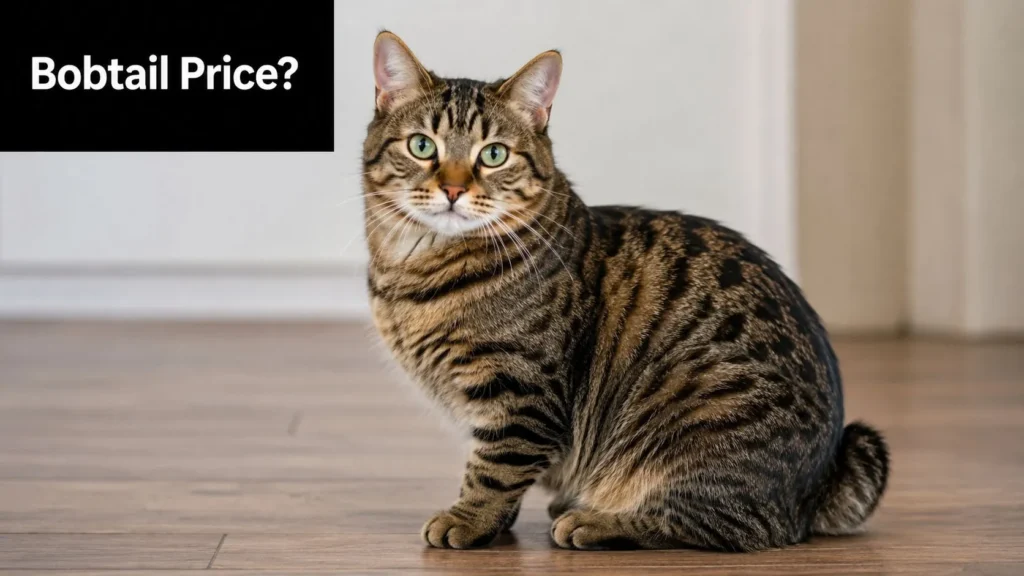
For a first-time buyer, it helps to treat the upfront fee like the cover charge at an event. It gets you in the door, but it does not include everything you will spend once you are there. A breeder kitten may cost more at the start and come with records, early vaccinations, or other basic care already handled. A rescue adoption may cost far less and still offer strong value if the organization has already covered medical basics before placement.
If you’re still deciding whether to buy or adopt, a practical guide to adopting a cat can help you think through temperament, home setup, and what questions to ask before bringing any cat home. For broader beginner-friendly reading, this collection of pet care advice for first-time owners is a useful place to build the basics.
Practical rule: Treat the purchase fee as the entry ticket, not the total bill.
What buyers usually miss
The first-year budget is where the breeder versus rescue choice becomes clearer. Two cats with very different upfront prices can end up much closer in total cost once you include vaccines, microchipping, parasite treatment, spay or neuter, an initial exam, and basic supplies. In other words, the better deal is not always the lower listing.
A cheap listing can become expensive fast if you need to catch up on medical care right away. A higher asking price can be reasonable if it includes health records and early vet work. Rescue cats can also be the better financial choice for the same reason. The smartest comparison is not cat versus cat. It is package versus package.
Decoding the Sticker Price Breeder vs Rescue
You find two American Bobtails online the same week. One breeder is asking several hundred dollars more than a rescue. At first glance, the rescue looks like the obvious bargain. Then you start adding up what each cat comes with, and the comparison changes.
That is the part new buyers often miss. The listing price is only the starting number. What matters is how much of your first-year spending is already built into that price.
Cost and inclusions breeder vs rescue adoption
| Factor | Reputable Breeder | Rescue Organization |
|---|---|---|
| Typical upfront price | Higher upfront cost | Lower upfront cost |
| Breed type | Usually a purpose-bred American Bobtail | May be purebred, mix, or bobtail-type cat |
| Paperwork | Often more formal and breed-specific | Usually adoption paperwork and medical records |
| Early medical care | Varies by breeder | Often bundled into adoption |
| Availability | More limited because the breed is uncommon | Less predictable, depends on intake |
A breeder’s fee often reflects planned litters, pedigree records, early care, and the time spent raising kittens in a controlled setting. A rescue fee serves a different purpose. It helps cover intake, foster care, and basic veterinary work while getting the cat into a stable home.
That difference matters because two lower-priced options can lead to very different first vet bills.
Why rescue can look cheaper and still offer strong value
Rescue cats are often adopted out with some day-one costs already handled, such as vaccines, a microchip, or spay and neuter surgery. For a first-time owner, that can reduce surprise expenses in the first few weeks. A low breeder price can still be a fair deal, but only if you know what is included and what you will need to pay for yourself right after pickup.
A lower adoption fee can cover more immediate needs than a bargain breeder listing.
That can feel backwards at first. People often assume the higher-control breeder route always includes more. Sometimes it does. Sometimes the rescue offers the more complete starter package.
A simple way to compare them is to treat each option like a bundled phone plan. The monthly number alone tells you very little if one plan includes data, insurance, and setup while the other does not.
Questions worth asking before you compare listings
- What is included in writing: Ask for vaccination records, microchip details, registration papers if relevant, and any recent vet notes.
- Has spay or neuter been done: If not, that cost may land on you soon after bringing the cat home.
- What medical care has already been covered: Ask specifically about vaccines, deworming, flea treatment, and an initial exam.
- What support comes after placement: Some breeders stay in touch. Some rescues do too. That help can save money and stress if a feeding, litter, or behavior issue comes up early.
- Can they explain the cat’s background clearly: Good breeders and good rescues can usually tell you what they know without getting vague or defensive.
The smartest comparison is not breeder versus rescue as a general idea. It is one complete offer versus another, line by line, with the first-year cost in view.
Key Factors That Influence an American Bobtail’s Cost
Within the breeder market, prices don’t vary randomly. They usually rise when the kitten comes with stronger documentation, more breeder oversight, and clearer proof of early care.
One of the clearest examples comes from premium listings. TICA-registered American Bobtail kittens can be priced at $1,000 to $2,000, and those listings typically include health testing, vaccination, and registration, according to this TICA-registered American Bobtail listing guide. That’s a very different product from an unregistered kitten sold with little paperwork.
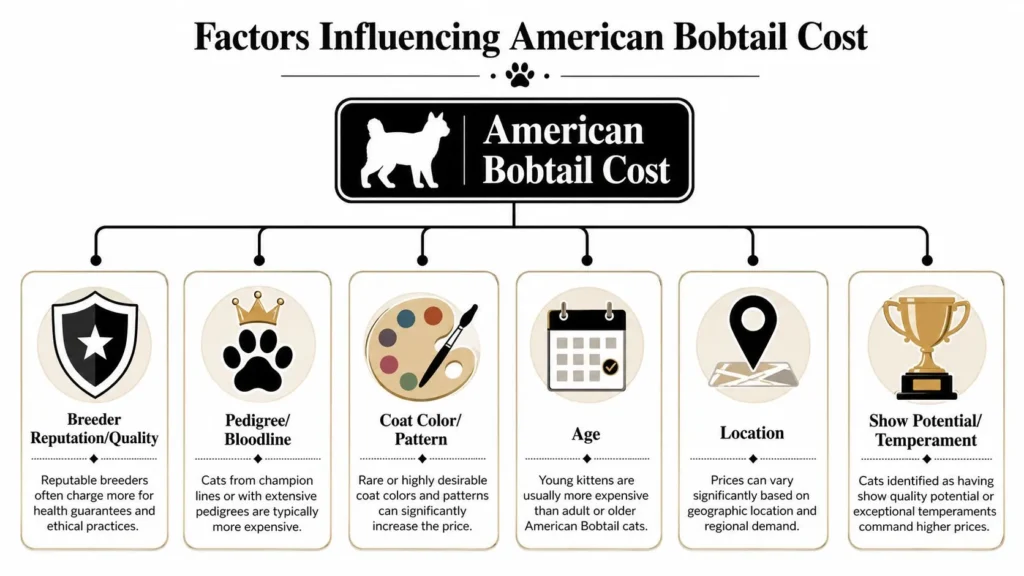
The biggest price drivers
Some factors push price up because they add real value. Others push price up because buyers like certain traits. It’s useful to separate those.
- Registration and documentation: This is one of the clearest reasons a kitten costs more. Registration, health records, and traceable lineage reduce uncertainty.
- Breeder reputation: A breeder with a strong process usually spends more on planning, screening, and care. That cost shows up in the price.
- Lineage: Some kittens are sold as companions, while others are marketed with stronger pedigree value. That often changes the asking price.
- Location and local supply: In a rare breed, limited local availability can affect what you see on listings.
- Age and presentation: Younger kittens and more polished listings often attract stronger demand.
- Perceived show potential or standout traits: Some buyers will pay more for very specific preferences.
What actually protects your wallet
If you’re new to purebred cats, it’s easy to overfocus on appearance. The safer habit is to focus on the paperwork stack and the seller’s transparency.
A kitten with formal registration, vaccination records, and documented health screening costs more because the breeder has done more work before the cat ever reaches your home. That doesn’t guarantee perfection. It does reduce guesswork.
You’re often paying for lower uncertainty, not just a prettier listing.
This is why a high breeder price isn’t automatically a rip-off, and a low breeder price isn’t automatically a deal. If a seller can’t clearly explain what’s included, the low number can become expensive later.
A simple way to evaluate a higher asking price
Ask yourself three things:
- Can the seller document the cat’s background clearly?
- Are medical records and registration part of the price?
- Does the offer reduce your immediate to-do list after pickup?
If the answer is yes across the board, the higher price may reflect real value. If the answer is mostly no, you’re looking at a listing, not a complete purchase package.
Budgeting for Your Bobtail’s Lifetime Care
The purchase fee gets the most attention, but the monthly budget is what decides whether ownership feels manageable six months later. That’s where many first-time buyers get caught off guard.
Recent pricing guides estimate monthly ownership costs at $205 to $880, according to this American Bobtail cost guide. That range includes routine needs like food, health care, and general maintenance. It also shows why ongoing care can surpass the one-time price of the cat.
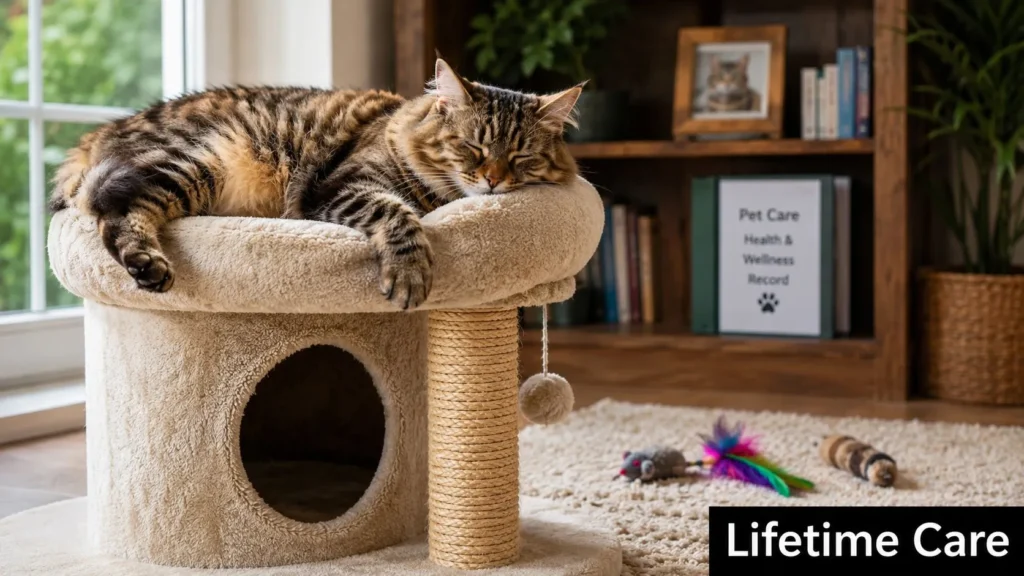
What that monthly budget actually covers
That range isn’t one giant mystery bill. It usually reflects the mix of regular expenses most owners already know, plus the ones they forget to plan for.
- Food and litter: The recurring basics never stop.
- Routine veterinary care: Exams, preventive care, and follow-up appointments add up over time.
- Home supplies: Scratchers, toys, carriers, beds, and replacement items wear out.
- Grooming and maintenance: Even a low-fuss cat still needs nail care, brushing supplies, and basic upkeep.
- Unexpected care: This is the category that blows up a budget when owners don’t leave room for it.
First-year thinking works better than sticker-price thinking
A rescue adoption can look like the cheapest route because the fee is lower. In many cases, it also helps with first-year costs because the cat may already be vaccinated, microchipped, and spayed or neutered. A breeder purchase can still be the right choice, but only if you budget beyond the deposit or purchase payment.
A practical move is to separate your cat budget into two buckets: expected monthly care and unexpected medical or household costs. If you don’t already keep a cash buffer, a short guide on saving for unexpected costs can help you build that habit before the first surprise bill arrives. If your adopted cat hasn’t been altered yet, it also helps to understand the difference between spay and neuter so you know what procedures and conversations may still be ahead.
The smartest buyer isn’t the one who finds the lowest fee. It’s the one who can still comfortably pay for care after the excitement wears off.
How to Find Reputable Sellers and Avoid Scams
You find a kitten photo, fall in love, and see a price that looks lower than expected. That is the moment buyers get into trouble. A cheap listing can become the most expensive option if the cat arrives sick, the records are fake, or the seller disappears after taking a deposit.
That risk matters more with a breed that is not common in every area. You may have fewer local options, which makes long-distance listings feel normal. Scammers know that. Good breeders and legitimate rescues know it too, and they usually make verification easier, not harder.
As noted earlier, adoption fees and breeder prices can look very different on paper. The safer way to compare sellers is to ask, “What care is already included, and what proof comes with it?” Price works like the first page of the bill. Records, honesty, and post-placement support tell you what the rest of the bill may look like.
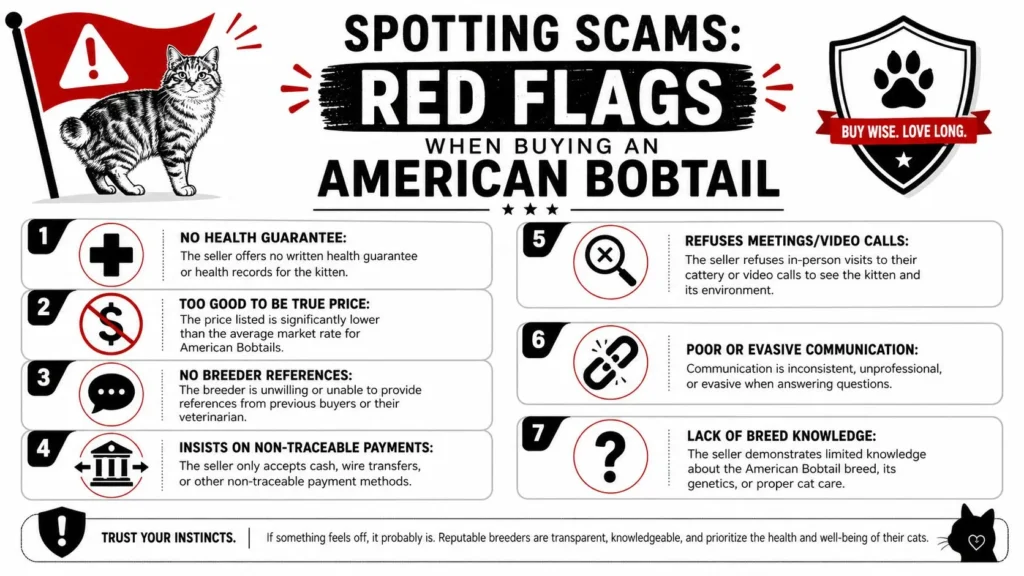
Red flags that should slow you down
- No health records: A seller should be able to show vaccinations, exam notes, and any treatment the cat has received.
- Pressure to send money quickly: Urgency is a common scam tool because it cuts off careful checking.
- No live video or in-person viewing option: You should be able to see the cat and the setting in real time, even if you are buying from a distance.
- Vague answers about the cat’s background: A reputable breeder or rescue can explain the cat’s age, temperament, care history, and any known issues in plain language.
- A very low price with no clear reason: Sometimes there is a legitimate explanation. There should also be paperwork that matches the story.
- Payment methods that remove your protection: Be cautious if the seller pushes gift cards, wire transfers, or other hard-to-reverse payments.
For a visual walkthrough of the warning signs, this short video is worth a look.
Green flags you want to see
Good breeders and good rescues tend to sound similar in the ways that matter. They ask you questions too. They want to know where the cat will live, what other pets you have, and whether you understand the day-to-day commitment. That is a sign they care about placement, not just payment.
Ask for the records before sending a deposit. Ask what veterinary care has already been done. Ask whether the cat is microchipped, altered, or still needs follow-up appointments. If you are new to all of this, a practical guide for a first-time cat owner can help you know which questions to ask before you commit.
One more useful habit. Read the seller’s process closely. Clear contracts, realistic timelines, and direct answers usually point to an organized breeder or rescue. Confusing terms, shifting prices, and missing paperwork often point to bigger problems.
If a seller seems offended by basic questions, treat that as an answer.
Common Questions About Owning an American Bobtail
Are American Bobtails good for first-time cat owners
Often, yes. People are drawn to them for their sturdy look, but many owners stay loyal to the breed because of the personality. They tend to be social, engaged, and adaptable, which can make them easier to live with than a first-time owner expects.
That said, a friendly breed doesn’t erase the need for planning. If this is your first cat, a beginner-friendly checklist for a first-time cat owner can help you think through setup, supplies, and daily routines.
Do they need a lot of grooming
Their grooming needs depend on coat type and the individual cat. Some will be fairly simple to maintain with regular brushing, while others need more attention during shedding periods. The safest assumption is that every cat needs consistent coat care, nail trims, and a clean home setup.
Is the bobbed tail itself something to worry about
Buyers often get nervous about the tail because they know some tailless or short-tailed cats can have breed-specific concerns. That’s a fair question to ask a breeder or rescue. The practical answer is to focus on records, physical condition, and seller transparency rather than making assumptions from appearance alone.
Should you choose a breeder or adopt
That depends on what matters most to you. If you want predictability in lineage and paperwork, a reputable breeder may be the better fit. If your priority is lowering first-year cost while giving a cat a home, adoption can be a strong choice. The right answer is the one that matches your budget, your comfort with uncertainty, and your willingness to ask careful questions before committing.
If you enjoy practical, plain-English guides like this one, visit maxijournal.com for more approachable articles across pets, health, science, education, entertainment, and everyday questions readers have.
Discover more from Maxi Journal
Subscribe to get the latest posts sent to your email.