Hyaluronic acid gets most of the attention whenever people talk about hydration. That advice isn’t wrong, but it is incomplete. If your skin feels tight, reactive, flaky, or chronically thirsty even after you use hyaluronic acid, the missing piece may be beta glucan skin support, not another stronger acid or a heavier cream.
Beta-glucan deserves a lot more space in everyday skincare conversations. It isn’t just a water magnet. It also helps skin feel calmer and more supported, which matters when dehydration and irritation show up together. That’s why I think of it less as a trendy hydrator and more as a practical repair ingredient that happens to hydrate very well.
The Unsung Hero of Skin Hydration
Skincare routines are often learned in a familiar order. First comes cleanser. Then moisturizer. Then someone tells them to add hyaluronic acid for dehydration. That routine can help, but it doesn’t always solve the deeper problem. Skin often needs two things at once: more water and a better way to hold onto it.
That’s where beta-glucan starts to look more interesting than its reputation suggests. It sits in a category many people skip over because it sounds technical, but the benefits are easy to understand in real life. If your face feels hydrated for an hour and then turns tight again, you may not just need a humectant. You may need an ingredient that also supports the skin barrier.
A good place to compare hydration habits is this guide to skincare tips for hydrated skin. It shows the kind of routine logic many people already follow, which makes beta-glucan easier to place in context.
Why the hyaluronic acid conversation is too narrow
Hyaluronic acid is famous because it’s simple to explain. It draws in water. People understand that quickly. But beta glucan skin care matters because hydration isn’t only about pulling water in. It’s also about helping skin stay comfortable after that first wave of moisture.
If you already appreciate classic moisture helpers like glycerin, this overview of glycerin soap benefits can help frame the bigger hydration picture. Skin doesn’t thrive on one “hero” ingredient alone. It usually does best when humectants, barrier-support ingredients, and gentle formulas work together.
Practical rule: If a hydrating product leaves your skin plump at first but dry later, look for barrier support, not just more moisture.
Beta-glucan fits that need unusually well. It’s underrated because it sounds less glamorous. In practice, it’s often the ingredient that makes skin feel less fragile.
What Exactly Is Beta-Glucan
Beta-glucan is a naturally occurring polysaccharide found in sources such as oats, mushrooms, yeast, algae, and fungi. That definition sounds more intimidating than it is. In skincare terms, think of it as a sugar-based skin helper that’s very good at managing moisture and supporting stressed skin.
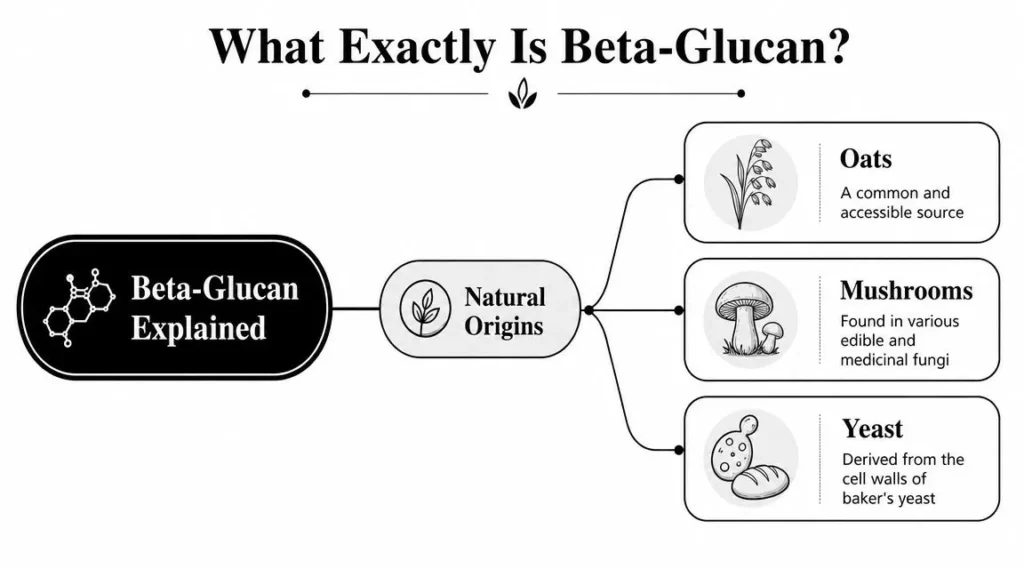
Think of it as a moisture net
The easiest way to understand beta-glucan is to picture a soft net laid over the skin. Part of that net helps attract water. Another part helps keep that moisture from escaping too quickly. So instead of acting like a simple splash of hydration, it behaves more like a cushion plus a cover.
That’s why skincare chemists often talk about two useful roles at once:
- Humectant behavior means it helps attract and retain water.
- Film-forming behavior means it can sit on the skin in a light, invisible layer that supports moisture retention.
Those two actions together make beta-glucan more than “another hydrator.” It works like a sponge that also puts a lid on the bucket.
Where people get confused
Many readers hear “polysaccharide” and assume the ingredient is harsh, synthetic, or overly active. It isn’t described that way in skincare use. Beta-glucan has a long scientific history in dermatology, and its use in skincare grew out of earlier medical applications, which helped establish it as a credible ingredient in barrier-repair formulas rather than a passing trend, as noted in this beta-glucan skincare overview.
That same reference also notes a widely cited claim that, at equal concentration, beta-glucan can provide 20% more hydration than hyaluronic acid. That’s one reason it has gained so much attention among formulators and skincare professionals.
Beta-glucan isn’t interesting because it replaces every hydrator. It’s interesting because it hydrates while also behaving like a comfort ingredient.
What this means on your face
In plain language, beta-glucan can help if your skin feels:
| Skin feeling | What beta-glucan is known for |
|---|---|
| Tight after washing | Helping pull in and hold water |
| Dry but also irritated | Supporting hydration with a soothing profile |
| Dehydrated under makeup | Giving a more cushioned, less stressed feel |
| Fragile after overdoing actives | Supporting the skin barrier while moisturizing |
That’s a key appeal of beta glucan skin care. It doesn’t just chase dryness. It helps skin act less overwhelmed.
Science-Backed Benefits of Beta-Glucan for Skin
The strongest case for beta-glucan isn’t marketing language. It’s that the ingredient makes sense biologically and has been discussed as a barrier-repairing humectant. Topically, it can form an invisible film on the stratum corneum, reduce transepidermal water loss, and improve hydration retention, which is why people often reach for it when skin feels sensitive or compromised rather than being dry.
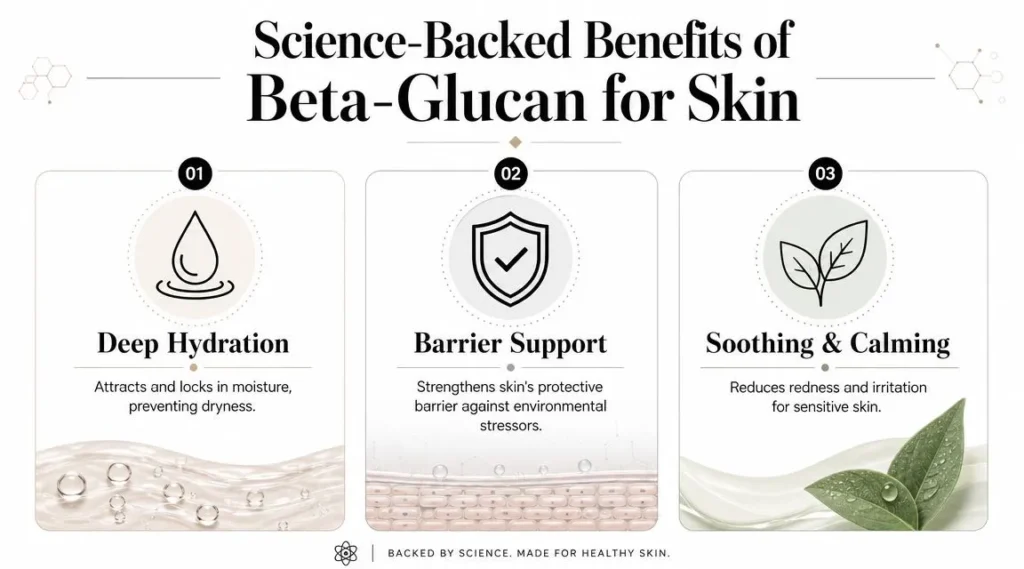
Deep hydration that lasts better
Some hydrators give a fast plumping effect, but the skin still feels uncomfortable later. Beta-glucan stands out because its hydration story is tied to moisture retention, not just moisture attraction.
In one 8-week topical study, beta-glucan increased skin hydration by 27%, reduced facial wrinkles by 56%, and improved elasticity and firmness by 29%, according to this clinical review of topical beta-glucan. That combination matters. It suggests hydration isn’t acting alone. Better water binding and better barrier support are showing up as visible skin changes.
Barrier repair is the real differentiator
This is the point many people miss when comparing beta-glucan with hyaluronic acid. Hyaluronic acid is often discussed as the hydration star. Beta-glucan earns attention because it supports hydration in a more protective way.
If your skin barrier is irritated, over-exfoliated, wind-chapped, or struggling after active ingredients, a pure hydration step may not feel like enough. Beta-glucan’s film-forming behavior helps explain why it’s frequently positioned for skin that needs comfort and recovery.
For readers exploring calming routines, this soothing skin hydration guide is a useful companion because it focuses on the practical side of moisture plus skin comfort.
When skin is dry and reactive at the same time, the best ingredient often isn’t the strongest hydrator on paper. It’s the one your skin can live with every day.
Why the anti-aging angle makes sense
Wrinkles and rough texture aren’t always separate from dehydration. Dry, poorly supported skin often looks less smooth and less springy. The study results above show why beta-glucan is often described as a multitasker. Better hydration can improve the look of the skin surface, and stronger moisture retention can help skin appear firmer.
If you like pairing hydration with gentle botanicals, this article on rose water benefits fits well into the same conversation about comfort-focused skincare.
Beta-glucan versus hyaluronic acid
Here’s the short version.
- Hyaluronic acid is the famous water-grabber.
- Beta-glucan also helps with hydration, but it brings more obvious barrier-support logic to the table.
- If your skin is merely thirsty, either may help.
- If your skin is thirsty and irritated, beta-glucan often makes more practical sense.
That doesn’t mean hyaluronic acid is useless. It means it shouldn’t automatically be treated as the final answer.
How to Add Beta-Glucan to Your Routine
The good news is that beta-glucan is easy to fit into a routine. You don’t need to rebuild everything around it. In most cases, you’re just swapping one hydration step for a smarter one, or adding it where your skin needs more support.
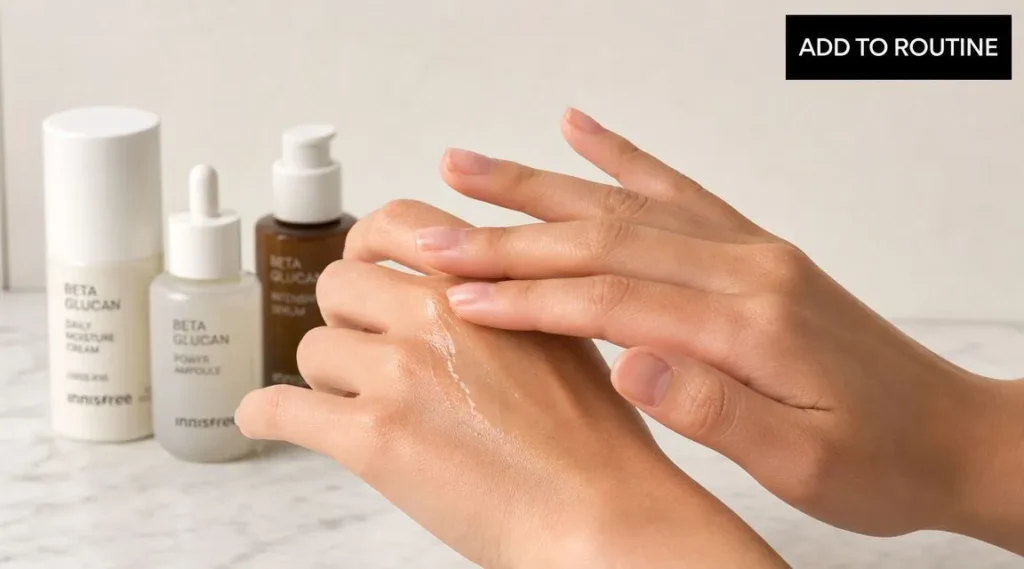
Which product type makes the most sense
Beta-glucan shows up in several formats, and the best one depends on what your skin is struggling with.
- Serums work well if dehydration is your main issue and you want to layer lightly.
- Moisturizers are a smart choice if your skin barrier feels weak and you want hydration plus more staying power.
- Masks can be helpful when your skin feels stressed and you want a comforting treatment.
- Post-active support products are worth considering if retinol, vitamin C, or exfoliating acids tend to leave your skin stingy or tight.
If your under-eye area is also showing dryness, this guide to the best anti-aging eye cream can help you think about where a barrier-friendly formula may matter most.
Simple layering order
For best results, apply beta-glucan after cleansing and before a heavier cream. A basic order looks like this:
- Cleanse gently so you don’t strip the barrier first.
- Apply beta-glucan serum or essence onto slightly damp skin.
- Seal with moisturizer if your skin leans dry or easily irritated.
- Use sunscreen in the morning as your final daytime step.
That order matters because humectants work best when the routine doesn’t leave them exposed and unsupported.
Pairing beta-glucan with stronger actives
This is one of beta-glucan’s most practical strengths. It generally fits nicely beside ingredients that can be effective but irritating.
- With retinol it can help offset the dry, brittle feeling many users complain about.
- With vitamin C it can make a brightening routine feel less sharp.
- With exfoliating acids it can add a comfort layer that helps skin recover.
- With hyaluronic acid it can create a broader hydration strategy if you already like HA and don’t want to give it up.
Here’s a helpful visual explainer that shows where this kind of ingredient can fit in a routine:
A few routine examples
If your skin is dehydrated but not very sensitive
Use a beta-glucan serum under your regular moisturizer, morning or night.
If your skin is reactive from overuse of actives
Pause the extra exfoliation for a bit. Keep the routine plain: cleanser, beta-glucan, moisturizer, sunscreen.
If your skin is oily but tight
Choose a lightweight gel or serum texture instead of assuming you need a rich cream. Oily skin can still be dehydrated.
Small adjustment, big payoff: Replace one disappointing hydration product with a beta-glucan formula before adding more steps. More products don’t always fix a weak routine.
The key is consistency. Beta-glucan isn’t complicated. It’s useful because it slots into real routines without drama.
Understanding Safety and Potential Side Effects
Beta-glucan has a reassuring profile in skincare because it’s widely used for hydration, barrier support, and soothing benefits. It’s often considered a sensible option for people whose skin doesn’t tolerate aggressive formulas well.
Who usually does well with it
This ingredient is commonly positioned for:
- Sensitive skin
- Dry or dehydrated skin
- Compromised barrier skin
- Skin that feels irritated after strong actives
- Skin that needs a calmer moisturizer routine
That makes sense because beta-glucan isn’t usually chosen for a dramatic “peel” or corrective effect. People use it because they want skin to feel more stable.
Side effects and common-sense use
No skincare ingredient is guaranteed to suit every single person. Formula matters. So does the rest of the ingredient list. Fragrance, essential oils, and strong exfoliants in the same product may matter more than the beta-glucan itself.
What I tell readers is simple:
- Patch test first if you have reactive skin.
- Keep the rest of the routine boring when you introduce a new hydrator.
- Watch the full formula, not just the star ingredient.
There also aren’t any major everyday routine conflicts that make beta-glucan especially hard to use. In practice, that’s one reason it’s easy to recommend. It plays well with a lot of common skincare categories and doesn’t demand a complicated schedule.
Common Questions and Your Beta-Glucan Checklist
A few practical questions come up again and again with beta glucan skin care. Most of them have straightforward answers.
Quick answers
Can I use beta-glucan every day?
Yes. It’s generally the kind of ingredient people use consistently rather than occasionally.
Is it good for acne-prone skin?
It can be, especially if your acne routine leaves your skin dehydrated or irritated. The key is choosing a formula that doesn’t feel too heavy for you.
Can I use it with retinol or acids?
Yes. Many people like it specifically because it helps make stronger routines feel more comfortable.
Is it only for dry skin?
No. Oily skin can still be dehydrated, and barrier stress isn’t limited to dry skin types.
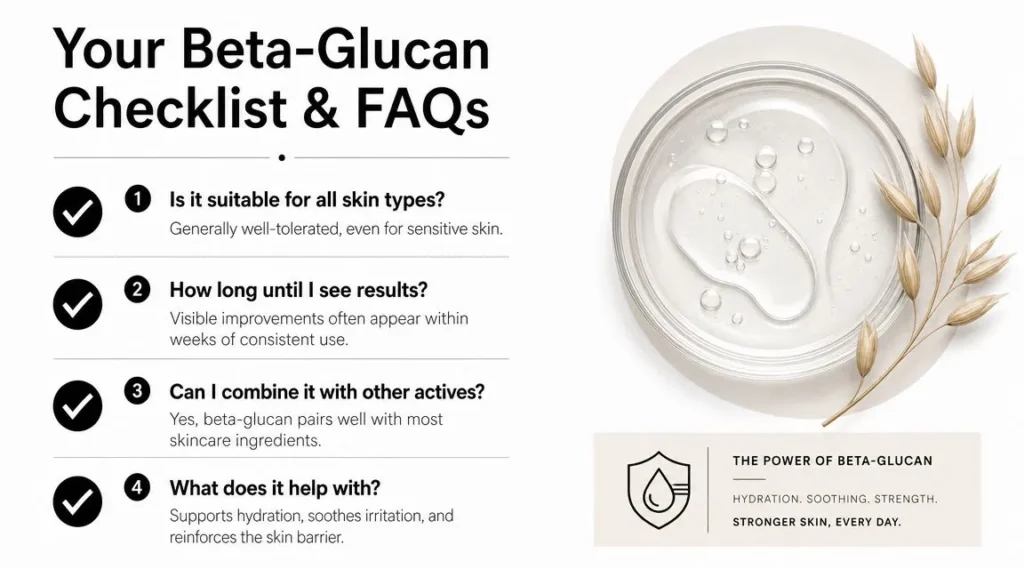
Your checklist
Beta-glucan may be worth trying if you relate to several of these:
- Your skin feels tight after cleansing even when you already moisturize.
- Hyaluronic acid hasn’t felt like enough on its own.
- Your skin gets flaky and stingy after retinol, acids, or weather changes.
- You want hydration plus comfort, not just a temporary plump look.
- You prefer flexible ingredients that fit morning or night.
- Your routine needs less excitement and more stability.
If that sounds like your skin, beta-glucan isn’t a niche extra. It may be the ingredient that makes the rest of your routine work better.
If you enjoy clear, practical writing on skincare, health, science, and everyday wellness, explore more at maxijournal.com. It’s a strong place to find approachable articles, fresh commentary, and thoughtful reads across a wide mix of topics.
Discover more from Maxi Journal
Subscribe to get the latest posts sent to your email.