Most advice about hidden gems in Europe is already outdated by the time you read it. A place gets called underrated, appears on enough feeds, then turns into a conveyor belt of day-trippers, phone cameras, and identical recommendations. That cycle is exactly why travelers end up disappointed. They follow “secret” lists and land somewhere that no longer feels secret at all.
A better approach is to stop chasing obscurity for its own sake and start looking for places with depth. The most rewarding alternatives to Europe’s overworked capitals aren’t always unknown. They’re the towns and smaller cities going through a cultural or creative renaissance, places where restoration, local arts, food, and everyday life still matter more than volume. That’s where travel feels less staged.
This matters in a continent where demand is huge and unevenly distributed. Eurostat notes that 65% of EU residents made at least one personal tourism trip in 2024, and about 7 out of 10 of those trips stayed within the traveler’s own country. In 2022, EU residents made nearly 1.1 billion tourism trips, while Spain alone accounted for 271 million nights by international tourists in tourist accommodation, equal to 22.4% of the EU total according to Eurostat’s tourism statistics. The crowding problem is real, but so is the opportunity to travel differently.
If you want a wider planning lens before you go, it also helps to discover European non-Schengen destinations, especially if you’re mixing classic stops with less obvious ones.
1. Brașov, Romania – The Hidden Mountain Gem
Brașov works because it gives you two trips at once. You get the medieval square, Gothic façades, and mountain backdrop people expect from Transylvania, but you also get a city with student energy, contemporary culture, and a lived-in rhythm that doesn’t feel designed only for visitors.
The mistake here is treating it as a quick stop between Bucharest and Bran. Don’t. Brașov rewards travelers who slow down, linger in Piața Sfatului, then drift outward into side streets, cafes, and the neighborhoods where the city feels less like a backdrop and more like a place people use.
How to do Brașov well
Base yourself near the old center so you can walk early and late, when the city is at its best. Morning gives you cleaner light and quieter lanes. Evening is when restaurants, bars, and cultural spaces feel local again.
If you’re building a wider Romania itinerary, it helps to compare it with other top travel destinations in Europe so you don’t crowd your route with too many transit-heavy stops.
Practical rule: Use Brașov as a base, not a photo stop.
A strong stay usually looks like this:
- Choose the square, then sleep one street away: You’ll stay close to the action without hearing every late-night table.
- Pair history with contemporary culture: Medieval streets are the draw, but craft beer spots, live music venues, and local art events are what keep the city from feeling frozen in time.
- Take one day trip, not three: Bran Castle and nearby villages are easy additions, but too many excursions flatten the experience.
Brașov is one of the better hidden gems in Europe for travelers who want a mountain city with beauty and utility. It’s easy to get around, visually rich, and active enough that you won’t spend the evening wondering what to do after the church towers and cobbles have done their job.
2. Gjirokastër, Albania – The City of Stone
Some towns impress you from a distance. Gjirokastër does that with its slope of stone-roofed Ottoman houses and fortress silhouette. Then you arrive and realize the appeal lies in its texture. Stairways, courtyards, workshops, uneven streets, and old homes turned into intimate guesthouses give it a seriousness that many prettier places lack.
This is one of the strongest alternatives for travelers who say they want authenticity but keep booking polished old towns that now function like open-air retail zones. Gjirokastër still has edges, and that’s part of the point.
What travelers get wrong
They rush the castle, tick off the old bazaar, and leave. That misses the town’s slower appeal. You’re here for architecture, yes, but also for the way old houses are being reused by artists, hosts, and small cultural operators who are keeping the town active rather than embalmed.
If you tend to prefer places that still feel underread rather than overmarketed, this belongs on any list of most underrated travel destinations.
A few habits improve the trip immediately:
- Book a restored stone guesthouse: Modern hotels flatten the experience. Traditional houses give you the views, materials, and atmosphere that make the town distinct.
- Go to the fortress late in the day: The light softens, the valley opens up, and the setting finally makes visual sense.
- Learn a few Albanian phrases: Even basic effort changes the tone of interactions in smaller Balkan destinations.
Gjirokastër isn’t slick, and that’s why it works.
The town also suits travelers who like literary history and lived heritage more than “must-see” pacing. Sit longer than feels efficient. Walk uphill even when there’s no obvious attraction at the end of the lane. In Gjirokastër, the payoff is rarely one monument. It’s the cumulative atmosphere.
3. Civita di Bagnoregio, Italy – The Eroding Village
Civita di Bagnoregio has the kind of setting that usually ruins a place. One dramatic cliff, one narrow footbridge, one ancient village, and before long the destination becomes all image and no life. Yet Civita still has enough fragility and seriousness to rise above that trap, especially if you arrive before the rush and treat it as more than a scenic detour.
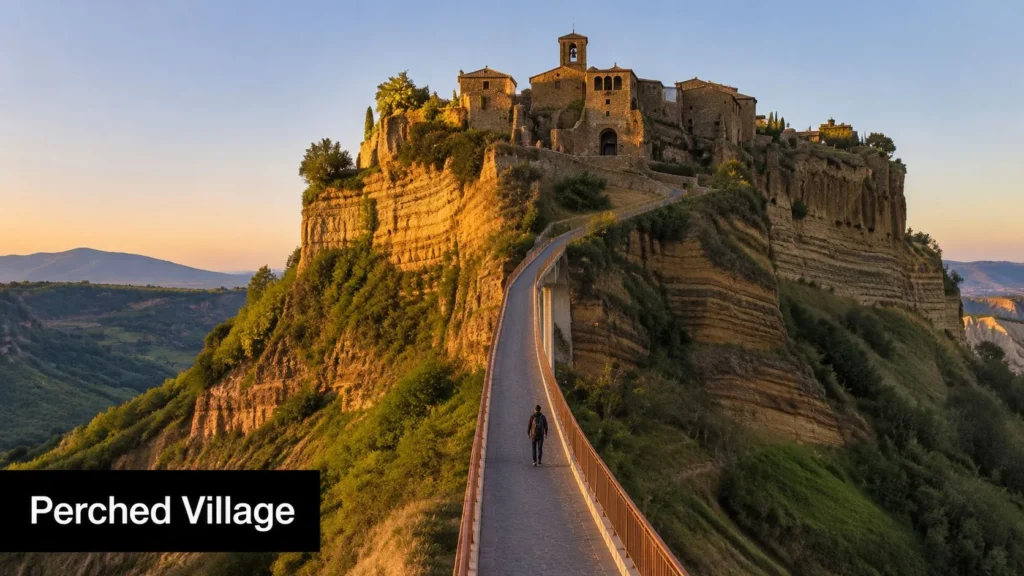
Its appeal now isn’t only preservation. It’s reinvention. Artists, writers, and small cultural programs have helped keep the village intellectually alive, which matters in a place that could easily have slipped into pure nostalgia.
Timing matters more than almost anything else
Arrive early. In places this compact, crowd timing isn’t a minor optimization. It determines whether the village feels contemplative or performative. By midday, the footbridge and lanes can feel exposed, hot, and far more transactional.
The smarter move is to stay nearby in Bagnoregio, come in early, then return for a slower meal elsewhere. That keeps the visit focused and prevents the common mistake of overestimating how much “activity” a cliff village needs to justify itself.
What works best:
- Wear proper shoes: The bridge and stone surfaces punish flimsy footwear.
- Treat it as a half-day minimum: Too short, and you only photograph it. Long enough, and you notice details beyond the skyline.
- Look for cultural programming in quieter periods: Creative stays, workshops, and writing retreats make more sense here than high-season sightseeing.
Civita is one of those hidden gems in Europe that becomes better once you stop demanding a full checklist from it. Its strength is concentration. One setting, one approach, one village, and a surprising amount of atmosphere if you arrive with patience.
4. Kotor, Montenegro – The Fjord of the South
Kotor is no secret anymore, but it still earns a place on this list because it shows the difference between a discovered place and a fully exhausted one. Cruise traffic and day visitors can crowd the old town, yet the bay, upper paths, neighboring settlements, and off-hour rhythm still offer an Adriatic experience with more texture than many better-known coastal stops.
Its visual drama does a lot of the work. Venetian stone, enclosed lanes, and steep mountains pressing into the bay make even a routine walk feel cinematic. But if you only stay inside the old walls at peak hours, you’ll leave wondering what the fuss was about.
Where Kotor still feels real
Walk beyond the obvious center. Waterfront stretches outside the core, smaller dining spots, and villages around the bay often deliver the calm people thought they were booking in the first place.
Another reason Kotor remains useful is that “hidden gem” status across Europe is changing fast. Some places that were niche are now repeatedly featured in mainstream travel coverage for 2026, including Plovdiv, Ulcinj, Ghent, and Bitola, while guides continue to promote places like Ljubljana, Sarajevo, and the Azores, as noted in this discussion of Europe’s shifting hidden-gem map. Kotor belongs in that same conversation. It’s not unknown. It’s still worthwhile if you travel it correctly.
The trick in Kotor isn’t avoiding popularity. It’s sidestepping its schedule.
A better Kotor stay usually includes:
- Shoulder season over peak summer: The town breathes again when demand eases.
- Dinner outside the busiest square: Better pacing, often better food, and fewer menu boards designed for one-night visitors.
- One uphill excursion: The bay makes the most sense from above, whether you hike or arrange transport to a mountain village.
Kotor suits travelers who want Adriatic beauty without defaulting to Croatia’s most saturated circuits. It rewards timing, range, and a willingness to leave the postcard center behind.
5. Sintra, Portugal – The Romantic Mountain Town
Sintra is proof that a place can be famous and still mishandled. Too many travelers treat it as a Lisbon add-on, show up late, queue for the biggest palace, then complain it felt crowded and expensive. That’s not a Sintra problem. That’s a day-trip problem.
Stay overnight and the town changes character. Mist settles in, the gardens quiet down, and the mix of Romantic architecture, forest, literary history, and old villas starts to feel less like a theme park and more like a proper mountain retreat with strange, theatrical taste.
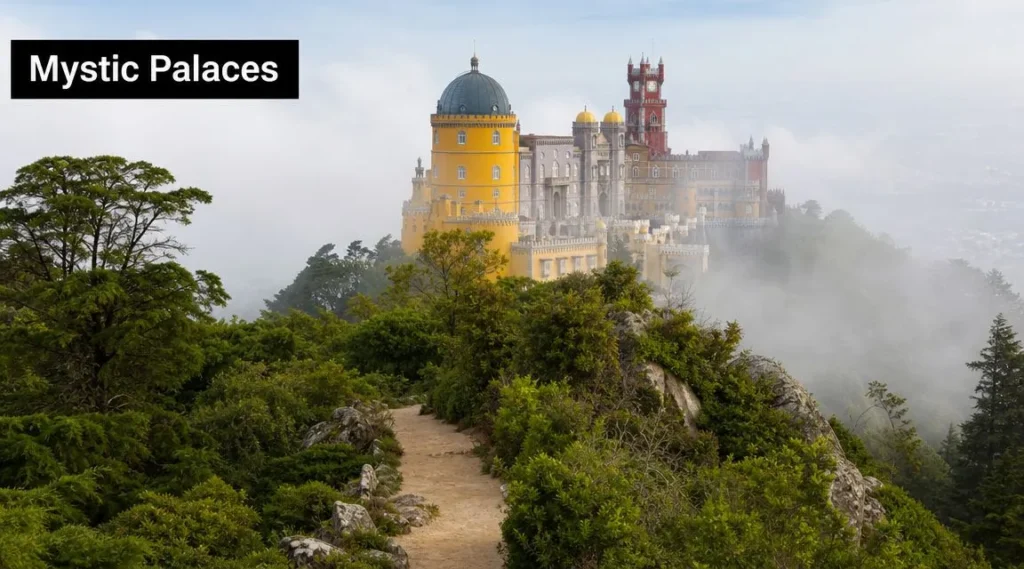
The overnight rule
If you can only change one thing, change that. An overnight stay gives you the early hours before buses arrive and the evening after they leave. That’s when Sintra’s wooded paths, smaller streets, and less famous estates become the main event.
It also helps to pack for hills, damp air, and multiple microclimates in one day. A practical guide on how to pack light for Europe is useful here because Sintra punishes overpacking almost as much as bad shoes.
What works in practice:
- Visit headline palaces first thing: Not because that advice is original, but because in Sintra it’s the difference between wonder and crowd management.
- Walk between selected sites: The forested setting is part of the destination, not dead space between attractions.
- Add one lesser-known quinta or garden: That’s often where Sintra feels most personal.
Sintra remains one of the most usable hidden gems in Europe for travelers who care about atmosphere more than bragging rights. It isn’t hidden. It is still magical if you refuse to experience it at the exact hour everyone else does.
6. Český Krumlov, Czech Republic – Medieval Bohemian Jewel
Český Krumlov has one obvious risk. It can feel too pretty. The river bend, castle tower, painted facades, and cobbled lanes are so photogenic that some travelers dismiss it as a place to admire rather than inhabit.
That’s shortsighted. The town’s long theater, music, and visual arts traditions give it more depth than the postcard version suggests. If you stay overnight and show up for evening performances or quieter morning walks, the place shifts from decorative to genuinely engaging.
How to avoid the stage-set effect
The common mistake is walking one loop through the center and assuming you’ve “done” the town. Instead, use the famous core as the anchor and spend time in adjacent streets, along the riverbanks, and in cultural venues that still give the place local purpose.
This is also a destination where season changes the entire experience. Shoulder months strip away some of the tour-bus atmosphere and make the architecture feel less theatrical. Cooler weather also suits the town’s enclosed scale.
A smarter visit usually includes:
- At least two nights: One for the obvious townscape, one for the slower cultural rhythm.
- An evening event: Chamber music, theater, or a traditional performance gives context to all that preserved beauty.
- A side trip into southern Bohemia: The surrounding countryside keeps the region from feeling like one isolated jewel under glass.
Best use of time: Spend fewer hours photographing the skyline and more hours inside the town after dusk.
Český Krumlov works best for travelers who like beauty but need substance behind it. It has enough of both, provided you don’t consume it as a checklist stop between Prague and Vienna.
7. Ohrid, Macedonia – Ancient Lake City
Ohrid offers one of the strongest balances in the Balkans. Lake scenery, Byzantine churches, Ottoman traces, old lanes, waterfront life, and a growing cultural scene all sit close enough together that the place feels coherent rather than fragmented.
What makes Ohrid especially compelling now is that its revival isn’t only aesthetic. The town has become more interesting for artists, musicians, and travelers who want a historic setting that still supports creative life instead of only displaying its past.
Why Ohrid lasts in the memory
The lake does some of the emotional work. Water gives the town breathing room, and that changes how you move through it. Churches above the shore, terraces along the edge, and boats moving across the light create a slower cadence than many inland heritage cities can manage.
The right way to visit is to combine the obvious monuments with ordinary meals and local conversation. Family-run restaurants, short excursions to nearby villages, and guides who can explain the layered history make the difference between a scenic stay and an informed one.
Useful habits here:
- Learn a few Macedonian phrases: It won’t make you fluent, but it shows respect and often opens warmer exchanges.
- Hire one strong local guide: In a place shaped by multiple eras, context matters.
- Leave room for lakeside time: Don’t over-program every hour in a destination whose charm depends on pause.
Ohrid is one of the hidden gems in Europe that still feels generous. It gives a lot without requiring strategic combat against crowds, and that alone makes it valuable in a region where more obvious names are becoming noisier each year.
8. Hallstatt, Austria – Alpine Lake Village
Hallstatt is the most controversial pick here because the village is beautiful and overexposed at the same time. Plenty of travelers now reject it on principle. I think that goes too far. The problem isn’t Hallstatt itself. The problem is the way visitors commonly approach it.
Day-trip culture compresses the village into its busiest few hours, then people declare it spoiled. Stay overnight, get up early, walk the shore before the buses, and Hallstatt becomes legible again as a lakeside settlement with craft traditions, salt-mining history, and a real mountain setting behind the famous viewpoint.
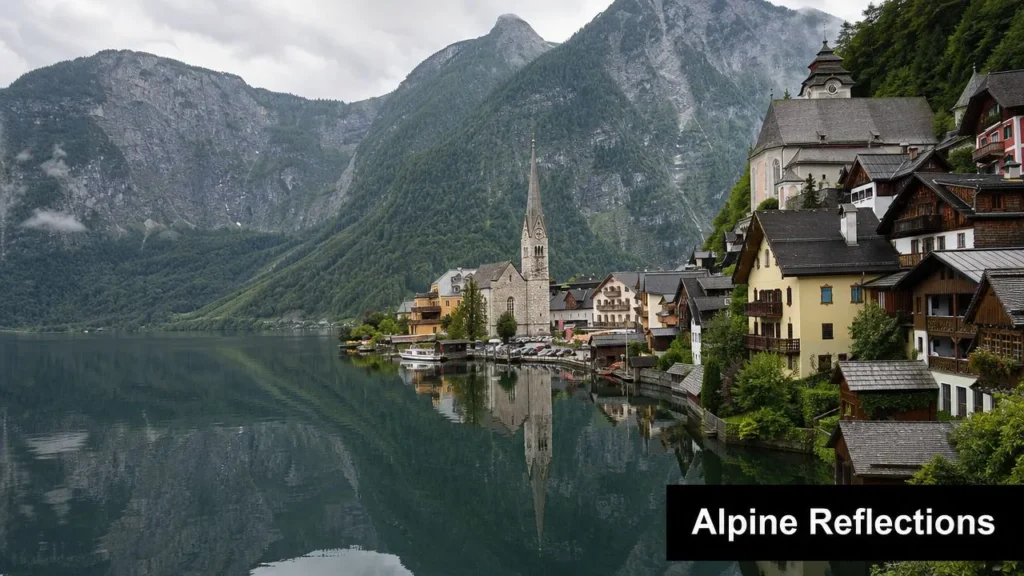
The trade-off is simple
You won’t have the harbor to yourself at midday, and pretending otherwise helps no one. But you can absolutely find quieter edges of the village and surrounding trails where the place regains its dignity.
A practical angle that often gets missed in travel writing is infrastructure. Across Europe, more digitally mature systems are helping secondary markets become more workable for real-time planning and visitor services. The European Commission’s European Data Market Study 2024 to 2026 describes a mature, policy-driven data ecosystem where adoption, interoperability, and value-added use cases matter increasingly. In travel terms, that makes well-managed smaller destinations easier to explore and benchmark than they were a few years ago.
For Hallstatt, what works is straightforward:
- Sleep in the village or very close by: The early and late hours are the entire advantage.
- Walk beyond the harbor viewpoint: The image is famous. The experience sits elsewhere.
- Use colder months if you can handle the weather: The village is more itself when it isn’t performing for bus arrivals.
Hallstatt still belongs on a serious list of hidden gems in Europe, but only with that caveat. Don’t visit it like everyone else and then complain you got everyone else’s experience.
9. Sibiu, Romania – Transylvanian Cultural Capital
Sibiu has the urban confidence some smaller heritage cities never develop. The squares are elegant, the facades are polished without feeling fake, and the city’s cultural calendar gives it an energy that extends well beyond architecture. It feels less provincial than outsiders expect and less hectic than larger European cultural centers.
That combination is exactly why it works as an alternative. If Brașov gives you mountain drama, Sibiu gives you civic culture, festival life, and a stronger sense that old streets can still host contemporary ambitions.
Where Sibiu stands out
The city’s great strength is balance. Traditional craft, public events, contemporary arts, and everyday local use all coexist without competing for the same narrow tourist attention span. You can spend the morning in the old town, the afternoon in galleries or workshops, and the evening in a square that still feels like part of city life rather than a staged visitor zone.
Sibiu also benefits from a broader European shift toward more actionable local intelligence in secondary markets. One operational signal is the spread of smart-meter-enabled systems and related data use. A stock-research profile of Eviso Spa discusses how digital power meter data, described there as compulsory in many EU countries, supports AI-based supply and demand optimization, which points to a wider environment where data-driven services can extend beyond headline cities, as explored in this analysis of hidden-gem infrastructure signals.
Sibiu feels curated, but not curated for you. That’s an important difference.
For a better stay:
- Time your visit around culture, not only weather: A strong festival week changes the city.
- Stay near the historic core but explore the lower town too: You’ll get a fuller picture of its texture.
- Look for artisan spaces, not just landmark squares: Sibiu’s identity is stronger in workshops and event venues than in quick panoramic stops.
10. Plitvice Lakes, Croatia – Natural Wonder Beyond the Coast
Croatia’s coast pulls so much attention that inland areas often get treated as side material. Plitvice deserves better than that. It’s one of the rare nature destinations in Europe that can absorb broad popularity and still deliver genuine awe, provided you manage your timing and expectations.
The first thing to understand is scale of feeling, not scale of distance. You’re there for water color, wooden paths, forest atmosphere, and the layering of falls and lakes. If you rush it like a stopover between cities, the park turns into crowd avoidance and route logistics. Give it a full day and it starts to open up.
Early entry helps set the tone for the day.
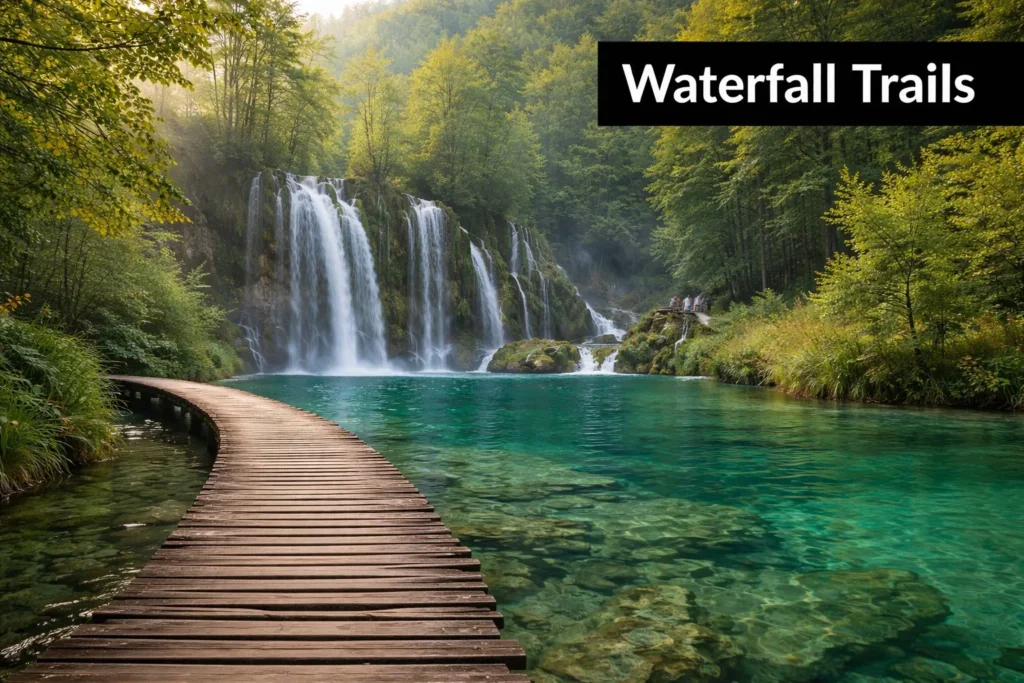
How to keep Plitvice from feeling overrun
Arrive at opening if you can, and don’t treat the boardwalk sections as the entire experience. The park is strongest when you alternate iconic viewpoints with quieter stretches and accept that some patience is part of visiting a protected natural area people care greatly about.
One useful perspective on crowd contrast comes from Greenland. Travel coverage often points out that Greenland gets only about 90,000 annual visitors, while Venice alone attracts about 20 million tourists each year, a stark reminder of how differently places can sit inside the same European travel conversation according to this comparison of Europe’s lesser-known destinations. Plitvice sits somewhere in the middle of that broader debate. It’s famous, but it still offers an experience grounded in its natural environment rather than urban congestion.
A few practical rules matter here:
- Stay nearby the night before: That makes the early start realistic.
- Wear hiking shoes and carry layers: Conditions shift quickly around water and forest.
- Leave the coast mentality behind: This is a full nature day, not a scenic break between beach towns.
If you want a quick sense of the terrain before planning your route, this video helps frame the geography:
Plitvice earns its place because it proves hidden gems in Europe don’t have to be urban, and they don’t have to be unknown. They just have to give you something richer than the standard script.
10 Hidden Gems in Europe, Quick Comparison
| Destination | Accessibility (ease of visit) | Cost & infrastructure | Expected experience (highlights) | Best for | Key advantages |
|---|---|---|---|---|---|
| Brașov, Romania | Moderate, reachable by train/road; local transit improving | Low cost; good outdoor infrastructure but some transport limits | Medieval old town, Gothic landmarks, mountain recreation, arts scene | Art enthusiasts, adventure travelers, budget explorers | Affordable, less crowded, strong arts + outdoor access |
| Gjirokastër, Albania | Challenging, remote with limited public transport; steep streets | Very low cost; limited amenities and English speakers | Ottoman stone architecture, fortress views, authentic local culture | History buffs, photographers, cultural immersion seekers | Undiscovered, highly authentic, excellent photo opportunities |
| Civita di Bagnoregio, Italy | Difficult, accessible only by footbridge; limited transport | Very limited on-site services; nearby towns handle accommodations | Eroded plateau village, Etruscan/medieval character, artist residencies | Artists, writers, photographers, spiritual seekers | Secluded, peaceful, strong creative residency scene |
| Kotor, Montenegro | Good, road and ferry access; cruise-traffic impact | Moderate cost; growing strain on local infrastructure from tourism | Venetian old town, dramatic bay and mountain scenery, festivals | Photographers, adventure travelers, history enthusiasts | Dramatic scenery, Mediterranean charm, emerging cultural events |
| Sintra, Portugal | Easy, 30 km from Lisbon by frequent train | High tourist prices; excellent visitor infrastructure but crowded | Fairy-tale palaces, misty forests, Romantic-era heritage | Romantics, photographers, literary and culture lovers | Iconic palaces, easy Lisbon access, rich arts heritage |
| Český Krumlov, Czech Republic | Moderate, regional access; heavy tourist traffic at peak | Moderate-high prices in center; strong amenities and festivals | Curved Vltava river, castle, theater and festival culture | Photographers, theater and history enthusiasts | Well-preserved medieval town with strong cultural programming |
| Ohrid, Macedonia | Moderate, regional connections; some transport limits | Low cost; infrastructure less developed than Western Europe | Ancient lake city, Byzantine churches, music and film festivals | History buffs, budget travelers, emerging-culture explorers | Scenic lake setting, authentic Balkan feel, growing arts scene |
| Hallstatt, Austria | Good, reachable from Salzburg/Vienna; very busy with tours | High cost; excellent infrastructure but overtourism common | Alpine lake vistas, salt-mining heritage, traditional crafts | Photographers, nature lovers, cultural heritage fans | Spectacular natural setting and strong historical significance |
| Sibiu, Romania | Good, regional transport and festival-ready infrastructure | Affordable; growing tourist services and tech community | Saxon squares, theater festival, artisan crafts, contemporary arts | Theater enthusiasts, festival-goers, culture seekers | Balanced authentic medieval character with modern amenities |
| Plitvice Lakes, Croatia | Good, improved access and trails; limited park lodging | Moderate-high (entrance fees); conservation-focused infrastructure | Cascading lakes, waterfalls, karst landscapes, biodiversity | Photographers, hikers, ecotourists, nature documentarians | World-class natural scenery, well-maintained trails, strong conservation programs |
Your Map to an Unforgettable Europe
The best hidden gems in Europe aren’t always the places no one has heard of. More often, they’re the places people haven’t learned to visit well. That distinction matters. A town can be famous online and still feel deeply rewarding if you stay the night, shift to shoulder season, walk beyond the headline square, or build your day around local rhythms instead of bus schedules.
That’s the thread connecting all ten destinations. Brașov and Sibiu work because culture hasn’t been pushed out by tourism. Gjirokastër and Ohrid still carry lived history instead of polished nostalgia. Kotor, Sintra, Hallstatt, and Český Krumlov remind you that a place doesn’t need to be secret to feel special. It needs breathing room, context, and a traveler willing to resist the obvious version of the trip.
The practical lesson is simple. Stop searching for a perfect undiscovered place and start evaluating trade-offs. Ask better questions. Is this somewhere I can enjoy early and late, after day visitors leave? Does the town have real cultural life, or only visual appeal? Can I base myself nearby and move more slowly? Is the destination gaining attention because it has substance, or because it photographs well? Those questions lead to better trips than any viral list ever will.
Europe’s travel map is also changing in ways that make secondary destinations more compelling. Better data systems, stronger local infrastructure, and more advanced tourism management are helping smaller places operate with more confidence. At the same time, repeated “underrated” coverage keeps pushing some towns into the mainstream. That means authentic travel now depends less on finding a pin nobody else has saved and more on knowing how to travel once you arrive.
Pack accordingly, pace yourself, and leave room for the unplanned parts. Good shoes matter more than extra outfits, especially if your route includes old stone streets, lakeside paths, or steep hill towns. If you need help on that front, a practical guide to luxury European footwear can help you think through comfort and style before you go.
And if you like reading beyond standard roundup content, maxijournal.com is one option worth browsing for destination-focused travel writing alongside its broader cultural coverage. Then pick one place from this list and go deeper than the average itinerary. That’s where Europe still surprises you.
If you enjoy approachable travel writing and destination roundups, explore maxijournal.com for more posts, and consider following the site if you want fresh commentary across travel, arts, culture, and beyond.
Discover more from Maxi Journal
Subscribe to get the latest posts sent to your email.