Europe’s top destinations are not interchangeable. The strongest choices tend to combine a clear identity, strong visitor infrastructure, and experiences that hold up beyond a checklist of landmarks. That is why the same places keep appearing at the top of serious travel shortlists, even as traveler priorities shift between art, food, history, nightlife, nature, and ease of movement.
This editorial selection approaches Europe the way a good magazine panel would. It matches each destination to the traveler most likely to value it. The Art Connoisseur will judge a city differently from the Adventurer. The Historian is looking for depth, not just famous sights. The Romantic may care less about museum density than atmosphere after dark.
That distinction matters because Europe rewards precision. A first-time visitor who wants cultural concentration, walkability, and recognizable icons will usually get more from Paris than from a resort island. A traveler drawn to mountain air, physical challenge, and restorative scenery should not default to another capital city just because it ranks well on generic lists. Popularity is useful context, but fit is the better filter.
The result is a curated top 10 that treats destinations as identity matches as much as places on a map. Paris earns its place for the art-driven traveler. Berlin belongs here for the visitor interested in ideas, reinvention, and modern history. The Swiss Alps compete on equal terms with Rome and Barcelona because Europe’s best trips are not all urban, and not all memorable experiences come from the same kind of traveler logic.
Use this list as a selection framework. Choose the destination that best matches how you travel, then build the trip around that strength.
1. Paris – The Cultural and Artistic Hub
Paris is the clear pick for the Art Connoisseur. For a first-time visitor who wants Europe in concentrated form, it is also one of the most efficient choices on the continent.
Its status at the top of European travel rankings, as noted earlier, reflects a real structural advantage. Few cities offer this level of museum density, architectural recognition, dining culture, and transport access within a layout that still makes sense on foot. Paris works for travelers who want famous landmarks, but it works even better for those who judge a destination by how much cultural depth they can reach in a single day.
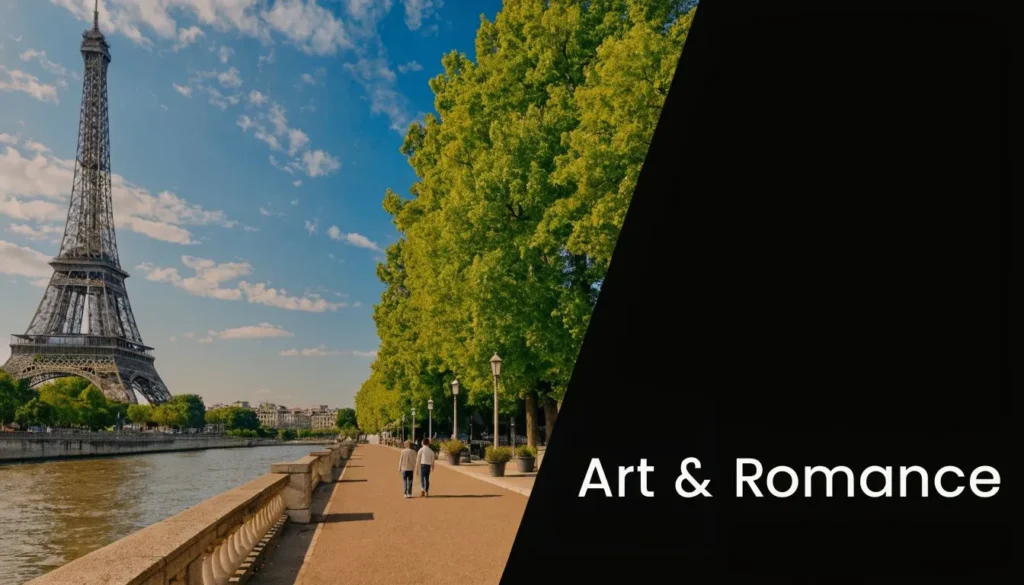
Why Paris keeps winning
Beyond the Eiffel Tower, the Louvre, and Versailles, Paris stands out for how completely its major attractions are embedded within everyday city life. A museum morning can lead into a market lunch, an afternoon walk through the Marais, and an evening performance or river stroll without heavy transit planning. That matters because convenience changes behavior. Travelers tend to do more, see more, and leave room for spontaneity when the city does not require constant logistical decisions.
Paris also rewards different levels of cultural ambition. One traveler may build the trip around canonical institutions and major collections. Another may care more about bookshops, smaller galleries, café terraces, and neighborhood character on the Left Bank or along Canal Saint-Martin. Both versions of Paris feel coherent, which helps explain why the city appeals to serious art travelers and generalists at the same time.
The editorial case for Paris is simple. It suits the traveler who wants cultural concentration rather than a single standout attraction.
Practical rule: Reserve your highest-demand museum or landmark early in the day, then keep the afternoon flexible. Paris is usually strongest between the scheduled moments.
- Best for: The Art Connoisseur, plus travelers drawn to architecture, fashion, and classic city breaks.
- Travel style: A strong match for first-timers, couples, and solo travelers who want a structured day without losing the freedom to wander.
- Editorial note: Choose Paris if your priority is breadth with depth. Few European destinations deliver both as consistently.
2. Barcelona – Architecture and Beach Lifestyle
Barcelona is one of Europe’s strongest all-round city breaks because it solves a problem many destinations cannot. It gives the Design Lover a serious architectural itinerary and a credible beach component in the same trip.
Spain’s tourism performance helps explain why Barcelona remains so competitive, as noted earlier. The city draws from two demand patterns at once: travelers who want major urban culture, and travelers who want Mediterranean downtime built into the day. Few large European cities combine those priorities as effectively.
The city where design shapes daily life
Barcelona’s advantage is not just that it has famous buildings and a waterfront. The stronger point is that architecture influences the feel of the city beyond the headline sights. Gaudí’s work gives Barcelona a visual identity that is immediately legible, while districts such as Gràcia and Sant Antoni show how local life, food culture, and street design sustain interest after the landmark checklist is done.
That distinction matters. Some cities peak at their monuments. Barcelona usually improves when travelers leave space between them.
The strongest itinerary balances major sites with lower-pressure hours. Sagrada Família and Park Güell are still the central draws, but seaside walks, market lunches, live music, and time in neighborhood plazas often determine whether the trip feels enjoyable or merely efficient. Camp Nou also broadens the city’s appeal, especially for travelers whose interests extend beyond architecture and art.
Barcelona does require some discipline in planning, particularly in high season. Popular attractions can become crowded enough to flatten the experience, and the beach can feel less restorative when it is treated as an afterthought.
- Reserve major architecture early: Timed entry improves the experience at the city’s busiest landmarks.
- Treat neighborhoods as part of the itinerary: Gràcia, Sant Antoni, and the seafront add context that famous sites cannot provide on their own.
- Use weekdays for coastal time: The beach is typically calmer and easier to enjoy.
Barcelona excels as a hybrid destination, blending urban design, sociable street life, and a genuine coastal reset for travelers who want variety without changing cities.
3. Rome – Historical and Spiritual Center
Rome is Europe’s clearest choice for the Historian, and for a more specific traveler type as well: the visitor who wants a trip organized around civilizational continuity rather than isolated attractions.
Its advantage is density of meaning. Few cities combine imperial archaeology, Renaissance and Baroque patronage, living religious ritual, and ordinary neighborhood life within such a compact core. In Rome, major sites are not detached set pieces. They remain embedded in the city’s daily circulation, which changes how the experience reads on the ground.
A capital built on continuity
Rome works best for travelers who care less about seeing a monument once and more about understanding how one era was built on another. The Colosseum, Forum, and Pantheon are obvious examples, but the stronger impression usually comes from accumulation. A church incorporates ancient columns. A government building faces a piazza shaped by papal power. A short walk turns into a compressed history of statecraft, religion, and urban design.
Vatican City sharpens that experience. It gives Rome a second center of gravity, one defined less by empire than by spiritual authority, artistic commission, and pilgrimage. For travelers interested in religion, ritual, or the political role of faith in Europe, that adds a layer few destinations can match.
Rome asks for pace management.
The city is most rewarding on itineraries that alternate high-density sightseeing with slower neighborhood time. Testaccio and Trastevere help restore proportion after the archaeological core, and early mornings often show Rome at its most persuasive, before heat and crowding flatten the detail.
- Best for: The Historian, the pilgrim-minded traveler, and art visitors who want context, not only masterpieces.
- What Rome does better than most capitals: It connects ancient, religious, and civic history in one continuous urban setting.
- Trip strategy: Plan around one major anchor each half day, then leave room for churches, side streets, and long meals.
Rome rewards travelers who treat it as a layered city to read, not a checklist to complete.
4. Amsterdam – Canals, Culture, and Progressive Living
Amsterdam suits the Urban Explorer, the traveler who wants culture without ceremonial heaviness.
Its advantage isn’t size. It’s calibration. Amsterdam offers museum-grade art, canal scenery, nightlife, and one of Europe’s most legible city layouts in a package that feels manageable. You can see major works, bike between neighborhoods, and still preserve time for cafés and people-watching.
Compact, but not limited
That compactness matters more than travelers expect. In many major capitals, transit and distance drain energy. Amsterdam tends to conserve it. The city’s scale encourages a style of trip where you can move from the Van Gogh Museum to a canal district, then into De Pijp or Oud-West without feeling like you’ve spent the day in transit.
The city also appeals to travelers interested in how contemporary values shape urban life. Cycling culture, design-minded public space, and a tolerant social atmosphere make Amsterdam feel as much like a civic model as a tourist destination.
- Best for: Travelers who like art, nightlife, and city systems that are easy to read.
- Neighborhood strategy: Stay outside the most crowded core if you want evenings that feel more local.
- Timing: Shoulder seasons often deliver the best balance of atmosphere and mobility.
If Paris feels grand and Rome feels layered, Amsterdam feels edited. That’s its strength.
For travelers making a shortlist of top travel destinations in Europe, Amsterdam often serves as the most efficient culture-rich city break. It gives a lot without demanding too much logistical effort.
5. Berlin – Innovation and History
Berlin is the match for the Contrarian Thinker. Choose it if you’d rather visit a city defined by argument, reinvention, and unfinished identity than one polished into postcard perfection.
Unlike Paris or Rome, Berlin’s magnetism comes partly from fracture. The city’s appeal lies in what it has survived and what it keeps building anyway: memorial culture, experimental nightlife, startup ambition, and neighborhoods that still feel in motion.
For travelers who like edges, not polish
Berlin works best when you treat it as a city of layers rather than attractions. Its historic sites matter, especially those tied to the Wall, the Cold War, and the legacy of the twentieth century. But the city gains force when that history sits beside club culture, warehouse spaces, street art, and a visibly changing business scene.
This makes Berlin one of Europe’s strongest destinations for repeat travelers. It doesn’t rely on singular beauty. It rewards curiosity, context, and a tolerance for contradiction.
A few traveler types often overperform here:
- The history traveler who wants recent history rather than ancient or royal narratives.
- The music-first traveler who plans nights as carefully as museum visits.
- The creative professional who’s interested in how cities incubate new scenes.
Berlin doesn’t ask to be admired. It asks to be interpreted.
That’s why it belongs on a serious editorial list. If you want top travel destinations in Europe that feel intellectually alive, Berlin earns its place.
6. Venice – Romantic Waterways and Artistic Legacy
Venice is Europe’s strongest case for choosing a destination by mood, not just monuments. For the Romantic, the Art Connoisseur, and the slow traveler who values atmosphere over volume, few places are as precisely matched.
What makes Venice exceptional is not only beauty. It is urban design with almost no substitute. The city’s canals shape movement, sound, and pacing so completely that daily life feels curated by geography. That creates the intimacy people travel for, but it also creates pressure. As noted earlier in the article’s Italy market review, Venice has become a shorthand example of overtourism. The conclusion is straightforward. Venice still earns its place, but only for travelers willing to choose timing carefully and resist the day-trip version of the city.
A city that rewards selectivity
Venice performs poorly as a checklist destination and extremely well as an editorial pick for a specific kind of traveler. San Marco, the Doge’s Palace, and the Grand Canal deserve their status, yet the city’s real advantage appears once you move beyond the obvious route. Cannaregio offers a more residential rhythm. Dorsoduro better serves travelers who care about galleries, churches, and a less compressed experience of Venetian art.
An overnight stay changes the city’s value proposition. Early morning strips away much of the crowd logic that dominates midday Venice. Evening does the same. The result is a destination that feels less like a stop and more like a setting.
A few traveler types get more from Venice than others:
- The Romantic who wants atmosphere, slowness, and shared rituals over packed itineraries.
- The Art Connoisseur who sees Venice as a living archive of Byzantine, Gothic, and Renaissance influence.
- The Reflective Traveler who prefers wandering, observation, and place-specific texture to constant activity.
Venice succeeds when you experience it as a place to inhabit for a day or two, not a trophy to collect in three hours.
Murano or Burano can still make sense, especially if you want a change of pace from the central districts. But the stronger editorial recommendation is simpler. Choose fewer major sights, stay later, walk more, and let the city reveal its quieter register.
Venice is fragile, famous, and often overcrowded. It remains one of Europe’s top destinations because, for the right traveler, no substitute really exists.
7. Swiss Alps – Adventure, Wellness, and Alpine Beauty
The Swiss Alps are for the Adventurer who also wants order. Many mountain destinations offer beauty. Switzerland adds reliability, engineering, and a hospitality culture that reduces friction.
This is the anti-city entry on the list, and that matters. Not every European trip should be built around capitals and museums. For some travelers, the clearest memory of Europe will be a train climbing into alpine scenery, a ridge walk above a valley, or a quiet spa evening after a long hike.
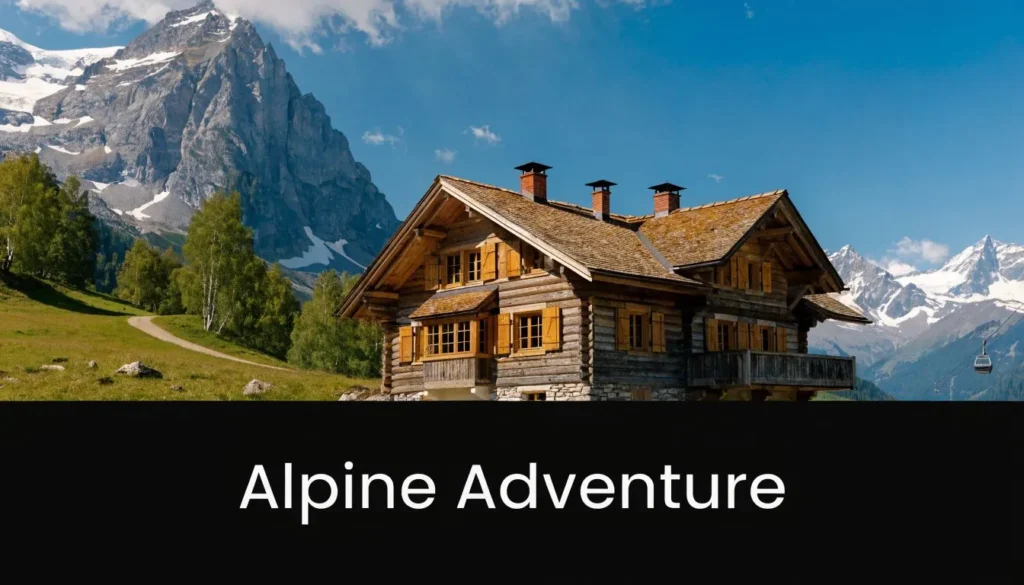
Why the Alps justify the cost
The Swiss Alps work because infrastructure amplifies the terrain instead of competing with it. Rail links, cable cars, mountain towns, and trail access make the region unusually navigable for travelers who want outdoor immersion without expedition-level complexity. Interlaken, Zermatt, and St. Moritz each serve different styles, from active adventure to polished retreat.
Summer and shoulder-season travel can be especially smart here. Hiking, scenic trains, village stays, and lake access often deliver more emotional range than a ski-only framing suggests. Wellness also belongs in the conversation. Alpine travel in Switzerland isn’t just exertion. It often mixes movement with recovery.
- Traveler type: Hikers, scenic rail enthusiasts, couples seeking a restorative trip, and travelers who prefer nature to city density.
- Editorial verdict: Few regions in Europe combine terrain and logistics so well.
- Watch for: Weather shifts. Flexible planning matters more here than in city itineraries.
The Swiss Alps are one of Europe’s cleanest examples of premium travel that actually feels premium in practice.
8. Prague – Medieval Magic and Bohemian Culture
Prague is the match for the Romantic Pragmatist. You want visual drama and old-world atmosphere, but you don’t want every choice on the trip priced like a fantasy tax.
The city’s appeal is straightforward. Gothic and Baroque architecture, a strong café and beer culture, and a compact historic core give Prague immediate atmosphere. Yet it still feels accessible to travelers who’d find Paris or Venice too expensive or too crowded for the same kind of emotional payoff.
The value of preserved mood
Prague’s competitive edge is mood preservation. It still offers the feeling many travelers are seeking when they search for top travel destinations in Europe: towers, bridges, squares, old streets, and nighttime glow. But unlike some heavily visited heritage cities, it can still feel relaxed if you move beyond the most obvious paths.
That’s where neighborhoods such as Vinohrady and Žižkov come in. They widen the trip from “medieval postcard” to “living Central European capital.” The city’s Jewish history, concert culture, and day-trip potential also add weight beyond aesthetics.
A practical point matters. Prague is strongest when approached at a human pace.
- Do less in the center: Historic-core fatigue is real.
- Use local pubs strategically: They often reveal more of the city than themed tourist venues.
- Add one side excursion: It prevents the city from flattening into scenery alone.
Prague doesn’t need to dominate a ranking to earn its place. It fills an important role in this curation: the beautiful, culture-rich city that still feels attainable.
9. Athens – Classical Antiquity and Mediterranean Living
Athens belongs to the Scholar. It’s for travelers who don’t just want ruins, but want the original context behind ideas that still shape politics, philosophy, theater, and architecture.
Yet Athens isn’t only an academic pilgrimage. The city also works for travelers who want one foot in antiquity and the other in a very contemporary Mediterranean capital. That’s why it remains more versatile than its reputation suggests.
More than an archaeological stop
The Acropolis gives Athens its headline image, but the city’s real strength is the conversation between the ancient and the everyday. Monastiraki, Plaka, neighborhood tavernas, and a rough-edged street life keep the trip from becoming too reverent. You can spend a morning with classical history and an evening in a busy square that feels immediate and local.
Athens also has a strategic advantage. It functions well as both destination and launch point. Some travelers come for the archaeology and stay for the food scene and urban energy. Others use it as a gateway to islands or to mainland historical excursions.
Athens rewards travelers who can hold two versions of a city at once: foundational and imperfect.
That’s precisely why it belongs on this list. If Rome is imperial layering and Paris is curated culture, Athens is civilizational origin with a lived-in present still pushing against it.
10. Iceland – Nature, Adventure, and Nordic Culture
Iceland is the choice for the Nature Maximalist. If your ideal trip centers on waterfalls, geothermal areas, volcanic terrain, and changing light rather than museum schedules, this is the strongest outlier on the list.
It doesn’t resemble the rest of Europe’s classic-city circuit, and that’s the point. Iceland gives this editorial selection a necessary edge. Not every traveler wants boulevards, cathedrals, and galleries. Some want exposure to land that feels active, sparse, and geologically unfinished.
A visual break helps explain the appeal better than description alone.
A destination for people who plan around landscape
Iceland works best when travelers respect scale and weather. Even short self-drive routes can feel dramatic because the terrain changes so quickly. Reykjavík offers culture, dining, and a manageable urban base, but the country’s main draw remains movement through open terrain, hot springs, glacier regions, and coastal roads.
This destination also appeals to photographers and repeat travelers who’ve already covered Europe’s major capitals. It feels like a reset from classic sightseeing habits.
- Best for: Road-trippers, hikers, photographers, and travelers who like itineraries built around natural events and outdoor access.
- Most common mistake: Treating Iceland as only a checklist of famous stops.
- Better approach: Pair iconic routes with smaller museums, local food, and slower geothermal stops.
Iceland earns its place because it expands what “Europe trip” can mean. It’s one of the most persuasive arguments for putting its natural environment, not city status, at the center of your planning.
Top 10 European Destinations Comparison
| Destination | Planning complexity | Cost & resources | Expected outcomes | Ideal use cases | Key advantages |
|---|---|---|---|---|---|
| Paris – The Cultural and Artistic Hub | Moderate, museum passes and reservations advisable | High daily costs for central lodging and dining | Deep arts, fashion, and historic-city experiences | Art and fashion enthusiasts, romantic city breaks, museum-goers | World-class museums, iconic landmarks, excellent transport |
| Barcelona – Architecture and Beach Lifestyle | Moderate, timed entry for Gaudí sites and beach planning | Moderate, generally more affordable than Western capitals | Blend of modernist architecture, beach relaxation, nightlife | Design lovers, beach + city travelers, sports and nightlife fans | Gaudí masterpieces, urban beaches, strong tapas culture |
| Rome – Historical and Spiritual Center | Moderate–high, book Vatican and Colosseum in advance | High, tourist-area premiums common | Immersive ancient history, Renaissance art, religious sites | History buffs, art lovers, spiritual travelers | Ancient ruins, Vatican collections, rich culinary scene |
| Amsterdam – Canals, Culture, and Progressive Living | Low–moderate, bike rental and museum cards recommended | Moderate, cheaper outside center | Canal-centric culture, cycling lifestyle, major museums | Cultural travelers, cyclists, LGBTQ+ friendly visitors | Extensive canals, bike infrastructure, top museums |
| Berlin – Innovation and History | Low, flexible urban exploration with some guided tours | Low–moderate, among more affordable major capitals | Contemporary culture, Cold War history, vibrant nightlife | Creative professionals, tech/startup visitors, club-goers | Street art, techno scene, strong creative economy |
| Venice – Romantic Waterways and Artistic Legacy | High, timing and boat logistics important to avoid crowds | Very high, limited supply drives up prices | Unique romantic atmosphere, historic architecture on water | Couples, art historians, unique-architecture seekers | One-of-a-kind canal city, gondolas, rich art tradition |
| Swiss Alps – Adventure, Wellness, and Alpine Beauty | High, seasonal booking, gear and fitness considerations | Very high, luxury resorts and alpine transport costs | Alpine adventure, wellness retreats, scenic train routes | Skiers, hikers, wellness travelers, outdoor adventurers | World-class ski infrastructure, pristine mountain scenery |
| Prague – Medieval Magic and Bohemian Culture | Low, compact city with easy transport passes | Low, highly affordable Central European option | Preserved medieval charm, bohemian arts, beer culture | Budget travelers, history enthusiasts, cultural explorers | Affordability, well-preserved historic center, vibrant beer scene |
| Athens – Classical Antiquity and Mediterranean Living | Moderate, early site visits advisable for heat and crowds | Low–moderate, generally affordable with island access | Deep classical history, archaeological learning, island gateways | Classical scholars, budget travelers, island day-trippers | Acropolis and ancient sites, gateway to Aegean islands |
| Iceland – Nature, Adventure, and Nordic Culture | High, weather planning, 4WD rentals, advance bookings | Very high, expensive transport, rentals, guided tours | Dramatic natural landscapes, glacier and geothermal adventures | Nature photographers, adventure travelers, aurora chasers | Geysers, glaciers, Northern Lights, unique geology |
Your European Adventure Awaits
Europe rewards precision more than ambition. The strongest itinerary is usually the one built around traveler fit, not the one that collects the most famous names.
That is the clearest conclusion from this editorial curation. Paris suits the Art Connoisseur who wants museums, design, and a city that still sets a cultural benchmark. Berlin gives more to the Contemporary Historian or creative-minded traveler who cares about ideas in motion, not only monuments. The Swiss Alps make a stronger case for the Adventurer or recovery-focused traveler than any capital can, especially if the trip’s purpose is activity, rest, and time outdoors.
Broad tourism demand supports the appeal of Europe’s headline destinations, but popularity is a weak planning tool on its own. A heavily visited city may offer prestige, convenience, and dense cultural programming. It may also deliver crowds, higher prices, and an itinerary that feels miscast for the person taking it. Editorial selection matters because it shifts the question from Where does everyone go? to Which place is most likely to hold your attention for a full week?
That framing changes the list in useful ways. The Historian should start with Rome or Athens, where the trip can be organized around civilizational depth rather than surface-level sightseeing. The Design Lover has a stronger match in Barcelona, where architecture shapes the city experience hour by hour. The Urban Explorer will often prefer Amsterdam for its scale, museum density, and ease of movement. The Romantic can still choose Venice or Paris, but the choice works best with realistic timing, budget discipline, and tolerance for crowds. The Adventurer is usually better served by Iceland or the Swiss Alps than by forcing a city break into a role it cannot fill.
Accessibility belongs in that same decision framework. As noted in an accessibility-focused review of European destinations, inclusive trip planning should be treated as a standard part of research, not a special add-on. In practice, that means checking transit systems, hotel entry conditions, pavement quality, and attraction access at the neighborhood level, especially in older cities where historic character often comes with physical constraints.
One good destination usually beats five rushed ones.
Choose the place that matches how you travel. If you want intellectual density, pick a city that rewards slow museum days and long walks. If you want motion, choose mountains, coasts, or road-trip territory. If you want atmosphere above checklist tourism, favor destinations that still feel coherent after the major sights are done. That is how a European trip becomes memorable for the right reasons.
maxijournal.com publishes cross-category editorial work on travel, arts, business, science, and culture, and that broader lens fits the approach behind this curation.
Discover more from Maxi Journal
Subscribe to get the latest posts sent to your email.