You’re probably here because you saw one of those unforgettable dogs with big ears and thought two things at once: “That is adorable,” and “How does that even work?” Maybe it was a Basset Hound whose ears seemed to arrive in the room before the rest of the dog, or a Spaniel with silky ear-fringe swinging like curtains when it ran.
Those ears aren’t just decoration. They shape how these dogs move through the world, how they smell, how they communicate, and how much care they need from the people who live with them. That’s the part many breed roundups miss. Big ears can be charming, funny, elegant, and useful. They can also trap moisture, drag through water bowls, and turn routine grooming into a real responsibility.
If you’re thinking about living with one of the classic dogs with big ears, it helps to understand the whole picture. Not just which breeds are famous for the look, but why those ears exist and what daily life with them is like.
Welcome to the World of Big-Eared Dogs
A big-eared dog has a way of stopping people in their tracks. Children laugh. Adults point. Someone usually asks if the dog grows into those ears. The answer, most of the time, is no. The ears are part of the package.
Some of the best-known dogs with big ears were developed for work, not for comic effect. The long ears of scent hounds help them follow trails with remarkable focus. In other breeds, broad ear flaps soften the face and add to the dog’s expressive look. You can often tell how a dog was meant to use its body just by watching the ears in motion. A hunting hound carries them differently from a companion Spaniel, even if both have that unmistakable floppy silhouette.
That’s why choosing one of these dogs shouldn’t start and end with appearance. A dog can be beautiful and still be a poor fit for your home. Some big-eared breeds are independent and nose-led. Others are gentle family dogs but need frequent grooming. A few combine both traits, which means you get a loving companion who also insists on following every interesting smell across the yard.
Big ears often signal history. They tell you what the dog was bred to do long before they tell you how the dog will look on your couch.
The joy of these breeds is real. So is the upkeep. If you know both sides before you bring one home, you’re much more likely to end up with a healthy dog and a manageable routine.
The Science Behind Those Magnificent Ears
Big canine ears make more sense when you stop thinking of them as ornaments and start thinking of them as tools. In many dogs with big ears, the ear flap helps the dog gather information from the environment, especially scent and sound. Ears also play a major role in expression. Even a relaxed droop or a slight lift can tell you what the dog is paying attention to.
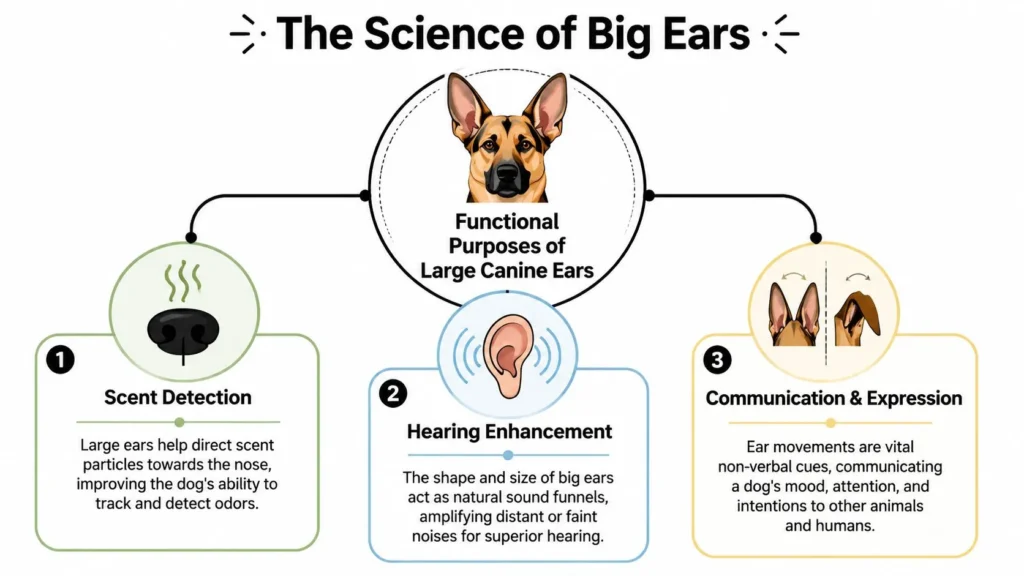
Scent work starts at ground level
The easiest way to picture long ears is to think of them as loose scoops moving close to the ground. As a dog tracks, those ears swing and disturb the air right where odor particles settle. That helps move scent toward the nose.
One verified description puts it clearly: long ears in dogs such as Basset Hounds and Cocker Spaniels act as funnels that collect and channel airborne odor molecules toward the nasal passages, improving olfactory acuity by up to 20 to 30% compared to short-eared breeds according to this breed and care overview of long-eared dogs.
That sounds technical, but the idea is simple. If a dog’s nose is a vacuum for smells, the ears are part of the attachment head. They help gather what the dog wants to inspect.
They can help with hearing and expression
Large ear flaps also change how a dog receives sound. The exact effect differs from breed to breed, but the shape and size of the outer ear can help collect sound waves and direct them inward. Dogs with mobile ears can angle them to focus on a sound source. Even in dogs whose ears hang lower, the pinna still contributes to how sound is gathered.
Communication matters just as much. Dogs don’t talk with words, so they use posture, tail carriage, eyes, mouth tension, and ears. A dog with long pendulous ears won’t signal exactly like a prick-eared shepherd, but ear set and movement still tell you plenty. Softly hanging ears can suggest relaxation. A sudden change in tension can tell you the dog has locked onto a smell, heard a noise, or become unsure.
Big ears are functional, but they come with trade-offs
The same ear shape that helps gather scent can also reduce airflow into the ear canal. That’s where biology stops being elegant and starts becoming practical. Warmth, moisture, wax, and debris can linger more easily in floppy ears than in upright ones.
Practical rule: If an ear flap covers and closes off the canal, assume it needs regular checks even if the dog seems comfortable.
That’s the central lesson with dogs with big ears. Form and function are linked. The feature people love most is also the feature that often requires the most attention.
A Showcase of Popular Big-Eared Breeds
When people search for dogs with big ears, they’re often picturing one of a handful of iconic breeds. These dogs don’t all behave alike. Some are steady and low-key. Some are busy and vocal. Some are scent-driven and can seem selective about listening once a smell catches their attention.

Comparing popular big-eared dog breeds
| Breed | Temperament | Typical Ear Length | Ear Care Needs |
|---|---|---|---|
| Basset Hound | Calm, stubborn, affectionate | Very long and low-set | Frequent checks, wipe debris, keep dry |
| Bloodhound | Gentle, determined, scent-focused | Extremely long | Regular inspection and cleaning |
| Cocker Spaniel | Sweet, lively, people-oriented | Long and feathered | Cleaning plus grooming around the ear |
| Beagle | Cheerful, curious, social | Long and soft | Routine checks, especially after outdoor activity |
| Black and Tan Coonhound | Independent, vocal, driven | Long and pendulous | Ongoing moisture and wax monitoring |
The Bloodhound is the classic example
If one breed defines the idea of dramatic ears, it’s the Bloodhound. The breed holds the Guinness World Record for the longest ears on a dog. In 2004, a Bloodhound named Tigger set the mark with a right ear of 13.75 inches (34.9 cm) and a left ear of 13.5 inches (34.3 cm), as noted in this summary of big-eared breeds and Bloodhound history.
That record fits the breed’s job. Bloodhounds are built for trailing. They’re often gentle with people, but they don’t approach life like a dog waiting for your next instruction. They approach life like an investigator. If your household wants a dog that checks in constantly and trains with crisp precision, a Bloodhound may feel more independent than expected.
Basset Hounds and Beagles are easier to recognize than to predict
Basset Hounds often look sleepy and slow, but that look can fool people. They may move at a measured pace, yet they’re still hounds. Their nose matters. Their choices often make more sense to them than to their owner.
Beagles share that hound logic in a more compact package. They’re usually social and lively, and many families love them. But a Beagle that catches an interesting scent can become briefly deaf to your plans for the afternoon. That doesn’t make the dog stubborn in a moral sense. It means the breed was built to prioritize odor information.
If you’re comparing family-friendly options, broad temperament fit matters as much as appearance. A general guide to family-oriented dog breeds can help you think beyond ear shape and focus on home life.
Spaniels and Coonhounds bring different challenges
Cocker Spaniels are often chosen for their soft expression and lush coat. Their long ears frame the face beautifully, but the feathering also means more grooming. Food, water, tangles, and trapped dampness can all become daily issues if the ears aren’t managed.
Black and Tan Coonhounds are another standout among dogs with big ears. Guinness World Records has also recognized Coonhounds for exceptional ear length, and in 2021 a Black and Tan Coonhound named Lou set a record with each ear measuring 34 cm (13.38 inches) according to this AKC breed lifestyle article on long-eared dogs. In personality, they tend to be more rugged and more driven than many first-time owners expect.
A useful question is not “Which dog has the biggest ears?” It’s “What kind of life was this dog bred for, and does my household match it?”
That question usually leads to a better match than appearance alone.
Practical Ear Care and Grooming Routines
Big ears need a routine, not occasional good intentions. Many owners wait until a dog starts scratching or shaking its head, but by then the ear may already be irritated. A better approach is steady maintenance.
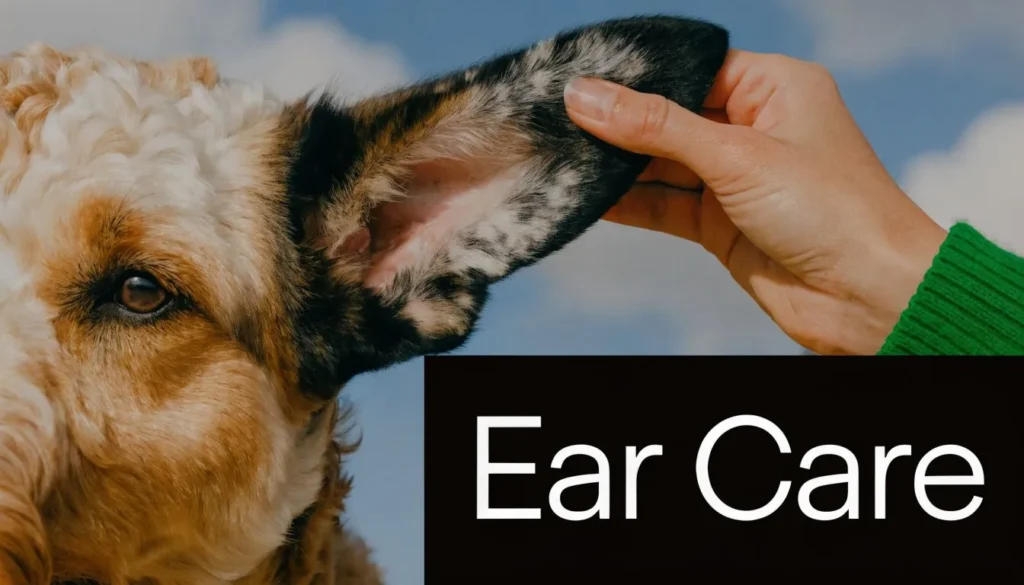
A verified 2023 veterinary study found that dogs with pendulous ears had a 3.5 times higher incidence of ear infections, and chronic otitis can lead to annual vet bills that exceed $500, according to this article discussing big-eared breeds and ear health. That’s why ear care belongs in the same category as tooth brushing or nail trims. It’s basic preventive care.
A simple home routine
Start with observation. Lift the ear flap and look for redness, excess wax, strong odor, discharge, or skin that looks moist and unhappy. Healthy ears are usually quiet. They don’t smell foul, they aren’t sticky, and the dog doesn’t react as if the area hurts.
Then build a routine like this:
- Choose the right cleaner. Use a dog-specific ear cleanser recommended by your veterinarian.
- Apply gently. Lift the flap, add the cleanser as directed, and avoid forcing anything deep into the canal.
- Massage the base. This helps loosen wax and debris.
- Let your dog shake. Messy, yes. Useful, also yes.
- Wipe what you can see. Use cotton wool or gauze on the visible parts only.
Never push cotton swabs down into the canal. Owners often mean well and end up packing debris farther in.
Grooming details owners often miss
Long ears don’t just collect wax. They drag through life. Water bowls, wet grass, food dishes, mud, and bathwater all end up on the ear leather or the feathering around it.
Some dogs need more than cleaning:
- Feathered ears often need careful brushing to prevent mats.
- Hairy ear openings may need veterinary guidance or groomer help if hair traps moisture.
- After swimming or bathing, dry the ears thoroughly instead of assuming they’ll air-dry on their own.
This demonstration is helpful if you want to see calm handling and ear-cleaning technique in action:
Make it easy for the dog
The best grooming routine is the one your dog doesn’t dread. Pair ear handling with treats, gentle touch, and short sessions. Touch the ear flap when nothing unpleasant is happening. Lift it, look, reward, and move on.
“Check often, clean when needed, and never wait for a bad smell to tell you something’s wrong.”
That pattern matters more than perfection. A brief check done consistently beats an elaborate routine done only when you remember.
Preventing Common Big-Ear Health Problems
The main medical issue in dogs with big ears is otitis externa, which means inflammation or infection of the outer ear canal. Owners don’t need to memorize the term, but they do need to recognize the setup. A covered ear canal stays warmer, darker, and more humid. Yeast and bacteria like that environment.
A verified summary notes that floppy, long ears are associated with otitis externa at 5 to 10 times the prevalence seen in erect-eared dogs, and that stagnant humidity supports yeast and bacterial overgrowth. The same source reports Malassezia pachydermatis in 65% of cases in this context, as described in this discussion of floppy versus erect ears and related health concerns.
What owners usually notice first
Most dogs don’t announce an ear problem clearly. They give hints.
Watch for these signs:
- Head shaking that happens repeatedly, not just once after a nap
- Scratching at the ears or rubbing the head on furniture
- Odor coming from the ear flap or canal
- Visible discharge or wax buildup
- Sensitivity to touch when you handle the ear
- A tilted head or general discomfort
These signs don’t tell you the exact cause. They do tell you the ear needs attention.
Why home treatment can go wrong
Owners often reach for whatever is in the cabinet and hope for the best. That’s risky. A dog can have yeast, bacteria, allergy-related inflammation, a foreign body, or a damaged ear canal, and those problems aren’t managed the same way.
If your dog also has facial swelling, hives, or other signs that suggest an allergy-related flare, general medication questions should still go through your veterinarian. A plain-language guide to Benadryl use in dogs can help frame the conversation, but ear disease itself still needs a proper exam when signs persist.
Prevention is mostly habit
Good prevention is ordinary and repeatable:
- Keep ears dry after baths, rain, and swimming.
- Inspect after outdoor activity if your dog runs through brush or fields.
- Stay consistent with routine cleaning based on your veterinarian’s advice.
- Book an exam early if the ear starts to smell, redden, or bother the dog.
Watch for this pattern: a dog that starts with mild scratching in the morning and has progressed to head shaking, odor, or pain by evening shouldn’t be treated as a “wait and see” case.
Big ears can also be injured. A dog that shakes violently can develop swelling in the ear flap, and long ears can get scraped on rough surfaces. Those aren’t the most common problems, but they’re worth keeping on your radar if your dog is suddenly protective of one ear or the flap looks puffy.
Training and Living with a Big-Eared Dog
Living with a big-eared dog is partly about grooming, but it’s also about adjusting your expectations. Many of these dogs were bred to notice things humans miss. A drifting scent outside the fence or a rustle in the brush may matter more to them than your cheerful recall cue.
That doesn’t make training impossible. It means training has to compete with powerful natural instincts. Short sessions work better than long lectures. High-value rewards usually beat dry biscuits. And if your dog is a scent hound, sniffing isn’t a distraction from being a dog. It is being a dog.
Daily life hacks that help
Small setup changes make a big difference:
- Use a narrow, high-sided bowl for dogs whose ears fall into food or water.
- Wipe ears after meals if the leather or feathering gets damp.
- Check ears after walks through weeds, sand, or damp grass.
- Practice gentle ear handling when the dog is calm, then reward immediately.
A lot of owners focus on obedience and forget handling skills. But handling is what allows you to look inside the ears, clean them, and notice trouble early. If your dog resists touch, make that a training goal.
Keep training realistic
Big-eared hounds often respond best when training feels like a game with a purpose. Nose work, scent games, and reward-based recall practice fit the dog better than constant correction. If you want a broader foundation, this guide on how to train your dog covers the basics in a practical way.
The easiest dog to care for is the dog that has learned your hands near its ears predict calm attention, not surprise restraint.
That one habit improves almost everything else. Grooming gets easier. Vet visits get smoother. You spend less time wrestling and more time caring.
Is a Big-Eared Companion Right for You?
Dogs with big ears can be delightful companions. They’re expressive, memorable, and in many cases wonderfully tuned to the world around them. Some are gentle loungers. Some are comic charmers. Some are serious scent workers in a family-dog body.
But the ears are not a side detail. They affect grooming, cleanliness, health monitoring, and sometimes training. If you love the look but don’t want a regular ear-check routine, one of these breeds may frustrate you. If you enjoy hands-on care and don’t mind a dog that brings a little extra maintenance into your week, the match can be excellent.
Ask yourself a few honest questions. Are you willing to check ears regularly? Can you handle the possibility of recurring ear trouble? Does your lifestyle fit a dog that may follow its nose with real determination? Do you want the temperament that often comes with these breeds, not just the silhouette?
For the right owner, dogs with big ears are more than photogenic. They’re fascinating animals with a visible link between structure, behavior, and history. That’s part of their appeal. You don’t just live with the ears. You live with everything they represent.
If you enjoy clear, practical writing on pets and many other topics, visit maxijournal.com for more approachable guides, fresh commentary, and everyday explanations that make complex subjects easier to understand.
Discover more from Maxi Journal
Subscribe to get the latest posts sent to your email.