So, you’re thinking about making money from your podcast. Before you start dreaming about those big-ticket sponsorships, we need to have a real talk about what it actually takes. It’s not about chasing vanity metrics or having a million downloads overnight. It’s about building a rock-solid foundation.
Earning an income from your show hinges on one thing: a loyal, engaged audience that genuinely trusts you. Get that right, and the money will follow. This groundwork is what separates the podcasts that thrive for years from those that fizzle out chasing the wrong goals.
Laying Your Monetization Foundation
Before you even think about putting a price on an ad spot, you need to do a serious self-audit. It’s time to get honest about where your show really stands.
Are You Ready to Monetize?
Take a hard look at your podcast and ask yourself a few tough questions. Your answers will tell you if you’re truly ready to ask for your audience’s—or a sponsor’s—money.
- Are you consistent? Do you drop episodes like clockwork? Brands and paying members need to know they can count on you. A spotty release schedule is a major red flag.
- Is anyone listening actively? Forget raw download numbers for a second. Are people emailing you? Sliding into your DMs on social? Leaving reviews? That’s engagement, and it’s pure gold. It proves people care.
- Is your niche crystal clear? Do you know exactly who you’re talking to and what your show is about? A tightly focused show, even with a smaller audience, is way more attractive to the right brands than a generic one with a massive, undefined listenership.
This isn’t just a box-ticking exercise. It’s about identifying your strengths and, more importantly, finding the gaps you need to fill before you start building out your revenue streams.
Before we dive deeper, let’s do a quick check-in. The table below is a simple way to gauge your podcast’s monetization readiness based on where you are in your journey.
Monetization Readiness Checklist
| Metric | Emerging Podcast (Under 5,000 Downloads/Episode) | Established Podcast (5,000+ Downloads/Episode) |
|---|---|---|
| Publishing Schedule | Consistent (e.g., weekly, bi-weekly) for at least 3-6 months. | Rock-solid, predictable schedule for 6+ months. |
| Audience Engagement | Starting to receive listener emails, social media comments, or reviews. | Steady stream of listener interaction; active community on at least one platform. |
| Niche Definition | You can describe your ideal listener and show topic in one sentence. | You have clear listener personas and content pillars that align with your niche. |
| Website & Email List | A basic website exists; you’ve started collecting emails. | A professional website with show notes; actively growing and engaging an email list. |
| Download Velocity | Downloads are growing steadily within the first 7 days of release. | Strong download numbers in the first 72 hours; predictable performance. |
This checklist isn’t meant to be a gatekeeper. It’s a roadmap. If you see gaps, that’s great! Now you know exactly what to work on to build a show that’s ready to generate real, sustainable income.
Key Metrics That Actually Matter
Let’s be blunt: total lifetime downloads mean very little. Smart advertisers and potential paying members look at metrics that show loyalty and attention.
The most successful podcasters think of sponsorships as their last line of defense, not their first. They build a sustainable business around their show by creating multiple revenue streams that work whether they have 500 listeners or 50,000.
Focus on stats like download velocity—how many downloads an episode gets in the first 7 or 30 days. This shows you have an active, waiting audience. Even better is the listener completion rate. If you can show that most of your audience sticks around for the entire episode, you’re proving your content is sticky. That’s a powerful selling point.
Get to Know Your Listeners
Knowing who is on the other end of the microphone is non-negotiable. It’s time to become a detective and dig into your podcast hosting analytics. Look for data on age, gender, and geographic location.
This isn’t just trivia; it’s a treasure map. For instance, discovering that 70% of your audience are women aged 25-34 in the United States is a game-changer. Suddenly, you’re not just a podcast; you’re a direct line to a highly specific demographic. This is how smaller, niched-down shows can command premium rates that rival bigger, more generic podcasts.
This foundation supports more than just ads. Knowing your audience’s struggles and desires is essential for creating products or premium content they’ll actually pay for. It’s also the key to building an email list—a powerful asset you own completely, no matter what happens to social media algorithms. You can dive deeper into this by learning how to build an email list and nurture that direct relationship.
Securing Your First Podcast Sponsorships
Landing your first sponsorship can feel like the final boss of podcast monetization. For many, it’s the ultimate proof that you’ve built something valuable. But here’s the reality: securing that first deal is less about having a million listeners and more about smart positioning and proving your show’s worth.
This is where you transform all that listener loyalty you’ve cultivated into a real revenue stream. The best sponsorships are true partnerships, connecting your audience with brands they’ll actually care about. Get this right, and you’ll strengthen the trust you’ve worked so hard to build.
Before you even think about outreach, brands will want to see proof of an engaged audience. They’re looking for a few key signals.
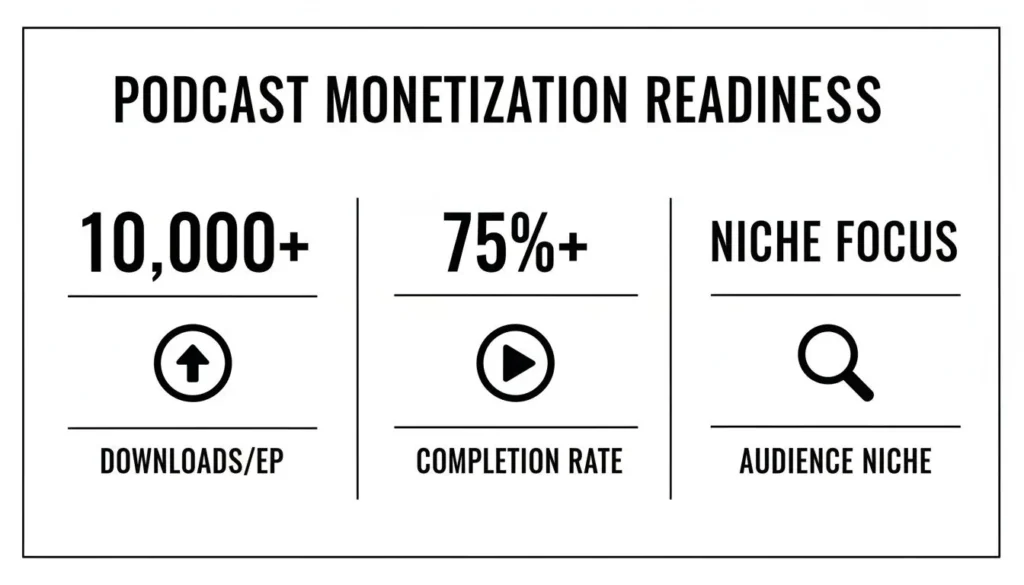
These numbers tell a sponsor that your audience doesn’t just download—they listen. That’s what they’re paying for.
Understanding Podcast Ad Formats
Before you pitch anyone, you have to know what you’re selling. Podcast ad placements are pretty straightforward and are usually broken down into three types.
- Pre-Roll Ads: These are short 15-30 second spots at the very start of an episode. They’re great for immediate exposure, but they’re also the easiest for listeners to skip.
- Mid-Roll Ads: Clocking in at 60-90 seconds, these are placed at a natural break in your content. This is the prime real estate. Listeners are already hooked, making mid-rolls harder to skip and far more valuable.
- Post-Roll Ads: These 15-30 second ads run at the very end. Engagement is typically lowest here, as many people dip out once the main content is over.
The gold standard is the host-read ad. This is you, in your own voice, delivering the ad copy. It’s personal, it sounds like a genuine recommendation, and it’s why brands pay top dollar for it. This format consistently outperforms programmatic ads, which are generic spots inserted automatically by an ad network and can feel jarring to the listener.
Key Insight: A host-read ad is more than just an ad; it’s an endorsement. You’re transferring the trust your audience has in you over to the brand, making it an incredibly powerful and high-value asset.
Calculating Your Rates with CPM
The industry standard for pricing podcast ads is CPM, or “Cost Per Mille,” which just means cost per thousand listeners. The math is simple:
(Ad Rate / Total Downloads) x 1,000 = CPM
So, if you charge $250 for a mid-roll ad and your episode consistently gets 10,000 downloads, your CPM is $25.
But CPM isn’t a fixed number; it fluctuates based on your show’s niche, ad placement, and audience engagement. The market is booming—global ad revenue hit $3.46 billion in 2023 and is projected to reach $4.79 billion by 2026.
For podcasters, this growth translates directly to higher earning potential. Host-read ads typically command CPMs of $18-$45, with top-tier shows in niche categories hitting $50-$100+. Mid-roll slots can demand anywhere from 1.2x to 2x more than pre-rolls. If your show is in a lucrative niche like business, tech, or finance, you could add another 10-30% to your rates because of the high-value audience.
For a show with 10,000 downloads per episode, a $25 CPM means $250 per ad spot. Land a few of those per episode, and you’re looking at significant income.
Crafting a Compelling Media Kit
Think of your media kit as your podcast’s resume. It’s a clean, professional document—usually a one or two-page PDF—that gives a potential sponsor everything they need to know at a glance.
Don’t get bogged down in fancy designs. Just make sure it includes these essentials:
- Show Information: Your podcast name, cover art, and a powerful one-liner that explains what your show is about.
- About the Host(s): A short bio that builds your credibility and lets your personality shine through.
- Audience Demographics: This is what brands crave. Include data on your listener’s age, gender, location, and key interests.
- Key Metrics: Showcase your best numbers, like downloads per episode (within the first 30 days), listener completion rates, and social media followers.
- Sponsorship Packages: Clearly lay out your ad formats (pre-roll, mid-roll, post-roll) and pricing. Consider offering package deals, like three mid-roll spots for a slight discount.
Keep this document updated with your latest stats every month or so. To really impress brands, go beyond basic downloads and learn how to measure content performance in more detail.
Finding and Pitching Potential Sponsors
Don’t sit around waiting for sponsors to find you. The best way to land deals is to go out and get them yourself.
Start by making a list of brands you personally use and respect. Your ad reads will be far more authentic and effective if you’re promoting something you genuinely believe in.
Once you have your target list, it’s time to send a few emails. A cold email can work wonders if it’s personalized, professional, and gets straight to the point.
Cold Email Example
Subject: Partnership with [Your Podcast Name] | Reaching [Your Audience Niche]
Hi [Contact Name],
My name is [Your Name], and I’m the host of [Your Podcast Name], a weekly podcast where I help [Your Audience Niche] [The Problem You Solve].
I’m reaching out because I’m a huge fan of [Brand Name] and I know your mission to [Brand’s Mission] would connect with my audience of [Number] engaged listeners. They are primarily [Key Demographic, e.g., ‘female entrepreneurs aged 25-40’], a perfect match for your brand.
Our episodes currently average [Number] downloads in the first 30 days, and we have an incredibly loyal community. We’ve worked with brands like [Previous Sponsor, if any] in the past with great results.
I’ve attached our media kit with more on our audience and sponsorship packages. Are you open to a quick call next week to explore a partnership?
Best,
[Your Name]
Don’t get discouraged if you don’t get a reply right away. People are busy. Send a polite follow-up a week later. Persistence is a huge part of this game.
Diversifying Your Income Beyond Ads
Sponsorships are great, and landing that first big ad deal feels amazing. But relying on them alone is a risky game. You’re essentially putting your podcast’s financial health in someone else’s hands. One shift in a brand’s budget or marketing strategy, and that income can disappear.
True stability comes from building multiple income streams. Think of it as creating a financial safety net for your show. This isn’t just about defense, though. It’s about actively building a real business around your content by monetizing the trust you’ve built with your listeners.
The Power of Affiliate Marketing
Affiliate marketing is the perfect next step after ads. It’s straightforward: you earn a commission for recommending products or services you genuinely use and love. The best part? You can get started right away, no matter how many downloads you have.
Success here hinges on authenticity. This is not about just littering your show notes with random links. It’s about weaving recommendations into your episodes where they feel natural and provide real value.
Say you host a podcast for freelance writers. In an episode on productivity, you could share a personal story about how a specific project management tool saved a major client project. It’s not a scripted ad; it’s a helpful tip. You then pop your affiliate link in the show notes for anyone who wants to check it out.
Getting Started with Affiliate Marketing
- List Your Tools: Jot down all the products, software, books, or services you use that your audience would find genuinely helpful.
- Search for Programs: A quick Google search for “[Brand Name] affiliate program” will usually tell you if they have one. Many companies, from small startups to huge retailers, have them.
- Just Ask: If a brand you love doesn’t have a public program, don’t be afraid to pitch them directly. A quick email explaining your show, your audience, and why it’s a good match can work wonders.
The most effective affiliate mentions don’t feel like marketing at all. They are genuine recommendations shared in the natural context of your content. One authentic story about a product solving a real problem for you is more powerful than a dozen scripted ad reads.
Build a Community with Direct Listener Support
Your most dedicated listeners—the ones who tune in every week—are your superfans. Giving them a way to support your show directly creates a reliable, recurring revenue stream that’s completely independent of advertisers.
Platforms like Patreon, Memberful, or even the built-in subscription tools from hosts like Buzzsprout make this surprisingly easy. You just set up a few membership tiers and offer exclusive content in exchange for a small monthly fee.
Popular Membership Perks
- Bonus Episodes: Think behind-the-scenes content, extended interviews, or “ask me anything” (AMA) sessions just for members.
- Ad-Free Listening: This is a huge one. A clean, uninterrupted version of your regular episodes is a highly valued perk.
- Early Access: Let your subscribers get new episodes a day or two before everyone else.
- Community Access: A private Discord server or Facebook group gives members a place to connect with you and each other.
Even with a modest following, this model works. A podcaster with just 200 superfans paying $5 per month can bring in $1,000 in predictable income every month. This approach rewards you for the quality of your community, not just the quantity of your downloads. Digging into affiliate marketing is another fantastic way to monetize that listener trust.
Turn Your Expertise into Your Own Products
Selling your own products is the ultimate monetization strategy. You have total control, and you keep 100% of the profits. Your podcast has already done the heavy lifting of positioning you as an expert; now you can create products that solve your audience’s biggest problems.
You don’t have to start big. A small, high-value product can be a great entry point.
- Low-Ticket Digital Products: This could be anything from templates and checklists to ebooks and workshops. A cooking podcast might sell a $19 recipe bundle. A business show could offer a $47 social media content calendar.
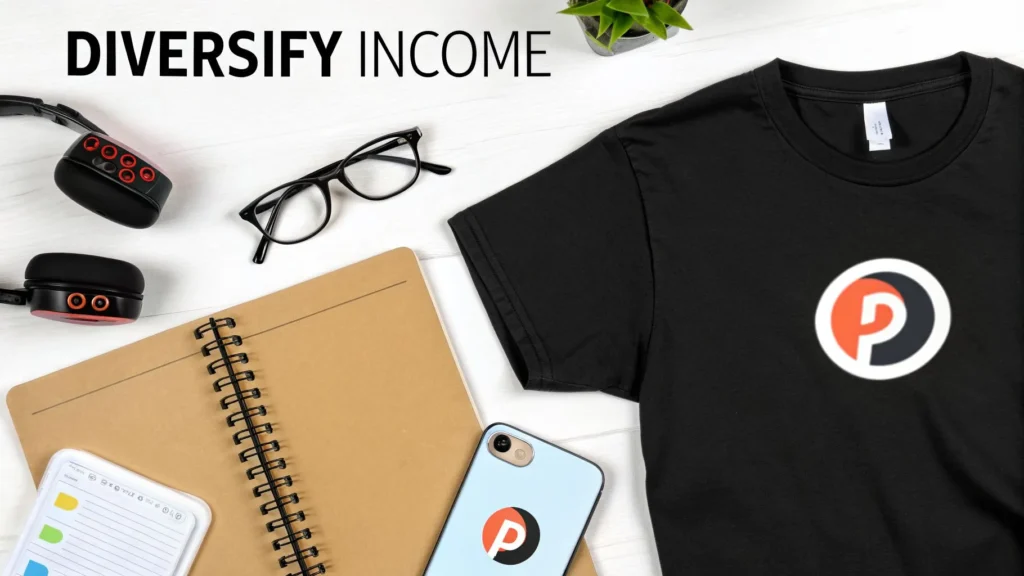
- Merchandise: If you’ve got a killer brand and an engaged audience, merch is a no-brainer. T-shirts, mugs, and stickers are a fun way to generate extra income while letting your fans fly your flag.
- High-Value Courses or Consulting: Once you’ve really established your authority, you can level up to comprehensive digital courses or one-on-one consulting. Your podcast becomes the perfect sales funnel, warming up clients who already know and trust your expertise.
By building out these different income streams, you create a much more resilient podcasting business. You’re no longer at the mercy of a single platform or advertiser. Instead, you’re building a direct relationship with your audience and gaining the freedom to grow your show on your own terms.
Scaling Your Podcast into a Media Brand
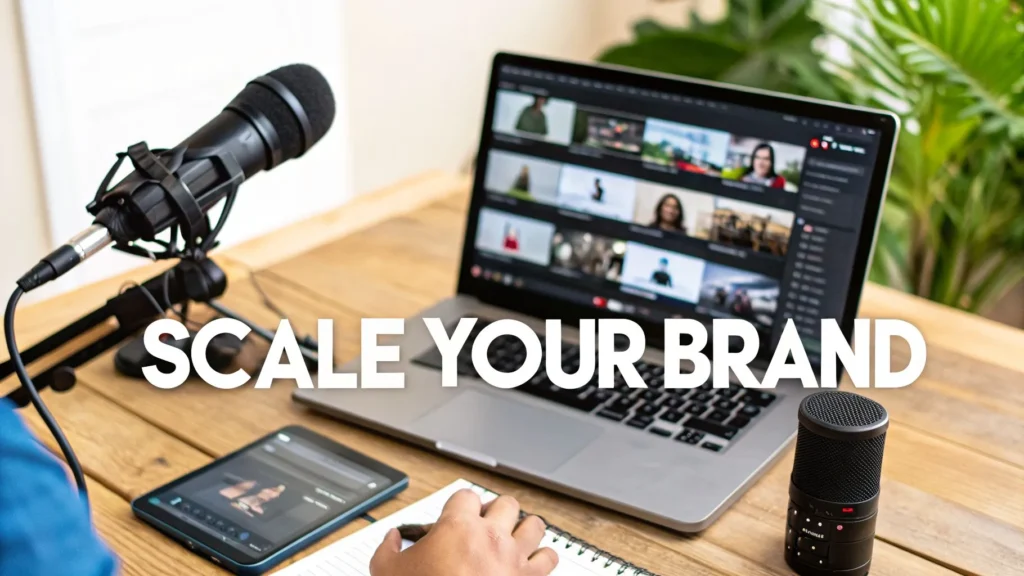
If you’re serious about scaling your podcast’s revenue, you have to stop thinking of yourself as just a podcaster. You’re building a media brand. Your audio episodes are the raw material, not the finished product.
This is how you move from earning a little extra cash to building a sustainable business. Every single hour of audio you record can be broken down, repackaged, and redeployed into a dozen different content assets. Each one is a new opportunity for someone to discover your show and a new way for you to earn money.
Transform Audio into a Content Machine
Every episode is a potential goldmine. Instead of just dropping an episode and moving on, you need to get in the habit of extracting every ounce of value from it. This is the foundation of smart monetization.
The easiest place to start is with your show notes. Don’t just post a few links; turn them into a comprehensive, SEO-friendly blog post. Publishing a full, cleaned-up transcript is another no-brainer. This can pull in a surprising amount of traffic from people searching for your topics on Google.
Then, you can get creative. Pull out the most impactful quotes or data points and design simple graphics for Instagram, X, or LinkedIn. These little breadcrumbs act as trailers, giving people a taste of the full episode and a reason to go listen.
The real goal here is to make your show discoverable everywhere, not just inside Apple Podcasts or Spotify. Turning your audio into text and visuals creates multiple front doors for new listeners to walk through.
You’re creating a system. Someone finds your blog post via Google, which leads them to your podcast. On the podcast, they hear you mention your membership community. You just converted a random search into recurring revenue.
Capitalize on the Rise of Video Podcasting
The line between audio and video has basically disappeared. A recent study found that 53% of monthly podcast listeners now want to see a video version of the shows they follow. If you’re not on video, you’re willingly ignoring half your potential audience.
At a minimum, you should be recording your podcast sessions on video and uploading the full episode to a dedicated YouTube channel. This immediately puts your content on the world’s second-biggest search engine.
Key Benefits of Video Podcasting
- Expanded Reach: YouTube’s algorithm is incredibly powerful for discovery. You’ll reach people who would never have found you on an audio-only app.
- New Monetization: Once your channel is eligible, you can turn on YouTube monetization and start earning ad revenue directly from your views.
- Enhanced Sponsorship Value: Video gives you more to sell. You can offer sponsors on-screen logos, product placements, and branded backgrounds, which allows you to charge a premium over simple audio ads.
Don’t underestimate the power of short-form video. Pull the most compelling 60-second clips from your episodes and post them as YouTube Shorts, Instagram Reels, or TikToks. They’re perfect for grabbing attention and funneling viewers back to your full-length content.
Take Your Show on the Road with Live Events
There’s no better way to build a real community—and make serious money—than through live events. It’s where you turn your listeners from a passive audience into an active tribe.
Virtual events are the perfect place to start. They’re low-cost, high-margin, and easy to set up.
- Ticketed Live Q&As: Bring a popular guest back for a live Q&A session. Use a platform like Zoom or Crowdcast to sell tickets and manage the event.
- Virtual Workshops: Teach what you know. If you host a personal finance podcast, you could run a $99 workshop on “Building Your First Budget” and generate thousands of dollars in a single afternoon.
Once you have a solid local audience, in-person events are the next step. A live podcast recording, a fan meetup, or a full-day seminar can command ticket prices from $25 to $500 or more, depending on the format and value.
These events aren’t just about ticket sales. They create amazing content for your other channels (recordings, photos, testimonials) and build a level of fan loyalty that powers every other part of your business. This is how you go from being a show people listen to, to a brand they experience.
Managing the Business of Podcasting
Once the money starts rolling in, your podcast isn’t just a passion project anymore—it’s a business. It’s time to start thinking like an entrepreneur, not just a creator. While dealing with the backend operations isn’t the most exciting part of podcasting, it’s what separates a flash-in-the-pan show from one with real staying power.
To make your monetization efforts stick, you have to get serious about the business side of things. That means digging into your data, getting your legal house in order, and handling your finances like a pro.
Proving Your Worth with Analytics
Let’s be blunt: sponsors don’t care about your downloads as much as they care about their return on investment (ROI). They want to see that their money is reaching the right people and driving action. Your hosting platform’s analytics dashboard is where you’ll find the proof. Forget vanity metrics and focus on the data that tells a story of an engaged audience.
When you’re pitching partners, these are the numbers that matter:
- Download Velocity: How many downloads does a new episode get in the first 7, 30, and 60 days? This shows sponsors you have a loyal audience that listens right away.
- Listener Demographics: Get granular with your audience’s age, gender, and location. This is how brands confirm your listeners are their ideal customers.
- Conversion Rates: If you’re running ads with a promo code or a custom URL, you need to track how many people are using it. A 0.1-2% conversion rate is actually considered a strong performance in this space.
For many podcasters, sponsorships make up the lion’s share of their income—often 60-85% of the total revenue mix. Handing over clear, compelling data is how you justify your ad rates and turn a one-time sponsor into a long-term partner. For more stats on podcast monetization, check out this deep dive from New Media.
Navigating Legal and Ethical Guidelines
The moment you take money for a sponsorship, you’ve entered a legal contract. This is a minefield for new podcasters, so tread carefully. Never, ever move forward with a sponsorship based on a casual email chain.
A formal sponsorship agreement is non-negotiable. This document protects both you and the brand by clearly outlining deliverables, payment terms, ad placement, and usage rights. It prevents misunderstandings and ensures you get paid on time.
Just as critical is being transparent with your listeners. The Federal Trade Commission (FTC) has clear rules about endorsements, and you have to follow them. You must disclose when you have a financial relationship with a brand, and it needs to be obvious. Something as simple as, “This episode is sponsored by [Brand Name],” before the ad read works perfectly. Trying to hide it or being vague is a fast way to lose your audience’s trust and land in legal hot water.
Managing Your Podcast Finances
Making money means you have to manage money. It’s time to put on your business hat and get your finances sorted. The first, most important step? Open a separate bank account for all your podcast-related income and expenses. This one move will save you massive headaches come tax time.
From there, get obsessive about tracking everything.
- Income: Log every single dollar, whether it comes from sponsorships, affiliate links, memberships, or merch sales.
- Expenses: Keep a record of all business costs. This includes your hosting fees, new gear, software subscriptions, and any marketing spend. A lot of these expenses are tax-deductible.
This isn’t just about being organized. It’s about knowing your numbers. When you have a clear financial picture, you can calculate your profit margins, make smart decisions about where to reinvest in your show, and confidently build a sustainable business for the future.
Common Questions About Podcast Monetization
When you start looking into making money from your podcast, you’re bound to run into a lot of conflicting advice and confusing numbers. It’s a common experience.
We’re here to cut through the noise. Let’s tackle some of the most frequent questions we see from podcasters, giving you the direct answers you need to start earning.
How Many Downloads Do I Really Need to Monetize
This is the question on every podcaster’s mind, but there’s no single magic number. For programmatic ads and most large ad networks, the industry benchmark you’ll hear most often is around 5,000 downloads per episode within the first 30 days of its release.
But that figure isn’t a hard-and-fast rule. If your show serves a highly engaged, niche audience—think financial advisors, classic car collectors, or expert knitters—you can land direct sponsorships with as few as 1,000 downloads. Brands will absolutely pay a premium to get in front of a specific, hard-to-reach group.
Remember, monetization isn’t just about ads. You can implement powerful strategies like affiliate marketing and direct listener support from day one, regardless of your download numbers. Your first dollar can be earned from your first true fan.
Should I Join a Podcast Network or Find Sponsors Myself
Deciding whether to join a network or go independent really depends on your goals, your personality, and how big your audience is right now. Each path has its own clear upsides and downsides.
Joining a podcast network can give you instant credibility and open the door to a roster of sponsors you couldn’t get on your own. That convenience comes at a price, though. Networks typically take a hefty revenue cut, often between 30-50%, and most won’t even talk to you unless you have a large, established audience—sometimes 50,000+ downloads per episode.
On the other hand, going solo and securing your own direct deals gives you total creative control and, most importantly, 100% of the revenue. It’s more of a hustle, since you’ll handle all the outreach, negotiation, and paperwork yourself. But for podcasts in that 5,000-50,000 download sweet spot, it’s almost always more profitable.
What Is a Realistic First-Year Income for a New Podcast
Let’s be real: most podcasts make very little, if any, money in their first year. Your primary focus should be on making great content and building a community, not on cashing checks.
Once you have some momentum, however, the numbers can get interesting. A show that consistently gets 5,000 downloads per episode and lands two mid-roll sponsors at a conservative $25 CPM (cost per mille) could bring in $250 per episode. If you publish weekly, that works out to about $1,000 per month from sponsorships alone.
From there, that income grows significantly when you start layering in other streams. Adding affiliate commissions from products you actually use and recommend, or launching a simple membership for your most dedicated fans, can easily double or triple that monthly figure. Your niche, your consistency, and how hard you promote will ultimately set your earning potential.
At maxijournal.com, we publish insightful articles and commentaries on everything from technology and business to arts and entertainment. Discover fresh perspectives and dive into topics you love by exploring our daily content at https://maxijournal.com.
Discover more from Maxi Journal
Subscribe to get the latest posts sent to your email.