In an oversaturated music market, securing attention for your work feels more challenging than ever. While major label backing can seem like the only viable path, a vibrant and influential ecosystem of independent music blogs offers a powerful alternative for emerging artists. These platforms act as modern tastemakers, championing genuine artist discovery and fostering communities around fresh sounds.
Unlike algorithm-driven playlists that often lack depth, these blogs provide the crucial context, storytelling, and human curation that can elevate a song into a career milestone. They are run by passionate writers and editors dedicated to finding and amplifying tomorrow’s essential artists, making them a direct line to a dedicated and engaged audience.
This guide is a strategic roadmap, not just a simple list. We will dissect 7 of the most respected independent music blogs, providing actionable intelligence to help you connect with them effectively. For each entry, you will find:
- Their specific genre focus and editorial style.
- Clear, direct links and submission guidelines.
- Screenshots and examples of recent coverage.
- Practical tips for crafting a pitch that gets noticed.
Whether you’re an artist preparing to send your demo or a music lover searching for your next favorite band, this directory is your essential tool for navigating the indie scene. It’s time to cut through the noise and find the platforms that will truly hear you.
1. Stereogum
Stereogum is a titan among independent music blogs, having built a reputation since 2002 for its timely news coverage, sharp music criticism, and knack for artist discovery. It stands out as a daily publication that balances breaking stories with deep, thoughtful commentary, making it a go-to source for dedicated music fans and a primary target for artists seeking credible exposure. The site’s broad genre focus means you’ll find everything from indie rock and pop to metal, hip-hop, and jazz, all covered with the same level of respect and critical rigor.
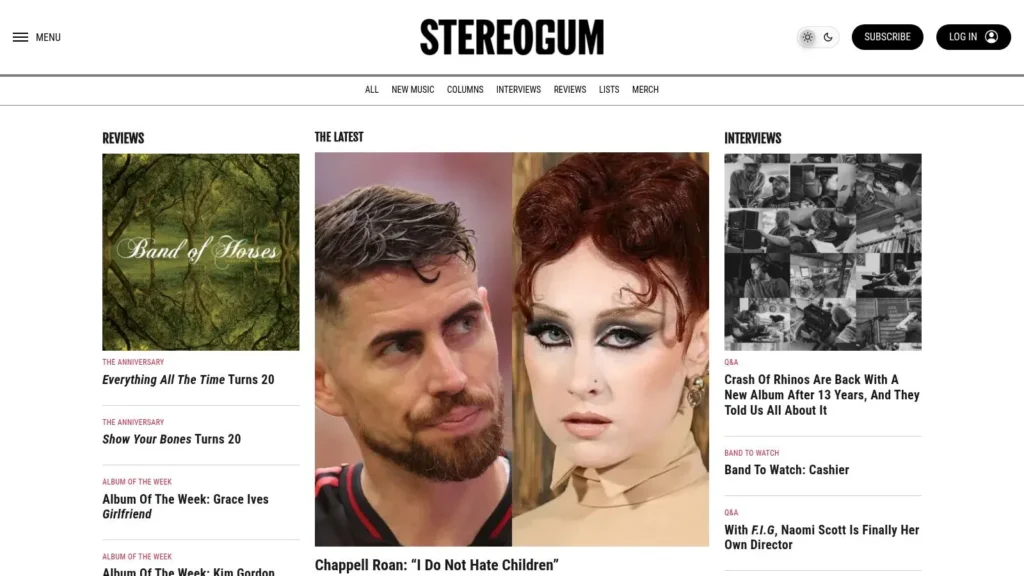
What makes Stereogum special is its collection of recurring columns and discovery franchises. Features like “Album Of The Week” provide in-depth reviews of significant new releases, while the coveted “Band To Watch” franchise has a long history of spotlighting artists right before they break into the mainstream. This structure offers multiple avenues for artists to gain visibility and for readers to find new music consistently.
Pitching Tips & Submission Guidance
To get your music in front of the Stereogum team, precision is key. A generic “check out my band” email will get lost.
- Target the Right Column: Familiarize yourself with their monthly genre columns (e.g., “The Black Market” for metal, “Uproxx” for jazz). If your music fits a specific niche, mention that column in your subject line and pitch the corresponding editor.
- Focus on the “Why Now”: Stereogum thrives on timeliness. Center your pitch around a new release, an upcoming tour, or a compelling story. Why should they cover you this week?
- Keep it Professional: Provide a short bio, a private streaming link (SoundCloud or Bandcamp), links to your socials, and a high-quality press photo. Make their job as easy as possible.
Pro Tip: Avoid sending mass emails. A personalized message to a specific writer whose work you genuinely follow is far more effective. Reference a recent article they wrote to show you’ve done your homework.
Pros, Cons, and Access
Stereogum’s user experience is clean and focused on readability. However, in 2020, the site transitioned to a reader-funded model to maintain its independence after being reacquired by its founder. This introduced a membership program with different access tiers. While you can still read a limited number of articles for free each month, unlimited access requires a subscription, starting at a few dollars per month and going up for premium perks like Discord access and exclusive content. While some might see the paywall as a drawback, it directly supports the site’s high-quality journalism. The model also reflects a wider trend, similar to how many creators are now exploring their own platforms, a process you can understand better if you’re interested in learning how to start a blog.
Website: https://stereogum.com/
2. Consequence
Consequence (formerly Consequence of Sound) is an influential, independently owned U.S. publication that acts as a major intersection for music, film, and television culture. Established in 2007, it has become one of the most prominent independent music blogs by combining high-volume news reporting with sharp critical analysis and broad cultural commentary. Its large audience and frequent exclusives make it an essential platform for both emerging artists seeking a breakout moment and established acts looking to connect with a deeply engaged readership. The site covers a wide spectrum of genres, from indie and rock to hip-hop and electronic music, alongside extensive festival coverage.
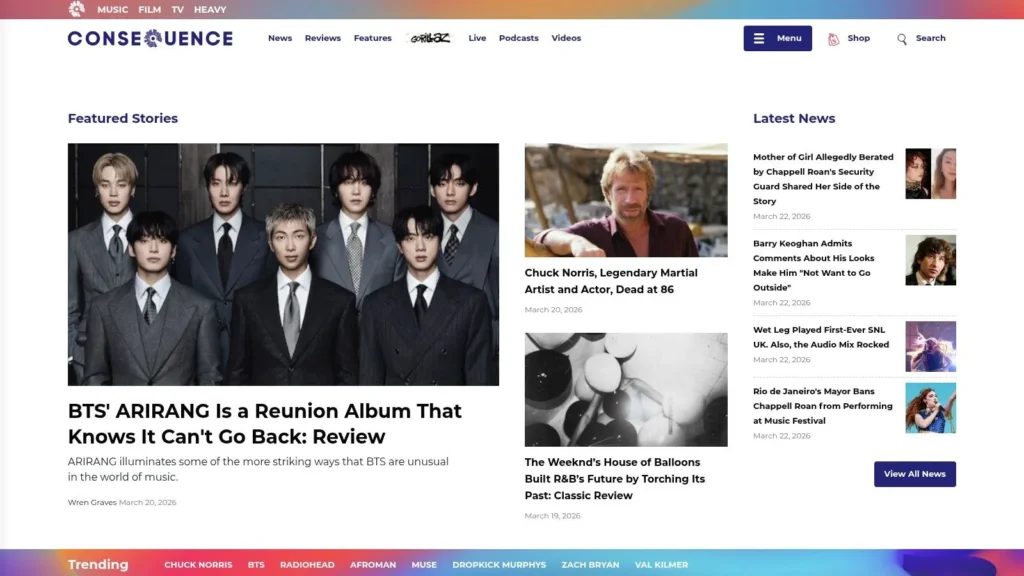
What distinguishes Consequence is its cross-media approach and its dedicated infrastructure for discovery. Beyond standard reviews and interviews, the platform features the Consequence Podcast Network and specific live event verticals, offering multiple content formats for artist features. This integrated model provides unique opportunities for visibility, such as an album review paired with a podcast appearance. Key features like their well-regarded year-end lists and regular exclusives (e.g., “Origins,” where artists break down the influences behind a new song) serve as powerful discovery tools for readers and significant promotional milestones for musicians.
Pitching Tips & Submission Guidance
Consequence maintains a clear and accessible submission process, but its high editorial volume requires a targeted approach to stand out.
- Use the Official Channels: The site directs all music submissions and press releases to a specific email address found on their “Contact Us” page. Sending pitches to individual writers directly is less effective unless you have a pre-existing relationship.
- Highlight Your Unique Angle: With so many submissions, a compelling narrative is crucial. Does your music tie into a current film? Is there a strong visual component? Frame your pitch around a unique story that aligns with their cross-media focus.
- Provide a Complete Press Kit: Your email should be a one-stop shop for an editor. Include a brief bio, links to your music on major streaming platforms, high-resolution press photos, and any upcoming tour dates or release schedules.
Pro Tip: Timing your pitch with a festival appearance can be a smart move. Consequence provides extensive festival coverage, and editors are often looking for fresh acts to highlight in their previews and recaps.
Pros, Cons, and Access
Consequence is a free-to-access website, supported by advertising, which ensures its content reaches the widest possible audience without a paywall. The user interface is modern and image-heavy, prioritizing a dynamic browsing experience. A major pro is its expansive reach and the cross-promotional opportunities it offers artists who have appeal in film or TV culture. However, because its scope is not limited to music, the sheer volume of content can sometimes make it harder for unsolicited music submissions to get noticed. The process to publish articles online can be competitive, underscoring the need for a polished pitch. While the high output means constant fresh content for readers, it also means your music is competing for attention against major news in other entertainment sectors.
Website: https://consequence.net/
3. EARMILK
EARMILK has carved out a significant niche among independent music blogs by championing emerging talent with a distinct focus on discovery. Established as a North American publication, it provides a daily dose of new music across a wide genre spectrum, including hip-hop, electronic, indie, and pop. Its editorial voice is known for being scene-aware and forward-thinking, making it a trusted source for listeners eager to find the next big thing before it hits the mainstream. The site is especially recognized for its active coverage during key industry moments like SXSW and festival season.
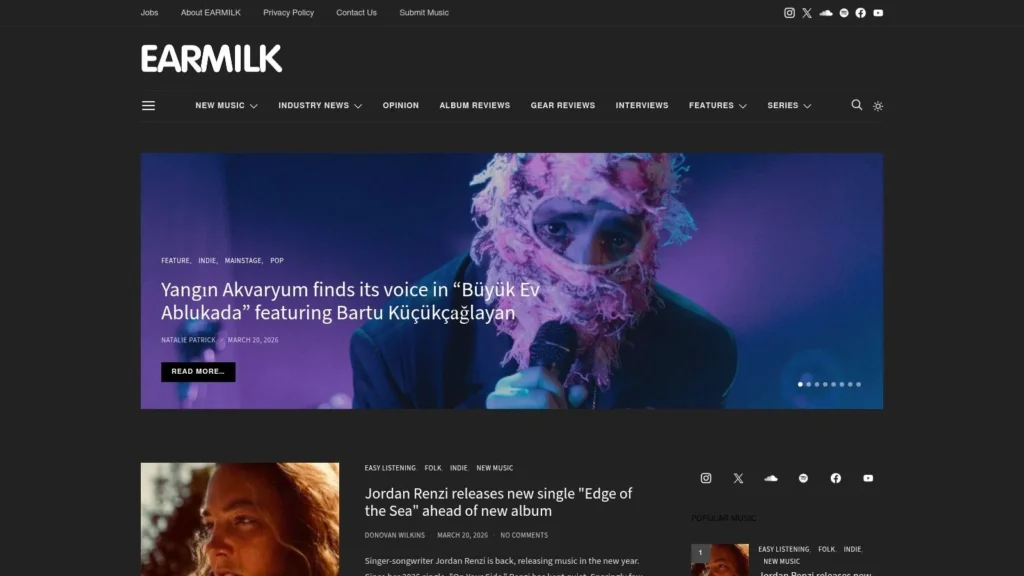
What makes EARMILK special is its dedication to discovery-driven features and a high publishing cadence. Regular columns like “Artists to Watch” and in-depth interviews provide a consistent platform for new artists to tell their stories. This approach gives readers a reliable stream of fresh content and offers musicians multiple opportunities for meaningful press coverage, moving beyond simple track premieres to build a narrative around their work.
Pitching Tips & Submission Guidance
EARMILK operates differently from blogs that accept direct email pitches. They funnel all submissions through dedicated third-party platforms to manage the high volume of music they receive.
- Use the Official Channels: Do not search for editor emails. Your music must be submitted through either SubmitHub or Pillargram. This is a non-negotiable first step.
- Craft a Compelling Platform Pitch: When submitting, your short pitch on the platform is critical. Briefly introduce the artist, highlight what makes the track unique, and include relevant links to your EPK or socials.
- Target Genre-Specific Editors: On platforms like SubmitHub, you can often see which editors cover specific genres. Aim your submission at a writer who has a history of covering music similar to yours for a better chance of it connecting.
Pro Tip: While using these platforms may involve a small fee for premium credits, it guarantees your music is heard. A well-targeted submission is an investment, not just a shot in the dark.
Pros, Cons, and Access
EARMILK’s biggest advantage for artists is its transparent and organized submission process, which eliminates the “black hole” of a general email inbox. This clear pathway, combined with a strong focus on discovery, makes it one of the more accessible independent music blogs for up-and-coming acts. The site’s content is free to access, with a clean user interface that prioritizes music and editorial.
The primary drawback is that the submission process is gatekept. Artists must use SubmitHub or Pillargram, which can be a barrier for those unfamiliar with the platforms or unwilling to pay potential submission fees. Due to the sheer volume of submissions, competition is fierce, and a feature is never guaranteed. Making sure your online presence is optimized can help you stand out; learning some basic SEO tips for beginners could even improve how your band’s website gets discovered.
Website: https://earmilk.com/
4. Atwood Magazine
Atwood Magazine positions itself as an online music journal, prioritizing thoughtful criticism and in-depth artist storytelling over the chase for breaking news. Founded in 2012, it has become one of the most respected independent music blogs for artists who have a rich narrative to share. The publication champions a slower, more deliberate form of music journalism, making it an ideal platform for acts looking to build a genuine connection with an engaged readership through detailed features, interviews, and premieres. Its genre scope is wide, welcoming everything from folk and indie-pop to R&B and electronic music.
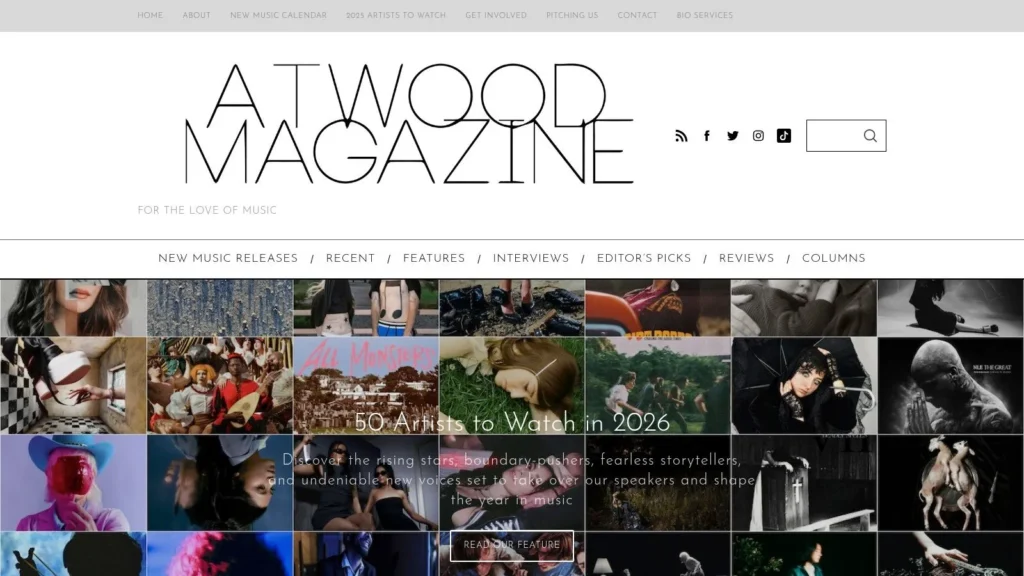
What makes Atwood Magazine special is its focus on contextualizing artists within the broader musical and cultural landscape. Rather than just a quick review, a feature on Atwood often explores an artist’s creative process, personal history, and the thematic depth of their work. Key features include “Artist-focused series,” in-depth interviews, and scene spotlights that give readers a comprehensive understanding of not just the music, but the person and the community behind it. This longform approach provides a valuable platform for artists to tell their full story.
Pitching Tips & Submission Guidance
Submitting to Atwood Magazine requires a pitch that aligns with their editorial and narrative-driven style. They are more interested in the story behind the song than just the song itself.
- Highlight Your Story: Your pitch should lead with a compelling narrative. Are you exploring a specific theme on your new EP? Did a unique life experience shape your songwriting? Give them a story to latch onto.
- Use Their Official Channels: Atwood maintains a clear “Collaborate” section on its website with dedicated submission forms and contact emails. Using these official channels ensures your music gets to the right place.
- Frame it as a Feature: Instead of just asking for a review, suggest a specific feature idea. Proposing a track-by-track breakdown, a personal essay about your album’s creation, or an in-depth interview shows you understand their content.
Pro Tip: Atwood is also known for being open to new writers. If you’re a musician with a knack for writing, pitching a guest column or a piece about your local music scene can be a creative way to get your foot in the door.
Pros, Cons, and Access
Atwood Magazine is completely free to access, with no paywalls or subscription tiers, making its content widely available. The user experience is clean and focused on longform reading. One of the biggest advantages is the accessible submission process and its editorially considerate approach, which gives emerging artists a fair shot at meaningful coverage. This makes it a great fit for publicity campaigns that are built around storytelling. However, the trade-off for this depth is speed and volume. As a smaller, passion-driven team, their response and publication lead times can be longer than at larger outlets, and they are less focused on high-volume, daily news cycles.
Website: https://atwoodmagazine.com/
5. Aquarium Drunkard
Aquarium Drunkard is less a blog and more an “audio journal,” a distinction that captures its deep-curation and archival sensibility. Founded in Los Angeles, it has become one of the most respected independent music blogs for its thoughtful exploration of genres often overlooked by mainstream outlets. Its focus on psych, folk, Americana, avant-garde, global sounds, and left-field indie makes it a sanctuary for discerning listeners and a powerful tastemaker for artists operating outside the commercial norm.
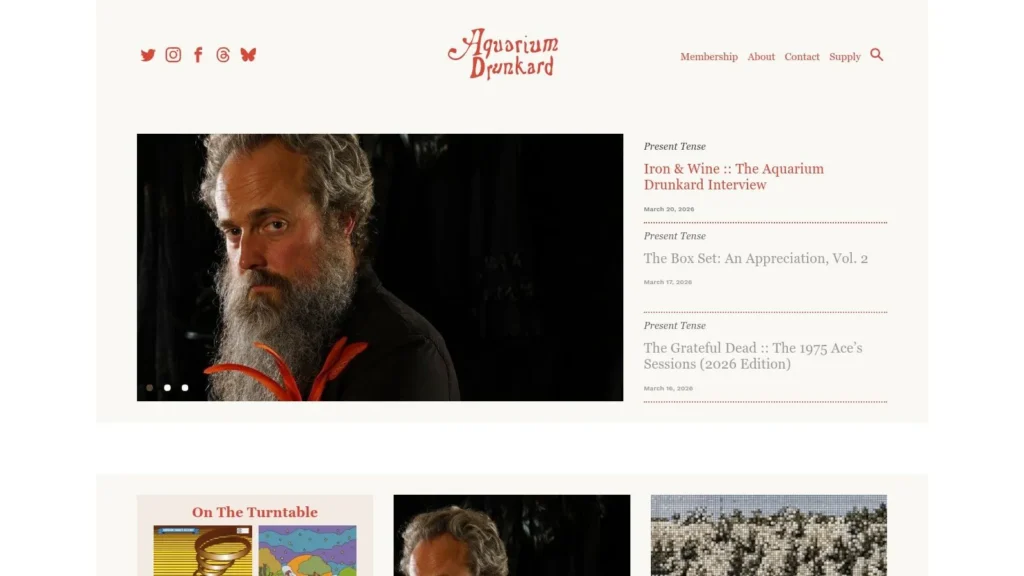
What truly sets Aquarium Drunkard apart are its original editorial formats that offer unique exposure opportunities. The “Lagniappe Sessions” invites artists to record and submit exclusive cover sets, providing a creative way to showcase their influences and musicianship. This, combined with its curated mixes, the “Transmissions” podcast, and a weekly Sirius XMU radio show, creates a rich, multi-platform ecosystem for music discovery that rewards deep engagement from both fans and musicians.
Pitching Tips & Submission Guidance
Getting covered by Aquarium Drunkard requires aligning with its specific, crate-digging aesthetic. A generic pitch is unlikely to resonate.
- Understand the Vibe: Spend time listening to their radio show and exploring their archives. Does your music share a sonic or spiritual lineage with artists like John Fahey, Sun Ra, or Gram Parsons? If so, explain that connection.
- Propose a Lagniappe Session: If you have the ability to record high-quality covers, pitching an idea for a “Lagniappe Session” can be a unique angle. Suggest two or three cover songs that fit their world and explain why.
- Be Patient and Professional: The site has a small, dedicated team. Send a clear, concise email with private streaming links, a brief bio, and your key press assets. Contact information is available directly on their site for editorial and advertising inquiries.
Pro Tip: Your pitch should read like a recommendation from a fellow music fanatic. If your sound connects to a specific era, an obscure label, or a particular subgenre they’ve covered, highlight that connection to show you get what they’re about.
Pros, Cons, and Access
The website offers a clean, text-focused user experience that prioritizes reading and listening. While the core content is free, Aquarium Drunkard is supported by its community through Patreon and an optional membership. Supporters gain access to exclusive content, bonus mixes, and other community perks. This model ensures the journal’s editorial independence and ad-free reading experience. The primary “con” for some artists might be its highly selective editorial lens, which decidedly skews toward heritage-inspired and experimental aesthetics over contemporary pop trends. However, for those who fit its niche, a feature on Aquarium Drunkard is a significant badge of honor.
Website: https://aquariumdrunkard.com/
6. Gorilla vs. Bear
Gorilla vs. Bear has been a quintessential tastemaker among independent music blogs since its inception in 2005. The Texas-based site built its reputation on a distinct, minimalist aesthetic and a keen ear for emerging sounds, often championing artists in the dream-pop, experimental electronic, and left-of-center pop realms long before they gain wider recognition. Its highly curated approach feels less like a news outlet and more like a trusted friend’s recommendation, prioritizing a strong curatorial voice over high-volume content.
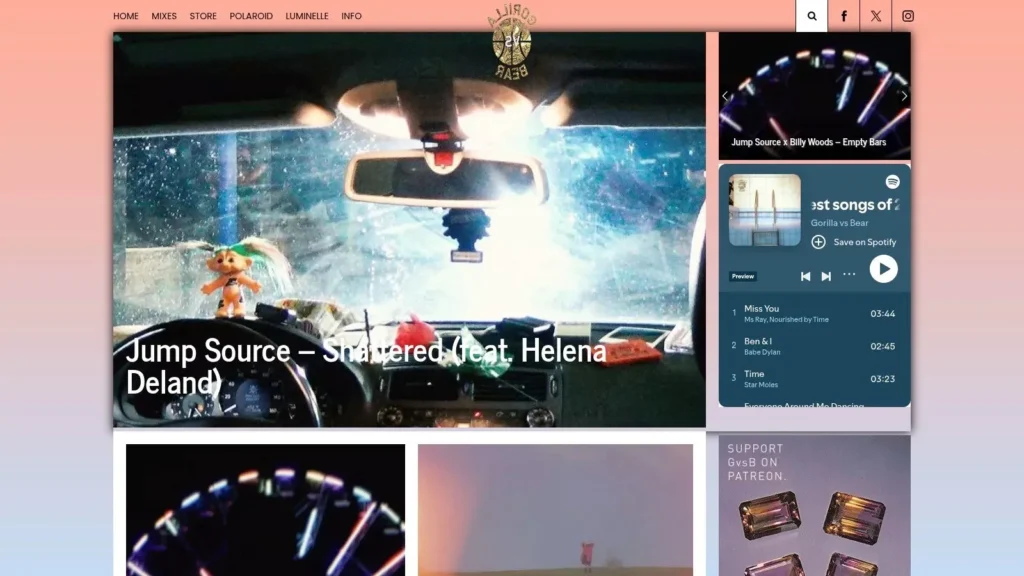
What truly defines Gorilla vs. Bear is its visual-forward, discovery-first style. Posts are often brief, pairing a compelling track or video with a single, striking photograph and just a few sentences of essential context. This format puts the music front and center, allowing the art to speak for itself. The site is known for its SiriusXMU radio show and its annual “Albums of the Year” and “Songs of the Year” lists, which are considered essential reading for anyone tracking the pulse of the indie scene.
Pitching Tips & Submission Guidance
Gorilla vs. Bear is famous for its direct submission process, but getting noticed in a crowded inbox requires a thoughtful approach. They still list their email publicly, which is a rarity.
- Align with the Aesthetic: Before you pitch, spend time on the site. Does your music and visual identity match their hazy, ethereal, or lo-fi vibe? If you’re a high-energy punk band, this probably isn’t the right fit.
- A Picture is Worth a Thousand Words: Since the blog is photography-forward, a great press photo is not just an asset-it’s part of the pitch. Send a high-resolution, artistically compelling image that reflects your sound.
- Be Direct and Concise: The editors value brevity. Your email should include a very short intro, a link to stream your music (preferably Bandcamp or SoundCloud), and your photo. Avoid long, gushing bios.
Pro Tip: Your subject line should be simple and effective. Use the format: “Submission: [Artist Name] – [Track/Album Title]”. This helps them filter their inbox and immediately identifies the purpose of your email.
Pros, Cons, and Access
Gorilla vs. Bear’s website is completely free to access, with no paywalls or subscription models, reflecting its old-school indie spirit. The user experience is clean and uncluttered, designed for browsing and discovery. Its main strength is its highly respected curatorial voice; a feature on this site is a significant co-sign that can open doors with other blogs, labels, and fans who trust their taste. The primary con is the low publishing volume compared to larger outlets. They don’t cover everything, and their specific taste means they pass on a lot of great music that doesn’t fit their niche. This exclusivity, however, is precisely what makes a placement so valuable.
Website: https://www.gorillavsbear.net/
7. Obscure Sound
Obscure Sound has been a staple in the world of independent music blogs since its founding in 2006, carving out a respected niche by focusing purely on artist discovery. Run by Mike Mineo, the site is a testament to dedicated, long-form music journalism that champions emerging indie-pop, rock, and electronic acts. Unlike larger outlets chasing trends, Obscure Sound prides itself on providing thoughtful, detailed write-ups for artists who are often receiving their very first press coverage, making it an invaluable platform for musicians at the start of their journey.
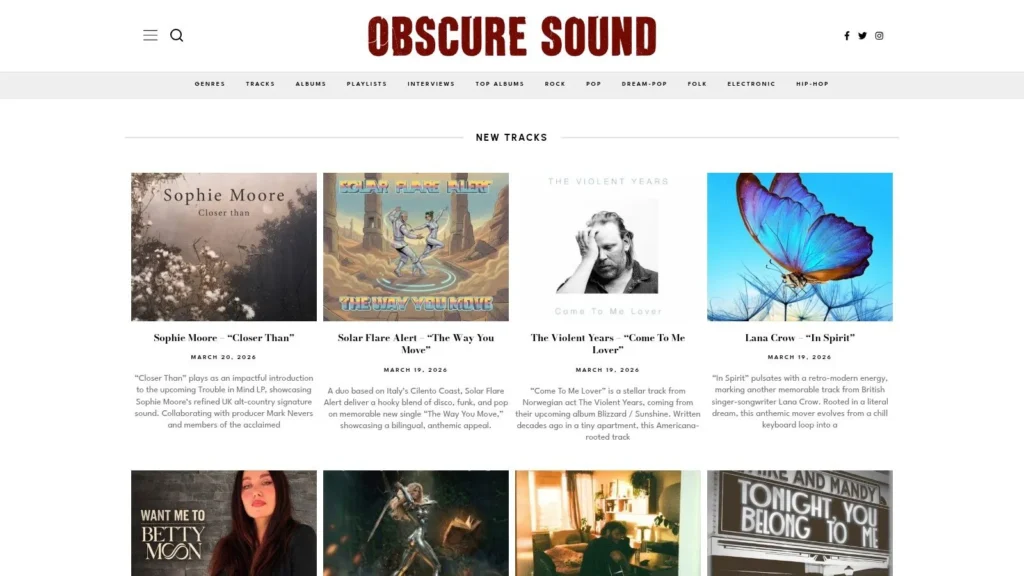
What makes Obscure Sound special is its genuine commitment to the “discovery” ethos. The site’s primary content consists of in-depth single, EP, and album reviews that always embed the music directly, allowing readers to listen as they read. Features like regular discovery lists and premieres offer multiple opportunities for artists to be heard. This singular focus on new talent, backed by sincere and well-written commentary, gives a placement here significant weight and credibility for an artist’s press kit.
Pitching Tips & Submission Guidance
Obscure Sound is notable for its transparent and varied submission process, accommodating artists with different resources.
- Choose Your Submission Path: The site officially accepts music through three main channels: a direct email address for free submissions, SubmitHub for a streamlined and guaranteed response, and MusoSoup for a campaign-based approach. Choose the one that best fits your budget and timeline.
- Highlight Your Sound: In your pitch, be specific about your genre and influences, especially if they align with the blog’s indie-pop and rock focus. Referencing a past artist featured on the site that you sound similar to can show you’ve done your research.
- Provide Key Assets: Always include a private streaming link (SoundCloud is preferred), a short artist bio, a high-quality photo, and links to your social media. Making the information easy to access increases your chances of being reviewed.
Pro Tip: While the free email option is tempting, the volume of submissions is very high. Using a platform like SubmitHub for a small fee guarantees your track will be heard and provides direct feedback, which can be just as valuable as a placement.
Pros, Cons, and Access
The website offers a straightforward, ad-supported user experience that is completely free for readers. Its design prioritizes content and embedded audio, making music discovery simple and direct. The multiple submission routes are a major advantage, giving artists flexibility. A key pro is the detailed editorial that accompanies each feature, offering more than just a passing mention. The main drawback is that Obscure Sound is a niche, discovery-focused blog, so its traffic and social reach won’t match that of a massive publication. However, its audience is highly engaged and specifically looking for new artists, making it a targeted and valuable placement.
Website: https://www.obscuresound.com/
7 Independent Music Blogs Compared
| Outlet | Implementation complexity | Resource requirements | Expected outcomes | Ideal use cases | Key advantages |
|---|---|---|---|---|---|
| Stereogum | Moderate — established editorial process, membership gating | Moderate — professional press kit, timely assets; possible membership friction | High editorial visibility and tastemaker citations | Releases needing consistent editorial visibility across genres | Broad genre reach, recurring discovery franchises, established credibility |
| Consequence | Moderate–High — large outlet, selective coverage | High — polished assets, exclusives or podcast-ready content | Wide, cross‑media reach and festival/industry attention | Cross‑media campaigns, festival coverage, exclusives | Large audience, podcast/network support, clear submission routes |
| EARMILK | Low–Moderate — streamlined but platform-gated submissions | Low–Moderate — polished tracks, SubmitHub/Pillargram fees possible | Frequent discovery placements and festival-season exposure | Emerging artists seeking steady discovery and genre targeting | Clear submission pathway, consistent discovery-driven editorial |
| Atwood Magazine | Low — accepts pitches and contributors; slower cadence | Low — narrative materials, time for longform engagement | In-depth features and contextual criticism | Story-driven campaigns and artist development pieces | Thoughtful longform editorial, accessible contributor channels |
| Aquarium Drunkard | Moderate — selective, format-specific opportunities | Moderate — high-quality session recordings, archival/context material | Deep-curation exposure via mixes, podcasts, radio | Left-field, heritage, or session-oriented artist showcases | Unique formats (sessions, radio, podcast), niche tastemaker credibility |
| Gorilla vs. Bear | Low–Moderate — direct email accepted but competitive inbox | Low — strong visuals and concise pitch with high-quality audio | Curated discovery among early-adopter indie audiences | Experimental, dream-pop, and left-of-center pop discoveries | Visual-forward presentation, longstanding curator voice |
| Obscure Sound | Low — multiple submission routes including free email | Low — press kit and embedded audio; optional third-party fees | Discovery-focused write-ups and targeted niche reach | Emerging indie acts seeking first-press coverage and reviews | Accessible submissions, detailed write-ups, discovery emphasis |
Your Next Move: Turning Clicks into a Career
We’ve explored a powerful roster of independent music blogs, from the genre-agnostic tastemakers at Stereogum and Consequence to the niche, atmospheric curation of Aquarium Drunkard and Gorilla vs. Bear. Having this list is your map, but it’s not the entire journey. The real work begins now: translating this knowledge into tangible press coverage and, ultimately, new listeners.
The core lesson woven through each blog’s profile is the critical importance of targeted outreach. A generic email blast is the fastest way to the trash folder. Your success depends on your ability to see these platforms not as a faceless monolith, but as collections of passionate individuals with distinct tastes and editorial standards.
From List to Action Plan: A Strategic Framework
Simply knowing that EARMILK loves electronic and hip-hop or that Atwood Magazine champions introspective lyricism isn’t enough. You must internalize these details to craft a pitch that feels personal and relevant. Before you hit “send” on another email, pause and run through this strategic checklist.
- Match Your Sound to Theirs: Is your music a genuine fit? If you make hyper-pop, pitching the folk-centric Obscure Sound is a waste of everyone’s time. Be honest with yourself about where your music naturally belongs.
- Study Their Recent Coverage: Read the last ten articles published on your target blog. What artists are they featuring? What is the tone of the writing? This simple act of research shows respect and helps you tailor your message.
- Personalize Your Opening: Address the editor or writer by name. Mention a recent article you enjoyed. This small effort immediately separates you from the 95% of submissions that start with “To whom it may concern.”
- Craft a Compelling Narrative: Why should they care about your music? Beyond just a streaming link, what is the story behind your song or album? A brief, compelling narrative gives them something to connect with and potentially write about.
The Art of the Follow-Up (and Knowing When to Stop)
Patience is a fundamental skill in music promotion. The editors at these influential independent music blogs are inundated with submissions. A polite, concise follow-up email after a week or two is perfectly acceptable. It reminds them of your pitch without being aggressive.
Key Insight: A single follow-up is professional; multiple follow-ups become a nuisance. If you don’t hear back after a second attempt, it’s best to move on. A “no” (even a silent one) from one blog doesn’t define your music’s value. It just means it wasn’t the right fit at that moment.
Building relationships is a long-term game. Engage with these blogs on social media. Share their articles. Become part of their community in a genuine way. When your name appears in their inbox, it will be from a familiar community member, not a total stranger.
Ultimately, this list is a starting point. Your next move is to methodically and respectfully engage with the platforms that align with your artistic vision. Each pitch is a chance to build a connection, refine your story, and take another step forward in your career. The dedication you pour into your music deserves an equal amount of care in how you share it with the world. Take these tools, apply this strategy, and make your voice heard.
The same spirit of creative independence and quality curation found in these blogs is what we champion at maxijournal.com. Just as these platforms provide a stage for emerging artists, maxijournal.com offers a space for writers, experts, and creators to share their insights on everything from arts and technology to business and travel. If you’re inspired to share your own story or expertise, explore maxijournal.com to see how unique voices are celebrated.
Discover more from Maxi Journal
Subscribe to get the latest posts sent to your email.