The best indie music bands list isn’t necessarily the one with the most famous names. In 2025, 88% of tracks on streaming platforms received fewer than 1,000 streams, while short-form video became a leading discovery route, according to RouteNote’s coverage of independent streaming trends. That makes a static ranking less useful than a method that separates established artists, emerging DIY acts, critical recommendations, live-performance proof, and fast algorithmic discovery.
The seven sources below serve different purposes. Each one is assessed by its discovery features, editorial strengths, limitations, and best use case. Use them together to build a list with historical context and current momentum, then turn that research into the kind of practical music coverage a publication such as maxijournal.com can develop. If you’re also exploring the craft behind the sound, master indie drum patterns in 2026 offers a useful complementary angle.
1. AllMusic
AllMusic works best as the research foundation for an indie music bands list. Its genre and style portals give listeners a broad map of indie rock, indie pop, alternative music, and related scenes, while artist pages lead to discographies, credits, influences, and similar-artist connections. That structure makes it easier to understand where a band sits rather than treating “indie” as a single sound.
The platform’s human-edited catalog is its defining strength. You can start with a genre overview, scan artist highlights, and then move through an artist’s releases or connected acts. A band that appears unfamiliar in a current playlist may become more intelligible once you see its listed influences, collaborators, and adjacent artists.
Best use case and limitations
AllMusic is particularly strong for historical and subgenre discovery. It helps you find bands from different eras and trace relationships across scenes, which is difficult to do through a single current playlist. It’s also useful for writers who need a dependable starting point when checking an artist’s discography or building background notes.
Its weakness is speed. The interface can feel dense, and it doesn’t function like a live “what’s breaking now” feed. The site is a catalog first, so a listener seeking immediate emerging-band momentum may need to pair it with a more current source.
- Use it for: Historical context, genre mapping, discography research, and similar-artist exploration.
- Don’t rely on it for: Real-time trend detection or fast-moving DIY discoveries.
Start here when your list needs depth. Add newer names from other sources afterward, then return to AllMusic to understand their musical neighborhood.
2. Bandcamp
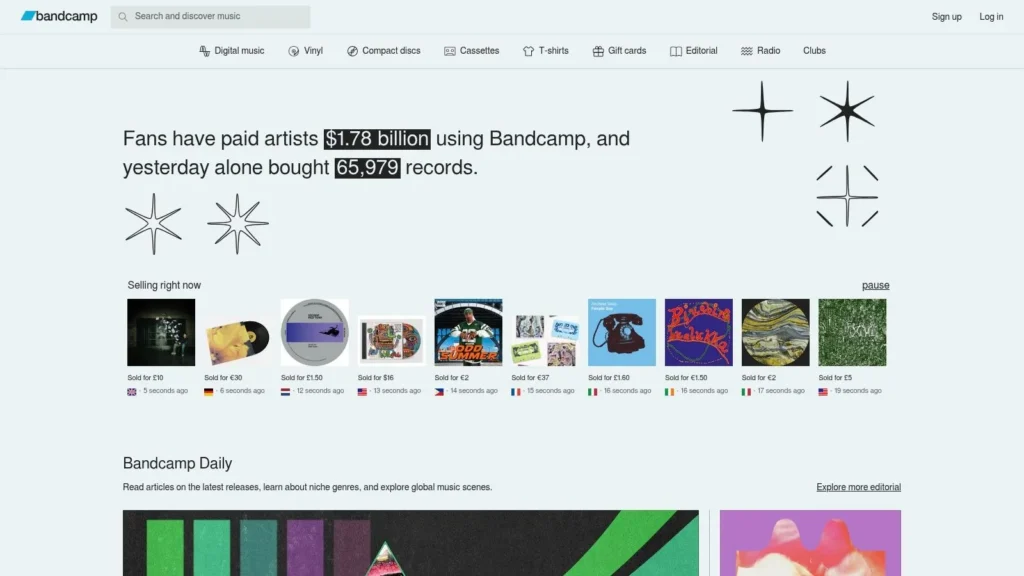
Bandcamp is one of the most useful living sources for an emerging indie music bands list. Its tag pages and Discover tools surface artists through labels such as “indie,” “indie rock,” and “indie pop,” while filters can narrow results by format, location, and popularity. Because artists upload music directly, the platform often brings listeners closer to active DIY scenes than a broad editorial database does.
The discovery process is deliberately open-ended. You might find a new band through a tag page, a top-selling release, a location filter, or a Bandcamp Daily feature. That variety matters because the platform doesn’t force every artist into one editorial hierarchy. It can reveal what’s circulating within a niche community, even when the band hasn’t attracted wider coverage.
Discovery with direct support
Bandcamp’s strongest advantage is the short distance between discovery and support. A listener can hear a track, inspect the release, follow the artist, and often purchase music or merchandise from the same platform. That makes it more than a listening directory. It’s also a way to identify bands with a direct relationship to their audience.
The trade-off is uneven quality. The platform is open to a wide range of artists, so tags alone won’t tell you whether a release fits your taste or your list. Editorial features and listening notes help, but you’ll still need to sample the music yourself.
For additional release-focused browsing, Maxi Journal’s independent music releases coverage can sit alongside Bandcamp research.
- Use it for: DIY artists, local scenes, new releases, and direct artist support.
- Check before adding: Production quality, current activity, location, and whether the band has a coherent release trail.
Bandcamp should supply the list’s freshest layer, not its entire framework.
3. Pitchfork
Pitchfork gives an indie music bands list an editorial filter. Its Best New Music coverage, album and track reviews, artist profiles, and recurring recommendation packages help listeners decide which recent releases deserve priority. Instead of browsing every available option, you can begin with records that received sustained critical attention and then follow the related links around each artist.
That context is more valuable than a bare name. A review can explain an artist’s stylistic reference points, identify related performers, and indicate whether a release represents a significant development in the artist’s work. For a listener with limited time, this creates a practical sequence: read the review, play the central track or album, then explore the linked artists.
Strong filter, incomplete map
Pitchfork’s editorial voice is its biggest strength and its main limitation. The publication can help prioritize listening, but its taste profile won’t represent every corner of independent music. DIY artists with little press infrastructure may be absent, while bands already receiving attention can appear more often.
That doesn’t make the source unreliable. It means you should treat it as a critical selection layer, not a complete census of indie bands. A list built only from major review outlets will tend to reflect visibility as much as musical quality.
- Use it for: Timely critical recommendations, review context, and release prioritization.
- Balance it with: Bandcamp for less-established acts and KEXP or NPR Music for live-performance evidence.
Writers developing a review-driven list can also consult Maxi Journal’s independent music reviews for a publication context focused on accessible commentary.
Editorial rule: Use a review to choose what to hear first, not to decide what every listener must value.
The most useful result combines Pitchfork’s critical framing with sources that reveal community activity and performance strength.
4. Stereogum
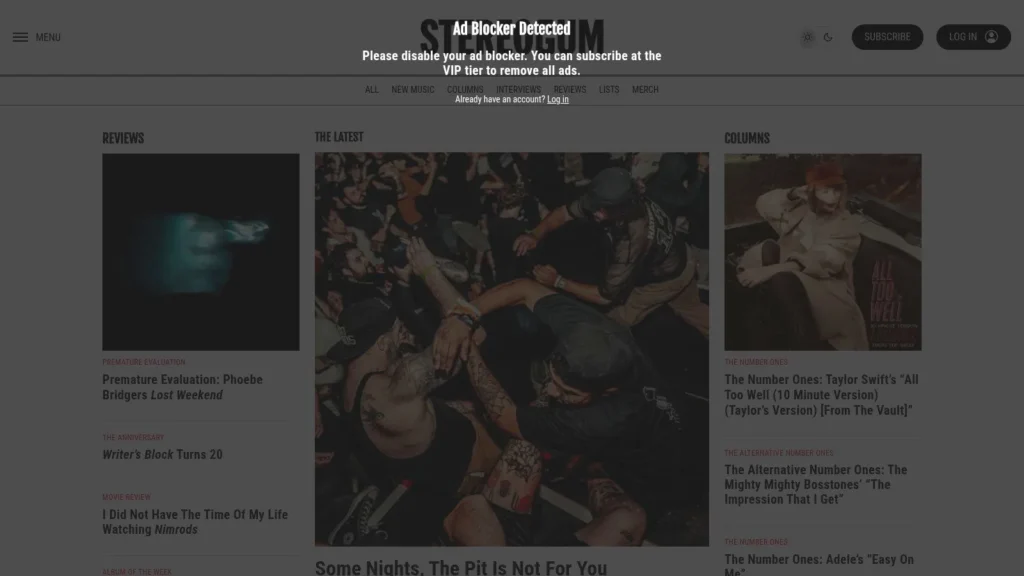
Stereogum is particularly effective for finding artists at the point where an emerging act begins to receive sustained editorial attention. Its annual Best New Artists packages, the ongoing Band To Watch series, interviews, and embedded listening options make it easier to move from a name on a page to a working shortlist.
The annual lists provide a time-specific snapshot. That’s helpful when you’re building a list around a particular year, because each artist comes with an editorial reason for inclusion rather than appearing as an unexplained recommendation. The Band To Watch archive adds a second layer, allowing you to compare current discoveries with earlier picks and see how the publication has followed emerging scenes.
Why the archive matters
Stereogum’s strength is continuity. A current profile may introduce a band, while older coverage can show how music journalism documented similar artists before they became widely recognized. Embedded tracks and playlists also reduce friction, so you can test several recommendations without leaving the article.
The limitation is timing. An annual package may feature a band after it has already appeared on a DIY platform or local scene page. Coverage also leans toward English-language music, which can narrow the geographic range of a global list.
- Use it for: Emerging artist profiles, annual discovery packages, and editorially selected listening.
- Look beyond it for: Earlier grassroots signals, non-English-language scenes, and highly local acts.
Stereogum’s independent music blog coverage provides another route for readers who want to understand the wider editorial ecosystem around indie discovery.
A strong workflow starts with a Stereogum profile, plays the embedded track, checks the band’s latest release, and then searches for live evidence before adding the act permanently.
5. KEXP
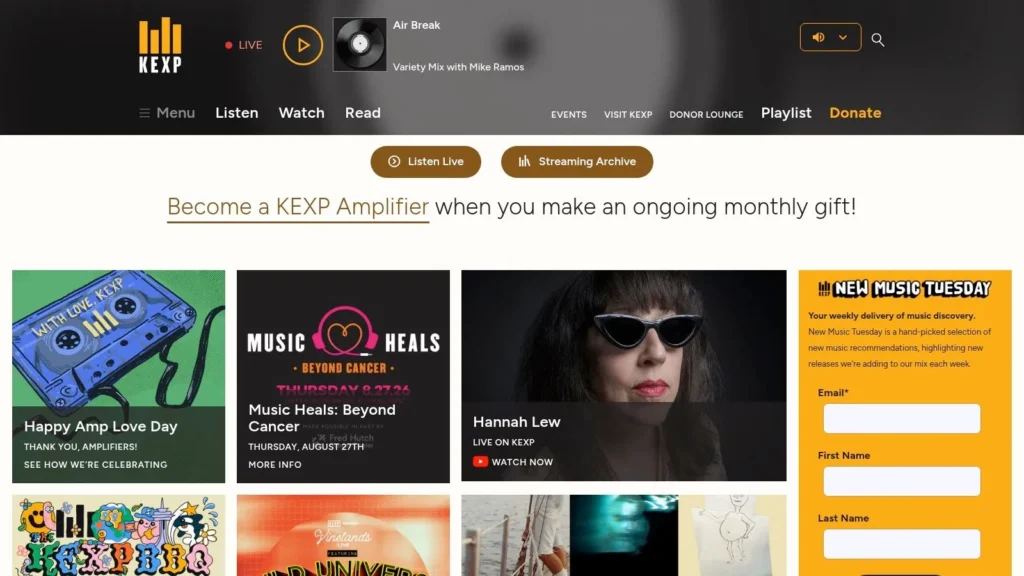
KEXP turns radio programming into a practical discovery source. Its playlist history records tracks played on air, creating a searchable trail of artists selected by DJs rather than generated solely by listener behavior. The site’s live sessions add a second form of evidence, showing how bands perform beyond a polished studio recording.
This makes KEXP useful for listeners who care about scene knowledge and performance quality. You can search recent playlists for unfamiliar names, identify recurring artists, and then watch a session to decide whether the band belongs on a serious recommendation list. The process takes more digging than opening a ready-made playlist, but it often produces more distinctive results.
A source that rewards active research
KEXP isn’t a conventional ranked list. It doesn’t tell you which band is “best,” and its playlist archive can require sorting by date, program, or artist. That extra work is a limitation for casual browsing, but it’s an advantage for researchers who want to understand how a community radio station builds a musical conversation.
The station’s curation can also reflect regional preferences, including a noticeable Pacific Northwest perspective at times. That doesn’t invalidate the selections. It means you should compare them with international and platform-based sources.
- Use it for: DJ-curated discovery, live-session checks, and alternative pathways beyond algorithmic feeds.
- Record while browsing: The program, track, artist, release, and any session worth revisiting.
KEXP is the right source when your list should sound locally informed rather than assembled from the most visible streaming recommendations.
6. NPR Music and Tiny Desk
NPR Music gives an indie music bands list a performance-first perspective. The Tiny Desk archive presents artists in an intimate setting, often with stripped-back arrangements that expose vocals, rhythm sections, songwriting, and group chemistry. NPR’s broader coverage adds interviews, spotlights, contests, and genre pages that help place those performances in a wider context.
A live video can answer questions a studio track leaves open. Does the band create tension without heavy production? Can the vocalist hold the center of the arrangement? Do the musicians sound like a group rather than a collection of edited parts? Those observations don’t replace listening to the recorded release, but they help distinguish an act with a compelling live identity from one that only works in a highly controlled format.
Broad reach, imperfect coverage
NPR Music covers far more than indie. That breadth is useful when an artist moves between indie rock, folk, alternative pop, soul, or experimental music, but it means you’ll need to filter the archive intentionally. Smaller local scenes may also receive less representation than artists with stronger press relationships or national visibility.
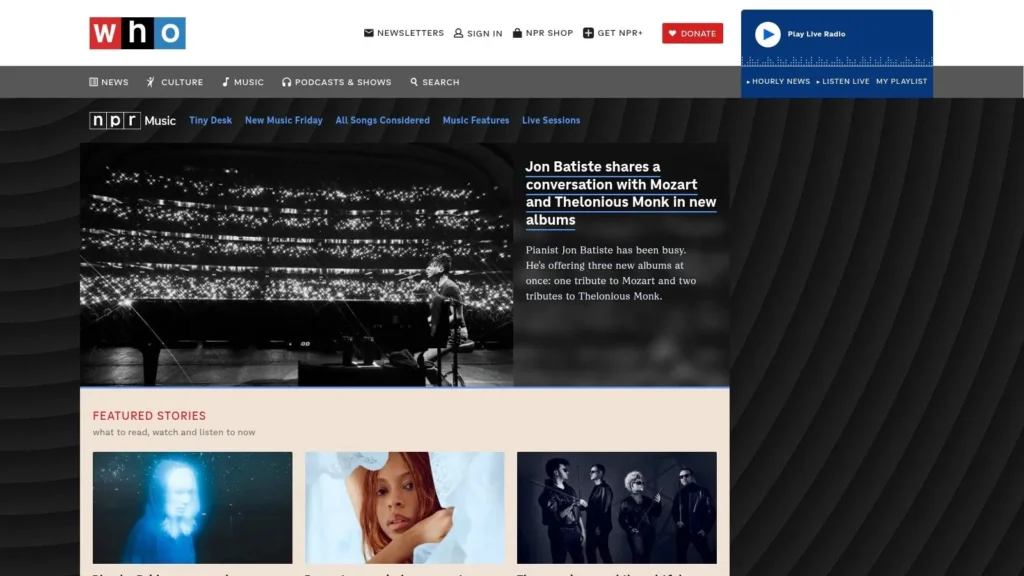
- Use it for: Live-performance validation, cross-genre discovery, and quick visual introductions.
- Avoid overreading: A strong Tiny Desk appearance proves the band can communicate in that setting, not that every recorded release will suit your list.
A live session is evidence of an artist’s performance character, not a substitute for checking the wider catalog.
For a practical list, watch one live set, listen to one representative studio track, and note whether the two versions reinforce each other.
7. Spotify Editorial and The Indie List
Spotify’s editorial playlist The Indie List is the fastest source in this roundup for building a first-pass listening queue. Its rolling selection moves across indie rock, indie pop, and alternative, while track pages connect directly to artist profiles, biographies, related music, and tour information. That low-friction design makes it easy to move from one band to the next.
The playlist works as a momentum signal. It can show which artists are appearing in current editorial circulation and help you identify songs worth investigating through other sources. It also connects naturally with Spotify’s wider discovery tools, including Release Radar and Discover Weekly, so one promising track can lead to a broader personal recommendation path.
Fast, useful, and incomplete
The platform’s limitation is opacity. Listeners can see the playlist’s contents, but they won’t get a complete explanation of why each song was selected. Editorial placement can also favor artists who already have momentum, which makes the playlist less effective for finding the most obscure bands.
That distinction matters because current visibility doesn’t equal durable importance. MIDiA Research’s independent music analysis shows that independent artists and non-major labels held 46.7% of the global recorded music market on an ownership basis in 2023, with $14.3 billion in revenue. The ownership figure is a reminder that discovery should lead to questions about control, community, and sustainability, not just playlist placement.
- Use it for: Rapid sampling, current playlist momentum, and artist-page navigation.
- Verify through: Bandcamp, editorial profiles, and live archives before treating a band as a durable recommendation.
Spotify is the best starting point for speed, but it shouldn’t be the final judge.
Indie Bands: 7-Source Comparison
| Platform | Implementation complexity | Resource requirements | Expected outcomes | Ideal use cases | Key advantages |
|---|---|---|---|---|---|
| AllMusic | Low, browse curated portals and indexes | Web access; time for reading/research | Comprehensive, historical genre catalogs and linked discographies | Researching scenes, tracing subgenres, building authoritative lists | Editorially consistent database with deep context and credits |
| Bandcamp | Low, tag browsing and Discover pages | Web/app; time; optional purchases | Highly current lists of emerging indie artists and releases | Finding new DIY artists, surfacing recent releases, direct support | Real-time tag-driven discovery and direct artist support |
| Pitchfork | Low, follow Best New Music and reviews | Web; time; optional subscription for full features | Critic-endorsed picks with in-depth reviews and context | Prioritizing what to hear first; finding critically notable releases | Strong editorial voice and detailed review context |
| Stereogum | Low, read annual lists and Band To Watch features | Web; time for reading and listening | Curated emerging-artist lists with embedded playlists | Early discovery of rising indie artists; playlist-ready listening | Reliable early picks and playlists for quick listening |
| KEXP | Medium, search date-stamped playlists and sessions | Web; time to dig archives; streaming for sessions | Continuous discovery and live-performance evidence over time | Tracking ongoing discovery and evaluating live chops | Extensive searchable playlists and DJ-curated session archives |
| NPR Music (Tiny Desk) | Low, watch/listen to Tiny Desk sets | Web/video streaming; time | Live-performance-focused discovery and editorial spotlights | Vibe checks, assessing live appeal, broad stylistic discovery | High-quality live videos and national editorial exposure |
| Spotify Editorial, “The Indie List” | Very low, play and follow playlist | Spotify account; Premium for offline/no-ads | Fast snapshot of trending indie tracks and artists | Quick trend checks, mobile discovery, easy artist follow-through | Frequently refreshed, low-friction streaming with direct artist links |
Turn Seven Sources Into One Better List
A useful indie music bands list should record why each band belongs, not merely collect names. Begin with AllMusic when you need historical context, subgenre relationships, or a route through an artist’s discography. Then use Bandcamp to find independent releases and active DIY artists who may not yet appear in larger editorial databases.
Apply editorial judgment with Pitchfork and Stereogum, but don’t confuse coverage with completeness. These publications can help prioritize listening and explain why an artist matters within a current conversation. They’re less reliable as standalone maps of local scenes, non-English-language music, or artists without established press access.
Use KEXP and NPR Music to test live identity. KEXP is especially valuable for DJ-curated discovery and session archives, while Tiny Desk offers a quick visual and musical check on how an act communicates in an intimate setting. Finish with Spotify’s editorial The Indie List when you want fast listening momentum and direct links to related artists.
The order matters. Current streaming visibility can be uneven, and MIDiA Research’s 2024 report gathered revenue data from more than 5,500 companies totaling $10.6 billion in recorded-music revenue, illustrating how fragmented the independent sector is. One platform can’t represent that entire ecosystem.
For every band, record:
- Subgenre: Describe the sound precisely enough to guide the next recommendation.
- Representative track: Choose one entry point, not an unexplained album title.
- Discovery source: Note whether the band came from a catalog, tag page, review, radio playlist, live session, or editorial playlist.
- Similar artists: Use the source’s connections, then verify them through listening.
- Next step: Add a release, watch a performance, read an interview, or check the band’s live activity.
This turns a list into a working listening system. It also makes the result easier to update when an artist releases new music or moves from a local discovery source into wider editorial and streaming circulation.
For practical independent music discovery coverage, visit maxijournal.com to explore articles about emerging bands, new releases, music blogs, and related entertainment topics. Use the site as a starting point for finding fresh recommendations, then build your own annotated list from the seven sources above.
Discover more from Maxi Journal
Subscribe to get the latest posts sent to your email.