You’re looking at a long flight on the calendar and already doing the math. How many hours in the seat, how bad the jet lag might be, whether the food will be edible, whether you’ll land ready for the trip or spend the first day recovering in a hotel room. That dread is understandable. Long-haul flying compresses several problems into one experience: poor sleep, restricted movement, dry cabin air, limited food control, and a clock that stops matching the place you’re headed.
The good news is that the best travel hacks for long flights don’t work as isolated tricks. A neck pillow alone won’t solve anything if you picked the wrong seat, slept at the wrong time, and never got out of it. Drinking water helps, but it’s much more useful when it’s part of a broader system that includes meal timing, movement, and light exposure.
That’s the shift that matters. Stop thinking about long flights as dead time to endure. Treat them as a controlled transition period between time zones, climates, and activity levels. The people who arrive looking surprisingly normal usually aren’t tougher than everyone else. They’ve built a repeatable protocol.
What follows is that protocol. These travel hacks for long flights are organized as a full playbook for pre-flight, in-flight, and post-flight performance. Some improve comfort immediately. Others pay off after landing, which is where most generic advice falls short. If you apply them together, the flight becomes less of an obstacle and more of a setup for the trip you want to take.
1. Strategic Seat Selection and Position Optimization
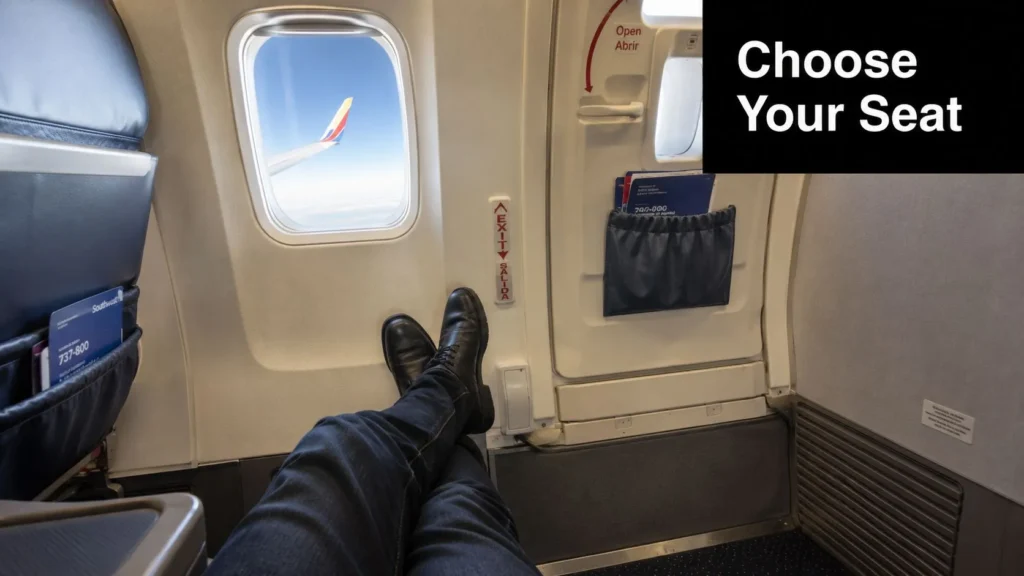
Seat choice sets the ceiling for everything that follows. On a 10-hour flight, the wrong seat forces constant small compromises: waking a neighbor to stand up, reaching awkwardly for basics, bracing against galley noise when you were trying to sleep. The right seat reduces friction and makes the rest of your long-haul protocol easier to follow.
Airlines and travel clinics consistently frame long-flight planning around mobility, rest, and individual risk factors rather than a single “best” seat for everyone. The UK’s NHS advises travelers to move regularly on long journeys and choose clothing and setups that make movement easier, which is a practical reason many experienced flyers prefer an aisle on long sectors if circulation and bathroom access are priorities, according to NHS guidance for reducing DVT risk when traveling.
Match the seat to the job
Choose based on the main constraint you need to solve.
An aisle seat works best for travelers who plan to hydrate properly, get up on a schedule, or dislike feeling pinned in place. A window seat is usually better for sleep because it gives you a surface to lean against and removes one source of interruption. Exit rows can help, but they come with trade-offs that matter in real use: fixed armrests, entertainment units stored in the seat, colder cabin spots, and restrictions on who can sit there.
Seat maps also hide details that change comfort more than marketing labels suggest. A “preferred” seat near a lavatory often means door noise, queue traffic, and stray light during the hours when you want the cabin dark. Bulkhead seats may give knee room but take away under-seat storage, which slows access to your sleep gear, water, or headphones.
Build a position you can hold for hours
After boarding, set the seat up with intent. Put only high-frequency items within reach: headphones, eye mask, lip balm, water, medication, and one layer. Everything else stays stowed so your foot space remains usable.
Posture matters because economy seats punish passive sitting. Sit all the way back so your lower back is supported, keep both feet planted when possible, and avoid crossing your legs for long stretches if swelling is a problem for you. Small adjustments done early beat trying to recover after three hours of bad positioning.
A few checks are worth doing before you book and again when you check in:
- Confirm recline behavior: Some seats near exit rows or cabin dividers have limited recline, which can matter more than a little extra legroom.
- Study the noise map: Seats near lavatories, galleys, and bassinets create repeated disruptions that show up most during overnight flights.
- Compare actual space, not labels: understanding seat pitch helps you judge whether a seat gives useful legroom or just looks better on the map.
- Protect your access path: If you choose a window for sleep, keep your essentials organized so you do not need to unpack half your bag every time you need one item.
The goal is not to find a universally perfect seat. The goal is to choose a position that supports your flight plan, whether that plan prioritizes sleep, movement, or working without interruption. A good seat does not solve long-haul fatigue by itself, but it makes every other intervention more effective.
2. Compression Garments and Movement Routines
By hour six, many long-haul passengers blame the seat. The bigger problem is usually venous pooling from staying still in a pressurized cabin for too long. That shows up as swollen feet, tight calves, stiff hips, and a heavier walk on arrival.
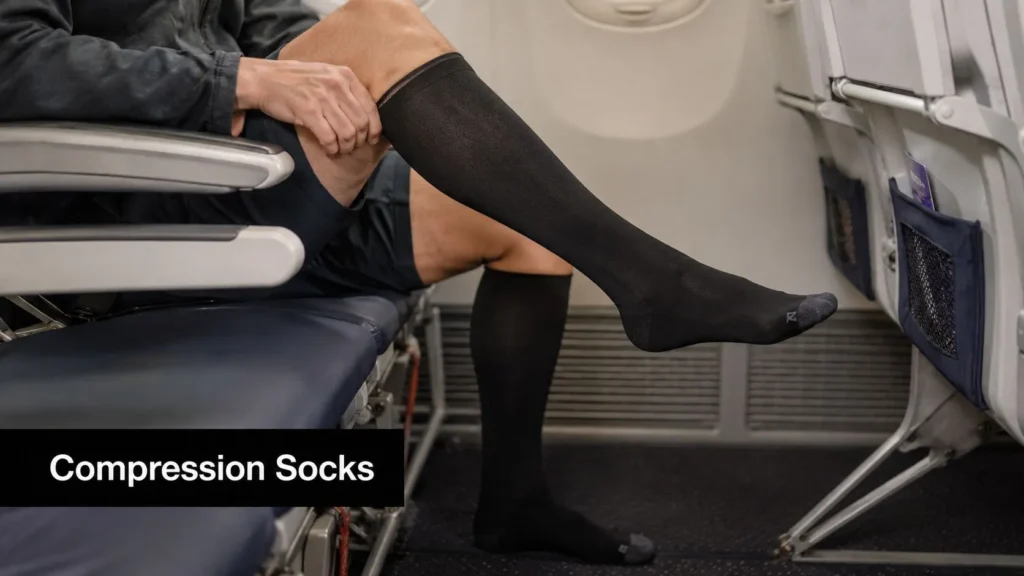
Compression works best as part of a circulation protocol, not as a standalone fix. The CDC guidance on preventing blood clots while traveling advises movement and calf-muscle exercises during long trips, especially for travelers with added risk factors. That is the practical reason to put compression socks on before boarding, not after your shoes already feel tighter.
Build a repeatable movement loop
A good in-flight routine has to survive real cabin conditions. Limited space, sleeping seatmates, meal carts, and uneven turbulence all punish routines that are too ambitious. Use a small loop you can run without drawing attention or waiting for perfect timing.
Start with seated work every 30 to 60 minutes when awake. Rotate each ankle, flex and point your feet, and press through the balls of your feet to mimic calf raises. Those movements are simple, but they keep the calf muscle pump active, which helps move blood back upward instead of letting it sit in the lower legs.
Then add standing movement whenever the seatbelt sign is off and the aisle is clear.
- Ankle circles: 10 slow rotations per side while seated.
- Foot pumps: Alternate toes up, toes down for 20 to 30 reps.
- Calf raises: 10 to 15 reps while standing near your row or galley.
- Short aisle walks: Walk to the lavatory or a clear section of aisle every few hours.
- Bathroom timing: Use restroom trips as scheduled movement prompts, not last-minute emergencies.
Travelers who already follow a broader healthy travel routine for preventing stiffness, dehydration, and fatigue usually find this easier to maintain because the habit starts before takeoff.
Compression choices and trade-offs
Knee-high compression socks are enough for many healthy travelers on long flights. They are easier to wear, easier to remove, and less likely to bunch behind the knee than poorly fitted sleeves or full leggings. Fit matters more than buying the strongest option available. If the garment leaves deep marks, slips down, or feels painful, the setup is wrong.
There is also a comfort trade-off. Compression can feel warm, especially on daytime flights or on routes where the cabin runs hot. I still use it on overnight sectors because the reduction in swelling is usually worth the extra warmth, but I pair it with looser shoes and avoid overly tight waistbands that make sitting harder.
Your food choices affect this section more than many travelers realize. Salty airport meals and alcohol can leave rings tighter and shoes less comfortable by descent, so if you plan your pre-flight intake with personalized meal plans, build around lighter, predictable meals that do not make fluid retention worse.
What makes the routine stick
Scheduled movement beats reactive movement. Waiting until your legs ache means circulation has already been poor for hours. Set triggers you will reliably follow, such as one seated micro-routine after each movie chapter, one aisle walk after each bathroom visit, or one standing set after every service clears.
An aisle seat makes this easier, but the method still works from a window if your seated routine is strong and your walk breaks are deliberate. The goal is simple. Arrive with working legs, normal shoes, and less recovery to do on the ground.
A quick visual refresher can help if you want movement ideas you can copy in the seat or aisle:
3. Strategic Hydration and Nutrition Planning
Hour six is where poor planning shows up. Your mouth feels dry, your ring is tighter than it was at boarding, the meal cart arrives when you are not hungry, and the snack you bought at the gate is either too salty or too heavy. Long-haul hydration works best as a schedule, not a vague intention.
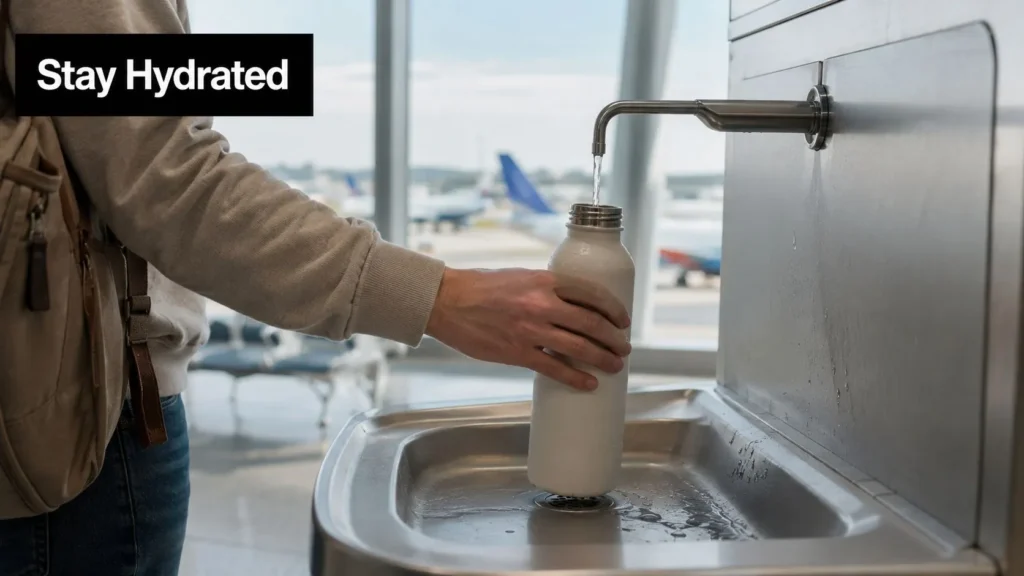
Cabin air is dry, and the practical problem is usually access. If water depends entirely on cabin service, intake becomes irregular. Bring an empty reusable bottle through security and fill it before boarding. Then drink in small, steady amounts from the gate onward instead of waiting until you already feel thirsty.
Build a simple intake plan
A good rule is to make hydration automatic. Take a few sips after boarding, again after each service pass, and again every time you stand up. That pattern is easier to follow than trying to estimate total volume in the air.
Food matters just as much because it changes how comfortable hydration feels. Very salty meals can leave you feeling puffy by descent. Heavy, greasy food raises the odds of reflux, bloating, and poor sleep in a seat that already limits digestion. For more durable healthy travel habits during a trip, treat airport food as part of your flight setup, not a last-minute convenience purchase.
Use meals to support timing, not just hunger
Meal timing gives the body another cue about what part of the day it is. If you are trying to shift toward destination time, eat on that schedule as early as practical. On an overnight eastbound flight, that often means a lighter meal before departure or soon after takeoff, then stopping intake early enough to make sleep easier. On a long daytime flight, a more substantial meal can help maintain energy and prevent random snacking.
The trade-off is individual tolerance. Some travelers feel best with one predictable pre-flight meal and minimal food in the air. Others do better with smaller snacks every few hours because an empty stomach makes them restless or nauseated. The useful approach is the one you have tested before travel day.
Pack food that is boring in the best way. Nuts, plain crackers, fruit, a sandwich you know agrees with you, or a protein bar with familiar ingredients usually beat airport fast food and mystery sauces at 35,000 feet. If you already use personalized meal plans at home, apply the same logic to travel days. Choose foods that keep energy stable and digestion predictable.
Two mistakes cause most in-flight nutrition problems. Eating too little early, then getting overly hungry and eating whatever appears. Eating too much late, then trying to sleep with a full stomach.
Hydration and nutrition support the rest of your long-haul system. Better fluid timing reduces that dried-out, depleted feeling on arrival. Better meal timing makes sleep, comfort, and jet lag management easier to execute.
4. Noise Cancellation and Sleep Optimization Technology
There’s a reason experienced travelers spend money on sound control before almost anything else. Cabin noise keeps the body in a low-grade state of alertness. Even if you don’t think it’s bothering you, it makes resting harder and makes the flight feel longer.
A quality pair of over-ear noise-canceling headphones changes the texture of the cabin. It won’t create silence, but it reduces the mechanical hum and chatter that keep your nervous system switched on. Products like the Bose QuietComfort line, Sony WH series, and Apple AirPods Max are common choices because they combine passive isolation with active cancellation and remain comfortable for extended wear.
Don’t buy audio gear. Build a sleep setup
Headphones help most when they’re one piece of a full sleep system. Pair them with an eye mask, a neck pillow that matches your sleep posture, and audio that doesn’t stimulate you. Nature sounds, steady ambient tracks, or familiar low-stakes podcasts work better than an action movie soundtrack leaking through your ears while you try to drift off.
Over-ear headphones are often easier for long sessions than earbuds, but they can be awkward if you sleep sideways against the window. Earbuds are smaller and easier to sleep in, but many travelers find them less comfortable after several hours. This is one of those trade-offs you should test at home rather than discovering at cruising altitude.
- If you’re a window sleeper: A slimmer headphone or earbud setup may work better.
- If noise is your biggest issue: Over-ear noise cancellation usually feels more effective.
- If battery anxiety stresses you out: Charge everything fully and carry a backup cable or power bank.
Sleep quality depends on timing, not just gear
In this regard, many travelers overestimate comfort products. A great mask and expensive headphones can help you sleep at the wrong time just as effectively as the right time. That’s useful for survival, but not always for jet lag management.
Some of the most useful travel hacks for long flights are really about reducing friction. If your sleep kit lives in one pouch and you can deploy it in a minute, you’ll use it. If it requires unpacking half your carry-on, you won’t. The best setup is the one you can activate quickly when the destination-aligned sleep window opens.
A polished kit won’t make every flight restful. It will give you a better shot at obtaining actual rest instead of just sitting in darkness with your eyes closed.
5. Circadian Rhythm Adjustment and Sleep Scheduling
You board a 10-hour overnight flight, fall asleep right after takeoff because you feel tired, wake up for breakfast over Greenland, and land in the morning with your body convinced it is still the middle of the night. That is how long-haul trips turn into lost first days. Sleep helps. Sleep at the wrong circadian time can make adaptation slower.
Jet lag is a timing problem. The practical fix is to treat the flight as part of a schedule-shift protocol, not as dead time to endure. Set your watch and phone to destination time after boarding. Then make the next decisions from that clock, not the one your body brought from home.
Build your in-flight schedule around the destination day
Use three inputs together: light, food, and sleep timing. The CDC’s guidance on jet lag and managing your body clock across time zones supports this basic approach. Light is the strongest cue, but meals and sleep timing help reinforce it.
If your destination is entering nighttime, reduce stimulation early. Finish your meal, limit screen exposure, and start your sleep routine before the cabin fully settles. If your destination is in daytime, stay up, keep overhead light on if possible, and avoid turning the seat into a bed just because the cabin is quiet.
A short nap can help. An unplanned three-hour sleep block at the wrong point often hurts more than it helps.
- If it is destination night: Prioritize one consolidated sleep window.
- If it is destination day: Stay awake, hydrate, and use caffeine carefully if you already tolerate it well.
- If timing is awkward: Use a brief nap as damage control, not your main sleep period.
Use melatonin as a timing tool, not a sedative
Melatonin works best when used to cue sleep timing, not to force sleep whenever you feel exhausted. The Sleep Foundation’s review of melatonin for jet lag and travel timing explains why timing matters more than just taking it on the plane.
For many travelers, the useful rule is simple: match melatonin to the bedtime you want at the destination, not the bedtime your departure city suggests. That often means taking it close to your planned destination-night sleep window rather than immediately after takeoff. If you are building your kit in advance, pack it where you can reach it easily, alongside the rest of your long-trip flight essentials and carry-on setup.
There are trade-offs. Melatonin can leave some travelers groggy, and it is not a substitute for a real sleep plan. I treat it as a small adjustment tool. The larger gains come from choosing the right sleep window, protecting it, and staying awake with intention when the destination clock calls for it.
For trips that matter the next day, this is one of the few tactics that changes arrival quality instead of just making the flight more tolerable.
6. Cabin Environment Control and Personal Comfort Items
Cabin comfort isn’t one thing. It’s a stack of small irritants: dry lips, cold shoulders, warm feet, a stiff neck, scratchy skin, and nowhere to put your arms. Travelers often respond by bringing too much gear. A better approach is to build a compact personal microclimate.
That means carrying items that solve several problems at once and using them in a consistent sequence. Layers beat bulky clothing. A real neck pillow beats improvising with a hoodie. Lip balm and moisturizer are worth more than many travelers admit because dry skin and facial discomfort gradually wear down your ability to rest.
Build a small comfort kit that earns its space
A useful long-haul comfort setup often includes an eye mask, neck pillow, light scarf or layer, lip balm, moisturizer, socks, and hand sanitizer. Brands vary, but the logic doesn’t. Every item should either improve temperature control, reduce pressure, or make rest easier.
Travel pillows are especially personal. Some travelers do better with wraparound options like Cabeau-style support. Others prefer softer, bendable designs that can be positioned against the window or tray table. What matters is whether the pillow supports your actual sleep posture instead of the one shown in product photos.
- Wear adaptable layers: Cabins swing between cool and stuffy.
- Protect skin early: Apply moisturizer and lip balm before discomfort becomes distracting.
- Keep one “reset” item handy: Fresh socks, a face wipe, or a clean T-shirt can change how the second half of a flight feels.
Comfort should support function
The goal isn’t spa-level luxury. It’s to remove the tiny annoyances that stop you from sleeping, eating, or sitting still without irritation. I’ve found that the most effective kits are boringly practical and packed the same way every time. If you always know where your eye mask or lip balm is, you’ll use it at the right moment instead of after your seat area has already turned chaotic.
A well-packed carry-on matters here as much as the products themselves. This packing guide for what to pack for long trips is useful if your current setup still involves digging through tangled cords and spare clothes to find one small item.
The comfort trap is overpacking. If your “essentials” overflow the seat pocket and armrest area, they stop being helpful. A clean, disciplined kit is better than a large one.
7. Entertainment and Distraction Strategy Planning
Bad entertainment planning makes a long flight feel longer than it is. The usual mistake is downloading whatever looks interesting the night before, then discovering mid-flight that all of it requires too much attention, all of it is too similar, or none of it matches your energy level.
Good entertainment strategy is less about quantity and more about sequencing. You want options for different mental states: alert, tired, restless, anxious, and nearly asleep. That usually means mixing formats instead of relying only on movies.
Curate by energy level, not just by genre
A strong in-flight lineup has layers. One or two films you’re excited about. A few easy episodes of something familiar. An audiobook that works with eyes closed. A podcast or playlist that helps you unwind rather than revving you up. Download everything in advance because airline systems sometimes disappoint at the exact moment you most need them.
The best travelers I know don’t just pack content. They assign content to phases of the flight. A demanding film works early when you’re fresh. Light comedy or a comfort rewatch works when fatigue sets in. Audio works well during meal service, turbulence, or periods when you want to rest your eyes.
- Use offline downloads: Never assume seatback entertainment will save you.
- Keep one low-effort option: Crossword, Sudoku, or a simple offline game helps in mental dead zones.
- Save your best pick: Don’t burn your most anticipated movie while boarding chaos is still unfolding.
Entertainment can either support sleep or sabotage it
Long-flight planning becomes more tactical. Some content keeps you pleasantly occupied. Other content spikes alertness and makes it harder to transition into sleep when the timing is right. A tense thriller may be great at home and a terrible choice halfway to your destination bedtime.
The right entertainment doesn’t just pass time. It regulates energy.
If you’re anxious in the air, familiar content often beats novelty. Rewatching a favorite series or listening to a known podcast can feel grounding in a way that new material doesn’t. If you’re trying to align with destination time, entertainment should support that larger system, not compete with it.
A flight is one of the few places where boredom and overstimulation can alternate quickly. Build for both.
8. Pre-Flight Preparation and Post-Flight Recovery Protocols
You feel the cost of a long-haul flight long before boarding. It starts with the 5 a.m. alarm, the rushed packing check, the skipped meal, and the decision fatigue that burns energy before the aircraft door closes. By the time the flight begins, recovery is already harder.
Long flights work best as a three-phase system: prepare the body before departure, protect it in transit, and control the first hours after landing. Travelers who treat the flight as an isolated event usually arrive more dehydrated, more sleep-disrupted, and less able to adapt to local time. The practical goal is simpler. Reduce preventable strain before takeoff so the in-flight strategies in this article can do their job.
Build a controlled departure runway
The final 24 hours should remove friction, not create it. Pack in a way that supports access, not just space efficiency. Keep medications, compression gear, eye mask, earplugs, pen, charging cable, and any sleep-related items in one grab zone inside your personal item. If you need to stand up and open multiple bags to find one tablet or one cable, the system failed.
I use a simple test. If an item matters in the seat, it does not go in the overhead bin.
Pre-flight sleep also matters. Starting a long-haul itinerary already short on sleep makes appetite, patience, pain tolerance, and circadian adjustment worse. A late-night packing session can erase a lot of the benefit from good seat selection, hydration planning, and sleep timing later on. The day before departure should feel boring and organized for a reason.
A tighter pre-flight checklist helps:
- Set your first 12 hours after arrival before you leave home: Know where you are going, how you are getting there, and whether you need to stay awake or sleep soon after landing.
- Match your watch and phone to destination time before boarding or at takeoff: That reduces the habit of eating and sleeping on home time.
- Pre-decide your first meal after landing: This prevents the usual airport or hotel default of heavy food at the wrong biological time.
- Leave buffer on departure day: A rushed airport experience raises stress and often leads to poor food choices, less hydration, and forgotten essentials.
Use the arrival window to reset, not drift
The first day after landing determines whether jet lag fades or lingers. Guidance from the CDC on reducing jet lag during travel centers on timing light exposure, sleep, and activity around the new time zone. That matches what experienced long-haul travelers learn by trial and error. The body adjusts faster when those signals are consistent from the start.
That means the post-flight plan should be specific.
If you land in the morning or early afternoon, get daylight exposure and light movement soon after arrival. Walking outside usually works better than collapsing indoors under dim lighting and then taking an unplanned three-hour nap. If you land late in the evening, protect the path to sleep. Keep lights lower, keep the meal moderate, shower, and get to bed without turning the night into a second day.
The trade-off is realism. Sometimes a short nap helps, especially after overnight eastbound flights. Keep it controlled so it does not push bedtime deep into the night. A timer is better than guesswork.
Recovery continues after baggage claim
A long-haul flight does not end when you leave the airport. Swelling, dehydration, digestive disruption, and circadian confusion often peak later. That is why the first post-arrival block should stay deliberately simple: fluids, light movement, appropriately timed food, and light exposure that supports local time.
Avoid scheduling your hardest meeting, longest drive, or most socially demanding event immediately after landing if you have any control over the calendar. The point of all these flight hacks is not to suffer more efficiently. It is to arrive functional.
Small pre-flight decisions carry forward. A calm departure improves in-flight execution. Good in-flight execution improves first-day recovery. Handle each phase as part of one system, and long-haul travel becomes much more predictable.
8-Point Long-Flight Travel Hacks Comparison
Use this table to choose the right mix for the trip in front of you. A daytime westbound flight, an overnight eastbound flight, and a high-stakes arrival all call for different priorities.
| Strategy | Implementation complexity | Resource requirements | Expected outcomes | Ideal use cases | Key advantages |
|---|---|---|---|---|---|
| Strategic Seat Selection and Position Optimization | Low to moderate (research, aircraft check, timely check-in) | Minimal to moderate (free seat maps, possible seat fees) | Better comfort, better sleep odds, less friction around movement | Long-haul economy travelers, travelers managing back pain, anyone who needs aisle access | Supports the rest of the system because seat position affects sleep, mobility, and bathroom access |
| Compression Garments and Movement Routines | Low (put them on, follow a repeatable routine) | Low (compression socks or sleeves, a few minutes each hour) | Less swelling, better circulation support, better first-day recovery | Flights over several hours, older travelers, passengers prone to leg fatigue | Low cost, easy to repeat, useful even in tight cabins |
| Strategic Hydration and Nutrition Planning | Low to moderate (plan timing, pack supplies, avoid random choices) | Low (water bottle, electrolytes if useful, familiar snacks) | More stable energy, fewer headaches, less digestive disruption | Travelers who dehydrate easily, anyone connecting onward after landing | Reduces avoidable fatigue and keeps the cabin from feeling harsher than it already is |
| Noise Cancellation and Sleep Optimization Technology | Low to use, moderate to set up well | Moderate to high (ANC headphones or earbuds, charging plan, eye mask) | Better rest, lower perceived cabin stress, improved focus when awake | Noisy cabins, light sleepers, business travelers who need to function on arrival | Creates a controllable audio environment and makes planned sleep more realistic |
| Circadian Rhythm Adjustment and Sleep Scheduling | High (requires pre-trip planning and discipline) | Low to moderate (light management, sleep timing, optional supplements) | Faster clock adjustment and less jet lag disruption | Multi-time-zone trips, short business trips, arrivals tied to meetings or events | Highest payoff when arrival timing matters more than in-flight comfort |
| Cabin Environment Control and Personal Comfort Items | Low (pack deliberately, use at the right time) | Low to moderate (layers, eye mask, neck support, moisturizer, lip balm) | Better comfort, less dryness, fewer temperature-related sleep interruptions | Cold cabins, dry cabins, frequent flyers who know their weak points | Builds a personal comfort microclimate instead of relying on cabin conditions |
| Entertainment and Distraction Strategy Planning | Low to moderate (download, organize, assign content by flight phase) | Low (device storage, battery, offline access) | Lower boredom and anxiety, better pacing across a long flight | Very long sectors, anxious flyers, travelers who struggle with idle time | Useful for managing alertness. It can keep you awake when that helps, or fill non-sleep blocks without draining you |
| Pre-Flight Preparation and Post-Flight Recovery Protocols | Moderate to high (calendar planning and follow-through) | Low to moderate (time, packing discipline, recovery window after arrival) | Smoother departure, fewer in-flight mistakes, faster rebound after landing | Frequent long-haul travelers, athletes, executives, anyone with a short recovery window | Ties the full system together because preparation before takeoff affects everything that follows |
The practical takeaway is simple. If budget is tight, start with the highest return per dollar: seat choice, compression, hydration planning, and a basic comfort kit. If arrival performance matters more than ticket price, circadian planning and sleep setup usually deserve more attention than entertainment upgrades.
No single row wins on every flight. The right setup is the one that matches route, departure time, health profile, and what you need to do in the first 24 hours after landing.
Your Blueprint for Arriving Ready
Long-haul travel gets easier when you stop looking for a silver bullet. There isn’t one. The people who handle long flights best usually aren’t relying on a miracle pillow, a lucky upgrade, or unusual stamina. They’re using a system that reduces friction at every stage of the trip.
That system starts with seat choice because access shapes behavior. An aisle seat supports hydration, stretching, and bathroom access. A thoughtfully chosen window seat can support better sleep. From there, movement and circulation become essential. Compression socks can help, but they work best when paired with actual mobility, even if that only means ankle circles, calf raises, and short aisle walks repeated consistently.
Hydration and food planning matter for the same reason. They aren’t glamorous, but they keep your energy from swinging wildly and make the cabin feel less punishing. Starting hydration before departure, carrying your own bottle, and packing food you know works for your body removes a lot of avoidable discomfort. Noise control and comfort gear then build on that foundation. Good headphones, an eye mask, layers, and a reliable neck pillow don’t create luxury. They create fewer obstacles to real rest.
The most important shift, though, is circadian. If you remember only one principle, make it this: long flights aren’t mainly about surviving time in a seat. They’re about helping your body arrive on the right clock. That’s why destination-time meals, sleep timing, and light exposure consistently outperform generic “sleep as much as possible” advice. Comfort hacks help. Timing strategy changes the outcome after landing.
This is also why pre-flight and post-flight routines deserve more attention than they usually get. A controlled departure day, a ready carry-on, realistic arrival planning, and smart first-day light exposure all extend the benefit of what you did in the air. They turn the flight into part of the recovery plan instead of a barrier to it.
You don’t need to implement every tactic at once. Start with two or three that solve your biggest problems. If you always land stiff, fix the seat and movement system first. If jet lag ruins the first days of every trip, prioritize destination-time alignment. If sleep is the weak point, build a better sound and comfort setup. Then add the next layer.
That’s how the best travel hacks for long flights work in practice. Not as isolated tips, but as a repeatable operating system. Build yours well, and you won’t just endure the journey. You’ll arrive ready to use the trip.
If you want more practical travel, health, science, and lifestyle guides written in a clear, usable way, explore maxijournal.com. It’s a solid place to find approachable commentary, everyday how-tos, and fresh articles across travel, wellness, tech, business, arts, and more.
Discover more from Maxi Journal
Subscribe to get the latest posts sent to your email.