Amsterdam’s shape is the attraction. You can travel about 100 kilometers along the city’s canals without leaving city limits or repeating the same canal, and the city has more than 1,200 bridges, according to this Amsterdam fact guide. That helps explain why so much of what to do in Amsterdam starts on the water, beside the water, or with a bridge in view.
The mistake first-time visitors make is treating Amsterdam like a city with one center and one checklist. It works better as a series of compact experiences you combine by mood: a serious museum in the morning, a canal cruise in the afternoon, a brown café at dusk, a neighborhood walk after dinner. The distances are manageable, but the city can feel crowded and tightly booked, so the order matters almost as much as the attractions themselves.
This guide focuses on the ten experiences that give you the broadest, smartest view of the city. Some are obvious for a reason. Others matter because they keep your trip from collapsing into queueing, rushed museum visits, and generic tourist streets. If you only have a day, pick three and keep them geographically tight. If you have longer, use these as anchors and leave room between them.
One practical note before you start planning. Amsterdam rewards good etiquette more than aggressive sightseeing. That applies on bike lanes, on residential streets, in courtyards, and in small cafés. If you need a quick cultural primer before you arrive, read Unspoken rules for Amsterdam bikes. It’ll save you from the most common mistake visitors make.
1. Canal Cruises Through Amsterdam’s UNESCO World Heritage Waterways
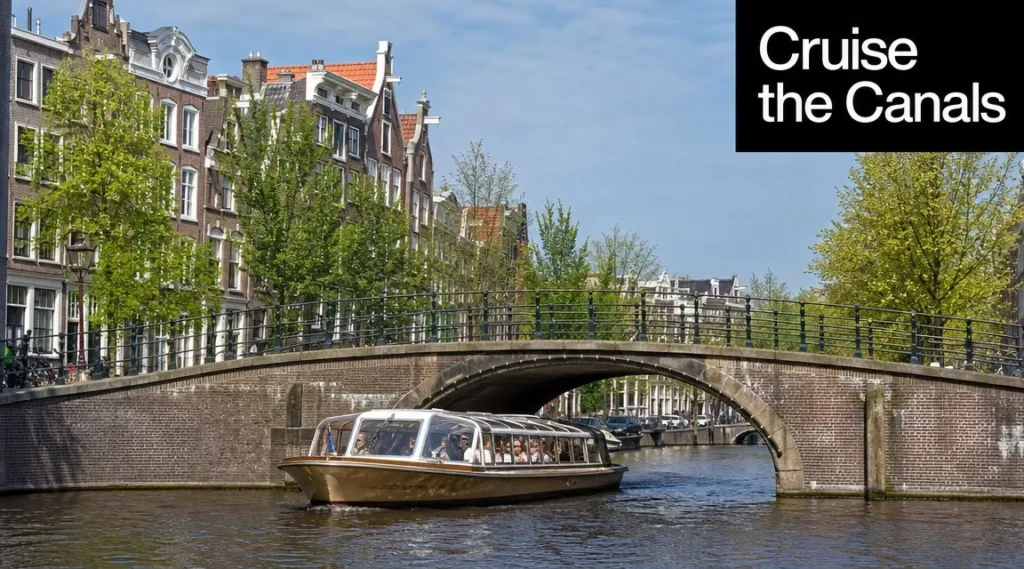
A canal cruise sounds obvious. It still belongs near the top of the list because Amsterdam is one of the few cities where the standard tourist activity is also one of the best orientation tools. Seeing the canal belt from the water makes the street plan click in a way it often doesn’t on foot.
Large glass-roof boats work if you want a simple overview and protection from weather. Smaller boats are better if you care about sightlines, photos, and hearing a guide without competing with a packed cabin. Evening cruises can be beautiful, but they’re less useful for orientation and usually need more advance planning.
How to choose the right cruise
If this is your first visit, take a standard sightseeing cruise early in your trip. Operators like Stromma and Blue Boat Tours are easy to book and practical if you want a broad first pass. If you already know you dislike group tours, book a smaller boat and pay the premium.
A few things matter more than people expect:
- Departure point: Different piers shape the route. Check the map before booking so you’re not spending half the cruise on a less interesting stretch.
- Time of day: Morning and late afternoon are usually better for seeing architecture clearly. Night is more atmospheric, but less useful if your priority is understanding the city.
- Layering: Even in mild weather, canal breeze can make an open or semi-open boat feel colder than street level.
Practical rule: Book the canal cruise before you book random add-ons. It helps you decide which neighborhoods you want to return to on foot.
What works best in a real itinerary
A cruise works well on arrival day, after the Anne Frank House, or after a museum-heavy morning when you want to keep moving without more indoor concentration. It doesn’t work as well right before a tightly timed ticket, because boarding and dock logistics can eat into your buffer.
If you’re building a broader Europe trip, Amsterdam’s canal experience is one reason it stays on lists of top travel destinations in Europe. In practice, the best version is simple: arrive a little early, sit where you can see both sides, and don’t treat it like transport. Treat it as the city introducing itself.
2. Anne Frank House and World War II Historical Tours
The Anne Frank House is one of the most important visits in Amsterdam. It’s also one of the easiest to mishandle if you treat it like just another museum slot. This is a short, emotionally intense experience, and it needs space around it.
Expedia’s 2026 Amsterdam guide lists the Anne Frank House among the city’s most popular places to visit, alongside the Van Gogh Museum and Rijksmuseum in its roundup of popular Amsterdam attractions. That popularity means timing is not a minor detail. It shapes whether the day feels meaningful or rushed.
How to visit without flattening the experience
Book as early as you reasonably can, especially if you’re traveling in a busy season or want a specific time window. Early morning can work well if you want the rest of the day free. Late afternoon also works if you’d rather keep the morning lighter and quieter.
Good pairings include a reflective canal-side walk, the Jewish Cultural Quarter later in the trip, or a low-key dinner. Bad pairings include party districts, back-to-back museum marathons, or anything that forces you to move fast immediately afterward.
Consider these trade-offs:
- Audio context: If an audio guide or contextual material is available, use it. The visit lands differently when you already understand the broader wartime setting.
- Photography mindset: Don’t plan this as a content stop. Restrictions aside, you’ll get more from attention than documentation.
- Emotional pacing: Leave recovery time after the visit. People often underestimate that.
Some Amsterdam experiences are scenic. This one is moral and historical. Plan accordingly.
Add a broader World War II lens
The Anne Frank House is personal and specific. If you want a wider understanding of wartime Amsterdam, add a historical walking tour or another Jewish heritage site on a different day. Don’t force all of it into one compressed block. Separation helps you absorb what you’ve seen.
For many travelers, this is the most memorable answer to what to do in Amsterdam because it connects the city’s streets to one of the most widely read personal testimonies of the war. Go in prepared, not rushed, and don’t stack it with anything frivolous.
3. Van Gogh Museum – World’s Largest Collection of the Master’s Works
If you only visit one art museum in Amsterdam, choose based on your own tolerance for scale. The Van Gogh Museum is often the better pick for travelers who want an emotionally coherent, artist-focused experience rather than a vast national collection.
It’s easier to move through with a narrative in mind. You’re following one artist’s development, seeing changes in style, color, technique, and mood. That structure makes it more accessible than many major museums, even for people who don’t usually love museums.
How to get more from the visit
Timed entry matters. So does your energy level. Don’t schedule this after a night out or at the tail end of a day when you’ve already walked for hours, because the museum rewards concentration.
The best approach is selective. Instead of trying to absorb every room evenly, pick a few works or periods and spend longer with them. The museum experience improves when you stop trying to “complete” it.
Useful tactics:
- Go early on a weekday if possible: You’ll think more clearly when the galleries feel less compressed.
- Use the audio guide if available: Context helps with Van Gogh more than with many painters because his evolution is part of the appeal.
- Limit your ambitions: Three thoughtful hours beats a distracted sprint.
Who should choose this over the Rijksmuseum
Choose the Van Gogh Museum if you want a strong narrative arc, modern museum pacing, and a manageable focus. Choose the Rijksmuseum if you want Dutch history, decorative arts, and the sweep of the Dutch Golden Age.
If you’ve enjoyed major art institutions elsewhere, you might like comparing this one with the best museums in Paris, because the Amsterdam experience is narrower, more intimate in theme, and simpler to experience in a single sitting.
For many visitors, the Van Gogh Museum is the better museum on a first trip, even if the Rijksmuseum is the grander institution. It asks less stamina and gives more emotional clarity in return.
4. Bicycle Tours – Experience Cycling Culture Like a Local
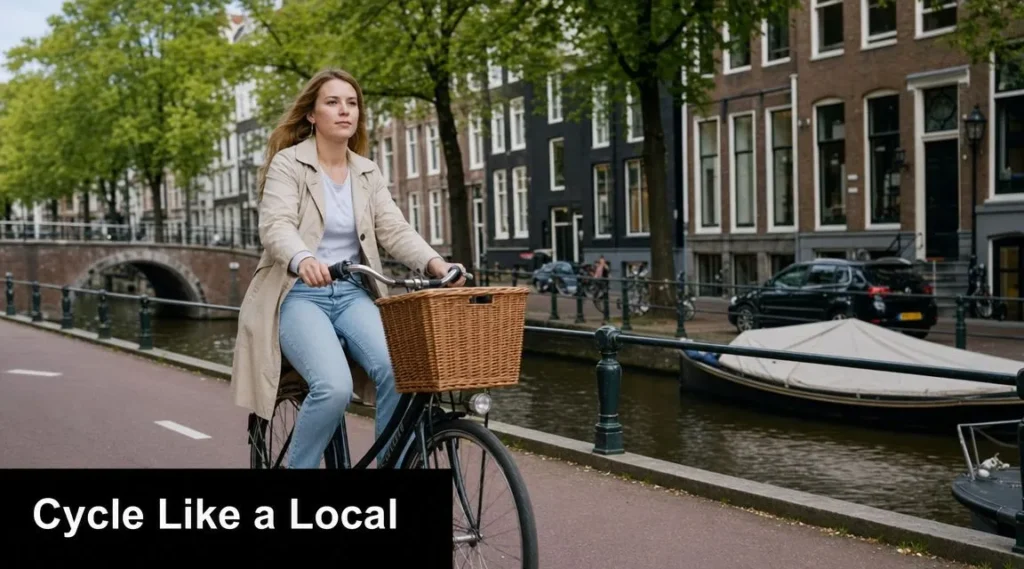
Cycling in Amsterdam is not a cute add-on. It’s part of how the city functions. That’s why a bike tour can be excellent or terrible depending on your confidence, route, and guide.
If you’re already comfortable riding in busy urban conditions, a bike tour gives you fast neighborhood range and a stronger feel for daily life than walking alone. If you’re hesitant on a bike, don’t force it on your first morning in the city. Amsterdam cyclists move decisively, and uncertainty causes more problems than speed.
When a bike tour is a great idea
Small-group operators such as Bike About Tours and Amsterdam Bike Tours are often better than giant mixed-ability groups. Good guides do more than recite landmarks. They teach lane behavior, positioning, signaling, and the rhythm of intersections.
Book an afternoon departure if you’re nervous. Morning commuter energy can feel harsher, especially near major crossings and around Centraal. Closed-toe shoes and a light rain layer are the practical baseline.
- Best for: Confident riders who want to cover several districts efficiently.
- Less ideal for: Families with shaky riders, anyone who hasn’t biked in years, or travelers carrying lots of gear.
- Smart move: Rent a bike for a short practice ride before committing to a guided tour.
What visitors get wrong
They underestimate etiquette. A canal-side ride looks dreamy in photos, but in real life you need to signal, stay predictable, and never drift into a bike lane while checking your phone or map.
This quick visual is useful before you decide whether riding in Amsterdam suits you:
A bike tour works best on day two or three, once you’ve already oriented yourself. If you’re still figuring out tram stops, canal names, and local flow, walking first is smarter. For travelers mapping the whole journey, this fits naturally into a broader guide on how to plan a trip abroad, because Amsterdam rewards realistic self-assessment more than bravado.
5. Rijksmuseum – Dutch Masters and National Treasures
The Rijksmuseum is where you go when you want Amsterdam to feel big, historic, and culturally heavyweight. It isn’t just an art stop. It’s one of the clearest ways to understand the Netherlands through painting, design, objects, and state identity.
This museum can also exhaust people fast. The building, the scale, and the density of major works create the classic “museum overload” problem. If your attention starts fading after ninety minutes, that’s normal. Plan around it instead of pretending you’ll absorb everything.
How to avoid the common mistake
The mistake is entering with no route and trying to see the whole museum evenly. If time is limited, prioritize the Dutch Golden Age galleries and the works you already know you care about. Save peripheral sections for a second pass if you still have energy.
The other tactical choice is whether to use the museum app or go analog. The app is practical if you like structure. A looser wander works better if you’re already familiar with Dutch masters and just want time in the rooms.
Try this approach:
- Start with your priority works: See the famous rooms while your eyes are fresh.
- Take a break before fatigue turns everything into wallpaper: The café or museum gardens can reset your focus.
- Don’t stack another huge museum right after: Your attention won’t hold.
Field note: People who “aren’t museum people” often do better here when they choose a short, intentional route instead of attempting a full conquest.
Best pairing for the same day
The Rijksmuseum pairs well with a slower afternoon in the Museumplein area, a canal cruise, or a relaxed evening in the Jordaan. It pairs badly with another heavy historical site unless you’re someone who can process a lot of visual information without burning out.
If the Van Gogh Museum is the concentrated character study, the Rijksmuseum is the wide historical canvas. For many travelers, that makes it the most intellectually satisfying answer to what to do in Amsterdam, even if it’s not the easiest.
6. Jordaan District Walking Tour – Charming Medieval Neighborhoods
If you want Amsterdam to feel livable rather than staged, spend real time in the Jordaan. Don’t just cut through for photos. This neighborhood rewards wandering, pauses, and mild detours more than strict route-following.
The appeal isn’t one major monument. It’s the combination of narrow streets, canals, local cafés, independent shops, and the sense that you’ve stepped slightly out of the tourist conveyor belt without leaving central Amsterdam. That balance is rare.
How to walk the Jordaan well
Go with a loose plan. Mark a few cafés, a market if timing lines up, and maybe one or two specialty shops. Then leave gaps. The best finds in the Jordaan are often side streets, small courtyards, and places you’d miss if you were speed-walking to a list.
Late afternoon is often the sweet spot. Streets feel active, cafés begin to fill, and the neighborhood shows more personality than it does during a rushed morning pass.
A practical Jordaan approach looks like this:
- Choose one anchor stop: A café, gallery, or brewery gives your walk shape.
- Use side streets deliberately: The main drags are fine, but the neighborhood’s charm lives one block off them.
- Eat locally: Skip tourist-menu restaurants and pick a place that looks like people are lingering.
Why this matters on a first trip
First-timers often overbook headline attractions and end up seeing very little of daily Amsterdam. The Jordaan fixes that. It gives your itinerary breathing room and restores some texture after major museums.
It also works in almost any weather short of heavy rain. If the forecast is mixed, keep the Jordaan as your flexible slot. Duck into a brown café, browse a shop, then continue. That kind of low-pressure neighborhood time is often what people remember most fondly.
7. Heineken Experience – Interactive Brewery Tour and Brand History
The Heineken Experience is a polished, commercial attraction. That isn’t criticism. It just tells you what kind of visit to expect.
If you like brand museums, interactive exhibits, and a social stop with a built-in tasting, this can be fun. If you want a quiet, traditional brewery atmosphere, it may feel too packaged. The right choice depends on whether you want entertainment or beer culture depth.
When it’s worth your time
It works well for groups with mixed interests because it’s easy, structured, and not demanding. It also fits travelers who want one lighter attraction between heavier historical sites. The original brewery setting adds some place value, and the tasting component gives the visit a clear payoff.
Book ahead rather than deciding at the door. Popular timed-entry attractions in Amsterdam benefit from advance planning anyway, and the city’s hotel market is notably capacity-managed. An independent market analysis reported roughly 49,600 hotel rooms in late 2025, with occupancy averaging 75.7% in 2024 and rising to 77.8% on a 2025 year-to-date basis, according to this Amsterdam hospitality market analysis. In plain terms, popular slots disappear faster than many visitors expect.
Who should skip it
Skip the Heineken Experience if you care more about small-scale brewing, local atmosphere, or traditional pub culture than multimedia presentation. In that case, you’ll likely get more from a brown café, a neighborhood bar, or a smaller brewery stop elsewhere in the city.
A simple test helps:
- Choose it if: You want a lively, easy, social attraction with clear logistics.
- Skip it if: You’re looking for craft-beer nuance or something deeply local.
- Time it well: Late afternoon or early evening usually fits best, especially if you’re turning it into a casual night.
This isn’t mandatory Amsterdam. But for the right traveler, it’s a good pressure-release valve between museums and long walks.
8. Flower Markets and Tulip Fields – Experiencing Dutch Horticultural Heritage
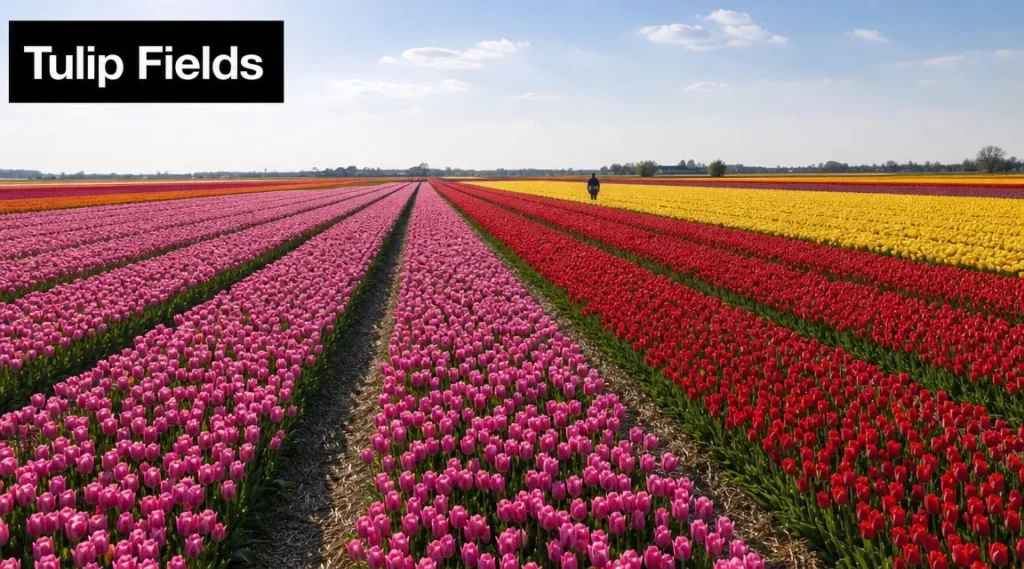
Amsterdam’s flower appeal depends heavily on timing. The Bloemenmarkt is easy to visit in the city center, but the classic tulip-field dream is seasonal. If you arrive outside spring, adjust expectations early and don’t build your whole trip around flowers.
That doesn’t mean skipping the subject entirely. Even without peak tulip season, flowers and gardening still show up in Amsterdam’s visual identity, markets, and souvenir culture. In spring, the experience becomes much stronger and worth planning around.
What to do in the city and beyond
The Bloemenmarkt is best treated as a short stop, not a half-day destination. It’s central, convenient, and easy to combine with canal-side wandering. Go early if you dislike dense foot traffic.
For travelers planning around seasonality, Amsterdam has more than the standard flower-market option. Amsterdam tips for free things to do notes that Open Garden Days take place for three days each June, when more than 30 canal houses open private gardens. That’s a more distinctive floral and architectural experience than many first-time visitors realize.
The real trade-off with tulip chasing
Field trips and garden visits can be beautiful, but they cost time and lock you into weather and bloom timing. If your Amsterdam stay is short, think carefully before giving up a major museum or neighborhood day for a flower excursion. If flowers are central to why you’re visiting the Netherlands, then plan around them unapologetically and book accordingly.
Go for tulip fields only if you care enough to build a day around them. For everyone else, a city market and garden-focused detour may be the better use of time.
This is one of the most seasonal answers to what to do in Amsterdam. When it aligns with your dates, it’s special. When it doesn’t, forcing it leads to disappointment.
9. Local Café and Coffee Culture – Gezelligheid Experience in Brown Cafés
Amsterdam makes more sense once you sit still in it. Brown cafés are where that happens. They’re not about checking off a landmark. They’re about atmosphere, pace, and the Dutch social texture often described as gezelligheid.
You’ll recognize the style quickly: dark wood, close tables, soft light, and people talking rather than performing for a room. This is one of the easiest ways to counterbalance a sightseeing-heavy itinerary. It also doesn’t require much planning, which is useful in a city where the major ticketed sights often do.
How to choose a café well
Pick by neighborhood first, not by fame. A random good café in the Jordaan or De Pijp will often serve you better than a place everyone online has already turned into a mini attraction. Historic names like Café de Dokter or Café ’t Smalle can be rewarding, but they’re best when your expectations are about mood, not perfection.
The main etiquette point is simple. Match the room. If conversations are subdued, don’t be the loudest table. If it’s busy, order efficiently and settle in without treating the place like your private lounge.
A good brown-café session usually includes:
- A local drink choice: Beer, genever, coffee, or whatever suits the hour.
- A small snack: Bitterballen, cheese, or another bar bite makes the stop feel complete.
- Enough time: Give it at least an hour if you can.
Why this belongs on the essentials list
Visitors often ask what to do in Amsterdam and expect the answer to be all museums, cruises, and famous streets. That misses the city’s authentic feel. A brown café gives you something the headline attractions can’t. It lets you observe rhythm instead of just consuming sights.
This is also one of the best low-effort experiences on a rainy day, after a long walk, or in the gap between two booked entries. If your trip feels overprogrammed, cut something minor and add café time instead. The itinerary usually improves.
10. Jewish Historical Museum and Portuguese Synagogue – Cultural Heritage and Resilience
If the Anne Frank House gives you one personal wartime lens, the Jewish Historical Museum and Portuguese Synagogue give you a wider historical framework. This is the better choice when you want depth, continuity, and a broader understanding of Jewish life in Amsterdam beyond one story.
The experience is quieter and less universally prioritized by first-time visitors, which is part of its value. You’re not moving through a single emotional narrative. You’re encountering centuries of culture, worship, migration, rupture, and persistence.
Why this area deserves real time
This is not a filler museum. It needs focus and a slower pace, especially if you’re reading exhibit texts carefully or pairing it with a walk through the surrounding quarter. Start with the Portuguese Synagogue if architecture is a strong draw for you, then move into the museum with that visual context already in your head.
A good day here stays intentionally light. Don’t pair it with nightlife plans or three other serious historical stops. A canal-side meal, a gentle walk, or a return to your hotel afterward is enough.
For travelers trying to avoid the most saturated core, this part of Amsterdam also opens up a different city geography. One useful alternative area is Amsterdam Noord, reached by free ferry from Centraal, where former industrial spaces now host creative venues, street art, workshops, restaurants, and the STRAAT museum, as described in this guide to lesser-known Amsterdam neighborhoods. That contrast helps frame Amsterdam by mood rather than by one crowded center.
Practical timing and mindset
Late afternoon can work well if you prefer calmer museum conditions. Allow enough time to absorb the setting rather than rushing through because another ticket is looming.
This is one of the strongest choices for travelers who want their Amsterdam trip to include serious cultural learning, not just scenic highlights. It won’t be everyone’s favorite stop. It may be the one that stays with them the longest.
Top 10 Amsterdam Activities Comparison
A good Amsterdam plan is not about ranking sights from best to worst. It is about matching each activity to your time, energy, budget, and tolerance for queues. Use the table below to choose what fits your trip, then build days around smart pairings rather than trying to do all ten at the same intensity.
| Attraction | Implementation complexity | Resource requirements | Expected outcomes | Ideal use cases | Key advantages |
|---|---|---|---|---|---|
| Canal Cruises Through Amsterdam’s UNESCO World Heritage Waterways | Low. Easy to book, fixed routes, little planning needed | Moderate cost. Tickets vary by operator, and weather affects the experience | Strong city overview, architecture views, and a low-effort first look at Amsterdam | First-time visitors, couples, travelers with limited walking capacity | Water-level perspective, easy orientation, access to canal views you will not get on foot |
| Anne Frank House and World War II Historical Tours | High. Timed entry, strict visitor flow, advance planning strongly recommended | Low ticket cost, but a meaningful time and emotional commitment | Educational and emotionally powerful reflection on Holocaust history | History-focused travelers, educators, visitors who want context rather than scenery | Preserved annex, original materials, clear historical framing |
| Van Gogh Museum – World’s Largest Collection of the Master’s Works | Moderate to high. Timed tickets, crowd management, and focused viewing required | Higher admission cost and at least a few hours if you want more than a quick pass | Detailed artistic context, strong biographical insight, and clear creative development across his work | Art lovers, students, creative travelers | Exceptional concentration of Van Gogh works, useful chronology, strong interpretive material |
| Bicycle Tours – Experience Cycling Culture Like a Local | Moderate. Best for confident riders who can handle city traffic and group pacing | Low to moderate cost. Rental or tour fee, plus weather and fitness considerations | Active neighborhood exploration and a practical feel for how locals move through the city | Active travelers, repeat visitors, travelers short on time | Covers more ground than walking, gives local street-level perspective, often good value |
| Rijksmuseum – Dutch Masters and National Treasures | High. Large museum, heavy choice load, and real planning needed to avoid fatigue | High time and ticket investment. Best with a half-day mindset | Broad understanding of Dutch art, history, and state identity | Art-focused travelers, culture-first itineraries, architecture fans | Masterworks, decorative arts, historical objects, and a landmark building in one stop |
| Jordaan District Walking Tour – Charming Medieval Neighborhoods | Low. Easy to do independently or with a short guided walk | Low cost and flexible timing | Strong neighborhood feel, canal views, small shops, and good casual photography | Independent travelers, slow travelers, visitors balancing out museum-heavy days | Relaxed pace, attractive streets, local cafés, hidden courtyards |
| Heineken Experience – Interactive Brewery Tour and Brand History | Moderate. Timed admission and a set visitor route | Moderate fee, usually with tasting included | Fun, polished brewery and brand overview rather than a craft-beer deep education | Groups, beer fans, travelers wanting a lighter indoor activity | Interactive format, social atmosphere, consistent production quality |
| Flower Markets and Tulip Fields – Experiencing Dutch Horticultural Heritage | Moderate. Seasonal timing matters, and tulip fields often require a day-trip plan | Moderate cost and added transport time in peak bloom season | Strong visual payoff and a clearer sense of Dutch flower culture | Spring visitors, photographers, gardeners | Color-rich seasonal experience, easy pairing with half-day excursions outside the center |
| Local Café and Coffee Culture – Gezelligheid Experience in Brown Cafés | Low. Minimal planning, easy to slot between bigger sights | Low cost if kept simple, though central locations charge more | Rest, people-watching, and a better feel for local social rhythm | Budget travelers, writers, solo travelers, anyone needing a slower hour | Atmosphere, affordability, warmth in bad weather, easy neighborhood variety |
| Jewish Historical Museum and Portuguese Synagogue – Cultural Heritage and Resilience | Moderate. Best approached with time to read and reflect | Low to moderate time and ticket commitment | Detailed education on Jewish life in the Netherlands and the impact of persecution and survival | Cultural travelers, history readers, visitors wanting a less crowded serious site | Preserved architecture, thoughtful interpretation, calmer experience than the busiest memorial stops |
The key value in this comparison is how these experiences combine. Pair high-focus stops such as the Rijksmuseum, Van Gogh Museum, Anne Frank House, or the Jewish Historical Museum with lower-effort activities such as a canal cruise, Jordaan walk, or brown café stop. That structure keeps the day usable.
Timing matters just as much as interest. Book the hardest-ticket items first, especially Anne Frank House and the major museums. Leave flexible activities, such as cafés, neighborhood walks, and some canal cruises, to fill the gaps.
Budget also changes the best choice. Travelers trying to keep costs down usually get more from Jordaan, brown cafés, and a self-planned cycling or walking day than from stacking paid attractions. Travelers with limited time often get better value from one major museum plus one scenic or neighborhood-based activity than from rushing through three ticketed stops.
Planning Your Perfect Amsterdam Itinerary
A good Amsterdam itinerary is built on restraint. The city is compact, but the mistake I see again and again is stacking major sights too tightly and spending the day in lines, on trams, or rushing between timed entries.
The best structure is simple. Combine one high-attention stop with one lighter experience, then leave room for meals and transit. A morning at the Rijksmuseum works well with an afternoon in the Jordaan. Anne Frank House pairs better with a canal cruise or a quiet café than with another heavy museum visit an hour later. That pacing keeps the day usable.
Book in order of difficulty, not in order of excitement. Start with the hardest tickets to get, especially Anne Frank House and the major museums. Build around those fixed times. Leave flexible parts of the trip, such as a brown café stop, a neighborhood walk, or a canal cruise with frequent departures, for the gaps.
For one day, keep your ambitions tight. One major museum, one scenic activity, and one neighborhood-based experience is usually enough. Good combinations include Rijksmuseum, a Jordaan walk, and a brown café, or Anne Frank House, a canal cruise, and dinner nearby. Add much more and the day starts to feel like logistics instead of travel.
Two or three days gives you better options. Split your hardest indoor visits across separate mornings, when your attention is strongest and queues are easier to manage. Use afternoons for lower-pressure plans such as the Jordaan, cafés, or the Jewish Cultural Quarter. Keep one block open for weather. Amsterdam can feel completely different in sun, wind, or rain, and flexibility helps.
Transport is easy if you stay realistic. Walk when your stops are close together. Use trams for longer jumps. Take the free ferry to Amsterdam Noord. Rent a bike only if you are comfortable riding in busy urban traffic, signaling clearly, and staying out of the way of faster local cyclists. For many first-time visitors, walking and trams are the better choice.
Budget changes the right itinerary. If you want to keep costs down, do fewer paid attractions and spend more time in neighborhoods, on canal-side walks, at brown cafés, and on free ferries. Paying for one standout museum and one other ticketed experience often gives better value than trying to fit in four. Amsterdam rewards selectivity.
Etiquette matters here because the city is lived in, not staged for visitors. Stay out of bike lanes unless you are crossing them. Keep your voice down in residential courtyards. Do not stop on narrow bridges for long photo sessions. In brown cafés, read the room before treating the place like a party bar. Small choices make the city easier for everyone.
Amsterdam also works better when you build in contrast. Mix art with street time. Mix a serious historical visit with something visually open or socially relaxed. Mix the center with one district where you can slow down. That is how these 10 experiences turn into an itinerary that feels personal instead of crowded.
If you are traveling solo, keep practical safety in mind too. SafePing is a safety and emergency app for solo travelers.
Discover more from Maxi Journal
Subscribe to get the latest posts sent to your email.