So, you’ve got the travel bug. An idea for a big international trip is starting to take shape, moving from a vague daydream into something you really want to make happen. This is the exciting part, but it can also feel a little daunting. Where do you even begin?
This first phase is all about getting the big pieces in place. It’s where you turn that spark of inspiration into a solid foundation. Forget the overwhelming details for now; we’re focused on the core decisions that will shape your entire adventure.
And you’re not alone in feeling that pull. In 2025, an estimated 1.52 billion people packed their bags for international adventures—a 4 percent jump from the year before. The world is opening up, and there are more options than ever. You can learn more about these global tourism trends and what they mean for travelers.
First Up: Nail Down Your Destination and Vibe
Before you can book a single flight, you need to answer the big question: Where are you going? The best way to narrow it down is to think about the kind of trip you’re craving.
Are you picturing yourself unplugging on a beach, diving into the energy of a huge city, or maybe pushing your limits on a mountain trail? Your answer points you toward the right destination.
For example, what’s your travel style?
- Total Relaxation: You might love the quiet beaches of Antigua or a peaceful lakeside escape in Northern Italy.
- High Adventure: Think about hiking in Patagonia, exploring the jungles of Costa Rica, or skiing the Swiss Alps.
- Culture and History: You could get lost in the ancient ruins of Rome, the temples of Kyoto, or the buzzing markets of Marrakech.
Pick two or three places that fit the bill. Now, do a quick reality check. Look up the best time of year to visit each one, keeping an eye on weather, peak tourist seasons, and any major holidays that could jack up prices or close down shops.
Get Real About Your Budget and Savings Plan
With a destination (or two) in mind, it’s time to talk money. This isn’t about limiting your fun; it’s about making sure you can actually afford it without a mountain of stress. A clear budget helps you decide where to spend and where to save.
Start by getting a rough idea of the big-ticket items:
- Flights: Use a site like Google Flights or Skyscanner to see what round-trip tickets are going for.
- Accommodation: Check Booking.com or Airbnb to find the average nightly cost for a place that fits your style.
- Daily Spending: This is for food, local buses or trains, museum tickets, and souvenirs. Be honest with yourself here.
Once you have a ballpark figure, work backward. If your dream trip to Portugal costs around $3,000 and you want to go in six months, you know you need to put away $500 a month. Suddenly, that big number feels totally doable.
Pro Tip: I always add a 15% contingency fund to my travel budgets. This slush fund has saved me more times than I can count, covering everything from an unexpected taxi strike to a spontaneous, can’t-miss cooking class. It turns a potential crisis into a simple decision.
The Boring but Critical Part: Passports and Visas
Do not skip this step. Seriously. I’ve heard horror stories from travelers who booked their entire trip only to realize their passport was about to expire. Do this before you spend a single dollar on non-refundable bookings.
First, find your passport. Now. Check the expiration date. Many countries require your passport to be valid for at least six months after your trip ends. If your passport is cutting it close, start the renewal process immediately. Standard processing can take weeks; expedited service costs more and can still take longer than you think.
Next, figure out if you need a visa. A country’s official embassy or consulate website is the only place you should get this information. Some countries are visa-free, others offer a visa on arrival, and some require a complicated application submitted months in advance. Sorting this out early saves a world of panic later.
To help you stay on track, here’s a quick checklist summarizing these initial, crucial steps.
Initial Trip Planning Checklist
This table breaks down the essential first actions for planning any trip abroad, helping you build a solid foundation from day one.
| Action Item | Key Consideration | Recommended Timeline |
|---|---|---|
| Define Trip Vibe & Choose Destination | What kind of experience are you seeking (relaxation, adventure, culture)? Research weather and peak seasons. | 12+ Months Out (for big trips) |
| Create a Rough Budget | Estimate major costs like flights, accommodation, and daily spending. Use online tools for baseline figures. | 10-12 Months Out |
| Establish a Savings Plan | Based on your budget, calculate your monthly savings goal and set up automatic transfers. | 10-12 Months Out |
| Check Passport Validity | Ensure it’s valid for at least 6 months past your planned return date. Renew immediately if needed. | 9-12 Months Out (or as soon as you decide to travel) |
| Research Visa Requirements | Check the official embassy/consulate website for your destination. Note application timelines and required documents. | 9-12 Months Out |
Tackling these items first transforms your trip from a “someday” idea into a “this is happening” plan. With these fundamentals handled, you’re ready to move on to the fun part: booking
Mastering Your Travel Budget and Finances
Let’s talk money. A solid budget is the difference between a trip you can actually enjoy and one where you’re constantly stressed about your bank account. Think of it less as a restriction and more as your roadmap to financial freedom on the road.
Getting this right is about making your money work for you, not the other way around. It’s a big deal, especially when you consider the sheer scale of the travel industry. By 2025, tourism export revenues are projected to hit a massive $2.2 trillion globally. You can dig into these global travel and tourism economic trends to see just how much is being invested in the infrastructure you’ll be using.
Accurately Estimating Your Total Trip Cost
First things first: you need a real number. It’s so easy to just focus on the big-ticket items like flights and hotels, but the small, daily costs are what really sneak up on you. A proper budget leaves no stone unturned.
I break my own trip budgets down into a few key buckets:
- Major Pre-Trip Costs: This is for flights, your travel insurance policy, and any visa fees you need to pay upfront.
- Accommodation: Your total cost for hotels, hostels, or Airbnbs.
- Daily Spending: Think food, morning coffees, local bus fares, museum tickets, and small souvenirs.
- Tours & Activities: Any pre-booked excursions, cooking classes, or special events.
- The “Oops” Fund: Seriously, always add 15-20% to your total estimate. This is for everything you didn’t see coming.
For a 10-day trip to Italy, for example, the math might be: $800 on flights, $1,500 for accommodation ($150/night), and $1,000 for daily spending ($100/day). That’s a baseline of $3,300. Add a 15% buffer ($495), and your actual savings goal is closer to $3,800. This kind of detailed planning is what separates a smooth trip from a stressful one.
Handling Money on the Road
Once you’re there, how you pay for things is just as important as how you budgeted. Just using your regular debit card from home is a surefire way to get hit with a bunch of fees that slowly bleed your travel fund dry.
I learned this the hard way on a trip to Thailand. My bank froze my card after my first ATM withdrawal, thinking it was fraud—even though I’d filed a travel notice. It took a frantic, expensive international call to fix. Now, I never leave without calling my bank twice and carrying a mix of payment options.
A smart payment strategy involves having a few different tools in your financial toolkit.
Your Financial Toolkit for Travel
| Payment Method | Best For | Key Tip |
|---|---|---|
| Travel Credit Card | Major purchases like hotels, restaurants, and tours. | Get one with no foreign transaction fees. These sneaky fees usually add 3% to every single purchase abroad. |
| Travel Debit Card | Withdrawing local currency from ATMs. | Look for a bank that reimburses or waives international ATM fees. Charles Schwab Bank is a traveler favorite for this. |
| Local Currency (Cash) | Small stuff: street food, local markets, tips, and tiny shops. | Never exchange money at airport kiosks—they have the worst rates. Use an ATM at a local bank once you arrive. |
| Emergency Backup Card | Kept in a separate bag from your main wallet in case of loss or theft. | Make sure it’s a different card type (e.g., a Visa if your main card is a Mastercard) from a totally different bank. |
Tracking Your Spending as You Go
A budget isn’t a “set it and forget it” thing. You’ve got to keep an eye on it. Thankfully, you don’t need a complicated spreadsheet; a simple app will do the trick.
For group trips, an app like Splitwise is a lifesaver for figuring out who owes who. If you’re flying solo, something like Tripcoin or even a basic Google Sheet works perfectly. The goal is to take just two minutes every evening to log what you spent. This quick check-in keeps you honest and lets you know if you need to pull back a bit the next day. It’s this discipline that ensures you come home with great memories, not a financial hangover.
Booking Flights, Accommodations, and Transport
With the research done and a budget set, it’s time for the exciting part: making it all real. This is where you lock in the big-ticket items. Getting these bookings right isn’t just about clicking “confirm”—it’s a strategic game that can save you hundreds.
Flexibility is your best friend here. Even shifting your travel dates by a day or two can dramatically lower costs. Flying mid-week is almost always cheaper than on a weekend, and booking on a Tuesday can sometimes reveal lower fares than you’d see on a Sunday.
Snagging the Best Flight Deals
Flights are usually the biggest single purchase, so this is where you want to be smart. I use aggregators like Skyscanner to get a bird’s-eye view of prices across different airlines and dates. They’re brilliant for research.
But here’s my golden rule: always book directly with the airline. Why? If something goes wrong—a delay, a cancellation, you name it—dealing directly with the airline is infinitely easier than trying to get help from a third-party booking site. Trust me, it’s a simple extra step that can save you a massive headache.
A great tool is Google Flights. Set up price alerts for your route, and it will email you when prices drop. I did this for a trip to Japan and waited for the alert to pop into my inbox a few months out—it saved me over $300.
Pro Tip: Don’t write off stopovers. I once found a flight to Germany that was way cheaper because it had a long layover in Amsterdam. I took it, which gave me a full, unexpected day to explore a new city and still saved me money.
This flowchart maps out the key financial decisions you’ll be making as you put your trip together.
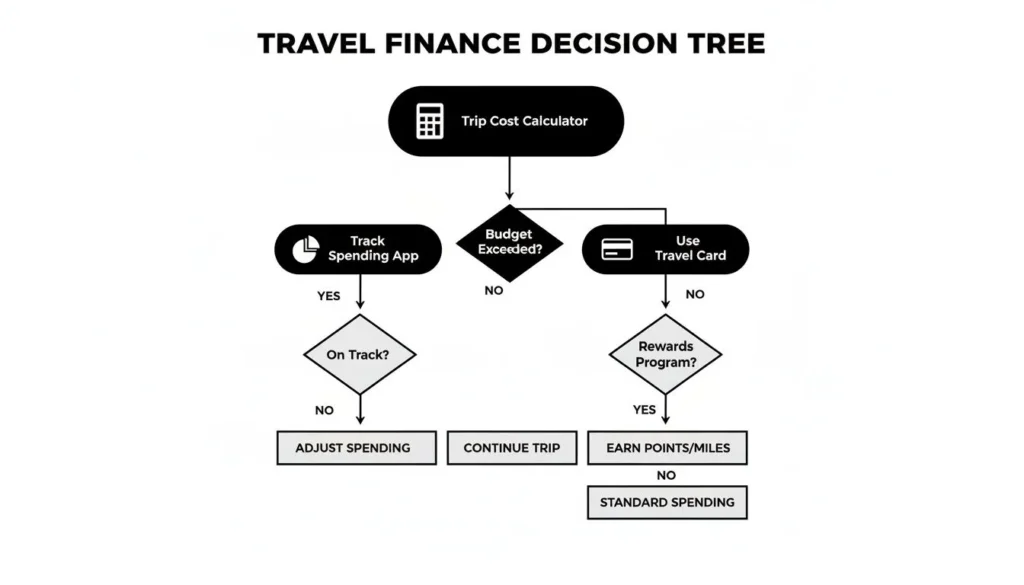
As you can see, every choice, from your initial budget to how you track spending on the road, plays a role in your trip’s financial success.
Choosing Your Home Away From Home
Where you sleep sets the entire tone for your trip. Are you a solo traveler looking to meet people, or are you after a quiet, private escape? Your lodging should fit your budget and travel style.
- Hostels: The classic choice for budget and solo travelers. Use a site like Hostelworld and always filter for places with high safety ratings (8.5+) and personal lockers. The social aspect is a huge plus.
- Hotels: When comfort, privacy, and amenities are the priority, hotels are the way to go. They provide a reliable and relaxing home base after a packed day of sightseeing.
- Vacation Rentals (Airbnb, Vrbo): Perfect for groups, families, or longer stays. Having your own kitchen can slash your food budget, and you often get to stay in more residential neighborhoods for a local feel.
Choosing the right type of lodging can be tricky, so I’ve put together a quick comparison to help you decide.
Accommodation Options Compared
| Accommodation Type | Best For | Average Cost | Key Pro | Key Con |
|---|---|---|---|---|
| Hostel | Solo travelers, budget travel | $25 – $60 / night | Social atmosphere, low cost | Lack of privacy, potential noise |
| Hotel | Couples, comfort seekers | $100 – $300+ / night | Privacy, security, amenities | Higher cost, less “local” feel |
| Vacation Rental | Families, groups, long stays | $80 – $250+ / night | Kitchen facilities, more space | Inconsistent quality, cleaning fees |
Whatever you choose, read recent reviews carefully and always check the map. A place that looks cheap might be far from everything, costing you more in time and transport in the long run.
Demystifying Local Transport
Finally, think about how you’ll get around once you’re there. Figuring this out ahead of time saves a lot of stress on arrival day.
For most major cities in Europe and Asia—think Paris, Tokyo, or London—the public transit is so good that a car is more of a burden than a benefit. A multi-day transit pass is usually your most economical and efficient option.
On the other hand, if you’re exploring vast regions like the American Southwest or the Scottish Highlands, renting a car is a must for true freedom. A quick search on a site like Rome2Rio will show you the time and cost differences between buses, trains, and driving, helping you make the right call. For a closer look at the digital tools I use, check out our guide on the best travel apps for planning your journey.
Once you’ve booked your flights, accommodation, and transport, you’re officially going. The skeleton of your trip is in place, and now you can focus on all the fun details.
Staying Safe and Healthy on the Road
With your flights and hotels booked, it’s easy to get lost in daydreams of ancient ruins or bustling city streets. But let’s shift gears to something less glamorous, yet absolutely critical for a stress-free trip: your health and safety. This is the stuff that lets you actually enjoy your travels, knowing you have a solid plan for anything that comes your way.
Think of it as being proactive, not paranoid. A little prep work on health, insurance, and safety is the best investment you can make for peace of mind.
Why You Can’t Skip Travel Insurance
I’ll be blunt: travel insurance is completely non-negotiable for any trip abroad. It’s not about covering a lost suitcase; it’s about protecting your health and your finances. A simple accident can spiral into astronomical medical bills in a foreign country if you’re not covered. But finding the right policy is what matters.
When you’re shopping around, cut through the noise and look for these three essentials:
- Emergency Medical and Dental: This is the heart of any good policy. I never consider a plan with less than $100,000 in medical coverage. It sounds like a lot, but it’s a realistic safety net for a serious incident.
- Emergency Medical Evacuation: If you get seriously hurt in a remote area, this covers the staggering cost of getting you to a proper hospital or even flying you home. It’s a must-have, especially for adventure travel.
- Trip Cancellation and Interruption: This reimburses your non-refundable expenses if you have to cancel your trip for a covered reason (like a sudden illness). Trip interruption helps if you have to cut your travels short and head home unexpectedly.
I once had a trip to Southeast Asia completely derailed by a sudden family emergency. Because I had robust trip cancellation coverage, I was reimbursed for my flights and pre-paid hotels, turning a stressful situation into a manageable one. It taught me to never skimp on a good policy.
To really get into the nitty-gritty of what makes a great policy, check out our full guide on the best travel insurance for international trips. It breaks down the top providers and what to look for.
Check Your Destination’s Health Requirements
Your health prep is entirely destination-dependent. The risks in Southeast Asia are different from those in Western Europe. Your best bet is to get information from an official source.
For travelers from the US, the Centers for Disease Control and Prevention (CDC) website is the gold standard. You can look up any country and get a clear list of recommended vaccines, health notices, and practical advice. Make an appointment with your doctor or a travel clinic at least four to six weeks before you leave to get any necessary shots and prescriptions.
Smart Habits for Safety and Document Security
Staying safe abroad usually boils down to common sense and good habits. Tourist hotspots are generally safe, but they’re also magnets for pickpockets and scammers.
Everyday Safety Habits
- Guard Your Gear: I always use a cross-body bag and wear it in front of my body. Never, ever hang your bag on the back of a chair in a cafe. A money belt is also a great idea for stashing your passport and extra cash.
- Spot Scams: Be wary of anyone getting too close, being overly friendly, or offering you something that sounds too good to be true. A classic trick is the “accidental spill”—one person creates a distraction while their partner snatches your wallet.
- Share Your Itinerary: Always leave a copy of your flight info, hotel addresses, and general plan with someone back home.
- Register Your Trip: For U.S. citizens, enrolling in the Smart Traveler Enrollment Program (STEP) is a smart move. It helps the local embassy find you in case of an emergency.
One last thing: protect your passport like it’s gold. I keep digital and physical copies of it completely separate from the real thing. I have a photo of it in a locked album on my phone, a copy saved to my cloud drive, and a paper photocopy in a separate bag. If your passport ever gets lost or stolen, having these copies will make getting an emergency replacement at the embassy infinitely easier.
Packing and Pre-Departure: The Final Countdown
Those last few days before an international trip can feel like a blur of activity. It’s easy to get overwhelmed, but a bit of smart planning can turn that last-minute chaos into pure, pre-travel excitement. Let’s walk through how to pack like a pro and nail those final checks, so you can walk out the door feeling completely ready.
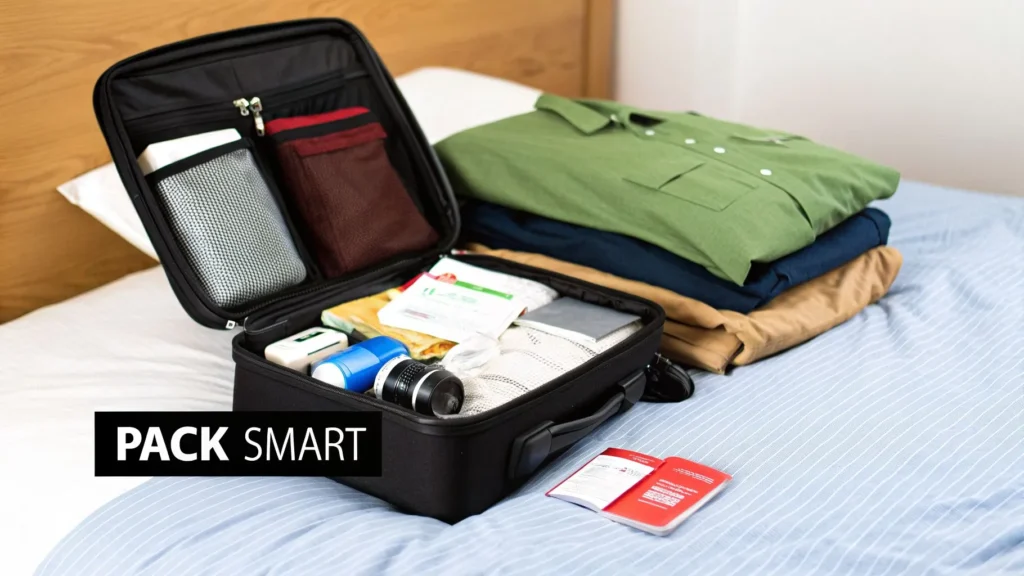
The real art of packing isn’t about cramming everything in; it’s about being strategic with what you leave out. Your goal is to build a small, versatile wardrobe that covers all your bases without weighing you down. The trick is to stop thinking in terms of individual items and start thinking in complete outfits.
Build a Travel Capsule Wardrobe
Creating a travel capsule wardrobe is an absolute game-changer. The foundation is a simple, neutral color palette—think black, gray, navy, or beige. Then, you can bring in personality with a few colorful statement pieces or some easy-to-pack accessories like scarves. This way, almost everything you pack will match everything else.
- Layering is your best friend. A t-shirt, a long-sleeve top, and a light jacket give you far more options than one heavy sweater. This approach works just as well for a sunny trip to Spain as it does for a cool adventure in Iceland.
- Stick to the rule of three. For a typical week-long trip, you really don’t need more than three pairs of shoes. Pack a pair of comfortable walking shoes, something a bit nicer for evenings out, and a third pair like sandals or boots, depending on your destination’s climate.
- Packing cubes are a must. I consider these non-negotiable. They not only compress your clothes to save a surprising amount of space but also keep your suitcase perfectly organized. You can have one cube for tops, another for bottoms, and a third for underwear and socks.
The classic mistake is packing for every single “just in case” scenario. I’ve been there—I used to haul a massive suitcase around, only to come home with half of my clothes untouched. Now, I only pack things I’m certain I’ll wear. If a real emergency pops up, I just buy what I need there. It usually ends up being a great souvenir anyway.
If you’re ready to truly master the art of carry-on only, our guide on how to pack light for Europe is packed with even more detailed strategies and checklists. It’s a key part of planning a trip abroad without being weighed down.
Assemble Your Go-To Kits
Beyond your clothes, a couple of small, well-organized kits will make your life so much easier. Don’t just toss random items into your bag; group them logically so you can grab what you need in a second.
Your Mini First-Aid Kit
Put together a small pouch with the essentials. Trying to find a pharmacy in a new city at midnight is a hassle you don’t need.
- Pain relievers like ibuprofen or acetaminophen
- Antihistamines for surprise allergies
- An assortment of Band-Aids and, crucially, blister plasters
- Antiseptic wipes and a small tube of hydrocortisone cream
- Any personal prescription medications you need, kept in their original bottles
Your In-Flight Essentials
Keep a small bag inside your carry-on with everything you need to make a long flight more comfortable. This should include a portable charger, headphones, lip balm, an empty reusable water bottle, and a fresh pair of socks and underwear. Trust me, if your checked bag ever gets delayed, you’ll be incredibly grateful for this little kit.
The Final Pre-Departure Checklist
With your bags just about packed, it’s time for the final sweep. Run through these last-minute tasks in the 48 hours before you leave to make sure nothing important gets missed.
- Do Your Digital Prep. This is a lifesaver. Use Google Maps to download offline maps for your destination city. It’s a game-changer when you’re navigating without Wi-Fi or data. Also, make sure you have your airline’s app downloaded with your digital boarding passes saved.
- Confirm Your Phone Plan. Double-check that your international roaming plan or your new eSIM is activated and ready to go. The last thing you want is to land and have no way to call your hotel or pull up directions.
- Share Your Itinerary. Send a final copy of your travel plans—including flight numbers, hotel addresses, and key reservation details—to a trusted friend or family member back home.
- Organize Your Wallet. Take out any cards you won’t need. You should only carry your primary credit and debit cards, some of the local currency you exchanged, and your ID. A great tip is to stash a backup card in a separate bag from your wallet.
- Charge Everything. This seems obvious, but it’s so easy to forget. Fully charge your phone, power bank, headphones, and any other electronics you’re taking with you.
Once you’ve ticked off these final items, you can finally silence that nagging voice in your head that’s whispering, “Did I forget something?” Now, you’re ready. Lock the door, head to the airport, and get ready for an amazing adventure.
Your International Trip Planning Questions Answered
Even after you’ve dotted every ‘i’ and crossed every ‘t’ on your travel plan, a few nagging questions always seem to surface right before you leave. It’s completely normal. After years of globetrotting and swapping stories with other travelers, I’ve noticed the same worries pop up time and time again.
Think of this as our final chat before your adventure begins. We’ll cover everything from planning timelines to language barriers, giving you that last bit of confidence to walk out the door ready for anything.
How Far in Advance Should I Plan an International Trip?
This is the big one, and honestly, it all comes down to the trip’s complexity. If you’re planning a massive, multi-country journey or heading to a once-in-a-lifetime spot like Australia or Japan, give yourself 9-12 months. That runway is perfect for saving money without feeling the pinch, catching early-bird flight deals, and navigating any tricky visa paperwork.
For a shorter, one-week getaway to a single country, say in Europe, you can easily pull it all together in 4-6 months. This gives you enough time to watch for flight prices to dip and book those charming, popular hotels before they’re all gone.
I’ve found my personal sweet spot for most trips is the eight-month mark. It’s long enough to be strategic but not so far off that the trip feels like a distant dream. Try to plan anything under three months, and you’re almost guaranteed to pay a premium for flights and lodging.
What Is the Best Way to Deal with a Language Barrier?
The fear of not being understood holds a lot of would-be travelers back. But here’s the truth: it’s almost never the huge issue you build it up to be. In most places that see tourists, you’ll find plenty of people who speak English, especially in younger crowds.
Here are a few simple strategies that I swear by:
- Learn the Magic Words: Just mastering “Hello,” “Please,” “Thank you,” and “Excuse me” in the local tongue works wonders. It shows respect and opens doors.
- Lean on Technology: An app like Google Translate is a modern travel essential. The conversation mode is a lifesaver for quick chats, and using the camera to translate a menu is a game-changer.
- Never Underestimate Body Language: A smile and a simple point can get you surprisingly far. You can have a whole interaction without uttering a single translatable word.
How Much Money Should I Bring in Cash?
Even in our tap-to-pay world, cash is still king in many situations. My rule of thumb is simple: have enough local currency to get you through 48 hours if your cards suddenly stop working. For me, that usually works out to about $100-$150 worth of local cash.
This little stash is perfect for things where cards aren’t an option—think street food vendors, local market finds, tips, or a quick taxi. Just do yourself a favor and skip the currency exchange at the airport; their rates are terrible. Your best bet is to hit a local bank’s ATM right after you land.
What If I Get Sick or Have an Emergency Abroad?
This is where all that prep work really shines. First off, this is precisely what travel insurance is for. Before you even leave, save your policy number and the insurer’s 24/7 emergency line in your phone, and also write it down somewhere safe.
For a minor sniffle, a local pharmacy (look for the green cross in Europe) is your best friend for advice and medicine. If it’s more serious, your insurance company will point you to an approved clinic or hospital. I also always save the address of my country’s local embassy or consulate—it’s a crucial backup for a lost passport or any other major drama.
Keeping an eye on travel trends can also add useful context. For instance, U.S. travel forecasts show a complex picture, with some predicting dips while others see strong growth in international arrivals by 2026. It’s a good reminder that the travel world is always in motion, making solid prep more important than ever.
Hopefully, tackling these common questions helps you feel ready to handle the little curveballs that are part of every great adventure.
At maxijournal.com, we believe a well-planned journey is the secret to unforgettable experiences. Our journal is packed with guides, stories, and practical advice to get you inspired and prepared for what’s next. Explore more travel articles and tips on maxijournal.com.
Discover more from Maxi Journal
Subscribe to get the latest posts sent to your email.