Trash day is often the moment people start thinking about a zero waste lifestyle. You tie up one full bag, notice a second bag already half filled, and realize most of it is packaging, food scraps, paper towels, and things you barely remember buying. That’s where many people are right now. Not at “zero.” Just frustrated by how much gets tossed without much thought.
A practical zero waste lifestyle starts there. Not with a mason-jar fantasy. Not with replacing everything you own. It starts by examining what leaves your home each week and changing the habits that create most of it.
What Is a Zero Waste Lifestyle Really
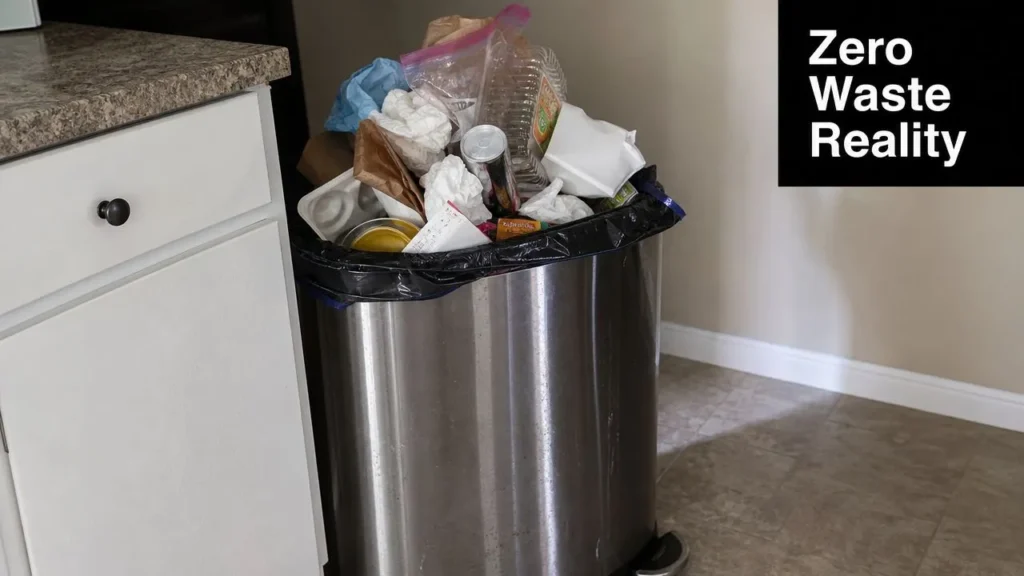
The term “zero waste” often leads to the assumption that it means producing absolutely no trash. That definition scares people off before they begin. In practice, a zero waste lifestyle is much more useful than that.
The U.S. EPA describes zero waste as a framework that minimizes waste by reducing consumption and maximizing recovery, with a commonly cited community target of 90% diversion from landfills by 2040. The same EPA page notes the world generated 2.01 billion metric tons of solid waste in 2018, and that figure is projected to reach 3.4 billion metric tons by 2050 (EPA definition of zero waste).
The real goal is redesign, not perfection
That definition matters because it shifts the focus away from guilt and toward systems. A zero waste lifestyle asks a simple question before every purchase and every toss: can this be refused, reduced, reused, repaired, recycled, or composted instead?
That’s why experienced advocates often talk about diversion and recovery rather than literal zero. If your home still creates some residual waste, you haven’t failed. You’re still moving in the right direction if more materials stay in use and less ends up buried or burned.
Practical rule: Zero waste works best when you treat it as a decision filter, not a purity test.
What this looks like in daily life
A realistic zero waste lifestyle usually includes things like buying fewer packaged items, carrying reusables you’ll remember to use, composting food scraps if you can, and choosing durable products over disposable ones. It also includes accepting limits. Some neighborhoods don’t have bulk stores. Some apartment buildings don’t offer composting. Some medical, childcare, and accessibility needs create waste that can’t be avoided.
That doesn’t disqualify anyone.
If you want a brand-level example of this broader mindset, Fillaree’s zero waste philosophy is useful because it treats zero waste as an ongoing practice of reducing what gets discarded, not as a claim of flawless living.
The most helpful way to think about zero waste is this: you are not trying to become a person who never throws anything away. You are becoming a person who creates less waste by design.
The Foundational Principles The 5 Rs
The most durable framework for a zero waste lifestyle is the 5 Rs. Bea Johnson helped popularize them for households, along with the memorable example of reducing her family’s annual trash to fit in a pint-sized jar. The same source notes that the average American throws away about 4.5 pounds of trash per day (background on the 5 Rs and household waste).
That framework only works well if you use it in order.
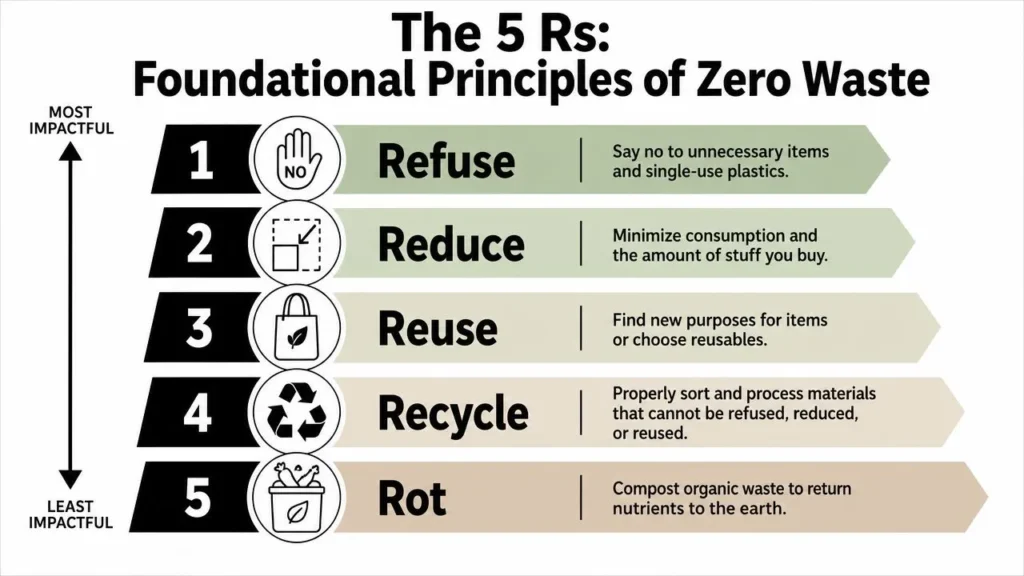
Refuse and reduce come first
The biggest beginner mistake is starting at recycling. Recycling matters, but it’s near the end of the chain. If you buy the item, bring it home, use it briefly, and then rely on a system to process it, you’ve already accepted waste and resource use upstream.
A stronger move is to refuse what you don’t need. Skip the receipt if you don’t want it. Say no to promotional freebies, disposable cutlery, and single-use shopping bags.
Then reduce what comes into your home in the first place. Fewer impulse buys means fewer things to store, maintain, and eventually throw away. A lot of waste prevention happens before the product reaches your kitchen counter.
Reuse is where habits become visible
Reuse is the point where zero waste becomes practical and repeatable. You keep a stainless steel bottle in your bag. You use cloth napkins instead of paper towels for ordinary meals. You store leftovers in containers you already own instead of reaching for single-use wrap every time.
This is also where people often overspend. They buy a full “zero waste kit” before changing any routines. That usually backfires.
What works better is simpler:
- Use what you have first. An old glass jar is already a storage container.
- Replace disposables only as they run out. Finish the paper napkins before switching to cloth.
- Choose reusables you’ll maintain. A reusable coffee cup helps only if you wash it and carry it.
Don’t buy your way into less waste. Shrink the waste stream first, then fill real gaps.
Recycle and rot still matter
Recycle comes later because it’s a backup, not the main plan. It’s useful for materials you couldn’t refuse, reduce, or reuse, but it depends on local rules and clean sorting. When people toss everything vaguely recyclable into one bin, contamination rises and results get worse.
Rot means composting organic matter. Food scraps, coffee grounds, and yard trimmings can often return to the soil instead of sitting in the trash. Even where home composting isn’t possible, many people can still use a drop-off site, curbside organics bin, or community garden program.
The 5 Rs are not five equal choices. They are a hierarchy. The closer you act to the top, the more effective your zero waste lifestyle becomes.
Your First Step A Practical Home Waste Audit
Most zero waste advice starts with products. That’s backwards. Start with evidence from your own home.
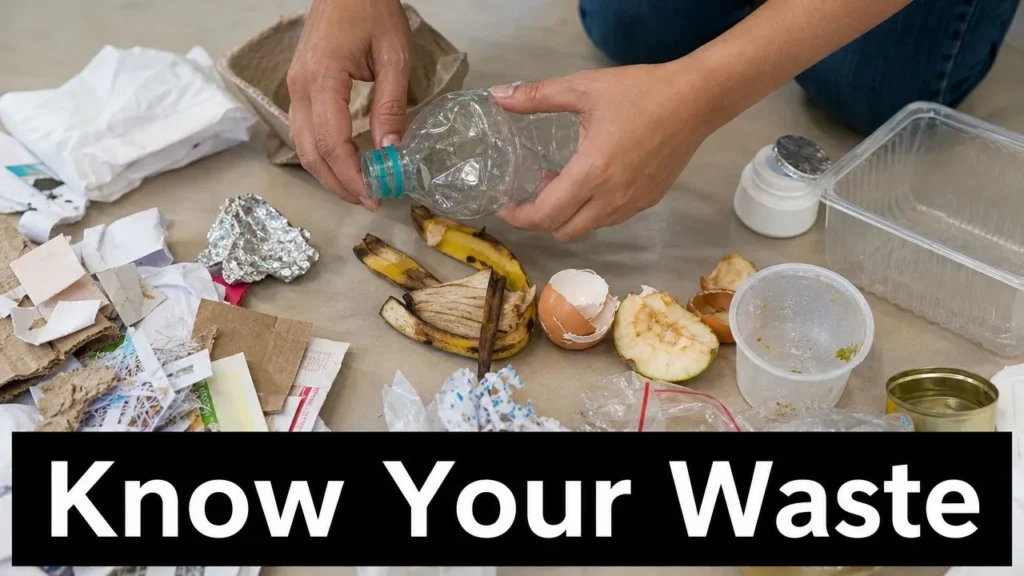
A home waste audit sounds more intense than it is. You’re not grading yourself. You’re just finding out what fills your bin most often so you can stop guessing.
How to do a one-week audit
Use one normal week. Don’t try to be extra sustainable for the exercise. You want honest patterns.
- Set up simple categories. Use boxes, bins, or paper bags labeled food scraps, plastic packaging, paper, glass and metal, hygiene waste, and miscellaneous.
- Collect what you usually throw out. If something is messy or unsafe, write it down instead of handling it.
- Keep a short note beside the bin. Mark recurring items such as snack wrappers, takeout containers, coffee pods, paper towels, produce stickers, and shipping mailers.
- Look for repeats, not perfection. If the same item shows up day after day, that’s your signal.
- Circle the top three sources. Those are your first targets.
What you’re really looking for
You don’t need exact weights to get useful insight. You need patterns.
A typical audit often reveals one of these problems:
- Food-related waste: spoiled produce, takeout packaging, coffee filters, paper napkins
- Bathroom waste: product bottles, disposable razors, cotton rounds, floss containers
- Convenience waste: bottled drinks, snack wrappers, grab-and-go lunch packaging
- Cleaning waste: paper towels, wipes, detergent bottles
If food scraps are a major share, learning the basics of composting at home can remove a large chunk of what heads to the trash in many households.
A quick visual walkthrough can also help if you’ve never sorted a week’s waste before:
Turn the audit into a roadmap
Once you’ve finished the week, don’t make twenty changes. Pick one category that is both frequent and easy to influence. If your bin is full of bottled drinks, start there. If it’s takeout containers, focus on meal planning and dine-in habits. If it’s paper towels, set out a cloth alternative where you already reach.
The best first swap is the one that removes something you throw away repeatedly.
That’s what makes a waste audit powerful. It gives you a personalized starting point instead of a generic checklist.
High-Impact Swaps for Everyday Life
Once you know what’s filling your bin, the next step is targeted replacement. In zero-waste practice, a commonly cited benchmark is 90% diversion from landfills and incinerators, and households move toward that by systematically replacing single-use items with reusables (Zero Waste International Alliance benchmark explained by Eco-Cycle).
The key word is systematically. Not randomly. Not because an influencer recommended a bamboo version of something you rarely use.
Kitchen swaps that usually matter first
The kitchen creates steady, visible waste, so it’s usually the easiest place to gain momentum.
If your audit showed lots of disposable packaging, begin with storage and shopping habits. Bring a tote bag. Keep a few jars for leftovers or bulk ingredients if those options are available to you. Use dishcloths or washable rags for ordinary spills instead of pulling off sheet after sheet of paper towel.
Water is another common source of daily waste. If you’re trying to move away from bottled drinks, it helps to think beyond the bottle itself and consider building a healthier water foundation at home. A setup you trust is easier to use consistently.
You can also cut a surprising amount of waste by planning meals before shopping. When ingredients get used on purpose, fewer half-used bags and spoiled vegetables end up in the trash.
Bathroom swaps that are worth the effort
Bathrooms generate smaller items, but they add up fast because they’re routine-based. Good swaps here are the ones that fit into habits you already have.
Try these first:
- Bar soap instead of bottled hand soap if your household consistently uses it.
- A safety razor or durable razor system if disposable razors are a repeat item in your audit.
- Washable cloth rounds if you go through cotton pads often.
- Refillable or concentrated products when refill access is realistic where you live.
Skip the urge to replace every product at once. Finish what you already own unless there’s a strong health or skin reason not to.
On-the-go changes that stop impulse waste
A lot of everyday trash appears because people get caught unprepared. Hunger, errands, commuting, and travel create convenience waste fast.
Keep a few basics ready near the door:
- A water bottle you like carrying
- A compact shopping bag that folds small
- A food container for leftovers or takeout
- A set of utensils if you often buy lunch out
If plastic packaging is one of your biggest categories, this guide on how to reduce plastic waste can help you think through practical reduction points without trying to eliminate every plastic item overnight.
Common waste items and their zero-waste swaps
| Disposable Item | Zero-Waste Swap | Why It Matters |
|---|---|---|
| Paper towels | Cloth rags or washable towels | Cuts repeat-use household paper waste |
| Bottled water | Refillable bottle and home filtration setup | Reduces daily single-use packaging |
| Plastic shopping bags | Reusable tote or foldable bag | Prevents grab-and-go bag accumulation |
| Takeout cutlery | Travel utensil set | Stops waste from meals eaten away from home |
| Plastic wrap | Reusable containers or wraps you’ll reuse | Keeps food storage from becoming disposable |
| Cotton rounds | Washable cloth rounds | Replaces a small but constant bathroom waste stream |
| Disposable coffee cup | Reusable mug | Helps when coffee purchases are a frequent habit |
Some swaps fail because they create friction. A reusable item that’s hard to clean, too bulky to carry, or easy to forget won’t last. The best swaps are the ones that fit your routine so well they become boring.
That’s a compliment.
Navigating Obstacles and Common Misconceptions
The biggest barriers to a zero waste lifestyle usually aren’t philosophical. They’re practical. Cost, time, access, and the fear of doing it badly stop more people than lack of interest.
Guidance for beginners increasingly points in the same direction: start with a trash audit, tackle the largest waste sources first, and aim for gradual progress rather than immediate perfection (practical beginner steps from Keep America Beautiful).
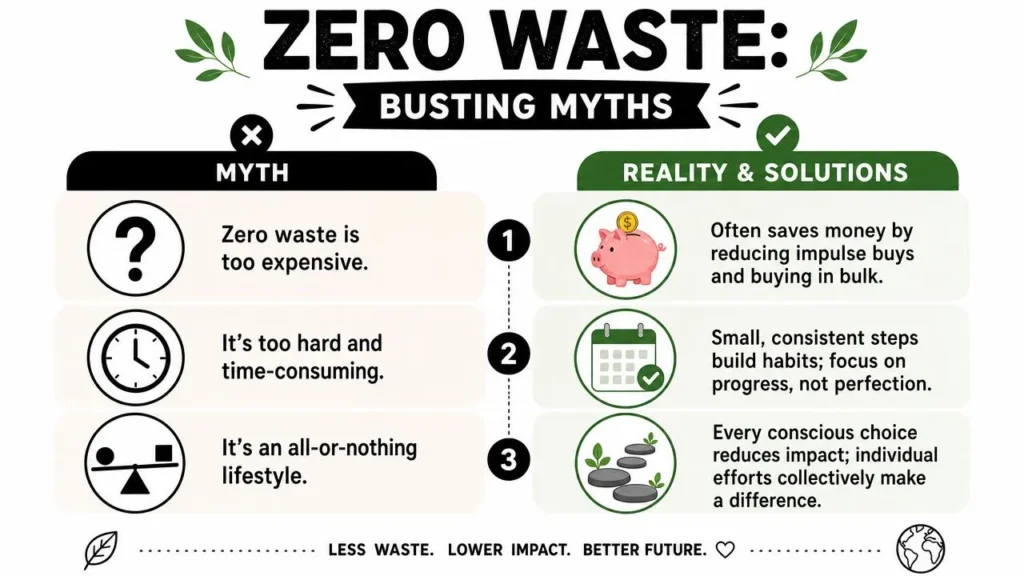
Zero waste is too expensive
It can be expensive if you try to buy a whole new identity in one weekend. Glass dispensers, matching jars, stainless lunch kits, specialty brushes, and premium refill products add up fast.
A lower-cost approach is better anyway. Use existing containers. Keep old towels as rags. Repair what still works. Replace disposables only when they run out.
The affordable version of zero waste is less about shopping and more about stopping unnecessary shopping.
I don’t have time for this
People don’t need a complicated routine. They need a few systems that reduce repeat decisions.
Examples:
- Set reusables by the door so you don’t hunt for them.
- Meal-plan a few core dinners to reduce takeout packaging and food spoilage.
- Keep one donation box active so usable items leave your home before they become clutter.
- Buy fewer kinds of products so you manage less stuff overall.
That usually saves time over the long run because there’s less to clean up, sort, replace, and throw away.
Small systems beat big intentions. If a habit needs too much willpower, redesign the setup.
I can’t do it perfectly, so why start
This is the most damaging myth because it turns a useful practice into an all-or-nothing test. A zero waste lifestyle doesn’t require a perfect pantry, a compost tumbler, or a package-free grocery store nearby.
It requires honesty about your limits and consistency where you do have control.
If you live in an apartment without organics pickup, focus on what you buy. If you care for children, simplify lunch and snack systems. If disability or health needs require disposable products, work on a different category without guilt.
Recycling should be enough
Recycling is better than trashing recyclable material, but it is not a free pass for overconsumption. Many people use recycling as permission to keep buying disposables. That leaves the root problem untouched.
A stronger standard is this:
- First ask whether you need it
- Then ask whether you can borrow, repair, refill, or reuse
- Only then think about recycling or composting
That order keeps the zero waste lifestyle grounded in prevention, which is where the most meaningful changes happen.
Expanding Your Impact Beyond the Bin
Once your home systems are running more smoothly, the next shift is outward. Personal waste reduction matters, but local infrastructure shapes what’s possible. If your city has poor recycling guidance, limited refill options, or no composting access, individual effort hits a ceiling fast.
That’s why a mature zero waste lifestyle usually grows into community participation.
Where local action makes a difference
You don’t need to become a full-time activist. A few well-placed actions can strengthen low-waste options for everyone around you.
- Support refill and repair businesses. Spend where shops offer bulk goods, repair services, secondhand items, or refill stations. Reliable customer demand helps these models survive.
- Use local food systems. Farmers’ markets, produce co-ops, and neighborhood food networks often make it easier to buy with less packaging and less waste.
- Ask for better systems. Apartment managers, schools, workplaces, and city departments often respond when enough residents request composting, clearer sorting signs, or reusable service ware.
- Join hands-on community efforts. Repair cafes, tool libraries, swap events, and community gardens all keep materials circulating longer.
- Extend the mindset to clothing. Buying secondhand, repairing garments, and choosing longer-lasting pieces are part of the same logic. This overview of what sustainable fashion means in practice is a useful extension of the home-waste conversation.
Waste reduction gets easier when your neighborhood supports it. Individual habits matter. Shared systems multiply them.
There’s also a psychological benefit. People stick with zero waste habits longer when they stop feeling like they’re doing it alone. Community makes the lifestyle more resilient, less isolating, and more practical.
Conclusion Your Zero Waste Journey Starts Now
A zero waste lifestyle is not a contest to see who can fit a year of trash into the smallest jar. Instead, it’s typically a slow process of noticing waste, changing routines, and building systems that make lower-waste choices easier to repeat.
That’s why the most effective starting point isn’t buying a set of aesthetic containers or attempting a total life overhaul. It’s identifying your real waste patterns and acting on the biggest ones first. A small number of focused changes usually beats a long list of ambitious intentions.
Keep the standard simple. If a swap saves waste and fits your life, keep it. If a tactic looks good online but creates stress, clutter, or extra expense, adjust it. A workable zero waste lifestyle should feel more grounded over time, not more brittle.
Use this three-step checklist today:
- Schedule your waste audit. Pick one normal week and track what fills your bin.
- Choose one high-impact swap. Start with the item you throw away most often.
- Find one local support point. Look for compost access, a refill shop, a repair service, or a community group.
You don’t need to do everything. You need to begin, pay attention, and keep refining. That’s how this lifestyle becomes realistic, affordable, and lasting.
If you enjoy practical, approachable guides like this, explore maxijournal.com for more fresh writing across sustainability, health, science, fashion, business, travel, and everyday life. It’s also a good place for readers and prospective contributors who want thoughtful, accessible commentary without the jargon.
Discover more from Maxi Journal
Subscribe to get the latest posts sent to your email.