Four out of five U.S. adults still miss the recommended two 4-ounce servings of fish or seafood per week, which makes canned fish less of a backup plan and more of a practical nutrition tool. The question isn’t whether canned fish is healthy in the abstract. It’s which fish you buy, what it’s packed in, and what the can itself is doing to the food inside.
For a shopper standing in front of a wall of tins, that matters. A can of sardines in water is not the same choice as albacore tuna in oil, and neither is identical to a fish packed in a can with a lining that may affect exposure to contaminants. The label tells part of the story, but species, packing medium, and can lining finish it.
A useful way to think about canned fish healthy is as a decision guide, not a verdict. You’re choosing between different nutrient profiles, different mercury patterns, and different trade-offs in sodium and packaging. You can also use canned fish to get closer to the seafood intake target from the 2020 to 2025 Dietary Guidelines, while still keeping the choice simple enough for a weeknight pantry run.
Practical rule: if you want the easiest win, start with small fish, water-packed or olive-oil-packed, and a brand that tells you as much as possible about sourcing and lining.
Why the Question of Canned Fish Health Is More Nuanced Than It Looks
The fastest way to get the answer wrong is to ask a yes-or-no question. Canned fish health depends on three separate things, the fish species, the packing liquid, and the can lining. A sardine in water behaves differently from an albacore tuna in oil, and a tin with a more transparent lining policy deserves a different level of trust than a can that gives you almost no detail.
Start with the fish, not the marketing
Species matters because fish differ in size, lifespan, fat content, and contaminant load. Small, short-lived fish like sardines and anchovies usually bring a different risk profile than larger predatory fish like tuna and some mackerel. That’s why “canned fish” is too broad to answer cleanly, and why the healthiest tin is often the one that matches your goal rather than the flashiest label.
Then look at what it’s packed in
Packing medium changes the nutrition math. Water-packed fish usually keeps calories lower, while olive oil can make the food more calorie-dense and more satisfying. That doesn’t make oil bad, it just means the can is carrying more than fish, so the label deserves a second look.
Finally, treat the can as part of the food
This is the part most quick guides skip. Recent review literature points to BPA and BPA analogs, toxic elements, histamine, and microplastics as real packaging and contaminant questions, while also noting that estimated dietary exposure to toxic elements in canned seafood often stays below tolerable daily intake levels in the samples reviewed (review of canned seafood safety). In other words, the can itself is part of the nutrition conversation, not a side note.
If you want a simple framework, use this one. Choose the species first, check the packing medium second, and inspect the can details third. That gets you much closer to a smart buy than chasing a generic “healthy” label ever will.
Comparing the Most Common Species Side by Side
Different cans answer different needs. If you want heart-supportive fats, the best choice may be different from the best choice for pregnancy. If you want bone support, fish with edible bones can move ahead quickly. The simplest way to shop is to match the species to the job you need it to do.
How the usual suspects differ
Salmon is the easiest all-around pick when you want solid protein plus vitamin D. A 3-ounce serving of canned salmon contains about 20 grams of protein, and salmon also fits the broader case for oily fish as a source of long-chain omega-3s.
Sardines are the bone-friendly option. In the canned-fish literature, 100 grams of cooked sardines with bones delivers about 382 mg of calcium and 490 mg of phosphorus (PubMed analysis of commercial canned fish). That makes them a strong choice when you want more than protein alone, especially if you are trying to get more calcium from food without adding another separate supplement.
Mussels are a quiet winner for protein. A 2-ounce serving of tinned mussels provides about 10 grams of protein, and they often get overlooked because they do not have the same familiar pantry reputation as tuna or salmon. They can be especially useful on days when you want a smaller serving that still brings real nutrition to the plate.
Tuna is still useful, especially if you want a familiar flavor and a leaner texture. The trade-off is species size, since bigger tuna species usually sit higher on the mercury ladder than smaller fish. Anchovies and smaller mackerel can give you the same pantry convenience with a smaller contaminant burden, which is why many readers choose them for regular use.
Best pick by goal: heart health, salmon or sardines. Low-mercury routine, sardines or anchovies. Muscle building, salmon or mussels. Bone strength, sardines. Pregnancy-friendly habit, smaller fish more often, tuna less often.
| Canned fish at a glance | Protein per 3 oz | EPA + DHA per 3 oz | Mercury level | Signature micronutrient |
|---|---|---|---|---|
| Salmon | About 20 g | Valuable source | Moderate to lower, depending on species | Vitamin D |
| Sardines | Qualitatively high | Valuable source | Low | Calcium from edible bones |
| Tuna | Qualitatively high | Valuable source | Higher in larger species | Lean protein |
| Mackerel | Qualitatively high | Valuable source | Varies by species | Heart-supportive fats |
| Anchovies | Qualitatively high | Valuable source | Low | Flavor, sodium-sensitive use |
| Mussels | About 10 g in 2 oz | Valuable source | Generally low | Iron |
The best answer is rarely one universal winner. A small rotation covers more ground. If you want a pantry that handles most of the common jobs, keep sardines, salmon, and a lower-mercury fish like anchovies on hand, then use tuna more selectively.
Health Benefits Often Overlooked in Canned-Fish Guides

Canned fish is more than a protein can with a seaside vibe. Its biggest nutritional value comes from EPA and DHA, the long-chain omega-3 fats that play a much larger role than the shorter-chain ALA omega-3s found in flax or walnuts. Marine canned fish is a valuable source of EPA and DHA, and an evidence review summarized in the fish literature notes that about one to two 3-ounce servings of fatty fish per week supplies roughly 2 g/week of omega-3s and is associated with a more than one-third lower risk of dying from heart disease (evidence review).
Heart, brain, and muscle are the big three
For heart health, fatty fish does the heavy lifting. EPA and DHA support lipids, blood pressure, vascular function, and inflammatory signaling, which is why they appear again and again in heart-focused nutrition guidance. A tin or two each week can be a practical habit, even if you are not trying to build a perfect menu.
For brain support, DHA deserves its own mention. It is a structural fat in the brain, so canned fish is not just “good calories,” it is a nutrient package that helps support the tissues people rely on all day. That matters for adults, but it matters just as much for kids, pregnant people, and anyone trying to keep meals simple.
For muscle and fullness, the complete protein matters too. A 3-ounce serving of canned salmon gives about 20 grams of protein, and a 2-ounce serving of tinned mussels gives about 10 grams of protein (Runner’s World summary). That mix of protein and fat is part of why a tin can feel like a real meal instead of a snack.
Bones, not just fillets
Sardines with bones deserve attention too. 100 grams of cooked sardines with bones provides about 382 mg of calcium and 490 mg of phosphorus (PubMed analysis), so the can can support bone nutrition in a way many other shelf-stable proteins cannot. Fish is also a good source of vitamin D, which helps explain why it keeps showing up in practical nutrition advice.
If you want a clearer read on whether your routine is covering omega-3 needs, at-home fatty acid testing can give context to your habits. A tool such as a home nutrition monitor can help you track patterns without turning dinner into a lab project. The goal is to see whether your pantry pattern is doing what you think it is.
Common Myths Worth Clearing Up Before You Stock Up
“All canned fish is too salty”
That claim is too blunt to help you shop well. Some tins are high in sodium, especially when they are packed in brine or heavily seasoned, but plenty of options are milder than people expect. A simple move is to drain and rinse when the texture allows, and to choose no salt added versions when you find them.
“Any canned tuna is dangerous”
Tuna deserves more judgment than sardines or anchovies because larger, longer-lived predatory fish tend to accumulate more methylmercury over time. That does not make tuna off-limits. It just means the species matters, and the can should not be chosen on habit alone.
“The can lining always leaks dangerous BPA”
Packaging details matter as much as the fish itself. Review literature has raised BPA and BPA analogs as part of the conversation around can linings, so it makes sense to notice whether a brand discloses lining details or says BPA-free. The point is not to assume every can behaves the same, because packaging is part of the nutrition picture, too. For a quick way to read what the label is telling you, a nutrition labels guide can help.
“Canning destroys omega-3s”
That idea overshoots the mark. Omega-3 fats remain stable through canning, so canned fish can still be a dependable source of those heart-supportive fats. The process changes texture and shelf life much more than it erases the nutrient value.
“Canned fish is overcooked and nutrient-dead”
It is cooked, yes. Nutrient-dead, no. Commercial canned fish can still deliver protein, calcium, phosphorus, and omega-3s, and the can itself does not cancel those benefits. As noted earlier, review work on canned seafood safety also found that measured dietary exposure to toxic elements in the samples reviewed often stayed below tolerable daily intake levels (canned seafood safety review).
Practical rule: if a warning sounds absolute, it is probably flattening the actual trade-off. Read the species, check the packing medium, and treat the label as the final word.
Mercury and Sodium Calibrated by Species and Body Weight
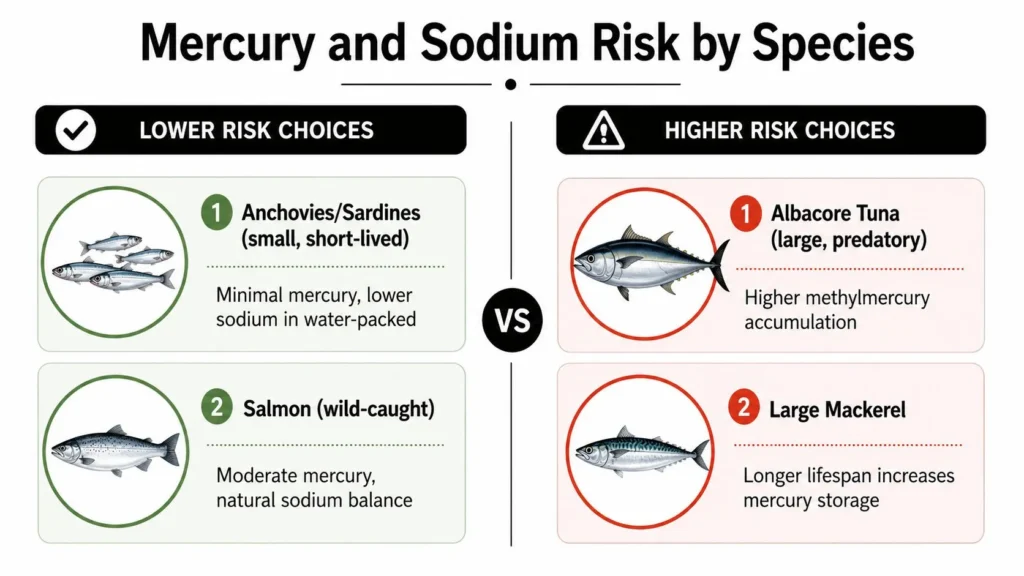
Mercury is the piece that deserves respect, not panic. The short version is simple, big, long-lived, predatory fish accumulate more methylmercury, while small, short-lived fish accumulate less. That’s why sardines and anchovies are easier to use often, and why albacore tuna needs a lighter touch than those smaller fish.
Make the choice fit the person eating it
For a 150-pound adult, a sensible routine is to lean on sardines, anchovies, and salmon more often, and keep albacore tuna as the occasional can rather than the default. For a 60-pound child, the same species logic matters even more, because the smaller body has less room for repeated exposure. Pregnancy and breastfeeding call for even more caution with higher-mercury fish, so smaller fish are the safer pantry habit.
That’s the main principle. Use smaller fish more often, larger predatory fish less often, and don’t let tuna become your everyday can just because it’s familiar.
Sodium needs a different kind of fix
Salt gets added for shelf life and food safety, but you still control a lot of the final sodium load. Water-packed fish usually keeps the baseline lower, and rinsing and draining can help when the flavor and texture allow it. Omega-3s remain in the fish, so the trade-off is usually manageable rather than dramatic.
The can also tells you how to pace the week. If the fish is small and lower-mercury, it can fit into a regular rotation. If it’s larger tuna or a larger mackerel, treat it as a less frequent option and let the smaller fish fill the gap.
If you’re tracking health data more closely, the habits that support blood pressure, lipids, and energy are the same habits that keep canned fish useful, not risky. Tools that help you monitor those patterns can be a good complement to food choices, including devices covered in this health monitoring devices guide.
How to Read a Can Like a Nutrition Pro in Under a Minute
A good can gives you four clues fast. First, which species you’re buying, because small fish and large fish do not belong in the same risk bucket. Second, what it’s packed in, because water, olive oil, brine, and tomato sauce change calories, flavor, and sometimes sodium.
The details that change the choice
Third, check the lining claim. If a brand says BPA-free or explains more about the lining, that gives you more to work with than a vague “premium” badge ever will. Fourth, look for country of catch and third-party signals like MSC, wild-caught, or pole-and-line if the brand gives you those details. Transparency will not make a can perfect, but it does make comparison easier.
Packing medium deserves a quick pause. Olive-oil-packed fish can feel richer and more satisfying, while water-packed fish usually keeps calories lower and the flavor milder. Neither one is automatically better. The better choice depends on whether you want a lighter lunch or a more filling meal.
If you already know how to read a nutrition panel, a nutrition labels guide can help you turn the numbers into a fast shopping habit. The goal is not to get obsessive. It is to spend 20 seconds on the right details instead of 20 minutes guessing.
The same label reading habit helps at breakfast too, especially if you want a can that fits into a fuller meal later in the day, like a high-protein breakfast ideas routine.
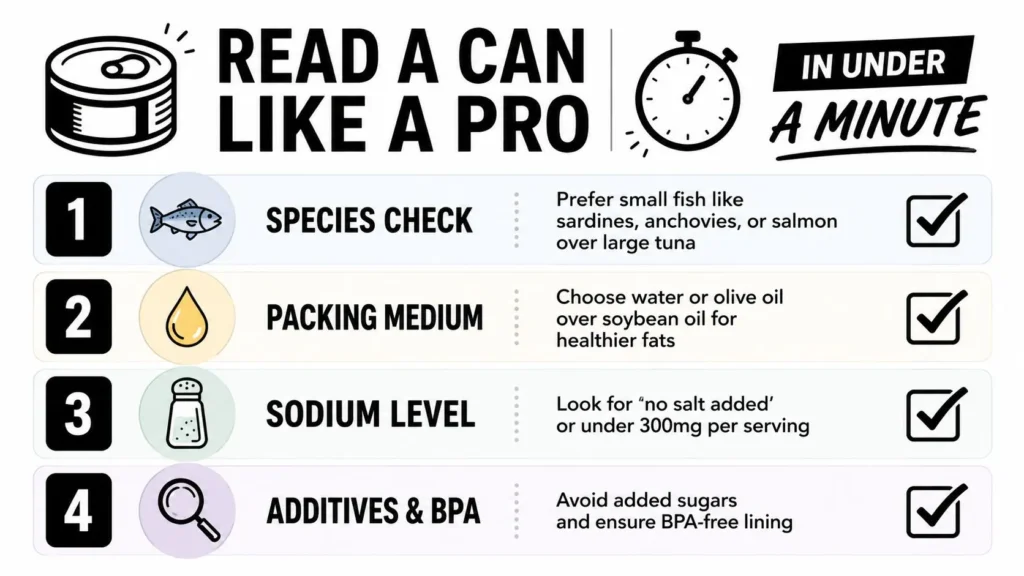
60-second checklist: small species first, then packing liquid, then sodium, then lining and sourcing.
If a can clears those four checks, it is usually a solid pantry buy. If it fails two or three, keep walking.
Storage, Prep, and Fast Meal Builds From One Can
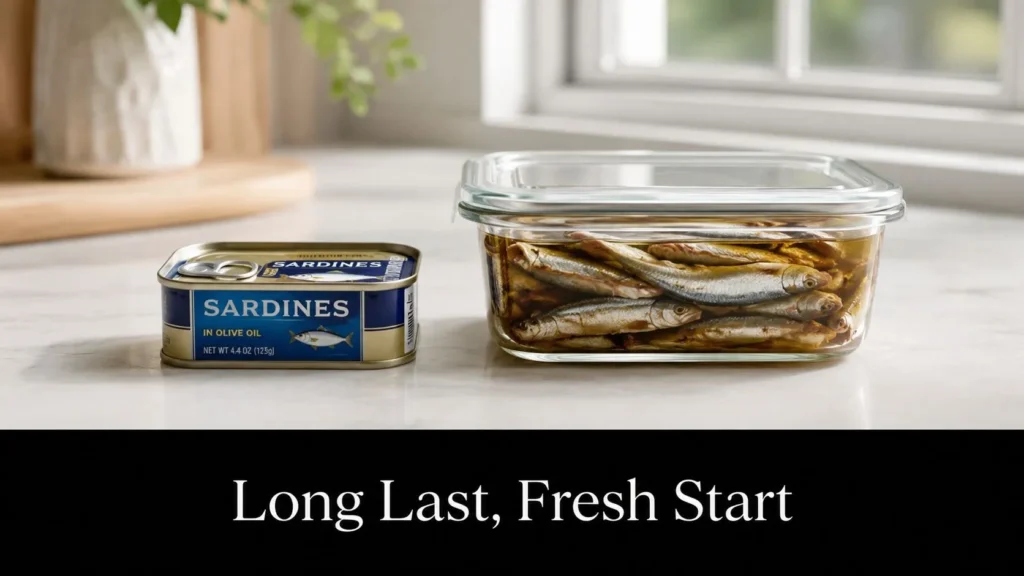
The unopened can is the easy part. Most canned fish keeps for 3 to 5 years from the packing date, so it belongs in the pantry, not waiting in the fridge. Once you open it, move the leftovers into a sealed glass container and use them within 3 to 4 days, because a half-used can is not a good fridge container.
Small prep moves that improve the meal
A quick drain and rinse can help lower sodium when the texture still works for the dish. A fork is enough to flake the fish into a topping, a salad base, or a grain bowl. Add shelf-stable basics like beans, whole grains, leafy greens, and citrus, and the can turns into a complete meal instead of a lone protein portion.
For more pantry-friendly combinations, these meal prep recipe ideas fit well when you want the fish to plug into a wider weekly plan. If you are building a routine around high-protein meals, a healthy meal prep ideas page can help you work from simple templates instead of one-off recipes.
A can also behaves differently depending on how you use it. Sardines hold up well on toast with a bright topping. Salmon blends easily into a salad bowl. Tuna and white beans can become a spread, and mackerel works well over warm rice because its richer flavor needs only a few sharp accents.
Here are four fast builds that work in about 10 minutes or less for one person:
- Sardine toast with lemon and chili flakes. Mash sardines with a little lemon, pile them on whole-grain toast, and finish with chili flakes.
- Salmon salad bowl with chickpeas. Combine canned salmon, chickpeas, greens, and citrus for a filling lunch.
- Tuna and white-bean dip. Blend tuna with white beans, olive oil, and seasoning, then scoop with vegetables or bread.
- Mackerel over rice with quick-pickled onions. Spoon mackerel over warm rice and add sharp onions to cut the richness.
These meals work because the fish is already cooked, lightly seasoned, and ready to join real food. A can is not just backup food for emergencies. It is a fast starting point for breakfast, lunch, or dinner. For a morning version, the same pantry logic works in high-protein breakfast ideas that use a can as the protein base.
Your Weekly Canned-Fish Routine and Quick Answers
A simple rhythm beats a complicated rulebook. Use smaller fish like sardines or anchovies for regular rotation, keep salmon in the mix for variety, and use tuna more selectively if mercury is part of your concern. If a brand is vague about sourcing, skip it and choose one that says where the fish came from and how it was caught.
A weekly pattern that doesn’t fight real life
One workable pattern is to make canned fish part of a few different meals rather than a single repeated lunch. Sardines on toast, salmon in a salad bowl, and anchovies or mussels in a grain bowl each solve a different dinner problem, and they keep the pantry from getting boring. For sustainability, smaller fish such as sardines and anchovies are often the lower-impact choice when they come from well-managed fisheries, and unclear country-of-origin labeling is a reason to keep shopping.
Is canned fish safe to eat every day? Not as a blanket rule for every species. Smaller fish fit a regular routine better, while larger predatory fish deserve more spacing because of mercury. Daily use is easier to justify when the can is sardines, anchovies, or another lower-mercury option.
Is it safe during pregnancy? The same species logic matters more here. Lower-mercury fish are the smarter habit, and larger tuna should be limited rather than treated as an everyday staple. If you’re pregnant or breastfeeding, the label should be read with extra care, not less.
Does the can lining really matter? Yes, because packaging is part of the exposure picture. The safer move is to prefer brands that are more transparent about lining materials and to avoid pretending every can is identical. The fish matters, but the can matters too.
How long can you keep an opened can? Don’t keep it in the can. Move leftovers into a sealed glass container and use them within 3 to 4 days. That small step protects both flavor and food safety.
If you want your pantry to work harder for you, set up a canned-fish shelf this week with one small fish, one salmon, and one tuna you’d eat. Then build the next shopping list around the cans you finish first, not the ones that just sounded healthy at the store.
maxijournal.com publishes approachable, research-aware writing that makes everyday health choices easier to use in real life. If you liked this practical look at canned fish, visit the site for more clear guides that turn nutrition questions into simple habits you can keep.
Discover more from Maxi Journal
Subscribe to get the latest posts sent to your email.