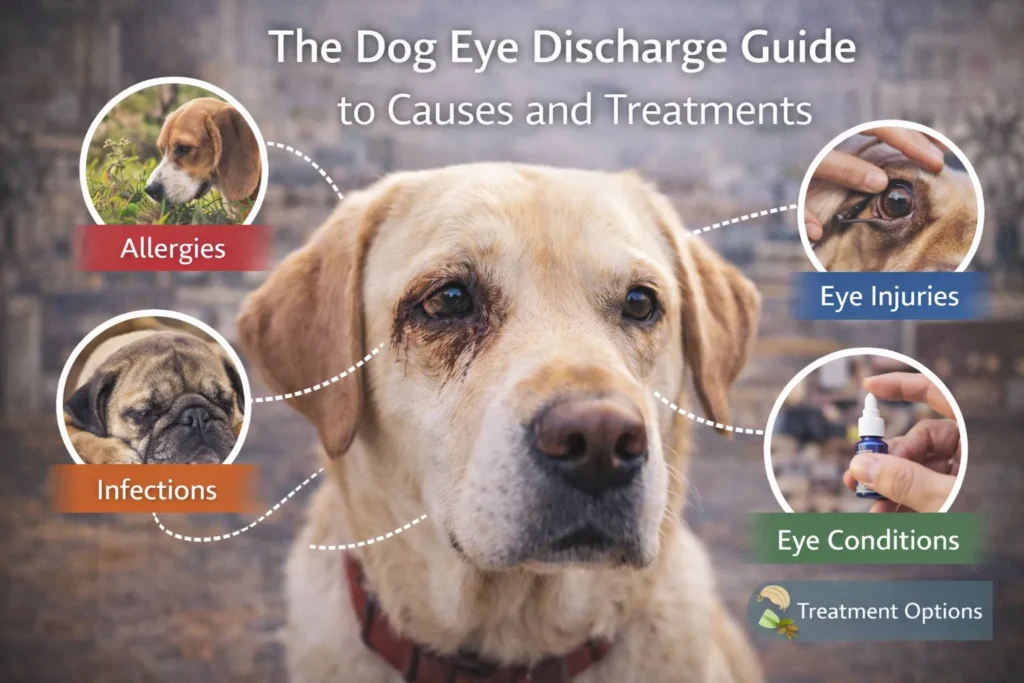
You wipe a little crust from the corner of your dog’s eye, and then the questions start. Is this normal? Did the wind irritate their eye? Is it an allergy, an infection, or just sleep gunk?
That concern is reasonable. Eye boogers in dogs are common, but they are also one of those small signs that can mean very different things depending on what you see. A tiny tan crust after a nap is not the same as thick sticky mucus all day long.
Most of the time, the answer is reassuring. Sometimes, though, your dog’s eyes are asking for help. The key is learning how to read the clues without panicking.
Understanding Your Dog’s Morning Eye Gunk
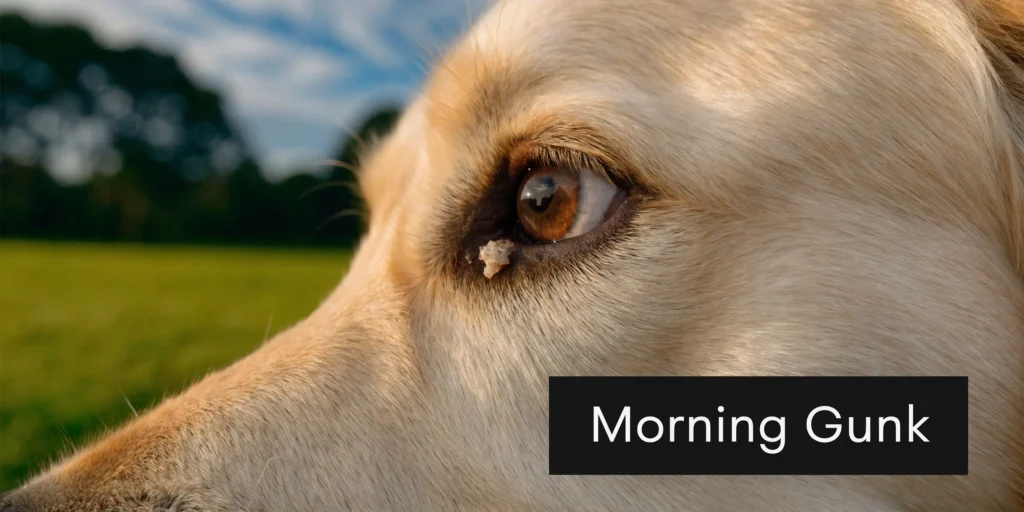
A healthy dog can wake up with a bit of dried material in the inner corner of the eye. That small crust is usually just the eye’s housekeeping system at work. Tears, oils, mucus, dead cells, and a little dust collect overnight, then dry into the “sleep” you notice in the morning.
That is why many owners see it most clearly right after their dog wakes up. If both eyes look comfortable, the discharge is mild, and your dog acts normal, it is often harmless.
Veterinarians see this issue all the time. Eye discharge is one of the most common issues seen in dogs, affecting nearly all dogs, and flat-faced breeds can have up to 10 to 20 times higher rates of excessive discharge because of their anatomy (Chewy’s veterinary overview of dog eye discharge). The same source notes that over 80% of owner-reported cases turn out to be harmless when the discharge is mild and uncomplicated.
What normal often looks like
Normal morning eye gunk is usually:
- Small in amount and gathered near the inner corner
- Light tan, gray, or clear
- Present in both eyes
- Not linked with redness, squinting, or pawing
A Pug, Bulldog, or Shih Tzu may collect more visible discharge because the eye shape and facial folds make tear drainage less efficient. That can look messy without being dangerous.
Tip: If your dog’s body language stays relaxed, their eyes stay open and bright, and the discharge looks the same from day to day, that is usually a reassuring pattern. If you want a better sense of those subtle comfort signals, this guide to https://maxijournal.com/understanding-dog-body-language/ is a useful companion.
Why owners get confused
Owners often focus on the presence of discharge instead of the pattern. The better question is not “Does my dog have eye boogers?” It is “Did anything change?”
That one shift in thinking helps a lot. Eyes do produce normal debris. Eyes in trouble usually change color, volume, or comfort.
Decoding the Color and Consistency of Dog Eye Discharge
The fastest way to make sense of eye boogers in dogs is to look at color, texture, and timing. Those three details tell you much more than the amount alone.
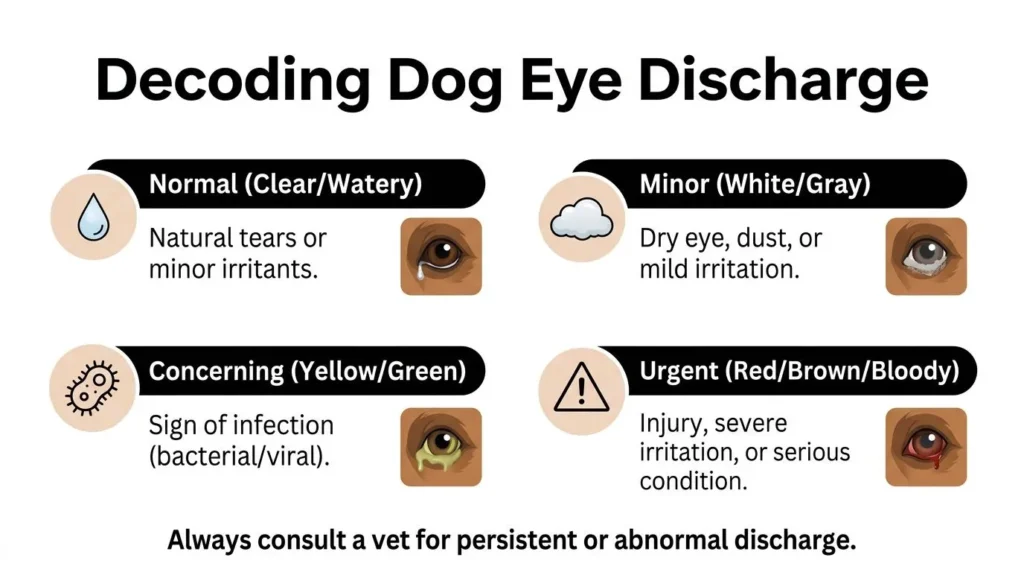
Veterinary eye exams use discharge appearance as a clue. Clear discharge often points to irritants or blocked ducts, yellow-green pus suggests bacterial infection, and thick sticky mucus is a classic sign of keratoconjunctivitis sicca, or dry eye (Reed Animal Hospital’s explanation of normal vs abnormal discharge).
A simple color guide
Here is the practical version I give owners in the exam room.
| Discharge Type | Common Appearance | Potential Meaning |
|---|---|---|
| Clear or watery | Tear-like, thin, wet fur under the eye | Mild irritation, excess tearing, or drainage problems |
| Tan or light gray crust | Small dried specks after sleep | Often normal morning debris |
| White or gray mucus | Gooey or stringy, more noticeable through the day | Irritation or dry eye |
| Yellow or green | Thick, pus-like, sticky | Infection or significant inflammation |
| Rusty or brown staining | Tear tracks on the fur | Tear staining, chronic overflow, or drainage issues |
| Bloody or red-tinged | Red, pink, or mixed with fresh fluid | Trauma or urgent eye disease |
What each type usually means
Clear and watery
This is usually a volume problem. The eye is making extra tears, or the tears are not draining properly.
Dust, pollen, wind, or a blocked duct can do this. Some flat-faced dogs always look a little teary because their eye structure leaves the surface more exposed.
Tan crust after sleep
This is the version that is most often normal. It is the dried residue left behind when tears evaporate overnight.
If it stays mild and your dog is comfortable, it usually falls into the harmless category.
White or gray goo
This often causes the most confusion. Owners expect infection to be the main cause, but white or gray sticky material often points more toward irritation or dry eye than pus.
That is especially true if it keeps returning after you wipe it away.
Yellow or green discharge
This deserves attention. When discharge becomes yellow-green and thicker, that raises concern for infection or stronger inflammation.
If the eye is also red, swollen, or painful, do not wait.
Key takeaway: Thin and watery usually means tears. Thick and sticky usually means mucus. Mucus tells you the eye is irritated, inflamed, or not being lubricated properly.
Brown or rusty staining
This is common in light-coated dogs. The fur under the eye stays damp, then stains over time.
It may be cosmetic, but if the tearing is new or heavy, the reason behind that overflow matters.
Bloody discharge
This is never a “watch and see” sign. Blood suggests trauma or a more serious eye problem.
The one rule that matters most
Do not judge eye discharge by color alone. Pair it with what your dog is doing.
A dog with mild watery tearing who is running, playing, and keeping the eye open is different from a dog with the same tearing plus squinting and pawing. Comfort matters as much as appearance.
Common Causes Behind Your Dog’s Eye Boogers
Once discharge stops looking like ordinary morning debris, the next question is why it is happening. The answer usually falls into one of a few buckets: irritation, poor tear drainage, eyelid problems, infection, injury, or dry eye.
Some causes are mild. Some can damage the surface of the eye quickly.
Everyday irritants and mechanical problems
A dog does not need a major illness to develop discharge. Common triggers include:
- Dust and pollen that make the eyes water
- Wind exposure that dries and irritates the surface
- Hair rubbing the eye in shaggy-faced dogs
- Blocked tear ducts that let tears spill onto the face
- Eyelids that roll inward so lashes rub the cornea
- Foreign material such as grass, sand, or grit
These dogs often start with watery eyes, then develop mucus because the eye stays irritated.
Conjunctivitis and surface inflammation
Conjunctivitis means inflammation of the tissues around the eye. Owners often call it pink eye, although the cause can vary.
When the tissues become inflamed, the eye produces more discharge. This may be clear at first, then become thicker if irritation continues or infection joins the picture.
Dry eye deserves special attention
The cause I want owners to understand best is keratoconjunctivitis sicca, usually shortened to KCS or dry eye. It sounds simple, but it is not just “a little dry.” It is a real disease of tear production.
KCS affects 1 in 25 dogs globally, rises to 25% to 35% in high-risk breeds such as Cocker Spaniels, is diagnosed with a Schirmer tear test, and modern treatment can control symptoms in 85% to 90% of cases (PetMD’s dog eye discharge guide).
Why dry eye creates thick boogers
Tears are not just water. They form a protective film that lubricates the cornea and flushes away debris. When the watery part of that film drops, mucus becomes concentrated.
That is why dry eye often creates thick, sticky, ropey discharge instead of simple tears. Owners sometimes wipe it away again and again, but it keeps coming back because the problem is not dirt. The problem is poor tear production.
Dogs at higher risk
Certain dogs show up with this pattern more often:
- Cocker Spaniels
- Bulldogs
- Shih Tzus
- Older dogs
A senior dog with dull-looking eyes and recurring sticky discharge should always make me think about dry eye.
Practical point: If the eye looks dry, dull, or coated instead of glossy and wet, ask your veterinarian whether a Schirmer tear test is needed.
Injury can look like “just discharge”
One of the most dangerous mistakes owners make is assuming all eye boogers are a surface issue. A scratched cornea, an ulcer, or trapped debris can all cause tearing and mucus.
Pain is the clue. If your dog suddenly blinks hard, squints, keeps one eye shut, or resists having the face touched, think beyond discharge and think painful eye.
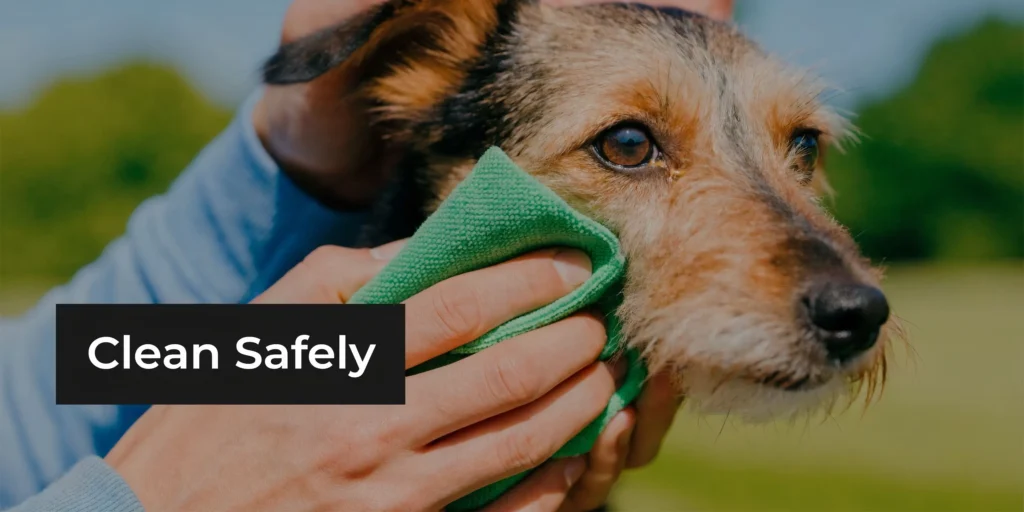
How to Safely Clean Your Dog’s Eyes at Home
Home cleaning is useful for normal crusting and mild buildup. It is not a substitute for treatment when an eye is painful, very red, or producing abnormal discharge.
The goal is simple. Remove debris without rubbing the eye itself or turning cleaning into a wrestling match.
What to use
Keep your supplies boring and gentle.
- Soft clean cloth or gauze pad
- Warm water or sterile saline
- A calm dog and good lighting
- Treats for cooperation
I prefer gauze or a soft cloth because they wipe smoothly. Cotton balls can leave tiny fibers behind.
A simple cleaning routine
Soften first
If the discharge is dry, hold the warm damp cloth against the area for a moment. That softens crusts so you do not need to tug.
Wipe away from the eye
Use one gentle motion from the inner corner outward. If there is more debris, switch to a clean part of the cloth.
One eye, one clean surface
If both eyes need cleaning, use a fresh section of cloth or a new gauze pad for the second eye. That reduces the chance of spreading irritation from one side to the other.
Stop if your dog seems painful
Cleaning should not trigger yelping, snapping, intense flinching, or hard squinting. If it does, stop and call your veterinarian.
Tip: If your dog hates face handling, do very short sessions. Wipe once, reward, and pause. A calm routine beats a perfect one.
A visual walkthrough can help if you are unsure about hand position and pressure:
What not to do
These mistakes cause trouble fast:
- Do not use human medicated eye drops unless your veterinarian specifically told you to.
- Do not pry off hard crusts that are stuck to the eyelid skin.
- Do not touch the eye surface with your fingernail, tissue corner, or applicator tip.
- Do not keep cleaning all week if the eye is worsening.
When home care is enough
Home wiping is reasonable for a dog who gets mild, routine morning crusts and otherwise looks comfortable. If the discharge changes color, keeps building through the day, or returns with redness or squinting, cleaning becomes maintenance, not a solution.
The Overlooked Link Between Diet and Eye Health
Many owners ask a smart question that standard eye guides barely touch. Can food affect eye boogers in dogs?
Sometimes, yes. Diet does not explain every case of discharge, but it can influence the quality of the tear film, the level of inflammation, and how well the surface of the eye stays protected.
Why nutrition matters to the eye
The eye depends on a stable tear film. When that film is healthy, it spreads smoothly and protects the cornea. When it is unstable, the eye can become irritated, watery, or coated with mucus.
Fatty acids matter here. So do nutrients that support normal tissue health. A dog eating a poorly balanced diet may be more likely to struggle with chronic tearing or surface irritation, especially if they already have breed-related eye issues.
What recent research suggests
One often-missed point is the role of dietary fat balance. A 2024 study in the Journal of Veterinary Ophthalmology found that dogs on grain-free diets lacking balanced fatty acids had a 35% higher incidence of chronic tearing, and one trial found fish oil supplementation reduced eye discharge by 42% over eight weeks (AirVet’s summary of dog eye discharge types and meaning).
That does not mean grain-free diets always cause eye problems. It means nutritional balance matters, and tear quality appears to be affected by it.
Practical nutrition questions to ask
If your dog has recurring eye discharge, I would review these basics:
- Is the diet complete and balanced for your dog’s life stage?
- Has the discharge changed since a food switch?
- Is your dog on a boutique or restrictive diet without a clear medical reason?
- Has your veterinarian recommended fish oil, and if so, which product and dose?
This is one area where “premium” marketing can distract from actual formulation quality. The prettiest bag is not always the better eye-health choice.
Food sensitivity and inflammation
Some dogs with broader allergy patterns also show eye symptoms. If your dog has itchy skin, ear issues, licking, or seasonal flare-ups alongside eye discharge, food may not be the only trigger, but it can be part of the overall inflammation picture.
That is why nutrition review belongs in the conversation. It is not just about calories. It is about what supports skin, mucous membranes, and tear stability.
Key takeaway: If your dog has chronic tearing or recurring mucus, talk with your veterinarian about diet history before assuming the problem is only external.
If you want to browse more owner-friendly reading on food choices and related topics, the pet nutrition archive at https://maxijournal.com/tag/pet-nutrition/ is one place to continue.
Red Flags That Require a Trip to the Vet
Some eye problems let you monitor for a short time. Others should move you straight from observation to action.
Eyes can worsen quickly. A problem that looks mild in the morning can become painful by evening.
Call your vet promptly if you notice these signs
- Yellow or green discharge that looks like pus
- A sudden jump in the amount of discharge
- One eye affected much more than the other
- Redness of the white part of the eye or the eyelids
- Squinting or holding the eye shut
- Pawing, rubbing, or face scraping
- Cloudiness or a dull surface
- Visible swelling around the eye
- A bad odor from the discharge
- Any sign your dog cannot see normally
These are not cosmetic clues. They suggest inflammation, infection, pain, injury, or a tear-film problem that needs proper diagnosis.
Signs that feel more urgent
Some situations deserve same-day or emergency care.
Trauma or blood
If you see blood, fresh injury, or a known scratch from a cat, branch, or rough play, get the eye examined quickly.
Sudden pain
A dog who will not open the eye, cries when you approach the face, or becomes distressed by light may have a painful corneal injury or another serious problem.
Vision changes
Bumping into furniture, misjudging steps, or acting suddenly uncertain in familiar spaces can point to impaired vision. Do not wait on that.
Decision rule: If your dog’s eye looks painful, treat it as urgent even if the discharge itself does not look dramatic.
What not to do while waiting
Do not use leftover medication from a previous eye problem. Different eye diseases can look similar, and the wrong drop can make some conditions worse.
If you are also sorting out allergy symptoms and wondering about over-the-counter options, this article on https://maxijournal.com/can-you-give-a-dog-benadryl/ may help frame the broader conversation, but eye-specific treatment still needs veterinary guidance.
A Proactive Approach to Your Dog’s Eye Health
The easiest way to handle eye boogers in dogs is to make eye checks part of your normal routine. You do not need to inspect your dog like a specialist. Just notice what is typical for your dog.
A healthy pattern is usually consistent. The amount looks familiar. The color stays mild. Your dog keeps the eyes open, bright, and comfortable.
A simple routine that works
Observe daily
Look at both eyes in good light. Check symmetry, comfort, and the type of discharge.
Clean gently
Use warm water or sterile saline with a soft cloth when you are dealing with ordinary crusts.
Think beyond the eye
If discharge keeps returning, consider environment, breed anatomy, and diet history. Chronic eye issues often have more than one driver.
Ask early
Veterinarians would rather examine a mild eye concern early than treat a painful advanced one later.
Most owners do not need to become eye experts. They just need a reliable filter. Notice what is normal, recognize what changed, and respond before a small problem becomes a serious one.
If you enjoy clear, practical health explainers like this one, visit maxijournal.com for more approachable articles across pets, health, science, and everyday questions readers ask.
Discover more from Maxi Journal
Subscribe to get the latest posts sent to your email.