A large UK study found that domestic cats live 11.74 years on average (Phys.org coverage of the 2024 study). That number is useful, but it can also be misleading if you read it as a promise.
Some cats die much younger. Some live far longer. And the part many owners care about most is not just how long do cats live for, but how well they live while they are here.
That is where healthspan matters. Lifespan is the total number of years. Healthspan is the stretch of life when your cat is still comfortable, curious, mobile, eating well, grooming normally, and enjoying daily routines. If lifespan is the length of the book, healthspan is how many good chapters it contains.
As a veterinarian, I think that is the better question. Not, “Can my cat reach an impressive age?” but, “How can I give my cat the most good years possible?”
A cat who reaches old age with manageable arthritis, good hydration, a healthy weight, and a calm home often has a very different experience from a cat who lives the same number of years with chronic stress, obesity, untreated dental pain, or repeated illness. The calendar may look similar. The lived experience does not.
This guide takes that practical view. You will see the numbers that matter, but you will also learn why those numbers vary so much, what you can influence, and how to care for a cat in ways that protect both longevity and quality of life.
The Question Every Cat Owner Asks
Many cats in a recent UK dataset died before age 9. Many others lived well into their teens. That wide spread helps explain why cat owners keep asking the same question: “How long will my cat be with me?”
People ask it at adoption, after a new diagnosis, or during the quiet changes that come with age. A cat sleeps more. The top of the bookshelf starts to look too high. Grooming gets a bit less tidy. Under that question sits something deeper. You want time with your cat, but you also want that time to feel good for them.
No single answer fits every cat. Genes matter. Daily routine matters. Body weight matters. Spaying or neutering matters. Veterinary care matters. Even cats who share the same home can age in very different ways, much like two people in the same family can have very different health histories.
Lifespan is only half the story
Years alone do not tell you enough.
A cat can live a long time and still spend too much of that time coping with pain, dehydration, anxiety, stiffness, or changes in vision and hearing that no one recognized early. A better way to frame the question is to track two things at once:
- Lifespan means how many years a cat lives
- Healthspan means how many of those years are comfortable, active, and enjoyable
Healthspan works like the difference between keeping a car running and keeping it running smoothly. One car starts every morning but rattles, leaks, and struggles uphill. The other moves comfortably, turns easily, and handles daily use without strain. Cats age in a similar way. The goal is not only survival. The goal is good function, comfort, and interest in daily life.
Key takeaway: Good feline care aims to protect comfort and function for as many years as possible.
Why this matters so much for cat owners
Cats hide discomfort remarkably well. That trait helped their wild ancestors avoid looking vulnerable, but it can make modern pet care harder. A cat may still purr, eat, and greet you at the door while living with dental pain, arthritis, kidney disease, or chronic stress.
Owners often misread those early signs. “Slowing down” can be pain. “Getting picky” can be nausea or dental disease. “Acting old” can be a treatable problem that was caught late rather than early.
If you searched how long do cats live for, the clearest answer is that lifespan depends on many factors, and healthspan depends on what happens during those years. Proactive care gives you the best chance to protect both.
Cat Lifespan by the Numbers
One number can be helpful, but it can also be misleading. A reported average life expectancy of 11.74 years gives you a reference point for domestic cats overall, and the same UK research found 11.89 years for crossbred cats compared with 10.41 years for purebred cats. Those figures are useful for orientation, much like seeing your cat’s weight on a chart. They help set expectations, but they do not describe your individual cat’s full health story.
Indoor and outdoor life look very different
Daily environment changes risk in a major way. A Wikipedia summary of feline aging data reports a median lifespan of 13 to 17 years for indoor cats and 2 to 5 years for outdoor cats.
That gap reflects exposure. Outdoor cats face cars, territorial fights, infectious disease, parasites, toxins, harsh weather, and missed meals or missed medical care. Indoor cats can still develop obesity, stress, dental disease, arthritis, and kidney disease, but they are protected from many sudden threats that can cut life short.
For owners, this is one of the clearest examples of lifespan and healthspan working together. A safer home often does more than add years. It also reduces injury, pain, fear, and wear on the body.
Mixed-breed and purebred cats do not age the same way
Crossbred cats often benefit from a broader genetic mix. That wider gene pool can lower the odds that the same inherited problem is passed along from both sides.
Purebred cats can live long, happy lives too, but some breeds carry a higher chance of specific disorders. The pattern is similar to building from a set of instructions. If one part of the plan includes a weak point, careful maintenance matters even more over time.
This is one reason average lifespan numbers should never be used as a verdict. They are starting lines, not finish lines.
A quick reference chart
| Cat type | Typical lifespan |
|---|---|
| Domestic cat overall | 11.74 years |
| Crossbred cat | 11.89 years |
| Purebred cat | 10.41 years |
| Indoor cat | 13 to 17 years |
| Outdoor cat | 2 to 5 years |
The age range owners should watch more closely
The UK research noted earlier found that mortality risk rises after age 9, with annual probability exceeding 0.05 from year 9 onward. In day-to-day practice, that fits what many veterinarians see. Midlife is often when subtle changes begin to matter more.
A 10-year-old cat may still look settled and independent while losing muscle, drinking a little more, jumping a little less, or living with chronic pain that stays hidden behind normal-looking behavior. That is why senior care works best when it starts before a crisis.
One more caution here. Do not try to manage age-related changes with over-the-counter medications unless your veterinarian has given specific instructions. Even products people commonly ask about can be risky in cats. This guide on whether Benadryl is safe for cats explains why medication decisions need care.
Average lifespan matters. Healthspan matters more, because the goal is not only a longer life. The goal is more comfortable years within it.
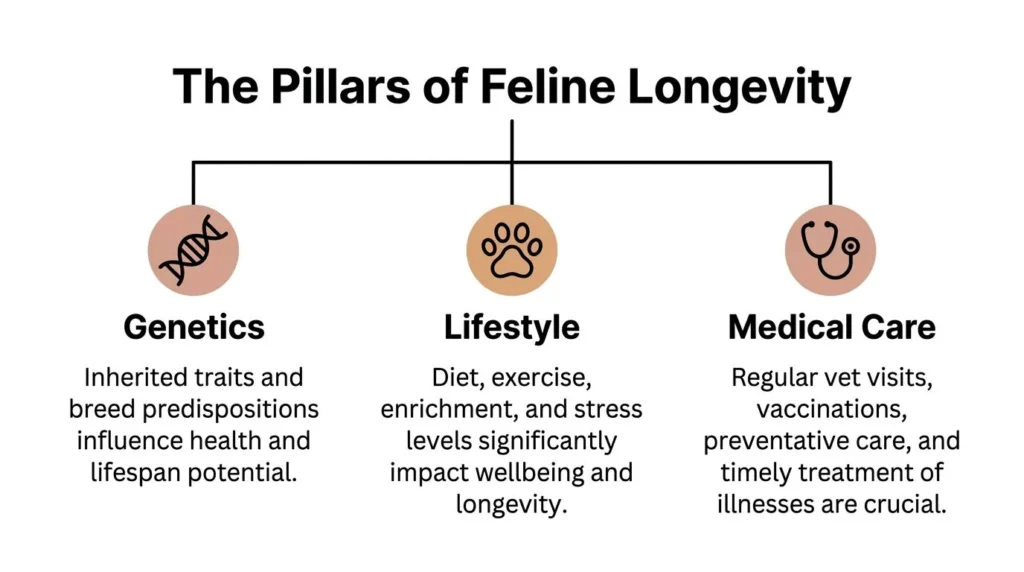
The Pillars of Feline Longevity
A cat’s lifespan is not controlled by one magic factor. It rests on three big supports. Genetics, lifestyle, and medical care.
When I explain this in the exam room, I compare it to a three-legged stool. If one leg is weak, the whole stool becomes unstable. Great food cannot erase severe inherited disease. Good genes cannot fully protect a cat that roams outdoors and gets into fights. Regular vet visits help, but they work best when the home routine also supports health.
Genetics set the baseline
Genes do not write the entire story, but they help draft the opening chapters.
Some cats inherit a stronger starting position. Others carry a higher chance of heart disease, kidney problems, airway issues, joint stress, or other breed-linked conditions. That is one reason some lines and breeds age more smoothly than others.
A helpful way to picture genetics is to think of a blueprint. The blueprint influences what kind of structure gets built, but maintenance still matters. A solid blueprint helps. It does not replace care.
Lifestyle shapes daily wear and tear
Lifestyle is where owners have enormous influence.
Indoor living reduces exposure to trauma, fights, infectious disease, parasites, poisons, and weather stress. Nutrition, hydration, exercise, litter box access, sleep quality, and stress levels all affect the body over time. The effects are gradual, which is why people underestimate them.
Cats thrive on predictability. A stable routine lowers stress. Play supports muscle and brain function. Good food supports organs and body condition. Fresh water matters more than many people realize, especially as cats age.
Here are some everyday lifestyle factors that protect healthspan:
- Indoor safety: Limits major external hazards and reduces preventable injuries.
- Weight control: Keeps joints, heart, and metabolism under less strain.
- Enrichment: Wand toys, climbing areas, food puzzles, and scratching posts keep the brain engaged.
- Low stress: Reliable routines, clean litter boxes, and safe resting spaces help nervous systems stay settled.
A side note on home treatment. If your cat seems itchy, sedate, painful, or uncomfortable, avoid giving medications casually from the human cabinet. Even common products can be risky or need dose guidance. If you are wondering about one widely discussed example, this guide on whether you can give your cat Benadryl explains why veterinary input matters.
Medical care changes outcomes early
Preventive medicine often looks boring until you compare it with emergency medicine.
Sterilization is one of the clearest examples. Neutered males had a median survival of 9.8 years versus 3.7 years for intact males, and spayed females had a median survival of 10.5 years versus 4.7 years for intact females (PetCareRx article summarizing veterinary analyses).
That gap likely reflects several forces at once. Intact cats are more likely to roam, fight, mate, and face injuries or infections. Unspayed females also face reproductive disease risks, including pyometra and mammary cancer concerns.
Veterinary perspective: Spaying or neutering does more than prevent litters. It changes behavior, lowers specific disease risks, and often makes life safer.
Medical care also includes vaccines, parasite control, dental care, and routine exams. These do not make a cat immortal. They catch trouble earlier, when treatment is often simpler and kinder.
The cats that do best over time usually are not the cats with one spectacular intervention. They are the cats whose owners keep all three pillars standing, year after year.
How Long Different Cat Breeds Live
Breed can shape lifespan, but it does not decide your cat’s future on its own. A better way to use breed information is to ask, “What should I watch for early so my cat stays comfortable, active, and engaged for as long as possible?”
That shift matters because healthspan and lifespan are not the same thing. Two cats may both reach old age, yet one keeps climbing, grooming, and playing while the other struggles much earlier. Breed patterns help you plan for that difference.
Cat breed average lifespan chart
| Breed | Average lifespan (years) |
|---|---|
| Burmese | 14.42 |
| Birman | 14.39 |
| Sphynx | 6.68 |
| Maine Coon | 12.5 |
| Siamese | 15 to 20 |
| Persian | 10 to 17 |
| Mixed breeds or moggies | 12 to 18 |
The figures above come from the research sources already cited earlier in this article, including the UK breed-ranked study and the feline aging material referenced previously.
Why one breed may age differently from another
A breed average is a starting point, not a promise. It reflects inherited tendencies across many cats, while your individual cat’s outcome still depends on early screening, body condition, dental health, stress level, and everyday care.
Some breeds are known for longer average lives. Burmese, Birman, and Siamese often fall into that group. Others may have shorter averages because inherited conditions appear more often in those lines. Maine Coons, for example, are watched closely for heart disease risk. Sphynx cats may need more proactive medical attention because skin, temperature regulation, and other health issues can affect long-term resilience.
That is why breed information works best as a care map. It points to the systems that deserve extra attention. Heart checks in one breed. Kidney monitoring in another. Joint support, skin care, weight control, or dental follow-up in others.
Use breed patterns to build a smarter health plan
Breed lifespan patterns help you know where to pay closer attention in your cat’s health plan.
- If you have a longer-lived breed: Plan for a long senior period, not just a long total lifespan. Mobility, dental comfort, kidney screening, and mental stimulation matter more once cats live well into their teens.
- If you have a breed with known inherited risks: Ask your veterinarian which problems tend to show up early and what screening schedule makes sense.
- If you have a large breed such as a Maine Coon: Keep a close eye on weight, activity, and subtle breathing or stamina changes.
- If you have a mixed-breed cat: Mixed heritage can be an advantage, but it does not replace routine exams and age-appropriate screening.
Food choice fits into this plan too. A cat with lower activity needs may do better with a diet designed for indoor living. This guide to best cat food for indoor cats can help you match nutrition to the life your cat lives.
Owners sometimes feel discouraged when they see a lower breed average. Try to read those numbers the way a veterinarian does. They are not a countdown clock. They are an early warning system. Used well, they help you protect function, comfort, and quality of life long before a problem becomes obvious.
Actionable Ways to Boost Your Cat’s Healthspan
Healthspan improves through many small decisions repeated over time. No supplement or gadget replaces those basics.
The most effective plan is also the least glamorous. Feed well. Keep body condition in a healthy range. Prevent problems. Find disease early. Make daily life interesting enough that your cat keeps moving, thinking, and engaging.
Start with body condition
A cat’s body condition is one of the clearest windows into long-term health. Maintaining an optimal Body Condition Score is linked to peak lifespan, and mortality probability rises sharply after age 9 (PubMed Central study summary).
In plain language, extra weight is not just cosmetic. Fat tissue changes metabolism, strains joints, can worsen diabetes risk, and makes it harder for the body to stay resilient with age.
What owners often miss is that gradual weight gain becomes “normal” to the eye. You see your cat every day, so small changes blur together.
Look for these signs instead:
- Ribs hard to feel: A warning that body fat may be too high.
- No visible waist from above: Often a clue that your cat is carrying excess weight.
- Belly swinging when walking: Common in overweight cats, though body shape varies.
- Less jumping or shorter play sessions: Sometimes blamed on age when weight is part of the issue.
Feed for the life your cat lives
An indoor cat who naps most of the day does not need the same feeding routine as a young, highly active cat. Diet should fit age, activity level, health status, and appetite pattern.
If you want practical food guidance for home life, this roundup of the best cat food for indoor cats is a useful starting point for comparing options.
Hydration matters too. Many cats are modest drinkers by nature. Wet food, water fountains, multiple water stations, and bowls placed away from litter boxes can all help encourage intake.
Tip: Think of nutrition as fuel quality and body condition as dashboard feedback. Both matter.
A short visual guide can help reinforce the basics:
Protect health before symptoms appear
Cats often look “fine” until they do not.
That is why preventive care is one of the best investments in healthspan. Routine exams, parasite prevention, dental checks, and age-appropriate lab work catch change before crisis. This matters even more in senior cats, because many chronic diseases start subtly.
A useful mindset is to stop asking, “Is my cat sick enough to go in?” and start asking, “Has anything changed from my cat’s normal?”
Build movement and curiosity into daily life
Exercise in cats does not look like exercise in people. It often comes in short bursts.
You do not need a gym plan. You need a home that invites movement.
Try rotating:
- Wand toys: Good for sprinting, stalking, and pouncing.
- Puzzle feeders: Add mental work to meals.
- Cat trees and shelves: Encourage climbing and jumping.
- Scratching posts: Support muscle use and territory confidence.
- Short play sessions: Better than one long session for many cats.
Mental stimulation matters because boredom changes behavior. Some cats overeat, some sleep excessively, and some become irritable or withdrawn. Enrichment keeps the brain switched on.
Do not overlook the mouth
Dental pain is one of the most under-recognized quality-of-life problems in cats. Many still eat despite oral discomfort, so owners assume the mouth must be fine.
If your cat drops food, chews on one side, has bad breath, paws at the mouth, or becomes less interested in dry food, ask your veterinarian for an oral assessment. A painful mouth can reduce appetite, alter behavior, and affect overall health.
The point of all this is. Cats age best when their owners treat everyday care as preventive medicine, not housekeeping.
Caring for Your Senior Cat
Senior care is where the idea of healthspan becomes real.
Many guides focus on how long cats live, but they spend less time on what aging feels like from the cat’s side. Managing declining mobility, cognitive function, and breed-specific aging patterns is essential if you want to protect a cat’s healthspan (Blue Cross discussion of cat lifespan and aging).
A senior cat may still look good in photos while struggling with pain, stiffness, confusion, or effortful litter box use. The signs are often quiet.
Signs owners commonly miss
Cats rarely announce discomfort. They edit their behavior instead.
Watch for:
- Jumping less often: Sometimes arthritis, not laziness.
- Missing the litter box edge: Can reflect pain, urgency, or difficulty climbing in.
- Sleeping in unusual places: Sometimes a search for easier access or more warmth.
- Less grooming: Common with pain, dental trouble, or general illness.
- Nighttime restlessness or vocalizing: May be linked to cognitive change, discomfort, or disease.
Make the home easier to use
Think of senior support as reducing friction.
A young cat can leap onto a bed, step into a high-sided litter box, and curl into a tight perch without much effort. An older cat may still want those things but pay a physical price for them.
Simple changes help a lot:
- Lower-entry litter boxes: Easier for stiff joints.
- Ramps or steps: Helpful near sofas, beds, or favorite windows.
- Warm beds: Comfort sore bodies.
- Food and water on each level of the home: Reduce unnecessary trips.
- Quiet resting spots: Useful if the home has children, dogs, or multiple cats.
Senior-care tip: If your cat stops doing a favorite activity, ask whether the desire is gone or the task has become uncomfortable.
Think function, not just diagnosis
Aging cats often develop chronic conditions that need monitoring rather than dramatic rescue. Kidney disease, arthritis, weight loss, dental disease, thyroid problems, and cognitive changes can all shape daily comfort.
Your job is not to guess the diagnosis at home. Your job is to notice changes early and describe them clearly. Videos of gait, litter box habits, breathing during sleep, appetite changes, or new vocalization patterns can help your veterinarian a lot.
If litter box changes raise concern about infection or intestinal problems, owners sometimes also benefit from learning about common parasite issues such as coccidia in cats, especially when sorting normal aging changes from signs that need prompt attention.
The best senior care is compassionate and practical. You are not trying to make your cat young again. You are removing obstacles so your cat can keep enjoying life as an older animal.
Conclusion From Lifespan to ‘Lovespan’
So, how long do cats live for?
Some live only a few years under harsh conditions. Many indoor cats live well into their teens. Some reach extraordinary ages. But the most useful answer is not a single number.
A cat’s future is shaped by genetics, daily lifestyle, and medical care. Those factors do more than influence lifespan. They shape comfort, mobility, appetite, confidence, and joy.
That is why I like to think beyond lifespan and toward lovespan. Not as a medical term, but as a reminder. The ultimate goal is shared time that still feels good for the cat and meaningful for the person who loves them.
A healthy weight, a safe home, regular veterinary care, good pain control, clean teeth, mental stimulation, and thoughtful senior support all add up. Sometimes they add years. Equally important, they add better days.
Your cat does not need a perfect life. Your cat needs a life where care is attentive, changes are noticed, and comfort is protected as the years pass.
Frequently Asked Questions About Cat Longevity
What is the oldest cat ever recorded
The verified record mentioned in the research set is Creme Puff at 38 years. Another cat, Lucy, is noted there at 39 years, but record claims around extreme ages can be difficult to confirm across sources, so it is best to treat extraordinary longevity stories with some caution unless the recordkeeping is clear.
Do cat years equal human years in a simple way
Not really. Cats do not age in a straight one-year-to-one-fixed-number pattern.
They mature quickly early in life, then aging becomes less simple to compare. The better question is not “How old is my cat in human years?” but “What life stage is my cat in now?” A young adult cat, a mature cat, and a senior cat each need different care.
Can supplements make my cat live longer
There is no single supplement in the verified material that can be presented as a proven life-extender for all cats. Be careful with marketing claims.
What consistently matters most is the boring stuff done well. Appropriate diet, healthy body condition, indoor safety, sterilization, preventive veterinary care, and strong senior monitoring.
Is it normal for older cats to slow down
Some slowing is common with age, but “slowing down” should never be your final explanation. It can reflect pain, dental disease, arthritis, kidney disease, cognitive change, or weight issues. Any meaningful change in movement, appetite, grooming, sleep, or litter box habits deserves attention.
Are mixed-breed cats healthier than purebreds
Often, mixed-breed cats have an advantage because broader genetic diversity can lower inherited disease risk. That does not make every mixed-breed cat healthier than every purebred, but it helps explain why crossbred cats performed better in the lifespan data discussed earlier.
If you enjoy clear, practical guides on pets, health, science, and everyday questions, explore more approachable articles at maxijournal.com.
Discover more from Maxi Journal
Subscribe to get the latest posts sent to your email.