Most lists of farming video games make one mistake. They treat every game with crops as if it scratches the same itch. It doesn’t. Managing a realistic fleet of harvesters, romancing townsfolk between parsnip harvests, and decorating a Disney village are completely different hobbies wearing the same overalls.
That’s why picking the right game matters more than picking the “best” one in the abstract. Some players want hard systems and machine management. Others want a cozy routine, a story arc, or a game they can hand to a beginner without a long explanation. A few want co-op first and farming second.
The genre is also bigger than many people realize. Farming games didn’t stay niche. The genre’s modern shape took off after Harvest Moon on SNES helped define it, and Stardew Valley later pushed it into the mainstream with over 1 million copies sold in its first year and 41 million units sold to date, according to the background cited in this genre overview. That success changed what players expect from farming video games. They now range from hardcore simulators to social RPGs to low-pressure life sims.
Below are seven games worth your time in 2026. Each one is tagged by playstyle, judged by what it does well, and paired with a quick-start tip so you can tell whether it fits your mood before you sink a weekend into it.
1. Stardew Valley
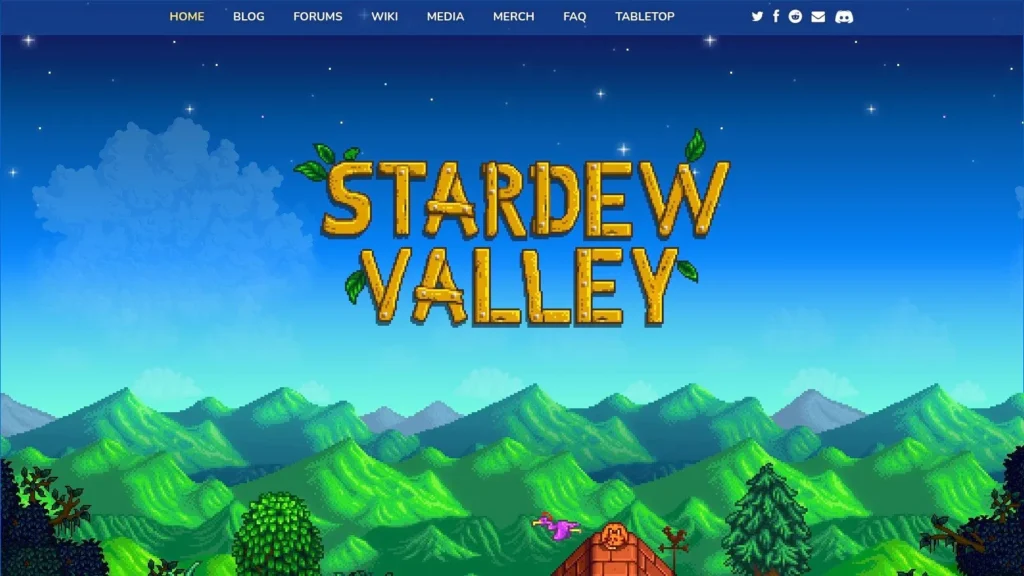
If someone asks for one safe recommendation in farming video games, this is still it. Stardew Valley remains the modern benchmark because it gives you a farm game, a life sim, a light dungeon crawler, a fishing game, and a social routine without making any one part too complicated.
Playstyle: RPG
Best for: Players who want freedom, long-term progression, and cozy solo or co-op play
Official site: Stardew Valley
The strength here is flexibility. You can play efficiently and optimize every season, or you can spend days rearranging crops, giving gifts, and ignoring profit entirely. That range is hard to beat.
Why it still works
The farming loop is simple at the start and richer later. Early on, you’re watering by hand and counting energy. Later, sprinklers, artisan goods, and the greenhouse open the game up. It never stops feeling like you’re improving the same place.
The extra systems matter too. Mining breaks up farming. Fishing gives you a change of pace. Festivals and villager relationships stop the farm from feeling isolated. Co-op also works well because players can naturally split jobs instead of competing for attention.
A few practical points stand out:
- Low hardware demands: It runs well on modest PCs and handheld-friendly setups.
- Strong replay value: Different farm layouts and self-imposed goals change the feel of a run.
- PC mods help a lot: If you want UI fixes, visual changes, or larger overhauls, the mod scene is a major advantage.
Trade-offs to know
The pixel art won’t land for everyone. If you need a glossy, modern visual style, this may feel dated before it even starts.
Late-game play can also turn into routine optimization. That’s fun if you like squeezing output from every tile. It’s less fun if you wanted a pure relaxation game with no pressure to min-max.
Practical rule: Don’t judge Stardew Valley by the first in-game week. The opening is intentionally small-scale, and the game gets much better once your farm has basic automation.
Quick Start
Plant enough to earn steady money, but don’t overcommit to hand-watering in spring. New players often make the same mistake. They buy too many seeds, spend the whole morning watering, then run out of time and energy for mining, fishing, or meeting villagers.
If you want a farming game that can become your main game for months, this is still the best all-rounder on the list.
2. Farming Simulator 25
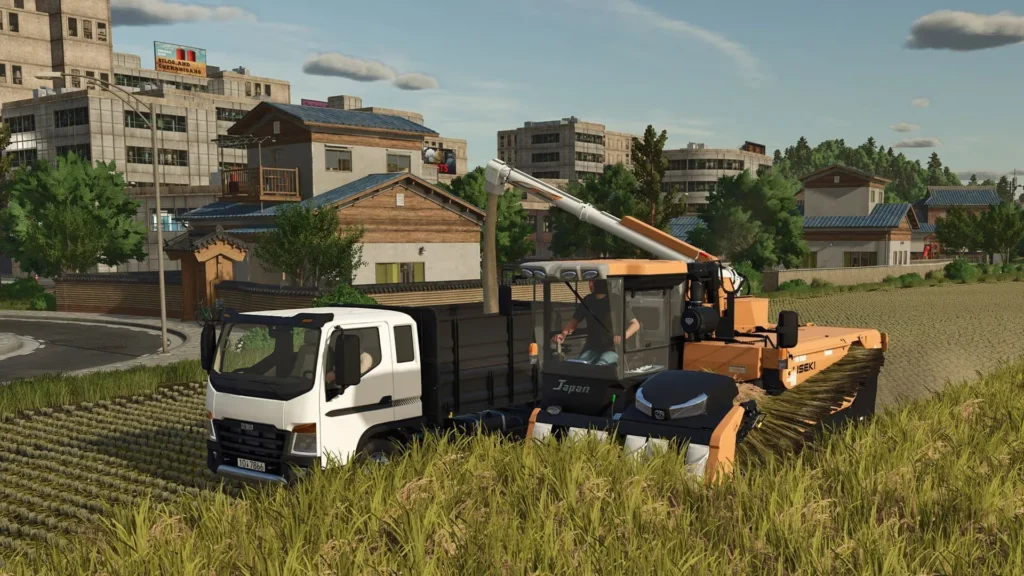
Farming Simulator 25 isn’t trying to be cozy in the same way as most farm-life RPGs. It wants to model agricultural work, equipment, and production chains with enough detail that machine choice and field planning matter.
Playstyle: Simulation
Best for: Players who want realism, machinery, logistics, and multiplayer farm management
Official site: Farming Simulator
This series has scale behind it. The franchise, developed by GIANTS Software and launched in 2008, has sold over 25 million copies across all versions and logged 90 million mobile downloads, with peak concurrency reaching up to 90,000 players, according to the series summary on Wikipedia’s Farming Simulator page. That popularity makes sense once you see how thoroughly it serves the equipment-and-systems crowd.
What it does better than anyone
No other game on this list matches its machinery focus. If you care about authentic tractors, harvesters, attachments, helpers, field prep, contracts, and supply chains, this is the obvious pick.
The licensed machine roster is a major draw. The broader series is known for digital versions of over 400 real machines and tools, which explains why some players come for the vehicles as much as the farming itself. That obsession with equipment gives the game a different identity from story-led farm RPGs.
Multiplayer also feels more purposeful here. In co-op, one player can handle seeding while another manages transport, animals, or production. It feels like running an operation, not just sharing a save.
For readers who enjoy practical growing outside games too, this guide on how to grow tomatoes from seed scratches a similar planning-and-process itch.
Where it pushes people away
The learning curve is real. Menus, implements, and workflow logic can overwhelm new players fast. If you don’t know the difference between enjoying complexity and tolerating friction, this can become expensive busywork.
There’s also very little narrative support. You won’t get strong town relationships, dating, or an emotional story arc. The payoff is mechanical, not personal.
If your favorite part of a farm game is shopping for better tools and setting up efficient routes, Farming Simulator 25 will click. If you need character drama, it won’t.
Quick Start
Start with helper-friendly jobs and leased equipment instead of buying a giant fleet too early. New players often burn money on machines they barely understand. Leasing lets you learn fieldwork without locking your whole save into one bad purchase.
This is the best choice if your ideal farm game feels closer to operating a business than living a fantasy.
3. Story of Seasons A Wonderful Life
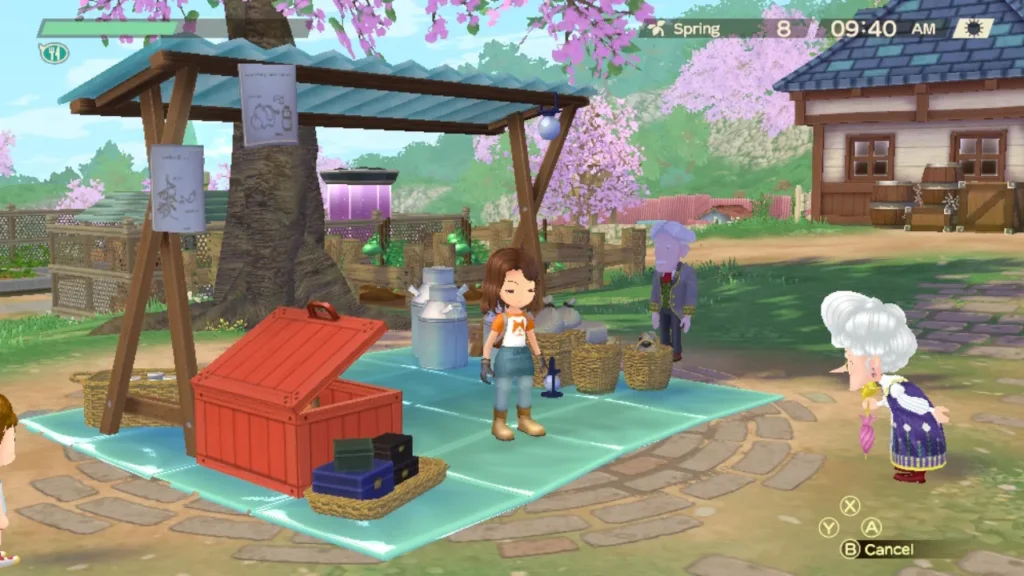
Some farming video games are about expansion. Story of Seasons: A Wonderful Life is about commitment. It slows the pace, narrows the focus, and asks whether you want to live through a farm life rather than optimize one.
Playstyle: RPG
Best for: Players who want a gentle routine, a clear life arc, and family-focused progression
Official site: Story of Seasons A Wonderful Life
This remake keeps the core identity of the GameCube original. That means daily chores, livestock care, relationships, marriage, and the passing of years all matter more than scale or speed. It feels intimate in a way many sandbox-heavy farm games don’t.
The reason to play it
The family and aging systems set it apart. Most farm games stop at romance or let relationships sit in stasis forever. This one gives your choices a longer arc. You’re not just building a profitable farm. You’re shaping a life over time.
That structure helps if you bounce off open-ended games. In Stardew Valley, some players love freedom and some feel directionless. A Wonderful Life gives you a stronger sense of movement and purpose.
The visual refresh also helps modern players who couldn’t go back to the original presentation. It’s cleaner, easier on the eyes, and smoother to play.
A side pleasure is how much attention it gives to flowers, fields, and visual routine. If you enjoy calm, seasonal arrangement in games, this piece on Animal Crossing flowers hits a similar note.
The trade-off is pace
This game is slower and more linear than most of the list. That’s the appeal for some players and the barrier for others.
Don’t come here looking for deep machinery systems, aggressive optimization, or a giant crafting web. You’re getting a character-driven farm life sim with a specific rhythm. If that rhythm doesn’t work for you, the game can feel sleepy.
- Best strength: Memorable long-term life arc.
- Biggest weakness: Less room for player-driven chaos or experimentation.
- Ideal mood: You want a farm game that feels reflective, not busy.
Quick Start
Invest attention in livestock and relationships early. This isn’t the kind of game where crop profits alone define your experience. The emotional payoff comes from the routines and people around the farm.
I’d recommend this most strongly to players who miss older farm sims and want something warmer, more deliberate, and less systems-heavy than the current trend.
4. Coral Island

Coral Island takes the familiar farm-life formula and opens it sideways. Instead of asking you to only improve your land, it ties progress to the surrounding island through diving, reef cleanup, and town restoration.
Playstyle: RPG
Best for: Players who want a modern, colorful alternative to Stardew Valley with broader social systems
Official site: Coral Island developer blog
Its biggest strength is mood. The tropical setting feels fresh, and the island has a brighter, more contemporary look than many farming video games built around rustic nostalgia.
What makes it stand out
The diving system is the main differentiator. Going underwater to clean up the reef adds a second major progression track that doesn’t feel tacked on. It changes the cadence of play, which matters if you get bored doing the same crop loop every day.
The social side is also a major draw. Large casts can be a problem when they feel interchangeable, but here the game clearly wants the town itself to be part of the reason you keep playing. If you like romance options, community energy, and lots of personalities to track, it offers plenty.
That broader scope gives the game more variety than tighter farm sims.
Best fit: Pick Coral Island when you want farming plus place-healing. Don’t pick it if you only care about squeezing maximum profit from every season.
The honest downside
Breadth creates mess. With lots of systems running at once, the game can feel less focused than its inspirations. Some players will love that buffet. Others will wish it trimmed a few ideas and polished the remaining ones harder.
It’s also one of the easier games on this list to recommend with a caveat. Post-update stability and bugs have been part of the conversation around it, so patience helps. If you hate rough edges, wait for a more settled moment before diving in.
Quick Start
Treat diving as a core activity, not optional side content. Players who ignore it often end up thinking the game is just a prettier, looser farm sim. The underwater progression is one of the main reasons to play.
This is one of the stronger picks for players who want modern presentation, lots of social content, and something that feels more expansive than traditional small-town farm life.
5. Disney Dreamlight Valley
Not every player wants a pure farm sim. Disney Dreamlight Valley is better understood as a life sim with farming built into a broader loop of questing, decorating, collecting, cooking, and character friendship.
Playstyle: Casual
Best for: Disney fans, decorators, quest-driven players, and beginners who want clear objectives
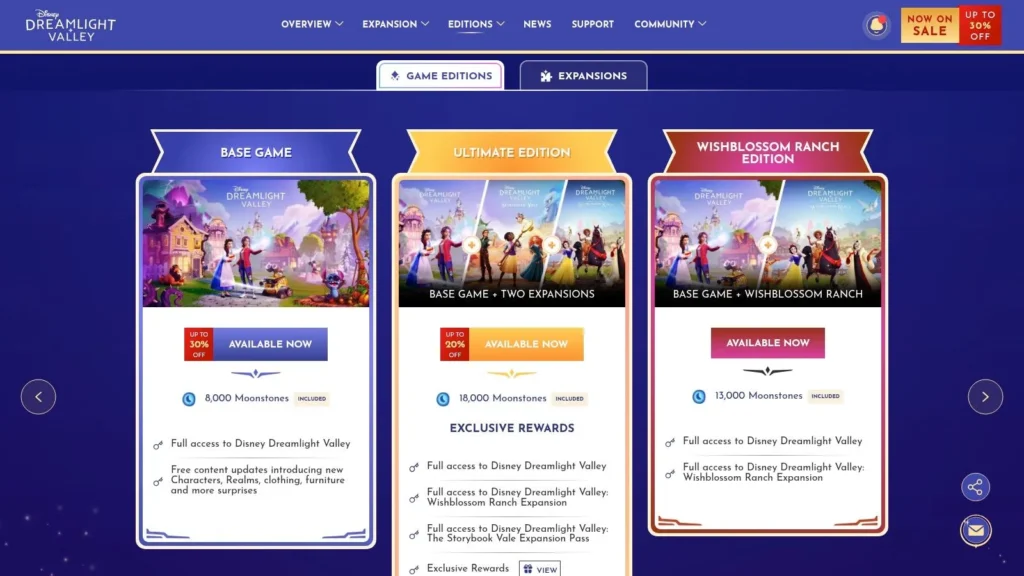
Official site: Disney Dreamlight Valley editions
This game succeeds when you treat gardening as part of a larger village routine. Crops matter. They just aren’t the whole point.
Why people stick with it
Character-driven content carries the game. If you’ve got any affection for Disney or Pixar worlds, the simple act of welcoming new residents, doing their quests, and reshaping shared spaces is a strong hook.
Decorating is another major reason to play. Some farming video games give you a house and call it enough. Dreamlight Valley makes environmental customization central. If your favorite farm-game moments involve pathing, furniture placement, and themed spaces, this is one of the best options in the genre-adjacent lane.
Regular updates help maintain momentum too, especially if you like returning for new characters and seasonal content.
For players who also enjoy mobile-style collection loops and familiar franchise worlds, this explainer on how you catch a Pokémon in Go touches a similar mainstream, approachable gaming audience.
The catch
Monetization and edition structure can be confusing. That doesn’t automatically ruin the game, but it does mean you should know what version you’re buying and what content sits outside the base experience.
The farming itself is also lighter than the title might suggest. If your goal is crop planning, season management, and farm economics, there are better picks above and below this one.
- Choose it for: Characters, decorating, quests, and accessible routines.
- Skip it for: Deep agricultural systems or a more traditional farm-sim feel.
“Play it like a village-life game, not a hardcore farming game, and it makes much more sense.”
Quick Start
Focus first on gaining access to movement, storage, and the characters you like. New players sometimes spread attention across every questline and burn out on errands. Pick a small set of goals and let the valley grow around them.
This is the easiest recommendation on the list for casual players who want comfort, familiarity, and a steady stream of things to tidy, discover, and personalize.
6. My Time at Sandrock
If most farming video games ask you to run a homestead, My Time at Sandrock asks you to rebuild a town with one. Farming is present, but the center of gravity is your workshop.
Playstyle: RPG
Best for: Players who want crafting, quests, combat, and story progression alongside farming
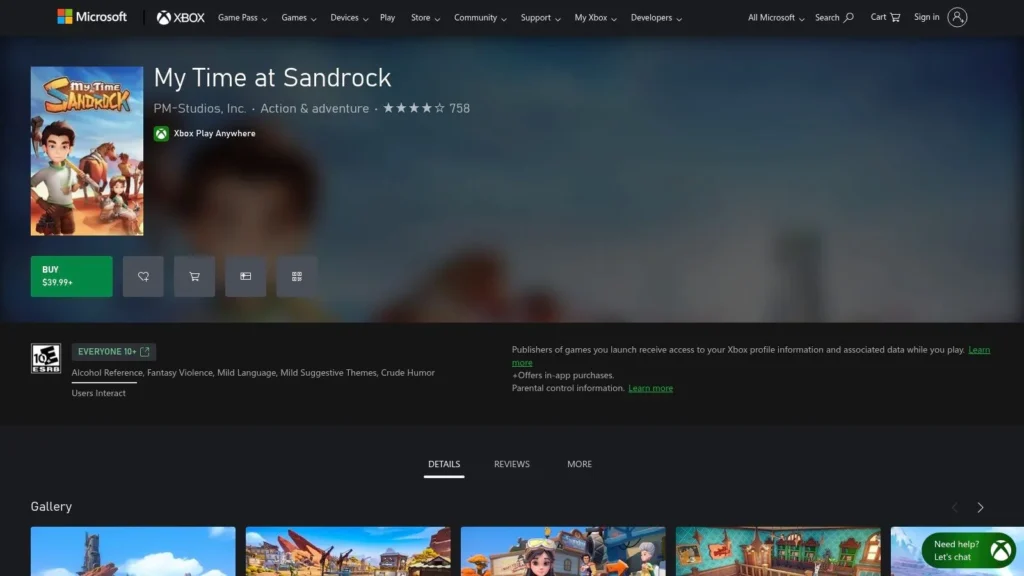
Official site: My Time at Sandrock on Xbox
This is the least “pure” farming game on the list, and that’s why a lot of players end up loving it. If tending fields alone gets repetitive for you, Sandrock gives you many more reasons to log in.
Where Sandrock wins
Commissions keep the early and midgame moving. Instead of waiting for crops to mature as your main source of progress, you’re building machines, gathering materials, turning in jobs, and seeing the town respond.
That creates a strong sense of momentum. Many cozy sims can drift. Sandrock rarely does. There’s usually a clear next objective, a machine to build, a dungeon run to make, or a relationship event to trigger.
Combat also has a bigger role here than in most of the list. That broadens the audience. It also means players looking for a calm, low-stress farming routine may find it too busy.
The trade-offs are obvious
This is more crafting-heavy than field-management-heavy. If you came for crop planning first, the workshop focus may feel like a bait and switch.
Console performance and bugs have also been a sticking point for some players, so platform matters more here than with simpler titles.
A quick breakdown helps:
- Strongest feature: Quest-rich progression with meaningful crafting.
- Weakest fit: Players who want farming to be the unquestioned main activity.
- Sweet spot: You enjoy life sims most when they give you constant projects.
Quick Start
Build around your workshop schedule, not your crops. That’s the mental shift that makes the game click. Farming supports your broader progression, but commissions and machine upgrades often drive the pace.
For players who want “farm sim plus RPG campaign” rather than “farm sim as routine,” Sandrock is one of the easiest recommendations in the current lineup.
7. Roots of Pacha
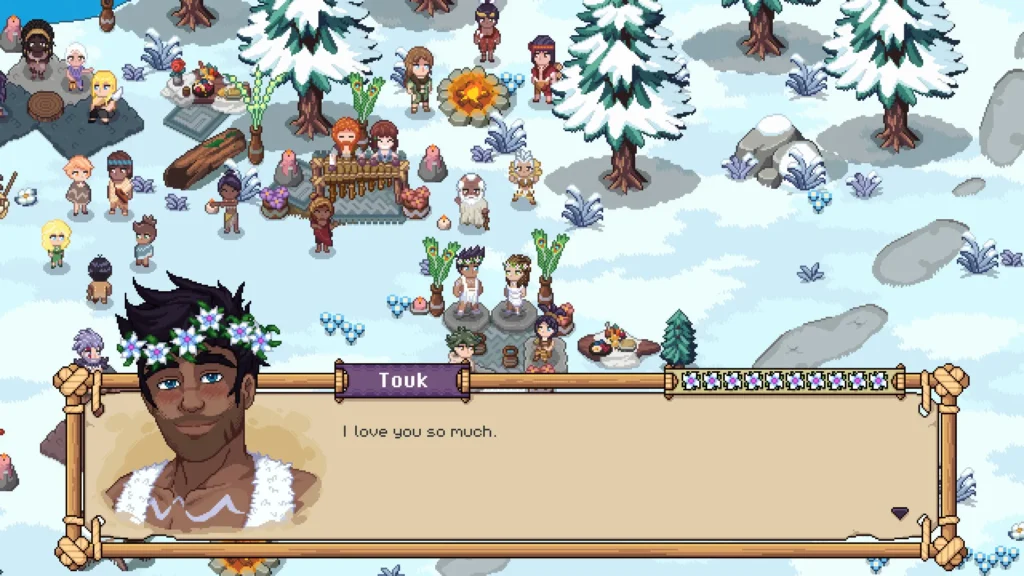
Roots of Pacha solves a common genre problem by changing the setting completely. Instead of giving you another inherited modern farm, it drops you into a prehistoric community where progress comes through shared ideas, domestication, and collective development.
Playstyle: Casual RPG
Best for: Co-op players, fans of cozy progression, and anyone bored with the usual farm-game setting
Official site: Roots of Pacha
That theme does more than change the art. It changes the feel of progression. Advancements aren’t framed as buying modern convenience. They feel like discoveries your clan reaches together.
Why it earns a spot
The ideas system gives the game a strong identity. Progress feels communal rather than individualistic, and that makes even familiar actions feel slightly different from genre norms.
Co-op is another strength. Some farming games technically support multiplayer but feel awkward when shared. Roots of Pacha is better tuned for relaxed drop-in play, where players can contribute without stepping on each other’s toes.
There’s also a nice educational angle to this kind of game. Background research around the genre points to an underserved discussion around farming games as tools for teaching resource management, sustainability, and real-world systems thinking in approachable ways, especially for younger players and underserved communities, as discussed in this video commentary on farming games and educational impact. Roots of Pacha is one of the easier examples to imagine in that conversation because it links community, domestication, and tool development so clearly.
Limits you should expect
This isn’t trying to match the scale of a giant simulator or the content sprawl of a massive live-service life sim. Its scope is smaller, and that’s part of its charm.
If you need constant spectacle, high-pressure optimization, or a huge machine economy, it won’t hold you the way Farming Simulator 25 or even Sandrock might.
Worth knowing: This is one of the few farming games where “cozy co-op” feels like a design pillar instead of an added mode.
Quick Start
Prioritize systems that improve your clan’s shared quality of life instead of chasing only personal efficiency. The game feels best when you engage with the communal rhythm.
For players who want something warm, distinct, and easy to enjoy with another person, this is one of the most refreshing farming video games available right now.
Top 7 Farming Games Comparison
| Game | Implementation complexity | Resource requirements | Expected outcomes | Ideal use cases | Key advantages |
|---|---|---|---|---|---|
| Stardew Valley | Low–moderate; accessible systems with late‑game depth | Low; runs on modest PCs/handhelds, optional PC mods | Cozy, high replayability, open‑ended progression | Casual players, co‑op groups, sandbox fans | Deep sandbox, excellent value, active mod scene |
| Farming Simulator 25 | High; detailed machinery, realistic workflows | Moderate–high; benefits from stronger hardware and DLCs/mods | Authentic farm operations, equipment and logistics focus | Simulation enthusiasts, vehicle/mechanic fans | Extensive licensed machines, realistic fieldwork, ModHub |
| Story of Seasons: A Wonderful Life (remake) | Low; structured daily loop and relationship systems | Moderate; modern console/PC support and QoL updates | Narrative-driven multi‑year arc, family and aging systems | Players seeking story, nostalgia, character-driven play | Defined life arc, family mechanics, nostalgic appeal |
| Coral Island | Moderate; multiple systems (farming, diving, social) | Moderate; modern visuals, ongoing post‑launch updates | Diverse activities, town/reef restoration, social interactions | Players wanting variety, modern aesthetics, social features | Eco-theme, diving/reef mechanics, inclusive cast |
| Disney Dreamlight Valley | Low–moderate; event and quest oriented systems | Moderate; frequent free updates plus paid expansions | Character-driven progression, collection and decorating | Disney/Pixar fans, collectors, casual event players | Strong character content, decorating/collection focus, steady updates |
| My Time at Sandrock | Moderate–high; deep crafting and workshop systems | Moderate; consoles/PC, DLCs and time investment in crafting | Town restoration, crafting progression, varied quests | Players who enjoy building, crafting and questing | Rich crafting/automation, commission progression, builder focus |
| Roots of Pacha | Low–moderate; cozy systems with clan tech tree | Low–moderate; optimized for drop‑in co‑op, modest specs | Community building, tech unlocks, cooperative play | Co‑op groups, players seeking novel prehistoric theme | Unique Stone Age setting, solid co‑op design, clan ‘ideas’ system |
Cultivating Your Next Adventure
The best farming video games don’t compete on one single scale. They compete on fit. That’s the mistake people make when they bounce off a game that’s technically excellent. They chose for reputation instead of choosing for playstyle.
If you want the broadest, safest recommendation, Stardew Valley still holds that spot. It does almost everything well, runs on modest hardware, and supports both relaxed play and long-term obsession. It’s the easiest game on this list to recommend without a long preamble.
If realism is the whole point, Farming Simulator 25 stands apart. It’s for players who care about equipment, logistics, and process. It asks more from you early, but no other entry here delivers the same machinery-first satisfaction.
For story and life progression, Story of Seasons: A Wonderful Life offers a rarer emotional shape. It’s slower, more directed, and more intimate. That narrower focus is exactly why some players will love it.
Coral Island works best for players who want a modern presentation and more variety beyond crops. Disney Dreamlight Valley suits players who care more about characters, decorating, and routine-friendly questing than strict farm systems. My Time at Sandrock is the pick for players who want crafting and missions to carry the experience. Roots of Pacha is the smart choice when you want co-op comfort and a setting that doesn’t feel recycled.
A few simple matching rules help:
- Choose simulation: Go with Farming Simulator 25.
- Choose classic farm-life RPG: Start with Stardew Valley.
- Choose a story-led life arc: Pick A Wonderful Life.
- Choose modern cozy breadth: Try Coral Island.
- Choose casual franchise comfort: Pick Disney Dreamlight Valley.
- Choose builder-heavy progression: Go with My Time at Sandrock.
- Choose co-op and fresh theme: Start Roots of Pacha.
There isn’t one right digital farm. There’s the one that matches how you want to spend your evenings. Maybe that means rotating crops for profit. Maybe it means rebuilding a desert town, cleaning a reef, or decorating a village around favorite characters.
Pick the game whose core loop sounds satisfying before it sounds impressive. That’s usually the difference between a game you admire and a game you keep playing. Your next digital homestead is waiting.
If you enjoy practical game guides, approachable criticism, and cross-topic writing that connects games with culture, tech, education, and everyday interests, visit maxijournal.com. It’s also a good place to explore fresh commentary or learn more about contributing your own work.
Discover more from Maxi Journal
Subscribe to get the latest posts sent to your email.