Need a music documentary for tonight, not a museum-approved title to bookmark for someday? That is where most streaming roundups fall short. They tell you which films are famous, but not which one fits your mood, your speakers, or the subscriptions you already have.
The difference matters. A great music documentary can play like a concert film, an artist portrait, a time capsule, or all three at once. The wrong pick can still feel like homework if you wanted pure performance energy and got two hours of industry trauma, or if you wanted context and got a setlist with no point of view. Good criticism should help you choose, not just nod at the canon.
Streaming makes that choice more practical than ever. Catalog rights move, regional availability changes, and platform menus hide some of the best titles in plain sight. That is why each entry here works as a viewer’s toolkit. You will get where to stream it, what kind of setup helps it play best, how to handle regional access checks, and which kind of music fan is most likely to click with it.
I am also treating form seriously. The strongest films on this list do not just benefit from good songs. They use editing, archival structure, and performance coverage in ways that shape what the music means. If you care how these movies are built, this short guide to documentary filmmaking techniques gives useful context for what separates a competent profile from a film with real cinematic control.
The seven picks below cover different needs: archival excavation, artist biography, concert-film immersion, counterculture history, and pure sensory overload. Some are best on a large screen with decent speakers. Some work fine on a laptop if you are there for testimony and structure. All of them are worth watching, but not for the same viewer, and that distinction is what this guide is built to clarify.
1. Summer of Soul (…Or, When the Revolution Could Not Be Televised)
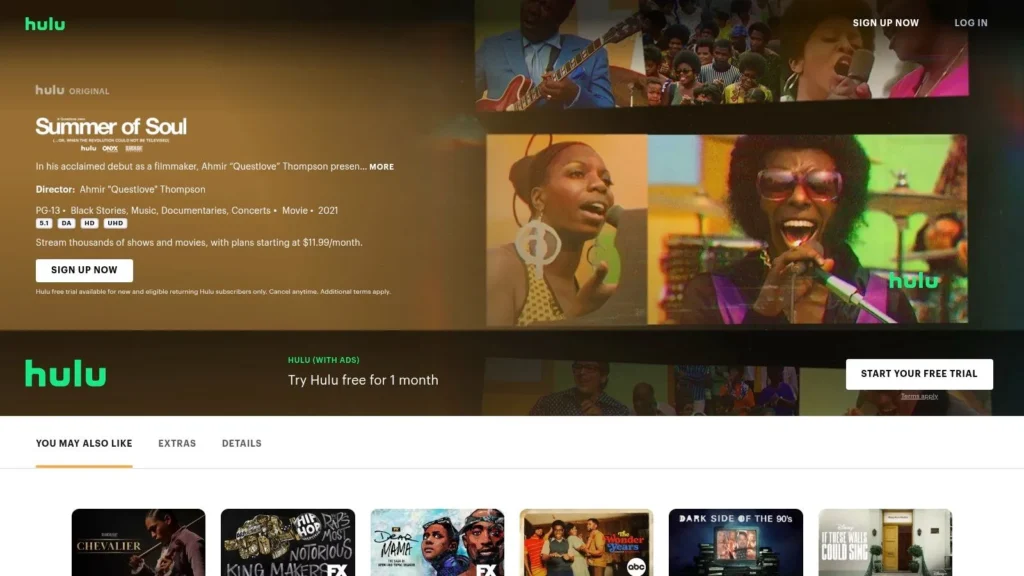
If you want one film that proves music documentaries can function as concert film, archival rescue, and cultural history at once, start here. Questlove takes the 1969 Harlem Cultural Festival and gives it shape, urgency, and rhythm without flattening it into a museum piece.
The restored footage is the selling point, but the structure is what makes it stick. Stevie Wonder, Nina Simone, and Sly & the Family Stone don’t appear as nostalgic legend slots. They feel present tense. The movie understands that performance footage means more when the historical stakes around it are clear.
Best way to watch it
This is currently available on Hulu’s Summer of Soul page. Use the biggest screen and best speakers you have, because the restoration work deserves space. A laptop will get the facts across, but it won’t do the grooves or crowd energy many favors.
For viewers outside the US, check your local Hulu equivalent or regional storefront first. Availability rotates, and music-doc lists often go stale because they treat platform access as an afterthought. That’s one reason broad curation still leaves a usability gap.
- Best for: Soul, funk, R&B, and festival-history fans.
- Works best when: You want a film that teaches without sounding dutiful.
- Less ideal when: You want a cradle-to-grave artist biography.
Practical rule: If you care how documentaries shape memory, this is one to pair with a craft-focused read on documentary filmmaking techniques.
One trade-off is scope. The film is anchored to a single event, so you won’t get a broad survey of the era. But that concentration is also its strength. It feels curated, not scattered.
2. What Happened, Miss Simone?
Some music docs explain an artist. This one confronts you with the cost of their brilliance. What Happened, Miss Simone? is still one of the sharpest artist portraits in streaming because it doesn’t separate Nina Simone’s music from her politics, anger, tenderness, or instability.
Netflix remains the right platform entry point because the film plays well for both total newcomers and listeners who know the records but not the life. It uses diaries, letters, archival footage, and interviews to build a portrait that feels intimate without turning confessional material into spectacle.
Who it’s for, and who should wait
You can stream it on Netflix’s film page for What Happened, Miss Simone?. If you’re introducing someone to Nina Simone, this is a strong first watch because it connects the songs to the person in a direct, legible way.
If what you want tonight is release, rhythm, and pure concert electricity, pick something else first. This film is emotionally demanding. It leaves room for the performances, but it isn’t built as a hangout watch.
It’s one of the rare music docs that can send a new listener straight back to the catalog with more questions than answers, in a good way.
A practical pairing helps. Watch the film first, then go listening. That sequence tends to work better than the reverse because the documentary gives emotional context to songs many people know only in fragments. If your taste runs toward artist deep-dives and discovery paths, it sits naturally beside broader habits for discovering new music well.
3. Beastie Boys Story
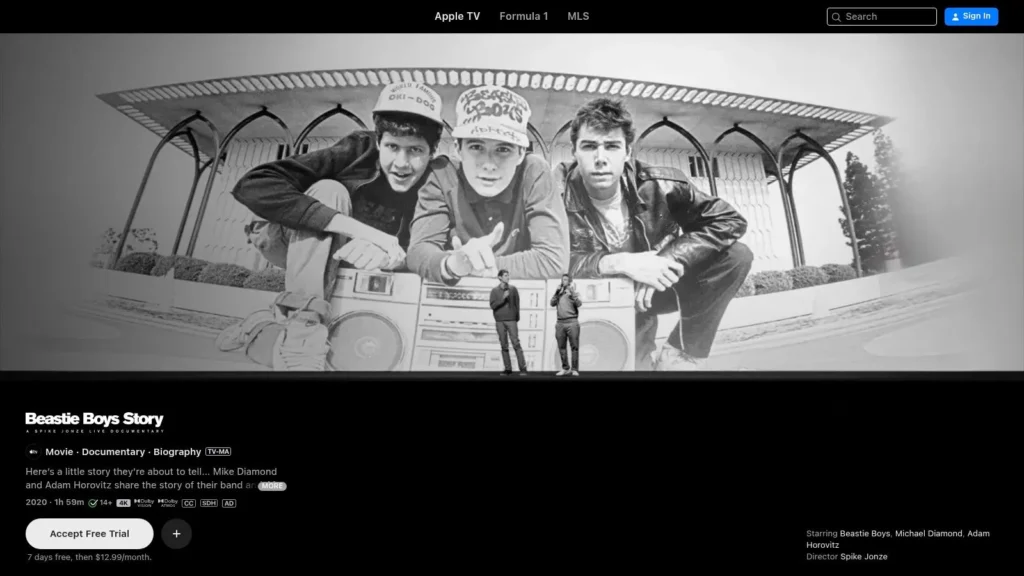
Want a music documentary that plays more like a smart, funny oral history than a performance film? Beastie Boys Story earns its spot for exactly that reason. Spike Jonze builds the film around a live stage presentation by Mike D and Ad-Rock, and that choice gives the whole thing a different rhythm. It feels conversational, self-correcting, and occasionally raw in a way a standard archive-heavy biography usually does not.
The trade-off is clear from the start. This film is not built to deliver wall-to-wall concert rush. It works better as a story about evolution, friendship, creative restlessness, and the uneasy process of looking back after loss. If you come in expecting a greatest-hits movie, you may want more music. If you want a filmmaker and two surviving members shaping memory in real time, this is one of the sharper streaming picks available.
Viewer toolkit
You can stream it on Apple TV+. Before subscribing for a single title, check whether Apple TV+ offers a trial in your region or is bundled with another Apple service you already use. That small check matters because this is an exclusive, and exclusives are where streaming convenience starts to feel expensive.
Apple is also a good home for this particular film. The platform presents the stage design, projected visuals, and archival inserts cleanly, which helps because the movie depends on timing and visual texture more than pure narrative momentum.
A practical viewing note. This plays best when you can give it your full attention. The jokes land, but the film gains weight as it moves deeper into the band’s internal history and the absence of Adam Yauch.
- Best for: Hip-hop fans, alternative rock listeners, New York culture watchers, and anyone who likes artist memoirs more than standard documentaries.
- Best setting: A quiet evening watch, ideally with someone happy to follow stories rather than chase songs.
- Regional access tip: If Apple TV+ is unavailable where you are, check local Apple TV storefront listings first. Availability can differ between the subscription app and transactional rental options.
- Main drawback: It offers selective memory by design, so viewers wanting a more investigative account may find it too controlled.
What makes it stand out on a streaming list is its format. A lot of music documentaries aim for total biography or total spectacle. Beastie Boys Story chooses testimony. That narrower frame limits it, but it also gives the film its voice. For fans who care about scene history, aging, collaboration, and how artists rewrite their own mythology, that is a strong bargain.
4. Stop Making Sense
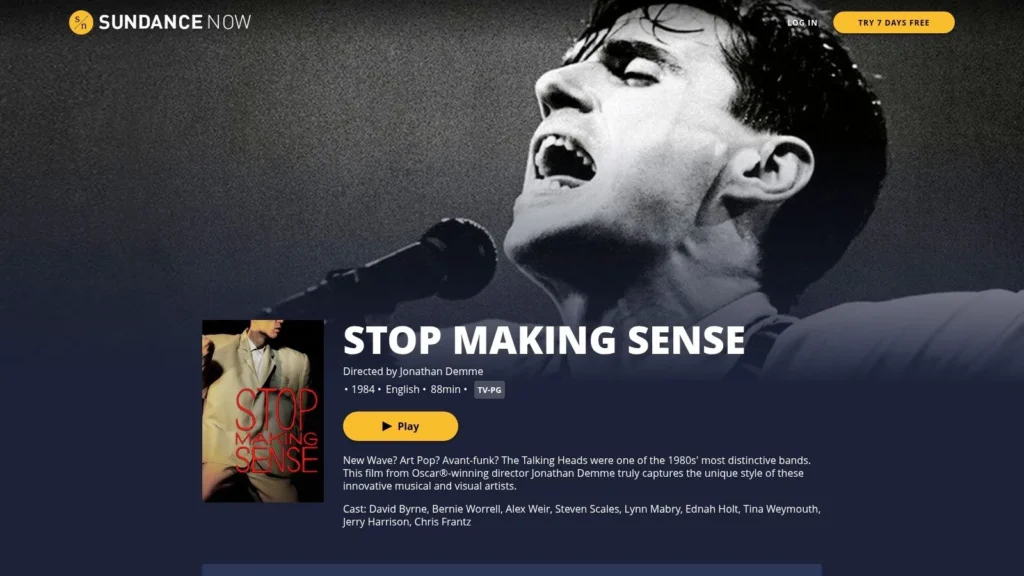
Few films in this space need less defending. The main question is whether it counts as the best choice for your night. If you want analysis, context, or biographical excavation, it isn’t. If you want one of the most precisely filmed live-performance experiences ever put on screen, it might be unbeatable.
Jonathan Demme keeps the frame disciplined. The camera isn’t trying to prove how energetic it is. That restraint is what lets the performance become ecstatic instead of chaotic. The film feels contemporary because it trusts staging, timing, and physical presence.
Viewer toolkit
It’s currently streamable on Sundance Now. Before subscribing just for one title, check whether your region bundles Sundance Now through another service or add-on. That’s often the least annoying route.
This is the title I’d hand to anyone who says they “don’t usually watch documentaries” but loves live music. There are almost no barriers to entry. You don’t need prior Talking Heads devotion, and you don’t need a syllabus.
Watch this one with the room lights low and notifications off. Its pacing depends on attention.
Its limitation is obvious and not really a flaw. It won’t tell you who these people were away from the stage. It only shows you what they can do on it.
5. The Last Waltz
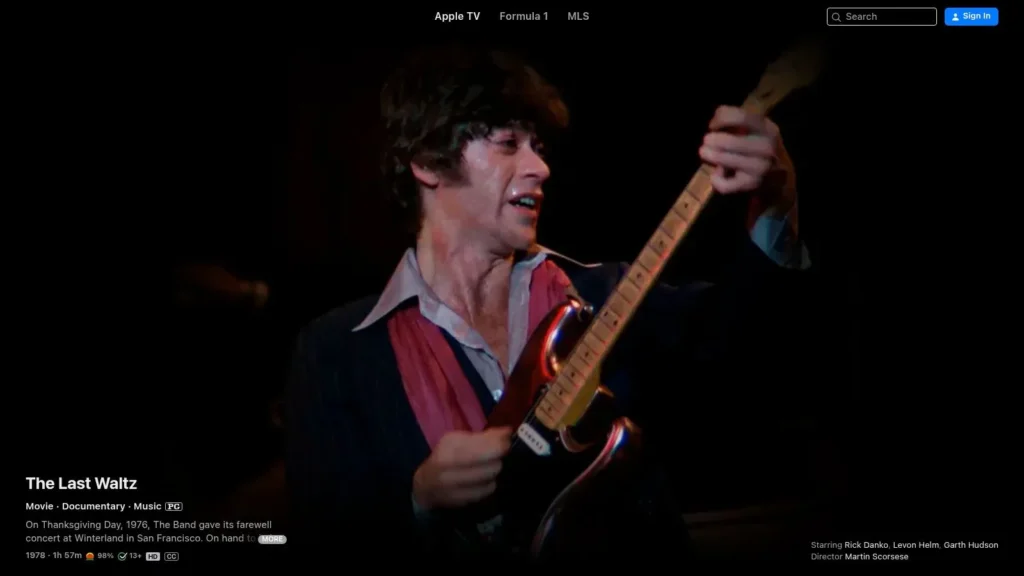
If Stop Making Sense is lean and architecturally exact, The Last Waltz is lavish. Martin Scorsese shoots The Band’s farewell concert like he knows the event already considers itself legendary. That confidence can feel grandiose, but here it pays off.
The guest list is part of the hook, but not the whole value. Dylan, Joni Mitchell, Muddy Waters, Neil Young, and others make it historically rich, yet the movie’s real strength is how fully it commits to live music as cinema. It doesn’t apologize for beauty.
Where to stream, and what to expect
This one is widely available for digital rental or purchase, including Apple TV’s listing for The Last Waltz. For many viewers, renting is the practical move. A permanent subscription add-on usually isn’t necessary.
The trade-off is perspective. The film preserves a canonized rock world more than it interrogates it. If you’re looking for a modern documentary that revisits the era with fresh critique around who got centered and who didn’t, this isn’t that movie.
- Best for: Classic rock, Americana, roots-music, and Scorsese fans.
- Best mood: Weekend viewing when you can settle in.
- Less ideal for: Viewers wanting a critical essay rather than a ceremonial send-off.
This is also a good reminder that genre-specific curation is still weak. Many mainstream lists lump all music docs together instead of helping viewers sort by style, fan identity, or documentary mode, a gap noted in commentary around broad “essential music documentaries” roundups from the Los Angeles Times.
6. Gimme Shelter
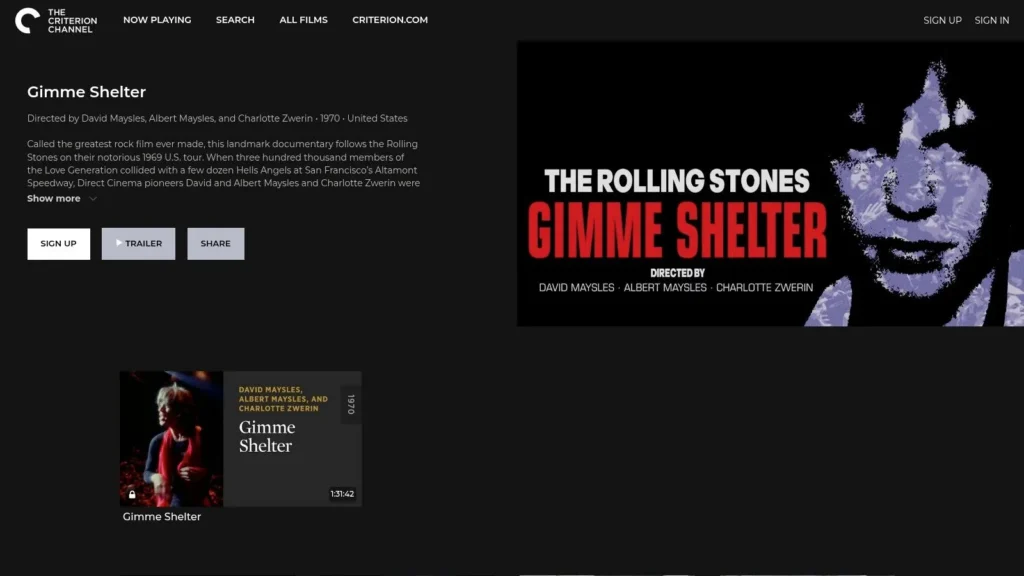
This is the one to choose when you want a music documentary to stop being comfortable. The Maysles brothers capture The Rolling Stones on tour, but the film’s gravity comes from Altamont and the collapse of a certain idea of the late 1960s.
Its power comes from refusal. No soothing narration. No retrospective framing that tidies up the moral mess. The movie lets the footage accumulate until the atmosphere turns toxic. Even now, it’s hard to shake.
Why Criterion is the right home for it
Stream it on The Criterion Channel. Criterion’s context matters here because this isn’t just a title to “watch sometime.” It’s a film to approach with seriousness, and the platform’s curation helps signal that.
This isn’t background viewing. It’s intense, disturbing, and historically loaded. If you’re expecting a celebratory rock doc, it will feel punishing. If you want vérité filmmaking at full force, there are few better options.
Some music documentaries make you love an era more. This one makes you question what the era was telling itself.
Because so many “best music documentaries streaming” lists skip practical currency, it’s smart to verify platform availability right before movie night. That timeliness problem remains common in curated lists, including platform-based recommendation articles discussed by Musicians Institute.
7. Moonage Daydream
This is the most sensory pick here and the least interested in behaving like a standard biopic. Brett Morgen builds Moonage Daydream as an experience first. Plot is secondary. Chronology is negotiable. Atmosphere is the point.
That approach won’t suit everyone. Some viewers want dates, transitions, and a cleaner line through Bowie’s life. This film wants to place you inside his artistic weather instead. On a good setup, that can be overwhelming in the best way.
How and where to watch it
You can stream it on Hulu, and it’s also available through digital purchase options. If you only have one title tonight and your home setup is small or tinny, I’d save this for better conditions. It was built for immersion.
One reason streamers keep backing projects like this is simple. Music docs don’t just attract attention, they can reactivate listening. Reprtoir reports that music documentaries can lift artist streaming by over 20% in the weeks after release, including a 21.2% surge in George Michael’s catalog within three weeks of Netflix’s Wham!. That commercial afterlife helps explain why bold, access-heavy films keep getting made.
- Best for: Bowie fans, art-rock listeners, audiovisual maximalists.
- Best setup: TV, soundbar, or headphones with range.
- Main drawback: Thin on linear biography.
If the film pushes you back toward playing music rather than just watching it, that’s very much in Bowie’s spirit. For beginners crossing from fandom into practice, even a simple guide on how to play guitar for beginners can turn inspiration into action.
Top 7 Music Documentaries Comparison
| Title | Production complexity | Resource requirements | Expected outcomes | Ideal use cases | Key advantages |
|---|---|---|---|---|---|
| Summer of Soul (…Or, When the Revolution Could Not Be Televised) | High, extensive restoration and archival editing | Extensive archival footage, audio restoration, interview integration | Immersive concert film with contextual social history; emotionally powerful | Music/history education, cultural festivals, general audiences | Jaw‑dropping restored performances; excellent sound restoration; strong historical framing |
| What Happened, Miss Simone? | High, deep archival research and intimate storytelling | Extensive personal archives (diaries, letters), performance clips, interviews | Revelatory biographical portrait connecting artistry and activism; emotionally intense | Biographical study, civil‑rights education, fans of Nina Simone | Intimate, revelatory narrative; definitive entry for newcomers; strong critical reception |
| Beastie Boys Story | Medium, staged live memoir adapted for film | Stage production and live capture; archival photos/videos integrated | Engaging, personal oral‑history experience that mixes humor and reflection | Fans, live‑event adaptions, casual viewers seeking nostalgia | First‑person storytelling by band members; warm humor and heartfelt reflection |
| Stop Making Sense | High, precise concert cinematography and staging | Multi‑camera concert shoot and restoration resources (4K) | Performance‑first, immediate cinematic concert experience | Concert‑film aficionados, film students, theatrical screenings | Exceptional cinematography and pacing; timeless, immediate feel |
| The Last Waltz | High, large‑scale concert shoot with cinematic treatment | Major crew, guest coordination, multi‑angle film capture | Cinematic document of a landmark farewell concert with narrative polish | Music historians, classic rock retrospectives, film/music studies | Star‑studded performances; Scorsese’s cinematic approach; high production values |
| Gimme Shelter | High, vérité shooting in unpredictable, chaotic settings | On‑the‑ground vérité footage, extensive editorial resources, tour access | Raw, urgent chronicle of a dark moment in rock history; unsettling viewing | Documentary film courses, cultural history studies, critical viewers | Unflinching vérité authenticity; historical immediacy; valuable supplemental context (Criterion) |
| Moonage Daydream | High, complex collage editing and high‑fidelity remastering | Estate‑approved rare footage, advanced audio/visual restoration, design work | Sensory, non‑linear audiovisual journey emphasizing creative philosophy | Art‑house screenings, audiophile setups, Bowie retrospectives | Dazzling audiovisual design; fresh non‑biographical approach; repeat‑viewing rewards |
Curate Your Own Film Festival
What do you want from tonight’s watch: a great performance, a sharp piece of cultural history, or a film that changes how you hear the music afterward?
The best music documentaries streaming now reward that kind of specific choice. They do more than fill an evening. They sharpen the records, the period around them, and the persona at the center. The practical use of this list is not to crown a single “best” title. It is to build a lineup that fits your mood, your setup, and the kind of music fan you are.
A few pairings work especially well. Put Summer of Soul next to Gimme Shelter for two hard, revealing views of the late 1960s, one restorative and one intensely unsettling. Match Stop Making Sense with The Last Waltz to compare two concert films with very different ideas of spectacle, one stripped to staging and rhythm, the other built as an event. Watch What Happened, Miss Simone? with Moonage Daydream if you want to test two opposite documentary methods: one clarifies a life through structure and testimony, the other creates meaning through texture, sound, and accumulation.
Where you watch matters almost as much as what you watch. Concert-forward films such as Stop Making Sense and The Last Waltz deserve the biggest screen and best speakers you have, even if that just means headphones instead of laptop audio. Denser films such as Moonage Daydream play better when you can give them full attention. Character-driven biographies like Miss Simone are easier to absorb at home, where pausing to sit with a line, a song, or a painful turn in the story does not break the experience.
Streaming also changes the job of a recommendation list. Rights shift. A title that was easy to find last month may be buried behind a rental wall or missing in your region tonight. That is why a viewer’s toolkit helps more than a ranked list. Check the current platform, confirm regional availability, and pick the film that matches the listener in the room, whether that is a casual Bowie admirer, a serious rock historian, or someone who wants one superb live-performance document.
Treat the list like programming. Build a double feature. Plan around your speakers, your attention span, and your appetite for history versus performance. If a film sends you back to the albums with new ears, it did its job.
If you like practical guides that connect film, music, and insights into how people watch and listen now, maxijournal.com is worth bookmarking. It publishes approachable commentary across entertainment and the arts, alongside technology, science, travel, business, and more, with room for curious readers and prospective contributors alike.
Discover more from Maxi Journal
Subscribe to get the latest posts sent to your email.